
Hot Water Services
Commercial Water Filtration
Jul
Commercial Water Filtration: Melbourne Solutions 2026
A busy Melbourne café usually notices water problems in small ways first. Coffee starts tasting flat. Ice looks cloudy. A combi oven takes longer to recover between loads. Then someone opens the service panel and finds scale, blocked cartridges, or a pressure issue that has been building for weeks.
The same pattern shows up in offices. Staff complain that the chilled tap tastes odd. The instant boiling unit spits or slows down. Facilities teams replace filters reactively because no one set a realistic schedule for local conditions. What looked like a plumbing nuisance turns into downtime, extra service calls, and frustrated users.
Introduction to Commercial Water Filtration
Commercial water filtration is the practical system behind water that tastes right, protects equipment, and stays suitable for day-to-day business use. In a Melbourne venue, that can mean filtered water for coffee machines, dishwashers, chilled dispensers, instant boiling taps, wall-mounted boilers, and hand-wash points that all draw from the same incoming supply.
The need is growing. The Australia water purifier market was valued at AUD 337.79 million in 2025 and is projected to reach AUD 652.17 million by 2035, with a projected CAGR of 6.80% from 2026 to 2035, according to IBISWorld's Australia water treatment services market context. That tells you something simple. More businesses are treating filtration as core infrastructure, not an optional add-on.
A good commercial setup does more than remove “bad stuff”. It stabilises taste, reduces wear on appliances, supports hygiene, and helps managers plan maintenance instead of reacting to failures.
This short video is a useful visual primer before getting into specifications and maintenance planning.
Why Melbourne sites need a more practical approach
Generic guides often focus on lab-style contaminant lists and forget how buildings use water. A café has rush periods. An office kitchen has waves of use around morning tea and lunch. A showroom might need chilled drinking water and an instant boiling tap from the same service area.
Practical rule: If water quality affects flavour, uptime, or compliance, filtration is no longer a nice-to-have. It's part of the operating system of the site.
That's why the right question isn't “Do we need a filter?” It's “What kind of system fits our appliances, our peak demand, and our maintenance reality in Melbourne?”
Understanding the Filtration Process
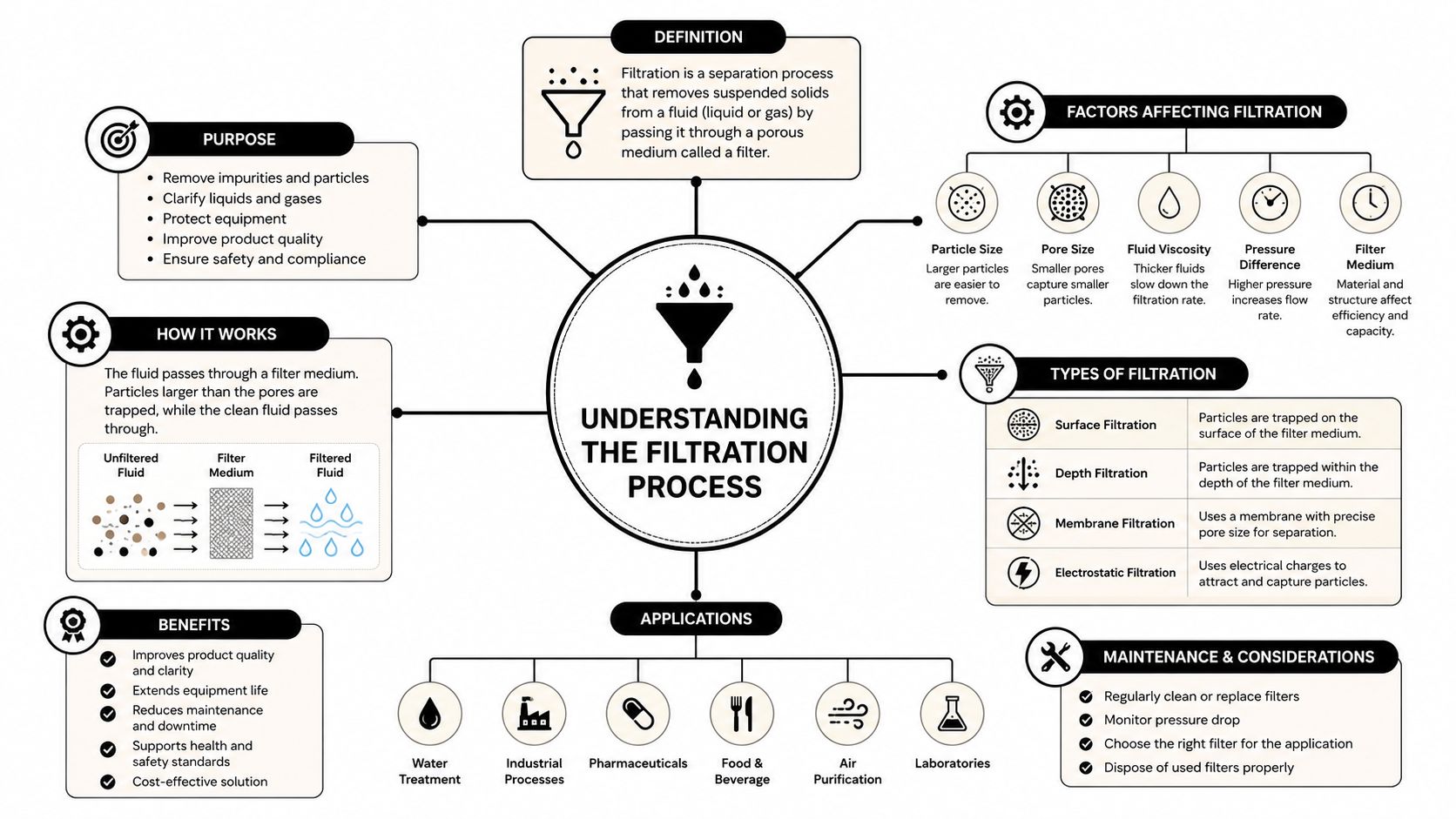
Think of a commercial filtration system like a row of sieves and treatment barriers, each handling a different job. If you ask one stage to do everything, it clogs early or misses problems it was never designed to solve. When the stages are layered properly, each part carries a sensible share of the load.
The standard industrial approach in Australia uses five stages: pre-filtration for debris removal, activated carbon for chlorine absorption, membrane filtration for micro-pollutants, UV sterilisation for microorganism neutralisation, and ion exchange or reverse osmosis for polishing, as described in the ABS water account background used in the verified data.
What each stage is doing
Pre-filtration comes first. This stage catches visible particles such as sediment and debris. It's the bouncer at the door. Its main job is to stop larger material from reaching more expensive downstream components.
Activated carbon handles taste and odour issues linked to chlorine and similar compounds. In practical terms, this is often the stage people notice most because it changes how drinking water, tea, and coffee present in the cup.
Membrane filtration is the finer barrier. Depending on the application, it can address much smaller impurities and dissolved material. This matters when equipment or beverage quality demands tighter water control than a basic cartridge can provide.
Why UV and final polishing matter
UV sterilisation doesn't work like a sieve. It's a treatment step used to neutralise microorganisms. That distinction matters because some readers assume a carbon filter covers everything. It doesn't.
Ion exchange or reverse osmosis is the polishing stage. Think of it as finishing work. By the time water reaches this point, the earlier stages have already reduced the load, which helps the final stage work more consistently.
A strong commercial system is less like one giant filter and more like a relay team. Each stage does one job well so the next stage isn't overloaded.
Why multi-stage beats a single cartridge
Single-stage systems can suit narrow tasks, such as improving taste at one tap. But once a site depends on water for multiple uses, one cartridge usually becomes a compromise. You may get better flavour but poor pathogen control, or cleaner water but weak flow under demand.
That's why commercial water filtration is usually built in layers. The design isn't complexity for its own sake. It's how you get stable water quality without sacrificing flow, appliance protection, or service life.
Main Commercial Filtration System Types
Facility managers usually encounter the same group of system types, but they don't all solve the same problem. The easiest way to choose is to match each type to the job it does best, then decide whether one type is enough or whether several should be combined.
Five common system types
| System Type | Filtration Stage | Removes | Maintenance Frequency |
|---|---|---|---|
| Sediment filter | Pre-filtration | Sediment and debris | Varies by site conditions and loading |
| Carbon filter | Adsorption stage | Chlorine, taste and odour-related compounds | Varies by usage and water conditions |
| Reverse osmosis unit | Polishing stage | Dissolved particles and fine impurities | Varies by membrane condition and upstream protection |
| UV sterilisation | Disinfection stage | Microorganism risk at treatment stage | Lamp and system servicing on a planned schedule |
| Whole-of-site system | Multi-stage setup | A combination of contaminants depending on design | Depends on the number of stages and site demand |
Where each one fits
A sediment filter is usually the starting point, not the whole answer. It makes sense on an incoming line where the aim is to protect valves, taps, chillers, and downstream cartridges from grit and visible matter.
A carbon filter is common in offices and hospitality because taste complaints often start with chlorine or odour. If your chilled tap is mainly for drinking water and you're not trying to achieve high-purity process water, carbon may be the most noticeable upgrade.
A reverse osmosis unit suits applications where water quality has to be tighter. Beverage prep is the classic example. Cafés often use RO where taste consistency and appliance protection are both priorities. If hard-water issues are part of the conversation, this guide to water filtration for hard water is a useful companion.
When to combine systems
A UV system is added when filtration alone isn't enough for the risk profile. That's especially relevant where stored or dispensed drinking water needs an added hygiene barrier.
A whole-of-site system serves buildings with mixed uses. A gym, office floor, or hospitality venue might feed chilled taps, boiling units, ice machines, and staff kitchen equipment from one central treatment train.
Don't pick a system by brand category alone. Pick it by the problem you need to solve at the exact point where water is used.
The most common mistake is treating all outlets as if they need the same water quality. They don't. A hand-wash sink, a coffee machine, and an instant boiling tap place different demands on filtration.
Sizing and Specifying the Right System
Sizing is where many commercial water filtration projects go off track. People look at total daily use, choose a cartridge or system that seems large enough, and assume the job is done. But commercial sites fail at the busy hour, not on the daily average.
In Australian commercial practice, staging should be sized around peak overlaps. The verified guidance notes that a system rated for 500 L/day can still choke during peak demand if the stages are undersized, reducing performance and increasing maintenance, as outlined in this commercial water filter sizing discussion.
Start with overlap, not total volume
If you run a Melbourne office kitchen, ask what turns on at the same time. It may be the chilled tap, the instant boiling tap, and a plumbed coffee machine during the morning rush. In a café, it may be espresso equipment, a dishwasher refill, and a combi oven around lunch.
Write down every connected appliance, then group them by simultaneous use. That list is more useful than a rough estimate of litres used across the whole day.
Build a practical specification sheet
A clear specification sheet should include:
- Connected outlets such as chilled taps, boiling taps, coffee machines, combi ovens, dishwashers, and drinking stations.
- Peak overlap notes that identify which items can run at once.
- Required stages such as sediment, carbon, membrane, UV, or RO.
- Pressure requirement based on the installed equipment and the treatment train.
- Service access needs so technicians can replace cartridges and inspect gauges.
For many sites, that document is what turns a vague quote request into a useful proposal. If you need a starting point for planning the fit-out side of the job, this overview of water filter installation in Melbourne helps frame the practical decisions.
A simple Melbourne use case
Take a compact office with an under-sink chilled tap and an instant boiling unit. On paper, daily use may look modest. In reality, everyone arrives within a short window, fills bottles, makes tea, and runs the coffee station at once.
If the pre-filter is too restrictive, everything downstream suffers. If the membrane stage is too tight for the expected overlap, users experience low flow and blame the tap, when the actual issue is system sizing.
Size for the busiest realistic hour. That's the hour your staff and equipment will judge the system by.
Maintenance and Filter Replacement Schedules
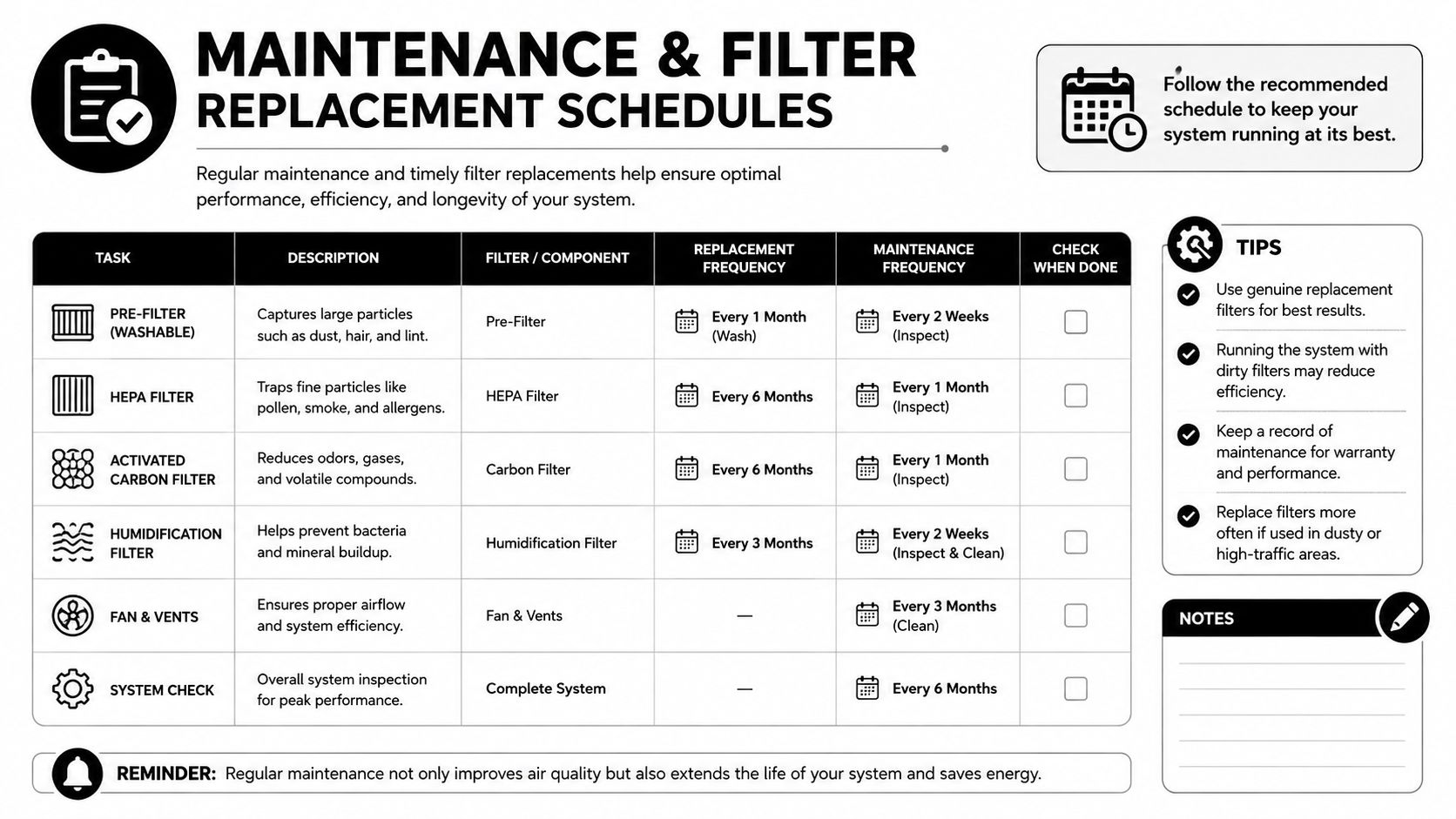
Good systems don't stay good by accident. They stay good because someone set a service rhythm that matches local conditions, checks pressure changes, and budgets for replacements before performance drops.
Melbourne adds a practical complication. Commercial systems without region-specific maintenance planning can face a 30 to 40 per cent faster clogging rate in Melbourne's water hardness conditions, which makes maintenance cost transparency especially important, according to the verified data drawn from the Queensland Health private drinking water guideline reference.
A schedule managers can actually use
Instead of waiting for taste complaints or pressure loss, build a recurring checklist into your facilities calendar.
- Weekly pressure check to spot loading or blockage before users notice low flow.
- Visual inspection of housings, valves, and drain points for leaks or stress.
- Cartridge review based on usage pattern, not just the date on the service label.
- Membrane and UV review as part of a planned maintenance window, especially on critical drinking water lines.
- Sanitisation event whenever major components are changed or after contamination concerns.
Why local water conditions change the maths
The challenge isn't only water quality. It's cost predictability. A manager can budget for known cartridge changes. It's harder to budget when local conditions shorten service life and no one has translated that into a site-specific plan.
For Melbourne offices and hospitality venues, this matters most on high-demand lines feeding drinking taps, boiling units, and beverage equipment. If those lines foul earlier than expected, the maintenance budget shifts from planned to reactive.
If your filters are blocking earlier than the product sheet suggests, that doesn't always mean the product is wrong. It may mean the schedule was written for average conditions, not your site.
Testing Contaminants and Ensuring Compliance
Filtration isn't complete until you verify the result. A system can be well designed on paper and still underperform if pressure is unstable, cartridges are overdue, or materials are unsuitable for potable water.
For Australian commercial installations, screen filter systems must be rated for a minimum of 600 kPa pressure and potable water components must comply with AS/NZS 4020, based on the Water Corporation DS240-01 filtration equipment standard. Those two checks are easy to overlook when people focus only on cartridge performance.
What to verify on site
Test the water at the point of use, not only at the incoming main. A building may have acceptable supply water but still develop issues at the dispenser or after treatment if components are mismatched or neglected.
A practical compliance file should include:
- Material compliance records for potable-water-contact parts.
- Pressure rating documentation for the installed filtration equipment.
- Service records showing cartridge, membrane, and UV maintenance.
- Water quality test notes tied to the outlets people use.
For managers who need a broader overview of water systems, codes, and commercial plumbing responsibilities, EZ Plumbing commercial services gives a helpful industry context around how these pieces fit together.
Testing methods and record keeping
Some sites use simple on-site checks for routine monitoring and call in laboratory testing when a risk, complaint, or compliance issue appears. The exact testing scope depends on the building and use case, but the habit that matters most is consistency.
If you want a practical starting point for choosing test approaches and reading results, this guide to water quality testing is useful background.
Keep records in one place. Health and facilities conversations move much faster when the team can show what was installed, when it was serviced, and what was tested.
Optimising Cost ROI and Equipment Integration
The return on commercial water filtration rarely comes from one dramatic saving. It usually comes from several smaller wins happening at once. Better tasting water reduces complaints. Stable flow helps appliances perform properly. Planned maintenance cuts unplanned downtime. Equipment lasts longer when it isn't fighting sediment, chlorine, or untreated hardness-related issues.
That's why cost discussions should include both the treatment system and the appliances connected to it. An under-sink filter feeding an instant boiling tap isn't just a filtration decision. It's a workplace operations decision. The same goes for chilled taps, wall-mounted boilers, and hot water urns in staff kitchens or hospitality prep areas.
Where managers often misjudge cost
The common mistake is comparing only purchase price. A simple carbon setup may cost less upfront, but it may not match the water quality needs of a coffee station, a chilled drinking point, and a boiling tap all sharing one branch. A more complete system can be easier to justify when it reduces taste complaints, service interruptions, and appliance stress across the line.
This is also where metering helps. If you're trying to understand which parts of a building drive water use and where treatment is most valuable, Axis Meter Solutions' water submetering insights offer a useful framework for thinking about water accountability inside commercial properties.
Integration with boiling and chilled water points
For office managers, the most practical setup is often one that connects filtration directly to the points staff use every day:
- Under-sink chilled taps for drinking water in breakout areas.
- Instant boiling taps for tea, coffee, and light kitchen use.
- Wall-mounted boilers where a larger group needs consistent hot water access.
- Commercial urns for events, training rooms, or catering support.
When those appliances are treated as part of one water strategy, decisions become clearer. You can size filtration around shared demand, plan service access properly, and avoid the patchwork approach where each new appliance gets a separate quick fix.
This is the one place it makes sense to note that Ring Hot Water supplies and installs filtered chilled water systems as well as instant boiling and chilled water equipment for commercial sites. In practice, that means managers can plan filtration and dispensing equipment together rather than as disconnected purchases.
Troubleshooting Common Issues and Conclusion
Most commercial filtration faults show up in a few familiar ways. Flow drops. Water tastes wrong. A tap spits air. A housing weeps slowly into the cupboard. None of these symptoms should be ignored, because small faults often point to a bigger issue in sizing, servicing, or component selection.
When flow drops
Low flow usually traces back to one of three causes. The first is a loaded pre-filter. The second is a membrane or polishing stage that's creating too much resistance for the actual demand. The third is a pressure issue elsewhere in the line.
Start with the simplest question. Did demand increase after new equipment was added? If the answer is yes, the system may not be failing. It may just be undersized for the current overlap.
When taste changes
A sudden taste change often points to exhausted carbon media, delayed maintenance, or bypassing due to poor installation or sealing. If the taste issue appears only at one point, test that outlet first rather than assuming the whole building has the same problem.
If the issue affects coffee, tea, and chilled drinking water at once, review the common upstream stages. Shared symptoms usually mean shared causes.
Water that tastes “off” is useful information. It often tells you which stage has stopped doing its job before a major failure appears.
When leaks or airlocks appear
Minor leaks often come from worn seals, housings not seated correctly, or disturbed connections after service. Airlocks can show up after cartridge changes, particularly on compact under-sink systems feeding boiling or chilled taps.
Keep basic spares available on site where appropriate:
- O-rings and seals for cartridge housings and service heads
- Isolation valves for controlled servicing
- UV lamp kits where UV is installed
- Approved fittings and flexible hoses matched to the system
Commercial water filtration works best when it's treated as part of the building's operating plan, not as an afterthought hidden in a cupboard. In Melbourne, that means paying attention to local maintenance realities, designing for actual peak demand, and integrating filtration properly with chilled and boiling water equipment.
If you need help choosing, installing, repairing, or maintaining a commercial water filtration setup in Melbourne, Ring Hot Water can assist with practical advice on filtered chilled water systems, instant boiling taps, wall-mounted boilers, and service parts for commercial sites.

