Uncategorized
Insinkerator Boiling Water Tap: Expert Guide 2026
Jun
You're probably looking at the same kitchen setup most Melbourne homeowners do. A kettle on the bench, a power point tied up, steam around the splashback, and a small daily delay every time someone wants tea, coffee, porridge, or a quick pot of pasta started. It's not a major problem. It's just one of those little frictions that gets old.
An InSinkErator boiling water tap changes that routine by moving the heating system under the sink and giving you steaming hot water straight from the tap. That sounds simple, but the decision isn't just about convenience. It affects cabinet space, plumbing layout, electrical access, ongoing maintenance, and how comfortable you are with a near-boiling water outlet in a family kitchen.
For Melbourne homeowners, the right question isn't “Is it a nice upgrade?” It's “Will it suit my kitchen and still make sense after the novelty wears off?”
Is an Insinkerator Tap the End of Your Kettle
For some households, yes. For others, not completely.
If you mainly use a kettle for tea, coffee, noodles, blanching vegetables, and quick cooking prep, an InSinkErator boiling water tap can take over most of that work. It clears bench space and removes the stop-start habit of filling, boiling, and waiting. InSinkErator's product line has also matured well beyond a basic hot water dispenser. Its global range has evolved into a full line of instant hot and cold water faucet dispensers, and in Australia it's established as a dedicated Steaming Hot Water Taps category that can also pair with filtration for taste and smell improvement, according to InSinkErator's faucet range information.
That matters because mature products are usually easier to live with. There's clearer installation guidance, clearer parts support, and a better idea of where the product fits in a real kitchen.
Where it works well
An InSinkErator tap suits households that want less clutter and use hot water often through the day. It also suits renovators who are already changing benchtops, sinkware, or cabinetry and can plan the under-sink layout properly.
A lot of homeowners start by comparing styles and finishes. The smarter starting point is function. Decide whether you want a dedicated steaming hot water tap or a multi-function setup, then look at your kitchen layout.
Practical rule: If the kettle annoys you every day, a boiling tap can be a genuine workflow upgrade. If you only boil water occasionally, it may feel more like a luxury than a necessity.
If you're still weighing up the category itself, Ring Hot Water has a useful overview of instant boiling water tap options that helps frame the decision before you get into specific models.
Where people overestimate it
A boiling tap doesn't solve every hot water need. Some people still keep a kettle for large fills, guests, or as a backup during servicing. Others realise that the core value isn't speed alone. It's the combination of convenience, filtration options, and a tidier bench.
That's why the kettle question is really a kitchen-usage question. If your household uses hot water constantly, the tap can become the default. If not, the kettle may still hang around in a cupboard.
How an Under-Sink Boiling Water System Works
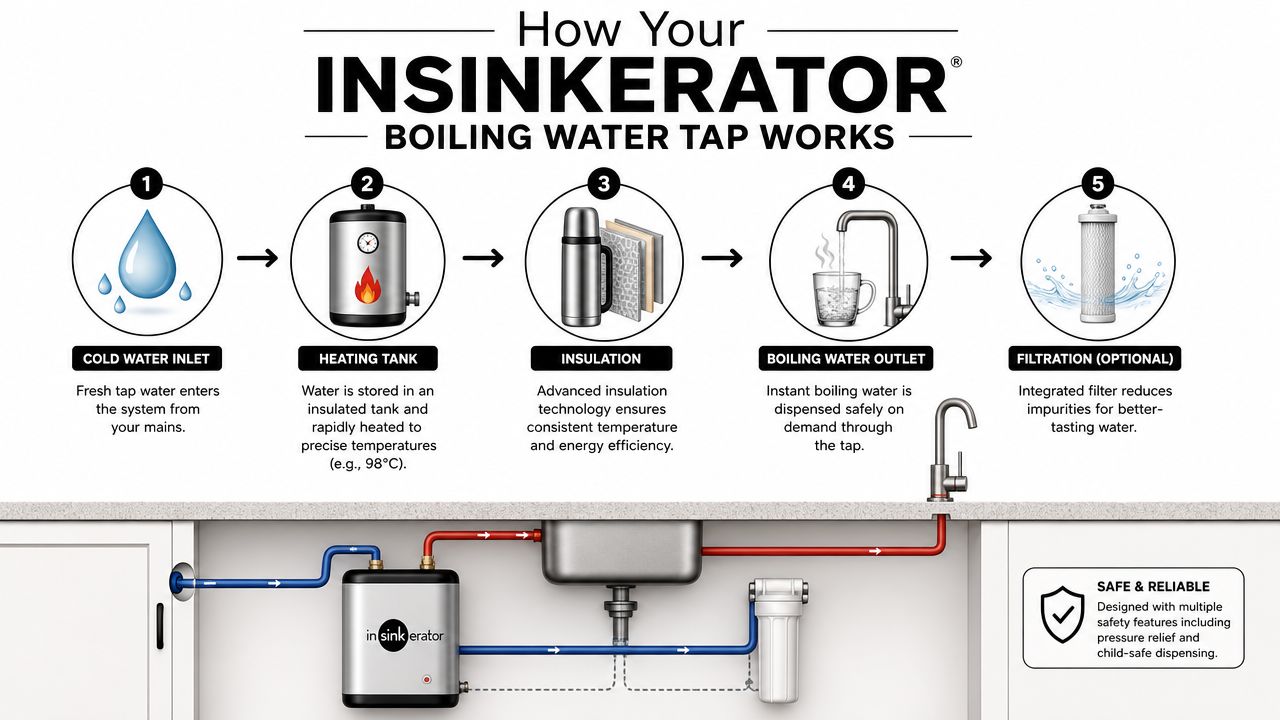
An under-sink boiling water system works like a compact hot water unit dedicated to one kitchen outlet. The tap on the bench is only the visible part. The working parts sit in the cabinet below.
Instead of heating water at the spout, the system stores a small volume of water in an insulated under-sink tank and keeps it near boiling, ready for use. InSinkErator states that the tank holds about 2/3 gallon of water, around 2.5 litres, and that it's continuously replenished from the cold-water supply as water is dispensed, as shown in InSinkErator's system overview.
The basic flow
In day-to-day use, the process is straightforward:
- Cold water enters the system from the mains.
- The under-sink tank stores and heats it to a near-boiling temperature.
- The tap dispenses it on demand when you operate the hot-water control.
- Fresh cold water refills the tank after each draw.
- The system reheats and holds temperature so it's ready for the next use.
That stored-water approach is why the tap feels fast. A kettle starts from cold each time. This system keeps a reserve ready, then reheats after you draw from it.
What that means in daily use
For a Melbourne household, that usually suits repeated small and medium draws better than one big session. Tea, coffee, porridge, blanching vegetables, and topping up a saucepan are where these units earn their keep. If several people want large volumes back-to-back, recovery time becomes part of the ownership experience.
That point matters during planning. Homeowners often focus on the tap style and forget the cabinet below. The tank needs space, the pipework needs a clean route, and the unit needs to stay accessible for servicing, filter changes, or repairs later on.
A multi-function model can also change the setup because the tap assembly and connections are more involved. If you are comparing that format, this guide to the InSinkErator 3 N 1 hot water tap explains how the combined fixture works.
Why filtration often gets bundled in
Filtration is not just a brochure extra. If the tap is being used for tea, coffee, and drinking water every day, taste becomes part of the value equation. In homes with harder water or noticeable odour, filtration can also affect maintenance intervals and owner satisfaction over time.
From a technician's point of view, this is the full scope. You are not buying a tap alone. You are buying a small under-sink system with a tank, fittings, power supply, and sometimes filtration, all of which need enough room to install properly and enough access to maintain over the years.
Key Features and Real-World Considerations
Feature lists look good in a brochure. Real ownership comes down to what happens on a busy morning, in a compact cabinet, with kids around, and after the first flush of excitement has worn off.
Multi-function taps change the appeal
A big reason people choose this category is that some models combine more than one water function into one fixture. That can make the sink area look cleaner and reduce the number of separate tap bodies on the bench or sink deck.
If you're considering one of the combination models, this quick guide helps.
| Model | Functionality | Best For |
|---|---|---|
| Dedicated hot water tap | Steaming hot water only | Homeowners who want simple kettle replacement |
| 3-in-1 style tap | Regular hot, regular cold, and steaming hot water from one fixture | Renovations and kitchens where bench simplicity matters |
| Hot and cold dispenser ranges | Broader style and configuration choices | Buyers comparing form as much as function |
If you want a closer look at that format, Ring Hot Water has a product-focused page on the InSinkErator 3 N 1 hot water tap.
Safety is more complicated than the marketing
Boiling taps are often sold as safer than kettles. Sometimes they are. Sometimes they aren't.
The case for them is easy to understand. You're not lifting a heavy kettle, carrying boiling water across the kitchen, or dealing with a cord near the bench edge. But there's another side to it. A boiling tap creates a permanently available hot-water source that relies on correct installation and sensible household use.
The available product material points to features such as a child-proof twin lever on a 3-in-1 model, but the practical safety question is broader than any one feature. The concern for families is whether those controls, together with proper installation, meaningfully lower scald risk in everyday use. That concern is noted in this discussion of child-safe lever design and practical scald risk.
What helps in a family kitchen
- Tap position matters. If the hot-water control is easy for a child to reach while climbing on cabinetry, the risk changes.
- Usage habits matter. Adults need to use the boiling function consistently and not treat it casually.
- Installation quality matters. Poor placement, poor access, or awkward controls can turn a premium fitting into a daily hazard.
A boiling tap can reduce kettle-related spills, but it doesn't remove the need for household discipline. It changes the risk profile. It doesn't erase it.
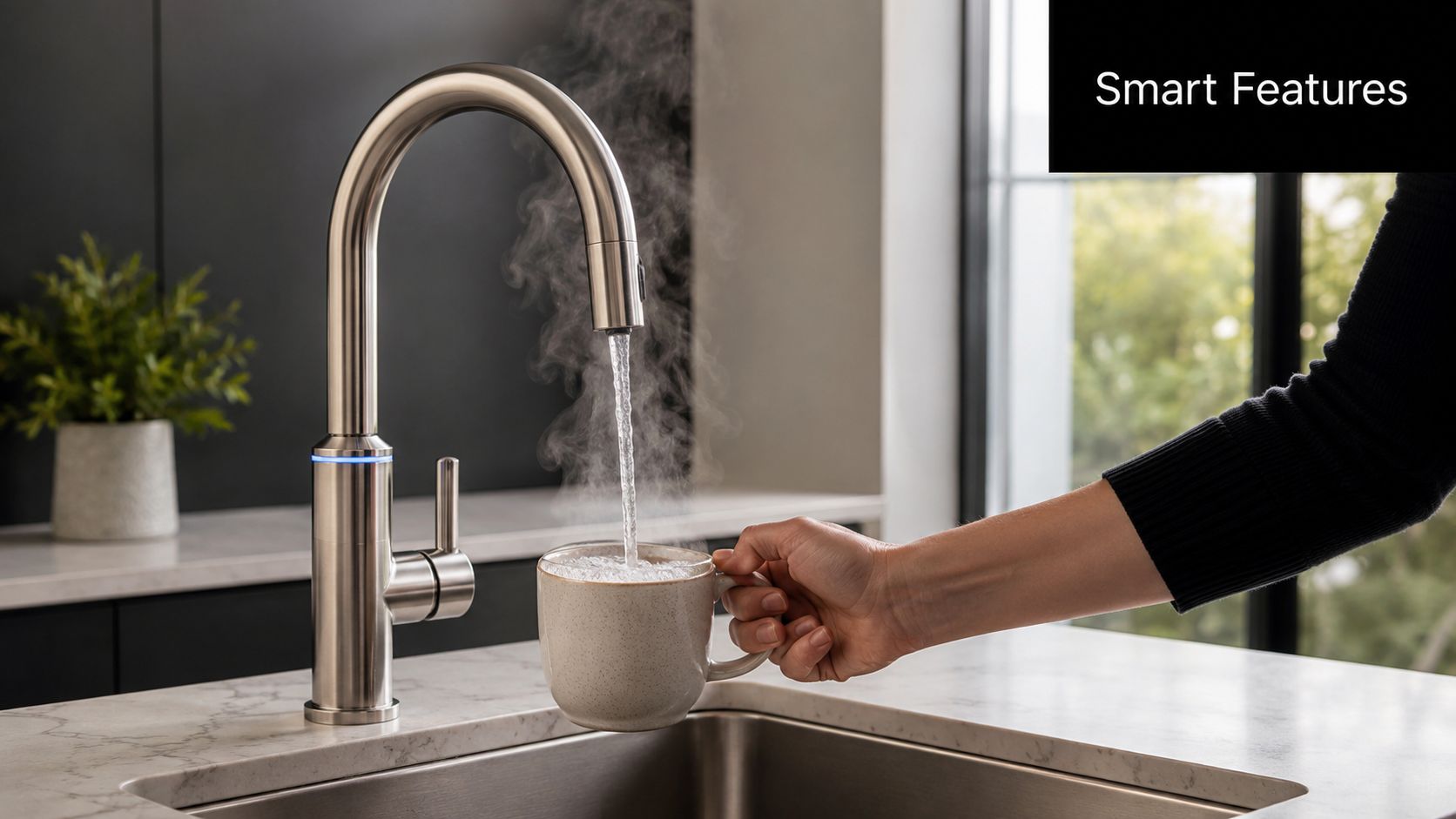
Here's a visual look at the product style and operation in a kitchen setting.
Running cost is the question most buyers leave too late
This is the part many reviews skip. Buyers usually ask about finish, function, and price. They don't ask enough about what the system costs to live with over time.
That means looking at:
- Standby heating because the unit keeps water hot under the sink.
- Filter replacement if your setup includes filtration.
- Service and repair costs if a valve, hose, thermostat, or other component needs attention later.
- Cabinet trade-offs because under-sink space has value too, especially in smaller Melbourne kitchens.
There isn't enough verified quantitative guidance here to promise savings over a kettle in every home. Usage patterns vary too much. A household that draws hot water often may see the convenience justify the setup more easily than a household that uses it only a few times a day. The key point is that total cost of ownership matters, especially in Australian conditions where electricity pricing, water quality, and maintenance habits all affect the outcome.
Installation Planning for Melbourne Homes
Friday night, the new kitchen is finally finished, and then someone opens the sink cabinet and realises there is nowhere sensible to put the tank.
That is how a lot of boiling water tap jobs go off track. The tap itself looks simple from above the bench. The real decision happens underneath, where space, power, pipework, and future access all have to work together.
The requirements under the sink
An Insinkerator boiling water tap needs more than a spare corner in the cabinet. It needs a suitable under-sink power point, connection to the cold-water line, and room for the tank, hoses, and any filter components fitted with the system.
Those basics affect the whole ownership cycle. A cramped install can make filter changes harder, turn a small leak into a messy clean-up, and push up labour time later if a thermostat, valve, or hose needs attention. Melbourne homeowners often focus on whether the tap will fit the benchtop cut-out. The better question is whether the cabinet will still be serviceable after the job is done.
Distance and positioning matter
Tank placement matters more than it first appears. If the tank ends up too far from the tap, hose routing gets awkward and the installation can become harder to keep tidy and accessible.
Older Melbourne homes are where this shows up most often. I regularly see kitchens with retrofitted mixers, added filtration, patchwork plumbing changes, or power installed in a spot that made sense for an older appliance but not for a boiling water unit. The system might still fit, but the final layout can be inconvenient every time someone needs to reach the shut-off valve or clear storage space.
What to check before you buy
A quick look under the sink saves a lot of grief later:
- Cabinet space for the tank, pipework, and any filter without crushing bins, traps, or cleaning items
- Power access in a practical position under the sink
- Cold-water connection that can take the required valve arrangement cleanly
- Tap and tank positioning that allows sensible hose runs
- Service access so a technician can still reach valves, fittings, and electrical connections without dismantling half the cabinet
One point gets missed all the time. Storage still matters. If the new setup takes over the only usable section of the cabinet, the system may be convenient at the tap and irritating everywhere else.
Common Melbourne fit-out problems
The usual trouble spots are predictable:
- Narrow sink cabinets in apartments and compact townhouse kitchens
- Existing water filters already using the best mounting area
- Older stop taps and flexible hoses that should be cleaned up before new equipment goes in
- Poorly placed power points that leave cords or components in awkward positions
Leaks are another reason planning matters. If a cabinet is already congested, even a minor issue can be harder to spot early and harder to repair cleanly. A problem such as a valve leaking water is much easier to deal with when the original installation has left proper access around the fittings.
Professional planning pays off later
This is why I treat installation as the start of ownership, not the end of the sale. A good layout keeps the system safer, easier to maintain, and cheaper to service over time.
That is also where local support matters. If a homeowner later runs into the sort of faults covered in these common Insinkerator hot water tap problems, a well-planned install gives Ring Hot Water a much better chance of diagnosing and fixing the issue quickly. In practice, the best Insinkerator installation is the one that still makes sense five years later, not the one that only looked neat on day one.
Maintenance Spare Parts and Troubleshooting
This is the stage where the ownership experience either stays easy or starts getting expensive.
A new Insinkerator tap usually feels simple. The true measure comes later, after regular use, filter changes, cupboard cleaning, and the first time something sounds off under the sink. In Melbourne homes, I see the same pattern often. The units themselves are usually serviceable, but cramped cabinetry, tired isolation valves, and ignored early warning signs turn small jobs into bigger ones.
What normal maintenance looks like
Most ongoing maintenance is routine. Keep the tap and outlet clean, replace filters if the setup includes one, and pay attention to any change in heat, flow, or sound.
Commissioning matters too. A unit needs to be filled and flushed before power is applied, and it needs time to come up to temperature. If a newly fitted system underperforms from day one, the first thing I check is whether that startup process was done properly, not whether the tank is faulty.
That saves a lot of wasted callouts.
The faults homeowners usually notice first
The first symptoms are rarely dramatic. They tend to fall into a few practical categories:
- Water is no longer hot enough. This can come from setup problems, thermostat drift, scale, or a failing component.
- Flow has dropped off. A blocked filter, restricted line, or valve issue is often behind it.
- The unit is making noises. Gurgling, clicking, or intermittent sounds can be harmless, but they can also point to air, heat cycling, or developing wear.
- There is water in the cabinet. Treat that as urgent until the source is confirmed.
If the leak seems to be around the shut-off point or connection rather than the tank body, this guide to valve leaking water gives useful background on what can fail around valves and fittings.
Spare parts that matter over time
The parts that matter most are rarely the ones homeowners notice at purchase. Over the life of the system, service work usually comes back to the pieces that control heat, direct flow, and keep the cabinet dry.
That usually includes:
- Isolation valves
- Flexible hoses
- Thermostat or temperature-control components
- Tap fittings and seals
- Filters, where fitted
Parts availability matters more than people expect. If a repairer has clear access, can identify the exact component, and can get the right replacement locally, the job stays straightforward. If the original install buried the unit behind bins, shelves, or other appliances, even a basic repair takes longer and costs more.
A good fault check starts by sorting the problem into one of three groups: heat, flow, or leaks. That narrows things down fast and avoids replacing parts on guesswork.
If your unit is already showing signs of trouble, Ring Hot Water has a practical guide to common InSinkErator hot water tap problems that can help you work out what is worth checking before you book a repair.
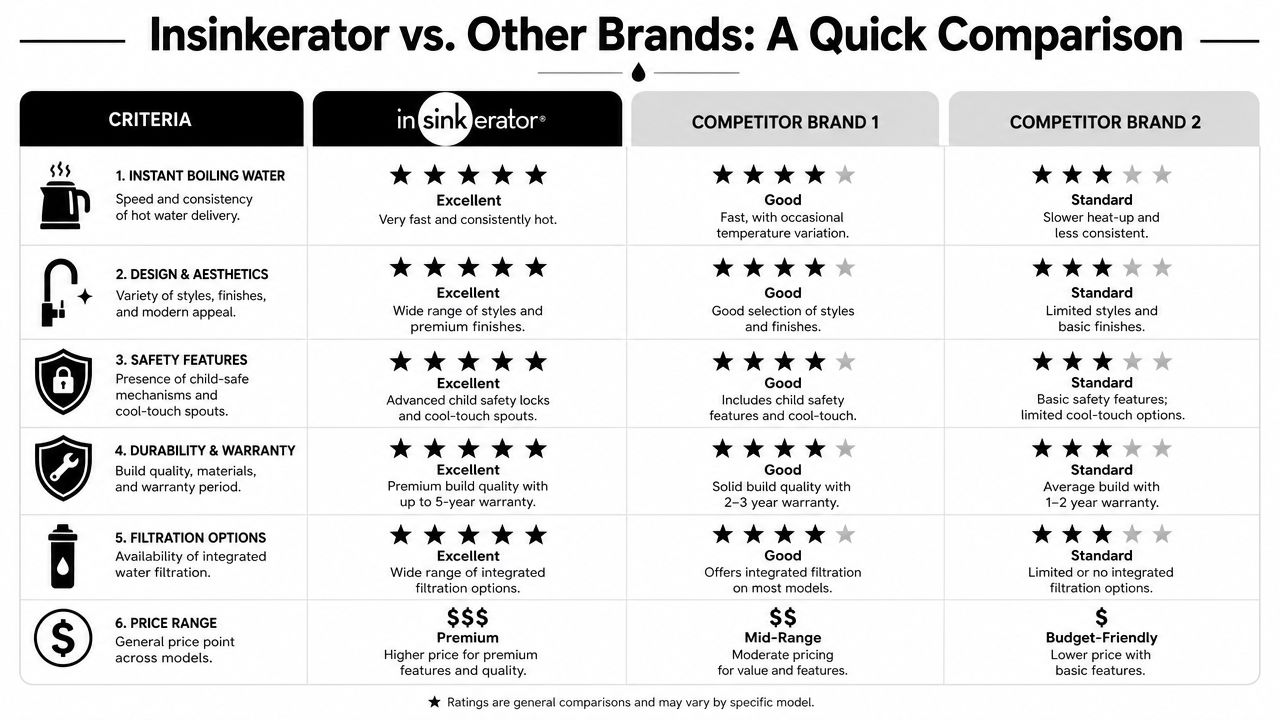
Insinkerator vs Other Brands A Quick Comparison
InSinkErator sits in a useful middle ground. It's a recognised name in instant hot water, with a mature under-sink approach and broad appeal for homeowners who want straightforward boiling-water convenience. Other brands, especially in the premium end of the market, often push further into chilled or sparkling water systems and more elaborate all-in-one setups.
That means the comparison isn't really about which brand is universally better. It's about what sort of kitchen you're building and what kind of ownership experience you want.
Where InSinkErator fits
For many homes, InSinkErator is the practical choice when the brief is simple. You want instant steaming hot water, an under-sink tank system, and a tap that integrates neatly into the kitchen without moving into a more complex beverage station setup.
Other brands may make more sense if your priorities lean toward:
- Chilled water integration
- More premium design positioning
- Broader feature sets in one fixture
- A different service ecosystem or installer preference
The ownership lens matters more than the showroom pitch
A big gap in many comparisons is what ownership looks like after installation. Total cost of ownership in Australian conditions includes ongoing electricity use for standby heating, filter replacements, and possible maintenance, which is a key point raised in this discussion of long-term ownership costs for boiling taps.
That's why quick showroom impressions can be misleading. One tap may look sleeker. Another may offer more functions. But the better choice is often the one that matches your actual usage, available cabinet space, and tolerance for ongoing servicing.
For homeowners who mainly want hot drinks, cooking convenience, and less bench clutter, InSinkErator usually makes sense as a focused solution. For buyers chasing an all-in-one premium water station, another brand may be a better fit.
Your Local Insinkerator Experts in Melbourne
A boiling tap is one of those products where local support matters more than people expect. The sale is only the start. After that, you need proper installation, sensible placement, access to the right fittings, and someone local to call if the system starts leaking, underperforming, or needs a replacement part.
That's especially true in Melbourne homes where cabinet layouts vary wildly. An apartment in the inner west, a renovated weatherboard, and a newer suburban build can all need very different installation approaches even when the same tap model is going in.
Local specialist support is useful for three reasons:
- Installation judgement. The product might fit on paper but still be awkward in practice.
- Repair speed. A local team can usually identify common faults faster than a general supplier with no field context.
- Parts continuity. Genuine spare parts, filters, valves, hoses, and fittings are often what keep a simple repair from turning into a drawn-out problem.
For Melbourne homeowners, the value isn't just buying an InSinkErator boiling water tap. It's knowing the system can be installed properly, serviced sensibly, and kept going without chasing parts across multiple suppliers.
If you want help choosing, installing, or repairing an InSinkErator boiling water tap in Melbourne, contact Ring Hot Water for practical advice on system fit, under-sink requirements, spare parts, and local service support.

