
Boiling Hot Water
Instant Boiling Water Tap: Instant Boiling Water Tap Guide
Apr
You’re probably reading this while your kettle is doing that familiar slow build toward a boil. Maybe it’s the morning rush, someone wants tea, someone else wants porridge, and the benchtop already feels crowded. In a lot of Melbourne homes, that’s the moment people start wondering whether an instant boiling water tap is worth it.
As a plumber, I can tell you the appeal isn’t just speed. It’s workflow. It’s less waiting, less clutter, and less of that habit we all have of filling the kettle with more water than we need. The part many guides skip is what ownership looks like after the install, especially in Melbourne where water quality, servicing, and spare parts really matter.
A boiling water tap can be a brilliant upgrade. But it’s a better upgrade when you understand how it works, what it costs to run, and what it needs to keep working properly for years.
Is It Time to Retire Your Kettle?
It’s not typically a boiling water tap that’s initially sought. Rather, the need often emerges from dissatisfaction with the kettle.
It usually happens in small ways. You boil it for one mug and forget about it. Then you boil it again. Someone overfills it for pasta. The cord sits awkwardly on the bench. The kids leave it out. You’re trying to make breakfast and there’s one more thing taking up space right where you prep food.
That old routine feels normal until you use a kitchen with an instant boiling water tap. Then the comparison becomes obvious. You turn the handle, fill the cup, and move on. No waiting for the kettle. No extra appliance on the bench. No second round because someone else wants hot water two minutes later.
For busy homes, that changes how the kitchen works day to day. The same goes for small offices, staff kitchens, and even compact setups where every bit of bench space counts.
Practical rule: If you use boiling water many times through the day, the convenience difference is immediate. You don’t need to be a gadget person to appreciate it.
There’s also a mindset shift here. A lot of homeowners see these taps as a luxury item at first. In practice, they’re closer to a workflow upgrade. If your kitchen is the hub of the house, having hot water ready at the tap starts to feel less like a nice extra and more like something that should’ve always been there.
How an Instant Boiling Water Tap Really Works
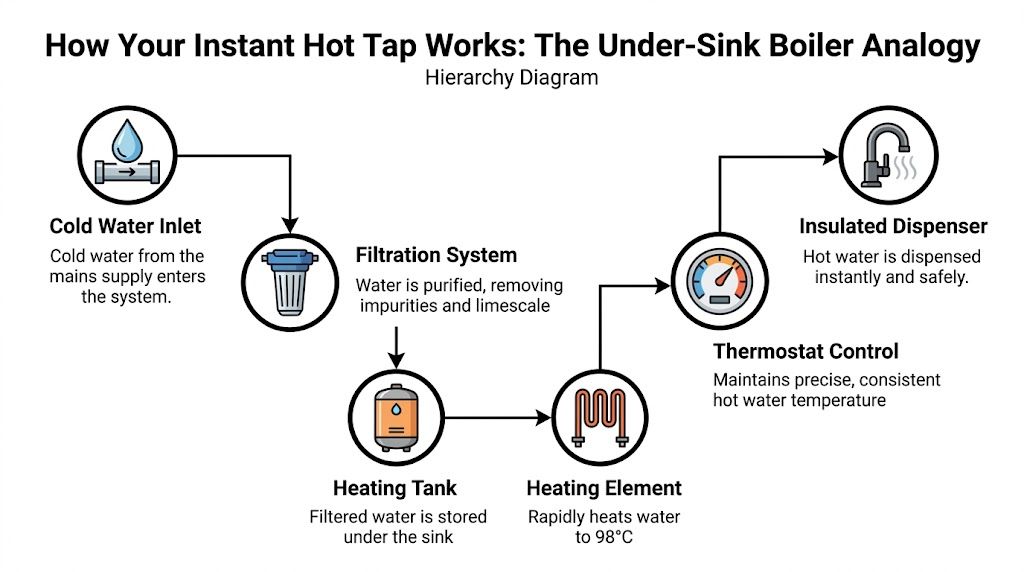
An instant boiling water tap is a fairly simple bit of plumbing once you know where the heat is coming from. The working parts sit under the sink, not inside the tap itself. Up top, you see a neat spout and handle. Below, there is a compact heating unit doing the heavy lifting.
In most Melbourne homes, cold mains water feeds into that under-sink unit, passes through a filter, and is heated to near-boiling temperature. The unit then holds that water ready for use in an insulated tank, or keeps it at temperature in a low-volume heating chamber depending on the design. When you open the tap, that stored hot water travels straight to the spout almost immediately.
That quick response is what catches people off guard.
The simple version
A kettle heats a batch of water from scratch each time. A boiling water tap keeps a small supply ready in advance, so you are not waiting through a full heating cycle every time you want one mug or one saucepan started.
That design also explains why these systems are usually better suited to drinks, meal prep, and short bursts of use rather than acting like a large commercial boiler. They are built for regular small draws through the day.
The parts that matter
You do not need to know every wire and valve, but a few core parts are worth understanding:
- The under-sink tank or heating unit stores or maintains the hot water supply. This tank is the engine room of the system.
- The heating element raises the water to dispensing temperature.
- The thermostat or temperature control keeps that temperature steady and prevents overheating.
- The filter improves taste and helps reduce sediment and scale build-up.
- The tap body and safety controls let you dispense water while reducing the chance of accidental use.
That filter matters more in Melbourne than many generic guides suggest. Water quality varies across the metro area, and homes in harder-water pockets can see scale build up faster inside the tank and on internal components. It is a bit like a kettle getting that chalky white crust, except the build-up is hidden under the sink, so people often do not notice it until flow drops or parts start wearing sooner than expected.
Some homeowners also compare these systems with smaller electric units before deciding what suits their kitchen layout and usage. If you want a clearer picture of how they differ, this guide to a tankless instant water heater is a useful reference.
Why it feels different from a kettle
The difference is not only speed. It is the way the system uses energy and space.
A kettle draws a strong burst of power to heat a full or half-full jug, often with more water than you need. A boiling water tap spreads that work out by maintaining a ready supply in an insulated unit. In day-to-day use, that usually feels easier because the hot water is part of the sink setup, not a separate appliance you have to fill, boil, lift, and put back.
There are practical ownership details as well. Running costs depend on how often the tap is used, how well the unit is insulated, and whether the filter and tank are kept in good condition. In Melbourne, the long-term experience often comes down to maintenance more than the headline feature list. Can you get replacement filters locally? Are spare parts available in a few years? Is there someone nearby who can service the unit if a valve, thermostat, or tank component needs attention?
Those are the questions that matter after the novelty wears off.
The Everyday Benefits of Instant Boiling Water
It usually hits home on a normal weekday. Someone wants tea before work. Someone else needs boiling water for porridge. Dinner starts later with noodles or rice, and the kettle gets boiled again. An instant boiling water tap cuts out those repeat jobs and makes the kitchen feel less stop-start.
That matters more in real homes than showroom demos. In Melbourne kitchens, the appeal is not only speed. It is the way the tap fits into daily routines, frees up bench space, and reduces the small annoyances that add up over a week.
Where it helps most in daily life
The biggest benefit is not one dramatic moment. It is the number of ordinary tasks that become easier.
- Hot drinks on demand for households where everyone runs on a different schedule.
- Cooking prep for pasta, rice, noodles, stock, and blanching vegetables.
- Cleaning jobs where very hot water helps loosen grease on utensils and trays.
- Entertaining when several people want tea or coffee one after another.
- Work from home days when the kitchen gets constant use.
A kettle is a separate appliance with its own little routine. Fill it, wait, pour it, put it back. A boiling tap folds that routine into the sink itself, which is why it often feels more useful after a few weeks than it did on day one.
It can also make a compact kitchen work better. Removing the kettle leaves one less appliance on the bench, one less cord to manage, and one less item to clean around. If you are comparing layouts and finishes, this guide to choosing the perfect kitchen or bathroom fixture is a handy reference alongside the plumbing side of the decision.
Less waste, but only if the household actually uses it well
One practical advantage is better control. With a kettle, people often boil more water than they need because it is quicker to overfill than measure. A boiling tap dispenses only what you ask for, which can reduce wasted water and avoid repeated full-kettle boils through the day.
The running cost side needs a bit more honesty. These taps are convenient, but they are not magic money savers in every house. An insulated tank uses power to keep water ready, so the result depends on your usage pattern. If your household reaches for boiling water several times a day, the system often makes more sense. If you rarely use it, the convenience may still be worth it, but the savings case is weaker.
That is why I usually tell Melbourne homeowners to judge it like a fridge, not like a kettle. It is an always-available appliance. The key question is whether your daily habits justify having hot water on standby.
Time savings are small each time, but noticeable over a week
The gain is only a minute here, a minute there. Still, that is exactly how kitchen frustrations build up.
You are not waiting for the boil before starting a pot. You are not standing in line behind another family member making coffee. You are not reheating the kettle because the first round got used up. Over time, the kitchen flows better because one repeated pause disappears.
For many households, that becomes the main reason they keep the system. The tap stops feeling like a special feature and starts feeling normal, which is often the clearest sign it is doing its job well.
If your day includes several short waits for the kettle, an instant boiling tap removes those pauses and gives the time back in small pieces.
The Melbourne reality: maintenance shapes the long-term benefit
This part gets missed in generic guides. In Melbourne, water quality can change how satisfying ownership feels after the first year or two. Areas with harder water can leave scale on components, and that can affect filters, valves, and the tank if servicing gets ignored.
So the everyday benefit is not only instant boiling water. It is also owning a system you can maintain without hassle. Before buying, it is worth checking whether replacement filters are easy to get, whether local technicians can service the unit, and whether common parts for a tap for hot water systems in Melbourne homes are available without long delays.
These taps suit more than large family kitchens, too. Apartments, staff rooms, reception areas, and smaller homes can all benefit, especially where bench space is tight and the kettle gets used over and over. The best outcome usually comes from matching the system to the way the space is used, then keeping up with the maintenance that Melbourne conditions sometimes demand.
Choosing Your Perfect Tap System and Features
Once you’ve decided the idea makes sense, the next question is which type of system fits your home.
Many consumers find themselves at a crossroads. They’ll look at one product with a separate boiling tap, another that replaces the mixer entirely, and a third that adds chilled or sparkling water. All of them sound useful. Not all of them suit the same household.
The main system types
Start with how you want the tap to behave in daily use.
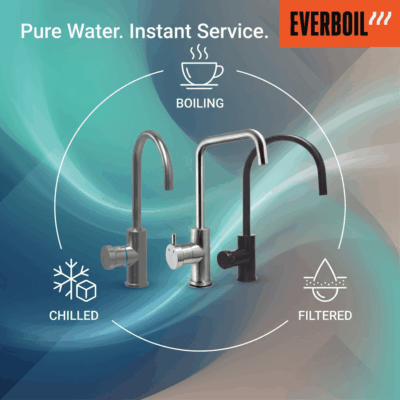
| Instant Boiling Water Tap System Comparison | Functions Provided | Best For | Typical Benchtop Footprint |
|---|---|---|---|
| Dedicated boiling tap | Boiling water only | Homes that want to keep an existing mixer and add a second tap | Separate tap hole or added fixture beside the main mixer |
| 3-in-1 tap | Standard hot, cold, and boiling water | Most households wanting one main tap to do the lot | Single main tap footprint |
| 5-in-1 system | Standard hot, cold, boiling, plus chilled and sparkling in some models | Entertainers, design-led kitchens, and households wanting a drink station effect | Single tap above, with more equipment below the sink |
A dedicated boiling tap is often the simplest conceptually. You keep your normal sink mixer and add a second tap just for near-boiling water. Some people like that separation because it’s very clear what each tap does.
A 3-in-1 tap is the choice that suits many family kitchens. It gives you standard hot and cold plus boiling water through one fixture, so the sink area stays neat.
A 5-in-1 system is the all-in approach. If you want chilled or sparkling water too, those options are usually included. It can be a great setup, but it asks more of the cupboard space underneath.
Match the tap to your routine
If you mostly want quick tea, coffee, and cooking water, a dedicated boiling tap or 3-in-1 is usually enough. If your kitchen doubles as a drinks hub and you like the idea of reducing other appliances, a bigger all-in-one setup may make sense.
Think about these questions:
- How busy is the kitchen? A couple who want simple convenience may choose differently from a large family.
- Do you want one tap or two? Some people like the clean look of one fixture. Others prefer a separate control for boiling water.
- What’s under the sink? Storage matters. Cleaning products, bins, and existing plumbing can limit your options.
- Do you care about filtered drinking water at the same tap? Many buyers do, especially in areas where taste and scale are concerns.
For design ideas beyond the appliance itself, this guide to choosing the perfect kitchen or bathroom fixture is helpful because it shows how tap shape, finish, and sink style need to work together.
Design matters more than people expect
A boiling water tap is functional, but it’s also a permanent visual feature in the kitchen.
You’ll see common shapes like gooseneck, straight spout, and more squared-off contemporary designs. Finishes vary too. Chrome is still common because it’s versatile and easy to match. Brushed and darker finishes can work well in newer kitchens, but they need to tie in with handles, sink finish, and appliances.
If you’re weighing styles, it helps to look at examples of a modern tap for hot water and compare how different spouts sit over the sink and drainer.
Features worth caring about
Some extras are useful. Some are just brochure material.
Look closely at:
- Safety controls, especially if children use the kitchen.
- Filtered water compatibility, which matters in Melbourne conditions.
- Handle design, because awkward controls get annoying quickly.
- Spout reach and height, so filling pots and tall mugs is easy.
- Service access, meaning how easy it is to change filters or reach the unit below.
Choose the system you’ll enjoy using on an ordinary Tuesday morning, not the one that only sounds impressive in a showroom.
That mindset usually leads to better decisions than chasing the longest feature list.
Key Buying Considerations for Melbourne Homes
A boiling water tap can look perfect in a showroom and still be a poor fit for a Melbourne kitchen. The real test is what happens six months later, when you are using it every day, paying the power bill, and trying to change a filter in a cramped cupboard.
Melbourne homes have a few practical quirks that generic buying guides tend to skip. Water quality varies by suburb. Older kitchens often have tight under-sink space. Service support matters more than people expect, because these systems rely on filters, valves, and heating units that need proper access and the right replacement parts.
Capacity and recovery rate matter more than looks
This is one of the first things I ask homeowners about.
If the tap is mainly for two morning coffees and the occasional noodle cup, a smaller unit may suit you fine. If your household fills teapots, preps pasta, and makes drinks back to back, the tank size and recovery rate start to matter a lot. It is a bit like choosing a hot water system for a shower. The question is not only “does it heat water?” but “how well does it keep up when everyone wants it at once?”
A nice spout design will not help if the unit runs out of steam during dinner prep.
Ask how the system performs during repeated use. Ask how long it takes to recover after several cups. Those answers tell you more than the finish colour or the marketing photos.
Filtration and local water conditions
Melbourne water is not the same in every home, and that affects ownership costs.
Some houses will get years of trouble-free use with basic scheduled servicing. Others will need closer attention to filtration and scale control, especially if the incoming water leaves residue on kettles, shower screens, or tapware. If you already battle white build-up around fixtures, treat that as a warning sign for any under-sink boiling unit.
The practical question is simple. What does the system need in your suburb to stay efficient and reliable?
That usually means asking what filter type is included, how often it needs changing, what replacement cartridges cost, and whether the brand has local stock of parts. A system with easy-to-find consumables is usually a better long-term buy than one with a slightly flashier spec sheet.
Running costs and efficiency
Homeowners often focus on purchase price and forget the weekly cost of ownership.
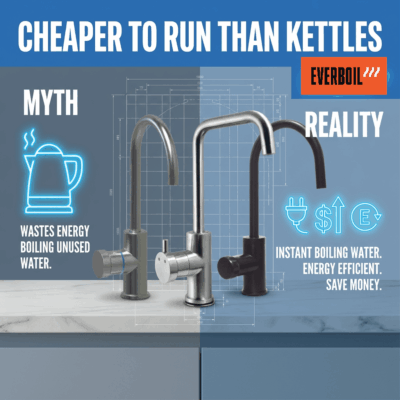
An instant boiling unit uses power to keep a small volume of water ready to go. Good units are insulated well and set up to limit waste, but they still add to your electricity use. The difference is that many households also use the kettle less, waste less water waiting for it to boil, and get more convenience in return.
Look for clear information on energy performance, standby use, and compliance with current Australian requirements. If a seller is vague, that is a concern. You want straightforward answers, not sales talk.
It also helps to ask whether the temperature can be adjusted. Some households do not need the highest setting all day, and a sensible setup can trim running costs over time.
Service access and cupboard layout
This situation determines whether practical ownership either feels easy or becomes annoying.
Under the sink, the boiling unit needs room for the tank, filter, pipework, and safe access to power. There should also be enough space to reach service points later. A crowded cabinet with bins, cleaning products, or pull-out storage can turn a simple filter change into a frustrating job.
I always tell homeowners to picture the first service visit, not just install day.
Can a plumber reach the unit without emptying half the cupboard? Is there a proper shut-off valve for easy servicing? Can the filter be removed without bending hoses into awkward positions? Those details make a big difference over the life of the system.
Parts, warranty support, and local backup
A boiling water tap is not a fit-and-forget item. It is more like a small appliance and a plumbing fixture combined.
That is why Melbourne buyers should ask where replacement filters, valves, and cartridges come from, how long warranty support typically takes, and who services the unit if something goes wrong. A strong warranty sounds good on paper, but local parts availability is what keeps downtime short.
Before you buy, ask:
- How easy is it to get genuine parts in Melbourne?
- Who handles warranty work locally?
- Are replacement filters and service items commonly stocked?
- Can any licensed plumber work on it, or does the brand require a specific technician?
Safety and day-to-day usability
Safety still matters, especially in family kitchens, but so does ease of use.
A child-safe activation method is a smart feature if young kids are around. Handle shape matters too. If the control feels awkward with wet hands or needs too much force, you will notice that every single day. The best system is the one that feels natural at 7 am when you are half awake, not just the one that looks impressive in a brochure.
For Melbourne homes, the smart buying checklist is usually pretty down to earth. Check the cupboard space. Check the filter plan. Check the running cost. Check the local service support. Get those four right, and the tap is far more likely to stay convenient instead of turning into another under-sink headache.
Installation and Long-Term Maintenance Guide
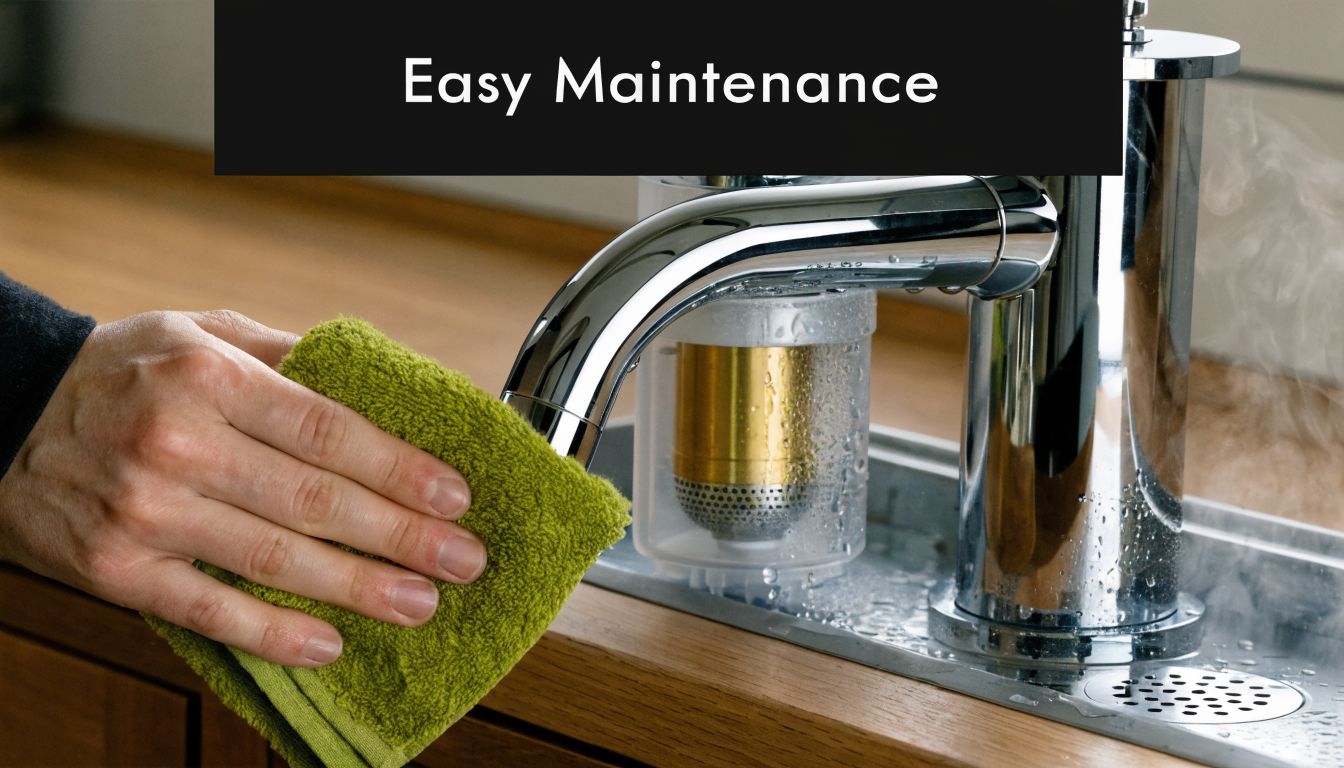
Saturday morning is usually when problems show up. You turn the handle for a quick tea, and the water comes out slower than usual, or not quite hot enough, or the unit under the sink starts making a noise it did not make last month. That is the part many homeowners only learn after buying. A boiling water tap is convenient, but it also needs the kind of care you would give any hard-working under-sink appliance.
What installation usually involves
A proper install is more than swapping one tap for another. The plumber has to fit the tap itself, connect the unit to the cold water supply, set up the filter, check there is enough cupboard room for the tank and hoses, and confirm the power point sits in a safe, practical spot.
Under-sink layout matters a lot here. If the tank, filter and pipework are packed in too tightly, every future filter change becomes harder than it needs to be. A tidy layout works like a well-organised tool box. You can reach what needs attention without pulling half the kitchen apart.
It also helps to have a proper isolation point nearby. If a filter housing needs replacing or the unit needs servicing, a dedicated under-sink shut-off valve makes the job faster and far less messy.
The maintenance side many owners underestimate
Melbourne water can be tough on these systems. In homes with moderate to hard water, mineral build-up slowly coats the parts that do the heating, much like scale building up inside a kettle. The difference is that a boiling water tap hides most of that build-up under the sink, so owners often miss the warning signs until performance drops.
As noted earlier, Melbourne water hardness can sit around 100 to 200 mg/L, and limescale can cut efficiency by 30% within 2 years without descaling. In day-to-day terms, that can mean slower heating, higher energy use, and extra strain on parts that would otherwise last longer.
This is why maintenance is part of ownership, not an optional extra.
A sensible owner routine
Most homes do well with a simple routine:
- Replace filters at the interval recommended for your model and local water quality.
- Descale the system before mineral build-up gets heavy.
- Check for small changes such as drips, spluttering, odd noises, or reduced flow.
- Use genuine replacement parts if a valve, element, seal, or thermostat wears out.
That routine is especially useful in Melbourne, where water quality can vary from suburb to suburb and older homes sometimes have tighter, trickier cabinetry under the sink. A unit in a brand-new kitchen in Docklands may be easy to service. A unit in an older weatherboard home in the inner west may need more careful access planning and closer attention over time.
If you need service or parts, Ring Hot Water handles installation, repairs, maintenance, and genuine spares for brands commonly used in Melbourne homes and workplaces.
Here’s a simple visual walkthrough that helps explain the sort of system care owners should expect over time:
Signs it’s time to book service
Do not wait for a full breakdown. Book a service if you notice:
- Reduced flow from the boiling outlet
- Inconsistent temperature
- New noises from the under-sink unit
- Visible mineral residue on fittings or nearby connections
- Slow recovery time after a few cups
A boiling tap usually gives you warning signs before it stops working. Catching those signs early is often the difference between a routine service visit and a larger repair bill.
Regular care keeps the system convenient, efficient, and much less likely to become an under-sink headache.
Your Expert Melbourne Partner Ring Hot Water
Owning an instant boiling water tap isn’t just about choosing a nice looking fixture. It’s about having the right support before installation, during setup, and later when the system needs filters, servicing, or replacement parts.
That’s especially true in Melbourne. Local water conditions affect maintenance. Cupboard layouts vary wildly. Some homes need a simple kitchen upgrade, while others need a more considered solution for an office, hospitality setting, or compact fit-out.
A specialist local provider helps at each stage. That means practical advice on which type of system suits the way you use the kitchen, guidance on compliant brands and filtration, proper installation, and ongoing access to the parts that keep the unit working reliably.
For homeowners, the benefit is clarity. You’re not trying to piece together advice from a tap showroom, a generic appliance seller, and a separate repairer later. For facility managers and businesses, it means less downtime and a clearer service path when something needs attention.
Ring Hot Water is based in Melbourne and works across areas including Sunshine, Yarraville, and Footscray. The business supplies instant boiling and chilled water systems, handles installation and repairs, and stocks genuine spare parts and fittings for brands used in homes, offices, and commercial sites. That combination matters because support for these units doesn’t stop after the first install.
If you’re weighing up an instant boiling water tap, the smart approach is to think beyond the purchase. Ask who will install it, who will service it, and where the genuine parts will come from later. That’s what makes ownership easy.
Frequently Asked Questions
Are instant boiling water taps safe for homes with kids?
They can be, provided you choose a model with proper safety controls and use it as intended. Many systems use child-resistant activation methods to reduce accidental use. If you’ve got young children, I’d put safety controls near the top of your buying list, not down in the fine print.
Can I install an instant boiling water tap myself?
I wouldn’t recommend it. These units involve hot water delivery, an under-sink appliance, filtration, and plumbing connections that need to be correct from day one. A poor install can create leaks, awkward servicing access, or performance issues that are hard to diagnose later.
Do they really help with bench space?
Yes, in a very practical way. Removing the kettle clears one of the most-used spots in the kitchen. In smaller Melbourne kitchens, that can make the room feel more organised straight away.
Will Melbourne water damage the unit?
Not automatically, but hard water and scale are real issues in many areas. That’s why filtration, descaling, and regular servicing matter. If you ignore maintenance, the system has to work harder and parts wear faster.
What parts usually need attention over time?
Filters are the obvious one, but service work can also involve valves, thermostats, elements, and fittings depending on the model and its maintenance history. The key is using genuine parts that match the unit rather than generic substitutions.
Is a 3-in-1 tap better than a dedicated boiling tap?
It depends on your kitchen. A 3-in-1 keeps the sink area neat and often suits a full renovation or kitchen refresh. A dedicated boiling tap can be a better fit if you want to keep your current mixer and add instant boiling water with less visual change.
What should I ask before buying?
Keep it simple:
- Is it compliant for Australia?
- How does it handle Melbourne water conditions?
- How easy is it to service?
- Are genuine spare parts easy to source?
- Will it fit under my sink without creating access problems?
If you’re considering an instant boiling water tap from Ring Hot Water, it’s worth speaking with a local specialist who can help with the full picture, including product choice, installation, servicing, and genuine spare parts for Melbourne conditions.

