
Uncategorized
Automatic Taps Melbourne: 2026 Buyer’s Guide
May
You're usually looking at automatic taps for one of three reasons. You're tired of touching a dirty handle while cooking, you're trying to stop kids leaving the tap running, or you manage a site where hygiene and water use are under more scrutiny than they used to be.
In Melbourne, that decision also sits inside a practical local context. Water isn't cheap when waste adds up, many buildings have pressure quirks, and plenty of kitchens now combine standard tapware with under-sink boiling, chilled, or filtered systems. That means an automatic tap isn't just a style choice. It's a plumbing and usability decision that needs to suit the way the space works.
The Modern Tap Beyond Just Turning It On
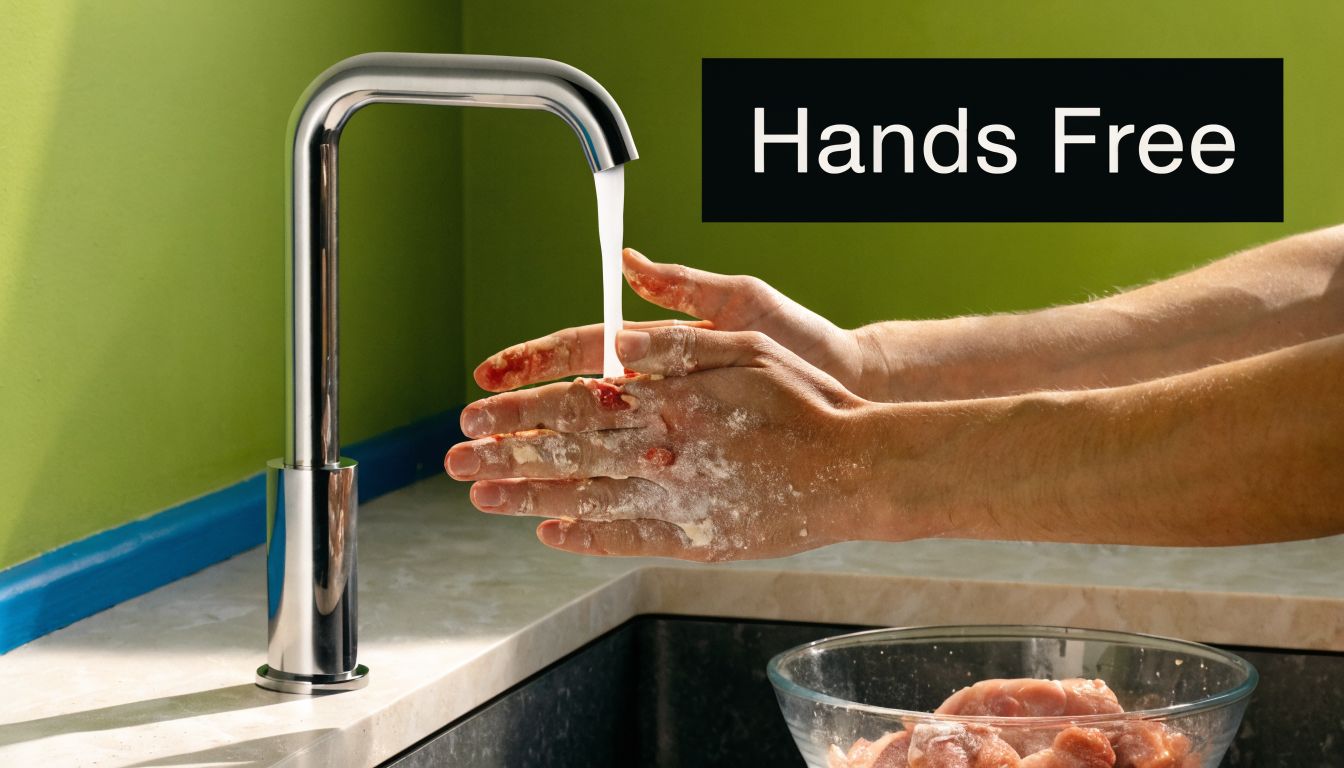
If you've ever had raw chicken on your hands, flour up your forearms, or a child thumping a mixer tap with soapy fingers, you already understand why automatic taps make sense. The old routine of touching a handle before washing and after washing has always been clumsy. In busy homes and commercial spaces, it's also one of the easiest ways to spread mess and germs.
Automatic taps solve that in a very direct way. Put your hands where the sensor expects them, water runs. Move away, it stops. That sounds simple, but in day-to-day use it changes how a bathroom, staff kitchenette, treatment room, or wash-up area feels. People use less water because the tap only runs when needed, and the basin area tends to stay cleaner because there's less constant contact with the fixture.
An Australian idea that still fits modern Melbourne
A lot of people assume touchless tapware came out of a big overseas electronics brand. It didn't start there. Automatic taps were pioneered in Australia by inventor Norman Wareham in the mid-20th century, with an electric-controlled design aimed at reducing disease spread in public settings, as outlined in this history of automatic taps in Australia.
That origin matters because the original purpose still holds up. Hygiene was the first driver. Water efficiency and convenience became the next two. In Melbourne, those three benefits now overlap in a way they didn't years ago. Homeowners want a cleaner kitchen workflow. Office managers want a better staff experience. Venue operators want less waste and fewer touch points.
Practical rule: The best automatic taps don't feel “high tech” in use. They feel obvious. Hands in, water on. Hands out, water off.
Why the shift has stuck
What changed isn't just taste. People became more aware of shared surfaces, and building owners became less tolerant of unnecessary water loss. Automatic taps moved from “nice extra” to “sensible upgrade” because they answer both problems at once.
They also suit the way many Melbourne properties are being updated now:
- Renovated family kitchens often pair cleaner tapware lines with filtered or specialty water systems.
- Commercial bathrooms need a more predictable, lower-contact setup.
- Accessible spaces benefit when users don't need grip strength to operate a handle.
A good automatic tap isn't trying to impress anyone. It removes one small irritation that happens dozens of times a day.
How Automatic Taps Work The Core Technology
Users don't need the electronics lesson. They just want to know why one tap responds properly and another one seems to miss your hands unless you wave at it like you're directing traffic.
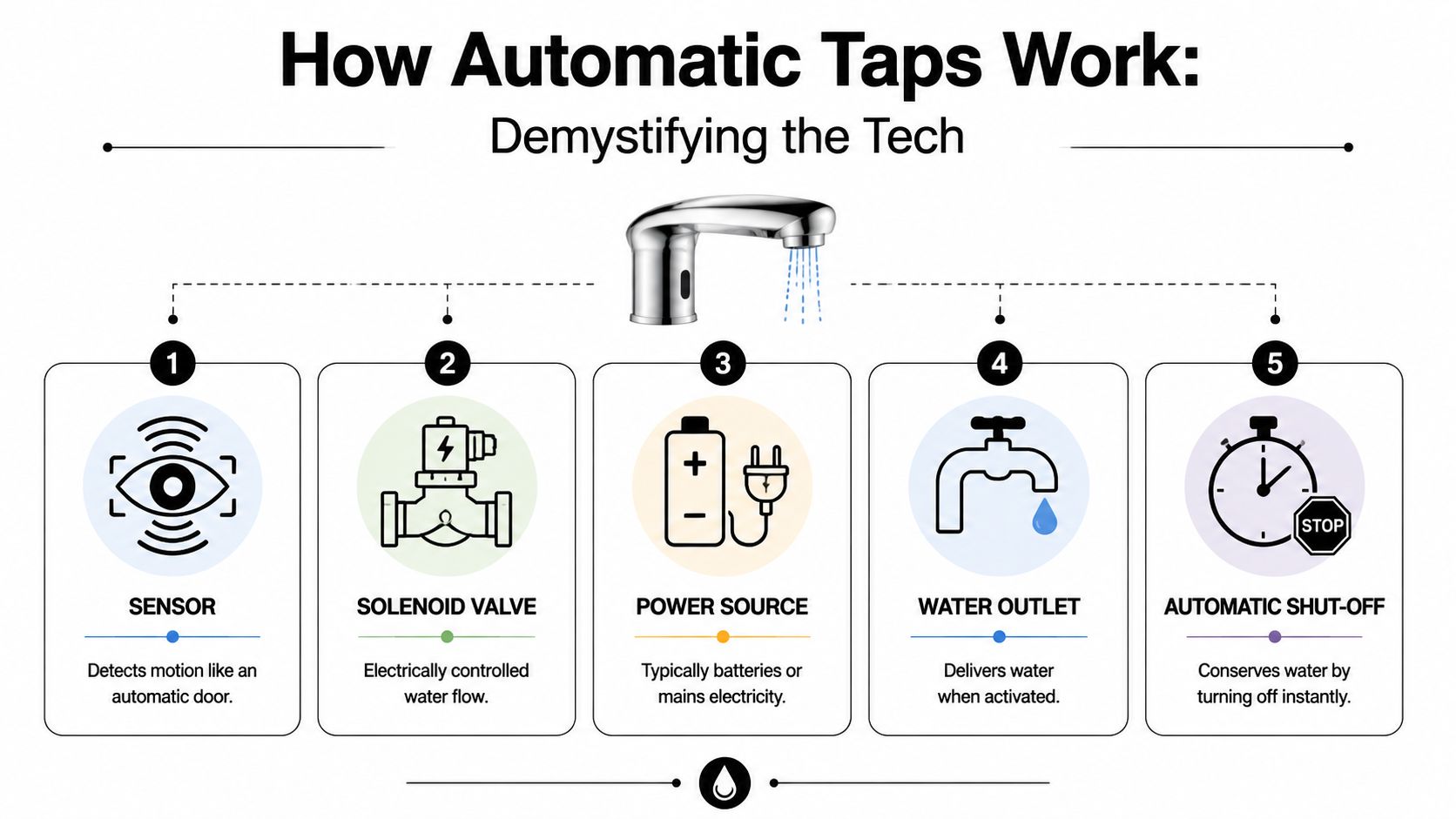
At the core, automatic taps use a sensor, a solenoid valve, a power source, and a water path through the body of the tap. The sensor detects presence. The solenoid opens or closes water flow. The power source runs the control system. The outlet delivers water. Then the shut-off stops flow the moment you move away.
The main sensing options
The most common setup is infrared. The principle is similar to an automatic door at the supermarket. The tap sends out a beam or field, then reacts when your hands enter the detection zone. This is the standard choice for most bathrooms and many kitchens because it's proven and straightforward.
A second option is capacitive sensing. This works more like a smartphone screen. It reacts to the presence of a conductive object such as your hand. In the right setting, capacitive designs can be very responsive, but they need the right product and installation conditions.
There's also the non-touch category that isn't sensor-led in the same way: foot or knee-operated systems. These are common in places where hands-free operation matters but staff want direct manual control, such as some food prep or clinical areas. They aren't the same as motion-sensor automatic taps, but they solve a similar hygiene problem.
For a deeper breakdown of components and behaviour in real installations, Ring Hot Water has a practical explainer on how automatic taps work.
Battery or mains power
This choice matters more than many buyers expect. Batteries give you flexibility. They're useful where wiring is awkward, in retrofits, and in some residential jobs. The trade-off is maintenance. If the owner forgets about the batteries, the tap eventually becomes a callback.
Mains-powered units suit high-traffic commercial spaces better when electrical access is planned properly. They remove battery management from the equation, but the installation is less forgiving and needs coordination.
| Automatic Tap Technology Compared | |||
|---|---|---|---|
| Technology | How it Works | Best For | Power Options |
| Infrared sensor | Detects hands within a preset range using an optical sensor | Public bathrooms, offices, most home bathrooms | Battery or mains |
| Capacitive sensor | Detects the presence of a hand through electrical field change | Design-led installations, selected kitchen and basin setups | Usually battery or mains depending on model |
| Foot or knee control | Activates flow through physical non-hand contact control | Food prep areas, clinical environments, hard-use work zones | Mechanical or powered depending on system |
If a tap only works when users “hunt” for the sensor, the problem is usually the product choice, the sensor position, or the install setup, not the idea of automatic taps itself.
What actually matters in use
The spec sheet matters less than these practical points:
- Detection consistency decides whether users trust the tap.
- Shut-off speed affects water waste and splash.
- Access to service parts determines whether a future fault is quick or annoying.
- Power method affects how often someone has to think about it after installation.
Good automatic taps are simple on the user side and well planned on the plumbing side.
Choosing the Right Automatic Tap for Your Space
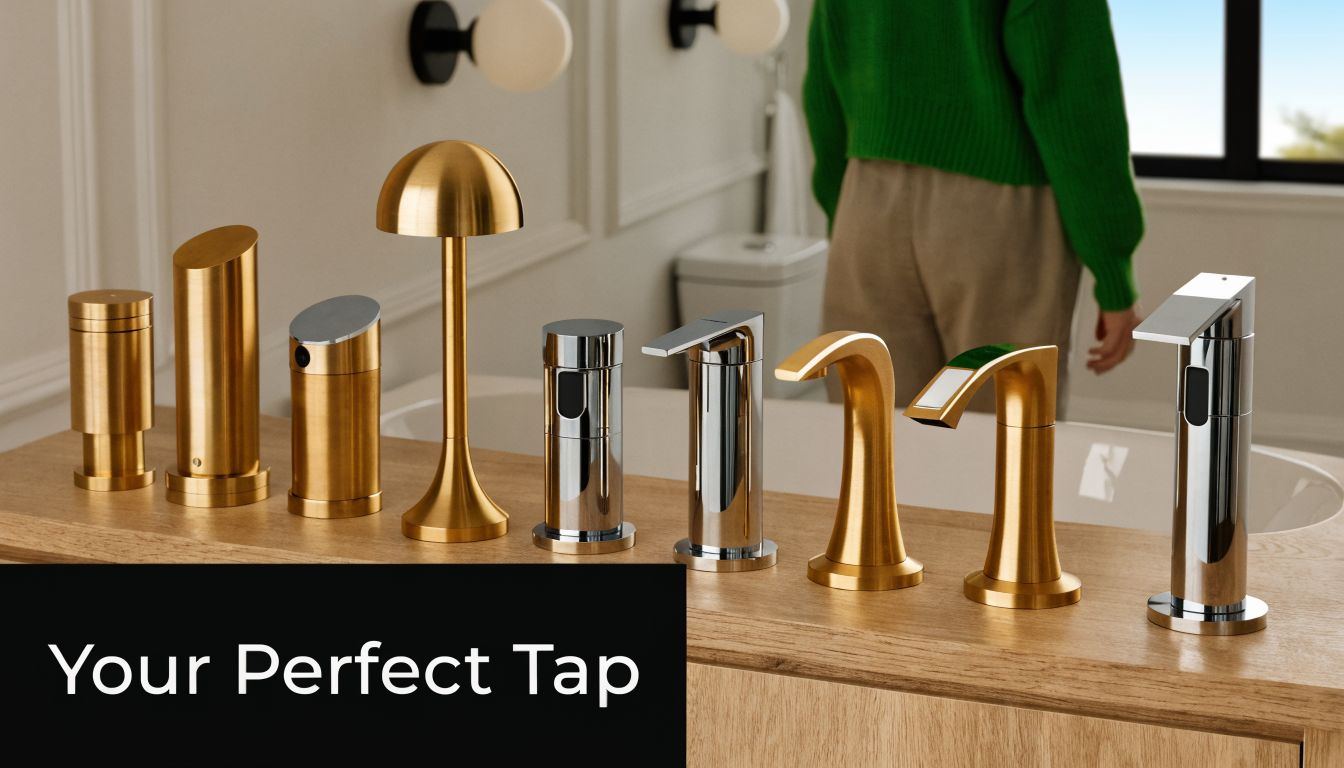
The right automatic tap for a family kitchen isn't always the right one for a school bathroom, office amenities area, or caravan fit-out. Most disappointments come from buying by appearance first and use case second.
In Australia, automatic taps save about 25 to 30% more water than manual taps, and Melbourne adoption has been strong, with 72% of public restrooms and over 80% of Victorian schools using touchless faucets by 2024. That same source notes bacterial transfer reductions of up to 40% in Victorian school settings. Those figures come from this Australian automatic faucets market summary.
For homeowners
In a home, convenience is what usually wins people over first. The tap turns on when your hands are full, dirty, or slippery. That's handy during cooking, cleanup, and the school-morning rush.
The better home installations usually have three things in common:
- A sensible sensor range so the tap doesn't trigger every time someone passes the sink.
- A shape that suits the basin so water lands where hands go.
- A realistic plan for servicing if the unit is battery powered.
If you're renovating at the same time, the tap should be chosen alongside basin depth, cabinetry space, and the rest of the plumbing layout. That's also why homeowners doing broader upgrades often speak with trades involved in expert bathroom makeovers, because tap choice makes more sense when it's considered with basin position, joinery and access panels.
For offices and shared workplaces
In offices, automatic taps do two jobs at once. They improve hygiene in shared amenities, and they reduce the amount of water lost through careless use. Staff don't need training to understand them. Visitors understand them immediately.
The strongest office candidates are:
- amenities used by clients or visitors
- staff kitchens with frequent hand washing
- newer fit-outs aiming for a cleaner, more premium finish
What doesn't work as well is choosing a very cheap domestic model for a workplace where dozens of people use it every day. Commercial duty matters.
A quick product overview helps if you're comparing styles and formats before locking in a tap body:
For hospitality and food service
Hospitality venues need reliability more than novelty. In a café, bar, or commercial kitchen, an automatic tap has to activate cleanly, cope with repeated use, and stand up to cleaning routines.
The tap also has to work with the broader water setup. If the site already uses filtered, boiling, or chilled delivery points, that integration has to be planned rather than improvised. Product selection matters more than the showroom look for this reason.
A kitchen or venue tap should be judged by how it behaves during the busiest hour of the day, not how it looks at handover.
For caravans and RVs
Caravan buyers need to be stricter. Space is tighter, battery management matters more, and vibration changes what holds up over time. A compact low-fuss setup is usually better than a feature-heavy one.
For this category, check:
- power supply compatibility
- service access under the bench
- resistance to movement and travel vibration
- realistic maintenance expectations on the road
That's the difference between a tap that's convenient and one that becomes another small problem to fix on holiday.
Essential Plumbing and Installation Requirements
An automatic tap can look straightforward from above the benchtop and still be badly wrong underneath. That's where most trouble starts. The visible part is only the outlet and sensor. The safety, performance and compliance sit in the valves, water feeds, pressure control and mounting layout below.
The non-negotiable TMV requirement
If you're connecting a sensor tap to an instant hot water unit such as a Zip or Stiebel Eltron setup, a thermostatic mixing valve is mandatory under AS 4032.3. It blends water down to a safe delivery temperature, typically 50°C maximum, before water reaches the tap. That requirement is explained in this Australian sensor tap installation guide covering TMV use.
This is not an optional extra. It's the difference between a safe installation and one that can expose users to scalding risk. Manual taps allow a user to mix hot and cold at the point of use. Sensor taps don't work like that. If the incoming water isn't correctly managed before activation, the faucet can deliver unsafe water very quickly.
On-site check: If a touchless tap is being fed from a high-temperature source, ask where the temperature is being controlled. If the answer is vague, stop there.
Pressure, layout and serviceability
Under-sink automatic tap installs need room, access and a clean route for maintenance. In practical terms, that usually means:
- Control box placement should allow future battery changes or service without dismantling half the cupboard.
- Isolation valves need to be accessible, because fault finding is slower when the water can't be shut off cleanly. A basic understanding of the sink shut-off valve and where it fits in maintenance helps property owners ask better questions before installation.
- Supply quality matters. Dirty water and debris shorten the life of small internal parts.
When plumbers are setting up new PEX-fed lines in tight cabinetry, having the right pressing gear on hand saves time and reduces awkward joins. For trades already working with compatible systems, a discounted Ryobi 18v Pex press tool can be a practical fit-out tool rather than a last-minute purchase.
What works and what usually doesn't
What works is a planned install where the automatic tap is treated as part of the whole water system. That includes inlet temperature, pressure behaviour, filtration where needed, and access for future servicing.
What usually doesn't work:
- dropping a sensor tap onto an old basin without checking cupboard space
- feeding it from a specialty hot water appliance without proper mixing
- hiding all the service components behind fixed joinery
- assuming every tap body suits every basin and splash pattern
One mention is enough here. Ring Hot Water handles installations that involve boiling, chilled and filtered water systems, so the tap choice can be matched to the rest of the under-sink setup rather than treated as a standalone item.
Calculating Your Return on Investment
The first cost is what most buyers focus on. The tap itself is only part of it. You may also need a thermostatic mixing valve, adjustments under the sink, and proper installation time. In some sites, especially retrofits, access can affect labour more than the fixture price does.
That's why generic “you'll save money” claims aren't useful. Melbourne buyers need local numbers and a realistic view of where the savings come from.
Where the savings come from
For homes and smaller commercial spaces, the financial case usually rests on two things. The first is shorter run time at the tap. The second is less hot water wasted while nobody is rinsing anything.
A 2024 WSAA report cited for Victorian programs found 45 to 55% water reduction and 30% hot water energy savings from sensor taps, with potential annual savings of $150 to $250 for a typical Melbourne family. That Melbourne-specific savings framing is outlined in this WSAA-based discussion of sensor tap savings in Victoria.
How to think about payback
A simple way to assess automatic taps is to separate direct and indirect return.
| Return type | What to consider |
|---|---|
| Direct utility return | Lower water use, lower hot water energy use, less waste from taps left running |
| Operational return | Cleaner amenities, fewer complaints about hygiene, less wear from constant handle use |
| Fit-out value | Better presentation in renovated kitchens, bathrooms and client-facing spaces |
For commercial buyers, the spreadsheet doesn't capture everything. In staff amenities and public washrooms, automatic taps can also reduce the small but constant mess caused by wet handles and unnecessary flow time. That doesn't always show neatly on an invoice, but facilities teams notice it.
Don't calculate ROI on purchase price alone. Calculate it on water use, hot water use, maintenance time, and whether the tap suits how the room is actually used.
When the numbers are strongest
The best returns usually show up where taps are used often and not always carefully. Family homes with children, offices, schools, hospitality venues and customer-facing bathrooms all tend to benefit faster than a little-used ensuite.
The weakest return usually comes from buying a poorly matched product that creates callbacks, battery frustration or activation complaints. That's not a problem with automatic taps as a category. It's a specification problem.
Maintenance Troubleshooting and Spare Parts
Most automatic tap problems aren't dramatic. They start as small annoyances. Slow response. Random activation. Weak flow. A drip that wasn't there last month. The trick is dealing with those signs early, before the fault turns into downtime or a replacement job.
The faults we see most often
In Melbourne, the local conditions matter. Harder water in some areas contributes to scale on aerators and internal parts. In mixed systems, especially where high-pressure boiling units are nearby, vibration and water quality can interfere with sensor stability over time if the installation isn't well sorted.
Caravan installs have their own pattern. A 2025 Master Plumbers Australia survey found 42% of sensor tap failures in caravan installs were due to battery drain. The same verified data also notes that high-pressure boiling systems in Melbourne hard water areas can contribute to sensor drift and limescale build-up if filtration and maintenance are neglected.
A sensible troubleshooting order
Start with the obvious and non-invasive checks first:
- Sensor lens condition. If the sensor face is dirty, response gets erratic.
- Power status. Battery models often show symptoms before complete failure.
- Flow condition. If activation seems normal but water is poor, check the aerator and supply side.
- Solenoid behaviour. Constant dripping or failure to shut off often points below the tap body rather than at the sensor itself.
Then look at the wider setup:
- Is the pressure unusually high?
- Is the water filtered where it should be?
- Has another appliance been added under the sink since the tap was installed?
- Is there enough room around the control box and hoses, or has everything been crammed into place?
Spare parts matter more than people think
An automatic tap with no parts support is disposable. That's a bad result for owners and an annoying one for plumbers. In practice, the parts that most often matter are solenoids, control boxes, battery packs, sensor modules, hoses, filters and seal kits.
If you're maintaining branded boiling-water systems alongside touchless fixtures, access to genuine components becomes even more important. This is especially true when a fault could be in the surrounding hot water system rather than the tap itself. For that reason, a practical reference point for replacement components is this guide to Zip spare parts in Australia.
Keep the maintenance record simple. Battery date, filter date, last clean, last service. That small habit prevents a lot of guesswork later.
When outside reading can still help
Even though local conditions differ, broad maintenance principles still apply. For readers who like comparing fault patterns across markets, this article on hot water repairs in Boston is useful as a reminder that water quality, pressure behaviour and part compatibility affect tap performance everywhere, not just in Melbourne.
What works long term is boring in the best way. Clean the sensor. Replace batteries before they fully die. Keep filtration maintained where the water quality calls for it. Don't ignore drips. And don't assume every automatic tap issue starts at the tap itself.
Your Next Steps with Ring Hot Water
Automatic taps make the most sense when they solve a real problem. Better hygiene. Less wasted water. Easier use for children, staff, customers or tenants. In Melbourne, they also need to suit local pressure conditions, Australian compliance requirements, and the growing number of kitchens and amenities spaces that already use boiling, chilled or filtered water systems.
For homeowners, the key question is usually whether the tap will be convenient enough to justify the install. In many kitchens and bathrooms, the answer is yes if the model is chosen properly and the plumbing underneath is handled correctly.
For business managers, the decision is broader. Reliability, maintenance access, water use and user experience all matter. A tap that looks sleek but causes service calls isn't a smart purchase. A tap that activates consistently, shuts off cleanly and fits the site's water setup usually is.
If you're in Sunshine, Yarraville, Footscray or elsewhere across Melbourne, the sensible next step is to get the tap choice matched to the actual space. Basin type, cupboard room, hot water source, filtration, pressure and intended use all affect what will work well.
If you're comparing options or planning an installation, Ring Hot Water can help you work through the practical details before you buy, whether you need advice on a home kitchen, office amenities, hospitality fit-out, caravan setup, or compatible spare parts for an existing system.

