
Boiling Hot Water Tap
Under Sink Hot Water System Melbourne
Jun
Under Sink Hot Water System Melbourne: Your 2026 Guide
You're usually looking into an under sink hot water system in Melbourne after the same moment happens a few too many times. The kettle is busy, the bench is crowded, someone's waiting to rinse a cup or make tea, and the water still isn't where you need it. In a home office, clinic, lunchroom or apartment kitchen, that delay gets old fast.
A good under-sink setup solves a very specific problem. It puts hot water at the point of use, frees up bench space, and can make day-to-day use far smoother than relying on a kettle or waiting for hot water to travel from a distant central unit. The catch is that Melbourne installations have a few local quirks that generic guides tend to skip. Water pressure can be higher than people expect. Hard water affects maintenance. Older homes often need electrical checking before anyone commits to a more powerful unit. Compliance matters too, especially where plumbing and electrical work meet under one cabinet.
Beyond the Kettle: Is an Instant Hot Water System Right for Your Melbourne Home?
The common Melbourne version of this problem is simple. It's a weekday morning, one person wants coffee, another needs warm water at the sink, and the kettle is occupying both time and bench space.

An under-sink unit changes that workflow. The heating hardware sits below the sink, the tap above does the work, and the kitchen feels less cluttered straight away. In practical terms, that matters most in smaller homes, apartments, renovated terraces, office kitchenettes, and fit-outs where every bit of cupboard and bench space counts.
There's also a bigger reason these systems appeal to Melbourne households. A 2025 Australian study on household energy use notes that hot water contributes 20–50% of total household energy use, and under-sink instant units align with efficiency trends by reducing the cold water wasted while waiting for mains hot water to reach the tap. That doesn't mean every under-sink product is automatically the right choice, but it does explain why point-of-use systems keep coming up in renovations and kitchen upgrades.
Practical rule: If the main annoyance is waiting for hot water at one specific sink, point-of-use usually deserves a serious look.
The strongest cases tend to be these:
- Kitchen upgrades: You want boiling or near-instant hot water without a kettle living on the benchtop.
- Apartments and compact homes: You don't want long pipe runs just to serve one basin.
- Offices and staff rooms: People need frequent short draws of hot water through the day.
- Secondary sinks: A bar sink, butler's pantry, clinic basin or utility sink often works better with its own local system.
Not every setup suits every household. Some people need a premium boiling-and-chilled tap. Others only need reliable hot water at one basin. Some properties have limited cupboard space, awkward drainage, or old switchboards that complicate the job.
If you're comparing convenience, layout and everyday usability, it helps to see how an instant hot water tap setup works in practice. The right system operates smoothly. The wrong one ends up underpowered, noisy, or expensive to modify after the fact.
Understanding Your Options: Types of Under Sink Systems
The phrase under sink hot water system Melbourne gets used loosely. In real jobs, there are a few very different categories, and each solves a different problem.
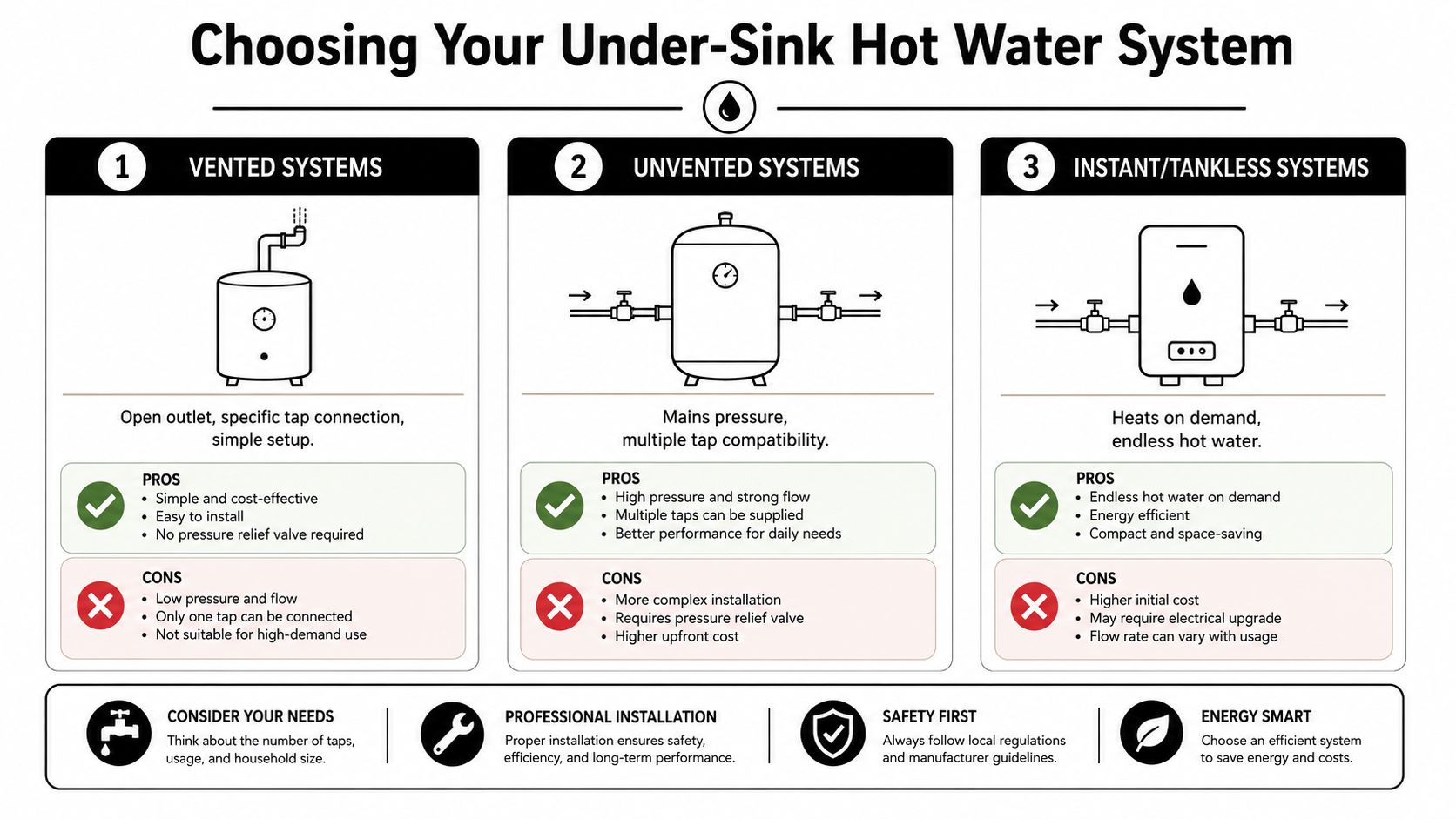
Instant boiling and chilled tap systems
These are the premium option people usually picture first. The tap on the bench delivers boiling water, chilled water, or both, depending on the model, while the command unit sits in the cabinet below.
They make the most sense when convenience is the point of the purchase. In a home kitchen, that usually means replacing the kettle and improving bench aesthetics. In an office, it means quick drinks service without a freestanding appliance. In hospitality back-of-house areas, it can simplify workflow where staff need repeat access to hot water.
They're excellent when the user wants:
- Fast access: Hot drinks and food prep happen without waiting on a kettle.
- Cleaner benches: No kettle, fewer standalone appliances, tidier splashback area.
- Multi-function use: Some systems combine regular hot and cold, filtered water, chilled water, or boiling water at one tap.
The trade-off is cabinet planning. These systems can compete for space with bins, traps, filter cartridges and cleaning products. They also need correct ventilation, sensible placement, and proper servicing access.
Small storage heaters
A small storage heater under a sink is a more straightforward solution. It stores a modest amount of hot water ready for use, which can suit hand-washing basins, remote sinks and light-duty applications.
This style often works where the demand is predictable and modest. A powder room basin, a tea point, or a sink far from the main hot water service can all be good candidates. They're generally easier to understand than more feature-rich boiling tap systems and can be useful where a client doesn't need premium functions.
The catch is usage pattern. Once the stored volume is drawn down, recovery time matters. If several people use the sink in quick succession, performance can feel limited compared with a system built for continuous demand.
Storage units can work very well at the right sink. They're less forgiving when buyers expect them to behave like a larger continuous system.
Instant tankless under-sink heaters
These are the specialised point-of-use units that heat water on demand as it passes through. They're compact and attractive on paper because there's no stored tank taking up cupboard volume.
Their strength is directness. If the system is correctly sized, correctly wired and matched to the expected flow, it can deliver reliable hot water exactly where needed. These are often discussed for single-sink applications rather than whole-of-home supply.
What matters most is realism about output. A compact tankless unit isn't magic. If the incoming water is cold and the tap flow is too high, an undersized heater won't keep up. That's where many generic buying guides become misleading.
Caravan and RV compact systems
These sit outside the usual suburban kitchen conversation, but they're relevant for buyers looking at compact under-bench hot water solutions more broadly. Caravan and RV setups focus on tight spaces, lighter components, and mobile use cases.
They're not interchangeable with fixed residential installations. A caravan-oriented system may be ideal in a mobile fit-out and completely wrong for a Melbourne house kitchen.
A quick way to narrow the field
| System type | Usually suits | Less suited to |
|---|---|---|
| Boiling/chilled tap | Kitchens, offices, premium renovations | Tight cabinets with no spare airflow or service room |
| Small storage heater | Light-use basins, remote sinks, tea points | Frequent back-to-back heavy use |
| Instant tankless | Single-sink point-of-use heating | High-flow taps with weak electrical capacity |
| Caravan/RV compact | Mobile setups and confined specialist applications | Standard fixed domestic kitchen installs |
Sizing and Installation Requirements in Melbourne
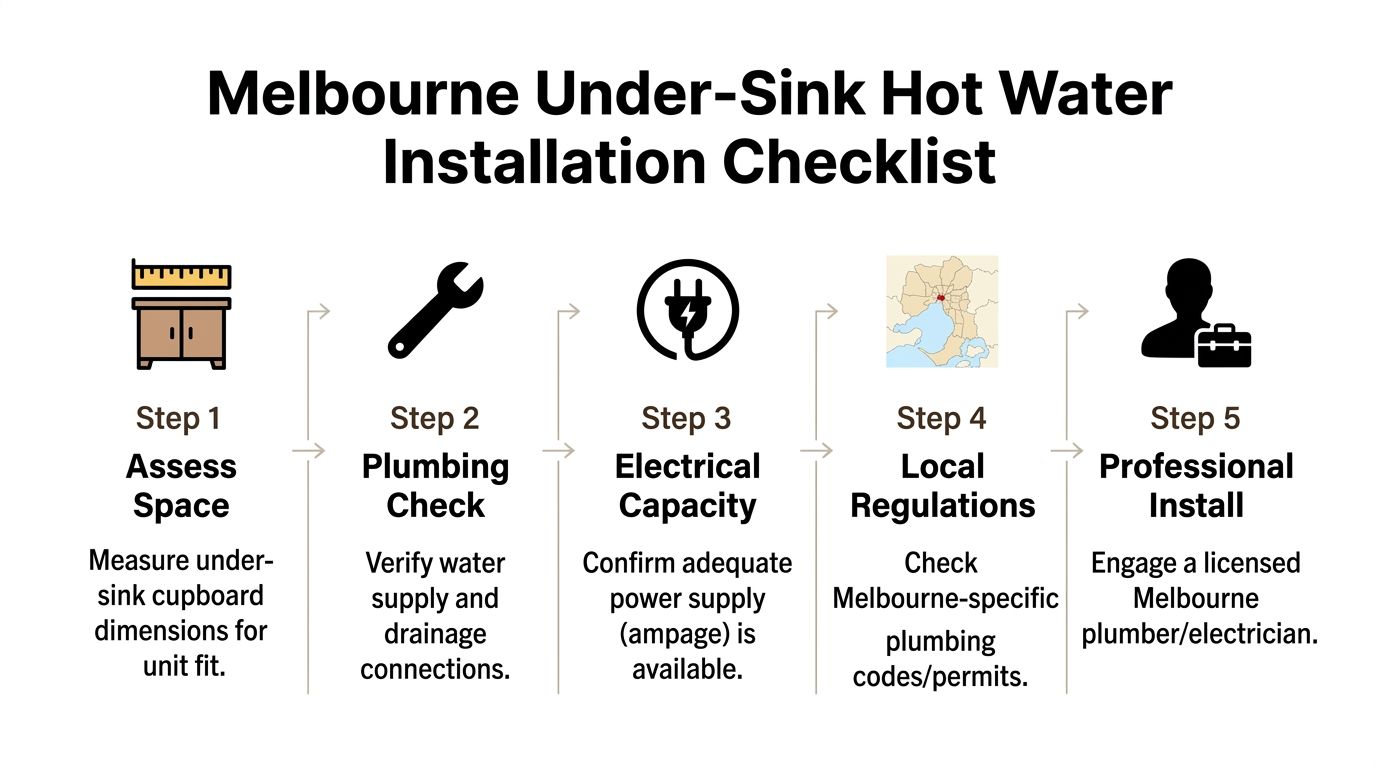
A Melbourne installation usually fails on one of three points: the unit is too small for winter inlet temperatures, the electrical supply is wrong for the heater, or the mains pressure has not been controlled properly.
Size for Melbourne water, not brochure conditions
Sizing starts with temperature rise. In Melbourne, incoming mains water is colder through much of the year than many generic buying guides assume. For a point-of-use unit to deliver comfortable hot water at the tap, it has to lift that colder supply water quickly enough at the flow rate you use.
The practical limit is usually the tap, not the label on the carton. A compact instantaneous unit can work well for a hand basin or a low-flow prep sink. Put that same unit on a kitchen mixer with a stronger flow rate and winter performance often drops away. The Orange County water heater sizing guide illustrates the broader principle. Higher flow and colder inlet water demand more heating capacity.
That is why I check three things first on Melbourne jobs: expected use, tap flow, and winter inlet conditions. Wattage on its own does not tell you whether the result will be acceptable at the sink.
Electrical capacity needs checking before the unit is chosen
This catches out plenty of older Melbourne homes, especially period properties and apartments with limited switchboard capacity. A stronger under-sink instantaneous heater may need a dedicated circuit, suitable protection, and a cable run that complies with AS/NZS 3000.
A proper assessment usually covers:
- Dedicated circuit requirements for higher-powered units
- RCD and circuit protection to current standards
- Switchboard capacity and whether upgrades are needed
- Cable route and cabinet location so the unit can be installed and serviced safely
If the project also involves specialist tapware, cabinetry coordination, or a boiling unit rather than a standard point-of-use heater, this under-sink boiling water unit installation guide helps clarify what needs to be allowed for before trades are booked.
Pressure control matters in Melbourne homes
Melbourne mains pressure varies more than many owners expect. In one suburb the supply may be moderate and stable. In another, particularly in pockets with stronger street pressure or after upstream works, an under-sink unit can be exposed to higher pressure than the product is happy with.
That affects more than comfort. Excess pressure can make temperature control erratic, increase wear on valves and flexi connections, and shorten the life of smaller under-bench systems. For storage units and boiling units, manufacturer pressure limits also need to be checked against the actual site conditions.
On a compliant installation, pressure-limiting and isolation valves are selected to suit the appliance and the property. That work sits under AS/NZS 3500, and it is one of the details generic online guides usually skip.
Cabinet space and service access often decide what is possible
Under-sink installs look simple until you open the cupboard. Trap position, shelf layout, bin systems, dishwasher hoses, and power point location can all restrict the available footprint. Some units also need clearances for ventilation, filter changes, or future servicing.
A tidy fit is not enough. The system still needs accessible isolation, safe electrical separation, and enough room for maintenance without dismantling half the cabinet. This is especially relevant in Melbourne renovations, where older cabinetry is being reused around new appliances.
Compliance is shared between plumbing and electrical trades
These systems sit across both trades, so the installation has to be handled as one coordinated job. Plumbing work must comply with AS/NZS 3500. Electrical work must comply with AS/NZS 3000. In Victoria, that also means using the right licensed trades and matching the installation method to the product approval and manufacturer instructions.
A sound Melbourne installation usually includes:
- Unit selection matched to the tap and actual use
- Confirmed cabinet clearances and service access
- Pressure control where site conditions require it
- Isolation valves for safe maintenance
- Licensed plumbing and electrical connection
The difference between a reliable under sink hot water system and a frustrating one is usually decided before the first hole is drilled. Correct sizing, correct pressure control, and compliant electrical work are what make these systems perform properly in Melbourne homes.
The Investment: Costs for Supply and Installation in Melbourne
The first thing to know about pricing is that there isn't one “normal” figure that fits every under-sink job. The final spend depends on the type of system, the condition of the existing services, cabinet constraints, and whether the installation is replacing like-for-like or creating a new setup from scratch.
The product itself is only part of the budget. A premium boiling or boiling-and-chilled tap sits in a different category from a simple under-bench storage heater or a compact tankless hand-wash unit. They use different hardware, different tapware, and often involve very different installation scope.
What usually changes the quote
A Melbourne quote often moves up or down based on practical site conditions rather than the tap alone.
- Electrical upgrades: If the chosen unit needs a dedicated circuit and the home has an older board or limited spare capacity, the job becomes more involved.
- Plumbing alterations: Moving isolation valves, replacing ageing flexis, adjusting copper or PEX runs, or adding pressure control all affect labour and materials.
- Cabinet work: Tight cabinetry can require reworking shelf layouts, trap positioning, ventilation openings, or service access.
- Tap replacement: Some systems use specialist taps, while others connect into existing arrangements with fewer changes.
- Access issues: Apartments, stone benchtops, awkward sink bowls and limited parking all influence installation time.
What buyers often miss
The cheapest quote can leave out items that matter later. Pressure reduction, isolation valves, filter placement, condensate considerations on chilled units, and electrical compliance checks all need to be clarified up front.
A useful quote should tell you what is included, what is assumed, and what may change once the installer checks the site. If those details are vague, the number on the first page isn't the actual project cost. It's only the starting point.
A realistic quote explains the site conditions. A vague quote usually turns into variation costs once the cabinet doors are open.
How to compare quotes properly
Don't compare on appliance price alone. Compare the whole package.
Look for whether the quote identifies the actual unit model, required valves and fittings, electrical work scope, commissioning, and any exclusions. Ask whether the installer has allowed for local pressure conditions, hard-water servicing needs, and future access for filter or element replacement.
That approach gives you a far clearer sense of value than chasing the lowest initial number. It also reduces the chance of buying a premium tap and ending up with a compromised install underneath it.
Maintenance and Repairs to Maximise Lifespan
Under-sink systems reward attention. They don't reward neglect, especially in Melbourne.
Melbourne's hard-water supply can accelerate scaling and sediment-related faults in point-of-use heaters, which increases the likelihood of element replacement or descaling service calls, as noted in this Australian under-sink hot water maintenance discussion. That's one of the clearest reasons local ownership experience can differ from what national marketing material suggests.
What tends to go wrong
Scale buildup is the usual long-term problem. It can affect heating efficiency, internal flow paths, thermostatic behaviour and component life. In boiling tap systems, filters and service schedules also matter because the system is doing more than just heating water. In tankless units, repeated cycling and sediment stress can show up as inconsistent output or component wear.
Common service issues include:
- Element wear: Hard water can make heating elements work harder over time.
- Thermostat faults: Temperature control can drift or fail.
- Valve leakage: Pressure and scale together are hard on smaller components.
- Reduced flow: Debris, filter loading or internal restriction can change how the tap behaves.
The cheaper approach is usually preventative
Most owners don't need constant servicing. They do need a sensible routine. That means checking filters when the product requires it, watching for changes in flow or temperature, and dealing with pressure issues early instead of after they've damaged valves or seals.
One of the simplest protective measures is making sure the incoming pressure is under control. If you're not sure why that matters, this guide to the pressure limiting valve used in hot water installs is worth reading before a minor leak turns into a bigger repair.
A unit that starts hissing, dripping, surging or heating unevenly usually needs attention sooner, not later.
Servicing advice that actually helps
The practical maintenance mindset is straightforward:
- Listen for change: New noises often show up before full failure.
- Watch the tap behaviour: Sputtering, slow flow or unstable temperature are warning signs.
- Keep the cabinet usable: Don't pack cleaning products tightly around the unit so technicians can still access it.
- Use the right parts: Small valves, hoses and filters need to match the system properly.
For product sourcing, repairs and compatible fittings, Ring Hot Water supplies under-sink units, spare parts and service support for brands used in Melbourne kitchens, offices and commercial settings. That's useful when a repair needs the correct valve, element, thermostat or connection part rather than a rough substitute.
How to Choose the Right Melbourne Installer
A poor installation shows up fast in Melbourne. The tap may work on day one, but if the installer has ignored cabinet clearances, local water pressure, switchboard limits, or the requirements under AS/NZS 3500 and AS/NZS 3000, the problems usually arrive later as leaks, nuisance shut-offs, difficult servicing, or warranty disputes.
The right installer treats the job as a small hot water installation, not a tap replacement. In older Melbourne homes, that difference matters. I regularly see tight cabinets, awkward trap locations, ageing stops, and power supplies that are fine for a dishwasher but not for a higher-demand boiling or filtered unit.
Ask questions that reveal real experience
Good questions expose whether the installer has done this work properly before.
Ask:
- What checks do you do on site before you quote?
- How will you confirm the unit has enough room for ventilation, servicing and safe isolation?
- What will you do if the incoming pressure is too high for the manufacturer's requirements?
- Does this model need a licensed electrician, and is that included in the scope?
- Have you installed and serviced this exact brand or model in Melbourne conditions?
The answers matter more than polished sales language. A capable installer will talk clearly about pressure control, compliant valves and connections, access for future servicing, and whether the electrical circuit is suitable. They should also understand that Victorian installations have to satisfy plumbing and electrical rules together, especially where the product includes heating elements, filtration, or extra tap functions.
What a solid quote should actually include
A proper quote is specific. It should tell you what is being supplied, what site conditions have been assumed, and what could change once the cabinet and services are inspected.
Look for:
- The exact unit, tap and any accessories
- Plumbing materials, valves and any pressure control items
- Electrical scope, including whether a licensed electrician is required
- Allowances for cabinet modifications or access constraints
- Removal of an old unit, if there is one
- Commissioning, testing, and handover
If the quote is vague, the variation bill usually is not.
After you've asked the basics, it helps to see a product range in context before committing to a brand or format.
Signs you're talking to a specialist
A specialist will ask about things many general plumbers skip. They will check how the cabinet door opens, where the filter will sit, whether the trap blocks the unit, how the tap will be fixed to the bench, and whether the chosen model can still be serviced without emptying the whole cupboard.
They should also be upfront about brand-specific requirements. Some systems are less forgiving of poor pressure control or hard water exposure. Others need more breathing room or a cleaner electrical setup. In Melbourne, those details are not minor. They affect reliability.
Ring Hot Water handles these installations with that level of detail in mind. That means checking the site properly, matching the unit to the property, and making sure the finished job is compliant, serviceable, and practical to live with.
FAQ Your Under Sink Hot Water Questions Answered
Can I install an under-sink hot water unit myself?
No. In Victoria, these systems involve regulated plumbing and, in many cases, licensed electrical work. DIY installation creates safety, compliance and warranty risks. It's not just a convenience appliance. It's part of your property's plumbing and electrical system.
Are boiling water taps actually boiling?
Manufacturers describe them as boiling taps, but product operation and safety design vary by system. The important point for buyers is practical use at the sink, not marketing language alone. If you want a unit for drinks, food prep, or office use, ask the installer to explain the delivered temperature and safety features for that exact model.
Are they safe in homes with children?
Many modern systems include safety measures at the tap and under the sink, but the protection varies by product. Safe use depends on the tap design, user habits, and correct installation. If child safety is a concern, that should be part of the product selection process, not an afterthought.
Will an under-sink unit suit an older Melbourne home?
Often yes, but older homes need more checking before the job starts. Cabinet space, pipe layout, mains pressure and switchboard capacity all matter. The answer depends less on the age of the house and more on whether the services can support the chosen system properly.
Is one under-sink unit enough for the whole home?
Usually, no. These systems are generally chosen for point-of-use convenience at a sink, kitchenette or work area. If you need a whole-of-home strategy, the under-sink unit should be considered as part of the broader hot water setup.
Why is professional advice more important now?
Because the regulatory and cost picture is more connected than it used to be. The NCC 2022, implemented in Victoria, has stricter energy-efficiency requirements, which makes professional advice necessary to ensure the chosen under-sink system is a compliant and cost-effective part of the property's overall hot water strategy, as noted in this Victorian under-sink water heater compliance discussion.
If you want practical advice on choosing an under sink hot water system for Melbourne, Ring Hot Water can help you compare suitable products, check site constraints, and organise the right installation, repair or spare parts support for your setup.

