
Uncategorized
Boiling Water Unit Service Melbourne: Expert Repairs 2026
Jun
You turn the tap, expect near-boiling water for tea, coffee, or the first rush of the workday, and get a dribble of lukewarm water instead. Or nothing at all. That failure feels small until it interrupts a home kitchen, office breakout area, staff room, café prep bench, or consulting room where people rely on that unit every day.
Boiling water units are a different category from standard hot water systems. They have tighter installation requirements, brand-specific parts, filtration components, temperature controls, and a much smaller margin for error when something goes wrong. If you call a general plumber, you might get someone who can isolate the water and power, but not someone who carries the right thermostat, valve, filter head, or knows the quirks of a Zip, Boiling Billy, Birko, or Stiebel Eltron command setup.
Your Instant Hot Water Just Stopped Working Now What
The most common call comes in first thing. Someone's already tried the obvious stuff. They've checked the tap, pressed the button again, waited a few minutes, maybe switched the power point off and back on. The unit still won't recover, or it starts making odd noises from under the bench.
That frustration is common. A 2024 Australian Bureau of Statistics report cited by Expert Hot Water on emergency hot water solutions says 34% of Melbourne households experienced a hot water failure in the past year. The same source also points out a real service gap. Most providers talk about general hot water systems and don't spell out specific emergency response for under-sink boiling taps.
Why these breakdowns are harder to sort out
A boiling water tap doesn't fail like a normal storage unit. Sometimes the tap still works but the command centre has tripped. Sometimes the filter is heavily restricted and the flow has dropped off so much that people assume the heater has died. Other times the unit has a worn thermostat, a failed element, scale build-up, a leaking vent, or a control fault that needs brand-specific parts.
That's why the first few minutes matter. Before anyone starts pulling covers off or touching fittings, isolate what you can safely isolate. If there's visible leaking, shut off the water feed if it's accessible. If there's a strong electrical smell, switch the unit off at the power point or circuit if you can do it safely. If you need a refresher on isolating the supply side, this guide to a hot water shut off valve is useful.
Practical rule: If the unit is leaking inside the cabinet and shares space with a power outlet, stop troubleshooting and isolate power before anything else.
What usually works and what doesn't
What works is a quick fault description with a few specifics:
- Brand and model if you can see it
- What changed such as no heat, low flow, leaking, tripping power, or bad taste
- Whether the filter was changed recently
- Whether the problem is constant or intermittent
What doesn't work is treating it like a kettle or a standard hot water service. These units are built around controlled delivery, not simple heat-up and pour-out operation. They need the right parts, the right clearances, and the right calibration after repair.
For Melbourne homes, offices, and hospitality sites, the fastest path is usually specialist diagnosis rather than broad plumbing trial and error.
Our Comprehensive Boiling Water Unit Services
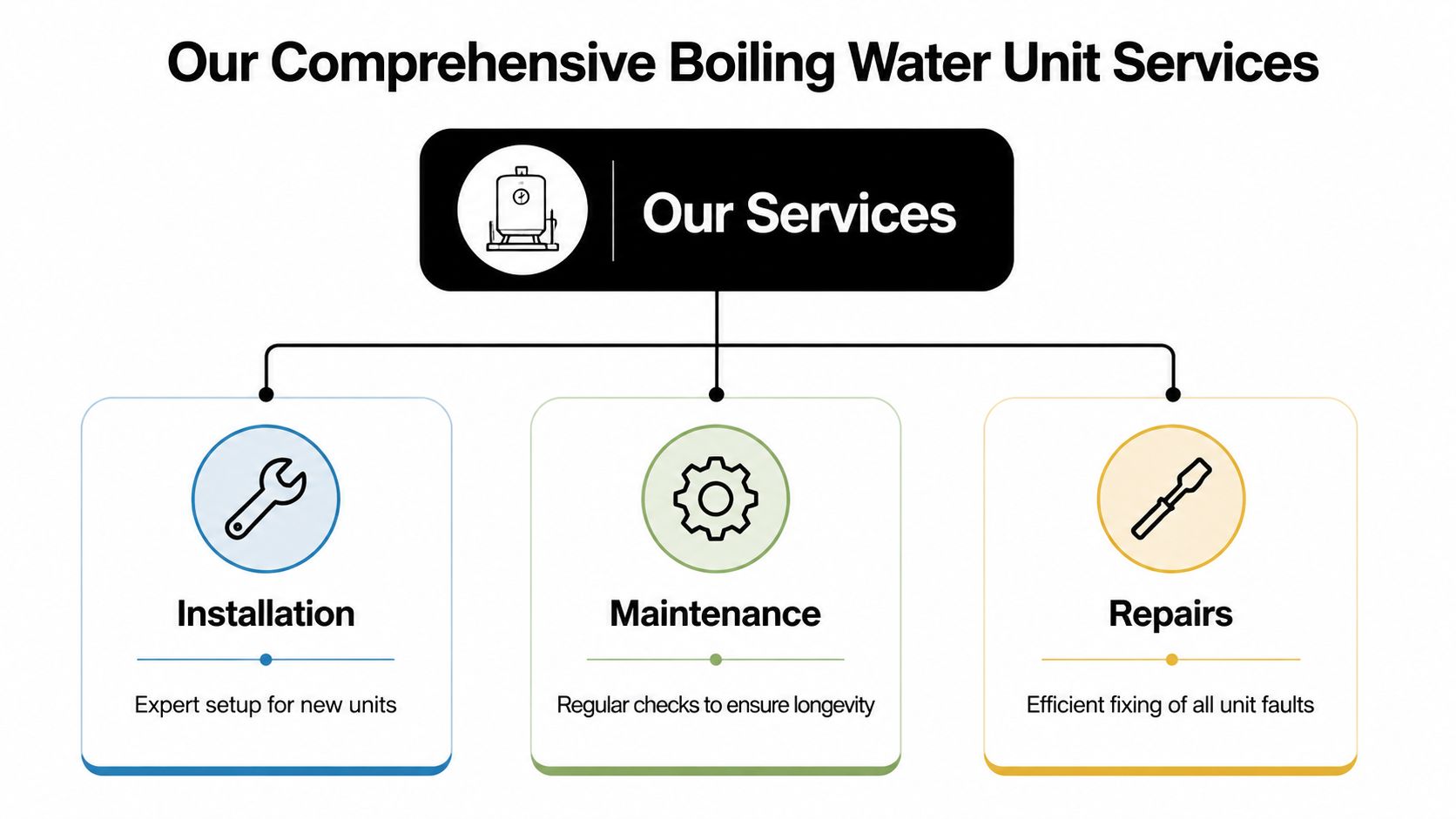
A boiling water unit service in Melbourne usually comes down to three types of work. Installation, maintenance, and repairs. Each one affects safety, recovery time, cupboard layout, and what you end up paying over the life of the unit.
Installation done properly
These units need more than a spare spot under the sink. The Zip residential installation guide sets out the basics clearly, including a dedicated 230V, 15A AC power outlet and specific under-bench clearances for the boiling tank and Command Centre. Cabinet fit, hose routing, ventilation space, filter position, and room for future servicing all need to be checked before the unit goes in.
Poor installation usually causes the same set of problems:
- Kinked or stretched hoses from tight cabinet layouts
- Insufficient ventilation that puts extra heat stress on components
- Incorrect power provision that prevents safe or legal connection
- Awkward filter access that turns simple maintenance into a bigger job
- A unit size that does not match demand, especially in offices and break rooms
The right starting point is practical. Check the tap location, cupboard dimensions, available power, and how many people will use it each day. For unit supply, installation support, and compatible fittings, see our boiling billy service options.
Maintenance that prevents avoidable breakdowns
Most boiling water units give some warning before they stop. Recovery gets slower. Flow drops off. Water taste changes. The tap starts dripping or venting more than usual. Those signs usually point to filter restriction, scale, valve wear, or heat-related stress inside the unit.
A proper service visit usually includes inspection of the filter setup, tap head, hoses, electrical connection, venting, and delivery temperature. Consumable parts get changed where needed, and any early wear is picked up before it turns into a no-hot-water callout.
One overdue filter can create a chain of problems. The unit works harder, reheats slower, and can look like it has a failed heater when the real issue is restricted flow or poor cooling.
Repairs that target the fault
Repair work should be driven by testing, not guesswork. Different symptoms can point to very different faults, and swapping parts too early often wastes time and money.
A sound on-site repair process usually follows this order:
- Confirm the reported fault. No heat, low flow, leaking, tripping power, or poor taste.
- Check external causes first. Outlet power, isolation valve position, filter condition, and user settings.
- Test the unit components. Thermostat operation, element continuity, valve response, seals, and visible connections.
- Carry out the repair and set the unit up properly. Temperature control, flow behaviour, and safe operation need to be checked before the job is finished.
That last step matters. A unit can heat again and still have problems if the calibration is off, the wrong part has been fitted, or another worn component has been left behind. That is why we treat emergency boiling water unit faults as more than a quick reset and hope job.
Common Faults And Simple DIY Checks You Can Do
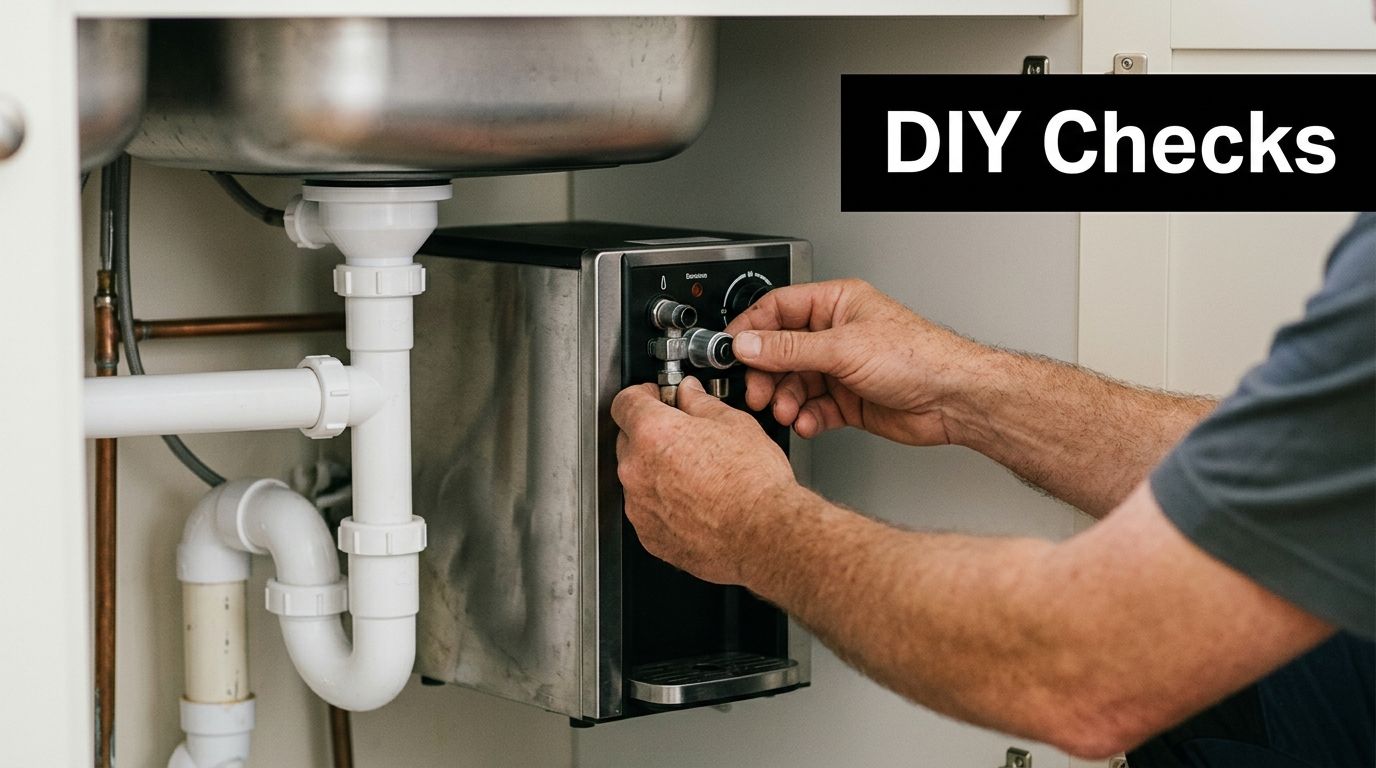
Some boiling water unit problems are safe to inspect. Others aren't. The line matters because these systems combine electricity, pressure, high water temperature, filters, and sealed components in a tight cupboard.
In Victoria, 42% of boiling water unit failures are due to worn thermostats, elements, or valves, according to the Australian Institute of Plumbing figures cited here. That same source notes an important safety boundary. Australian regulations require temperature controls to keep water below 50°C at the tap for safety, and that setting requires professional calibration.
Safe checks you can do before booking service
A homeowner, office manager, or café staff member can usually inspect the basics without opening the unit housing.
- Power check. Confirm the unit is switched on at the dedicated outlet if accessible, and check whether a breaker has tripped.
- Water check. Make sure the isolation valve feeding the unit hasn't been turned off.
- Filter check. If the system has a service indicator or a visibly overdue filter, restricted flow may be part of the problem.
- Cabinet check. Look for water pooling, drips from hoses, or steam where it shouldn't be.
- Usage check. If the unit works for one cup then fades, recovery or scale issues may be involved.
Troubleshooting guide
| Symptom | Simple DIY Check | When to Call Ring Hot Water |
|---|---|---|
| No hot water at all | Check the power outlet, switch, and whether the unit display or indicators are active | Call when power is available but the unit remains cold, or if it trips again after reset |
| Low flow from the tap | Check whether the inlet valve is fully open and whether the filter is overdue | Call when flow stays weak after the obvious checks, or if the unit sounds strained |
| Water tastes odd | Replace or inspect the filter if that's part of normal user maintenance | Call when a new filter doesn't fix taste, or if the unit also has heating or leak symptoms |
| Leaking under the sink | Look for a loose external connection or a full drip tray if fitted | Call immediately if water is near the power point, the leak is inside the casing, or the source isn't obvious |
| Water not hot enough | Confirm the issue isn't heavy consecutive use outpacing recovery | Call when the problem is persistent, because thermostat and calibration faults need testing |
| Strange noise from the unit | Listen for repeated boiling, clicking, or stressed refill sounds | Call when the noise is new, frequent, or paired with poor performance |
Where DIY stops
Don't remove the unit cover and start replacing electrical or temperature-control components unless you're qualified to do it. Thermostats, elements, and valves may be physically replaceable, but that doesn't make them safe as a casual DIY job.
If the fault points to a thermostat, element, valve, internal leak, or temperature setting, the smart move is to stop at diagnosis and hand the repair over.
A lot of avoidable damage comes from owners chasing one symptom and missing the root cause. A low-flow complaint might start with a blocked filter, but it can also mask scale, inlet restriction, or a stressed valve. A “not hot enough” complaint can be a thermostat issue, but it can also be user demand exceeding the unit's capacity.
This short video gives a useful general view of service conditions around boiling water units and under-sink systems:
A simple decision rule
Use this rule in practice:
- Check external power and water
- Look for obvious leaks
- Replace only user-serviceable consumables such as filters, if your model allows it
- Stop if the fault involves heat, calibration, internal parts, or electrical access
That approach saves time and avoids turning a repairable fault into a bigger cabinet, tap, or command-centre replacement.
Brands We Service and The Importance of Genuine Parts
Brand matters more than many owners realise. Two units can look nearly identical from the tap above the sink, while the under-bench hardware, filter head, valve arrangement, hose sizes, and control layout are completely different.
Brands commonly found around Melbourne
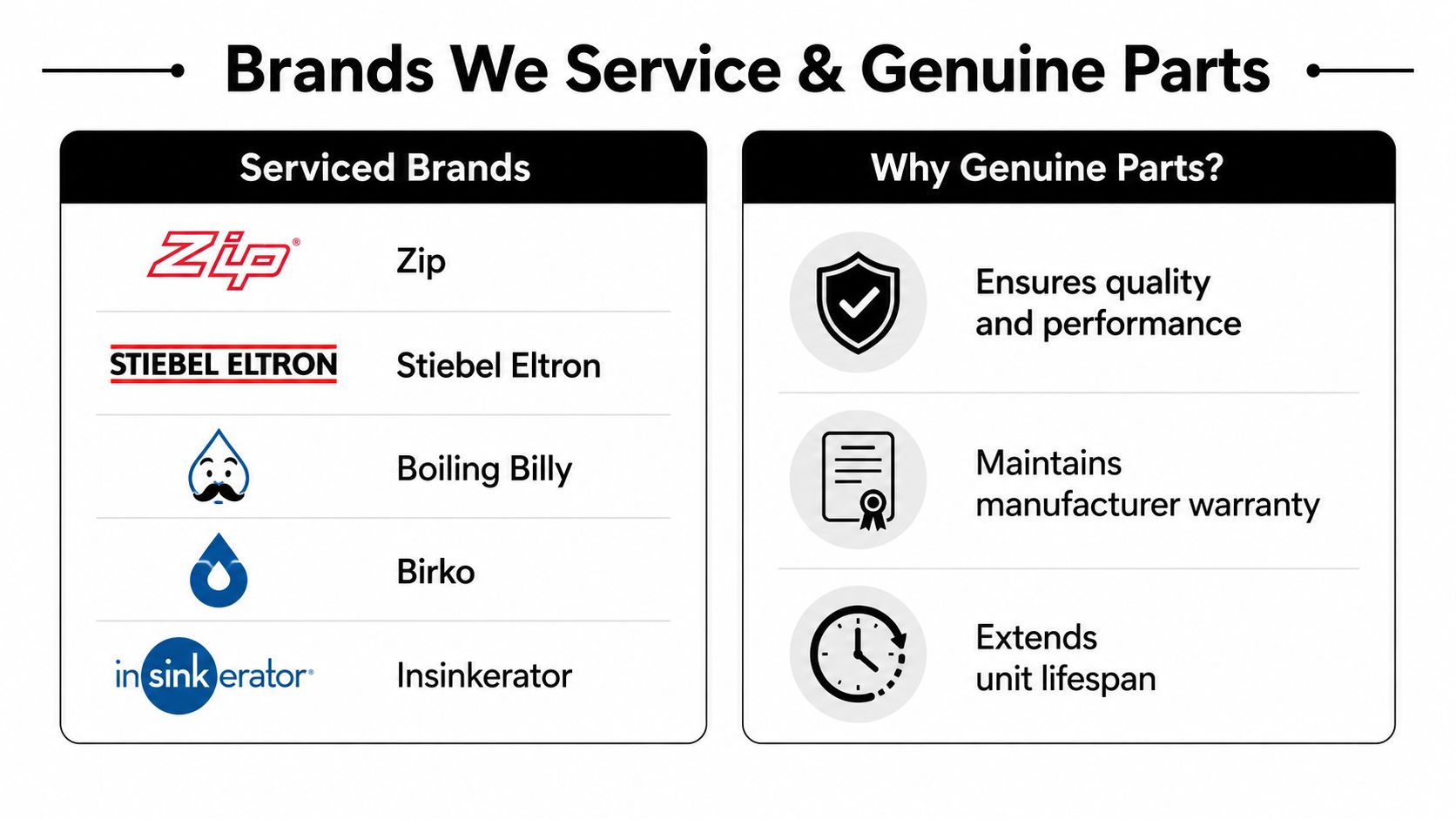
The units that come up most often in homes, offices, schools, clinics, and hospitality sites include:
- Zip
- Stiebel Eltron
- Boiling Billy
- Birko
- Insinkerator
- Crown
- Kwikboil
- Everboil
- Everchill
- Robatherm
A lot of service delays happen because someone orders a part that is “close enough”. The mounting points differ, the probe length is wrong, the thread doesn't match, or the electrical rating isn't right for that exact model.
Why genuine parts save headaches
The cheapest part on the screen is often the most expensive one once the callback is counted. Genuine or manufacturer-approved parts matter for three practical reasons.
- Compatibility. The part is built to fit the unit it was designed for. That matters for seals, electrical values, hose connections, and sensor behaviour.
- Safety. These units handle very hot water in confined spaces. The wrong thermostat or valve isn't a minor gamble.
- Warranty position. If a unit is still within manufacturer cover, non-approved parts can complicate later claims.
For owners trying to identify the right component before service, this guide to Zip spare parts in Australia helps show how model-specific these repairs can be.
A replacement part that “fits after a bit of adjustment” is usually the start of the next service call.
The right part also helps the repair hold. That matters more in offices and hospitality venues, where a unit may be used continuously across the day and any recurring fault becomes an operational problem very quickly.
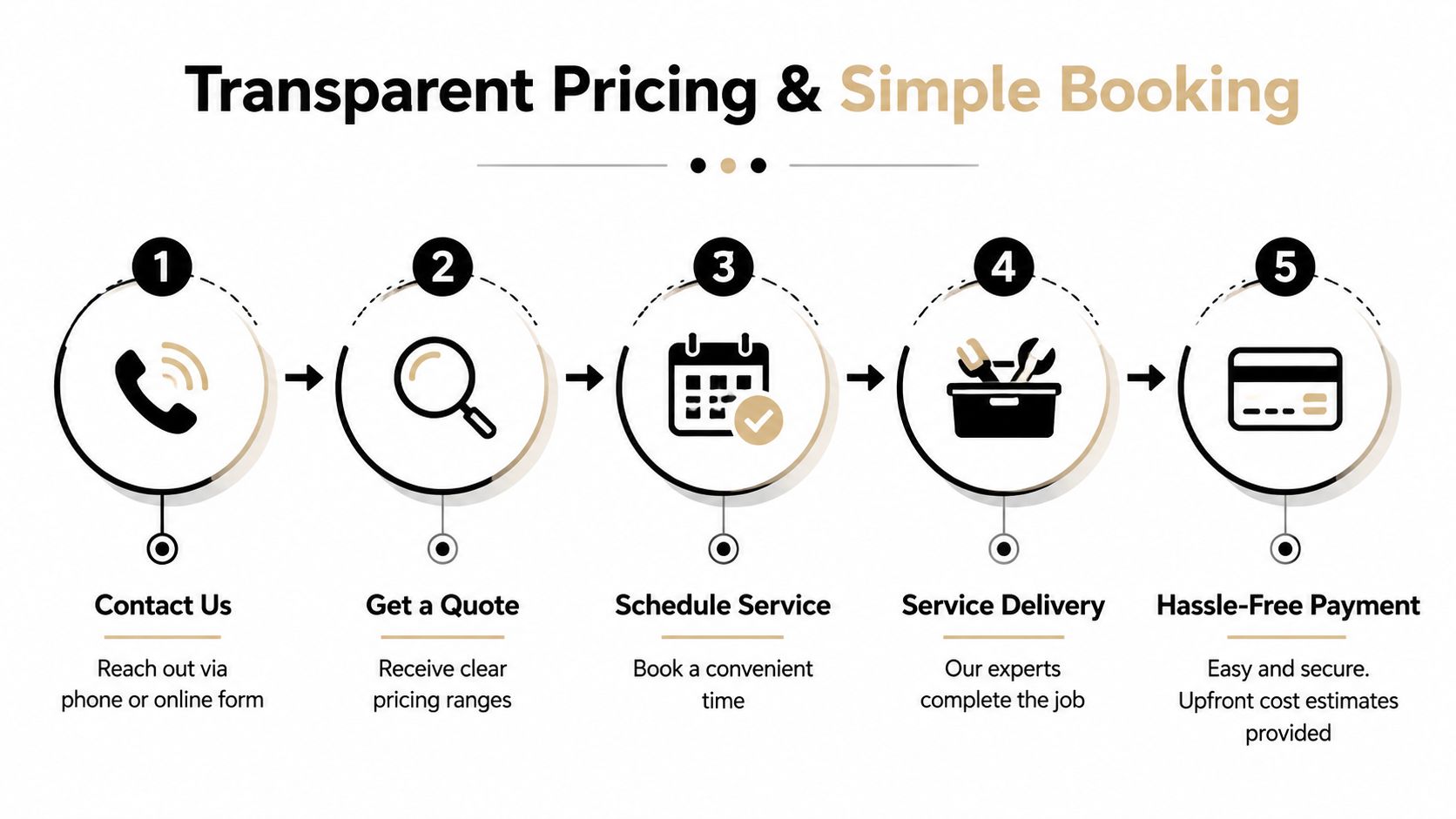
Our Transparent Pricing and Simple Booking Process
A failed boiling water unit usually leads to the same two questions. What is it going to cost, and how fast can it be fixed?
The honest answer is that price depends on what has failed. A dripping vent, blocked filter, failed thermostat, burnt element, split hose, or faulty inlet valve do not sit in the same labour or parts bracket. Site conditions matter too. Under-bench units buried behind waste bins and tight joinery take longer to diagnose and repair than units with clear access. After-hours callouts, CBD parking, and model-specific parts can also change the total.
That is why the practical way to price these jobs is in two steps. Start with an estimate based on the symptoms, brand, model, and photos. Confirm the quote once the unit is tested on site and the fault is identified properly.
What affects the price
The main cost drivers are usually straightforward:
- Type of fault. A service issue such as scale, filter restriction, or an external valve problem is usually cheaper than replacing an internal electrical part.
- Brand and exact model. Some units have common stock on hand. Others need brand-specific components, especially older Zip, Billi, Birko, or Rheem models.
- Access to the unit. Tight cabinets, hard-plumbed commercial setups, and awkward power isolation points all add time.
- Urgency. Same-day attendance and after-hours work are priced differently from a standard weekday booking.
- Parts required. A diagnosis-only visit costs less than a repair involving elements, thermostats, probes, valves, or filter heads.
Running a faulty unit also costs money in a quieter way. If it is short-cycling, heating poorly, or leaking slowly into the cabinet, you are paying for wasted power and often setting up a larger repair later.
How booking usually works
A good booking process should be clear from the first call. At Ring Hot Water, the aim is to get enough information early so the first visit has a real chance of solving the problem.
Call or message with the basics
Provide the brand, model if you can find it, your suburb, and the fault. “No hot water,” “constant boiling,” “leaking under sink,” and “tripping power” are all useful starting points.Send a few photos
One photo of the unit label, one of the cupboard setup, and one close-up of any leak or error display can save a lot of back-and-forth. It also helps identify likely parts before attendance.Get an estimate and booking window
You will usually be given a likely attendance time and an estimate based on the information available. If the symptoms suggest replacement is more realistic than repair, that should be said early.On-site diagnosis
The technician tests the unit, checks the supply, inspects hoses and valves, and confirms whether the issue is electrical, hydraulic, filtration-related, or a mix of those.Quote confirmation and work approval
Once the fault is confirmed, you get a clear price to proceed. If parts are in stock and the unit is worth saving, the repair can often be done then and there.Testing and handover
Before the job is signed off, the unit is run, checked for correct temperature behaviour, leaks, refill operation, and safe shutdown.
For Melbourne customers, speed matters most when the unit supports a busy office kitchen, staff room, clinic, or hospitality site. That is the service gap many people hit. They can find a plumber for general hot water, but not someone ready to assess a boiling water unit properly, with the right parts and a realistic view on whether repair still makes sense. A clear booking process cuts a lot of that downtime.
Frequently Asked Questions From Melbourne Users
A lot of Melbourne callers ask the same thing after the unit stops. Is this a quick repair, or am I about to replace the whole system? The honest answer depends on age, fault history, parts access, and how hard the unit gets used day to day.
Should I repair my boiling water unit or replace it
Repair is usually the better call when the fault is limited to one component and the rest of the unit is still in sound condition. Common examples are a failed thermostat, inlet valve, element, tap assembly, or filter head.
Replacement starts to make more sense when the unit has corrosion, repeated leaks, poor temperature stability, obsolete parts, or a long record of small repairs. I also tell customers to look at downtime, not just the invoice. In an office or clinic, a cheaper repair can still be the wrong decision if the unit is likely to fail again soon.
How often should an office or staff kitchen unit be serviced
For busy workplace kitchens, annual servicing is a sensible baseline. Some sites need attention sooner, especially where the unit sees heavy morning demand, missed filter changes, or harder water.
Units that are ignored until they fail usually show up with more than one problem. Scale buildup, tired valves, slow refill, and poor dispense temperature often arrive together.
What should a café or hospitality site do when the unit fails during service
Make the area safe first. If there is water near power, turn the unit off safely and stop using it.
Then collect the details that speed up diagnosis. Brand, model, what the tap is doing, whether the tank is refilling, and a clear photo of the setup. In hospitality, that prep matters because the primary issue is not just the fault itself. It is the lost time while someone tries to work out what unit is under the bench and which part it needs.
Can homeowners replace parts themselves
Filters and a few external consumables can be straightforward if the manufacturer allows user replacement. Internal parts are different. Once the job involves live electrical components, temperature control, pressure management, or tank access, it should be handled properly.
The risk is not only fitting the part. The risk is leaving the unit unsafe, leaking, overheating, or still faulty after it is switched back on.
Why is my tap flowing but not heating properly
That usually points to a heating or control fault rather than a supply issue. The likely causes include a failed element, thermostat problem, sensor fault, scale on internal components, or a unit that is undersized for current demand.
I see this a lot in offices that have added staff over time. The unit still works, but it no longer keeps up with the morning rush, so people describe it as inconsistent or not hot enough.
Do genuine parts really matter for older units
Yes, especially on older Zip, Billi, Rheem, and similar systems where tolerances matter. A part that almost fits can still create slow leaks, poor sealing, nuisance faults, or temperature problems.
Genuine or manufacturer-approved parts also make diagnosis cleaner. If a unit already has a mix of aftermarket components, it becomes harder to tell whether the current fault is wear, compatibility, or both.
Do you service homes only, or offices and commercial sites too
Both, but the job is rarely the same.
In homes, the main concerns are bench access, cupboard fit, noise, and getting the kitchen back to normal quickly. In offices, schools, medical rooms, and hospitality sites, the focus shifts to faster fault finding, reliable parts supply, and making sure the unit capacity still suits the site.
What warranty should I ask about on service work
Ask about the part warranty and the labour warranty separately. That keeps things clear if a different fault shows up later.
Also ask exactly what part is being fitted. If the answer is vague, keep asking. On boiling water units, the model match matters, and so does whether the installed component is genuine or approved for that specific unit.

