
Uncategorized
Alia 4-in-1 Boiling Water Tap: A Melbourne Buyer’s Guide
Jun
A lot of Melbourne kitchens end up solving one water problem at a time. The kettle handles tea and cooking water. A filter jug sits in the fridge or takes up bench space. Someone in the office brings in bottled water because tap water “doesn't taste right”. Then the bench gets crowded, cords start crossing over each other, and the sink area feels busier than it should.
That's usually the point where people start looking at an Alia 4-in-1 boiling water tap. Not because it's a flashy upgrade, but because it replaces several single-purpose habits with one fixed setup at the sink. For homeowners, that often means a cleaner kitchen and less back-and-forth through the day. For office managers, it can mean fewer small annoyances that waste time.
The question isn't whether the tap looks good in a brochure. It's whether it makes sense in a Melbourne home or workplace once you factor in installation, cabinet space, filtration, temperature control, maintenance, and the way local water conditions affect ownership. If you're also thinking about layout changes, these stylish kitchen design ideas are useful for seeing how practical upgrades can improve both function and finish.
Reclaiming Your Kitchen Bench from Appliance Clutter
In a typical renovation or replacement job, the first complaint usually isn't about water temperature. It's about clutter. People are tired of the kettle living next to the toaster, the filter jug taking up fridge room, and extra bottles or dispensers creeping onto the bench because no one likes the current setup.
The Alia 4-in-1 boiling water tap appeals because it tidies up that whole routine. Instead of reaching for different appliances, you use one tap at the sink for daily kitchen tasks. It changes the flow of the room more than most buyers expect.
Where the space saving actually helps
Bench space matters most in kitchens that are already working hard. That includes:
- Compact family kitchens where meal prep, school lunches, and coffee making all happen at once.
- Apartment kitchens where every appliance left out becomes part of the visual mess.
- Small office tea points where staff want quick hot drinks and chilled filtered water without adding more benchtop gear.
A multi-function tap won't make a poor kitchen layout disappear. But it does remove the usual bench offenders. That often makes the kitchen feel calmer, easier to clean, and more organised.
The biggest practical win is often not the boiling water. It's getting rid of the extra things sitting around the sink.
Why this matters more in Melbourne homes
A lot of Melbourne homes mix old cabinetry with newer appliances. That creates a mismatch. The kitchen might have modern expectations, but the space under the sink and on the bench was never planned for multiple countertop gadgets.
That's why people considering an Alia 4-in-1 boiling water tap usually aren't just shopping for a tap. They're trying to simplify the room. If the kitchen already feels crowded before breakfast, a single fixture that handles more than one job starts to make a lot of sense.
What an Alia 4-in-1 Tap Actually Delivers
The easiest way to think about an Alia 4-in-1 boiling water tap is as a command centre for the sink. It doesn't just replace a mixer. It combines standard tap use with filtered specialty water so you don't have to keep switching between separate appliances.
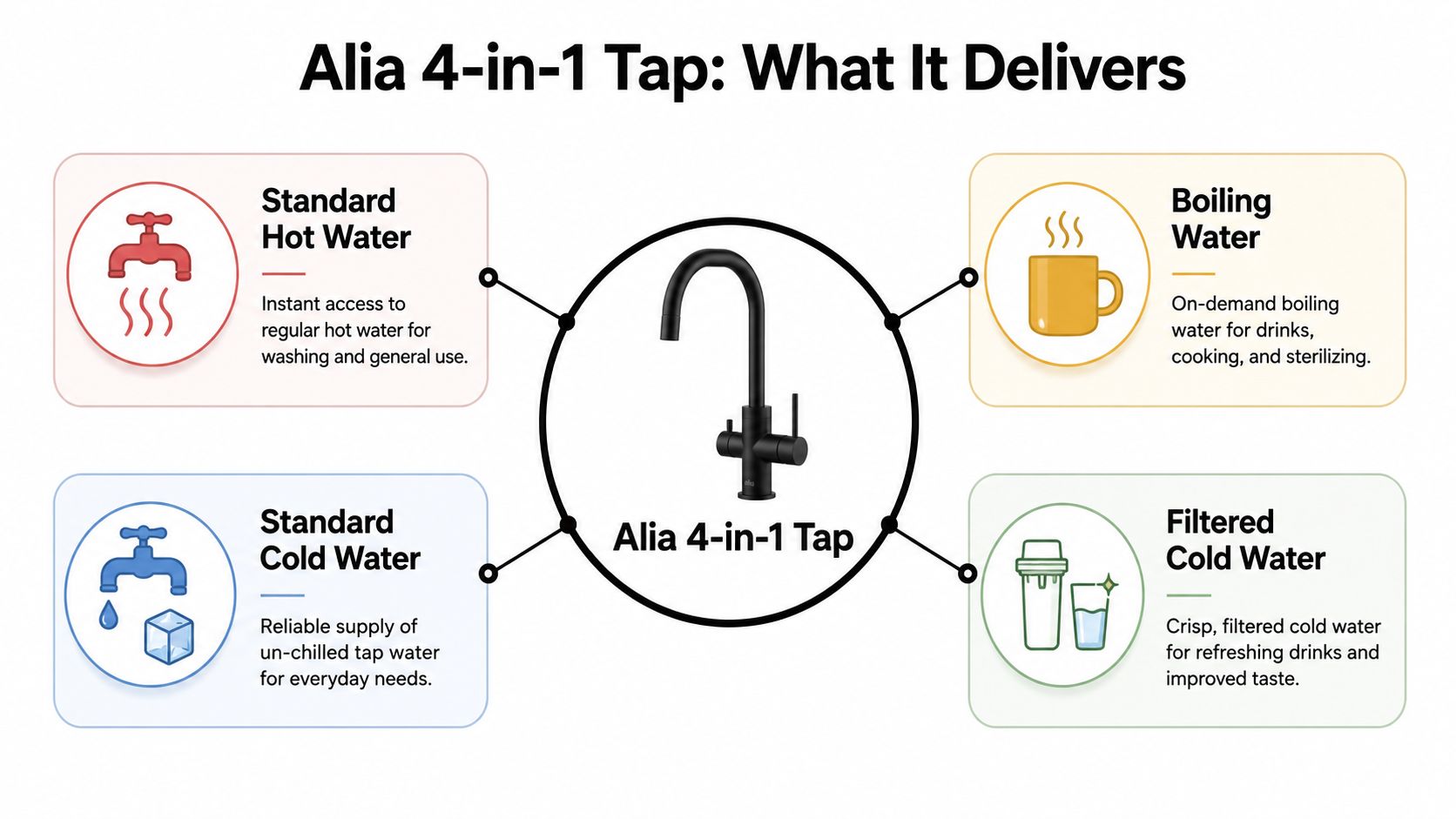
This is the visual often required before the product clicks:
The four outputs in plain English
A 4-in-1 boiling water tap delivers standard hot water, standard cold water, filtered near-boiling water at 98°C, and filtered chilled water at 4°C, which is what defines the category according to this 4-in-1 vs 3-in-1 boiling tap explanation.
In day-to-day use, those outputs break down like this:
- Standard hot water for washing up and normal sink use.
- Standard cold water for rinsing, filling pots, and general kitchen tasks.
- Filtered near-boiling water for tea, coffee, noodles, blanching, and quick prep jobs.
- Filtered chilled water for drinking water straight from the tap without a separate jug in the fridge.
That's the difference between a true 4-in-1 and a simpler tap setup. You're not just getting hot and cold plus a boiling feature. You're also adding filtered chilled drinking water.
What that changes in daily use
For a household, the biggest shift is speed. Tea, pasta water top-ups, baby bottle prep at a lower setting, quick rinsing, and a glass of cold filtered water can all happen from one fixture. For an office, it reduces the mini bottlenecks around kettles and fridge jugs.
The second shift is habit. Once people have filtered chilled water available at the sink, they often stop relying on backup containers and countertop appliances.
A short demonstration helps if you haven't used one before:
Who benefits most from the fourth function
The chilled filtered side is what separates this category from the “good enough” options.
If you mainly want cups of tea and the occasional cooking shortcut, a 3-in-1 can be enough. If you also want drinking water sorted at the same tap, the Alia 4-in-1 boiling water tap becomes much easier to justify. That's especially true in workplaces, entertaining kitchens, and homes where people already use a filter jug every day.
A Look at the Technology Under the Sink
The tap on the bench is only half the system. The important work happens underneath. That matters because buyers often focus on finish and handle design, then discover later that cabinet layout, power access, and servicing room are what determine whether the installation will be neat and practical.
What sits below the sink
An Alia setup typically relies on a few core parts working together:
- The tap body above the bench, which controls the different water outputs.
- An under-sink heating and chilling arrangement, which prepares specialty water before delivery.
- A filtration stage, which handles the filtered drinking functions.
- Connection points for plumbing and power, which need to be accessible and safely installed.
In real jobs, under-sink planning decides whether the system feels premium or awkward. If the cabinet is already full of bins, cleaning products, and plumbing from a tight sink base, you need to be realistic before buying.
Why the thermostat range matters
The Alia 4-in-1 filtered dispenser tap is listed with an adjustable boiling-water thermostat range of 35°C to 98°C, and it's described as lead-free and WaterMark-compliant for Australian installations on this Alia 4-in-1 filtered dispenser tap specification page.
That thermostat range matters more than it sounds. A fixed high setting gives you one result every time. An adjustable range gives you control over how the unit fits the household.
Here's where that matters in practice:
- Lower settings can suit households concerned about scald risk or unnecessary standby heating.
- Higher settings are better for drinks, food prep, and tasks where near-boiling water is the point.
- Flexible control gives you a better match between convenience and day-to-day use instead of forcing one operating style.
Practical rule: Don't choose temperature range as a brochure feature. Choose it based on who uses the kitchen and how often they draw specialty water.
What WaterMark compliance means for buyers
WaterMark compliance isn't a decorative label. In Australian plumbing work, it signals that the product is intended to meet local approval requirements. For homeowners and facility managers, that means less guesswork about whether the tap is suitable for proper installation in an Australian setting.
Lead-free construction matters for the same reason. If you're fitting a drinking water product into a kitchen, material quality isn't optional.
For readers comparing under-sink layouts and system types, this guide to under-sink hot water systems gives a useful overview of how these setups are generally configured.
Calculating the Real Cost of Convenience in Melbourne
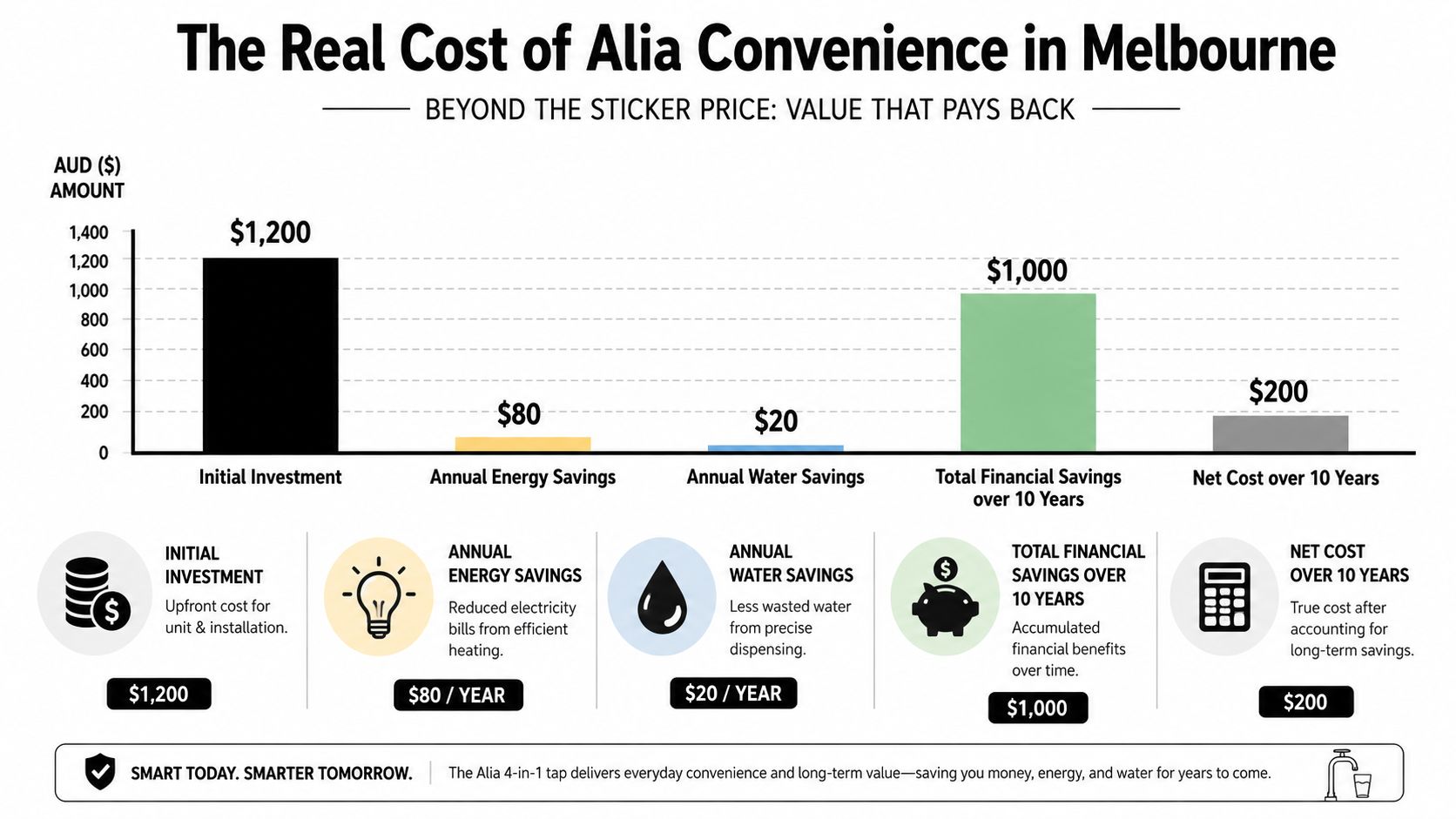
A common Melbourne scenario is a kitchen bench already crowded with a kettle, a filter jug, and cups stacked near the only free corner. An Alia 4-in-1 tap can clear that clutter, but the buying decision comes down to ownership cost over time, not bench appearance alone.
This visual is helpful for framing the decision, even though every household's usage pattern will differ:
The upfront spend is one part of the picture
An Alia-style multi-function tap costs more than a standard mixer because you are buying a complete under-sink system. That includes the tap, boiler or chiller components, filtration, and licensed installation. Some Melbourne kitchens also need minor cabinet changes, a new GPO, or tidier plumbing to make the setup serviceable.
I tell clients to judge it like a fixed kitchen appliance. That gives a clearer comparison than treating it as a tap upgrade alone.
The same logic applies during a renovation. If cabinetry, benchtops, and appliances are already in the budget, this type of tap often fits the project more comfortably. If the kitchen is otherwise working fine, the question becomes simpler. Will daily use justify the spend? For a renovation mindset, this article from All Well Property Services on kitchen renovation is a useful reminder that kitchen decisions rarely sit in isolation.
Running costs come down to use, power, and filter changes
The ongoing cost has three main parts. Electricity to keep the tank at temperature. Filter replacements. Occasional servicing over the life of the unit.
Usage frequency matters most. In a home where several people make tea, coffee, noodles, and baby bottles through the day, the tap earns its place quickly. In a small household that boils water twice a day, the convenience is still there, but the value case is weaker.
Melbourne water quality also affects the ownership picture. Our water is often softer than in many other parts of Australia, which can help with scale compared with harder-water areas, but that does not remove the need for filtration maintenance or periodic checks. Buyers comparing replacement schedules should look at a Melbourne under-sink water filter guide before assuming the filter is a set-and-forget item.
Who usually gets solid value from an Alia tap
The buyers who tend to be happiest with these systems use more than one function every day.
- Busy family kitchens where boiling water is drawn repeatedly and chilled filtered water replaces bottled water or a bench jug.
- Office kitchens, clinics, and staff rooms where people want quick drinks service without waiting for a kettle.
- Homes doing a cleaner kitchen fit-out and wanting one drinking-water point instead of separate appliances.
These setups make more sense when the tap replaces habits and appliances you already use constantly.
Cases where the numbers are harder to justify
Some buyers are better off keeping a kettle and separate filter.
- Low-use kitchens where instant boiling water is only needed now and then.
- Households that do not care about chilled filtered water and would mainly use the standard hot and cold functions.
- Cabinets with difficult service access, where maintenance becomes more awkward and more expensive over time.
That last point matters more than many buyers expect. A good installer can make a lot work, but poor access usually catches up with the owner later when filters need changing or parts need servicing.
For Melbourne homeowners and office managers, the practical test is simple. If the Alia tap will replace daily kettle use and daily filtered water use, the ownership cost is easier to justify. If one of those functions will sit idle, convenience starts costing more than it returns.
Installation Requirements and Water Filtration
Most installation problems aren't caused by the tap itself. They come from the cupboard below. People assume the sink cabinet has plenty of spare room, then discover there's barely enough space once the trap, pipework, bin system, and stored cleaning products are taken into account.
What your kitchen needs before install day
A smooth installation usually starts with a basic checklist:
- Usable cabinet space for the under-sink components, with enough room left for service access.
- Suitable plumbing connections that can be reached without turning the cupboard into a maze of extra fittings.
- A power point positioned appropriately for the unit and safe electrical compliance.
- A realistic storage plan because some under-sink space will be given over to the system.
Buyers should prioritize practicality over optimism. If the sink base is already overloaded, the tap can still be possible, but the install may need a smarter cabinet rethink.
Filtration is part of ownership, not an add-on
Beyond features, practical Australian concerns include filter replacement frequency, hard-water scaling, and the overall maintenance burden compared with a kettle and filter jug, as highlighted in this discussion of practical 4-in-1 tap ownership questions.
That's especially relevant in Melbourne because people often assume local water quality means maintenance won't matter much. In reality, filtration systems still need ongoing attention, and any heated water appliance benefits from being monitored for scale and performance changes over time.
A useful starting point if you're comparing drinking water options is this guide to an under-sink water filter in Melbourne.
What maintenance usually looks like
There isn't one universal schedule that suits every property, because usage and water conditions vary. But owners should expect the following:
- Filter changes as part of normal upkeep.
- Periodic inspection of hoses, valves, and under-sink components.
- Attention to water quality changes, including taste shifts or reduced flow.
- Monitoring for scale effects if the unit's performance changes over time.
That's the trade-off against a kettle and jug. The tap is tidier and more integrated, but it also introduces more installed components that need occasional servicing.
Buyers are usually comfortable with maintenance once they know what they're signing up for. Trouble starts when they assume the system is fit-and-forget.
Alia 4-in-1 Versus Other Tap Options
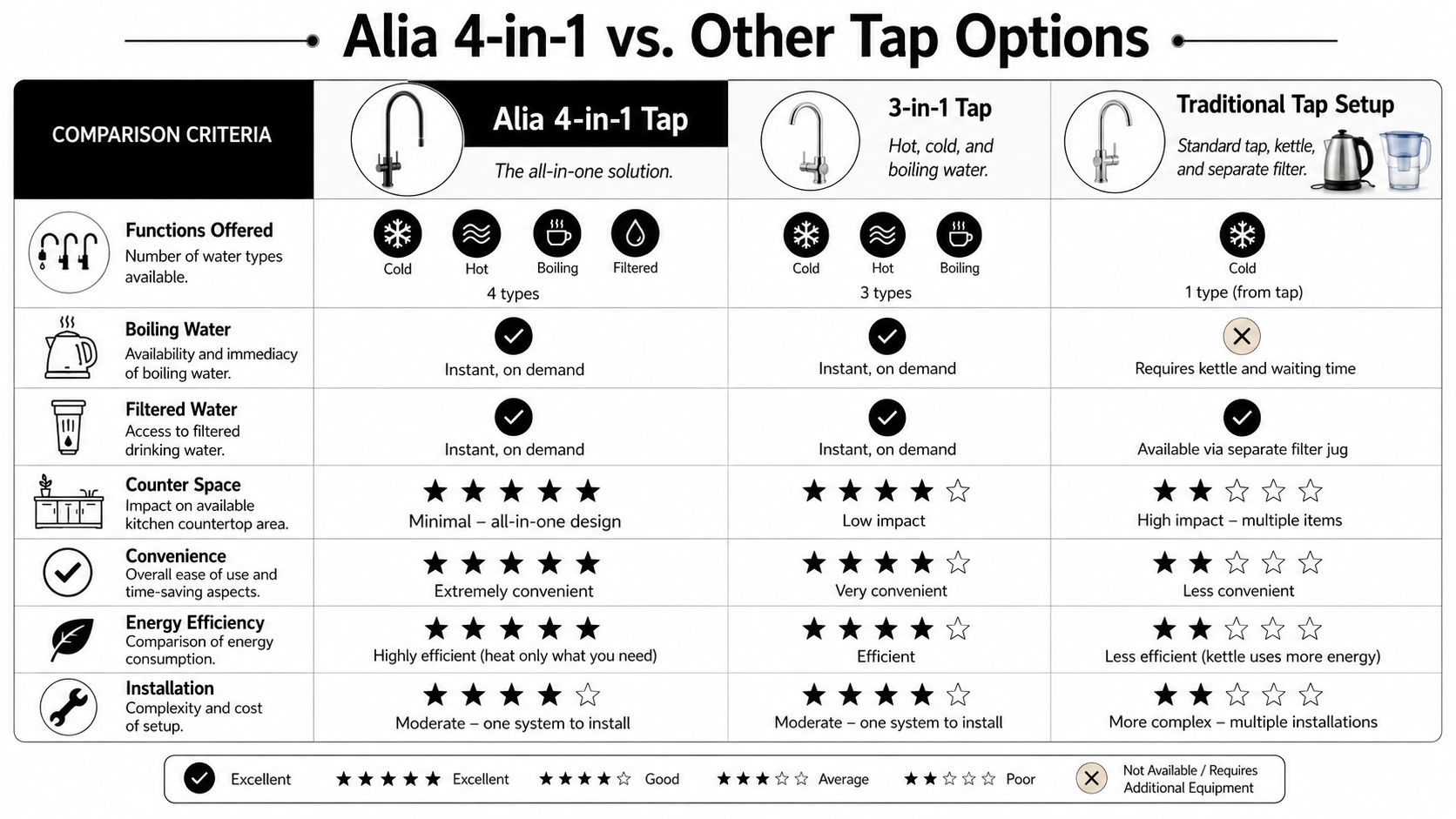
Most buyers don't choose between an Alia 4-in-1 tap and nothing. They choose between categories. That's a better way to look at it, because the right answer depends on whether you value chilled filtered water, how much under-sink hardware you're willing to live with, and what level of convenience you need.
This comparison helps frame the options:
The price gap that matters
In Australia, ALIA Global lists a 4-in-1 Instant Boiling Filtered Water Tap at A$1,650 and a Chilled Filtered Water Tap at A$2,500, which shows an A$850 difference for the chilled-capable option on its Australian instant boiling water taps collection.
That gap is useful because it puts a value on the extra function. You're not just paying for styling. You're paying for the move from a simpler boiling setup into a tap that also handles filtered chilled drinking water.
Comparing the options side by side
| Option | Best fit | Main compromise |
|---|---|---|
| Alia 4-in-1 | Homes and offices wanting one tap for washing, boiling, and chilled filtered drinking water | Higher upfront spend and more under-sink complexity |
| 3-in-1 tap | Buyers who want boiling water convenience but don't care about chilled filtered water at the tap | Doesn't replace a filter jug or dedicated chilled water solution |
| Traditional tap plus kettle and jug | Budget-conscious kitchens or low-use households | More clutter, more separate steps, less integrated use |
How to decide without overbuying
A 4-in-1 makes sense when the chilled filtered side will be used often enough to matter. If the household already relies on cold filtered drinking water, the added spend can be easier to justify.
A 3-in-1 can be the better fit when the buyer mainly wants quick hot drinks and occasional cooking convenience. If you're comparing that category, this look at an Insinkerator 3 n 1 hot water tap is useful for understanding what a simpler integrated setup offers.
The traditional setup still wins for simplicity and low initial commitment. It just asks you to keep living with the clutter, the waiting, and the extra bench gear.
Your Local Alia Tap Experts in Melbourne
A Melbourne buyer usually hits the same point after comparing models and prices. The next question is whether the tap will fit the cupboard, work with the existing plumbing, and stay practical to service once it is in.
That part matters more than the brochure. An Alia 4-in-1 has more going on under the sink than a standard mixer, and a poor layout can leave you with cramped access, awkward filter changes, or a unit that is harder to repair later. In older Melbourne homes, I often see tight cabinetry, worn isolation valves, and power points in the wrong spot. In offices, the issue is often usage volume and making sure the system is installed where staff can use it heavily without creating service headaches.
Ring Hot Water handles installation, repairs, servicing, filtration, and replacement parts for boiling and chilled water systems in Melbourne.
What good local support should include
Choose an installer who deals with the full job, not just the final connection:
- Model selection that matches how the kitchen is used, whether that is family drinking water at home or repeated staff use in a lunchroom.
- A proper site check for cabinet space, ventilation, power supply, water pressure, and access for future servicing.
- Licensed installation with a tidy under-sink layout and clear room to reach filters, valves, and the unit itself.
- Ongoing filter and maintenance support so ownership stays straightforward after the install is finished.
- Repairs and spare parts access from a Melbourne-based team that knows these systems and can diagnose faults without trial and error.
Good local support saves time later. It also reduces the chance of paying twice for cabinet alterations, plumbing corrections, or a reinstall because the first setup looked neat on day one but ignored service access.

