
Caravan hot water system
Caravan Hot Water Heater

May
Caravan Hot Water Heater: The Complete Aussie Guide 2026
A lot of caravan owners start looking into a hot water system after the same moment. The site is perfect, the awning is out, dinner’s done, and then someone turns on the shower and gets a burst of cold water, a weak dribble, or nothing at all. That’s usually when a caravan hot water heater stops feeling like an optional extra and starts feeling like part of the basics.
In Australia, that matters more than many first-time owners expect. You might be moving between powered parks, bush camps, coastal stops and inland towns with very different water quality, pressure and service access. A system that behaves well in one place can be frustrating in another if it’s badly matched, poorly installed or neglected.
Hot water also changes how you use the van. It means rinsing off after a dusty drive, washing up without wasting time, and making a compact space feel less like a compromise. If you’re travelling light and only need an outdoor rinse setup for beach days or quick camp use, it also helps to find the ideal portable shower before you commit to a full built-in upgrade.
Water quality is part of the same conversation. A lot of “heater problems” begin upstream with sediment, taste, scale or pressure issues, which is why it’s worth understanding what makes a good water filter for a caravan before blaming the appliance itself.
The Freedom of the Open Road with Comforts of Home
A caravan works best when the practical gear disappears into the background. You shouldn’t have to think much about the heater when you’re setting up at dusk, cleaning the dishes or trying to get everyone showered before bed. The right unit just lights, heats and delivers predictable water without fuss.
That’s the key attraction of a dependable caravan hot water heater. It’s not about luxury in the glossy brochure sense. It’s about making daily routines easy in a small space where every system has to pull its weight.
What new owners usually discover first
Most first-time buyers focus on layout, solar, fridge size and towing weight. Hot water often gets looked at later, usually after a few nights away. Then the questions start.
- How long does the hot water last? Short answer: less than people assume in a compact van.
- Can it run off-grid? Sometimes yes, but the answer depends on the fuel source and the rest of the van’s setup.
- Why does it work fine on one trip and struggle on another? Water flow, gas supply, scale, filters and valve condition all play a part.
A caravan hot water system isn’t just a heater. It’s a chain of parts that all need to cooperate, from tank and pump to valves, power and plumbing.
Comfort only counts when it’s reliable
In a house, you can often get away with a system that’s a bit oversized or forgiving. In a caravan, space is tight and components are compact. Small faults show up quickly. A partially blocked filter can feel like a heater issue. A weak pump can make an instant unit cut in and out. One wrong fitting can create a leak you only notice after the cupboard floor starts swelling.
That’s why the smart approach is practical rather than brand-led. Start with how you travel, how often you camp off-grid, how much hot water you use, and how comfortable you are maintaining the system. Once those answers are clear, the choice becomes much easier.
How Caravan Hot Water Heaters Work
You notice how your van’s hot water behaves the first cold morning away. One setup gives you a short, predictable window of hot water. The other keeps heating as you use it, but only if water flow, gas supply and power are all steady.
Caravan hot water systems usually sit in one of two groups. Storage heaters heat a small tank and keep that water ready. Instantaneous heaters heat water as it moves through the unit.
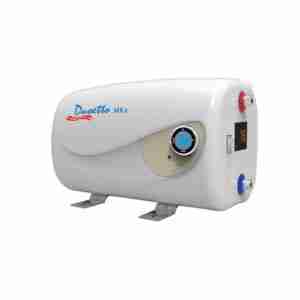
Storage heaters
A storage heater works like a compact household cylinder. Water is heated inside the tank, then delivered when you open the tap. In practice, that makes them easier to live with for many owners because the heater is less sensitive to small changes in tap position or pump behaviour.
The trade-off is recovery time. Once the hot water in the tank is used, you wait for the next heating cycle. For couples doing short showers and washing up straight after, that can be perfectly workable. For larger groups, the limit shows up quickly.
Storage units also tend to be more forgiving in older vans, especially where plumbing has been modified over time. I see fewer nuisance complaints with this type when the pump is only average or the pipe run is less than ideal.
Instantaneous heaters
An instantaneous heater has no reserve of preheated water. Cold water enters the unit, the burner or element starts, and the outlet temperature rises while water is flowing. That makes these systems attractive for owners who want compact installation and don’t want a small tank dictating how long hot water lasts.
The catch is that flow rate matters. If the pump pulses, the filter is partly blocked, a non-return valve is sticking, or the wrong fittings have narrowed the line, the heater may cut in and out or struggle to hold a steady temperature.
Practical rule: If an instant gas unit cuts in and out, don’t assume the burner is faulty first. Check whether the system is delivering stable flow to the heater.
That matters even more in Australia, where caravans often deal with hard water, long periods in storage, and a mix of park water, tank water and pump-fed supply. Scale inside the heater and debris in strainers can mimic a heater fault. So can a poor-quality joiner or the wrong push-fit fitting. If a van is plumbed with John Guest fittings, replace like with like instead of forcing in whatever a general hardware store has on the shelf.
Why owners get confused
Hot water faults are rarely isolated to the heater alone. A caravan hot water heater depends on clean water paths, correct gas pressure, sound 12V or 240V supply, and safe installation. That is why diagnosis needs to be methodical.
Australian owners also need to pay attention to recall history and compliance, especially on gas appliances bought second-hand or imported. Around Melbourne, Ring Hot Water is often the sensible call when a unit needs proper fault-finding, the right fittings sourced, or a safety check before a trip.
If you are also planning longer off-grid stays, your hot water choice needs to match the rest of the van’s setup, including powering your RV on vacant land. A good heater on a poorly matched water or power system still performs badly.
Neither design is better in every van. Storage systems usually suit owners who want simpler day-to-day behaviour. Instant systems can work very well, but they reward good plumbing, steady flow and careful setup.
Choosing the Right Heater and Fuel Source
Most buying mistakes happen because people compare models before they’ve decided on usage pattern. The more useful split is this: how you heat the water, and what energy source you rely on when travelling.
If you mostly stay in caravan parks with power, your priorities will be different from someone spending long periods away from mains supply. The same goes for a couple taking quick showers versus a family trying to wash dishes and rotate everyone through the bathroom.
Storage versus instantaneous in practice
Storage heaters are easier to live with if you want simple operation and steady delivery. They’re also less fussy about tap behaviour. If someone turns the flow down low, a storage system will usually keep behaving normally because the water has already been heated.
Instantaneous units suit owners who value compact design and don’t want to wait for a tank to reheat after light use. They can work very well, but only when the van’s pump and plumbing support them properly. In practice, that’s where many frustrations begin.
Gas, electric and dual fuel
Gas is the obvious choice for off-grid flexibility. It gives you independence from powered sites, but it also raises the stakes on installation quality, ventilation and servicing. That’s not the place for shortcuts.
A 240V electric heater is simple when you’re on mains power. It’s tidy, familiar and often straightforward to operate, but it ties your hot water to powered camping or another compatible electrical arrangement.
Dual-fuel systems appeal to people who want options. Use power when it’s available and switch to gas when it isn’t. The convenience is real. So is the added complexity.
For owners planning longer stays away from parks, it also helps to think through the wider power setup before choosing appliances. Articles on powering your RV on vacant land can help frame the broader energy question, even though hot water still needs its own separate fuel and plumbing decisions.
Comparison of Caravan Hot Water Heater Types
| Heater Type | Best For | Pros | Cons |
|---|---|---|---|
| Storage gas | Off-grid travellers who want forgiving operation | Steady delivery, less sensitive to tap flow, works well for short bursts of use | Limited stored volume, reheating wait, needs correct gas installation |
| Storage 240V electric | Owners mostly using powered sites | Simple operation, no gas flame in use, predictable on mains power | Not ideal away from powered sites, recovery depends on electrical setup |
| Storage dual fuel | Travellers mixing parks and free camping | Flexible energy choice, practical across different trip styles | More components, more installation complexity, more to diagnose later |
| Instantaneous gas | Owners chasing compact size and on-demand heating | Efficient use of water heating capacity, compact footprint, good for repeated light use if flow is stable | Sensitive to pump performance and minimum flow, can cycle if plumbing isn’t right |
| Instantaneous electric | Niche caravan applications with suitable power access | No gas bottle involvement during operation | Usually limited by available electrical supply in many caravan situations |
What works and what doesn't
What works is choosing for the van you use. What doesn't work is buying on brochure logic alone.
- Works well: A storage unit for owners who want straightforward operation and don't mind planning showers.
- Works well: An instant gas unit in a van with sound pump performance, clean plumbing and stable flow.
- Usually disappoints: Expecting a tiny caravan system to behave like a suburban household service.
- Often causes rework: Mixing fittings, pumps and valves without checking compatibility first.
The right heater is the one that matches your travel style, your available power, and the plumbing the caravan already has.
Sizing Your System for Space and Power
You feel sizing mistakes on the first trip. The shower goes cold halfway through, the pump surges, or the heater physically fits the cupboard but leaves no room to service a valve or change a fitting later.
Good sizing starts with use, not brochure capacity. A couple doing short showers and basic washing up can live comfortably with a smaller setup than a family rotating through the shower after the beach. In Australian conditions, water supply also changes the result. Hard water in some regional areas can shorten the life of valves and heat exchangers, so there is no point squeezing in a larger unit if the installation leaves poor access for maintenance.
How much hot water is enough
Storage systems reward disciplined use. Short showers, trigger heads and spacing out demand make a modest tank work far better than many owners expect. Continuous flow systems avoid the wait for a tank to reheat, but only if the water flow stays stable and the rest of the van supports the heater properly.
That support matters more than people think.
An instantaneous gas unit may be compact on paper, but it still depends on steady pump performance, correct gas regulation and a reliable 12V supply for ignition and controls. If the pump is weak or the flow pulses, the heater can hunt, cycle or shut down. Before choosing a model, it helps to understand how a 12 V water pump for a caravan fits into the system, because the heater only performs as well as the water delivery behind it.
Physical fit affects serviceability
Measure the compartment properly. Check width, depth, height, pipe entry points, venting path and the space needed to remove covers or reach drain points.
I see this problem often. A heater that "just fits" usually creates a harder job later, especially in smaller vans where every bend in the pipework costs space and every hidden fitting adds labour if something leaks. In Melbourne workshops, Ring Hot Water regularly deals with installs where the original unit was chosen by dimensions alone, with no thought given to safe clearances, recall checks or whether standard Australian fittings can be sourced without improvising.
Power is part of sizing
Gas supply is only one part of the job. Many caravan heaters also need 12V power for ignition, control boards and related functions, so sizing has to include the electrical side of the van as well as the appliance itself.
Owners who free camp for long stretches need to be realistic here. A heater, a pump, lighting and charging loads all draw from the same system. If battery condition is poor or wiring is undersized, hot water faults can look like heater faults when the real problem is low voltage reaching the unit.
A sensible sizing checklist
- Count real users: Base the choice on who will shower and wash up each day.
- Measure the install space properly: Include service clearances, venting and access to drains and valves.
- Check the support systems: Confirm the pump, gas setup and 12V supply suit the heater type.
- Plan for Australian servicing realities: Use fittings and pipe sizes you can source locally, including the correct John Guest or threaded connections where required.
- Leave room for maintenance: Hard water, filters, valves and recall inspections all require access later.
Essential Fittings Pumps and Plumbing Explained
A heater can only deliver what the plumbing allows. If the pump is weak, the filter is dirty, or the fittings are mismatched, the heater gets blamed for problems it didn't create.
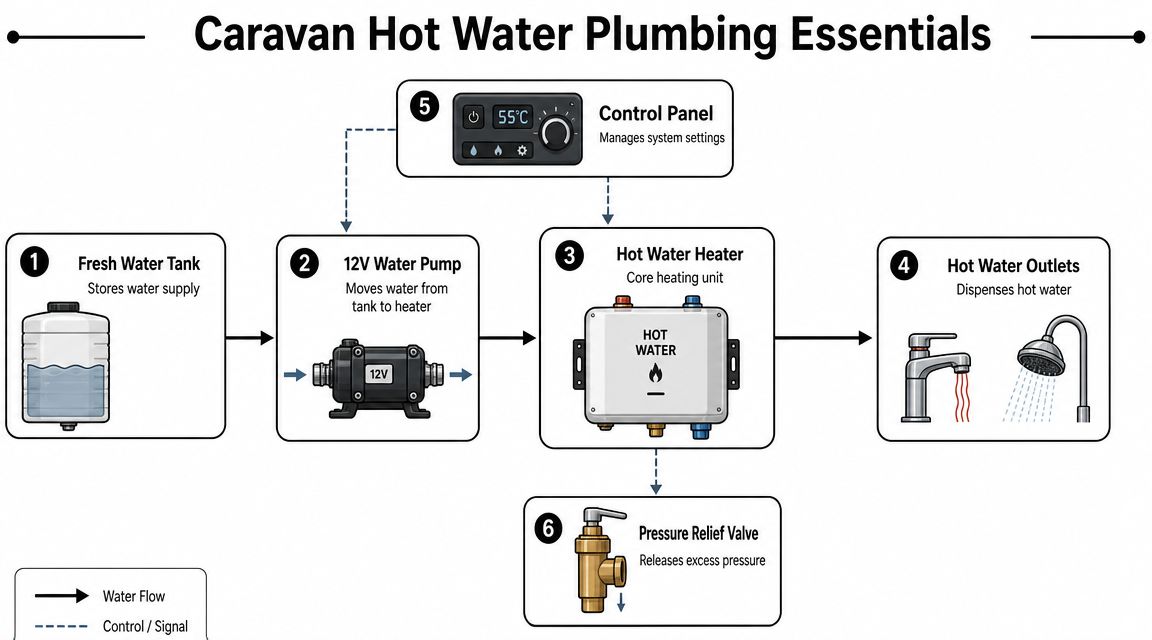
In most caravans, the 12V water pump is the heart of the system. It pulls or pushes water from the fresh tank through the pipework, into the heater and then out to taps or the shower. If pressure pulses badly or flow falls away, the whole system feels unreliable.
Where John Guest fittings come in
Australian caravans commonly use compact plastic tubing systems, often in 12mm sizes. That's where John Guest style push-fit fittings are popular. They make sense in a van because they're quick to assemble, neat in tight cupboards and easy to service when used correctly on compatible pipe.
That doesn't mean every connection in the system should be plastic push-fit. At the heater itself, you'll often move to more traditional brass threaded fittings because the connection needs a secure mechanical seal at the appliance.
What each part actually does
- Pump: Provides the water movement and pressure the heater depends on.
- Isolation valve: Lets you service sections of the system without draining everything.
- Non-return valve: Stops backflow and keeps water moving the right way.
- Pressure control hardware: Protects the system from excess pressure and nuisance leaks.
- Correct outlet fittings: Match the heater ports to the caravan's pipe material and size.
A lot of repeat leak jobs come down to poor part matching. Wrong thread type. Wrong insert. Wrong sealant. Or a push-fit used where vibration, heat or alignment makes it a poor choice.
The fittings rule that saves trouble
Use push-fit fittings for the tubing runs they're designed for, and use proper threaded connections where the appliance requires them. Don't force one system to do the job of the other.
If pressure control is part of the setup, it's also worth understanding what a pressure limiting valve does in a caravan water system. That's one of those components owners overlook until a relief valve starts dripping or a fitting gives way.
Good plumbing looks boring. That's the point. If the fittings are correct, supported properly and matched to the pipe, you stop thinking about them.
Installation Safety Maintenance and Troubleshooting
You pull into a regional park after a long drive, fill the tank, switch the heater on, and expect a hot shower in ten minutes. If the van has a gas water heater and the installation is wrong, that simple routine can turn into a serious safety problem.
Gas-side installation and servicing belong with a licensed professional. In caravans, clearances are tight, vents get blocked by dust or storage habits, and a small fault can affect combustion or flueing without obvious warning.
Australia has already seen why this matters. The ACCC issued a major recall for specific dual-fuel caravan and motorhome water heaters because of a carbon monoxide risk in gas mode. The affected models included SW6DEA, SW6DA, SW4DEA, SW4DA, SW4DECA, SW6DECA and SW6PA, within serial number ranges 181315552 to 193002648 and 8183311827 to 8190201139, manufactured between 4 April 2018 and 1 August 2019, according to the ACCC recall reminder for caravan and motorhome owners.
What every owner should do first
If you have bought a used caravan, start at the compliance plate and the heater label. Check the model and serial number yourself. Do not rely on a seller's memory or assume an old service sticker means the recall status was checked properly.
That habit saves trouble with more than recalls. It also helps when ordering replacement valves, elements, thermostats, or the correct John Guest and threaded fittings. In Melbourne, that parts-matching step is one of the common reasons owners end up calling a specialist such as Ring Hot Water after wasting time on near-miss components that do not quite suit the unit.
If you camp in colder weather and want broader heating advice for the rest of the setup, not just water heating, this ultimate guide to tent heaters is useful background on safe heat choices around campsites.
Routine Maintenance That Matters
Regular maintenance is simple, but it needs to be the right kind of simple.
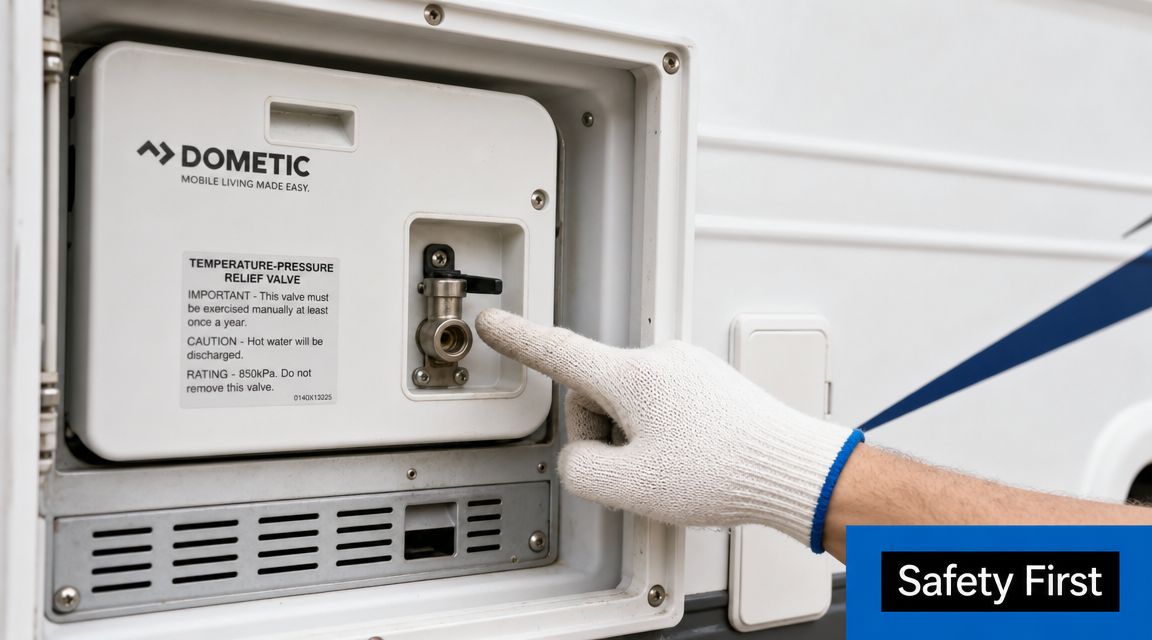
As noted earlier in the article, manufacturer guidance for caravan hot water systems recommends periodic high-temperature operation for hygiene, routine cleaning around vents and the appliance compartment, and regular operation of the safety or drain valve so it does not seize up with scale. In practice, those are the checks that prevent many avoidable service calls.
For most owners, the routine looks like this:
- Run a full hot cycle periodically: This helps keep stored water in better condition if the van sits unused between trips.
- Exercise the safety or drain valve: It confirms the valve can open and helps clear minor mineral build-up.
- Keep vents and the compartment clean: Dust, lint, insect debris, and road grime should not build up around the unit.
- Inspect for early leak signs: Look for staining, dampness, green corrosion on copper or brass, and white mineral marks around joints.
- Drain the system properly when storing the van: That matters in cold areas and also reduces stagnant water and scale issues.
A visual walkthrough helps owners understand what a valve check should look like in practice.
Hard water and scale are often the hidden cause
A lot of Australian heater faults are plumbing faults in disguise.
Regional water quality varies sharply. Fill in one town from a relatively soft supply and the system behaves normally. Fill in another from a harder bore or mineral-heavy source and scale starts building inside the heater, valves, strainers, and narrow hot-water passages. That build-up reduces efficiency and can shorten the life of hot water components, according to the Department of Climate Change, Energy, the Environment and Water.
The symptoms are easy to misread:
- Hot flow drops off before cold flow does
- Heating becomes noisy
- Water temperature turns inconsistent
- A relief valve starts weeping
- A blocked strainer or sticky non-return valve looks like a heater failure
I see owners replace parts too early because the heater still powers up, but the water path is restricted. If hot water output gets weaker over time rather than stopping all at once, check for scale, blocked filters, sticking valves, and partially obstructed fittings before replacing expensive components.
Troubleshooting without making the problem worse
Start with the safe checks. Confirm the van has water, the pump is primed, the isolation valves are open, and the power or gas supply is available to the heater. Then look for the simple faults that cause repeat callouts: tripped protection, clogged strainers, relief valves passing water, or poor aftermarket fittings on the hot side.
Stop there if the fault involves gas smell, combustion, burner behaviour, scorching, melted wiring, or signs of exhaust issues. Those are technician jobs.
That trade-off matters. Owners can handle observation, cleaning, draining, and basic visual checks. A licensed caravan hot water technician should handle gas work, combustion faults, internal electrical faults, and any repair where the wrong fitting, seal, or pressure setting could create a leak or safety risk. In Melbourne, having a local specialist with the right caravan parts on hand usually gets the van back into service faster than trying to adapt whatever a general plumbing aisle has in stock.
Your Melbourne Partner for Caravan Hot Water
You pull into a site outside Melbourne on a cold morning, turn on the tap, and get either lukewarm water or none at all. In practice, the fix might be a full heater replacement, but it can just as easily be the correct valve, a matching John Guest fitting, the right element, or a hard-water-related blockage that has been building for months.
Local support matters because caravan hot water faults rarely stay in one lane. Water flow, gas operation, electrical supply, pressure control, and fittings all affect the result. A supplier who knows caravan systems can sort the actual fault faster than a general parts counter trying to match pieces by eye.
Ring Hot Water handles caravan hot water heaters, pumps, valves, genuine spare parts, and the fittings that often delay repairs, including common John Guest and brass threaded components used in Australian vans. Melbourne owners can also get installation, repair, and maintenance support from a business that deals with caravan hot water equipment day in and day out. For owners outside Melbourne, having the correct parts shipped matters just as much, especially when a van is off the road over one missing fitting or a model-specific replacement part.
That matters in Australia. Hard water in some regions shortens the life of tanks, valves, and small waterway components. Safety recalls also come up from time to time, so model identification is not just a parts question. It can be a safety question. Before ordering anything, confirm the heater brand, model, fuel type, and any recall status, then match the fittings properly instead of forcing a near fit.
I see owners lose time and money by treating every no-hot-water problem as a heater failure. In many cases, the actual job is narrower. A relief valve is passing, a non-return valve is sticking, a pump is cycling badly, or someone has used a plumbing fitting that does not quite suit caravan pipe and pressure conditions. Get those details right and the system usually goes back to normal without replacing major components.
If you are in Melbourne, local hands-on help reduces the usual back-and-forth when plumbing, gas, and appliance faults overlap. If you are ordering from elsewhere in Australia, accurate parts support is the next best thing.
Start with the basics. Identify the heater type, fuel source, model number, and the exact symptom pattern. Poor flow, ignition trouble, short hot water duration, leakage, scale, and pressure issues point to different fixes. Once that is clear, the repair path gets much simpler.
A good caravan hot water setup is not about adding more parts. It is about using the right parts, fitting them safely, and dealing with small faults before they turn into leaks, repeat breakdowns, or a heater that should have lasted longer.
If you need help choosing, repairing or supplying parts for a caravan hot water system, contact Ring Hot Water for practical advice, Melbourne-based service, and Australia-wide access to fittings, valves, pumps and replacement components.

