
Water Filters
3 Way Mixer Tap

Apr
Discover 3 Way Mixer Tap Benefits & Installation
You’re usually looking at a 3 way mixer tap when the kitchen bench has started to feel crowded, the filter jug is always in the way, or the office staff are lining up for the kettle while someone asks why the “filtered tap” is separate from the main sink tap in the first place.
That’s where this style of tap makes sense. It isn’t just a nicer looking faucet. It’s a plumbing solution that combines standard hot and cold water with a dedicated filtered line through one fixture, while keeping those water paths separate inside the body of the tap. In Melbourne homes and workplaces, that matters even more when the tap also needs to work with an under-sink filter, and sometimes with an instant boiling or chilled system as well.
A lot of online guides stop at “hot, cold, filtered”. That’s the easy part. The harder part is whether the tap suits your pressure, your under-sink space, your fittings, and your existing boiling unit without creating service problems later. That’s where people either get a tidy, reliable setup or end up with drips, poor flow, awkward handles, or a boiling unit installation that never quite behaves properly.
What Is a 3-Way Mixer Tap and Why Is It Different?
A 3 way mixer tap is a single tap body that delivers hot mains water, cold mains water, and filtered water through separate internal paths. The simplest way to think about it is this. A standard mixer is like a two-lane road. One lane carries hot, one carries cold, and they merge at the outlet. A 3 way mixer tap adds a third protected lane that stays separate for drinking water.
That separate lane is the whole point.
In a standard kitchen, if you want filtered water, you usually choose one of two less elegant options. You keep a jug in the fridge, or you install a second little filter tap beside the main mixer. Both work. Neither is ideal when space is tight or you want the sink area to stay clean and simple.
A 3 way tap solves that by giving you one main fixture instead of two. It tidies the bench, avoids the look of an “add-on” tap, and makes daily use easier. Fill a saucepan, rinse produce, pour a glass of filtered water, then switch back to normal hot and cold without moving between fittings.
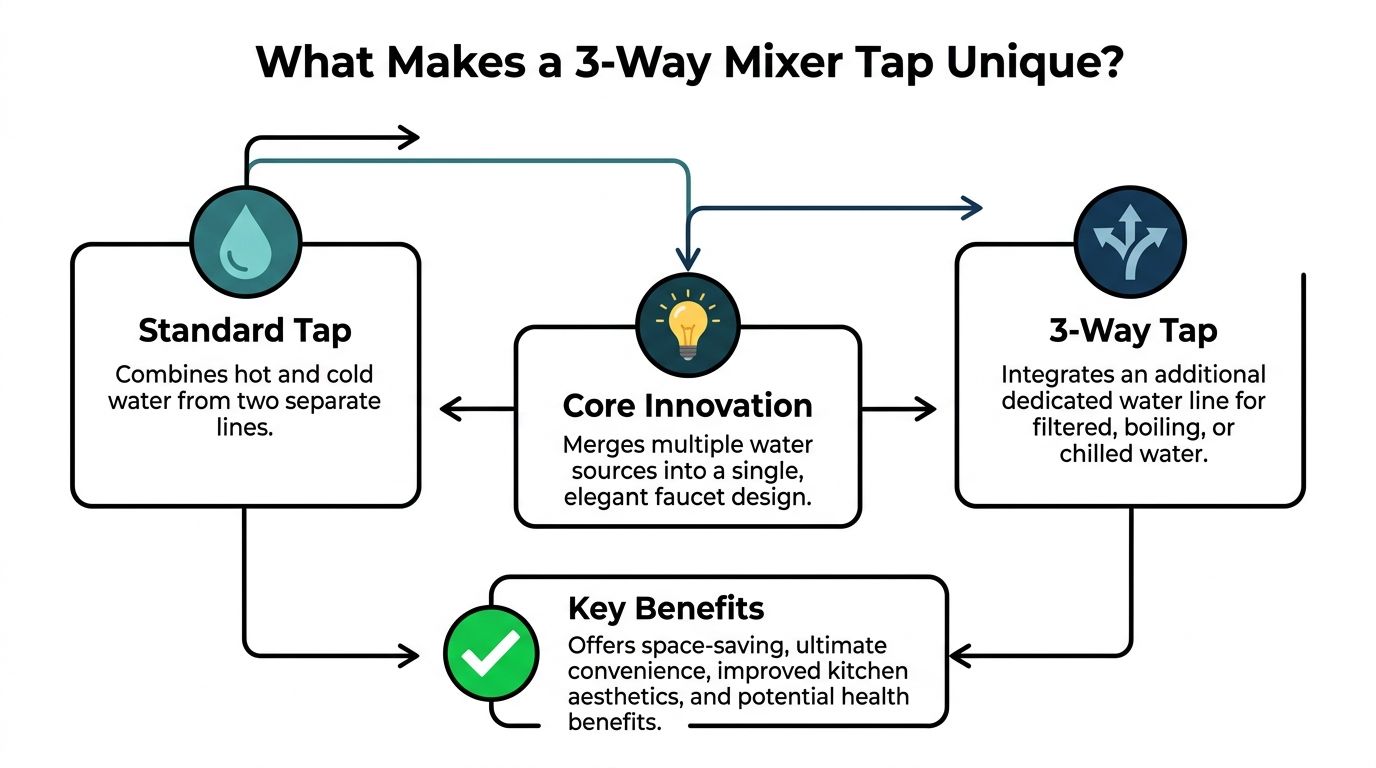
More than a design choice
This type of tap didn’t appear out of nowhere. The 3-way mixer tap represents a significant evolution from the standard 2-way mixer tap, and by the 1970s triple-delivery designs had emerged globally. Australian standards under AS/NZS 3718 also pushed attention toward mixer tap efficiency, with 3-way variants reducing water waste by up to 30% compared to separate hot/cold taps, according to the history and efficiency overview published here.
That efficiency point gets missed. People often focus only on convenience, but older separate tap arrangements can be clumsier to use well. A properly selected mixer tap is usually easier to operate accurately, especially for kitchens that see frequent use.
Why homeowners choose them
Customers don’t buy a 3 way mixer tap because they’re fascinated by valve design. They buy one because they’re tired of compromises.
- Less clutter: One fixture replaces the main tap plus a secondary filter tap in many kitchens.
- Cleaner layout: It suits stone benches and compact sink zones where extra holes are a hassle.
- Better hygiene in practice: Filtered water has its own path, so it isn’t travelling through the same mixed outlet route as your standard hot and cold supply.
- Easier daily habits: People drink more filtered water when it’s simple to access.
Practical rule: If you already know you want filtered drinking water at the sink every day, it usually makes more sense to plan for one integrated tap than to keep bolting separate solutions onto the kitchen.
Where it fits best
A 3 way mixer tap suits more than a renovated family kitchen. It also fits office lunchrooms, hospitality prep areas, butlers’ pantries, caravans with compact layouts, and workspaces where one tap has to do several jobs without eating into bench space.
Its real advantage isn’t that it gives you “three kinds of water”. It’s that it does it through a single fitting that looks right, uses space well, and can be paired with more advanced under-sink systems when the plumbing is planned properly.
The Inner Workings of a 3-Way Mixer Tap
A 3 way mixer tap only does its job properly if the plumbing inside the body is kept disciplined. From above the bench, it looks like one tap. Inside, it is carrying separate water services that must stay isolated from each other from the inlets through to the outlet.
That internal separation is the whole point.
A proper 3 way tap has dedicated waterways for standard hot and cold supply, plus a separate path for filtered water. On better models, the filtered line stays isolated through the tap body and exits through its own outlet point within the spout. That matters in day-to-day use because filtered drinking water is not passing through the same mixed chamber used for general mains hot and cold.
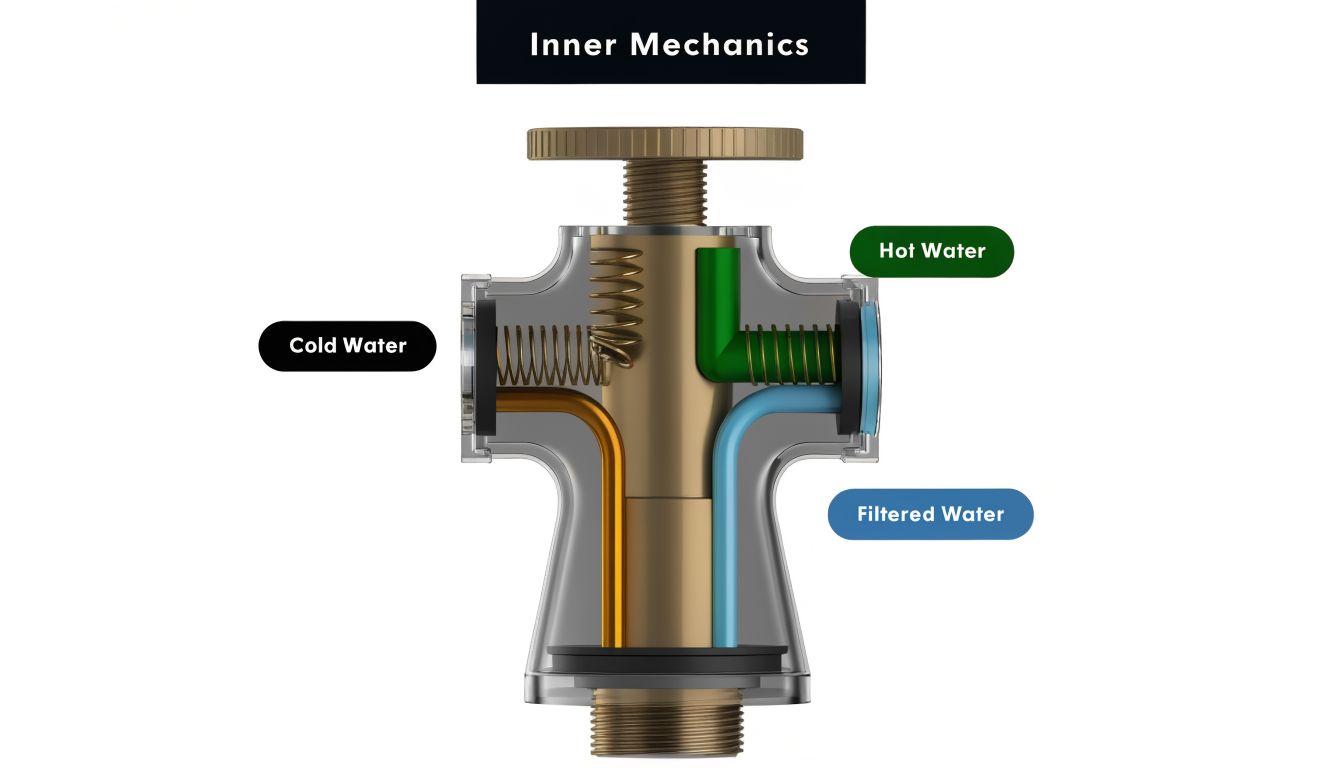
Separate channels matter
In the field, quality differences become quickly apparent. A well-built tap keeps the filtered circuit properly segregated. A cheap tap often cuts corners in the casting, cartridge layout, or outlet design. The result can be poor flow, awkward servicing, or a filtered outlet that does not inspire much confidence once the tap has been in use for a while.
This also affects system compatibility under the sink. Many Melbourne kitchens now pair a 3 way tap with filtration, instant boiling units, chilled systems, or a combination unit. If the tap’s internal design is basic, it may be fine on a simple filter setup but become troublesome once you ask it to work alongside more advanced appliances with their own pressure limits, check valves, and connection requirements.
Why pressure and flow matter in practice
The way a tap feels at the sink comes down to more than the handle design. Pressure balance, flow restriction, and the internal path length all influence performance.
Filtered water usually runs at a gentler flow than the standard hot and cold side. That is normal. It helps with drinking water delivery and reduces splashing, but it also means the under-sink setup has to be right. If incoming pressure is too low, the filtered stream can feel weak. If pressure is too high, you can get noise, spray, and extra wear on cartridges, flexi hoses, and filter heads.
In my experience, many complaints blamed on the tap are really installation issues. The common culprits are mismatched pressure, missing pressure limiting valves, undersized filtration tubing, or an under-sink boiling or chilled unit that has been connected to a tap it was never designed to work with.
| Water path | What it does | What to watch for |
|---|---|---|
| Hot/cold mains | Handles normal sink duties like washing up and filling pots | Needs stable pressure and a mixer cartridge that is not being stressed by poor alignment |
| Filtered outlet | Supplies drinking water through a separate internal channel | Performance depends heavily on filter condition, tubing size, and inlet pressure |
| Combined system performance | Affects how the tap feels across all functions | Problems often trace back to the under-sink unit or fittings, not the spout itself |
The controls and valve design
Control layout varies by brand. Some taps use one main lever for hot and cold, with a second lever or knob for filtered water. Others build the controls into a tighter format. The practical test is simple. Users should be able to choose the right water stream without hesitation, especially in office kitchens or hospitality areas where several people use the same fixture.
Valve quality matters here. Ceramic disc cartridges are the standard worth having because they shut off cleanly and stand up better to regular use than old washer-style arrangements. They are also less fussy when installed properly. If a new tap feels stiff, gritty, or vague at the handle, I start looking at installation tension, debris in the line, or poor manufacturing tolerance.
A good 3 way tap should feel predictable every time you use it.
Material quality affects service life
Finish gets the attention. Internal construction decides whether the tap will still be worth having in a few years.
For drinking water applications, the body material, internal seals, cartridges, and wetted components all matter. In homes, weak internals usually show up as drips, reduced filtered flow, or fiddly servicing. In offices and hospitality settings, those problems arrive sooner because the tap gets used harder and more often.
This is also why I tell clients to choose the tap as part of the whole under-sink system. A polished tap on the bench means very little if the body is light-duty, the fittings are awkward to access, or the unit underneath needs a different pressure range or connection arrangement. Ring Hot Water sees this regularly with Australian instant boiling and chilled systems. The tap may look compatible at a glance, but the key question is whether the valve design, outlet type, tubing, and pressure control will all work together once installed.
Key Benefits for Homes Offices and Hospitality
A good 3 way mixer tap earns its place because it removes friction from everyday use. The benefit changes depending on where it’s installed. In a family kitchen, it’s about convenience and bench space. In an office, it’s about making drinks and drinking water easier for staff. In hospitality, it’s about keeping workflow moving.
The common thread is simple. One well-planned fixture can replace multiple clumsy habits.
In homes, it cuts clutter without creating a second compromise
Most Melbourne homeowners start with a practical problem, not a plumbing theory. The sink area is crowded. The fridge is full of water jugs. The little add-on filter tap looks out of place. A 3 way tap clears that up by folding the filtered outlet into the main fixture.
That cleaner layout matters in renovated kitchens, but it matters just as much in older homes where there isn’t much room to waste. One tap at the sink is easier to clean around, easier to use, and usually easier to live with long term.
There’s also the water quality side. The move toward 3-way functionality addressed water quality concerns, and NHMRC 2011 guidelines influenced higher standards. Taps compliant with AS 4020 are tested in ways aligned with drinking water use, and this sat alongside a Melbourne trend where premium mixer tap installations rose 150% from 2010 to 2020, as noted in this history of tap development and standards discussion.
In offices, it removes small daily annoyances
Office kitchens have a way of exposing bad tap choices. If people need drinking water all day, a separate jug system becomes a nuisance. If they need hot drinks constantly, a basic sink setup doesn’t keep up well.
A 3 way mixer tap paired properly with under-sink equipment can give staff filtered drinking water from the same point they already use, while keeping the sink area tidier. That’s useful in small lunchrooms, medical suites, showrooms, and shared office fit-outs where every bit of bench space gets claimed.
What works in offices:
- Clear controls: Staff shouldn’t have to guess which handle gives filtered water.
- A sensible spout height: Enough room for bottles, jugs, and mugs.
- Good placement: Not crammed beside a wall cabinet where the handle movement is restricted.
What doesn’t work:
- Overcomplicated controls: People use the wrong outlet or avoid the tap altogether.
- Weak filtered flow: It makes bottle filling feel slow and irritating.
- No servicing plan: Filters get forgotten, then everyone blames the tap.
The best office tap setups are the ones nobody has to think about. People just use them.
In hospitality, speed and layout matter more than brochure features
Hospitality operators care less about jargon and more about throughput. If the tap serves filtered water for food prep or beverage service, it has to be reliable, quick to operate, and easy to clean around. The visual side matters too. A neat integrated tap looks more professional than a patchwork of separate spouts and fittings.
For bars, cafés, and back-of-house prep areas, one integrated fixture can simplify the sink zone. But hospitality also punishes poor specification. If the tap body is light-duty, the handles are fiddly, or the filtration side isn’t matched to demand, staff will find its weaknesses very quickly.
The trade-offs are real
A 3 way mixer tap isn’t automatically the right choice for every sink. It usually costs more than adding a basic separate filter tap. It also asks more of the installation because three water paths must be connected correctly, and under-sink layout becomes more important.
That said, the upgrade makes sense when you value these outcomes:
| Setting | Main benefit | Common reason people upgrade |
|---|---|---|
| Home kitchen | Cleaner sink area | Replace jugs and extra tap hardware |
| Office kitchen | Easier staff access to filtered water | Reduce daily bottlenecks and clutter |
| Hospitality | Faster, tidier operation | Keep service areas organised |
When the tap is chosen for the actual use case, not just the showroom appearance, it becomes one of those upgrades people stop noticing because it makes the room work better.
Pairing Your Tap with Instant Boiling and Chilled Systems
Much 3 way tap advice falters on a key distinction. It’s easy to describe a tap that delivers hot, cold, and filtered water. It’s harder to explain what happens when that filtered side is being fed by an under-sink system that also includes instant boiling or chilled water.
That combination is common in Australian kitchens and office fit-outs. It’s also where compatibility starts to matter more than appearance.
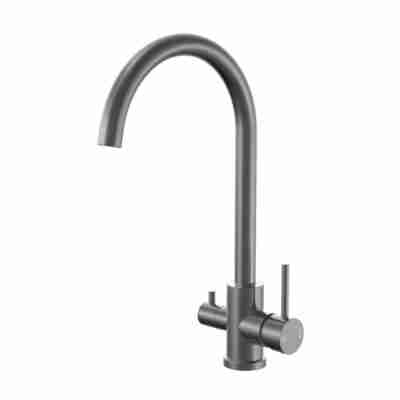
The tap is only one part of the system
When a 3 way mixer tap is paired with an under-sink boiling or chilled unit, the tap body has to cooperate with:
- the incoming mains pressure
- the filtration setup
- the appliance’s own operating requirements
- the correct valve arrangement
- the available cabinet space
- service access for future maintenance
That’s why a tap that looks suitable on paper can become a poor fit once it meets a real kitchen. A narrow under-sink cabinet, awkward waste pipes, or an older pressure condition can turn a neat upgrade into a fiddly retrofit.
In Melbourne retrofits, one documented challenge is the integration of 3-way taps with high-pressure boiling units such as Zip systems. Under AS/NZS 3500.1, specific non-return valves are required, and local plumbers have reported 25% higher service calls for retrofits involving boiling systems due to issues such as inadequate filtration bypasses, as outlined in this trade discussion of 3-way kitchen tap retrofit problems.
What usually goes wrong
The most common problems aren’t dramatic. They’re the sort of installation faults that slowly become expensive or annoying.
Pressure mismatch
A boiling unit and a mixer tap don’t always want the same conditions. If pressure is too high or unstable, the tap may feel harsh while the appliance side becomes harder to protect. If pressure is poorly managed, wear on valves and fittings increases.
Incorrect backflow protection
This is a major one. Boiling systems and filtered water lines need to be arranged so water can’t travel where it shouldn’t. If the non-return valve setup is wrong, the system can behave unpredictably and may not comply with the code requirements for that installation.
No proper filtration bypass logic
Some retrofits are joined together in a way that looks acceptable at first glance but creates odd performance issues later. The filtered line, boiling feed, and standard mains connections need to be separated with purpose. If they’re not, servicing becomes harder and the user experience gets worse.
If a plumber treats a 3 way tap plus boiling unit as “just another mixer swap”, that’s usually where the trouble starts.
A better way to think about compatibility
Don’t ask only whether the tap can connect. Ask whether the whole arrangement will operate cleanly after months of use.
A proper compatibility check should cover these points:
| Check | Why it matters |
|---|---|
| Boiling or chilled unit type | Different systems place different demands on valves, tubing, and cabinet layout |
| Filtered water path | The line must stay isolated and correctly routed |
| Pressure control | Protects both the tap and appliance side |
| Service access | Filters, valves, and cartridges need to be reachable |
| Spout and control design | The user must be able to distinguish water functions easily |
If you’re weighing up options, this overview of an instant boiling and chilled water tap setup helps show how the tap and appliance side relate in a practical installation.
A short visual walk-through helps as well:
Which systems pair well in practice
Brands like Zip, Stiebel Eltron, and Boiling Billy are common reference points in this category because homeowners and office managers often want filtered drinking water at the sink plus fast boiling delivery for tea, coffee, and food prep.
What works well is matching the tap style, pressure conditions, and fitting method to the unit’s needs from the beginning. What doesn’t work is buying the tap first, buying the appliance second, then assuming any installer can make them coexist neatly.
The smartest installations are rarely the most complicated. They’re the ones where each component is selected with the others in mind, and the final layout still leaves enough room under the sink to service it later.
A Practical Guide to Installation and Required Fittings
You usually find out whether a 3 way mixer tap was planned properly the first time someone changes a filter, resets a boiling unit, or tries to shut the water off in a hurry. If the cabinet is packed tight, the wrong fittings were used, or the pressure was never checked, a tidy-looking install turns into an awkward service job fast.
That’s the part many homeowners and office managers don’t see at purchase time. A 3 way tap is only one piece of the system. In Melbourne kitchens and office tea points, the primary task is making the tap, filtration, isolation valves, pressure control, and any boiling or chilled unit fit together without creating future headaches.
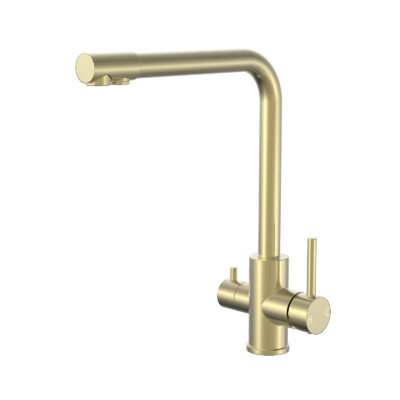
Start with the cabinet, not the tap brochure
Under-sink space decides what is possible.
A standard sink cabinet can look roomy until you add a filter cartridge, waste trap, hoses, power outlet, water connections, and an instant boiling or chilled unit. Then you still need enough hand access to isolate the water and service the components later. I see this constantly on retrofits across Melbourne, especially where a new tap is being added to an older kitchen that was never designed for appliance water systems.
Check these points before anything is ordered:
- Tap hole position and sink layout: The spout needs to land in a usable spot, and the handles or levers need clearance from splashbacks and window ledges.
- Cabinet dimensions: Measure for the equipment and for maintenance access. A filter that cannot be removed cleanly is a poor install, even if it fits on day one.
- Power location: Boiling and chilled units need compliant power access in a practical position, not a lead stretched across the cabinet.
- Hose path: Filter lines and braided hoses should run without kinks, crushing, or sharp bends around waste pipework and bin runners.
Pressure and isolation need to be planned early
A 3 way mixer tap connected to filtration is not forgiving of poor pressure control. Some properties have mains pressure that is too high for the tap, the filter assembly, or the connected boiling unit to live with comfortably over time. In those jobs, a pressure limiting valve is not an upgrade. It is part of getting the installation right.
The same applies to isolation. If you cannot shut off the filtered line or appliance feed without turning half the kitchen off, servicing becomes slower, messier, and more expensive. A properly placed kitchen shut-off valve for sink and appliance servicing makes a big difference once the system is in use.
A quick site check usually tells the story. Noisy pipework, aggressive flow at existing taps, or a history of dripping valves often points to pressure or control issues that should be addressed before the new tap goes in.
Choose fittings that match the system, not whatever is in the van
Installs often falter at this point.
Filtered water tubing, braided mixer tails, appliance feeds, and isolation points do not all want the same fitting style. Push-fit connectors can be the right choice on filtered water lines where clean routing and future disconnection matter. Threaded brass fittings still make more sense in other spots, particularly where you need a rigid, durable threaded connection. Mixing random adaptors because they happen to screw together usually creates a cabinet full of weak points.
For Australian boiling and chilled units, compatibility matters more than many people expect. Some systems want a specific inlet arrangement, some need pressure reduction upstream, and some are fussy about service clearances or hose routing. Buying the tap first and hoping the rest can be “made to work” is how jobs get overcomplicated.
A pre-install check that saves trouble later
Before installation starts, confirm these five items:
- The tap suits the sink and bench geometry. Tall necks, rear levers, and wide bodies can clash with splashbacks or overhead cupboards.
- Each under-sink component has a fixed location. That includes the filter, valves, waste, power point, and any boiling or chilled appliance.
- Isolation points stay accessible. They should not end up buried behind bins, cleaning products, or the appliance body.
- The fitting types are consistent. The line material, pressure, and service method should drive the fitting choice.
- Cartridge and unit servicing is possible without dismantling the cabinet. If a future technician has to remove half the setup to change a filter, the original layout was poor.
Usability matters as much as pipework
A 3 way tap can be plumbed correctly and still be annoying to use. Spout reach, handle travel, and the final mounting position all affect daily use at the sink. That applies in kitchens, office breakout areas, and hospitality prep spaces where people use the tap repeatedly through the day.
Builders already deal with this kind of placement logic in other wet areas. The same principle shows up in expert advice from Domicile Construction, where fixture height and clearance directly affect how well the finished installation works. Kitchen taps are no different. Good plumbing should also feel right in use.
What works on site, and what causes call-backs
| Works well | Causes problems |
|---|---|
| Planning the full under-sink layout before purchase | Buying a tap in isolation and forcing the rest to fit later |
| Allowing room for filters, valves, and appliance servicing | Packing the cabinet so tightly that routine maintenance becomes a dismantling job |
| Using the right pressure control where site conditions require it | Assuming the old setup’s pressure was fine for a filtered or boiling water system |
| Matching fittings to tube type and service needs | Stacking mismatched adaptors just to complete the connection |
| Keeping shut-offs visible and reachable | Hiding key valves behind bins or hard against the back panel |
The best installs are usually the calmest ones. Everything has a place, the fittings make sense, and the next person who has to service the tap is not left cursing the original job.
Simple Maintenance and Troubleshooting Your 3-Way Tap
A 3 way mixer tap doesn’t need constant attention, but it does need sensible maintenance. Most long-term issues start small. Reduced filtered flow, a stiff handle, a drip at the spout, or scale around the aerator all give you a warning before they become a service call.
The easiest way to keep the tap working properly is to treat it as part of the full water system, not just a shiny fitting on the sink.
Routine care that actually helps
For day-to-day cleaning, use a soft cloth and a mild cleaner suited to the tap finish. Avoid harsh abrasives. They can damage plated surfaces and make the tap look older long before its time.
The filtered side also depends on timely cartridge replacement. If the filter is overdue, people often blame the tap for slow flow or poor taste when the cartridge is the underlying issue. Keep the replacement interval organised according to the filter system you’ve installed.
A sensible maintenance habit includes:
- Wipe the tap body regularly: This prevents mineral buildup around handles and the spout outlet.
- Check the aerator if flow changes: Debris or scale can affect the stream pattern.
- Replace filter cartridges on schedule: Delayed changes reduce performance and water quality.
- Look under the sink occasionally: A quick visual check can catch a slow leak before cabinet damage starts.
Symptom, likely cause, practical response
Most common problems fit a simple pattern.
| Symptom | Likely cause | Practical response |
|---|---|---|
| Filtered water flow has dropped | Filter cartridge is clogged or overdue | Replace the cartridge and recheck flow |
| Tap is dripping | Valve cartridge may be worn or fouled | Have the cartridge inspected or replaced |
| Water is splashing oddly | Aerator may be blocked or scaled | Clean or replace the aerator |
| Handle feels stiff | Mineral buildup or internal wear | Clean external points, then book service if it persists |
Don’t ignore a small drip on a combined tap. It rarely fixes itself, and the longer it runs, the more likely it is to wear other internal parts.
When to call a professional
Some faults are not homeowner fixes. If the issue involves the boiling unit, chilled unit, hidden leaks, pressure irregularity, or backflow-related hardware, get a licensed plumber involved. The same applies if the filtered and standard water functions seem to interfere with each other.
A 3 way mixer tap is simple to use, but the system behind it may not be. Basic cleaning and filter changes are straightforward. Internal leaks, appliance-side faults, and valve arrangement problems are not.
Choosing and Installing Your Tap with Ring Hot Water
You pick a tap that looks right in the showroom, then installation day arrives and the problems start. The cabinet is tighter than expected, the boiling unit takes up more room than planned, the existing stop taps are in the wrong spot, or the pressure and connection layout do not suit the tap you bought. That is the point where product choice stops being a style decision and becomes a plumbing job.
A good 3 way setup starts with the full system, not the tap on its own. The spout height and reach need to suit the sink. The body needs to match the benchtop hole and fixing area. Under the sink, there has to be enough room for filter heads, hoses, isolation valves, and if you are adding instant boiling or chilled water, the appliance itself. In older Melbourne kitchens and office kitchenettes, that is often the part that catches people out.
If you are still weighing up tap styles and formats, our 3 way kitchen tap mixer guide gives a clear starting point. The next step is checking whether the tap will work properly with your actual sink, cabinet, and water system.
Compatibility matters more than price alone.
Some taps are better suited to a straightforward filtered water setup. Others are designed to pair cleanly with Australian instant boiling and chilled units, where hose routing, pressure control, and service access all matter. A tap can look almost identical from above and still be a poor match underneath. That is why we check the practical details first, especially in retrofits where the old pipework, trap position, powerpoint location, and cabinet shelves can limit your options.
For Melbourne properties in Sunshine, Yarraville, and Footscray, local installation support helps because many jobs are not simple swap-overs. A licensed plumber may need to alter valves, add the right fittings, improve access, or sort out issues left by an earlier install. For customers elsewhere in Australia, the same rule applies. Choose a supplier that can provide the correct filters, cartridges, valves, and genuine replacement parts after the tap is in service.
At Ring Hot Water, the focus is practical fit and long-term serviceability. A good result is a tap that works cleanly with the system behind it, can be maintained without tearing the cupboard apart, and still feels straightforward to use every day.
If you’re planning a 3 way mixer tap, filtered water upgrade, or a combined boiling and chilled setup, Ring Hot Water can help with practical advice, Melbourne installation and servicing, plus Australia-wide supply of taps, filters, spare parts, valves, and genuine fittings.

