
Boiling Hot Water Tap
Water Hot and Cold Dispenser

Apr
Melbourne Water Hot and Cold Dispenser Guide
Your bench is doing too much.
There’s the kettle that never sits neatly, the filter jug taking up fridge space, the bottle of chilled water someone forgot to refill, and the office kitchenette version of the same problem with more mess and more waiting. In a lot of Melbourne homes and workplaces, that’s the moment people start looking at a water hot and cold dispenser.
The appeal isn’t hard to understand. Turn the tap or press the control, and you’ve got hot water for tea, chilled water for drinking, and filtered water without juggling separate appliances. It’s cleaner, faster, and far easier to live with in a compact kitchen or busy staff area.
The part most buyers don’t get told is that the right unit depends on more than looks. Melbourne properties vary. Older plumbing, pressure swings, hard water pockets, tight under-sink cupboards, office demand, spare parts access, and service support all matter. A dispenser that works beautifully in a new apartment can be the wrong fit for a pre-1980 house in Yarraville. A stylish domestic tap can also be the wrong choice for a break room with constant use.
That’s where practical selection matters. A good system should suit the space, the water supply, and the people using it every day.
The End of the Kettle? Why Melbourne is Switching
A typical upgrade starts with irritation, not luxury.
Someone gets tired of waiting for the kettle. Someone else wants cold drinking water without filling trays or bottles. In offices, staff stop using the kitchen properly because the existing setup is clumsy. In homes, bench space gets tighter with every appliance added.
An integrated dispenser fixes several of those problems in one move. It removes the need for a separate kettle, cuts visual clutter, and gives you immediate access to water at useful temperatures. In a small Melbourne kitchen, that reclaimed space often matters as much as the hot and cold function itself.
The shift is already visible locally. ABS 2023 Household Water Use survey data indicates that 28% of Melbourne households now use WELS-compliant instant hot water dispensers, up from 12% in 2015, and these systems save an average household AUD 150 annually on electricity bills, as cited in this Australian market analysis.
What people are really buying
Most buyers say they want instant boiling or chilled water. In practice, they’re buying a better daily routine.
- Less bench clutter means the kitchen feels easier to use.
- Less waiting means tea, coffee, cooking prep, and bottle filling happen without the usual pause.
- Less appliance overlap means one integrated system can replace multiple workarounds.
Practical rule: If your current setup includes a kettle, a jug, and a separate cooling solution, you’re already paying the space penalty for a system that does less.
Melbourne homes have also changed. Renovations lean toward cleaner lines, fewer benchtop items, and appliances that disappear into cabinetry. Offices have similar priorities. Staff want quick access, cleaners want fewer surfaces, and managers want equipment that doesn’t look temporary.
That doesn’t mean every dispenser is worth buying. Some look good on a website and become annoying in daily use. The right result comes from matching the unit to the property, not just the brochure.
Inside Your Instant Hot and Cold Water Dispenser
Think of a modern dispenser as two appliances working together. One side behaves like a compact, insulated hot water system. The other works like a small refrigeration unit. They share a footprint, but they don’t share temperature.
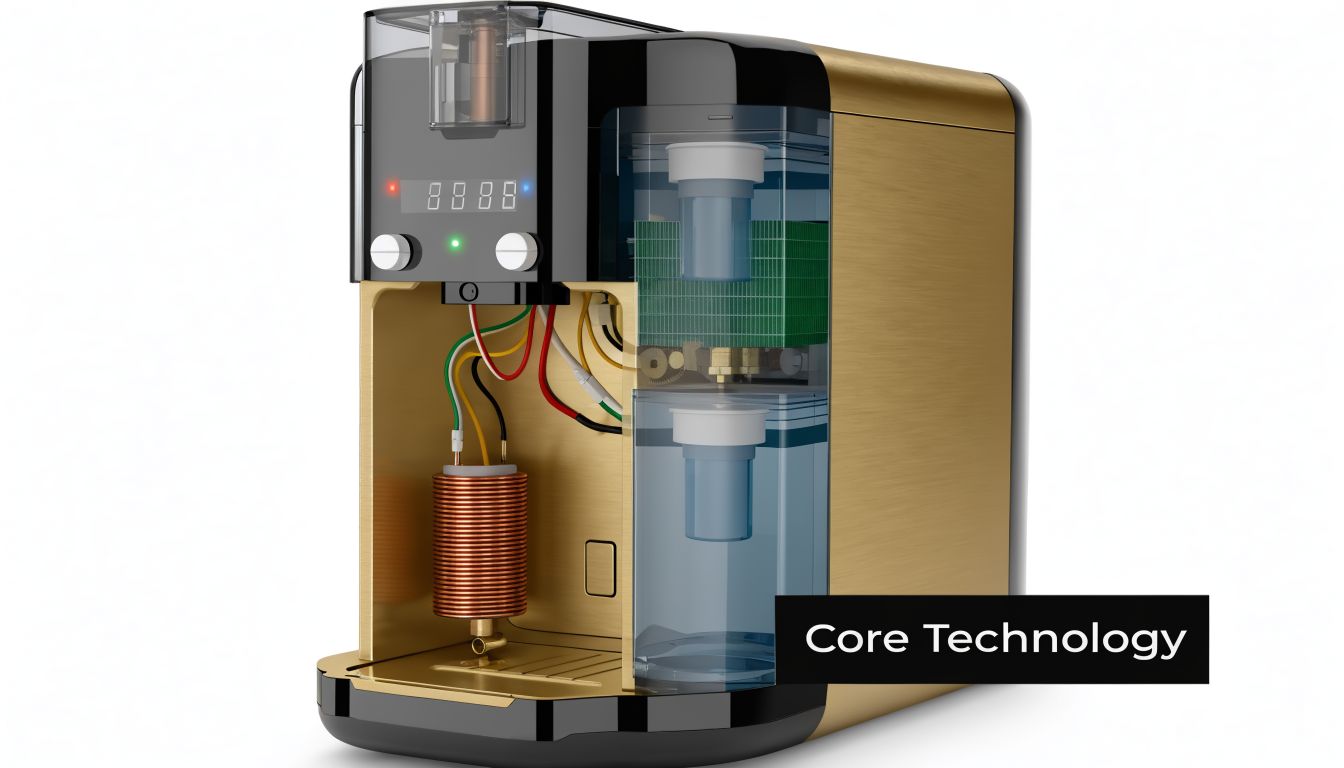
How the hot and cold sides stay separate
In professional units, the hot and cold water are stored in physically separate, thermally insulated reservoirs. Hot water is typically maintained at 74-90°C, while cold water sits at 5-10°C. Heating is handled by 420-watt elements, and the chilled side uses compressor-based refrigeration with R600a refrigerant, which helps prevent temperature crossover and improves energy efficiency, according to this explanation of how a hot and cold water dispenser works.
That separation matters in real use. If a system lets heat bleed into the cold side, your chilled water never feels properly cold. If the cold side affects the hot chamber, your tea water becomes underwhelming.
What happens when you use it
When you activate the tap or control, the unit draws from the relevant side of the system.
The better units do three things well:
- Hold temperature steadily so the first cup and the fifth cup feel consistent.
- Recover quickly after repeated use.
- Control energy use by heating and cooling intelligently rather than running wastefully.
Some buyers coming from the caravan or RV world already understand this logic because compact systems there also need to balance performance and limited space. If that’s your frame of reference, this overview of an instant hot water heater is useful background on on-demand water heating design, even though household dispensers use a different installation approach.
Separate reservoirs are what make a proper hot and cold dispenser feel composed in daily use instead of temperamental.
The basic takeaway is simple. A good dispenser isn’t one tank doing a rough imitation of hot and cold service. It’s two controlled systems packaged into one practical appliance.
Choosing the Right Dispenser for Your Space
The best dispenser for a Melbourne apartment is often the wrong one for a café, and the best office unit can be overkill in a small home. Form factor matters.
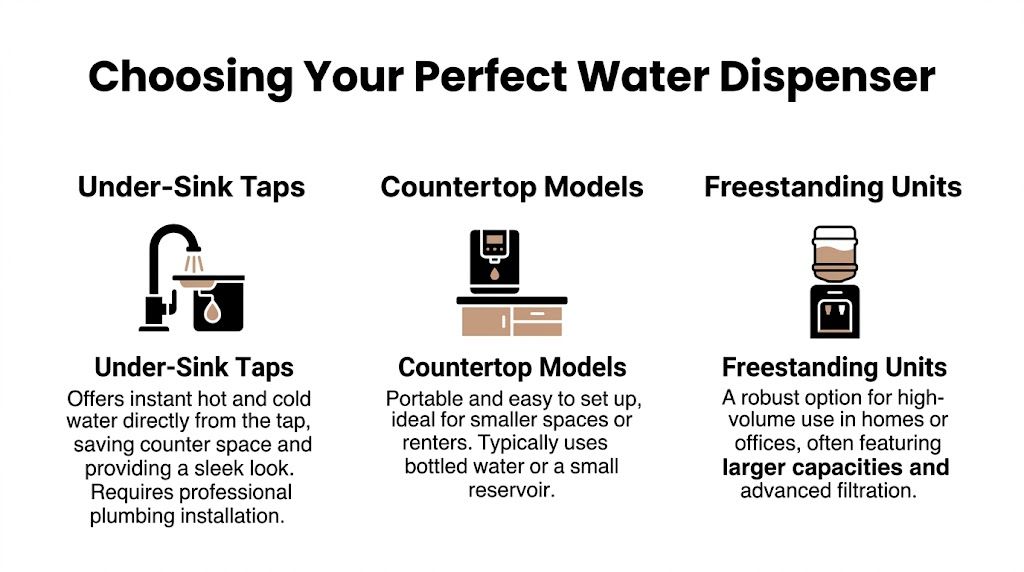
ABS 2024 data shows that 42% of new kitchen renovations in Melbourne include under-sink boiling and chilled dispensers, a 78% rise since 2018, with compact designs suiting urban homes where over 60% of dwellings are under 100sqm. For caravan owners, compact 12mm fitting units have grown at a 25% annual rate since 2022, according to this market overview.
Under-sink taps
These are the cleanest solution for most renovated homes and better-finished office kitchens.
You get a dedicated tap at the sink, while the working components sit inside the cabinet. That keeps the bench clear and gives the room a built-in look instead of an add-on appliance feel.
They suit:
- Homeowners renovating kitchens who want a tidy, integrated result.
- Apartment living where bench space is limited.
- Small offices where appearance matters and usage is steady rather than extreme.
They don’t suit every situation. If the cupboard is crowded, access for servicing can be poor. If the plumbing is old or pressure is unstable, the install needs more care.
Wall-mounted boiling units
These are practical, not decorative.
Wall-mounted units make sense in staff kitchens, medical rooms, community spaces, and hospitality back-of-house areas where people need dependable hot water quickly and don’t care whether the appliance blends into cabinetry. Some are paired with separate chillers depending on demand.
They suit:
- Break rooms and offices with repeated hot water use
- Churches, schools, and halls
- Hospitality prep areas
What works well is their straightforward serviceability. What doesn’t is forcing them into a design-led residential kitchen where they look industrial and out of place.
For workplace-specific considerations, this guide to water dispensers for office is a useful reference point.
Freestanding and benchtop units
These are the least invasive to set up, but usually the biggest compromise on appearance.
Freestanding units can suit temporary offices, rental situations, and high-use common areas where flexibility matters more than integrated design. Benchtop models can work in smaller premises, but they still consume visible space.
What people often get wrong is treating them as a universal answer. They’re not. They’re a good answer when you need easy placement, simpler setup, or mobility.
A quick comparison
| Dispenser Type | Best For | Key Advantage | Consideration |
|---|---|---|---|
| Under-sink tap | Homes, apartments, polished office kitchens | Saves bench space and looks integrated | Needs professional plumbing and enough cabinet room |
| Wall-mounted unit | Offices, hospitality, shared facilities | Built for practical repeated use | Less suited to design-focused home kitchens |
| Freestanding unit | Temporary spaces, rentals, common areas | Flexible placement | Takes visual and floor space |
If the room is permanent and the cabinetry is staying, under-sink usually wins. If the room is functional and heavily used, wall-mounted often makes more sense.
The right choice starts with use pattern, not product trend.
Decoding Features From Energy Ratings to Safety Locks
A product sheet can make every dispenser look similar. They’re not. The differences that matter are usually hidden in the specs people skim past.
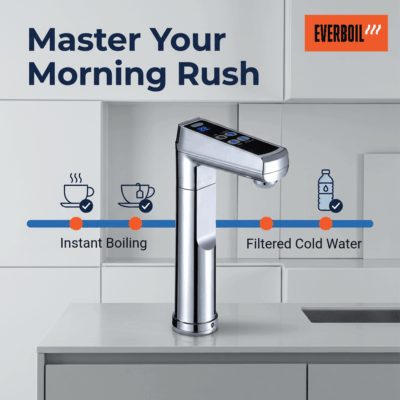
Start with energy and temperature control
Temperature control also changes how useful the system is. Hot water that’s too low frustrates tea and food prep. Cold water that’s only mildly cool feels disappointing in summer or after exercise.
Look for:
- Stable hot delivery for drinks and quick kitchen tasks
- Consistent chilled output during repeated use
- Clear controls so users know what they’re selecting
Don’t ignore the user interface
Touch panels and digital indicators aren’t just cosmetic. They can make daily use simpler, especially in offices where multiple people use the same unit.
A good control layout should be obvious to someone who’s never used that model before. If staff need a verbal explanation every time, the design has failed.
Useful features include:
- Filter life indicators so service isn’t left to guesswork
- Temperature displays for clearer control
- Simple dispensing logic that reduces misuse
Safety features are not optional
Boiling or near-boiling water at a tap needs proper safeguards.
For family homes, child-resistant operation matters. In offices and hospitality spaces, insulated spouts, clear controls, and predictable flow matter just as much because many users approach the unit casually and quickly.
A fancy finish won’t save a bad interface. If users can’t tell what the unit is doing, safety and convenience both suffer.
Match features to the setting
The common mistake is paying for features that don’t suit the environment.
- For homes with children, prioritise safety locks and straightforward operation.
- For workplaces, prioritise easy cleaning, intuitive controls, and steady recovery.
- For hospitality, prioritise reliability and service access before cosmetic extras.
Operational decisions also sit alongside wider kitchen choices. In hospitality fit-outs, for example, serving ware, waste handling, and beverage workflow all connect. If you’re reviewing the bigger setup, this UK hospitality guide to choosing recyclable coffee cups is a useful example of how practical procurement decisions ripple through daily service.
The strongest buying filter is simple. Ask what feature improves daily use, lowers risk, or makes servicing easier. If it does none of those, it’s probably brochure filler.
The Ultimate Guide to Water Filtration and Health
A dispenser is only as good as the water passing through it.
Heating and chilling improve convenience. Filtration is what improves confidence. If you want better taste, cleaner odour, and stronger control over water quality, the filter stage deserves as much attention as the tap itself.
The main filtration tiers
The first tier is basic taste improvement. That usually means carbon-based filtration aimed at reducing chlorine taste and odour and catching common particulates.
The second tier is more thorough multi-stage treatment. That can include sediment and carbon stages combined in a way that gives better overall conditioning before water reaches the dispenser.
The highest tier for many buyers is reverse osmosis, especially where people want a stronger purification approach for drinking water.
When reverse osmosis makes sense
Advanced direct flow RO systems can achieve a water recovery rate exceeding 50% and produce up to 1,450 litres per day, which reduces wastewater and provides a steady supply for homes and offices, as outlined in this product specification for the Expert P500 reverse osmosis system.
That matters in practice because older-style assumptions about RO often focus only on water waste or slow production. Direct flow systems have changed that conversation. For households that drink a lot of filtered water or offices that need dependable throughput, capacity and recovery rate both matter.
If you’re assessing local options, this page on water filter installation in Melbourne gives a useful overview of fitting filtration into a broader water setup. Navigating Installation and Maintenance in Melbourne
A good install solves problems before the first cup is poured. A rushed install creates callbacks, leaks, pressure issues, and annoyed owners.
Melbourne homes aren’t uniform. ABS-linked data states that 28% of Melbourne dwellings built pre-1980 have sub-optimal plumbing, and plumbers report 35% higher service calls for instant hot water systems in hard water areas or where supply pressure fluctuates between 100-1000 kPa, which is why proper fittings and pressure management matter, according to this industry summary on bottleless dispenser installation issues.
What the installer should check first
The first question isn’t which tap finish you want. It’s whether the property can support the unit properly.
A competent installer should assess:
- Available cupboard space for the boiler, chiller, filters, and service access
- Water pressure behaviour rather than assuming it’s stable
- Power availability in the correct location
- Condition of existing plumbing, especially in older suburbs such as Yarraville and Footscray
Where pressure is inconsistent, a regulator or related control hardware may be needed. Where the home uses unusual supply arrangements, the layout may need adapting. This is one reason under-sink systems shouldn’t be treated like a simple appliance swap.
A related setup option worth understanding is an under-sink water chiller, particularly when chilled supply is the main priority or part of a staged upgrade.
Why professional installation pays for itself
DIY thinking often focuses only on whether the unit can be connected. The better question is whether it can be connected safely, neatly, and serviceably.
What works:
- Correct isolation points
- Reliable fittings such as John Guest connections where appropriate
- Enough slack and routing discipline to allow later servicing
- Logical placement of filters and valves
What doesn’t:
- Overcrowded cupboards
- Unsupported hoses
- Taps installed without thought for splash pattern or sink use
- Electrical access that makes maintenance awkward
Most dispenser problems blamed on the product start with installation shortcuts.
Here’s a useful visual walkthrough of the kind of under-sink work that often sits behind a neat finished result:
Routine maintenance that actually matters
Maintenance doesn’t need to be complicated, but it does need to be regular.
Focus on:
- Filter replacement based on the system’s schedule and actual usage
- Descaling attention where water conditions make that relevant
- Visual checks for seepage, stressed fittings, or reduced flow
- Professional servicing when the unit is commercial, ageing, or showing inconsistent behaviour
This is also where brand support matters. Units from makers such as Zip, Stiebel Eltron, Boiling Billy, and Everchill are much easier to live with when genuine parts and local servicing are available. In Melbourne, one option is Ring Hot Water, which supplies, installs, and services these systems along with fittings and replacement parts.
Solving Common Dispenser Problems and Faults
Most faults fall into a small number of patterns. The trick is knowing which ones are simple checks and which ones need service.
No hot or no cold water
Start with the obvious. Check power supply, switch settings, and whether the unit has been turned off at the wall or isolation point.
Then check whether the system has had enough recovery time after heavy use. If one function still doesn’t return, the issue may sit with the heating side, cooling side, thermostat, or internal control.
Try this first:
- Confirm power is on at the socket and unit
- Check any reset function the manufacturer provides
- Make sure the water supply valve is open
- Look for warning indicators on the display, if fitted
Leaks under the sink or at the tap
Don’t ignore small leaks. They usually get worse, not better.
A leak can come from a fitting that wasn’t seated properly, a worn seal, a filter housing issue, or pressure behaviour that’s stressing the connection. If the leak appears around a hot outlet or electrical component, switch the unit off and stop using it.
Low flow or poor dispensing
Low flow is often blamed on the tap. It’s more often a supply or filtration issue.
Check whether the filter is due, whether an isolation valve is partly closed, or whether pressure is fluctuating. In older homes, scale, restrictive plumbing, or ageing valves can also contribute.
If flow drops suddenly after being normal, don’t force the unit. Check the filter and supply path before assuming a major failure.
Noise, odour, or hygiene concerns
Some noise is normal, especially when cooling systems cycle. New or unusual sounds deserve attention if they persist.
For commercial sites, hygiene isn’t negotiable. NCC 2022 amendments effective in 2025 require commercial units to mitigate Legionella risk through stored water temperature management, and the Victorian Health Department linked 22 Legionella cases in Melbourne in Q1 2025 to poorly maintained commercial water urns, as summarised in this note on commercial hot and cold water dispenser considerations.
That means commercial operators should:
- Follow scheduled servicing
- Keep cleaning and maintenance records
- Avoid ad hoc temperature changes without guidance
- Call for service if water quality, smell, or performance changes
If a unit is leaking, tripping power, dispensing erratically, or raising hygiene concerns in a shared setting, stop troubleshooting and book service.
Your Next Steps for Instant Water in Melbourne
A water hot and cold dispenser is a practical upgrade when it matches the property and how you use water.
The smart buying path is straightforward. Choose the right format for the space. Check the features that affect daily use. Decide how serious you are about filtration. Then make sure the installation suits your plumbing, pressure, and service access.
That last part matters more in Melbourne than many buyers expect. Older homes can be tricky. Offices need dependable uptime. Hospitality venues need equipment that can be maintained properly, not just installed quickly. Spare parts access also matters once the unit has been in service for a while.
Local support makes the whole system easier to own. It shortens diagnosis when something goes wrong, helps with brand-specific servicing, and avoids the common problem of buying a unit online only to discover no one wants to work on it later.
If you’re comparing options now, focus less on the glossy finish and more on the full setup. The best result isn’t just a good dispenser. It’s a good dispenser with the right filtration, a clean install, and support you can get.
If you need help choosing, installing, repairing, or maintaining a hot and cold water system in Melbourne, Ring Hot Water offers practical support across under-sink boiling and chilled units, wall-mounted boilers, commercial chillers, urns, filters, fittings, and genuine spare parts for major brands.

