
Uncategorized
How to Use Caravan Hot Water System: A Guide for 2026
Jul
You've just pulled into the campsite, the van's level, the kettle's packed away, and the first thing on your mind is a hot shower. That's where many new owners get caught out, because a caravan hot water system isn't something you can just switch on and ignore. If you fill it properly, bleed the air, and match the system to your setup, it works reliably. If you skip the checks, you can end up with lukewarm water, a tripped breaker, or a damaged heater.
Your First Hot Shower at the Campsite Starts Here
The first hot shower of a trip has a habit of exposing every shortcut you took during setup. A caravan hot water system is compact, efficient, and built for mobile use, but it still needs the right startup sequence before it delivers steady hot water. The difference between a smooth first night and a messy one is usually a few minutes of checking, not a major repair.
A lot of first-time owners assume the heater will sort itself out once the switch is on. That's not how these systems behave. In an Australian caravan, the hot water unit is usually a limited-capacity appliance, not a household-style endless supply, so it needs to be treated that way from the start. The good news is that the routine is simple once you know what matters.
Practical rule: fill first, purge air second, heat last. That order saves a lot of frustration.
The same idea shows up across storage, gas, electric, and instant systems, even if the controls look different. Once you understand the startup logic, the rest of how to use caravan hot water system comes down to matching the right steps to your model, then using less hot water than you would at home.
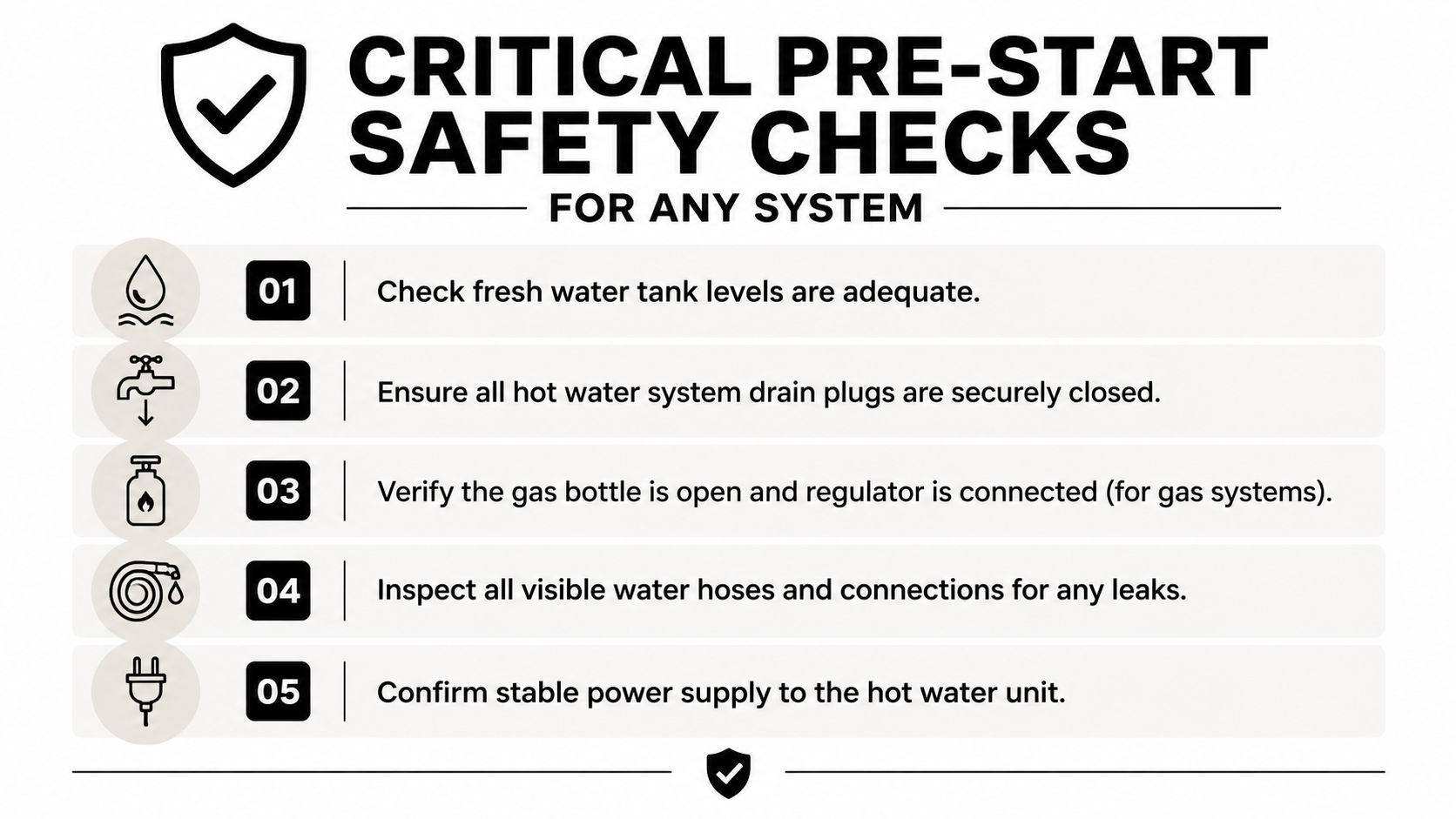
Critical Pre-Start Safety Checks for Any System
A cold campsite is the wrong place to discover that the heater was started with an empty tank or a closed valve. Before any gas, power, or heat reaches the unit, the system needs a proper pre-start check. Australian startup guidance repeatedly tells owners to open a hot tap, bleed out the air, and confirm the tank is full before energising the heater, because the wrong sequence can damage components or trip breakers (startup safety guidance). That order matters every time.
Check the water side first
Start with the fresh water supply and the heater itself. Confirm the tank or boiler is full, the drain plugs are secure, and the visible pipework is dry. If the system is empty or only partly full, leave it off. Air in the line can make the heater act like it has a fault when the issue is merely an unfilled tank.
Open a hot tap and let it run until the flow becomes steady. That purge clears trapped air and shows water is moving through the unit. If the tap spits or sputters, keep bleeding it until the flow settles. This is the habit that prevents dry-firing, where the heating element or burner runs before water is present.
Confirm the valve positions and controls
A bypass valve left in the wrong position can make a good heater look faulty. If the unit was set up for winter storage, return it to normal operating position before use. Check that the pressure control and tempering hardware are in place as well, because caravan kits are built around controlled flow and scald protection, not guesswork (typical caravan install hardware).
For gas units, confirm the bottle is open and the regulator is connected. For electric systems, make sure the supply is stable before you touch the heater switch. The install layout matters here, because caravan systems are usually assembled around a pump, accumulator, 12mm pipework, and pressure-limiting components, not a simple household tap arrangement (typical caravan install hardware).
Keep the fill-and-purge habit every time
The first few minutes after arrival are when mistakes happen. If the hot water unit has not been used since the last trip, assume there is air in the lines until you prove otherwise. A quick bleed now is a lot cheaper than dealing with a burnt-out heater later.
If you need to isolate the system before checking fittings or draining down, the shut-off valve guide is worth keeping handy.
How to Operate Your Specific Hot Water System
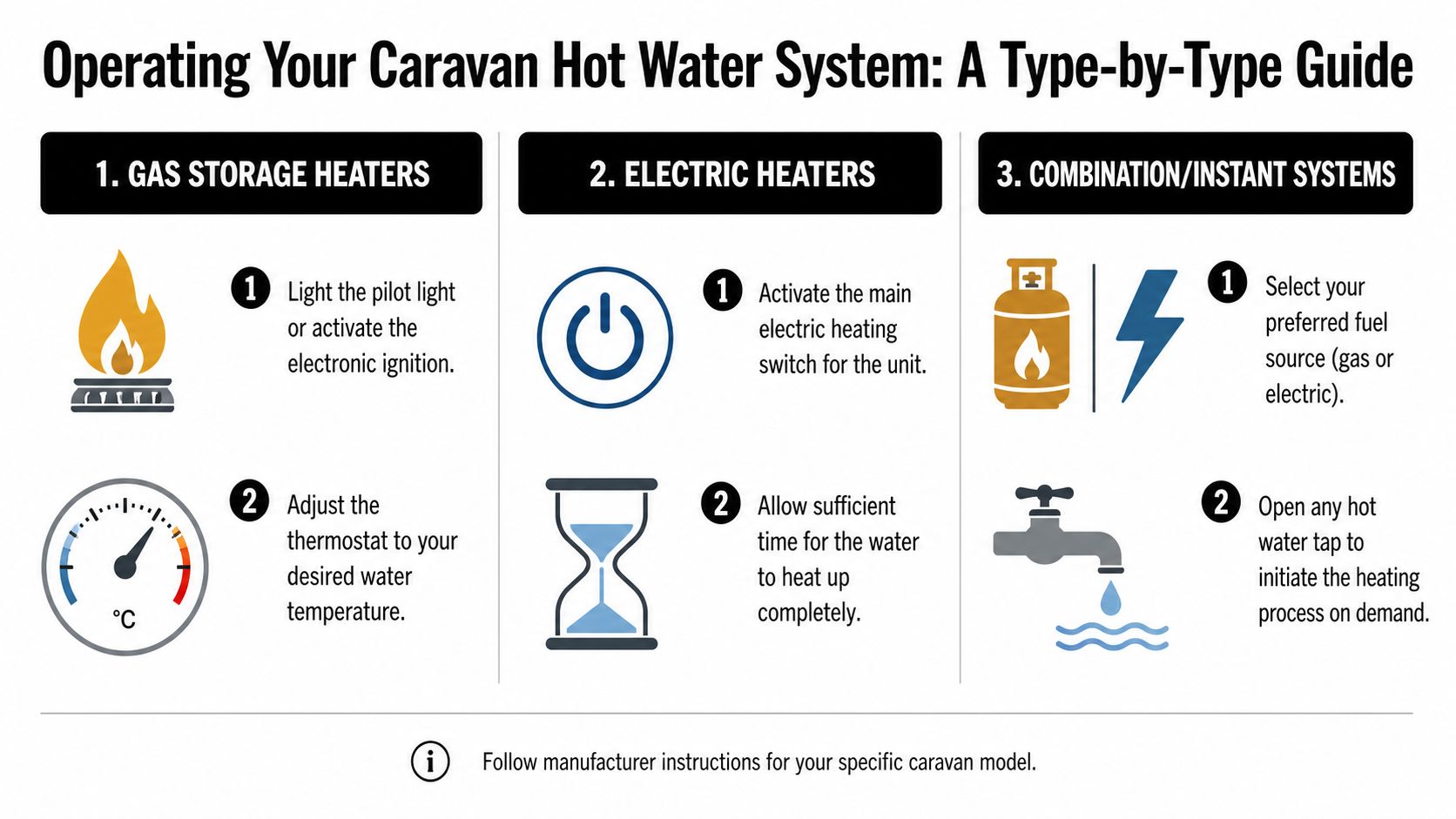
Once the tank is full and the air is out of the lines, the controls make more sense. At a campsite, the practical difference is simple. Gas storage heaters need a burner sequence, 240V electric units need mains power, and instant or combination systems need steady flow and the right settings before they behave properly.
Gas storage heaters
Gas storage units usually need the burner or ignition system running before the thermostat can regulate the tank. Some vans use a pilot light, others use direct spark ignition. If your model has an indicator light, treat it as a status check, not proof that the water is already hot. If that light points to a fault, stop there and check the gas supply and the purge sequence first.
Once the burner is active, the thermostat controls the water temperature inside the tank. Avoid turning the setting up without a reason. Higher settings can leave the outlet hotter than expected, which is why caravan systems often rely on mixing at the tap or through a tempering valve. In practice, set the heater for normal use and blend down only if the water feels too hot for comfortable use.
240V electric heaters
Electric heaters are straightforward to run, but only when the van is connected to a suitable mains supply at a caravan park or another approved source. Turn the unit on from the inside switch, then give it time to recover. A storage system does not produce hot water straight away, and a typical heat-up benchmark is around 28 to 30 minutes before usable hot water is available (heat-up benchmark).
People often assume something has failed at this point. Usually nothing is wrong, the water has not finished heating. If you are on site power, let the unit complete its cycle before running off water for showers or washing up. That avoids chasing a false fault when the system is still warming.
Instant and combination systems
Instant or on-demand heaters work off flow. Open a hot tap, and the unit responds to demand. That makes them useful for quick showers, but they still need the line purged and the flow set correctly. If the flow is too low or the settings are off, the result is temperature swings rather than a steady shower.
For a working look at caravan plumbing and pump hardware, the 12V water pump guide shows how the pump side fits into the broader setup. The main point is plain. The heater works properly only when water delivery stays steady.
If the heater is quiet but the tap flow is weak, check the plumbing side before assuming the heater is at fault.
Efficient Hot Water Use on the Road
Caravan hot water is limited, so efficient use starts with how you draw it, not just how you heat it. A typical caravan boiler sits in the 10 to 14 litre range, and that is usually enough for two people to shower back to back if they are careful with the flow and the timing boiler capacity guidance. In practice, that means the way you use the tank matters just as much as the heater itself.
Treat the tank like a limited supply
Back-to-back showers make the best use of one heated tank. If hot water is running at the sink, the outside wash point, and the shower at the same time, the tank will empty fast. On a campsite, hot water needs a plan, because once it is gone, you are waiting for recovery.
A navy-shower routine stretches supply without making the shower unpleasant. Wet down, turn the water off, soap up, then rinse. Keep the temperature steady instead of constantly adjusting the control, because repeated changes waste water and make the shower harder to manage.
Match the heat cycle to the trip style
Energy use is the other side of the job. Australian water-heating data shows that water heating can account for 15% to 27% of household energy demand Australian water-heating data. In a caravan, that demand shows up as gas use, battery draw, and the wait for the tank to recover, so the cost of each cycle is easier to feel.
Avoid reheating the tank unless you need it. If you are staying one night, one shower cycle may be enough. If you are parked for a few days, group showers and washing up so the heater runs fewer times. Fewer cycles mean less gas use and less strain on the system.
Good habit: use hot water in short, planned bursts, then let the system rest.
If you want to stretch supply without making campsite life awkward, the primary gain is usually in shower discipline, not in turning the heater higher.
Using caravan hot water well also means keeping the tank clean. If scale or residue is starting to build up, a proper flush with a suitable product helps the system keep heating the water it already has, and the caravan water tank cleaner page is a practical place to start.
Routine Maintenance and Winterisation
A caravan hot water system lasts longer when you check it before a fault turns into a breakdown. On the road, that means looking after the tank, fittings, and drains before the next trip, not after you discover water under the van. Keeping it clean and properly drained matters more in a caravan, because small issues turn into inconvenient repairs fast.
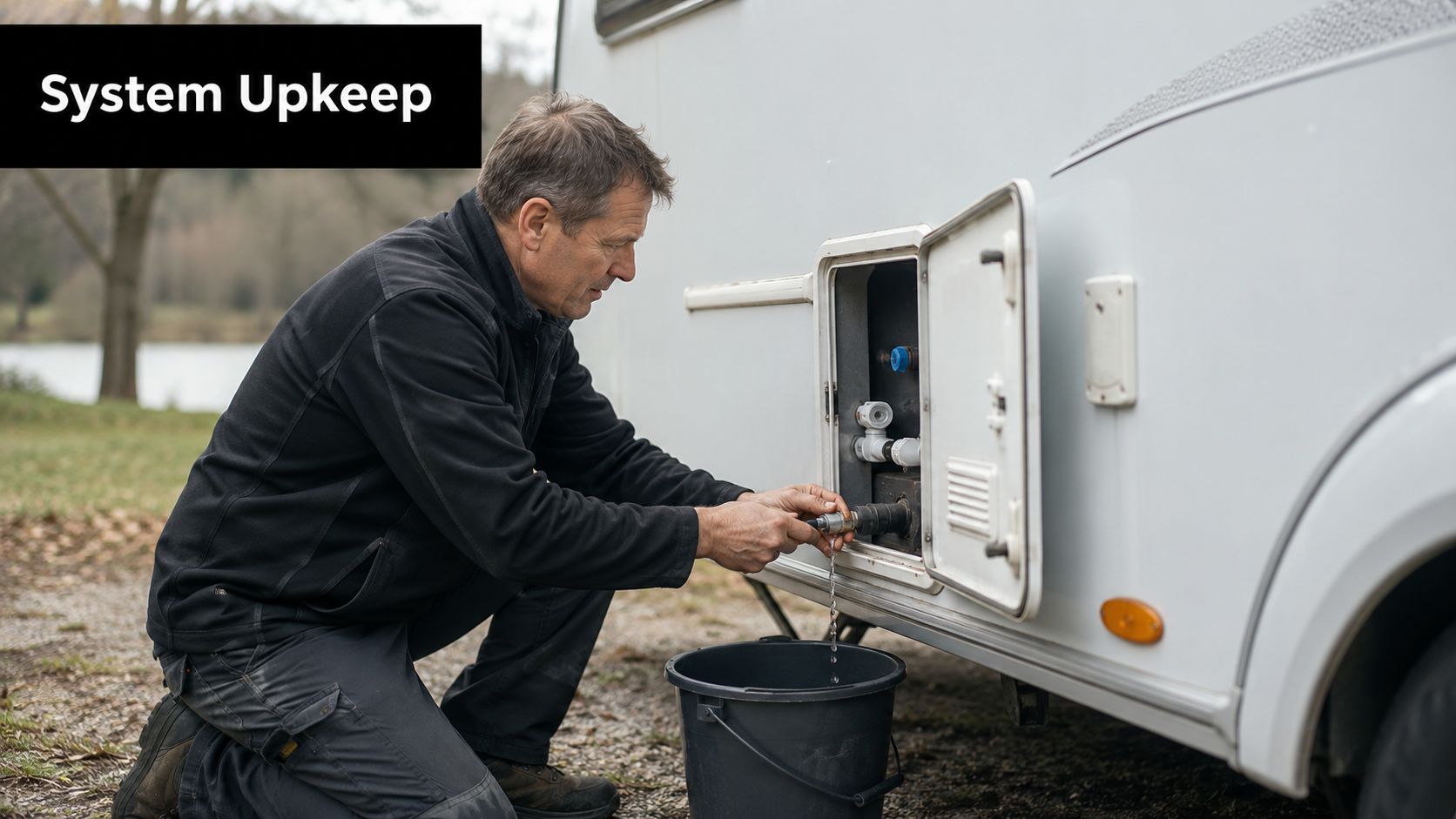
Routine checks that prevent bigger faults
Look over the heater, hoses, fittings, and tempering hardware for leaks, staining, or corrosion. If your setup uses a sacrificial anode, inspect it during routine service and replace it when it's worn. That small part protects the tank from corrosion, so leaving it until it fails can turn a simple service into a larger repair.
Tank flushing matters too. Sediment inside the unit reduces heat transfer and makes the system work harder than it should. If you use caravan-specific cleaning products, the caravan water tank cleaner page is a practical place to start, especially if the van has been sitting for a while or the water has been sitting in the system between trips. A regular flush also helps keep recovery times predictable, which matters when you are trying to get everyone showered before dark. If the heater is showing repeat faults or the water looks rusty after flushing, Fix your San Antonio water heater is a reminder that some problems need a qualified repairer, not another quick reset.
Winterise before storage, not after damage
When the season ends, drain the system completely and set the bypass as required by your van. The point is to remove any water that could freeze, expand, and crack the tank or lines. A half-drained system is a gamble, and freezing weather is not forgiving.
A proper winterisation routine also makes spring startup easier. If the system was drained cleanly and left in the right position, you will spend less time chasing airlocks and more time getting ready for the next trip. After storage, take a slow look for leaks and loose fittings before you fire it up again. If you want a better result after a long lay-up, inspect the valves, check the drain plugs, and confirm the bypass is returned to its normal position before heating the tank.
A clean tank, dry lines, and the right valve position will save more trouble than an emergency fix at the campsite.
Troubleshooting Common Hot Water Problems
Most caravan hot water faults are simple enough to narrow down without tools. Start with the symptom, then work through the likely cause in order. If the issue involves gas safety, mains power, or a sealed component, stop there and call a qualified technician.
Symptom, cause, fix
- No hot water at all. Check that the tank is full, the pump is running, the gas bottle is open, or the 240V supply is live. If the unit has a lock-out light, clear the basic supply issue first, then try again.
- Water is only lukewarm. Look at the tempering setup and whether the system is still in its recovery cycle. Sediment can also make heating less effective, so a flush may help if the system hasn't been serviced in a while.
- The pilot won't stay lit. That can point to a dirty thermocouple or burner tube, but it can also be a gas delivery issue. Stop if the flame won't stabilise after a proper check.
- Water flow is uneven. Air in the lines, a pump issue, or a partially blocked fitting can all cause that. Re-bleed the tap and confirm the pump is delivering a steady feed.
- The breaker trips when heating starts. That usually means an electrical fault rather than a user setting problem. Don't keep resetting it and hoping for the best.
If you want a useful external reference for the repair mindset, Fix your San Antonio water heater is a good example of how a service page frames troubleshooting around symptoms and repair decisions. The same logic applies here, identify the fault class first, then decide whether it's a simple owner fix or a licensed trade job.
When a fault repeats after a proper purge and restart, treat it as a real problem, not a bad luck event.
Caravan Hot Water System FAQs
| Question | Answer |
|---|---|
| How long should I wait for hot water? | After startup, give the heater time to warm through before you expect a proper shower. On storage units, that usually means waiting long enough for the tank to recover instead of rushing the tap. |
| Do I need to purge air every time? | Yes, if the system has been drained, left unused, or winterised. Open a hot tap first and bleed it until the flow is steady, then start heating. |
| What's the safest first check? | Confirm the tank is full and water is moving through the line before you switch on gas or power. That is the check owners skip most often, and it is the one that protects the heater. |
| Why does the water run out so fast? | Caravan boilers are usually small by design, so they suit short, controlled use rather than long back-to-back showers. If the van has a compact tank, plan around that limit and save the hot water for the part of the shower that matters. |
A caravan hot water system works properly when it is filled, purged, heated, and used with some restraint. Before a trip, check the basics, listen for the pump or burner to start normally, and make sure the first hot tap runs cleanly. If you need parts, guidance, or help matching the right setup to your van, contact Ring Hot Water and sort it out before you leave the driveway.

