Uncategorized
Hot Water System Spare Parts Near Me: Melbourne’s 2026 Guide
Jul
You usually search spare parts near me when the problem is already urgent. The boiling tap has stopped heating before the morning rush. The office urn is cold. The under-sink unit is flashing, leaking, or tripping power, and nobody cares about broad advice when they need the right part today.
In Melbourne, that urgency runs straight into a bad search experience. Generic results often bury appliance parts under automotive listings, broad marketplaces, and stores that sell “universal” replacements without saying whether they suit your unit. For hot water systems, that wastes time you don't have.
Why Finding Appliance Spare Parts Can Be Frustrating
The common pattern is easy to recognise. A homeowner in Sunshine loses hot water from an instant unit and searches for a thermostat. An office manager in Footscray needs an element for a wall-mounted boiler. A café needs John Guest fittings or a pilot lamp before service starts. They all type the same thing into Google and get pages of irrelevant car part results, mixed with hardware suppliers that don't specialise in boiling water systems.
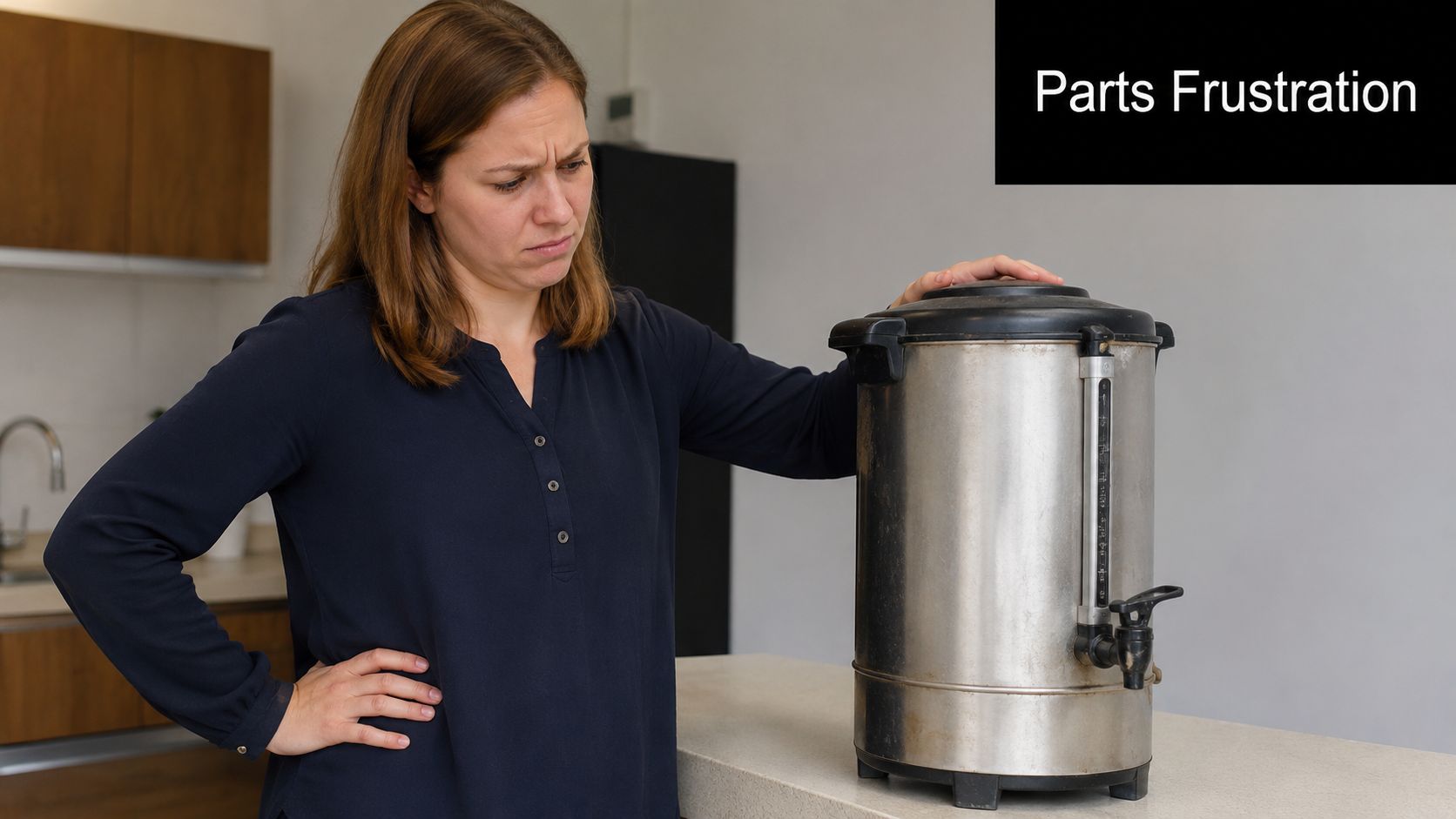
That frustration isn't imagined. In Victoria, 78% of local “spare parts” search results are auto-related, which leaves a real gap for people trying to find niche appliance parts such as boiling tap elements and thermostats locally, according to this Melbourne car spare parts guide.
Why generic search results fail
Hot water parts aren't interchangeable just because they look similar. A Zip element, a Stiebel Eltron valve, a Boiling Billy hose, and an Insinkerator fitting may all sit in the same broad category online, but the wrong match can create more work than the original fault.
A lot of people lose time in three places:
- Broad search terms: “boiling tap part” is too vague to bring up the exact component.
- Generic listings: many stores show a photo and a price, but no model-year detail, wattage match, certification note, or OEM code.
- Assumptions about pickup: a supplier may appear local on Maps, but the stock may still be coming from interstate.
Practical rule: Treat “spare parts near me” as the start of the job, not the answer. The useful part is the follow-up detail you add.
The local gap matters more than people think
Melbourne has plenty of plumbing merchants and electrical wholesalers, but not all of them carry specialist parts for under-sink boiling taps, commercial urns, or chilled and boiling combo units. That's why people end up scrolling through irrelevant directories or waiting on courier deliveries for parts that should have been identified properly in the first place.
If you're trying to understand the broader supply side of specialist products coming into Australia, this guide for Australian importers gives useful context on how niche inventory reaches local buyers. For the person standing in front of a dead unit, though, the immediate fix is much simpler. Identify the exact part, find a specialist, and confirm stock before you leave home.
Pinpoint the Exact Part Before You Search
Most failed searches start with incomplete information. If you ring a supplier and say, “I need the broken bit from my Zip,” you'll usually get more questions than answers. If you say, “I need a Zip 95334 element for a current model unit,” the call moves fast.
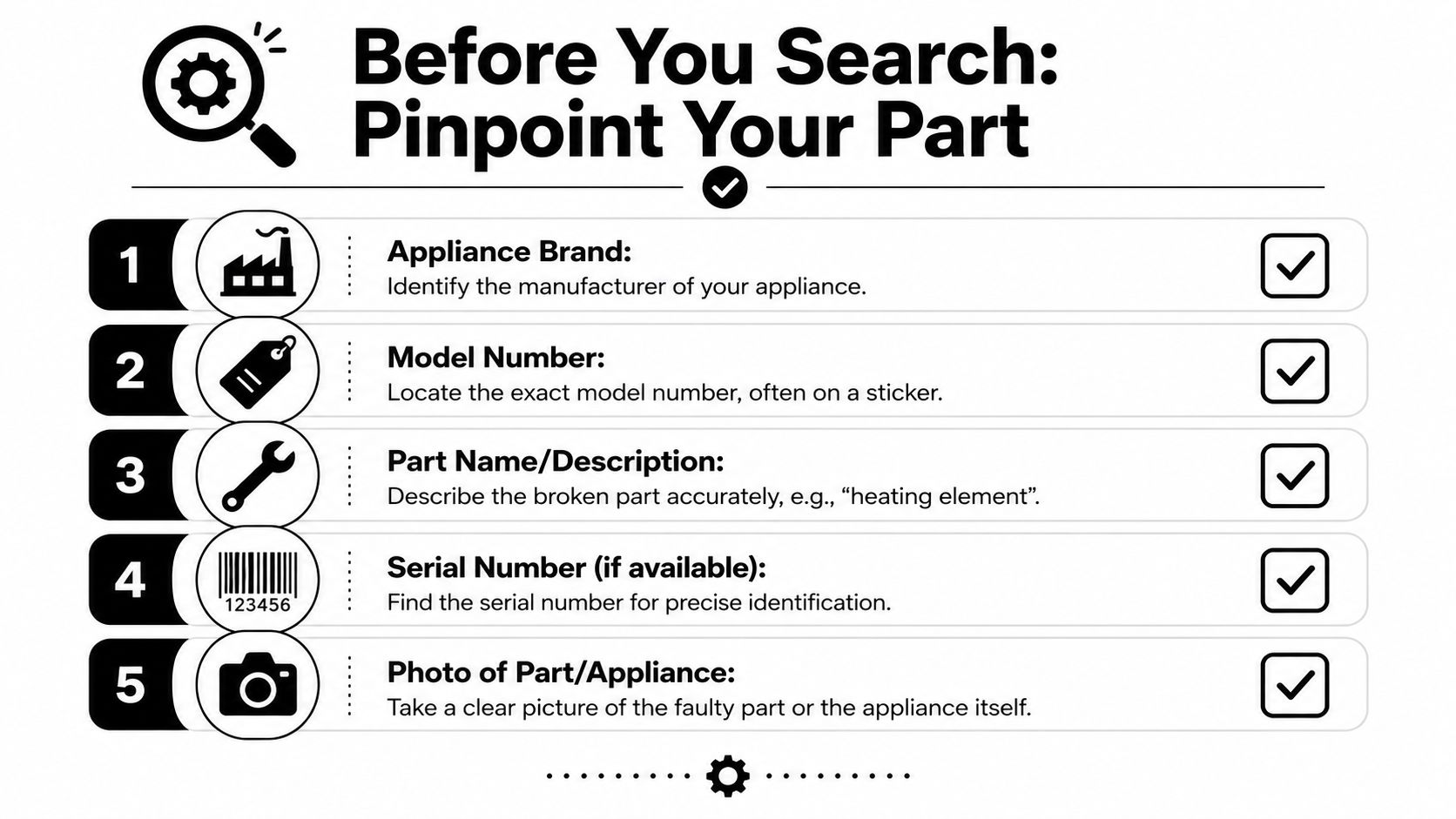
The five things to collect first
Before you open Google, gather these details from the appliance itself.
Brand name
Check the visible front badge first. On instant boiling systems, this is usually straightforward. Zip, Stiebel Eltron, Boiling Billy, Birko, Crown, Kwikboil, and Insinkerator parts all have different fitment rules.Model number
This is the big one. It's often on a data plate underneath the unit, on the side of the housing, behind the drip tray, or on the rear panel. On under-sink systems, use your phone torch and camera if access is tight.Part name
Don't guess if you can avoid it. Work out whether you're chasing an element, thermostat, safety valve, mixing valve kit, flexible hose, pilot lamp, or circuit board. A supplier can help identify it, but only if your photos are clear.Serial number
If the model has multiple revisions, the serial can narrow it down.Photos
Take one wide shot of the whole unit, then close-ups of the faulty part, all labels, wire connections, fittings, and any stamped text.
What to photograph
People often send one blurry photo of a corroded part and expect a clean answer. Better photos save a lot of back-and-forth.
Use this quick photo checklist:
- Full appliance view: show where the part sits in the unit.
- Label close-up: include model and serial details.
- Faulty component front and back: especially for elements and thermostats.
- Connection points: threaded ends, push-fit fittings, wiring terminals.
- Any printed codes: even faded markings can matter.
If the sticker is hard to read, photograph it from two angles. Glare hides numbers more often than people realise.
Why exact matching matters
For boiling water systems, “close enough” isn't close enough. A replacement part needs to match the appliance's design, rating, and connection type. If you need a starting point for common replacement categories, this elements and thermostats range shows the sort of detail you should expect from a proper listing: part family, product type, and brand-specific fitment cues.
A useful note from the trade side is that sourcing should begin with the OEM component code, not a generic description. The same source also notes that mismatched voltage or wattage can cause immediate failure rates exceeding 15% in Melbourne's variable grid conditions, and that issue shows up often when people buy by appearance instead of code from Direct Wholesale's spare parts information.
Master Your Local Search Strategy
Once you know the exact part, your search needs to get narrower, not broader. Most wasted trips happen because someone searched a generic phrase, found a store that “looks right”, and drove across Melbourne without confirming the part was on the shelf.
Search like a technician, not a browser
Use search terms that combine four pieces of information:
| What to include | Example |
|---|---|
| Brand | Zip, Stiebel Eltron, Boiling Billy |
| Part type | thermostat, element, safety valve, pilot lamp |
| Location | Melbourne, Sunshine, Footscray, Geelong |
| Buying intent | stockist, supplier, pickup, in stock |
That gives you searches like:
- Zip 95334 element Melbourne
- Stiebel Eltron thermostat supplier Sunshine
- Boiling Billy safety valve Footscray
- John Guest fittings hot water Geelong pickup
Those searches tell Google what you want and where you want it. They also improve your chances of seeing businesses that dominate local transactional searches by keeping their local listings, stock signals, and service information clear.
Use Maps, then call
Google Maps is useful, but only if you treat it as a phone book first and directions app second.
Do this in order:
- Check trading hours: don't assume a plumbing merchant is open when you finish work.
- Read the business description: look for specialist categories such as boiling water units, hot water parts, or filtration fittings.
- Check photos: user photos often reveal whether the business is a true specialist or just a general counter.
- Call with the model number in hand: ask for stock, part code confirmation, and whether pickup is same day.
A local stock check matters. The trade data here is practical, not theoretical. Verifying that a Melbourne metro or Geelong supplier has hard-to-source parts such as electronic circuit boards and pilot lamps locally can cut repair turnaround from 3 to 5 days if shipped from interstate to under 24 hours, with a 92% first-time repair success rate for under-sink units, according to Direct Wholesale's spare parts page.
Don't ask, “Do you have parts for Zip?” Ask, “Do you have the OEM code in stock for pickup today?”
A quick explainer on how local buying decisions play out in practice can help here:
What to say on the phone
Keep the call short and specific. This script works:
I've got a [brand] [model number]. I need a [part name]. The code on the part is [code if visible]. Can you confirm if it's genuine, whether it's in stock today, and if there's anything I need to match by model year?
That last question matters with appliances that have revised parts across production runs. A good supplier will answer clearly. A poor one will pivot back to generic descriptions.
How to Verify You Have the Genuine Part
The wrong spare part can fit badly, fail early, trip safety systems, or create a leak where none existed before. For hot water equipment, verification isn't a fussy extra. It's the part that protects your unit, your warranty, and in some cases the safety of the people using it.
Ask for certification, not just compatibility
Saying a part is “suitable for” a model isn't always enough. For components such as safety valves, you want to know whether the part is Australian Certified where that status is required.
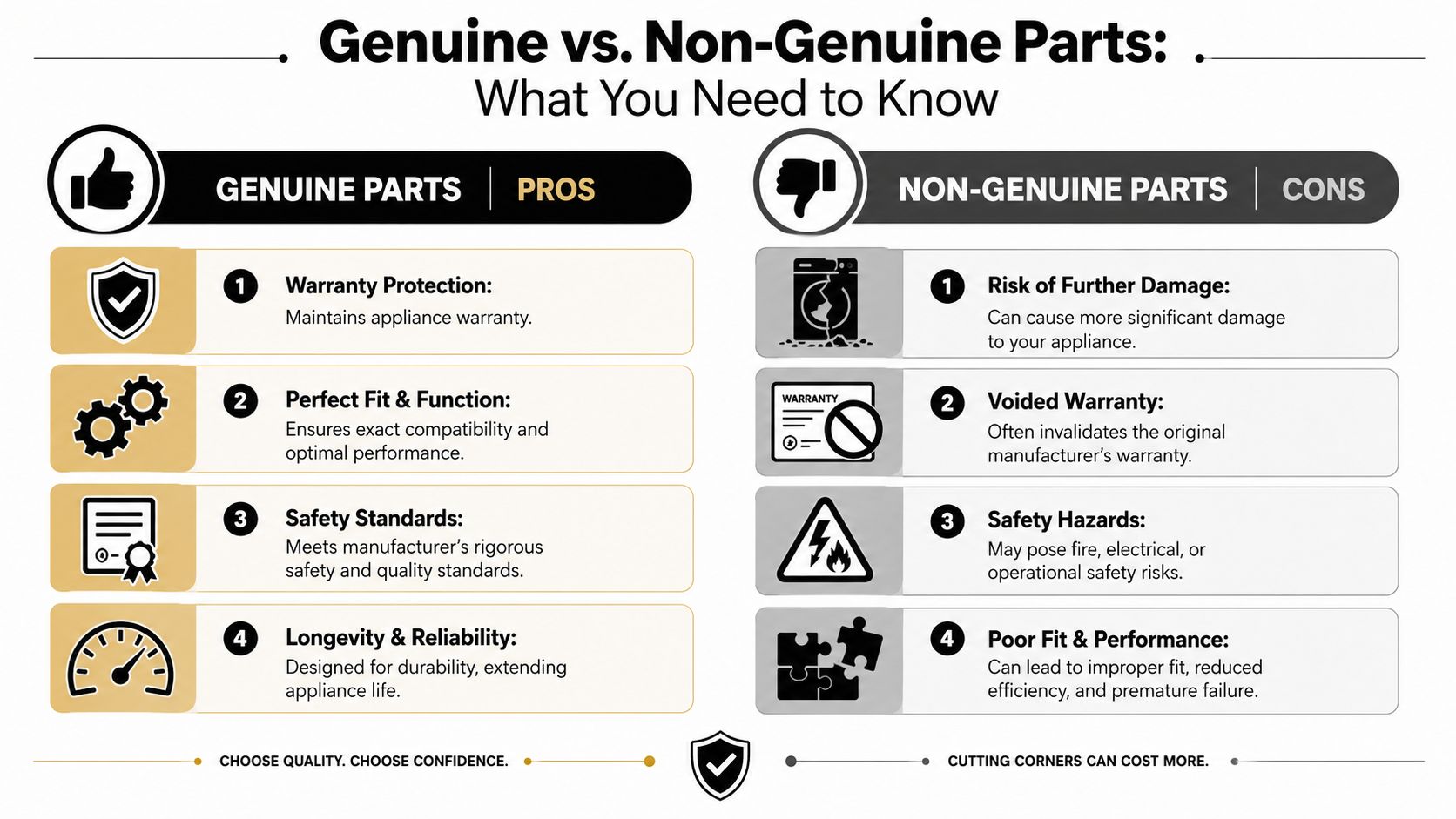
One of the most common traps is buying from a generic online listing that doesn't state certification clearly. Industry data cited by Marine Direct's Quick water heater spare parts information shows that 25% of non-certified replacement safety valves in the Australian market fail leak tests within 12 months, and that can void warranty coverage for major brands.
The questions worth asking every supplier
Use this checklist before you pay:
- Is this the genuine OEM part? If not, ask exactly how it differs.
- Is it Australian Certified where required? This matters for valves and safety-related components.
- Does it match my exact model and model year? Some units change parts across production runs.
- Can you confirm the rating? That includes wattage, voltage, and fitting type where relevant.
- Will this maintain warranty compliance? If the answer sounds vague, stop there.
- Can you send a photo of the actual part or box label? That's useful when ordering by phone.
Red flags that should slow you down
A lot of bad purchases can be avoided by watching for three warning signs.
| Red flag | What it usually means |
|---|---|
| No part code listed | The seller may be matching by guesswork |
| No certification detail | Risk around compliance and warranty |
| “Universal” language | Often too broad for specialist hot water units |
A correct part is identified by code, certification status, and model fitment. Not by “it looks the same”.
If you're dealing specifically with Zip equipment, this Zip spare parts guide for Australia is a useful example of the kind of brand-specific detail that helps verify what you're buying.
Genuine usually costs less in the end
The cheapest listing is often the most expensive repair path. A poorly matched thermostat can lead to repeat callouts. A non-compliant safety valve can leak or fail inspection. An incorrect element can burn out quickly or damage the unit around it. In trade work, the part price is only one line item. Downtime, labour, inconvenience, and follow-up faults are the true cost.
From Local Pickup to Professional Installation
Getting the right part is only half the job. The system still needs to go back together properly, and that's where many repairs go sideways. A fitting that's only slightly wrong, a thermostat wired incorrectly, or a valve installed without the correct seal can turn a simple repair into a larger fault.
What homeowners can do safely
Some tasks are low-risk and mostly mechanical. Replacing an external handle, checking a visible hose connection, or confirming a filter is seated correctly can be straightforward if the manufacturer allows it and the part sits outside the unit's main electrical or pressurised components.
That said, most genuine hot water faults don't stay in that simple category for long.
When to stop and book a technician
If the part involves any of the following, professional installation is the sensible choice:
- Electrical components: elements, thermostats, pilot lamps, circuit boards
- Pressurised water components: safety valves, pressure valves, mixing valve kits
- Internal disassembly: anything that requires opening the housing beyond basic access panels
- Leak-related faults: especially if water has been near wiring or insulation
The part might be small. The risk usually isn't.
For Melbourne homes and workplaces, this matters because hot water systems aren't niche equipment. In Australia, over 90% of residential homes rely on electric or gas storage hot water heaters, and the average residential hot water system lifespan is 10 to 15 years, meaning a large share of the country's 10+ million households moves into a maintenance phase every decade, according to Sparky Direct's hot water element page. By the time systems reach that age range, seals harden, anodes wear, elements scale up, and “simple” swaps often aren't as simple as they look.
The real trade-off
DIY can save a service call when the fault is minor and accessible. Professional fitting usually saves money when the issue affects heating, pressure, safety compliance, or repeat reliability. The key difference is that a technician doesn't just install the new part. They check whether the old part failed in isolation or because another issue caused it.
That distinction matters in offices, hospitality venues, and busy homes. Replacing a blown element won't solve a system that also has a failing thermostat or a compromised valve. The fastest route back to working hot water is often diagnosis plus installation, done once.
Quick Troubleshooting Before You Buy
Before you order anything, do a short safety-first check. A surprising number of “failed part” calls turn out to be power supply issues, a reset problem, a blocked filter, or a visible leak that points to a different component altogether.
The safe checks worth doing
Start with the basics:
- Check the circuit breaker: if the unit has tripped power, don't keep resetting it repeatedly. One reset to test is enough. If it trips again, stop.
- Look for visible leaks: check around hoses, valve bodies, and under the unit.
- Check the water supply isolation valve: make sure it's open.
- Inspect the filter if your unit uses one: a blocked filter can mimic poor performance or reduced flow.
- Look for error lights or unusual sounds: clicking, humming, or no indicator light at all can help a supplier or technician narrow it down.
What not to do
Don't remove electrical covers. Don't open sealed components. Don't bypass a thermostat or safety device “just to test it”. Those shortcuts create risk and often blur the original fault, which makes later diagnosis harder.
If you're trying to stay ahead of failures rather than react to them, this overview of the benefits of preventive maintenance is a useful reminder that routine checks usually beat emergency purchases.
For a more focused diagnostic step, this practical guide on how to test a hot water element can help you understand whether the element is likely to be the issue before you buy a replacement.
If the fault isn't obvious after these checks, the next best move is diagnosis, not guess-buying parts.
A rushed purchase often leads to two wasted trips. One to buy the wrong component, and another to replace it with the right one. Slow down for ten minutes, gather the model details, do the basic checks safely, and then make the call.
If you need genuine hot water system parts, practical advice, or professional installation in Melbourne, Ring Hot Water can help with spare parts for boiling taps, wall-mounted boilers, commercial units, filters, valves, elements, thermostats, and fittings, with local support for homes, offices, and hospitality sites.

