Uncategorized
Water Chiller Repair Service: Melbourne’s Expert Guide
Jul
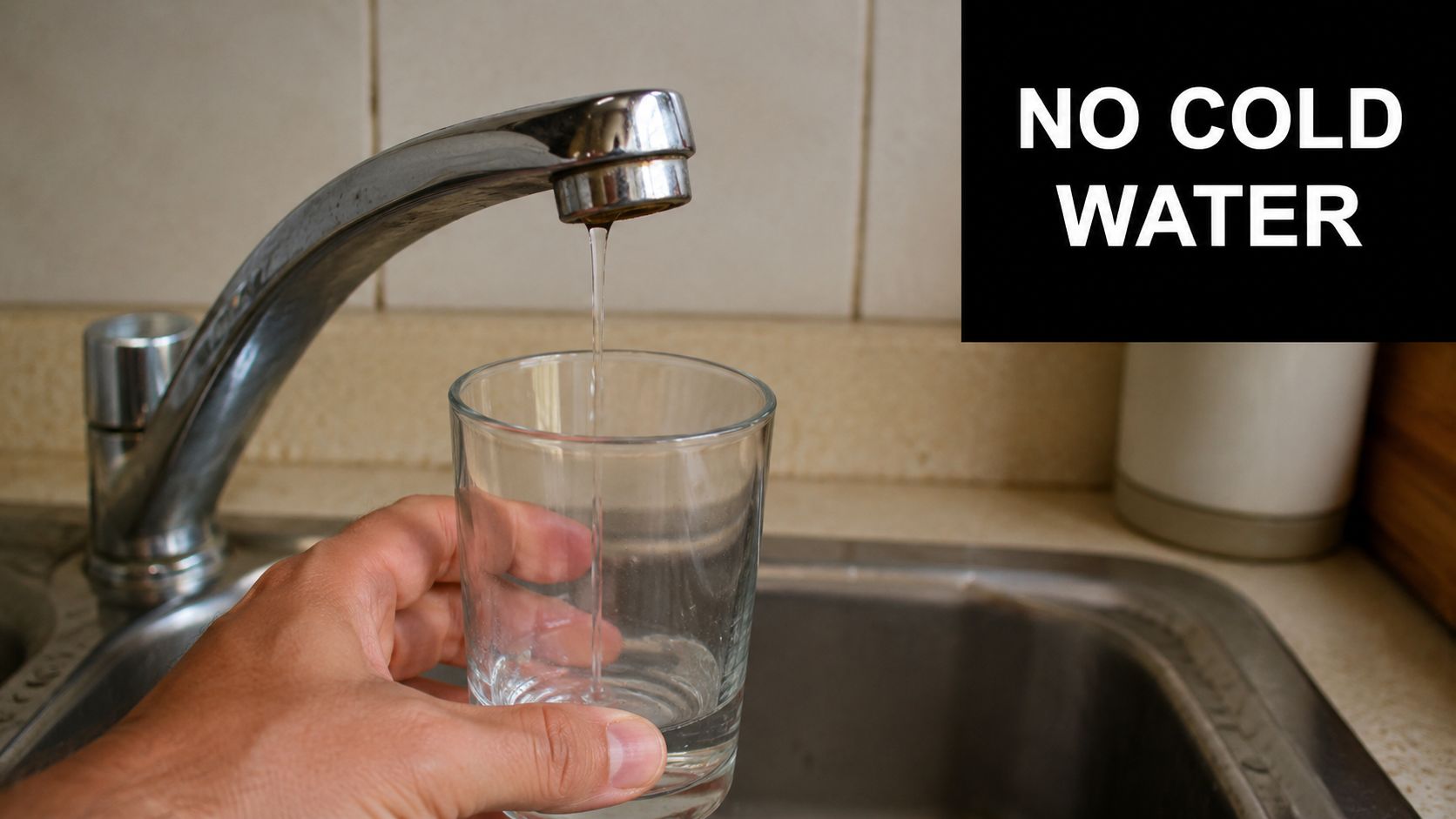
You turn on the chilled tap, fill a glass, take a sip, and the water is barely cool. Or worse, there's a puddle under the sink, a faint humming that won't stop, or the unit keeps cycling long after it should have settled down. That's usually the moment people start searching for a water chiller repair service and get hit with a wall of mixed advice that bundles together office drinking units, industrial chillers, refrigeration plants, and general plumbing.
For Melbourne homes and offices, that mix-up matters. An under-sink drinking water chiller has a very different layout, fault pattern, and parts requirement from a process chiller used in manufacturing. If the diagnosis starts in the wrong category, the repair often goes the same way.
Is Your Chilled Water Tap Failing You
A lukewarm glass of water from a tap that used to run properly cold is one of the most common complaints with under-sink units from brands like Zip, Billi, Stiebel Eltron, Boiling Billy, and similar systems. In many kitchens, the fault looks simple from the outside. It usually isn't.
Drinking chillers are not process chillers
An under-sink drinking water chiller is built to supply safe, convenient chilled water at a tap point. It sits inside cabinetry, works alongside filters and fittings, and often shares space with boiling water equipment. An industrial process chiller is a different class of machine altogether. It's built for equipment cooling, larger heat loads, and a different service approach.
That distinction gets missed all the time. Data cited by Melbourne Filtered Water on chiller repair confusion says 78% of Australian consumers mix these categories up when searching for chiller repair. The result is wasted time, wrong call-outs, and poor diagnosis.
If you're not sure which style of system you have, it helps to compare your unit with these common under-sink and drinking water chiller setups.
Why the right specialist matters
Under-sink units combine refrigeration, water filtration, compact plumbing connections, electrical controls, and brand-specific fittings. A technician who mostly works on industrial air-cooled or water-cooled process systems may be excellent in that field, but still lose time on a domestic or office drinking unit because the common faults are different.
Typical drinking chiller issues include:
- Thermostat faults that leave the water too warm or too cold
- Leaking John Guest or compression fittings under the sink
- Element or control issues in combination boiling and chilled units
- Internal corrosion or scale-related wear around water-contact components
- Restricted ventilation from tight cabinetry and dust build-up
Practical rule: If your chiller feeds a sink mixer, separate tap, or office drinking station, start with a technician who knows drinking water systems, not just refrigeration in general.
That usually saves one thing customers care about most. Time.
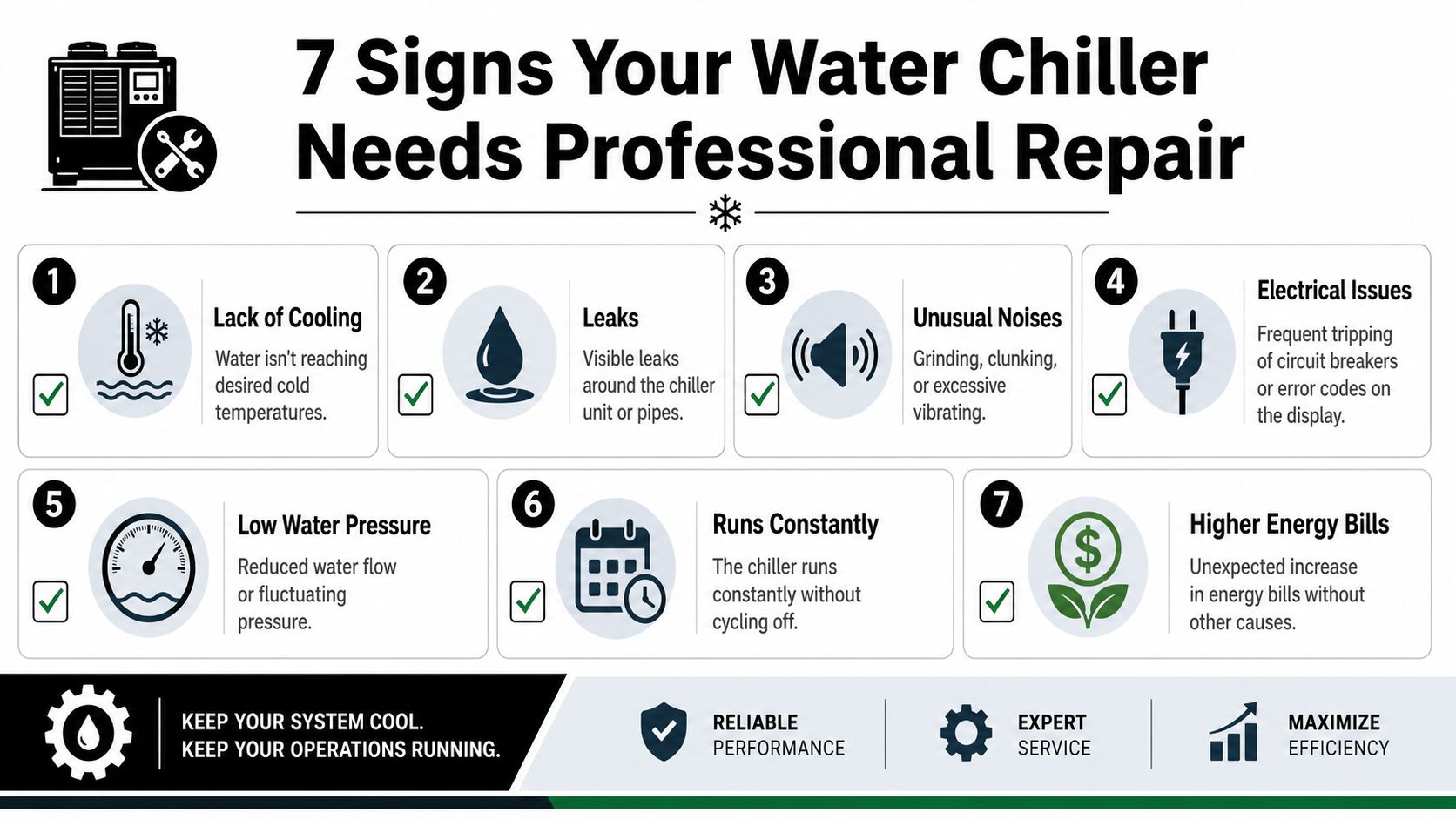
7 Signs Your Water Chiller Needs Professional Repair
Most chilled water units give warning signs before they stop altogether. Some are obvious, like a leak. Others creep in slowly, such as rising run time or weaker cooling. If you catch them early, the repair is often cleaner and less disruptive.
Performance signs you shouldn't ignore
The water isn't properly cold
This can point to a control fault, poor airflow, a refrigerant issue, or a failing compressor circuit. In under-sink units, blocked vents and cabinet heat build-up are common contributors.There's water under the sink or around the unit
Leaks may come from fittings, hoses, condensate problems, internal tanks, or aged seals. A small drip can become cabinet damage quickly, especially on timber or laminated bases.You hear odd noises
Gurgling, clicking, buzzing, or a harsher than normal hum often means something has changed inside the unit. Fan problems, loose mounts, refrigerant-side issues, or water flow restrictions can all alter the sound.Flow at the tap has dropped
Low pressure doesn't always mean the chiller itself is failing. It may be a blocked filter, a pinched hose, a partially closed valve, or a restriction inside the appliance. The key is tracing the loss point rather than guessing.
Faults that usually need proper testing
The unit runs constantly
A chiller that never seems to cycle off is working too hard. That can come from warm ambient conditions, poor ventilation, thermostat drift, condenser fouling, or a refrigerant loss.The water tastes or smells wrong
Not every taste issue is a cooling fault. Filters, stagnant lines, contamination, and ageing components can all affect water quality. That's why good diagnosis separates refrigeration repair from filtration service.You can see corrosion, staining, or oil residue
Visible residue around fittings matters. According to Heuch's water chiller maintenance guidance, low refrigerant levels below 85% of full charge capacity can reduce cooling by 10% for every 5% pressure drop, and oil residue around fittings is a primary visual sign of a breach on serviced commercial models including Zip and Robatherm. In a smaller drinking unit, that kind of visual clue tells the technician where to inspect first.
A chiller rarely goes from healthy to dead without leaving clues. Most failures announce themselves in temperature, sound, run time, or moisture.
When not to keep testing it yourself
Some owners keep resetting the unit, changing filters, or switching power off and on to see if it “comes good”. That can waste time, and in some cases it hides the original fault long enough to worsen it.
A professional repair is usually the right next step when:
- The problem repeats after a reset
- Moisture is appearing near electrics, cabinetry, or fittings
- The unit is warm to touch or obviously overworking
- The fault affects both boiling and chilled functions on a combo system
The Chiller Diagnosis and Repair Process Explained
When people book a water chiller repair service, they usually want two things straight away. They want the problem identified properly, and they want to know what happens before any money is spent on parts. Good service should feel clear from the first visit, not mysterious.
A proper appointment starts with observation, not assumptions. What the tap is doing, how long the problem has been happening, whether filters were recently changed, and whether the unit has had prior repairs all help narrow the fault before tools even come out.
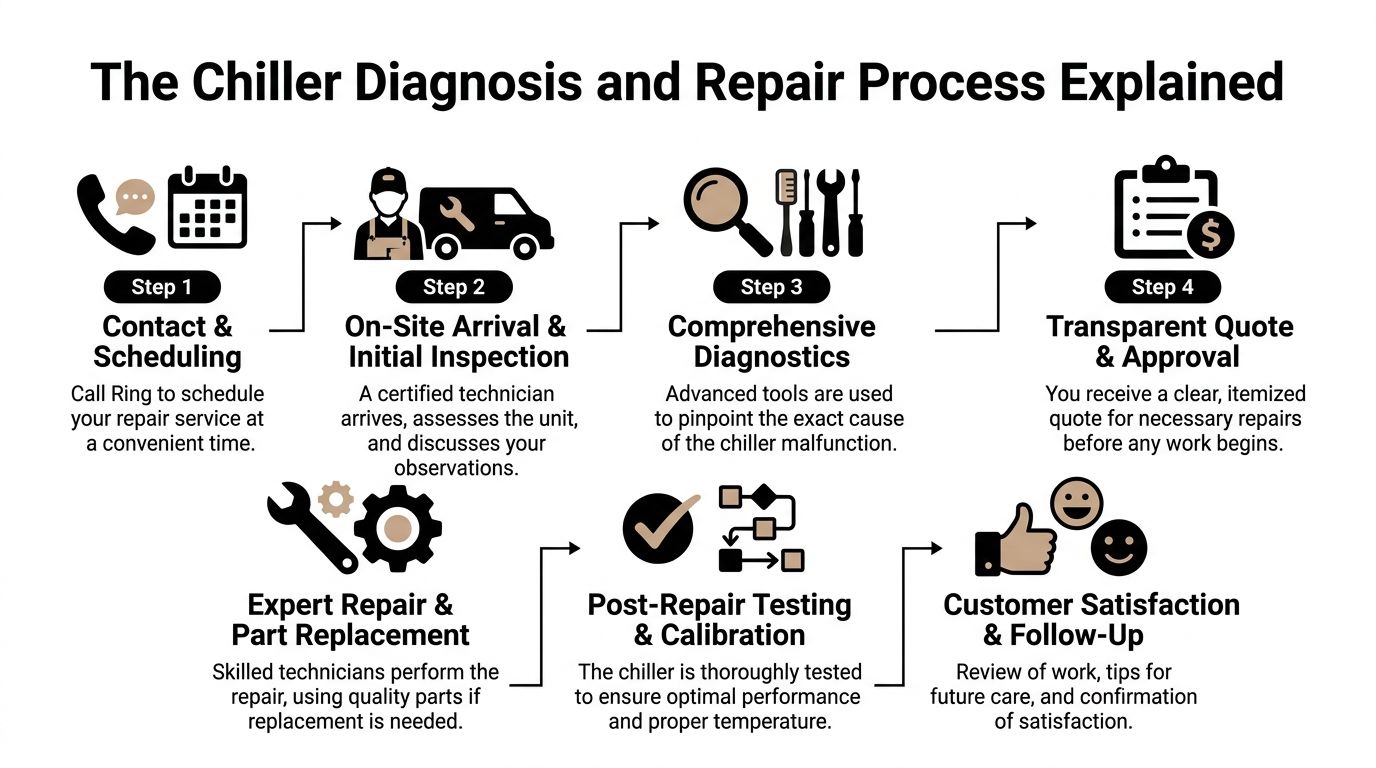
What happens on site
A standard call-out for an under-sink chiller usually follows a sequence like this:
Initial discussion
The technician confirms the symptoms. Warm water, intermittent cooling, noise, poor flow, tripping power, leaks, or taste changes all point in different directions.Visual inspection and safety check
Cabinet space, ventilation, hoses, isolation valves, power supply, visible corrosion, water marks, and fitment condition are checked first. This often reveals installation issues that are contributing to the failure.Diagnostic testing
Temperatures, electrical continuity, control response, fan operation, thermostat behaviour, and general system performance are tested with the right instruments. At this stage, guesswork is eliminated.Fault explanation and approval
You should get a plain-English summary of what's failed, what can be repaired, and whether the unit is worth repairing at all.
Here's a short visual overview of the service path from booking through to final checks.
Why proper calibration matters
Not every chiller fault is dramatic. Some come from settings, interlocks, and controls that are slightly off. On larger industrial-grade equipment, that gets even more critical. Thermal Engineering's CA Series maintenance instructions note that technicians must verify Low Refrigerant Temperature (LRT) and Low Water Temperature (LWT) safety interlocks on certain industrial chillers, and failure to calibrate them properly can cause evaporator icing and reduce efficiency by up to 40%.
That specific requirement belongs to industrial-grade equipment, not the average under-sink drinking unit. The broader lesson still applies. Controls and protections have to be tested, not assumed.
Good diagnosis isn't just finding the failed part. It's confirming why it failed, so the same repair doesn't come back a few weeks later.
The final stage
Once the repair is done, the unit should be re-tested under load. The tap needs to deliver stable chilled water, the appliance should cycle correctly, and the work area should be left clean. If a filter, hose, thermostat, valve, or fan was replaced, that should be explained clearly so the customer knows what changed.
Common Chiller Faults and Our Genuine Parts Solution
Under-sink drinking water chillers tend to fail in familiar ways. That helps if the technician knows these compact systems well. It causes frustration when the last repair treated a Zip, Billi, or Boiling Billy unit like a generic appliance and fitted whatever part was close enough.
That shortcut is where repeat faults start.
These units combine refrigeration, water supply, electrical controls, and very limited cabinet space. A warm water complaint can trace back to a thermostat, a failed fan, poor airflow, a scaled valve, or a sealed-system issue. A leak under the sink might be a hose, a fitting, or a pressure problem that has been stressing the connection for months. The job is not just replacing the failed piece. It is confirming the fault properly and fitting the part the unit was designed to run with.
The faults seen most often
| Common Fault | Symptom | Required Genuine Part |
|---|---|---|
| Faulty thermostat | Water too warm, erratic temperature, constant running | Genuine thermostat |
| Leaking valve or connection | Drips under sink, water staining, pressure loss | Genuine valve or correct fitting set |
| Failed fan motor | Poor heat rejection, overheating, noisy operation | Genuine fan motor |
| Worn flexible hose | Slow leak, swelling, split line | Genuine flexible hose |
| Element fault in combo unit | One function stops working or trips power | Genuine element |
| Refrigerant-side breach | Reduced cooling, abnormal run time, residue near fittings | Model-correct sealed system components |
The pattern matters because under-sink drinking chillers are a different repair category from large commercial or industrial water chiller repair work. The parts, access, and fault-finding process are different. A technician who mainly works on process chillers may know refrigeration well, but still lose time on brand-specific drinking water components, control layouts, and plumbing connections inside a kitchen cabinet.
Why genuine parts prevent repeat call-backs
I see the same problem regularly in Melbourne homes and offices. A thermostat has already been changed, but the temperature range is wrong for that model. A hose has been replaced with a substitute that fits poorly and starts weeping under pressure. A valve has been forced into place with mixed fittings, and the cabinet shows water staining a few weeks later.
Generic parts can look fine on the bench. In service, small differences matter. Cut-in and cut-out temperatures matter. Thread type matters. Hose flexibility matters. Electrical ratings matter.
Zip, Billi, Boiling Billy, Birko, and similar units often need model-specific parts and the right installation method to match. That is especially true on combination boiling and chilled systems, where one incorrect component can affect more than one function.
What the genuine-parts fix actually involves
A proper repair usually comes down to three checks:
Matching the part to the exact model
Part numbers, revision changes, and compatible assemblies need to be checked before fitting anything.Using the correct connection method
Push-fit, compression, and threaded fittings each need the right seals, inserts, and tightening method.Fixing the cause, not only the symptom
Replacing a failed fan without clearing blocked airflow leaves the new fan working under the same stress. Replacing a thermostat without addressing condenser overheating often leads to another call-out.
That is why we stay brand-aware on drinking water systems rather than treating every chiller as the same machine.
Cheap substitute parts usually lower the invoice on the first day and raise the total repair cost later.
For customers, the practical question is simple. Will the repair hold, or will you be back under the sink with another leak, warm water complaint, or tripping unit? Genuine parts improve the odds because they fit properly, operate within the right range, and suit the way these compact drinking water chillers were built.
Water Chiller Repair Costs and Timelines in Melbourne
It usually starts the same way. The chilled tap in the office kitchen turns lukewarm on a Monday morning, or the under-sink unit at home starts clicking and then stops cooling altogether. The first concern is practical. What will it cost to fix, and how long will you be without chilled drinking water?
For Melbourne homes and offices with Zip, Billi, Boiling Billy, Birko, and similar under-sink systems, repair cost depends on the fault, the model, and whether the right parts are on hand. These compact drinking water chillers are a different category from factory or plant equipment. If you want that distinction explained more fully, see our guide to industrial water chiller repair for large commercial systems. The parts, fault patterns, and labour involved are not the same.
What usually changes the repair price
A fair quote comes down to what we find after testing, not guesswork over the phone.
Diagnosis time
Some faults show themselves quickly, such as a failed fan or a clear leak at a fitting. Others take longer because the unit needs checks across power, controls, water flow, ventilation, and cooling performance.Brand and part availability
Zip and Billi systems often need model-specific components. If the repair needs a genuine valve, probe, fan motor, or control part, that affects the invoice and sometimes the turnaround.Access under the sink
Labour goes up when the unit is boxed in behind drawers, jammed beside waste pipes, or installed in a cabinet with poor service clearance.Overall condition of the unit
One failed part is usually economical to repair. A unit with several age-related faults, poor airflow, scale issues, and brittle hoses can push the job into replacement territory.
Typical timelines in Melbourne
Many repairs can be diagnosed on the first visit. If the fault is straightforward and the part is stocked, the job may be completed then and there. If a specific part has to be ordered, the repair usually runs on parts availability rather than labour time.
That is why specialist experience matters with under-sink drinking water systems. A technician who regularly works on chilled and boiling-chilled taps will usually identify the fault faster than someone who treats it like a general refrigeration call. The same principle shows up in broader maintenance work too. Good routine checks reduce avoidable breakdowns, which is one reason facility teams still refer to resources like this 2026 HVAC maintenance guide for scheduled service planning.
How to budget for the job
The most useful question is not “what is your cheapest repair?” It is “what am I paying for?”
Ask these three things when you book:
What the call-out includes
Confirm whether the visit covers diagnosis only, or diagnosis plus minor adjustment and testing.How parts are quoted
Check whether replacement parts are included in the initial price or approved separately after fault finding.What happens if repair is not economical
A good technician should say so plainly. There is no value in spending heavily on an under-sink chiller that is near the end of its service life.
That approach gives you a clearer answer than a vague starting price. It also helps avoid the common problem of comparing one quote that includes proper testing and genuine parts with another that only covers a basic look under the sink.
Simple Maintenance Tips for Your Water Chiller
A drinking water chiller doesn't need constant attention, but it does benefit from routine care. Most major failures are easier to deal with when the early warning signs are picked up before the unit is running hot, leaking into cabinetry, or struggling against blocked airflow.
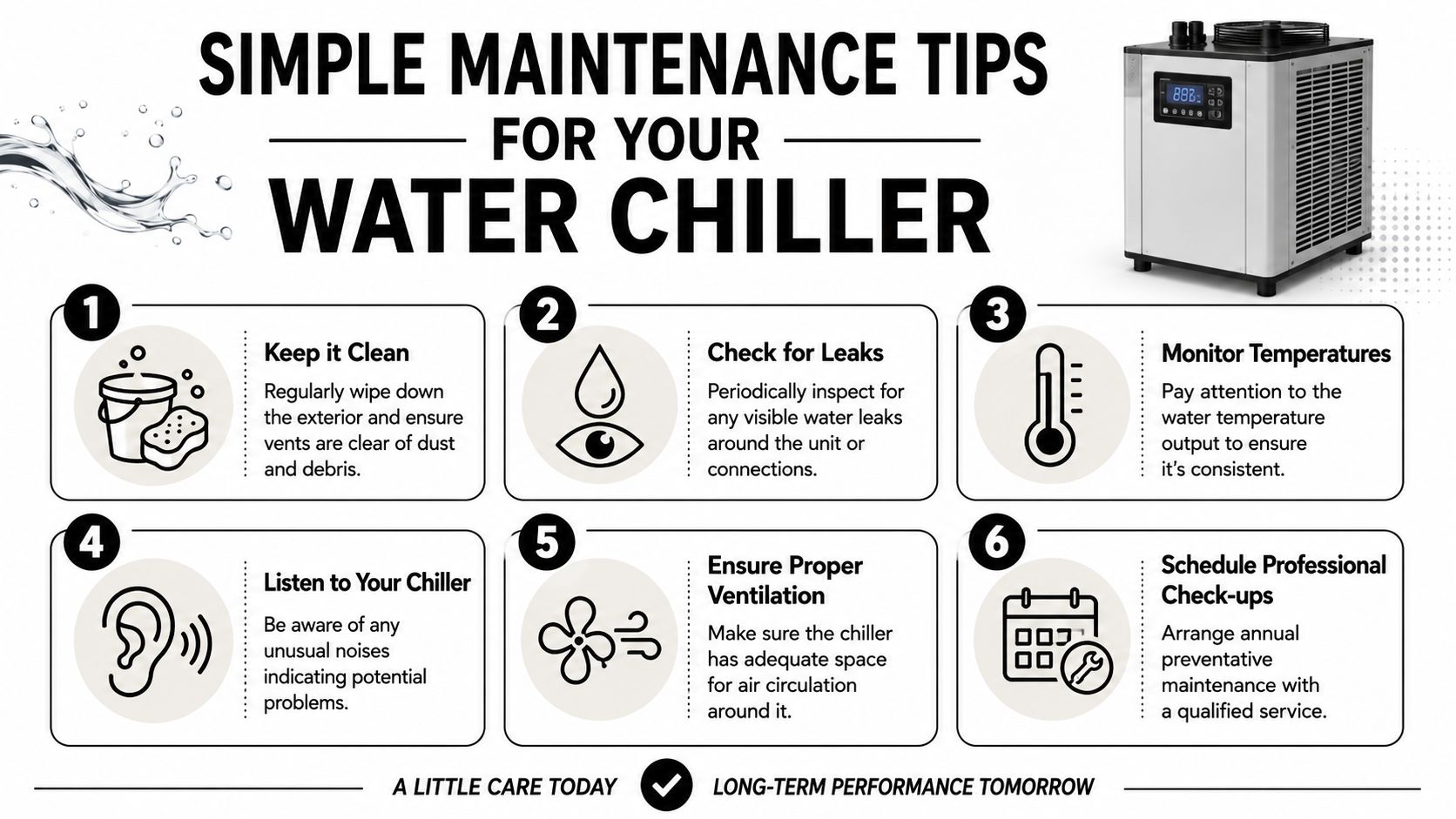
The simple checks worth doing
Keep vents clear
Under-sink units need breathing room. Dust, stored items, and tight cabinetry trap heat and make the chiller work harder than it should.Look under the unit regularly
A quick check for drips, staining, swelling in hoses, or white mineral marks can catch leaks early.Pay attention to output temperature
If the water starts drifting warmer over time, don't wait for total failure before acting.Listen for changes
A unit that suddenly clicks more often, hums louder, or sounds rougher is usually telling you something.
Filter care matters too
Many chilled water systems work alongside filtration. A neglected filter can affect taste, pressure, and overall system behaviour. If your unit uses a replaceable cartridge, change it according to the manufacturer's guidance and use the correct model rather than a lookalike substitute.
If you're checking the wider plant or office environment as part of a routine service schedule, a practical reference point is this 2026 HVAC maintenance guide from Can Do Duct Cleaning. It isn't specific to under-sink drinking units, but it's useful for building a disciplined inspection habit around ventilation, airflow, and service intervals.
What you can safely do yourself
You don't need to open the refrigeration side to be proactive. Safe owner-level maintenance usually includes:
- Wiping down external surfaces
- Keeping storage away from vents
- Checking visible fittings and hoses
- Monitoring taste, odour, and temperature
- Replacing the correct filter on schedule
For a closer look at the setup and care of compact systems, this guide to an under-sink water chiller is a useful reference.
The best maintenance habit is consistency. A two-minute check once in a while is far better than ignoring the unit until it stops.
Your Water Chiller Repair Questions Answered
Is it worth repairing an older chiller
Usually, yes, if the fault is isolated and the cabinet, plumbing, and core components are still sound. A thermostat, valve, hose, or fan issue is very different from a unit with multiple age-related failures, corrosion, and poor prior repairs. The sensible decision comes from comparing the condition of the whole system, not just the part that has failed today.
Should I replace it instead of repairing it
Replacement makes more sense when the unit has recurring faults, poor parts availability, visible internal deterioration, or a repair cost that doesn't stack up against the condition of the rest of the appliance. For many customers, the deciding factor isn't age alone. It's whether the next repair is likely to stabilise the unit or merely delay another breakdown.
Can you repair brands outside the usual Zip and Billi names
In many cases, yes. A competent drinking water chiller technician can usually assess a range of brands if parts support is available and the unit is serviceable. The important point is identifying the model correctly and avoiding guess-fit components.
How quickly can a technician attend in Melbourne
That depends on workload, your suburb, and the urgency of the fault. Leaks, power-related issues, and complete loss of service are usually the jobs people want attended first. Good booking teams will tell you plainly what's realistic instead of promising an impossible window.
What should I do before the technician arrives
Clear the cupboard, remove stored cleaning products or bins from around the unit, and note exactly what the tap has been doing. If there's a leak, isolate water if it's safe to do so. If there's an electrical concern, switch the unit off and leave it off until it's inspected.
If your chilled tap has gone warm, started leaking, or just isn't performing the way it should, Ring Hot Water can help with expert advice, genuine parts, and Melbourne-based service for under-sink drinking water chillers and boiling-chilled systems.

