
Uncategorized
Industrial Water Chiller Repair: A Melbourne Guide 2026

Jul
The call usually comes when the plant is already under pressure. Cooling has dropped off, staff are reporting warm process water, the control panel is throwing alarms, and someone wants a yes-or-no answer on whether production can keep running. In Melbourne, that often happens at the worst time. Not because the machine failed out of nowhere, but because small faults were missed until the chiller couldn't carry the load any longer.
Industrial water chiller repair is rarely just about swapping a failed part. The real job is finding the fault that caused the failure, then deciding what must be fixed now, what can wait, and what should change so the same problem doesn't come back next month. That's where many facilities lose money. They approve an urgent repair, but the underlying issue stays in the system.
One mistake shows up again and again. A low-flow alarm gets treated like a pump failure. The pump is blamed, quotes start coming through, and nobody checks the simple blockage sitting upstream in the Y-strainer. That diagnostic miss can turn a straightforward clean-out into a costly repair call, extra downtime, and the wrong parts on site.
Is Your Industrial Chiller on the Brink of Failure
A chiller on the brink rarely looks dramatic at first. It starts with nuisance alarms, longer run times, unstable leaving water temperature, or a unit that resets and comes back online only to trip again later. Facility managers often get told the same thing by operators: “It's still running, but it doesn't sound right.”
That's the point where action matters most. Once a chiller falls over completely, you're no longer choosing the best repair path. You're choosing the fastest available one.
In Australia, the pattern is clear. The Australian Refrigeration and Mechanical Services Association estimates that 68% of industrial chiller repairs are preventable through scheduled maintenance, yet only 31% of Melbourne-based facilities follow a quarterly maintenance protocol. After a breakdown, facilities see an average 19% increase in energy consumption from compressor inefficiency, according to Fleming's Australian chiller data.
What failure usually looks like before it becomes an emergency
Most failures give warnings first:
- Capacity starts slipping. The unit still runs, but temperatures drift.
- Alarms become intermittent. They clear after a reset, then return.
- Service calls start stacking up. One “small issue” follows another.
- Energy use creeps higher. The chiller works harder to do less cooling.
Practical rule: If the same chiller has needed repeated attention for what seems like unrelated faults, treat that as one connected reliability problem, not several isolated repairs.
A lot of managers assume a major failure must be sudden. In practice, the warning signs are often there for weeks. Poor water treatment, fouled heat exchangers, blocked strainers, worn contactors, loose electrical connections, and refrigerant leaks all tend to show themselves before they stop the plant.
If you're reviewing plant reliability or comparing fault patterns across systems, this overview of water chiller applications and setups helps frame where common operating problems usually begin.
Why delay costs more than the repair
Once a struggling chiller is left to run under fault conditions, the repair scope often grows. A dirty heat exchanger becomes a high-head issue. A flow restriction becomes nuisance tripping. Repeated short cycling starts stressing compressors and controls.
That's when a service call stops being routine and starts affecting production, comfort, compliance, or all three.
Decoding Chiller Failure Signs and Root Causes
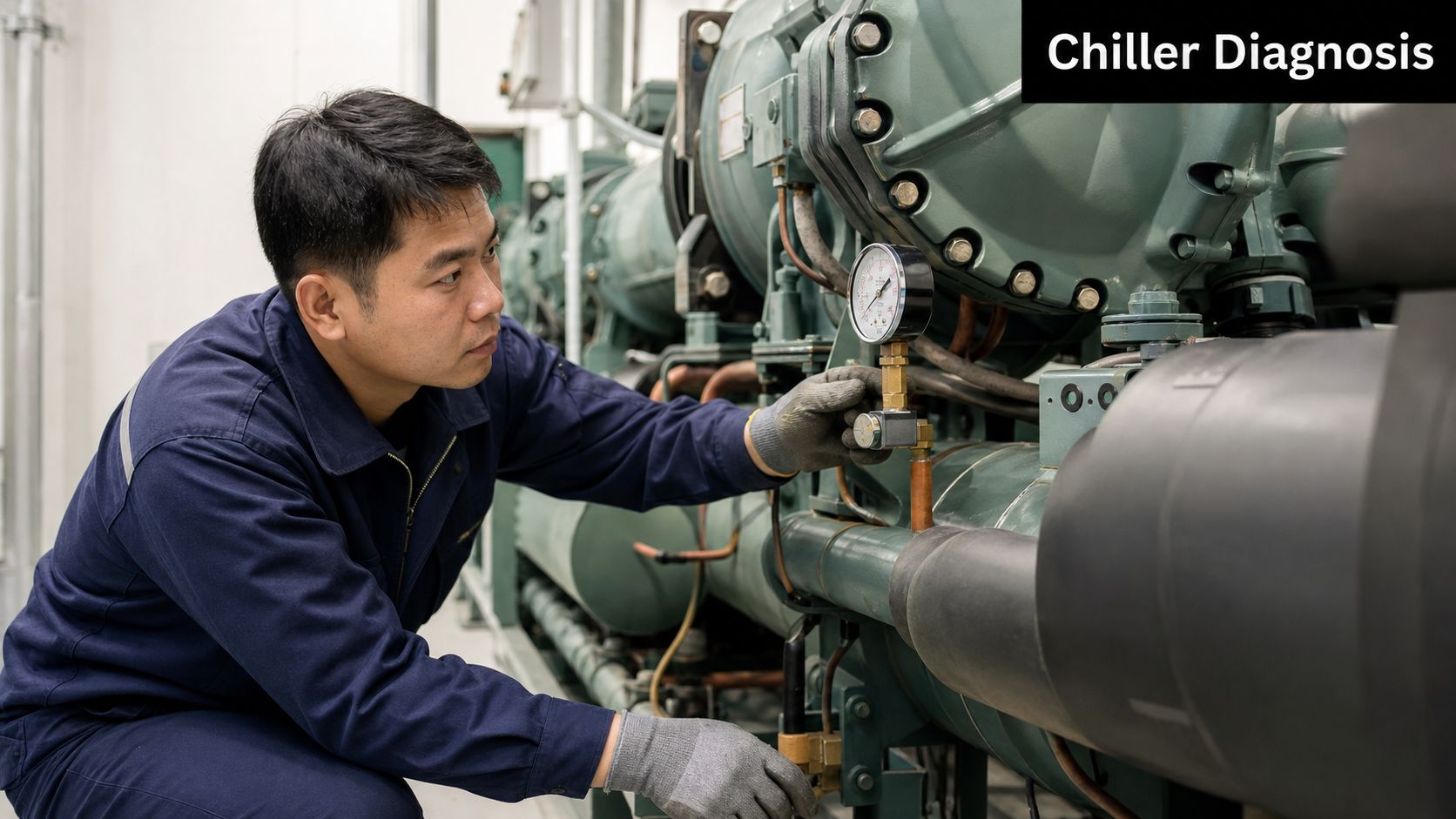
The best diagnostics start with symptoms, not assumptions. A chiller is like any hard-working mechanical system. If one part of the process is restricted, dirty, starved, or overloading, another part usually shows the stress first.
When cooling drops but the machine still runs
Reduced cooling capacity is one of the most common early complaints. The chiller hasn't stopped, but it isn't holding setpoint. On water-cooled units, one major cause is condenser fouling. Even 1 mm of scale buildup on water-cooled tubes can reduce heat transfer efficiency by up to 25%, which drives up head pressure and compressor load, as explained in Heuch's water chiller maintenance guidance.
That matters because the compressor then has to push against a harder condensing condition. You'll often see longer run times, poor pull-down, or high-pressure faults following not far behind.
Common causes behind weak cooling include:
- Fouled condenser surfaces that can't reject heat properly
- Restricted water flow through evaporator or condenser circuits
- Refrigerant-side problems such as leaks or charge imbalance
- Control issues where sensors report the wrong condition
What alarms are really telling you
A high-pressure alarm doesn't automatically mean the compressor is bad. It often means the compressor is reacting to another problem. Dirty coils, scale in a water-cooled condenser, poor condenser water flow, or a fan problem on air-cooled equipment can all push pressure up.
A low-flow alarm is even more misunderstood. Many teams jump straight to the pump. Sometimes that's correct. Often it isn't.
The alarm is the symptom. The root cause sits somewhere upstream in the system path.
Unusual sounds also tell a story. A rattling contactor, cavitating pump, struggling bearing, or rapid compressor cycling each point in different directions. Visible leaks matter too. Water leaks affect flow and can damage electrical components. Refrigerant leaks affect capacity, oil return, pressure stability, and compliance.
A quick visual refresher helps if your team needs to recognise common fault patterns on site:
The signs worth treating as urgent
Some faults can wait until planned maintenance. Others shouldn't.
Treat these as immediate investigation items:
- Repeated high-pressure cut-outs
- Visible oil staining around refrigerant joints
- Low-flow alarms that return after reset
- Burning smells or hot electrical components
- Sudden loss of capacity under normal load
If the unit is still operating, that doesn't mean it's safe to leave alone. It may only mean the protection controls haven't hit their limit yet.
A Practical Step-by-Step Troubleshooting Checklist
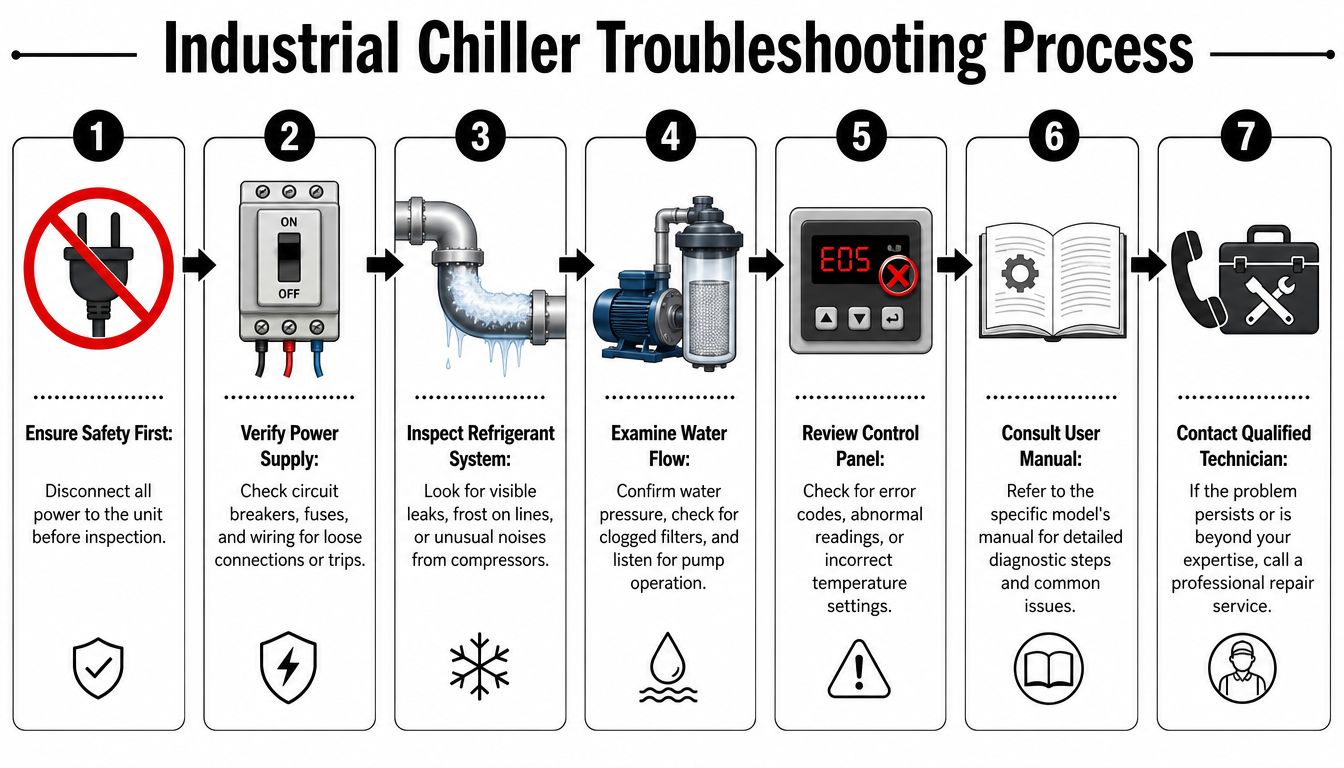
When a chiller faults, the safest approach is a simple-to-complex diagnostic order. Start with checks your site team can do safely. Don't begin by pricing major components before the easy causes are ruled out.
Start with the faults that cost nothing to confirm
Before touching anything, isolate power where required and follow your site safety procedures. Then work through the basics.
- Check the controller first. Read the actual alarm. Don't rely on second-hand descriptions like “it shut down again”.
- Verify power supply. Look for tripped breakers, blown fuses, phase loss, or loose isolator issues.
- Confirm the setpoints. An incorrect temperature setting or control mode can look like a mechanical fault.
- Inspect for obvious signs. Water around the base, oil residue, iced pipework, blocked airflow, or closed valves all matter.
This sounds basic because it is. Basic checks prevent wasted labour.
Low-flow alarm does not automatically mean pump failure
This is the mistake that catches a lot of facilities. The unit shows low flow. Someone hears poor circulation. The pump gets blamed before the strainer is even opened.
The more reliable sequence is:
- First check isolation valves. A partially shut valve can mimic larger faults.
- Then inspect the Y-strainer. Debris, scale, rust, and pipework residue often collect here.
- Only after that assess the pump. Listen for operation, verify current draw if qualified staff are available, and check whether the pump is running against a blocked path or truly failing.
According to the diagnostic guidance highlighted by Rite-Temp's chiller troubleshooting article, Y-strainer blockages account for 70% of low-flow alarms, yet this step remains under-documented in many Australian guides.
Field note: If a contractor recommends pump replacement before confirming strainer condition, ask what they found in the flow path. That question alone can save a bad call.
How to inspect a Y-strainer properly
If your site procedures and isolation points allow safe inspection, the process is straightforward:
- Isolate the section so you're not opening the line under pressure.
- Relieve pressure carefully according to plant procedure.
- Remove the strainer cap or screen access.
- Inspect the mesh, not just the housing. Fine debris can mat over the screen and restrict flow badly.
- Clean and reassemble with the correct seal condition checked.
- Restart and monitor whether the alarm clears and whether stable flow returns.
A chiller with a blocked strainer may still have a healthy pump. The pump just can't move enough water through the restriction. Replacing the pump in that situation fixes nothing.
What site staff can usually check safely
A facility team can often handle the early-stage checks without crossing into licensed refrigeration work:
- Electrical basics: Confirm breakers, local isolators, and control power status.
- Water side: Check valves, strainers, obvious leaks, and pressure gauges where fitted.
- Air side on air-cooled units: Look for blocked coils, rubbish buildup, or failed condenser fan operation.
- Controls: Record fault codes and note when they appear.
Leave refrigerant diagnosis, compressor testing, leak detection, pressure adjustment, and sealed-system repairs to a qualified technician. Good troubleshooting isn't about doing everything yourself. It's about narrowing the fault before expensive assumptions take over.
Preventative Maintenance to Avoid Costly Breakdowns
Emergency repair is almost always the most expensive way to maintain a chiller. Parts are needed now. Labour is urgent. Operations are waiting. Preventative maintenance changes that conversation by catching wear, fouling, drift, and blockage before they knock the unit out.
What good maintenance looks like in practice
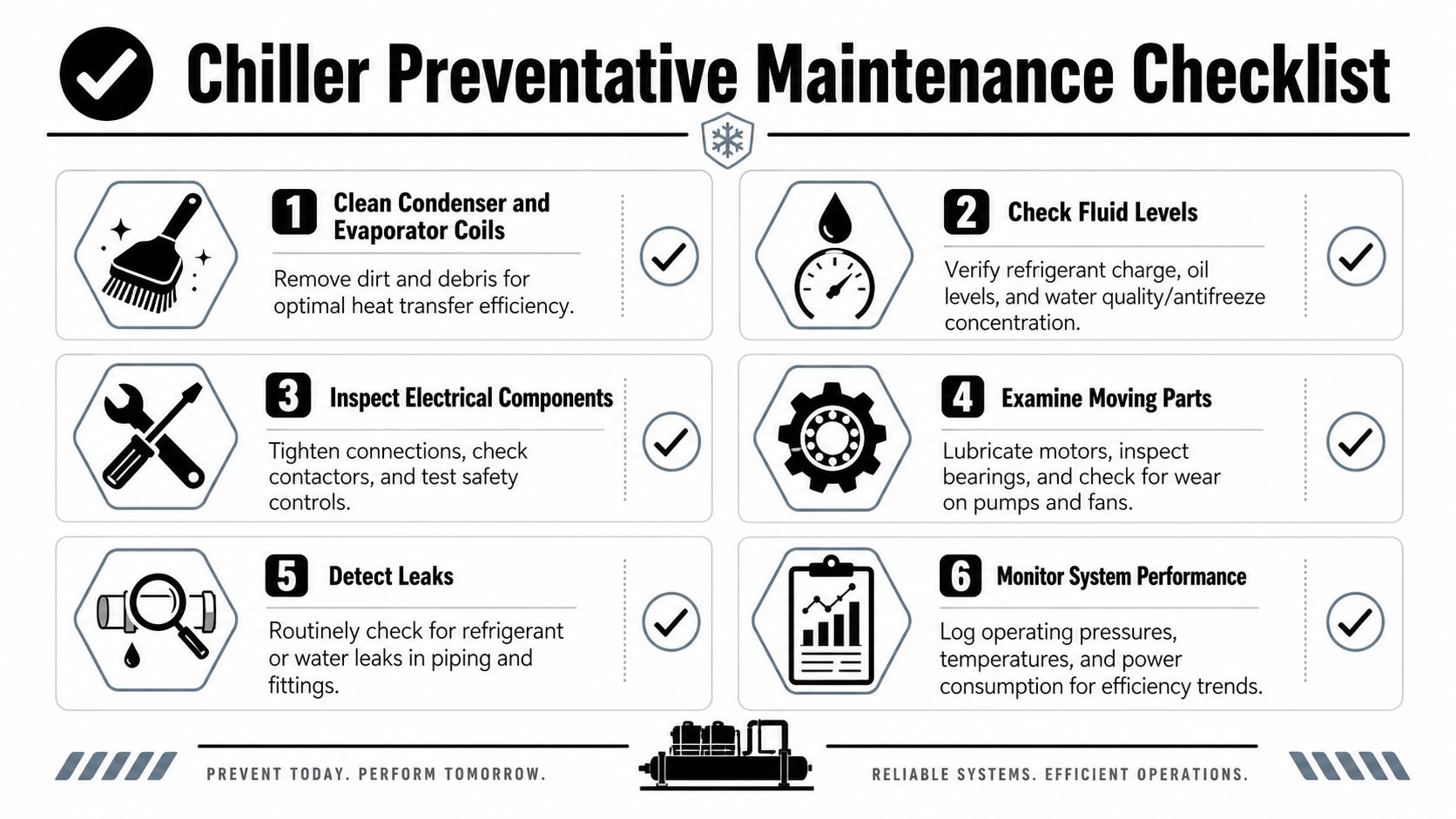
The best maintenance plans are boring. That's a good sign. They rely on repeatable checks, clean records, and regular inspections rather than waiting for alarms.
A practical site routine usually includes:
- Daily observations: Check operating status, leaving water temperature, obvious leaks, and unusual noise.
- Weekly housekeeping: Clear debris, inspect airflow paths, and confirm no valves have been left in the wrong position.
- Monthly water-side checks: Inspect strainers, review water treatment condition, and look for pressure drop changes.
- Scheduled technician service: Test safeties, inspect electrical components, verify operating conditions, and address wear items before failure.
The maintenance tasks that actually prevent repair work
Not every task delivers the same value. The jobs that consistently prevent breakdowns are the ones that protect heat transfer, water flow, and electrical reliability.
Focus on these:
- Clean heat exchange surfaces: Dirty condensers and fouled evaporators force the machine to work harder.
- Maintain water quality: Untreated or poorly controlled water drives scale, corrosion, and blocked passages.
- Tighten and inspect electrical connections: Heat and vibration loosen terminals over time.
- Log operating conditions: Pressure, temperature, and fault history help spot drift before shutdown.
- Check for leaks early: Small water or refrigerant leaks rarely stay small.
Good maintenance isn't a pile of paperwork. It's knowing what your machine normally looks and sounds like, then catching the change early.
If you're building or tightening a facility checklist, Covenant Aire Solutions' HVAC checklist is a useful cross-check for inspection discipline and task coverage, even if your final routine needs to be adapted to your exact chiller type and site conditions.
What doesn't work
Reactive maintenance dressed up as preventive maintenance doesn't save much. If the site only checks the chiller after an alarm, the plan has already failed. The same goes for maintenance that records readings but never reviews trends, or service visits that clean externally visible parts while ignoring strainers, water treatment, and control behaviour.
The facilities that get the best life from their equipment are usually not doing anything flashy. They're doing the basics consistently and recording enough detail to act before the unit trips.
Estimating Repair Costs and Common Replacement Parts
When a chiller goes down, budget pressure starts immediately. The first figure many managers want is labour plus parts. The better question is what the failure includes. On chillers, the quoted repair often covers more than the broken component itself. Diagnosis, access, cleaning, leak testing, compliance work, recommissioning, and follow-up checks all affect the final number.
In the Australian market, the average cost of repairing a failed industrial water chiller exceeds AUD $4,200, according to Fluid Chiller Services. The same source notes that 22% of industrial chiller repair jobs in Melbourne between 2020 and 2024 involved refrigerant leaks, which can trigger mandatory reporting and compliance fines.
Where repair bills usually come from
Some repairs are expensive because the part itself costs more. Others are expensive because diagnosis takes time, the refrigerant circuit must be opened legally, or the machine has to be shut down, tested, evacuated, repaired, and restarted in the right sequence.
Fluid Chiller Services reports two high-cost categories in the region:
- Belt-driven compressor failures at AUD $1,850
- Refrigerant leak detection at AUD $1,320
Those figures matter because they show how quickly a “small” issue can become a serious invoice once labour and system handling are involved.
Common chiller repairs and estimated costs in Melbourne
| Repair Type | Common Cause | Estimated Cost (AUD) |
|---|---|---|
| Failed industrial water chiller repair average | Mixed faults across industrial units | Exceeds $4,200 |
| Belt-driven compressor failure | Mechanical wear, overload, poor operating conditions | $1,850 |
| Refrigerant leak detection | Leaks at joints, valves, coils, or pipework | $1,320 |
Not every common part failure has a published market figure, so it's better to discuss those qualitatively. On many sites, technicians regularly replace or service contactors, sensors, fan motors, valves, controls, strainers, pump seals, and water treatment-related components. The actual price depends on access, brand, refrigerant type, urgency, and whether the failed part damaged anything else.
The hidden costs people forget
A quote can look reasonable until the secondary costs appear:
- Downtime costs: The machine may be repairable, but operations can't wait.
- After-hours attendance: Urgency changes labour cost and parts availability.
- Compliance exposure: Refrigerant leak work can involve reporting obligations and fines where businesses aren't compliant.
- Repeat attendance: Misdiagnosis often costs more than the original repair.
If you're assessing whether a repair is fair, ask for the fault path, the failed part, the likely cause, and what checks were done to prevent repeat failure. That gives you much more than a parts-and-labour number.
For teams also comparing packaged chilled water options and application-specific equipment, this commercial water cooler chiller product example helps show how intended use affects repair expectations and replacement thinking.
Choosing a Reliable Chiller Repair Service in Melbourne
The right service provider doesn't just fix the immediate fault. They diagnose the cause, explain the trade-offs clearly, and leave the system in a condition you can trust. The wrong one swaps parts until the alarm disappears, then leaves you with the same callout two weeks later.

What to ask before approving the job
Start with qualifications and scope. Chiller work isn't generic HVAC maintenance, especially where sealed refrigerant circuits, controls, pumps, and water treatment all interact.
Ask these questions:
- Are you licensed for refrigerant handling and insured for this work?
- Have you worked on this chiller brand and configuration before?
- Will you diagnose first or quote a part from the alarm description alone?
- Do you check flow restrictions before condemning pumps?
- What testing do you do after the repair to confirm the fault is gone?
- What warranty applies to labour and replacement parts?
A good contractor won't be annoyed by these questions. They'll answer them clearly.
What a reliable technician does differently
Experienced chiller technicians usually show their value in the first inspection. They ask what changed before the fault appeared. They look at water flow, operating pressures, control history, heat exchanger condition, and recent service work. They don't assume the alarm text is the diagnosis.
A credible repair starts with a fault tree, not a guess.
Local support also matters. On industrial equipment, delays in travel, parts sourcing, and follow-up can drag out what should have been a contained repair. A Melbourne-based provider with the right stock, local coverage, and familiarity with the site environment usually gives you a better chance of a first-time fix.
If your broader facility also relies on point-of-use hot water and drinking water equipment, it's worth working with a service company that understands connected plant support, scheduled servicing, and local response. This Melbourne boiling water unit service page is one example of what that kind of local servicing structure looks like.
Industrial Chiller Repair FAQs
What's the main repair difference between air-cooled and water-cooled chillers
Air-cooled chillers often fail around airflow, condenser coil condition, fans, and outdoor exposure. Water-cooled chillers add another maintenance layer through condenser water flow, scale, strainers, tower-related issues, and water treatment. The refrigeration circuit still matters on both, but the water side plays a much bigger role in water-cooled repair decisions.
How do I know whether to repair or replace
Look at the fault pattern, not just the latest failure. If the chiller has recurring shutdowns, parts are becoming hard to source, efficiency has clearly fallen, and every repair seems to uncover another issue, replacement may be the better long-term move. If the machine is structurally sound and the fault is isolated, repair often still makes sense.
What should I do when a low-flow alarm appears
Start with the simple checks. Confirm valves are open, check the water circuit condition, and inspect the Y-strainer before assuming the pump has failed. That sequence avoids one of the most common and expensive diagnostic mistakes.
Are refrigerant leaks just a repair issue or also a compliance issue
They're both. A leak affects performance and reliability, but it can also create reporting and environmental compliance obligations. If a leak is suspected, treat it as more than a top-up job. The leak source needs to be found and repaired properly.
Can my maintenance team handle industrial water chiller repair in-house
They can usually handle routine inspections, basic fault recording, housekeeping, strainer checks, and visual assessment if site procedures allow it. Sealed-system refrigeration work, leak testing, refrigerant handling, compressor diagnosis, and control-board replacement should stay with qualified technicians.
What information should I give a service technician before they arrive
Give them the model details, the alarm text, when the fault started, whether it's intermittent or constant, what the machine was doing beforehand, and any recent maintenance or water treatment changes. That shortens diagnosis and reduces wasted site time.
If you need help with chilled or boiling water equipment in Melbourne, Ring Hot Water offers local supply, servicing, repairs, installation support, and genuine spare parts across a wide range of commercial water systems. Whether you're chasing a fault, planning maintenance, or replacing ageing equipment, their team can help you get the right solution without guesswork.

