
Uncategorized
RV Hot Water Heater: An Australian Buyer’s Guide 2026

Jun
Cold air, wet thongs outside the van, kettle boiling for the first coffee, and one question that matters more than most owners admit. Will the shower stay hot?
That's usually the moment a caravan owner starts caring about the RV hot water heater properly. Not in the showroom. Not when reading a brochure. On the road, in real conditions, with a pump cycling, kids waiting, or a frosty morning in the high country when a weak hot water system stops being a minor annoyance and turns into the first job of the day.
A good RV hot water heater isn't just about comfort. It affects how long you can stay off-grid, how much gas you carry, how your plumbing handles cold snaps, and whether your system behaves nicely on patchy campground pressure. In Australia, those details matter more than many overseas guides admit. A setup that works neatly in a North American park with stable hookups doesn't always behave the same way in a coastal caravan park, a regional showground, or a bush camp running on your own pump.
Hot Showers on the Road Made Simple
Most owners want the same thing. Turn on the tap, get reliable hot water, and avoid fiddling with switches, bypass valves, pressure quirks, or mystery faults.
That sounds simple, but RV hot water systems involve a few moving parts. The heater itself is only one part of the job. Water pressure, fuel type, venting, pipe sizing, fittings, electrical supply, and climate all affect the result. If one of those is off, even a decent unit can feel unreliable.
What new owners usually get wrong
The first mistake is buying on marketing language alone. “Endless hot water” sounds brilliant until the unit sees poor pressure or a flow rate it doesn't like. “Simple storage tank” sounds old-fashioned until you realise it may suit your travel style better because it's predictable and easy to live with.
The second mistake is treating all Australian travel conditions as the same. They're not. A van used mostly in powered parks along the coast has different needs from a rig heading through inland winter nights or spending long periods on pump-fed water.
Practical rule: Choose the system for the way you camp, not the way a brochure says you could camp.
What matters in real use
If I'm explaining an RV hot water heater to a new owner, I narrow it down to a few practical questions:
- Where do you camp most often? Powered site, free camp, showground, or mixed use all change the best option.
- How do you use hot water? Quick dishwashing and one shower is very different from back-to-back family showers.
- How stable is your water supply? Some heaters are fussier than others when pressure or flow changes.
- Do you travel in cold weather? Winter protection matters far more than many buyers expect.
By the end of this guide, you should be able to look at a heater and tell whether it suits your van, your plumbing, and your travel habits, instead of guessing.
Storage Tank vs Instantaneous Heaters
The easiest way to understand the difference is this. A storage tank heater is like a preheated thermos. An instantaneous heater is like a kettle that only works when water moves through it.
Both can work well. Both have compromises. The right choice depends less on trends and more on how patient you are with recovery time, how steady your water pressure is, and how you use the van day to day.
How a storage tank heater behaves
A tank unit stores and heats a fixed amount of water before you need it. In the RV market, tank-style water heaters commonly hold 6 to 10 gallons and a fully heated unit can deliver about 15.8 gallons in the first hour when first-hour delivery is calculated from tank size and recovery rate, according to Furrion's RV water heater guide.
That explains a very common owner experience. You get a decent burst of hot water, then performance tapers off while the unit catches up.
Storage systems suit owners who like predictable behaviour. They're usually easier to understand, easier to troubleshoot, and often simpler when replacing an older factory-fitted heater.
How an instantaneous heater behaves
A tankless unit heats water on demand through a heat exchanger once it senses flow. In plain terms, it doesn't keep a tank hot all day. It wakes up when you open a hot tap.
That sounds ideal, and for some owners it is. Continuous hot water is a genuine advantage when the supply conditions are right. But “continuous” doesn't mean “carefree”. Flow rate, inlet pressure, gas supply, installation quality, and water condition all matter. If you're comparing options, this guide to a tankless instant water heater gives a useful starting point for the on-demand style of system.
Tankless systems reward good installation and stable conditions. Tank systems reward simple habits and realistic expectations.
Side-by-side comparison
| Feature | Storage Tank Heater | Instantaneous (Tankless) Heater |
|---|---|---|
| Hot water delivery | Preheats a fixed volume | Heats water as it flows |
| Best everyday feel | Fast start and familiar operation | Longer showers when flow stays steady |
| Main trade-off | You can run out and wait for recovery | You can get temperature swings if flow or pressure varies |
| Pressure sensitivity | Generally more forgiving | Usually more sensitive to supply changes |
| Maintenance focus | Tank condition, element, valves, anode on applicable models | Descaling, burner condition, filters, flow-related checks |
| Best fit | Owners wanting simplicity | Owners wanting on-demand performance and willing to tune the setup |
What works and what doesn't
A tank heater works well for couples, weekenders, and owners who don't need long back-to-back showers. It doesn't suit anyone expecting residential-style endless hot water from a small van system.
A tankless heater works well when the pump is healthy, pipework is right, regulator settings are sensible, and the incoming water is reasonably consistent. It doesn't work well when the plumbing is marginal, campground pressure jumps around, or the installation ignores the unit's flow requirements.
How to Choose the Right RV Water Heater
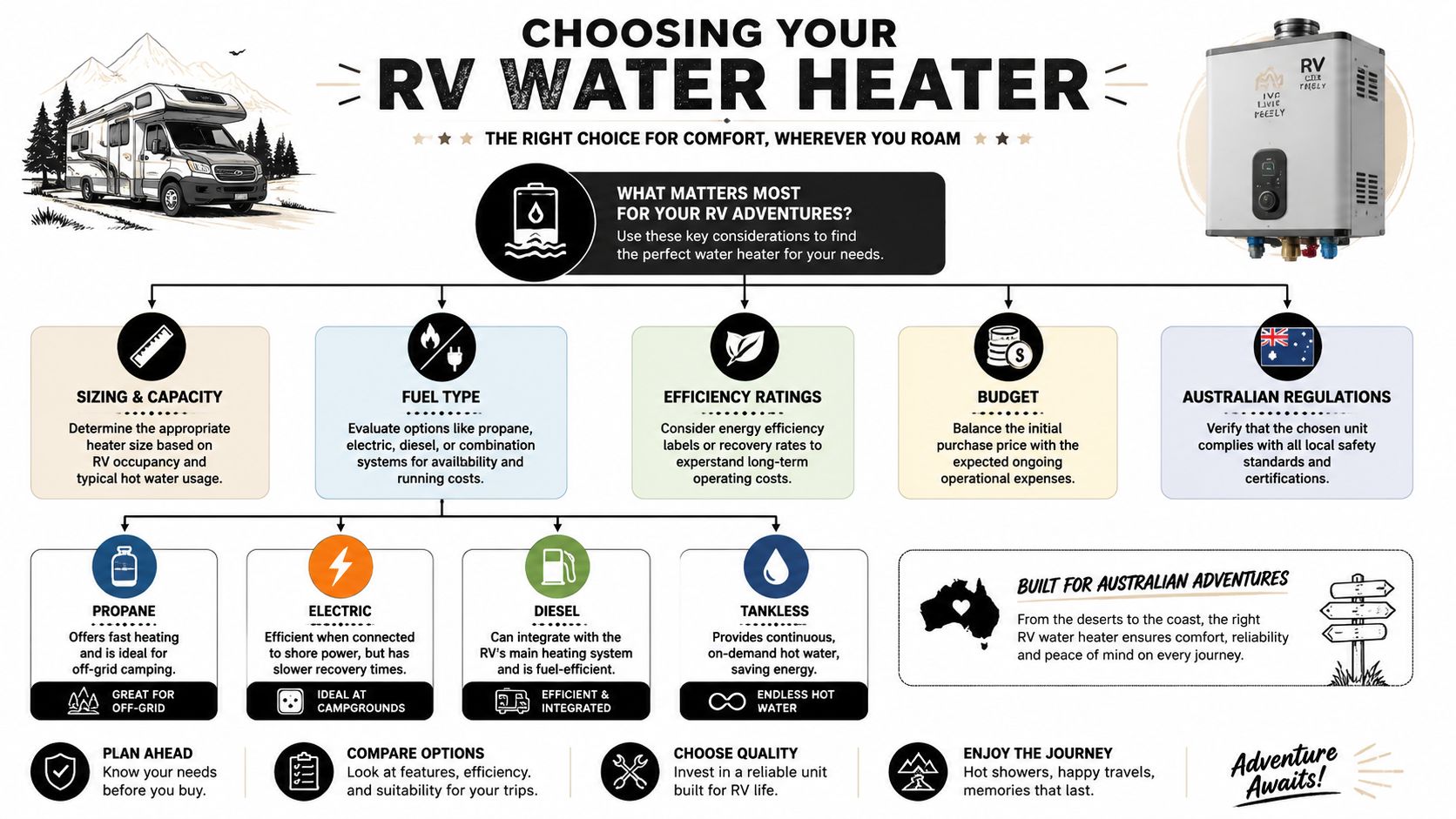
Buying the right RV hot water heater is easier if you stop thinking about brands first and start with three decisions. Water demand, available power, and how much real-world variability you're willing to tolerate.
Start with usage, not hype
A solo traveller using hot water mainly for dishes and short showers can live happily with a simpler setup. A family trying to wash up, shower, and clean muddy gear in quick succession puts far more strain on the system.
Think in patterns, not peak ambition. If you usually take quick showers and camp for a few nights at a time, simplicity often wins. If you live in the van for long stretches and hot water use is frequent, an on-demand system becomes more attractive, provided the rest of the van supports it.
A common buying mistake is choosing for the occasional “best case” trip rather than the normal one. The heater should suit your regular use.
Match the heater to your power reality
For many Australian owners, the question isn't tank or tankless. It's what energy source you can rely on.
- Gas-heavy travel: Strong option for off-grid use because you're not depending on a powered site for primary heating.
- Mostly on mains power: An electric-friendly setup can make sense if your van spends most nights plugged in.
- Mixed touring: Combination thinking matters. Some owners want gas for independence and electric support when available.
If you're still sorting out the broader fuel decision, this electric vs gas heating comparison is useful background reading because it frames the everyday operating trade-offs clearly, even though caravan systems have their own constraints.
Don't ignore pressure and flow behaviour
Many Australian buyers often encounter a challenge. The technical trade-off between RV heater types is recovery time versus continuous output, and some 12V DC tankless units specify an operating water pressure range of 14.5 to 116 PSI, which shows why stable pump or site pressure matters for temperature stability, as outlined in RecPro's tankless RV heater specifications.
That number matters less as a spec-sheet brag and more as a warning. If your onboard pump surges, if your filter is partly blocked, or if a caravan park tap is inconsistent, the heater may hunt for the right burn level and you'll feel it in the shower.
A simple decision filter
Ask yourself these questions in order:
Do you need short, reliable hot water or long, continuous hot water?
Short and reliable points to storage. Long and continuous points to tankless.Will your water pressure stay stable enough?
If the answer is “not always”, storage is often the safer choice.Do you travel in mixed Australian conditions?
If yes, favour a system you can service easily and understand quickly when something goes wrong.
Buy the heater your plumbing can support. That matters more than buying the most impressive unit on paper.
Installation and Venting Essentials
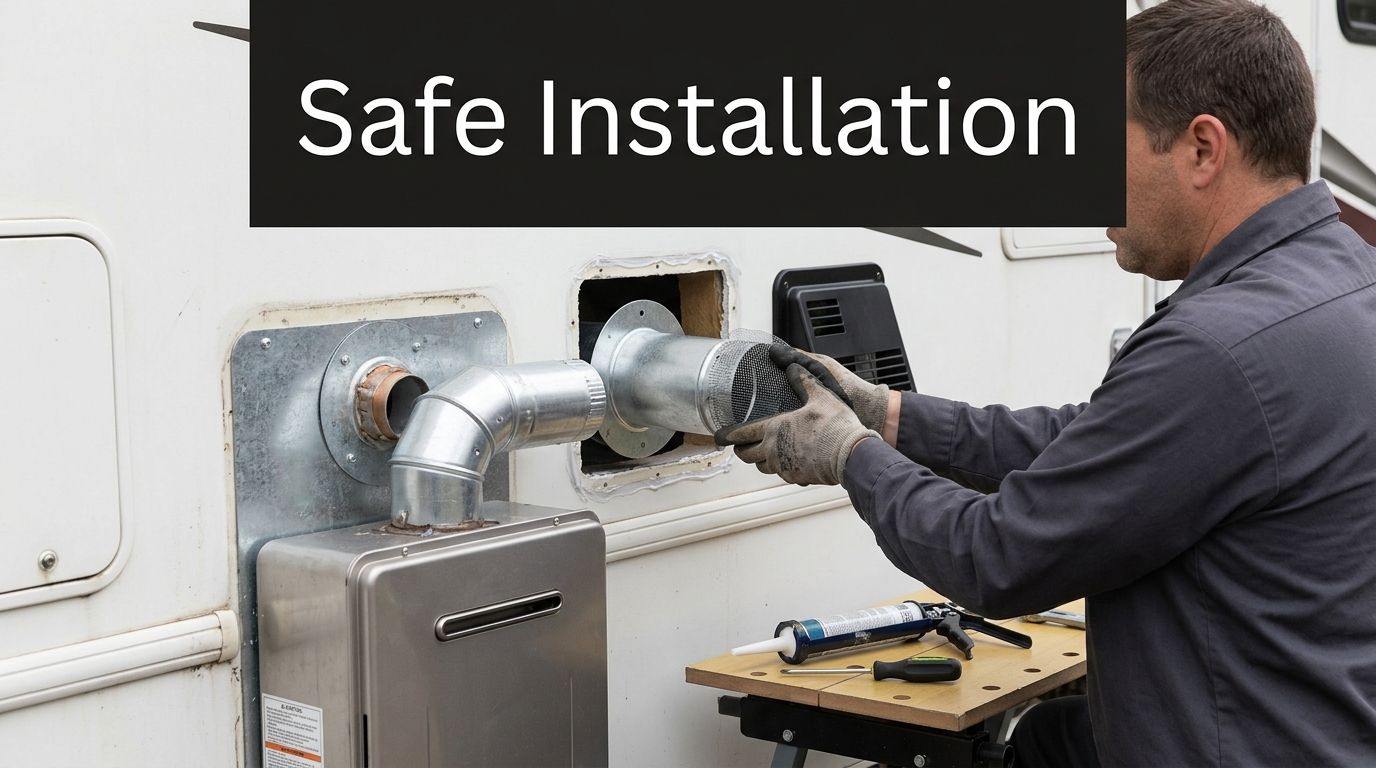
An RV hot water heater install is not just a box swap. In Australia, gas and 240V work need the right licensed trades. Even where an owner handles part of the preparation, the safety-critical work still needs to be done properly.
Location and access matter
The unit needs more than a hole in the wall. It needs workable service access, sensible pipe routing, proper clearances, and a venting path that matches the appliance. A cramped install might fit physically and still be a poor job because nobody can later reach filters, wiring, valves, or ignition components.
Tankless units make this even more important. They're often sold on the promise of endless hot water, but Keystone's tankless usage notes point out that hard water scaling and variable pressure can affect performance, causing temperature swings and flow sensitivity. That means installation quality isn't a side issue. It's part of whether the heater performs acceptably at all.
Venting is a safety job, not a trim detail
Gas combustion has to go somewhere. The external vent, combustion path, seals, and surrounding materials all need to match the heater design. You can't treat venting parts as generic caravan accessories.
I've seen owners focus heavily on the heater model and barely think about the vent assembly. That's backwards. A correctly selected vent system protects the van, supports proper combustion, and helps avoid nuisance operation problems.
Australian fittings and plumbing compatibility
A lot of caravan plumbing uses 12mm tubing, often with John Guest push-fit fittings, while some sections still use brass threaded fittings or transition pieces. Getting this wrong causes leaks, poor flow, awkward servicing, and endless little adaptors that shouldn't be there.
If you want a plain-English refresher on pipe material trade-offs, even outside caravan work, this overview of plumbing options for home renovations is useful because it highlights how material choice affects durability and fit-out decisions. In caravans, the same principle applies. Use fittings that suit the line, the pressure behaviour, and the service environment.
A tankless install also depends heavily on the pump side. If the onboard supply is weak or erratic, the heater can only do so much. This guide to a 12 V water pump for caravan is worth reading if your “heater issue” may start with water delivery.
Routine Maintenance and Troubleshooting
Most RV hot water heater failures don't begin as dramatic failures. They begin as skipped maintenance, small pressure issues, scaling, half-open valves, or a heater being turned on before the system is properly ready.
Maintenance that prevents common faults
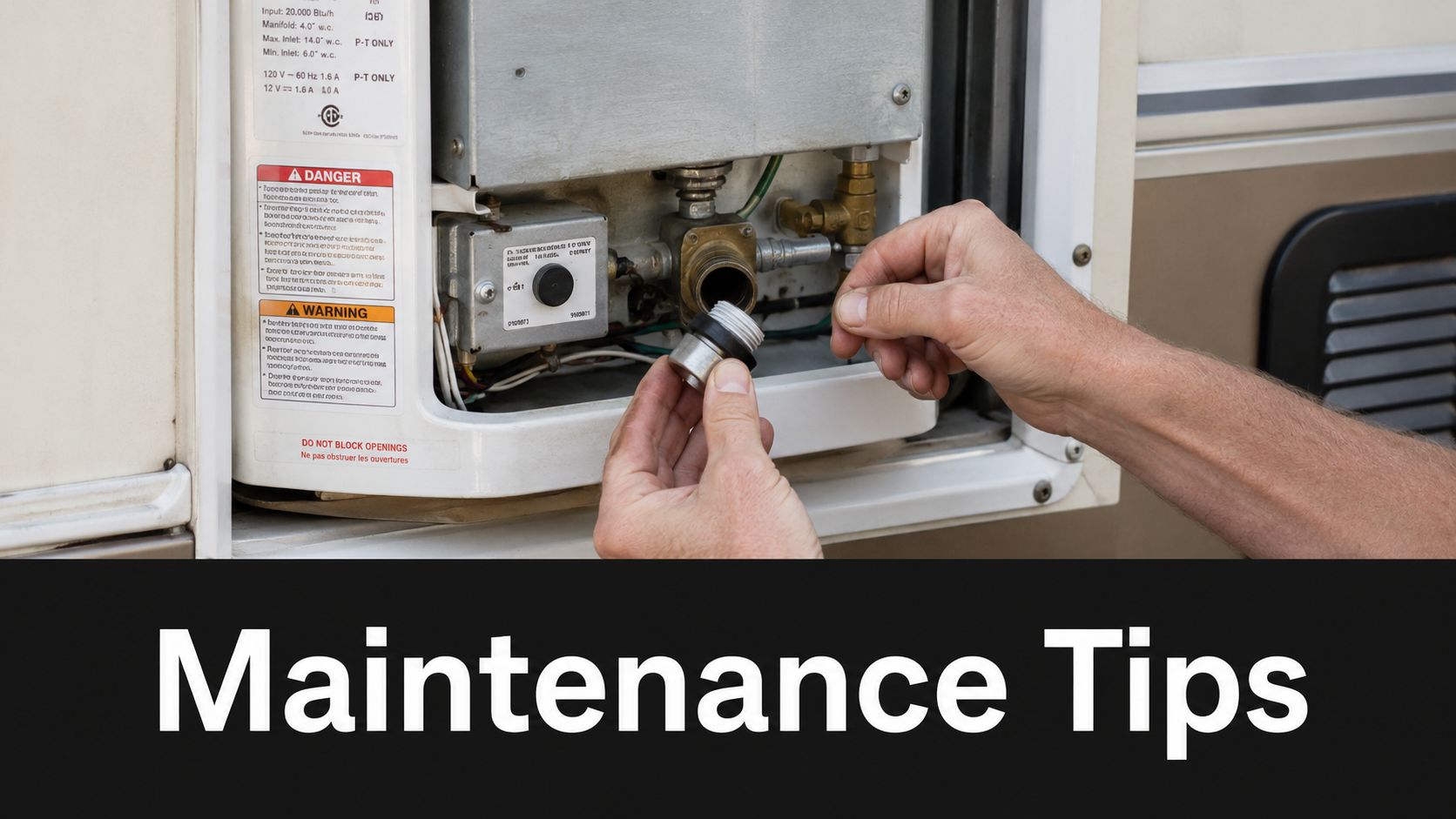
Storage systems benefit from regular draining and inspection. If your model uses a sacrificial anode, check it before it's completely spent. If the drain plug area is crusted, don't ignore it. Small signs of corrosion or leakage usually become larger jobs later.
Tankless systems need a different mindset. Their weak point is often scale, debris, and flow-related behaviour. If your water source changes from trip to trip, that maintenance becomes more important because the heater reacts to what's coming through it.
A sensible owner routine includes:
- Check the tank is full before energising a storage unit. Dry-firing an element is one of the fastest ways to create an avoidable repair.
- Inspect fittings and valves for small leaks. Dampness around joints often appears before a proper failure.
- Clean strainers and check inlet flow. Poor hot water performance sometimes starts as restricted water supply, not heater failure.
- Descale tankless units when performance starts drifting. Don't wait for major instability.
Fast fault finding
If there's no hot water, split the problem into categories. Is it power, gas, water flow, control settings, or a plumbing bypass issue? Don't start replacing parts blindly.
If the water is warm but not hot enough, check the simple causes first. A mixing issue, low flow through the heater, unstable pressure, or partial scaling can all mimic a failing heater.
The best troubleshooting starts outside the heater. Check supply, flow, valve position, and setup before blaming the appliance.
For electric storage systems, element faults are common enough that owners should know how to identify them safely. This guide on how to test a hot water element is useful background before you call for parts.
Winter operation in Australian conditions
Generic advice often falls short regarding a key challenge for Australian RV owners: winter operation and freeze protection, especially in southern regions, and Lippert's troubleshooting guide notes that many guides don't really deal with protecting lines and valves in sub-10°C conditions common in alpine travel without wasting power or antifreeze.
That matters in places like the Snowy Mountains, parts of Victoria's high country, and Tasmania in winter. The problem isn't only the heater tank. It's exposed lines, check valves, elbows, drain points, and exterior compartments.
Practical cold-weather habits
Use habits that reduce risk without overcomplicating the van:
- Drain down when the van will sit in serious cold. Standing water in vulnerable pipework is what does the damage.
- Know where your low points and isolation points are. If you can't drain the system quickly, you can't respond quickly.
- Don't assume “mild days” mean safe nights. A comfortable afternoon can still lead to damaging overnight temperatures.
- Confirm bypass positions after any winter prep. Many hot water faults after cold trips come from valves left in the wrong position.
Cold-weather reliability is often less about buying a fancy heater and more about disciplined setup and shutdown.
Sourcing Parts and Expert Help in Australia
When an RV hot water heater starts misbehaving, most owners don't need vague advice. They need the right part, the right fitting, or a technician who understands compact water systems rather than guessing from residential habits.
That's where specialist supply matters. Caravan and RV systems use specific combinations of compact heaters, pumps, valves, elements, thermostats, anodes, 12mm fittings, push-fit connectors, and threaded adaptors. General hardware outlets can help with some basics, but they often won't help much when you need matching components that suit a mobile setup.
What to look for in a supplier
A good parts source should be able to support both maintenance and repair work, including:
- Core service parts such as elements, thermostats, valves, and compatible replacement components
- Plumbing hardware including 12mm John Guest fittings, brass threaded fittings, reducers, elbows, and joiners
- RV-specific accessories that suit compact installations rather than standard house layouts
It also helps when the supplier understands the difference between replacing with like-for-like parts and making a sensible upgrade. If you've ever looked at a generic substitute and wondered whether it will fit, seal, and perform properly in a caravan, that concern is justified.
For a useful framework on the replacement-part decision itself, this article on aftermarket parts vs OEM is worth a read. It's from the automotive world, but the logic carries across neatly. Compatibility, reliability, and warranty implications matter more than buying the cheapest thing that looks close enough.
Why specialist support saves time
For Melbourne owners, hands-on local help can be the difference between a quick repair and a string of false starts. For owners elsewhere, a well-organised online supplier with Australia-wide delivery matters just as much, especially when you're chasing a specific fitting or genuine spare rather than a universal part that may or may not work.
The core value is practical advice. Not “this should fit”. Actual guidance on what matches your unit, your plumbing, and your use case.
Frequently Asked Questions
Some questions don't fit neatly into buying, installation, or maintenance. They come up after you've already lived with the van for a while and realised the small details matter.
| Question | Answer |
|---|---|
| Can I use a residential hot water heater in a caravan or RV? | Usually, that's a poor idea. Residential units are built for different mounting, ventilation, space, and plumbing assumptions. An RV hot water heater has to suit mobile installation, compact service access, and caravan-safe venting. |
| Is tankless always better for Australian caravans? | No. Tankless is better for some owners, especially those wanting longer showers and who can provide stable flow and proper maintenance. Storage still suits plenty of vans because it's simpler and often more forgiving. |
| Why does my shower temperature change when someone opens another tap? | That usually points to flow or pressure variation through the system. Tankless units are especially sensitive to changes in demand elsewhere in the van. |
| Do I need to run both gas and electric options if my heater has them? | Not necessarily. It depends on how you travel. Many owners use electric on powered sites and keep gas for flexibility. The right habit is the one that matches your camping style and the heater design. |
| Why is there hot water at the sink but not much at the shower? | Check the shower mixer, restrictions, line routing, and flow rate first. The heater may be fine while the outlet side is limiting performance. |
| How often should I descale a tankless unit? | There isn't one universal interval because water quality varies so much. If you use hard water areas or notice unstable temperature behaviour, inspect and service it sooner rather than later. |
| What's the most common owner mistake with storage systems? | Turning the heater on before confirming the tank is full. That can damage components and create a repair that was easy to avoid. |
| Can I upgrade from a storage tank to tankless? | Sometimes yes, but it's not always a neat swap. You need to check venting, space, water delivery, gas supply, and service access before assuming it's a direct replacement. |
If your setup is behaving inconsistently, don't jump straight to replacing the entire heater. A surprising number of “heater failures” turn out to be pressure issues, bypass valve mistakes, blocked strainers, or the wrong fitting choice somewhere in the line.
If you need parts, fittings, or expert help for your caravan or RV hot water setup, Ring Hot Water is a strong place to start. They supply Australia-wide through their online store and stock the kinds of components owners and trades need, including elements, thermostats, valves, anodes, John Guest fittings, and brass threaded fittings. If you're in Melbourne, they also provide professional installation, repairs, and maintenance, which is especially useful when the issue involves gas, venting, or tricky plumbing compatibility rather than a simple parts swap.

