
Uncategorized
Aqueous MK2 Water Heater: A Complete Melbourne Guide 2026

Jun
You're usually considering the Aqueous MK2 because the usual hot water options are too bulky, too slow, or impractical for the space.
A caravan galley, a workshop sink, a staff kitchenette, or a butler's pantry all create the same question. Do you need a compact 12V unit for mobile use, or a 240V model for a fixed install? Is 6 litres enough for short draw-off at a single outlet, or will 10 litres better suit the way the sink is used? Those are the decisions that shape whether the system feels well matched or frustrating in daily use.
The Aqueous MK2 water heater is built for that kind of point-of-use job. It gives Melbourne homeowners, caravan owners, and small businesses a compact hot water option that fits where a full storage system usually does not.
From an installation point of view, that matters. A small heater under a bench or inside a van cabinet only works well if the voltage, tank size, and available service space all line up with the site. Get those choices right and the unit does exactly what it should. Fast local hot water, less wasted space, and a setup that suits the actual job rather than forcing the job to suit the heater.
End the Wait for Hot Water with the Aqueous MK2
A common Melbourne scenario is a renovation that adds one extra sink but not the space for a full hot water system. The laundry gets a utility basin. The garage becomes a studio. A caravan fit-out gets a proper galley instead of a plastic tub and kettle. The need is simple. Hot water on demand, without wasting space.
The Aqueous MK2 suits that kind of job because it was brought to the Australian market specifically as a compact, near-instant option for fixed, mobile, and marine applications. That gives it a much broader role than a typical under-bench heater. It can sit in a home kitchenette one day and make just as much sense in a caravan or service vehicle the next.
If you're already planning a compact renovation, layout matters as much as the heater itself. Before people lock in cabinetry and plumbing points, I often tell them to think about sink location, storage, and service access together. A practical guide on designing a bathroom in Melbourne is useful for that same reason, even when your project is a laundry, powder room, or compact kitchenette. Good planning avoids boxing the heater into an awkward corner later.
Hot water problems in small spaces usually aren't caused by the heater alone. They start with poor placement, the wrong voltage choice, or a tank that's the wrong size for the actual job.
The Aqueous MK2 isn't for every site. If someone expects whole-house performance from a compact point-of-use heater, they'll be disappointed. But for the right application, it solves a very specific problem cleanly. It gives you stored hot water in a small package, and it does it in formats that suit both mains-powered and mobile setups.
Understanding the Core Features and Specifications
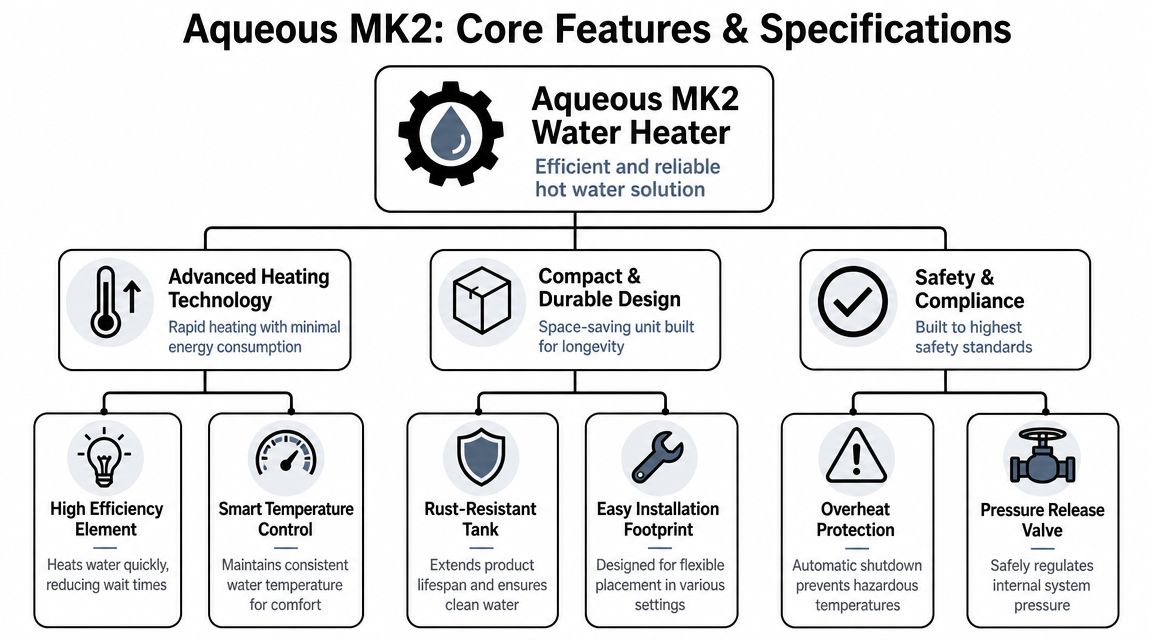
The Aqueous MK2 is easier to choose when you ignore the marketing language and focus on what the unit does in use. The important part isn't just that it heats water. It's how it controls temperature, how it fits into a tight install, and how its power options affect the job.
What the temperature control means in practice
The Aqueous MK2 is an auto-thermostatic heater available in 240V and 12V, with an adjustable operating range of 30°C to 75°C on 240V AC and 30°C to 70°C on 12V DC. Technical documentation also shows that it cycles automatically in 5°C increments once it reaches the set temperature, rather than running flat-out continuously (Plumbing Connection).
That matters more than people think.
In a caravan, compact kitchen, or marine fit-out, hot water demand is often intermittent. You wash hands, rinse cups, clean a pan, then stop. An auto-thermostatic unit is better suited to that stop-start pattern because it maintains temperature without constant full-power heating.
Practical rule: Tight temperature control is useful in small systems because it keeps the unit stable during short draw-offs instead of forcing it into rough on-off behaviour.
Why compact design matters more than brochure photos
Space is always the hidden cost in these jobs. Once you allow for plumbing, valves, wiring, and access for servicing, a “small” heater can still become a nuisance if its footprint doesn't match the cabinet or seat box it's going into.
Published Australian coverage described the 6-litre Aqueous MK2 as the “most compact model yet”, which tells you exactly where the line is aimed. It's built for installations where a regular storage heater is too bulky to be practical.
That's the primary benefit. Not style. Not novelty. Fit.
The core specification summary
| Feature | What it means on site |
|---|---|
| 6L and 10L models | You can size the unit for lighter or heavier point-of-use demand |
| 12V and 240V availability | It suits both mobile/off-grid style installs and fixed mains-powered sites |
| Auto-thermostatic control | Better temperature stability for intermittent use |
| Adjustable temperature settings | Lets installers and owners match the unit to the application |
| 5°C cycling behaviour | Helps avoid unnecessary short-cycling while holding usable hot water |
| Compact format | Easier to place in caravans, under benches, and inside cabinetry |
One more detail matters for specifiers and owners alike. Australian trade coverage reported Australian WaterMark accreditation for the 6L and 10L models. That's not a cosmetic badge. It gives installers and property owners a compliance reference point when the product is going into regulated water systems.
Sizing Your Unit 6L vs 10L and 12V vs 240V
A poor Aqueous MK2 choice usually shows up on the first busy day of use. The caravan owner runs out of hot water after a couple of sink jobs. The office kitchenette gets complaints because recovery feels too slow. The problem is rarely the heater itself. It is usually a sizing or power decision that did not match the job.
The Aqueous MK2 range gives you two main decisions. Pick the storage size for the way the tap will be used. Then make a realistic voltage choice based on the power system available on site.
Start with the tank size
Tank size is about draw pattern, not guesswork.
A 6L unit suits point-of-use jobs where the demand is light, short, and occasional. That includes a caravan sink, a small ensuite basin, or a secondary sink in a home where the aim is to get nearby hot water without using a larger central system. It also makes life easier where cupboard space is tight and every millimetre matters.
A 10L unit gives you more breathing room. It is the better fit where people draw hot water for longer, use the sink repeatedly, or expect less noticeable recovery between uses. In a staff kitchenette or workshop sink, that extra stored volume often makes the difference between a setup that feels adequate and one that feels undersized.
A simple rule works well on site.
Choose 6L if:
- the outlet is used by one person at a time
- the draw-offs are short
- space is limited
- the heater is solving a convenience issue at a secondary point
Choose 10L if:
- the sink gets back-to-back use
- washing up runs longer
- the user wants more buffer before reheating becomes noticeable
- the installation has room for the larger unit
Then choose the voltage realistically
A common misunderstanding for buyers involves the power supply. 12V and 240V are not interchangeable options. They suit different electrical setups and different expectations.
| Model | Capacity | Power Source | Best suited to |
|---|---|---|---|
| Aqueous MK2 | 6L | 12V | Caravan, camper, boat, or mobile sink with light demand |
| Aqueous MK2 | 6L | 240V | Small fixed kitchenette, utility sink, or office point-of-use |
| Aqueous MK2 | 10L | 12V | Mobile setup needing more stored hot water and properly planned electrics |
| Aqueous MK2 | 10L | 240V | Fixed installation with more regular sink use and higher convenience expectations |
A 12V unit makes sense when the whole system is built around battery supply. That means suitable cabling, enough battery capacity, and realistic expectations about how the heater will be used. In vans and marine installs, that can be the right answer. If you are comparing mobile-use options, the Aqueous 12V hot water heater range helps narrow down the available models.
A 12V unit is the wrong choice when the site already has dependable mains power and the owner wants home-style convenience. I see this mistake regularly. People choose 12V because it sounds flexible, then find the rest of the electrical system was never designed to support that decision properly.
A 240V unit is usually the cleaner option for houses, offices, workshops, lunchrooms, and fixed commercial spaces. If the site is on mains power full-time, 240V usually gives the simpler install and the more predictable day-to-day result.
The best buying question is not “Which model is better?” It is “How will this tap be used, and what power supply does the site support?” Answer that properly, and the 6L versus 10L and 12V versus 240V decision becomes much easier.
Ideal Applications from Caravans to Kitchenettes
The Aqueous MK2 is easy to understand when you match it to the person using it. Not every buyer wants the same thing, even when the heater is the same.
The caravan owner
Mark uses his van for weekends away and longer regional trips. He wants proper hot water at the sink without dedicating half a cupboard to the system. The appeal of the Aqueous MK2 is obvious here. Compact size, mobile-friendly voltage options, and a format that suits intermittent use.
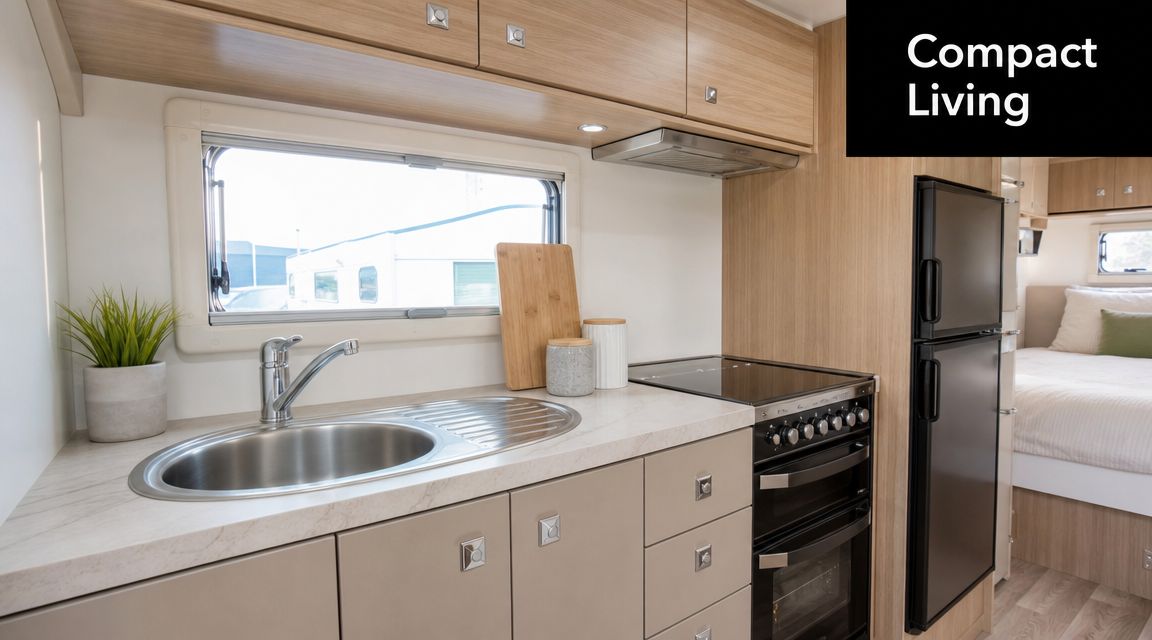
The catch is that the caravan application punishes sloppy planning. A van with light sink use and a sensible electrical layout can do well with a 12V model. A van that spends most of its life on powered sites may be better served by 240V. Owners trying to work through those differences usually benefit from broader caravan-specific guidance like this article on caravan hot water heater options.
The office or workshop kitchenette
Sarah manages a small office with a cramped sink area. Staff want hot water for washing cups and light clean-up, but there’s no appetite for a bulky commercial installation. A compact mains-powered unit often makes sense in such situations.
A small point-of-use heater close to the sink reduces the delay that comes with long pipe runs from a distant plant room or house system. In practical terms, that means less waiting and less frustration during the day.
The homeowner adding one useful sink
A Melbourne homeowner finishes a garage conversion, adds a powder room, or fits out a butler’s pantry. They don’t need to redesign the entire property’s hot water layout. They need one tidy local solution.
For these projects, the Aqueous MK2 fits where a full-size storage system doesn’t. It’s especially relevant when cabinetry, benchtops, and appliance placement leave only a limited service zone.
The marine or mobile operator
Boat owners and mobile businesses care about two things first. Space and reliability. The Aqueous MK2 was positioned in Australia for marine and mobile users as well as domestic and commercial ones, which is why it appears in these conversations more often than many small fixed-site heaters.
In mobile work, the winning setup is usually the one that’s easiest to live with, not the one with the longest feature list.
Correctly Installing Your Aqueous MK2 Heater
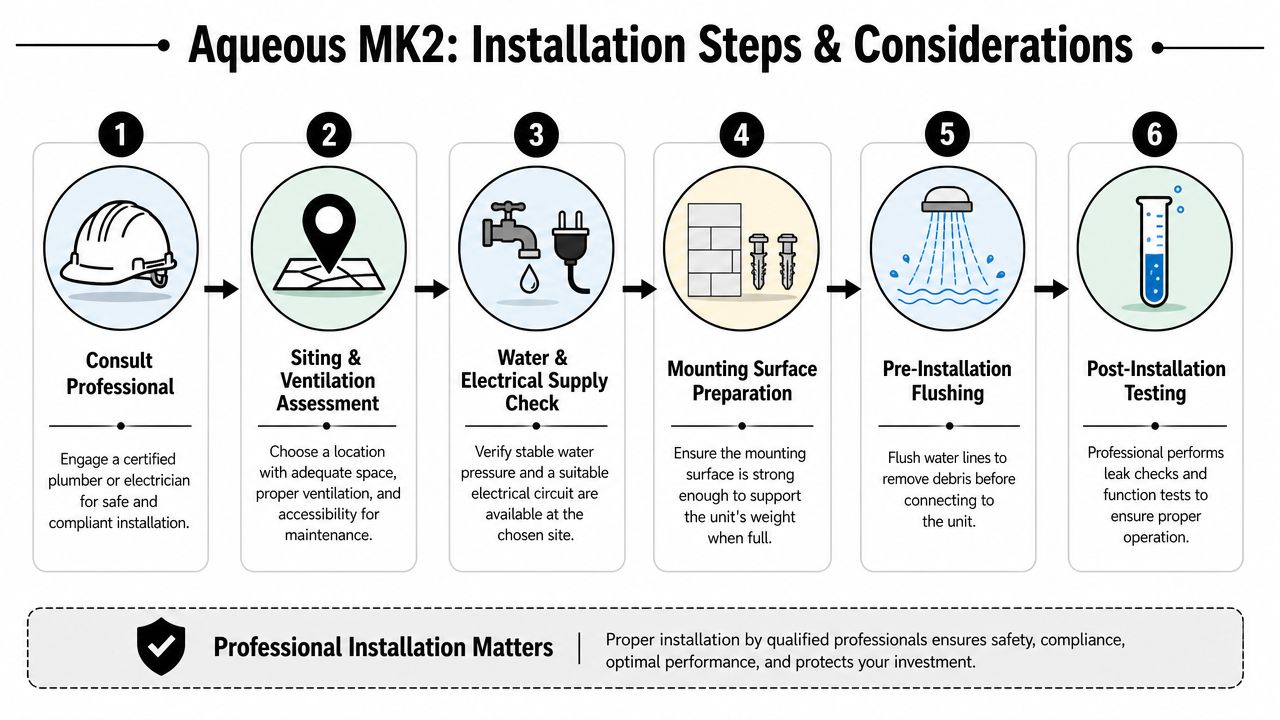
A neat installation starts well before the heater goes on the wall or into the cupboard. Position, access, power supply, and plumbing layout all affect how the unit performs over time. A good install feels straightforward to the owner because the hard decisions were handled early.
Get the location right first
Pick the site based on serviceability, not just empty space. The best location is usually one that keeps pipe runs sensible, leaves room for connections, and allows future maintenance without dismantling half the cabinet.
For mobile and marine applications, mounting security matters just as much. The unit has to sit on or against a surface that can support it properly in real operating conditions, not just while empty during fit-out.
Compliance is not optional
For the Australian market, the 6L and 10L Aqueous MK2 models are documented as manufactured to AS/NZS 3350.1.1:2002 and carrying WaterMark certification to AS/NZS 3498:2009, which is a key compliance indicator for plumbers installing regulated water products in Australia (Plumbing Connection on compliance details).
That matters for three reasons:
- Legal installation means the product has the right approval pathway for Australian water systems.
- Insurance and liability questions get harder when non-compliant products are involved.
- Trade acceptance is simpler when the installer can point to recognised compliance markers.
The installation issues that cause trouble
Some faults blamed on the heater are really installation faults.
- Poor access: If the unit is buried behind shelving or fixed panels, future servicing becomes expensive and frustrating.
- Longer-than-necessary pipe runs: Extra distance adds delay and can defeat the purpose of installing local hot water.
- Electrical mismatch: The chosen circuit or wiring arrangement has to suit the voltage and intended use.
- Weak mounting locations: In caravans and boats, movement exposes poor mounting decisions very quickly.
The cleanest installs are the ones where the plumber, electrician, cabinetmaker, and owner all made their decisions before the fit-out was locked in.
Licensed installation is the sensible path here. It protects the compliance side, the electrical side, and the simple practical reality that a compact unit still needs room to work properly.
Keeping Your Unit Running Smoothly
Compact water heaters are usually low-fuss if they’re installed properly and checked occasionally. Most owners don’t need a complicated maintenance routine. They need a simple habit of noticing changes early.

What to keep an eye on
Start with the obvious items around the unit.
- Check fittings visually. Look for moisture, staining, or slow drips around connections.
- Listen for changes. Unfamiliar cycling behaviour or heating delays can be an early warning.
- Watch recovery expectations. If the unit suddenly feels slower, don’t assume the tank is faulty straight away.
- Think about water conditions. In harder water areas, scale-related issues can build over time and may justify a service inspection.
Boat owners often already understand seasonal maintenance discipline because they do it elsewhere in the vessel. If your heater is installed on a boat, broader upkeep habits from a DIY boat winterization guide can help you think through periods of storage, shutdown, and recommissioning.
A simple troubleshooting guide
One issue that deserves special attention is electrical load mismatch. Public technical discussion around the unit has noted that insufficient battery capacity or undersized wiring can lead to poor heating performance, especially in caravan-style installations where the system may look adequate on paper but struggle in use (installation guidance discussion).
| If this happens | Check this first | When to stop and call a professional |
|---|---|---|
| Water is lukewarm | Confirm the thermostat setting and actual usage pattern | If settings are correct and performance still drops off |
| Heating seems slow on 12V | Review battery condition, wiring size, and overall electrical load | If you’re unsure whether the supply setup is adequate |
| Hot water runs out sooner than expected | Reassess whether the selected tank size suits the draw-off pattern | If the unit was correctly sized and behaviour changes suddenly |
| You notice leaks or dampness | Inspect visible connections only | Immediately, if the source isn’t obvious or safe to access |
For owners who want a better feel for the electrical side of heater maintenance, this guide on how to test a hot water element is a useful reference point. It helps explain one part of the fault-finding process without turning the job into guesswork.
A quick visual overview can also help when you're trying to separate normal operation from a developing fault.
If you're ever dealing with electrical uncertainty, stop there. That's especially true on 12V systems where battery, charger, inverter, and cabling decisions all interact.
Supply and Service with Ring Hot Water
A caravan owner usually asks one of two questions. Will the 12V model keep up with the way we travel, or is 240V the smarter choice for powered sites and fixed use? Melbourne homeowners ask a similar version in laundries, kitchenettes, and studio additions where space is tight and the hot water demand is modest but regular.
That decision is where good supply advice matters. The Aqueous MK2 is a compact stored hot water unit, so the result depends on matching the heater to the job rather than buying on size alone. A 6L unit makes sense where draw-off is short and space is limited. A 10L unit gives you more usable reserve for handwashing, rinsing, or back-to-back use at a small sink. The same goes for power. 12V suits mobile setups with the right battery capacity, cabling, and charging arrangement. 240V is often the cleaner answer for fixed installations because supply is simpler and recovery expectations are easier to manage.
That is the part many generic product listings miss.
At Ring Hot Water, the practical part of supply is straightforward. Identify the installation type, confirm whether the site is 12V or 240V, check the available space, and match the unit to how hot water is used. That helps avoid common mistakes such as fitting a 6L unit where the usage pattern really calls for a 10L, or choosing 12V in a setup that does not have the electrical capacity to support it properly.
Service matters after the sale as well. Buyers and installers often need compatible fittings, replacement parts, and clear advice on what suits a caravan, marine fit-out, workshop sink, or compact commercial kitchenette. Getting those details right early saves rework later.
The best outcome is simple. The heater fits the space, the power supply suits the model, and the stored volume matches the draw-off pattern. When those points line up, the Aqueous MK2 does the job it was built for. Fast local hot water in places where a full-size system would be unnecessary.

