
Uncategorized
A Guide to Water Filter Taps Bunnings: 2026 Selection Guide
May
You are likely doing what many Melbourne homeowners do. You have looked at the kitchen, decided the old mixer tap has reached its end, and visited Bunnings thinking a water filter tap will be a straightforward upgrade. Then you reach the aisle and realise half the products look similar, the packaging is full of technical language, and the main question is not just which tap looks best. It is whether the whole setup will suit your water, your cupboard space, and the way you use the kitchen.
That's where homeowners often encounter difficulties. A filter tap can be a simple and worthwhile improvement, but only if the tap, filter, fittings, and installation all work together. That matters even more if you're planning to add instant boiling or chilled water under the bench, because what seems like a basic purchase at the shelf can turn into a compatibility job very quickly.
Your Guide to Choosing a Water Filter Tap at Bunnings
Bunnings has made filter taps far more accessible than they used to be. A CHOICE article on water filters notes that 28% of Melbourne households own or plan to purchase a water filter tap, and Bunnings is cited as the top retail source due to affordability. That tells you two things. First, these systems are no longer a niche product. Second, many buyers are entering the category through a big-box retailer rather than a specialist supplier or plumber.
That accessibility is good news. It means more households can get into filtered drinking water without the old barrier of specialist-only pricing. It also means the average buyer is making a decision from shelf labels, display taps, and a few online reviews. That's fine for a basic dedicated filter tap with a matching under-sink kit. It's not enough if you want a reliable integrated system with boiling or chilled water, or if your cabinetry and plumbing are already tight under the bench.
What Bunnings does well
For water filter taps bunnings is a useful starting point because it lets you compare styles quickly. You can put hands on finishes, look at spout shapes, and get a rough sense of whether you want a separate filtered-water tap or a combined 3-in-1 style. If you're replacing a tired kitchen setup and want to improve taste and odour, that's often enough to narrow the shortlist.
A good general primer before you buy is this JMJ Plumbing water treatment guide, which explains the broader filtration categories in a way most homeowners can use.
Practical rule: Buy the tap for how it will be used, not for how it looks on the display board.
Where buyers usually misjudge the job
The mistake isn't shopping at Bunnings. The mistake is assuming the tap on display is the full system. It isn't. The visible part is just the outlet. The performance comes from the cartridges, the pressure available at the sink, the quality of the valves and hoses, and whether the setup suits Melbourne conditions and your own plumbing layout.
I see this most often when someone wants filtered cold water now, then plans to “add boiling later”. That sounds sensible, but it only works if the original choices leave enough room, enough flow, and the right connection options for the later upgrade. Plenty of off-the-shelf systems don't.
Understanding the Components of a Filter Tap System
A water filter tap system has two main parts. The tap is the part you see and use. The filtration assembly under the sink is the part that does the work. If you separate those two ideas early, the shopping process becomes much easier.
Viewing a water filter tap as a system similar to a coffee machine helps clarify its function. The spout and buttons are the primary points of interaction, but the final outcome depends entirely on the internal process. A premium tap body can still provide subpar results if the under-sink filtration is undersized, poorly matched, or installed with the incorrect fittings.
The tap itself
At shelf level, most buyers focus on finish, height, and handle style. That's natural. In practice, the tap type matters more.
You'll usually see a few common formats:
- Dedicated filter taps are separate small taps used only for filtered drinking water. These are often the least complicated option to retrofit.
- 3-in-1 taps combine hot, cold, and filtered water in one fitting. They save bench space but usually need more careful planning below the sink.
- Boiling and chilled compatible taps may look similar to standard mixers, but the under-bench equipment and connection method are different enough that you can't treat them like a normal tap swap.
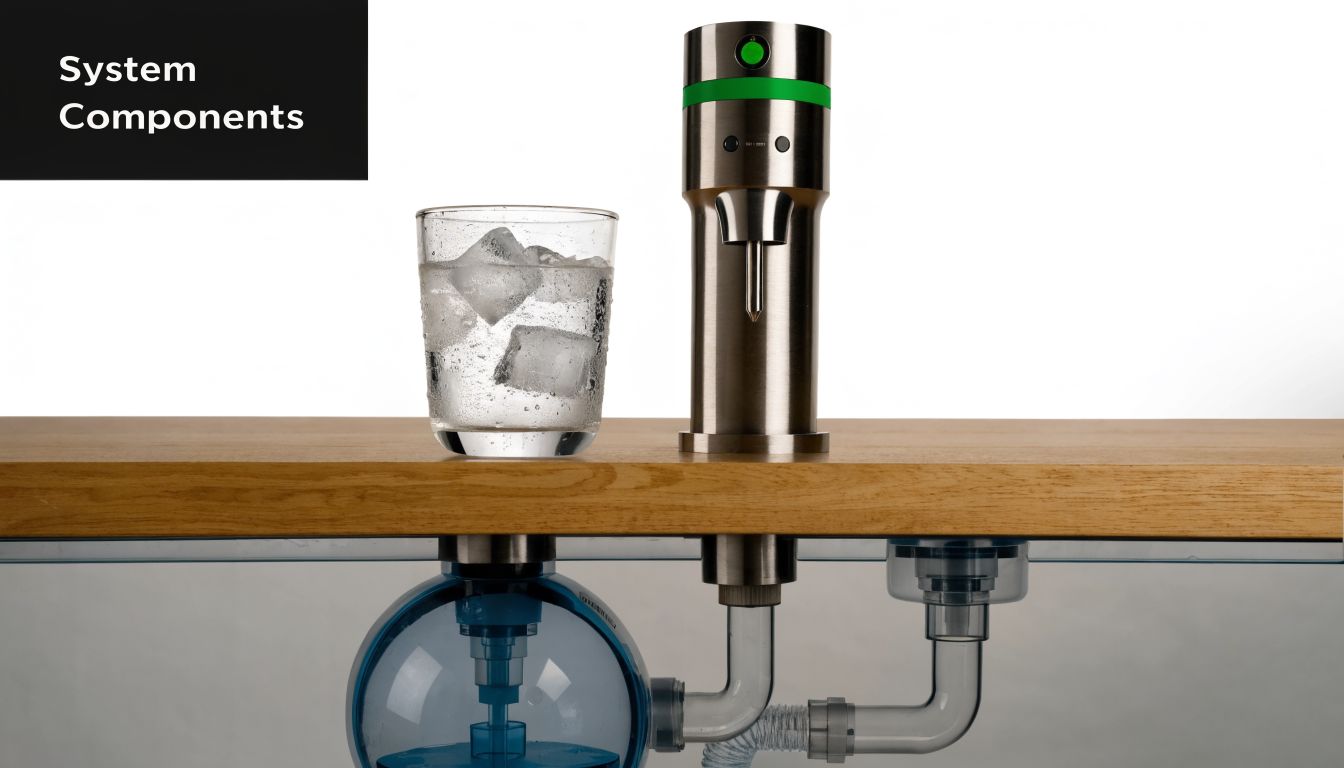
A lot of confusion starts because these categories can appear similar from above the benchtop. Under the sink, they're not similar at all.
The under-sink system
Filtration quality is determined at this stage. The under-sink section may include a sediment stage, carbon stage, reverse osmosis stage, pressure-limiting hardware, shut-off valves, tubing, and sometimes a separate tank or powered appliance if boiling or chilled water is involved.
Bunnings-sourced under-sink systems such as the Aqua-Pure AP430SS and Everpure H-300 use a 0.5 micron absolute-rated pleated sediment pre-filter followed by carbon block cartridges, and those setups are designed to reduce sediment and improve taste and odour when properly matched to the application. According to the verified product data, these systems can also help protect downstream stages and maintain usable flow in hybrid systems.
Why the under-sink layout matters more than people think
Cupboard space is often the deciding factor, not the tap design. Homes with pull-out bins, corner cabinets, waste disposals, or existing hot water accessories can run out of room quickly. Then the compromises begin. Filters get mounted awkwardly. Hoses get bent too tightly. Cartridges become difficult to change. Service access gets ignored.
If you can't change the cartridge easily, maintenance will be skipped sooner or later.
That's why the best buying decision often starts with a look under the sink rather than at the tap wall. Measure the free height. Check where the power point is, if any. See whether there's enough room for filter heads, valves, and future servicing. A neat install isn't just cosmetic. It's what keeps the system reliable.
How to Choose the Right Tap for Your Home Office or Caravan
The right choice depends less on brand and more on the environment. A family kitchen, an office breakroom, and a caravan all ask different things from a filter tap. If you treat them as the same job, you'll buy the wrong system.
Home kitchens
In a home kitchen, people usually start with appearance. That makes sense because the tap is one of the most visible fittings in the room. But daily use should lead the decision.
For homes, I'd look at:
- Benchtop layout so the spout height and reach suit the sink.
- Family use especially if children will use the filtered or boiling outlet.
- Service access because cartridge changes need to be easy, not theoretical.
- Upgrade path if you're thinking about adding instant boiling or chilled water later.
A separate dedicated filter tap often works well in older Melbourne kitchens where cupboard space is awkward and the existing mixer tap is still serviceable. A combined tap can look cleaner, but the under-bench planning becomes more important.
Office breakrooms
An office setup is less about style and more about throughput, consistency, and downtime. Staff want clean drinking water and quick access to hot drinks without a temperamental system. If the office is using an instant boiling unit or a chilled setup, filtration needs to support the appliance rather than restrict it.
The verified technical data notes that integrated systems used with boiling appliances can maintain proper performance when pressure drop is controlled and the correct hose and fitting arrangement is used. In practice, that means you don't choose the smallest, cheapest kit and hope for the best. Office systems need durable parts, straightforward cartridge replacement, and sensible placement so the cleaner, office manager, or maintenance person isn't fighting the cabinet every time something needs attention.
Caravans and RVs
Caravans are a different category altogether. Space is tighter, plumbing runs are shorter, vibration matters, and water sources can vary a lot more than a suburban mains connection. Compactness matters, but so does durability. A loose fitting that's merely annoying in a house can become a constant leak risk on the road.
If you're fitting out a van or upgrading an RV, a practical reference is this RV water filtration system setup guide. For Australian-specific buying ideas, this roundup of the best water filter for caravan is useful because it focuses on the compact setups and fittings caravan owners encounter.
In caravans, the neatest install usually wins. Fewer adapters, shorter runs, and better support for the tubing means fewer problems later.
Filter Tap Feature Comparison by Use Case
| Consideration | Home Kitchen | Office Breakroom | Caravan/RV |
|---|---|---|---|
| Main priority | Taste, appearance, convenience | Reliability, capacity, easy staff use | Compact layout, secure fittings, adaptability |
| Best tap style | Dedicated filter tap or 3-in-1 depending on space | Filtered tap paired with a properly planned boiling or chilled setup | Compact dedicated tap |
| Big risk | Buying for looks and ignoring under-sink room | Pressure drop and awkward servicing | Vibration, movement, limited installation space |
| Most important check | Cupboard clearance and future upgrades | Cartridge access and appliance compatibility | Hose routing and mount security |
| What usually works | Simple filtered drinking water for everyday use | Commercial-grade approach to fittings and maintenance | Lightweight, serviceable system with minimal complexity |
| What usually doesn't | Crowding too much under one sink cabinet | Domestic-grade shortcuts in a busy workplace | Bulky house-style systems forced into a van cavity |
A simple way to narrow the shortlist
If your goal is just better-tasting cold drinking water, keep it simple and choose a dedicated filtered tap with a well-supported cartridge system.
If you want one tap to handle filtered water plus boiling or chilled water, stop treating it as a shelf purchase and start treating it as a planned plumbing job.
If you're fitting a caravan, choose serviceability over showroom looks every time.
Decoding Filter Specifications and Certifications
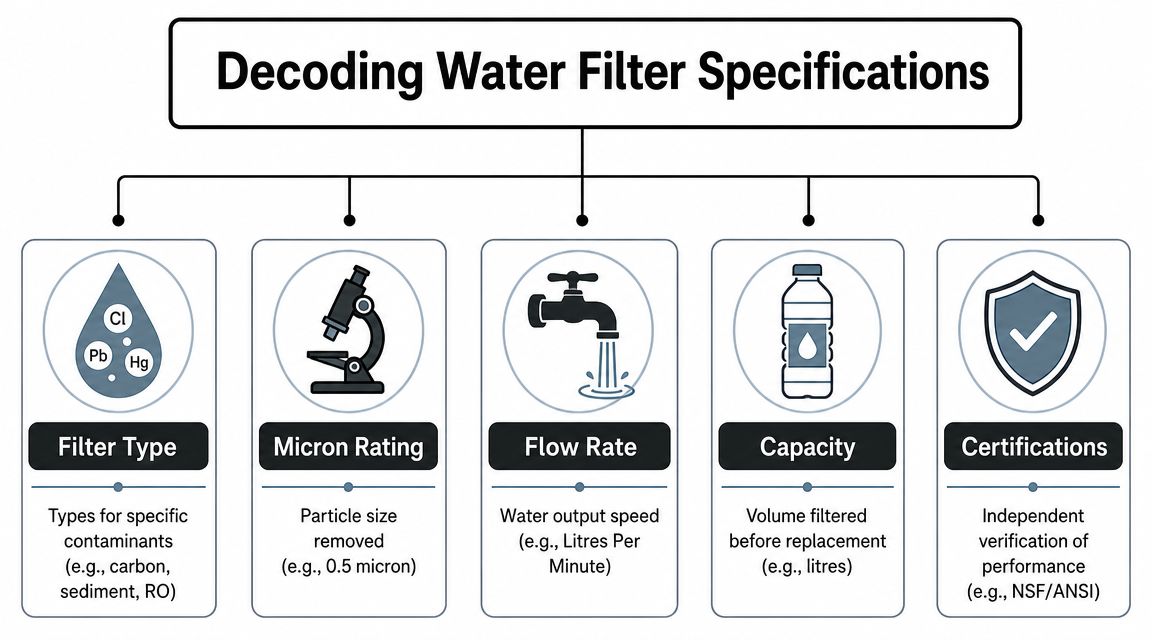
Most confusion around water filter taps bunnings comes from the product box. Terms like micron rating, carbon block, reverse osmosis, flow rate, and NSF/ANSI sound technical, but they are useful once you translate them into what they mean at the sink.
Micron rating and what it changes
A micron rating tells you the size of particle a filter is designed to trap. Smaller ratings generally mean finer filtration, but that doesn't automatically make a system better for every job. Fine filtration can also increase restriction if the system isn't designed well.
The verified data for Bunnings-sourced under-sink systems includes 0.5 micron absolute-rated pleated sediment pre-filters in some models. That matters because sediment protection isn't only about drinking quality. It also protects downstream filter stages from clogging early.
For a homeowner, the practical reading is simple:
- Sediment stages catch physical particles.
- Carbon stages improve taste and odour and reduce chlorine.
- RO stages target dissolved contaminants more aggressively, but they need the right setup and enough space.
Carbon, RO, and what each one is good at
Activated carbon does a lot of the everyday heavy lifting. If someone says their mains water tastes chlorinated or has an unpleasant smell, carbon filtration is usually part of the answer. The verified data states that some Bunnings-compatible systems reduce chlorine by more than 97% per AS/NZS 4348 in the relevant product category.
Reverse osmosis is a different level of filtration. Verified product information for Bunnings-listed units says some systems integrate multi-stage RO and activated carbon filtration rated to NSF/ANSI Standard 58 for total dissolved solids reduction, with up to 95% TDS removal under the listed conditions. That's a more specialised setup than a simple taste-and-odour filter, and it should be chosen for a reason, not because the specification sheet looks impressive.
Workshop note: The best filter is the one that solves your water problem without wrecking flow, crowding the cupboard, or making maintenance miserable.
Why certifications matter
Certification is what separates a tested claim from packaging fluff. Two labels matter a lot in Australia.
- WaterMark certification relates to suitability for plumbing products used in Australian installations.
- NSF/ANSI standards are often used to verify filtration performance for specific contaminant categories.
Those labels don't mean every certified product does the same thing. They mean the product has been assessed against a known standard. You still need to check what the standard covers. A tap body and a filter cartridge can each have different types of certification relevance.
Melbourne water and appliance protection
Filtration isn't only about what goes in the glass. It also affects what happens inside the appliance. The verified Bunnings brand data notes that in hard water areas like Yarraville, with average 100 to 200 mg/L calcium carbonate, the right filtration can prevent limescale buildup in boiling taps and extend element life by 40%, from 5 to 7 years under the cited conditions, according to the Zip brand information at Bunnings.
That's the sort of detail homeowners often miss. They focus on taste, but if a boiling tap is part of the plan, scale protection matters just as much. The same verified source also states that pre-filtration can extend RO membrane lifespan from 2 to 3 years out to 4 to 5 years, reducing replacement frequency.
Reading the label like a plumber
When I look at a box or spec sheet, I'm checking the sequence, not just the headline claim.
What type of filtration is it really using
Carbon only, sediment plus carbon, or a more complex RO setup.How fine is the pre-filtration
That affects both protection and restriction.Is the system suitable for the appliance downstream
Especially if a boiling or chilled unit is involved.Are the fittings and components appropriate for an Australian install
Certification and compatibility matter.Will the owner realistically maintain it
An excellent filter nobody can service becomes a bad system.
If bacteria reduction is part of your concern, this plain-English article on removing bacteria from water gives a helpful overview of the treatment approaches people often confuse.
The Hidden Complexities of Filter Tap Installation
A lot of packaging makes installation look like a weekend job with a shifting spanner and a bit of patience. Sometimes it is. Often it isn't.
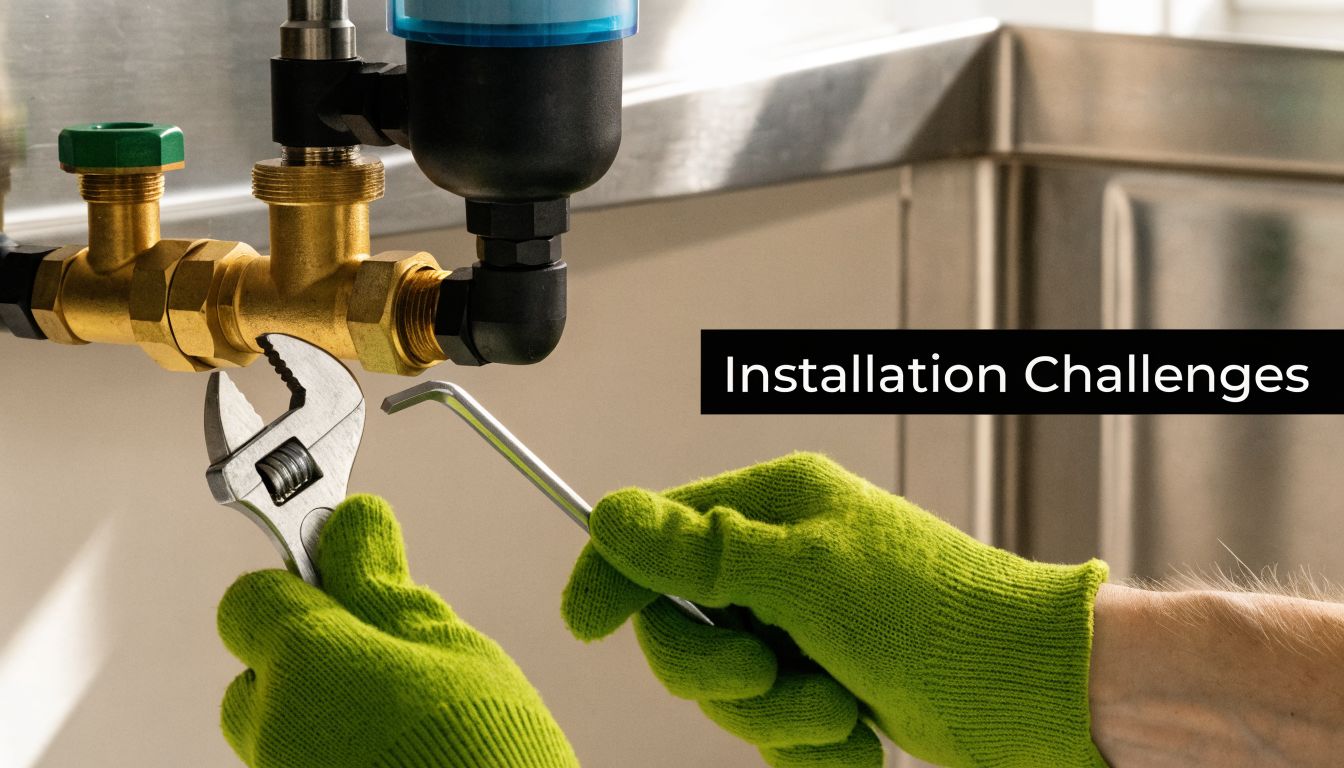
The biggest gap between expectation and reality shows up when a standard filter tap is being retrofitted alongside an instant boiling or chilled system. Verified survey data states that 68% of Melbourne homeowners encountered plumbing mismatches when retrofitting Bunnings filter taps with boiling water systems, and 42% needed a professional plumber at an average cost of $450, according to the water filter tap compatibility data. The common causes listed include non-standard threading and incorrect valve compatibility.
That doesn't surprise any plumber who works on these systems. The visible tap might fit the bench hole perfectly and still be wrong for the installation once you get underneath.
Why the DIY story falls apart
There's a big difference between changing a simple tap and integrating a filtered drinking water circuit into an under-bench appliance setup. Once you add boiling or chilled equipment, you're dealing with more than one supply line, more than one flow requirement, and very often more than one fitting standard.
Common failure points include:
- Thread mismatches where the supplied connector doesn't suit the existing stop tap or branch point.
- Poor valve choices that restrict flow more than expected.
- Tight bends in tubing which reduce performance or create stress points.
- Bad component placement that makes cartridge replacement awkward or impossible.
- No service isolation where it's needed so routine maintenance becomes a shutdown job.
Most leaking filter tap jobs don't fail because the tap was defective. They fail because the fittings were forced, adapted poorly, or placed where the hose was under strain.
Boiling and chilled systems make the job more technical
A boiling or chilled unit isn't just another accessory. It changes the plumbing logic under the sink. Flow, pressure, filtration sequence, and clearances all become more important. If the filtered water line is feeding a boiling appliance, scale management and pressure drop matter. If chilled water is involved, placement and hose routing matter even more because the cabinet gets crowded fast.
This short video is worth watching before anyone starts pulling fittings apart under the sink:
It's simple to consider the practicalities. A shelf kit can be suitable. The installation still has to be planned around the actual cabinet, appliance, and pipework in front of you.
When professional installation makes sense
Professional installation isn't about making a simple job sound fancy. It's about reducing the chance of a leak, a poor-flow result, or a system that becomes painful to service later.
If any of these apply, it's worth using a specialist installer:
- You're combining filtration with instant boiling or chilled water
- Your under-sink area is already crowded
- You're unsure about thread types or valve compatibility
- You want the fittings laid out for future servicing
- You've had a previous DIY leak or pressure issue
For Melbourne households weighing that up, this guide to water filter installation in Melbourne covers the local installation considerations people usually discover too late.
Long-Term Maintenance and Sourcing Spare Parts
A filter tap system isn't a fit-and-forget purchase. It only keeps performing if the cartridges are changed on time, the housing stays sanitary, and worn small parts get replaced before they create bigger issues.
That's where the difference between a basic retail purchase and a supported system becomes obvious. Buying the original tap is easy. Finding the exact replacement cartridge, valve, hose, or fitting a few years later can be much less straightforward.
The maintenance jobs that actually matter
The essentials are simple, but they need to be done consistently.
- Change cartridges on schedule based on the system's design and your usage. Delayed changes usually show up first as reduced flow, poorer taste, or inconsistent appliance performance.
- Flush new cartridges properly after replacement so loose carbon fines or installation debris don't cause confusion.
- Sanitise where appropriate when servicing the system, especially if the unit has been idle or the cupboard environment is less than clean.
- Inspect fittings and hoses during every cartridge change. A tiny drip often starts long before the owner notices water damage.
- Check the shut-off arrangement so future servicing doesn't turn into a full under-sink drama.
The verified data for some Bunnings-sourced under-sink filters states a 5,000 to 10,000L capacity before change-out in the relevant product range, and also notes practical advice to replace filters more frequently in high-use settings to maintain performance and compliance. The important point for most households is that replacement timing depends on both water quality and usage pattern, not just the date on the box.
Signs the system needs attention
A few problems appear again and again:
Reduced flow
This usually points to a loaded cartridge, a partially closed valve, kinked tubing, or an installation that was marginal from day one.
Bad taste or odour returning
That often means the carbon stage is exhausted, the cartridge is overdue, or the system has been sitting unused for too long.
Dripping under the sink
This is commonly a fitting issue, not a cartridge issue. Tubing can creep, olives can be over-tightened, and push-fit connections can be compromised if the pipe wasn't cut cleanly.
If a cartridge change feels like minor surgery every time, the system wasn't laid out properly in the first place.
Spare parts are where general retailers fall short
This is the bit homeowners rarely think about at the buying stage. Can you get the exact replacement later? Not “something that looks similar”. The correct cartridge. The matching filter head. The right John Guest fitting. The genuine hose. The proper shut-off valve.
General hardware retailers are good at broad access. They're not always good at lifecycle support for specialised systems. That matters most when you've got boiling taps, chilled systems, or older branded units where one missing fitting can leave the whole setup out of service.
If you're already at the replacement stage, a practical starting point is this guide to the replacement cartridge water filter process, because matching the cartridge correctly matters more than many people realise.
A maintenance mindset that saves trouble
The best long-term systems share a few traits:
- The cartridge can be reached without emptying the whole cabinet
- The isolation valve is easy to access
- The tubing is neatly supported and not twisted
- The owner knows what cartridge belongs in the system
- Genuine spares are available when needed
That's what keeps a filter tap useful for years instead of becoming one more half-working fixture in the kitchen.
Beyond Bunnings Your Next Steps for Clean Water in Melbourne
Bunnings is a practical place to start. You can compare styles, see the common categories, and get a feel for what water filter taps bunnings shoppers usually consider first. For a straightforward filtered drinking-water setup, that may be all you need.
The problems start when the job isn't straightforward. Melbourne homes often have tight under-sink spaces, mixed plumbing conditions, and owners who want more than a basic cold filtered tap. Once boiling water, chilled water, appliance protection, or future servicing enters the picture, the decision shifts from product shopping to system design.
That's the key takeaway. The tap on the shelf is only part of the answer. The better result comes from matching the right tap style to the right filtration method, fitting it with the correct valves and tubing, and installing it so maintenance stays easy. That approach protects water quality, avoids needless leaks, and gives the system a much better chance of performing properly over the long term.
If you're in Melbourne and want clean water without the usual trial and error, specialist advice is usually the smarter move. It saves guesswork, reduces compatibility problems, and gives you a clear path for installation, servicing, and spare parts when the system needs attention later.
If you need help choosing, installing, or maintaining a filtered, boiling, or chilled water setup, Ring Hot Water supplies genuine parts, specialist advice, and Melbourne-based support for systems that need to work properly the first time.

