
Automatic Taps
Automatic Sensor Taps: A Melbourne Home & Office Guide

May
You notice the tap most when your hands are least usable. Raw chicken on your fingers. Coffee grounds everywhere. A shared office kitchenette where half the staff touch the same mixer before lunch. That’s usually when people start asking whether automatic sensor taps are worth fitting, or whether they’re just another shiny extra that looks good in a brochure and causes headaches later.
In Melbourne, the answer depends less on the idea of touchless tapware and more on the installation details. A sensor tap in a new build with decent under-sink access is one thing. A sensor tap being added to an older vanity, beside a boiling unit, filter set and chiller in a tight cabinet, is another. The technology works well when the plumbing, power, basin finish and user habits all line up. When they don’t, that’s when you get nuisance triggering, poor placement, awkward servicing and disappointed owners.
For homes, offices, medical rooms, schools and hospitality sites, automatic sensor taps can be a smart upgrade. They reduce touch points, help control wasted flow, and suit the cleaner, simpler layouts many clients now want. But the main value comes from choosing the right tap for the right basin, then integrating it properly with the rest of the water system.
The Future of Water is Touchless Why Sensor Taps Are Here
A few years ago, automatic sensor taps were primarily associated with airports, hospitals and shopping centres. That’s changed. Homeowners now ask for them in kitchen renovations. Office managers want them in staff amenities. Builders use them to reduce contact points in shared spaces and to create a more modern finish.
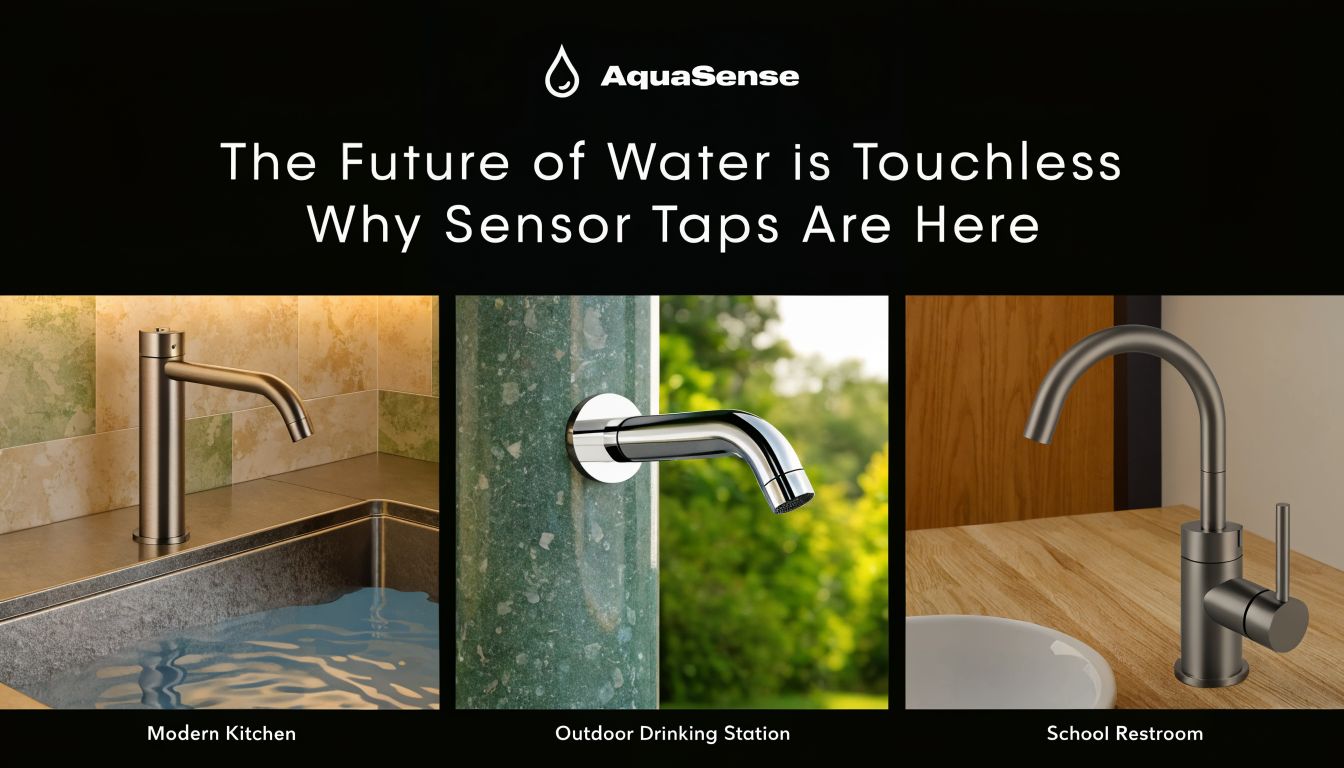
The shift isn’t just anecdotal. The automatic sensor faucets market analysis states that the market was valued at USD 1.77 billion in 2026 and is projected to reach USD 2.47 billion by 2035, with increased household demand driven by post-pandemic health priorities and water conservation.
Why Melbourne clients are asking for them
In local jobs, the interest usually comes from one of three places:
- Shared use areas: offices, clinics and commercial kitchens want fewer common touch points
- Renovation planning: homeowners doing a full kitchen or bathroom upgrade often want cleaner lines and newer functionality
- Water-conscious upgrades: some clients are trying to reduce waste from taps being left running during hand washing or prep work
That matters because automatic sensor taps are no longer a niche commercial fixture. They’ve moved into mainstream residential and mixed-use projects.
Practical rule: Sensor taps make the most sense where lots of people use the same basin, or where hands-free operation solves a daily annoyance.
More than a design feature
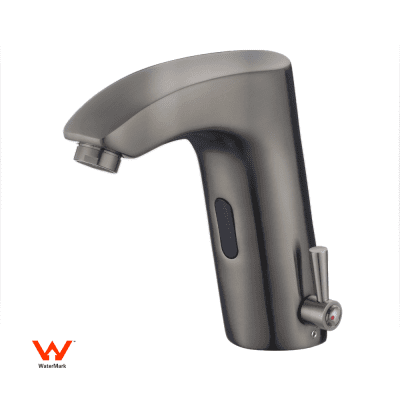
The strongest sensor tap installations aren’t chosen for looks alone. They’re part of a broader water setup that may also include filtration, instant boiling water, chilled drinking water or all three. That’s where planning becomes more important than product hype.
A touchless tap can improve a room. It can also complicate a cabinet if nobody has thought through battery access, service clearances, hose routing or how the basin finish affects the sensor. In other words, the future of water may be touchless, but the installation still needs very hands-on thinking.
Understanding the Magic Behind the Tap
Most automatic sensor taps work like a motion-activated light. Something enters the detection zone, the system responds, and then it stops once that presence is gone. The difference is that instead of switching on a light, the tap opens a valve and releases water.
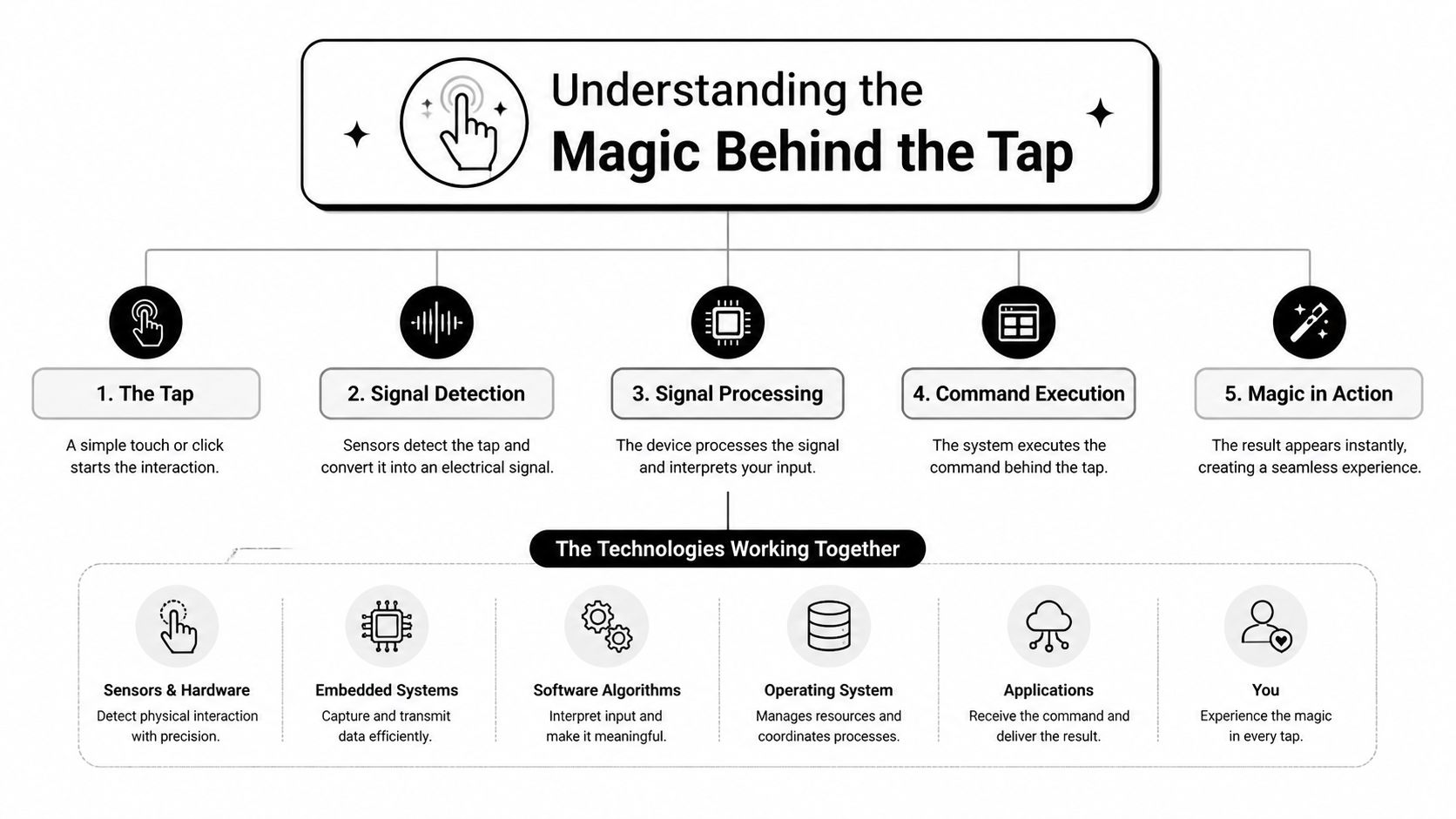
The core hardware is straightforward. According to this sensor tap operating guide, the system has four parts: the infrared sensor, the solenoid valve, the power source and the tap unit. That same guide notes that power consumption is ≤0.5 mW, and battery-powered models can exceed 200,000 cycles, lasting around 5 to 7 years in typical use.
The four parts that matter
| Component | What it does in practice |
|---|---|
| Infrared sensor | Detects hands in front of the tap |
| Solenoid valve | Opens and closes water flow using an electromagnetic signal |
| Power source | Usually batteries, sometimes mains power depending on the model |
| Tap body | The visible fixture that delivers the water |
What actually happens when you wash your hands
A user places hands under the spout. The infrared sensor reads that presence and sends a signal to the solenoid valve. The valve opens, water flows, and when the hands move away the valve closes again.
That’s the basic sequence, but installation quality changes how well it performs. Sensor position, basin depth, reflective surfaces and water pressure all affect the user experience.
If the sensor is good but the basin setup is wrong, the tap can still behave badly.
Battery and power choices
Battery models suit many retrofit jobs because they avoid chasing power to the vanity or kitchen cabinet. They’re often the easiest choice in existing homes, medical tenancies and older office fit-outs where wall and joinery work would otherwise blow out the job.
Mains-powered models can make sense where the cabinet is already being rebuilt or where regular maintenance access is harder. The trade-off is that electrical coordination becomes part of the job, which means more planning and usually more trades involved.
Why the valve matters more than most people think
The solenoid valve is the working heart of the tap. If it gets debris, scale, wiring faults or age-related wear, the tap may stop activating cleanly or fail to shut off properly. From a service point of view, that’s why parts availability matters almost as much as the original tap brand.
For Melbourne plumbers, the takeaway is simple. Automatic sensor taps aren’t mysterious. They’re just a combination of plumbing, low-power control and sensible placement. When each part is matched properly to the basin and cabinet, they’re reliable and easy to live with.
The Key Benefits for Hygiene Water Efficiency and Convenience
The case for automatic sensor taps is strongest when you look at everyday use rather than showroom appeal. In the right setting, they solve three common problems at once. Too many hands on one tap. Too much water running for no reason. Too much fiddling when your hands are busy, dirty or full.
Hygiene without extra effort
A manual mixer is one of the most frequently touched points in any bathroom or kitchenette. In homes that’s mostly a convenience issue. In offices, clinics, schools and food prep areas, it becomes a hygiene issue as well.
Touchless operation removes that last contact point during hand washing. That’s one reason sensor taps have been used in healthcare settings, where minimising cross-contact matters. For shared spaces, the benefit is simple. People don’t have to touch the fixture to start or stop water.
Water use that’s easier to control
The strongest measurable advantage is water efficiency. This sensor tap facts and charts page states that sensor taps can conserve up to 70% of water per use compared with manual taps. It also notes that a standard manual mixer uses about 4 litres per hand wash, while a sensor tap averages 1.5 litres.
That difference adds up fastest in places where usage is constant, such as public amenities, airports, schools and healthcare sites. It also matters at home, especially in kitchens and powder rooms where taps often get turned on before hands are in position.
Convenience that people notice straight away
Hands-free operation sounds minor until you use it every day. It’s helpful when your hands are covered in flour, oil, paint, cleaning product or garden soil. It also helps children and visitors because the tap is intuitive. Hands under the spout, water on. Hands away, water off.
That convenience becomes more valuable in commercial settings:
- Staff kitchens: fewer taps left running during quick rinse jobs
- Public washrooms: less wear from repeated twisting and forcing of handles
- Hospitality prep zones: easier operation when staff are moving fast
The best sensor tap is the one users don’t have to think about. It responds quickly, shuts off cleanly and never feels temperamental.
Where the benefits are strongest
Not every sink needs a sensor tap. In some homes, a standard mixer at the laundry trough or a utility sink still makes more sense. But there are clear stand-out applications:
- Kitchen prep sinks: where dirty hands make touchless use useful
- Office amenities: where lots of people share one basin
- Healthcare and consulting rooms: where reduced touch points are part of the brief
- Accessible bathrooms: where simpler operation can improve daily use
For most buyers, the mistake isn’t choosing a sensor tap. It’s expecting the same payoff in every location. Match the tap to a high-use, hygiene-sensitive or convenience-heavy area, and the value becomes obvious.
Integrating Sensor Taps with Boiling Chilled and Filtered Systems
Automatic sensor taps are often not just a standalone fixture. In many Melbourne kitchens and office fit-outs, the tap isn’t the only thing happening under the sink. There may also be a filter cartridge, pressure-limiting gear, a chilled unit, an instant boiling tank, isolation valves and electrical connections sharing the same cabinet.
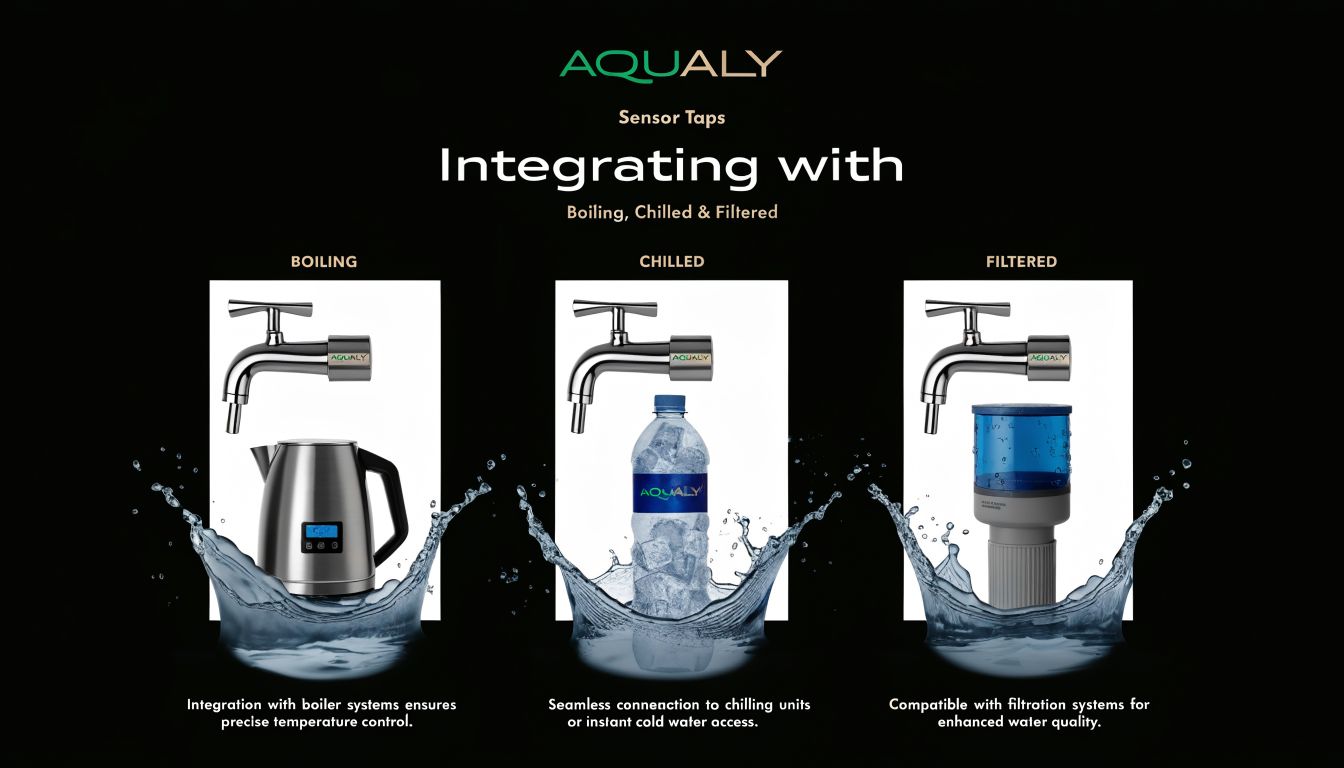
A well-designed setup separates functions clearly. The touchless side usually handles standard washing and rinsing. The specialised system handles drinking water, boiling delivery, chilled water or filtration. That split is important because the control needs of a sensor tap are very different from the safety and temperature demands of a boiling outlet.
One sink zone doing several jobs
In modern kitchens, clients often want one clean work area rather than a bench crowded with appliances. Combining sensor operation with advanced water services can free up space and reduce visual clutter.
Typical integrated goals include:
- Hands-free standard flow: for washing and food prep
- Filtered drinking water: for taste and convenience
- Instant boiling water: for tea, cooking and fast service
- Chilled water delivery: for workplaces and entertaining areas
If you’re comparing product styles and delivery formats, this guide to best instant hot water dispensers is useful for seeing how different systems approach everyday hot water access in practical settings.
The cabinet space issue nobody talks about enough
Most integration problems happen below the benchtop, not above it. A sensor tap needs room for its control box, power source and service access. A boiling or chilled system needs its own footprint, ventilation and plumbing layout. Add a filter assembly and suddenly a compact under-sink cabinet can become crowded very quickly.
That’s why planning should cover:
| Under-sink factor | Why it matters |
|---|---|
| Service access | Batteries, filters and valves all need future access |
| Heat separation | Sensitive components shouldn’t be crowded against hot equipment |
| Hose routing | Crossed or kinked lines create nuisance faults and awkward servicing |
| Power planning | Multiple appliances may need coordinated electrical provision |
Temperature and control need to stay in their own lanes
Sensor hardware is not the place to improvise with very hot delivery. The standard touchless mechanism should be matched carefully with whatever boiling or tempered water system is in the design. If the client wants a combined solution, choose a setup designed for that use rather than trying to force unlike components together.
For buyers looking at a combined kitchen drinking-water solution, this instant boiling and chilled water tap shows the sort of integrated arrangement many Melbourne homes and workplaces are moving towards.
The main lesson from field work is simple. Automatic sensor taps work well with boiling, chilled and filtered systems when the design treats them as coordinated parts of one sink station. They cause trouble when they’re added late, with no thought for cabinet space, serviceability or control separation.
Installation and Retrofitting in Melbourne Homes and Businesses
New builds are usually the easy jobs. You can place the basin correctly, allow for power or battery access, and plan the under-sink layout before the joinery is finished. Retrofitting is where most of the trade decisions matter.
In Melbourne homes, especially older ones, the basin opening, mixer position, cabinet depth and existing stop taps often dictate what’s realistic. In offices and tenancies, the challenge is usually access and downtime. Nobody wants a staff kitchen offline longer than necessary, and nobody wants a vanity altered only to discover the sensor starts misreading the basin.

What to check before you order anything
A good retrofit starts with a short site assessment. Not just the tap hole size, but the whole sink zone.
- Basin shape and finish: highly polished bowls can interfere with the sensor
- Waste position and material: chrome waste traps and shiny fittings can reflect the beam
- Cabinet clearance: the control pack and battery box need a sensible service position
- Water setup: isolation points and hose paths need to suit the new tap
The most overlooked issue is reflection. This sensor tap buying guide notes that highly reflective surfaces, including shiny basins and chrome waste traps common in Australian bathrooms and kitchens, can reflect the infrared beam and cause the tap to run continuously or fail to activate properly.
A sensor tap can be perfectly functional on the bench and still misbehave once it’s mounted over the wrong basin.
Battery or mains in a retrofit
Battery-powered taps are usually the more practical retrofit option. They avoid opening walls or arranging extra electrical works just to serve one fixture. They also give you more freedom in older homes where the cabinetry was never designed for modern low-voltage tap gear.
Mains power can still be the better choice in some commercial jobs, particularly when facilities staff want a fixed service setup and the fit-out already includes electrical work. But in domestic retrofits, battery often keeps the install cleaner and simpler.
Combining with specialist tapware
Where a job also includes advanced drinking-water gear, planning gets more detailed. A standard vanity install is one thing. A kitchen setup with filtered or specialist outlet functions is another. In those cases, product selection matters because the spout shape, mounting style and under-sink footprint all affect whether the system feels tidy or crowded.
For example, a gooseneck AutoFlo sensor tap suits installations where users need better hand clearance under the spout, which can be useful in both commercial wash areas and kitchen-style applications.
What works and what doesn’t
What works is straightforward. Choose the basin first. Check the reflectivity. Confirm access. Keep components reachable. Give every hose and cable a clean path.
What doesn’t work is treating automatic sensor taps like a simple mixer swap. They’re not difficult, but they’re less forgiving. If the site conditions are poor, the tap tells you quickly.
Choosing the Right Sensor Tap A Melbourne Buyers Guide
A good buying decision starts with the room, not the catalogue. The right automatic sensor tap for a compact powder room may be the wrong one for a busy office kitchen. Spout reach, basin geometry, finish, service access and power method all need to line up.
Start with fit and finish
A sensor tap should match the basin physically before anything else. If the spout is too short, users crowd the back of the bowl and splash water everywhere. If it’s too tall for a shallow basin, the stream can become messy and noisy.
Finish matters for more than appearance. In practical terms, choose surfaces that are easier to keep clean and less likely to create sensor interference within the overall sink zone. That doesn’t mean every shiny finish is a problem. It means you need to assess the whole setup, especially around the basin and waste.
Think about ownership, not just purchase
Many buyers make the mistake of comparing upfront pricing and ignoring service life, battery changes, electrical reliability and parts support. The more sensible approach is to look at the total period you expect the tap to stay in service.
This sensor tap ownership guidance makes the point clearly. Initial cost matters, but the long-term cost of ownership matters more, including battery replacement, reliability of electrical components in different climates, and the fact that electrical parts often carry shorter warranties than the tap body.
A practical buyer checklist
- Power method: choose battery if retrofit simplicity matters, mains if the fit-out already allows for it
- Service access: make sure batteries, filters and valves can be reached without dismantling half the cabinet
- Parts availability: solenoids, sensors and aerators should be replaceable
- Use case: a tap for a guest ensuite won’t be specified the same way as one for a staff washroom
- Australian compliance: check WaterMark and WELS requirements before purchase and installation
Buy the tap you can service in three years, not just the tap that looks good on day one.
Standards aren’t optional
For Australian work, compliance sits above aesthetics. WaterMark matters because you’re installing plumbing products into regulated systems. WELS matters because water efficiency labelling is part of how fixtures are assessed and compared locally.
Even when clients are focused on style, those checks should happen first. It saves arguments later and avoids the false economy of importing or fitting tapware that creates approval or service problems down the track.
Troubleshooting and Maintaining Your Sensor Tap
Most sensor tap faults are minor at first. Dirty sensor windows, flat batteries, blocked aerators and sticky valves are more common than major failures. A quick check often tells you whether it’s a simple maintenance issue or a parts problem.
Common Sensor Tap Issues and Fixes
| Symptom | Likely Cause | Solution |
|---|---|---|
| Tap doesn’t activate | Flat battery, dirty sensor, loose connection | Replace batteries if fitted, clean the sensor face, check accessible connections |
| Tap runs continuously | Reflective surface interference, stuck solenoid, sensor misread | Check for shiny nearby surfaces, isolate water, inspect valve operation |
| Weak or uneven flow | Blocked aerator or debris in the line | Remove and clean the aerator, check inlet strainers if fitted |
| Tap stops unexpectedly | Battery decline or intermittent sensor signal | Test power source, clean sensor zone, inspect for obstructions |
| Clicking but no water | Solenoid responding but no water supply through | Confirm isolation valves are open and supply is reaching the unit |
Maintenance habits that prevent callouts
Clean the sensor eye gently and keep soap residue from building up around the spout base. Check the aerator if the flow changes. If the tap is battery-powered, don’t wait until it fails completely before replacing cells in a high-use area.
For repair work, the valve assembly is often the first place to look. If a tap has activation issues linked to water control, an automatic tap solenoid is the sort of replacement part plumbers commonly inspect or swap when diagnosing faults.
A final tip. If the tap has become erratic after a basin change, benchtop replacement or waste fitting update, don’t assume the tap itself has failed. The surrounding reflective surfaces may be the actual cause.
Making the Smart Switch to Sensor Taps
Automatic sensor taps suit the way many Melbourne homes and workplaces now use water. They reduce touch points, help control unnecessary flow and make day-to-day sink use easier in busy spaces. When they’re specified properly, they’re practical equipment, not a gimmick.
The catch is that good results depend on good planning. Basin finish, cabinet access, power choice, parts support and compatibility with boiling, chilled or filtered systems all matter. That’s especially true in retrofits, where the tap has to work with existing plumbing and joinery rather than a blank slate.
For homeowners in Yarraville, Footscray, Sunshine and the wider Melbourne metro area, the best approach is to treat the sink as one coordinated water station. If you do that, automatic sensor taps can fit neatly into a modern setup and stay easy to use long after the renovation is finished.
If you’re weighing up automatic sensor taps for a home, office, clinic or hospitality fit-out, Ring Hot Water can help you assess the practical side of the job, including under-sink space, integration with boiling or chilled systems, repair parts and Melbourne installation requirements.

