
3 Way Taps
3 Way Kitchen Mixer Tap: The Ultimate Melbourne Guide

Apr
A lot of Melbourne kitchens still run like they did years ago. There’s a kettle parked in one corner, a filter jug taking up shelf space in the fridge, and a standard mixer doing the ordinary sink work. It functions, but it’s clumsy. You wait for water to boil, shuffle things around on the bench, and keep adding small workarounds to solve a problem the tap itself could handle.
That’s where a 3 way kitchen mixer tap makes sense. It combines everyday hot and cold mains water with a separate filtered line through one fixture, and in the right setup it can also work as the control point for under-sink boiling or chilled water systems. The result is a kitchen that feels simpler, cleaner, and easier to use.
The catch is that not every tap suits every Melbourne home. Water pressure, under-sink space, filter layout, boiling unit compatibility, and the quality of the tap body all matter. Generic buying guides usually skip that part. In practice, that’s the part that decides whether the upgrade works well for years or becomes a nuisance after install.
Is a 3 Way Tap the Right Upgrade for Your Kitchen?
If your bench is crowded and your sink area feels overworked, this upgrade is usually worth serious consideration.
The typical signs are obvious once you look for them. You’ve got a kettle you use constantly, a filter jug that’s always in the way, maybe a separate dispenser drilled into the benchtop, and too many motions to do basic tasks like filling a saucepan or making coffee. None of those items is a disaster on its own. Together, they make the kitchen feel less organised than it should.
A 3 way kitchen mixer tap fixes that by consolidating functions into one point at the sink. You keep standard hot and cold water for washing up, but you also gain a dedicated filtered line without adding another spout or cluttering the bench. If you’re pairing it with a boiling or chilled system under the sink, the improvement is even more noticeable during day-to-day cooking.
Kitchens that benefit most
Some kitchens gain more than others:
- Busy family kitchens where the sink gets constant use for drinks, lunch boxes, cooking prep, and cleanup.
- Renovated apartments and townhouses where bench space is limited and every fixture needs to earn its place.
- Homes replacing old under-sink gear where it makes sense to upgrade the tap and water treatment setup together.
- People who already buy filtered water solutions but want something neater and more permanent.
A good tap upgrade doesn’t just look better. It removes friction from jobs you do every day.
A lot of homeowners start researching this while planning a broader kitchen refresh. Even if you’re in Melbourne, there’s value in looking at practical renovation thinking from other markets. This guide to kitchen remodels in Michigan is a useful example of how people weigh layout, function, and fixture decisions together rather than treating the tap as an afterthought.
When it may not be the right move
It’s not ideal in every kitchen.
If the cabinetry under the sink is already packed with bins, cleaning gear, and pipework, you may need to rethink the layout before adding filtration or boiling hardware. If you’re renting, or planning to redo the kitchen properly in the near future, it can also make sense to wait and specify the whole system at once.
The main point is simple. A 3 way tap is a practical upgrade when you want one fixture to do more work, reduce bench clutter, and support a better under-sink system. It’s less about fashion and more about getting the kitchen to operate properly.
Understanding the 3-in-1 Tap Concept
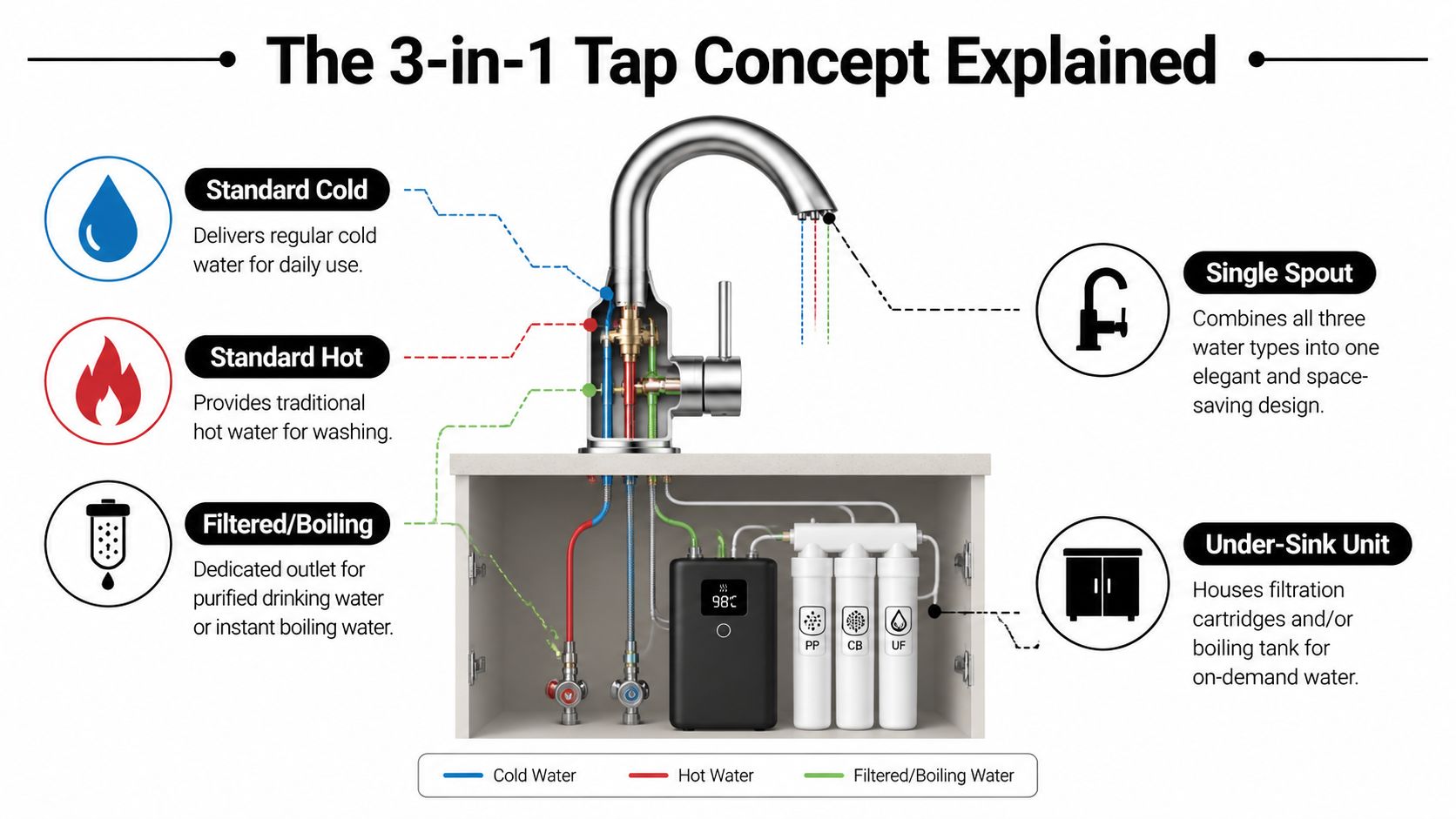
A 3 way tap is best understood as a three-lane highway inside one tap body. From the outside, you see one fixture. Inside, the water travels through separate paths.
Standard cold water has its own route. Standard hot water has its own route. Filtered water, or filtered water feeding a specialised system, has a dedicated route as well. Those paths are kept apart so the drinking water line doesn’t mix with ordinary mains hot or cold on its way through the tap.
What the three ways actually mean
In most domestic setups, the three channels are:
- Hot mains water for washing dishes and general sink use
- Cold mains water for rinsing, filling pots, and everyday cleaning
- Filtered water for drinking and food prep
That third channel is what makes the tap different from a normal mixer. It’s not just a convenience feature. It’s a hygiene feature. The filtered stream uses a dedicated internal waterway, which is the whole point of the design.
The separate water path actively prevents cross-contamination between filtered water and standard mains water. This distinction is one reason these taps became so appealing once filtered drinking water moved from being a niche extra to a normal kitchen expectation.
Why this design took hold
The concept didn’t appear out of nowhere. The history of triple delivery taps in Australia traces the introduction of the 3-way kitchen mixer tap in Australia back to the 1970s, after the launch of the first triple delivery tap combining hot, cold, and filtered water in one fixture. That same source notes that by the 1980s, Australian households reported up to 70% dissatisfaction with tap water taste due to chlorination and sediments, which helped drive interest in filtered tap solutions.
Separate pathways are the difference between a tap that merely looks streamlined and one that actually protects water quality.
One spout, different jobs
From a user’s point of view, the tap feels straightforward. You use one control set for normal hot and cold water, and a separate lever or control for the filtered line. On some models, that filtered channel can be paired downstream with an under-sink unit that provides boiling, chilled, or enhanced filtered water.
That’s why a 3 way kitchen mixer tap isn’t just a stylish mixer with extra plumbing. It’s the visible end of a more complete water delivery setup.
Here’s the practical version of that distinction:
| Feature | Standard mixer tap | 3 way kitchen mixer tap |
|---|---|---|
| Hot and cold mains | Yes | Yes |
| Dedicated filtered water path | No | Yes |
| Need for separate drinking water spout | Often yes | Often no |
| Bench and sink area clutter | More likely | Usually reduced |
| Integration with under-sink systems | Limited | Much better |
What it doesn’t do on its own
The tap itself doesn’t magically purify water. The quality of the filtered output depends on the filter system or boiling/chilled unit connected underneath. A well-designed tap gives that treated water a proper dedicated outlet. A poor setup can still underperform if the cartridges, pressure conditions, or fittings are wrong.
That’s why choosing the fixture and choosing the under-sink equipment should happen together, not as separate decisions.
Key Advantages of a 3 Way Mixer System
The best reason to fit a 3 way system is that it makes the kitchen work better every day, not just when guests notice it.
A standard tap does one job. A 3 way kitchen mixer tap handles normal sink duties while also giving you dedicated filtered water from the same fixture. If that filtered line is connected to the right under-sink equipment, it can also support a faster way to get drinking water where you need it. The practical value shows up in dozens of small moments. Filling a saucepan, topping up a drink bottle, rinsing salad leaves, making tea, or getting a pot started without dragging appliances around the bench.
Less clutter and a cleaner work zone
The space gain is often noticed first.
Once the filtered water comes through the tap, there’s often no need for a separate countertop filter arrangement or an extra little drinking-water spout drilled nearby. If the setup also replaces heavy dependence on a kettle, the sink run becomes much cleaner visually and easier to wipe down.
That doesn’t sound dramatic until you’ve worked in a cramped kitchen. More clear bench means more prep space. It also means fewer items to move every time you clean.
Better efficiency in daily use
There’s also a real efficiency argument when the tap is paired with the right boiling system. According to the kitchen faucets market data cited for Australia, 3-way taps used with brands like Boiling Billy can cut energy use by up to 30% compared to kettles, saving an estimated 250 kWh per household each year. The same source notes that integrated filtration channels also address common hard water complaints in Victoria.
That doesn’t mean every household will get identical results. It does mean the all-in-one tap and under-sink approach can be more efficient than repeatedly boiling a kettle for small jobs.
Where the convenience really shows
The day-to-day benefits tend to fall into a few categories:
- Cooking speed. Filling pots, blanching vegetables, or starting pasta water becomes less stop-start when water is available at the sink in a more useful form.
- Drink prep. Tea, coffee, and drink bottles become simpler because you’re not managing multiple devices and containers.
- Food quality. Filtered water is often preferred for drinking and cooking, especially when people are sensitive to taste.
- Tidier routines. One fixture replaces several awkward habits.
The strongest upgrades are the ones that disappear into your routine. You stop thinking about them because the kitchen simply flows better.
A neater alternative to piecemeal upgrades
Many kitchens end up with stacked fixes. First a better kettle. Then a filter jug. Then maybe a separate dispenser. The problem is that each product solves only one inconvenience.
A 3 way system is better because it treats the sink as the central water station in the kitchen. That’s how most households already use it. The fixture finally matches the behaviour.
There are trade-offs, of course. The tap costs more than a basic mixer. The installation is more involved. Maintenance matters. But if you cook often, care about drinking water, or hate bench clutter, those trade-offs usually make sense.
A good fit for modern Melbourne kitchens
This style of setup works particularly well in homes where people want cleaner lines without losing utility. Renovated period homes, newer townhouses, apartments with limited prep space, and family kitchens all benefit for slightly different reasons. Some want aesthetics. Others want speed. Many just want one reliable sink setup instead of three half-solutions.
The point isn’t that every household needs one. It’s that when you want filtered water, cleaner bench space, and a more capable sink, a 3 way mixer system solves those needs in one move.
Pairing Your Tap with Boiling and Filtration Systems
The tap on its own is only part of the job. The result you get depends on what sits underneath the sink and whether the whole system is matched properly.
Many Melbourne installs go wrong when a homeowner chooses a tap based on appearance, then tries to connect it to an existing filter or a new boiling unit without checking pressure, fittings, clearances, or water quality conditions. Sometimes it works. Sometimes it chatters, scales up early, or never performs as smoothly as it should.
The tap is the visible part of a bigger system
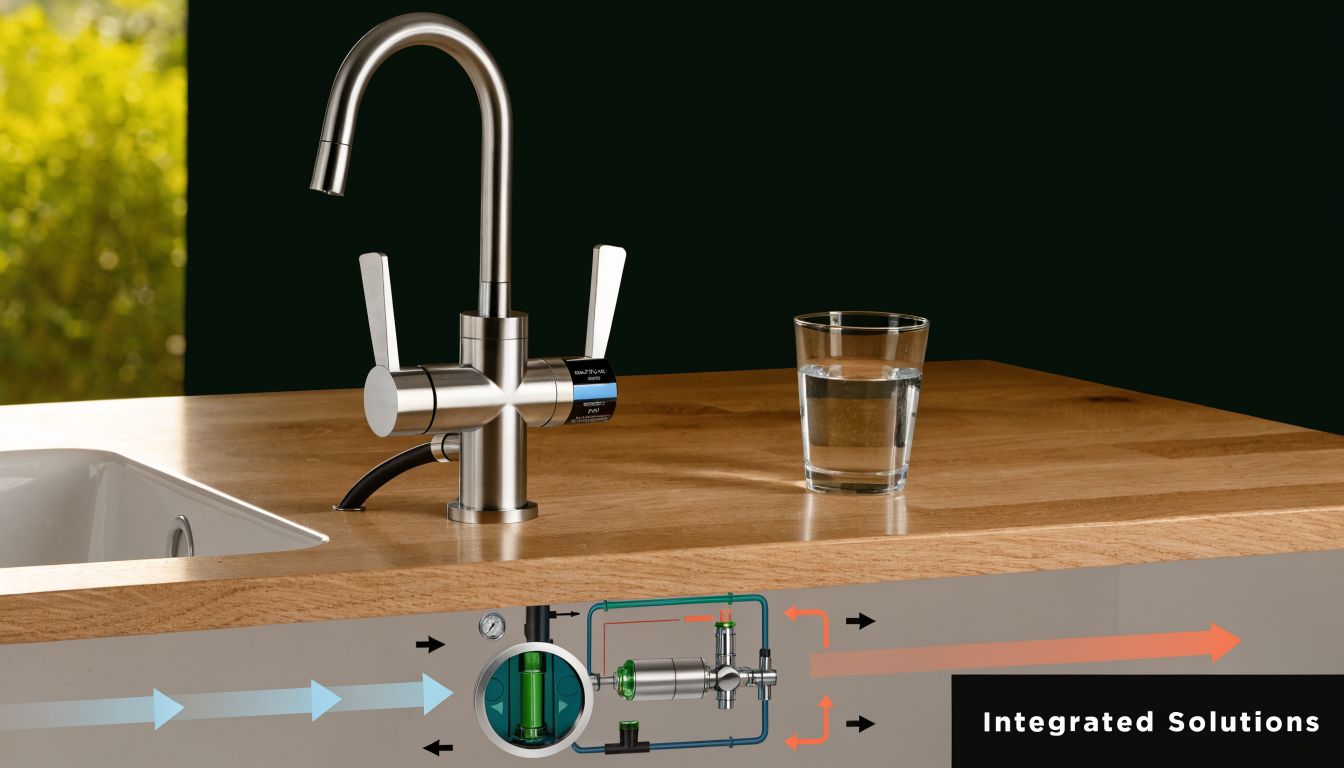
When paired correctly, the tap becomes the user-facing outlet for several functions:
- Standard mixed mains water for normal sink use
- Filtered drinking water from cartridges or a dedicated treatment setup
- Boiling water delivery from an under-sink boiler
- Chilled water delivery where a compatible chiller is installed
That’s why compatibility matters more than many buyers expect. A tap that looks right but doesn’t suit the under-sink hardware is the wrong tap.
Melbourne homeowners often ask whether one tap can work with systems from Zip, Stiebel Eltron, Boiling Billy, or similar under-sink units. In many cases, yes, but only if the line routing, flow expectations, fittings, and certification requirements are handled properly.
Pressure is one of the first things to check
In Australian kitchens, 3-way mixer taps are engineered for a supply pressure range of 150 to 1000 kPa, with 500 kPa as the optimum, according to the Pure Water Systems tap specification. That same source notes that Melbourne urban mains pressure commonly sits in the 300 to 600 kPa range, which is why durable ceramic disc valve technology and proper certification matter so much when a tap is connected to under-sink boiling equipment.
That specification tells you two useful things. First, the tap must cope with real-world metropolitan pressure, not just ideal showroom conditions. Second, the whole system needs to be balanced so the tap, filter, and boiling unit aren’t fighting each other.
A helpful place to compare local filtration options before choosing a tap setup is this under-sink water filter guide for Melbourne, especially if you’re trying to match treated water quality with a more advanced sink arrangement.
Practical rule: Check pressure and filtration first, then choose the tap body and fittings to suit. Doing it in reverse often leads to compromises.
Why Melbourne conditions matter
Generic guides tend to treat all houses the same. They aren’t.
In Melbourne, installation outcomes are shaped by a few recurring factors:
| Local factor | Why it matters | Common result if ignored |
|---|---|---|
| Variable mains pressure | Affects valve behaviour and unit compatibility | Poor flow or stressed components |
| Hardness and mineral content | Encourages scale in heating elements and waterways | Reduced performance and earlier servicing |
| Tight under-sink cabinetry | Limits tank, filter, and hose layout | Kinked lines or awkward servicing |
| Existing plumbing quality | Older valves and fittings can hold back a new system | Leaks, restrictions, or call-backs |
Material quality is not a side issue
A tap carrying multiple water streams needs to be built properly. For Melbourne installs, I’d be looking closely at the body material, the quality of the ceramic cartridges, and whether the fittings are suitable for constant use with a filter and possibly a boiling unit.
This is also where DZR brass and compliant components matter. Harder water and regular heat cycling expose weak materials quickly. Cheap internals often don’t fail dramatically at first. They start with stiffness in the controls, minor drips, or inconsistent flow. That’s usually the early warning.
If the system includes boiling water, backflow prevention and correct certification are not optional. The tap and associated components need to suit Australian compliance requirements, and the install has to protect both the drinking line and the appliance.
A short visual explanation helps if you want to see how these systems are commonly assembled in practice:
What works well in practice
The setups that perform best usually have these traits:
- A tap matched to the appliance, not forced into it
- Enough cabinet room for cartridges, tank, ventilation, and future servicing
- Clean hose runs without sharp bends
- Serviceable fittings so parts can be replaced without rebuilding the kitchen
- Realistic expectations about maintenance in harder water conditions
One practical example is a compact 3 way mixer used as an all-in-one outlet for hot, cold, and filtered water in kitchens or caravans. Ring Hot Water offers that style of tap with a dedicated filtered outlet kept separate from the mains line, which is the right basic design for this type of setup.
The wrong approach is trying to save money on the tap while investing heavily in the under-sink appliance. The right approach is to treat the tap, filter, and boiler or chiller as one system.
What to Expect During Installation
A proper install is straightforward when the kitchen is prepared for it. Problems usually come from assumptions, not complexity.
The first assumption is that any old mixer can come out and any new 3 way unit can go straight in. Sometimes that’s true. Often it isn’t. Cabinet space, stop tap condition, existing hole size, drainage layout, and nearby power all affect how smoothly the work goes.
What to check before the plumber arrives
A good pre-install check saves time and prevents most surprises. You don’t need to diagnose the whole job yourself. You just want to know whether the kitchen is ready.
| Check Item | Requirement | Notes for Your Plumber |
|---|---|---|
| Sink or benchtop tap hole | Must suit the new tap mounting arrangement | Confirm hole size and whether enlargement is needed |
| Under-sink space | Enough room for filters, tank, hoses, and access | Note bins, shelves, and stored items that may need moving |
| Power point | Accessible if a boiling or chilled unit is included | Check whether it’s already present under the sink |
| Isolation valves | Working hot and cold stops | Older valves may need replacement |
| Cabinet condition | Sound base and dry interior | Moisture damage can complicate mounting |
| Waste and pipe layout | Must leave space for equipment and service access | Tight corners can restrict hose routing |
The pressure mismatch issue
Retrofitting can get tricky when the tap is being paired with a boiling unit. According to the installation challenge notes on pressure mismatch, standard mains pressure might be 1 to 2 bar, while instant boiling systems often require 4 to 5 bar. That mismatch is one reason professional installation matters. The system has to be configured so components operate safely and as intended.
That’s also why broad advice from general renovation blogs only gets you so far. A resource discussing advanced London plumbing expertise is useful in one respect. It shows the kind of technical thinking complex plumbing upgrades demand, even though the local compliance settings are different here in Australia.
If boiling water is part of the system, treat the installation like an appliance install, not just a tap swap.
What the installer usually does
The sequence is typically practical and methodical:
- Inspect the site and confirm the tap, filtration unit, and any boiling or chilled appliance will physically fit.
- Isolate water and power where required.
- Remove the old mixer and check the sink or benchtop opening.
- Mount the new 3 way tap and align it properly so the controls are usable.
- Connect hot, cold, and filtered lines with the correct fittings and routing.
- Install the under-sink unit and make sure servicing access remains possible.
- Flush, test, and commission the system.
If you’re considering one of the more advanced under-bench setups, this overview of under-sink hot water systems gives a useful sense of how the appliance side fits into the job.
DIY or licensed plumber
For a plain filter-only arrangement, some handy homeowners are tempted to do parts of the work themselves. I understand why. The hardware can look simple once it’s unpacked.
In practice, if the system includes boiling water, pressure-sensitive components, or compliance requirements, a licensed plumber is the sensible choice. You protect warranties, reduce the risk of leaks, and avoid problems caused by mismatched fittings or poor line routing. The cost of redoing a bad install is usually higher than the cost of getting it done properly once.
Keeping Your 3 Way Tap in Perfect Condition
A 3 way tap doesn’t need constant attention, but it does need regular basics done on time.
The most important task is filter replacement. If the filtered line slows down or the taste changes, the cartridge may be due. Waiting too long puts unnecessary strain on the system and can make the tap feel like it’s underperforming when the actual issue is the consumable underneath.
The maintenance jobs that matter
A simple routine usually covers most homes:
- Replace filters on schedule according to the system you’re using
- Descale the boiling unit when needed if your water conditions encourage mineral build-up
- Clean the tap finish gently with a soft cloth and mild cleaner
- Watch for flow changes in either the mains side or the filtered side
- Check for drips early before a small seal issue turns into a bigger service call
If your area tends toward harder water, scale management matters more. Heating elements and fine internal waterways don’t ignore mineral build-up forever. They lose efficiency first, then reliability.
What you can handle yourself
Most owners can deal with a few common issues:
- Reduced filtered flow often points to a tired cartridge or a restriction in the filter line
- Spotted finish is usually just a cleaning issue, not a fault
- Stiff handle movement may indicate build-up or wear developing in the cartridge assembly
A tap rarely fails without warning. It usually gets noisier, stiffer, slower, or less consistent first.
When to call for service
If the tap body is leaking, the boiling unit is fluctuating, the filtered line may be cross-connected incorrectly, or the system is tripping power, stop troubleshooting and get it checked. The same applies if you notice unusual noises from the under-sink unit or persistent dripping that cleaning and basic checks don’t solve.
Routine maintenance is simple. Correct diagnosis is where experience matters.
Why Choose Ring Hot Water for Your Tap Needs
A 3 way kitchen mixer tap works best when it’s chosen as part of a complete sink system, not picked in isolation.
That matters in Melbourne because the tap often has to work with filtration, boiling, or chilled equipment in real homes with mixed cabinet conditions, variable pressure, and existing plumbing that isn’t always ideal. Advice from a standard tap retailer won’t always cover those realities.
Ring Hot Water focuses on the category this upgrade sits in. That includes under-sink boiling systems, filtration, chilled water equipment, spare parts, fittings, and servicing across Melbourne. If you’re comparing options for an instant hot water tap, that broader product knowledge is useful because many homeowners are really choosing between complete system types, not just tap shapes.
What that means in practice
The practical value is straightforward:
- Better tap matching for filtration and boiling setups
- Clearer advice on compatibility with brands already installed in the home
- Access to service parts and fittings rather than treating the install as a one-off sale
- Support after installation when filters, valves, or components need attention
For homeowners, that means fewer guesses. For plumbers and builders, it means a more reliable source of category-specific parts and equipment.
A 3 way tap should simplify the kitchen. The process of choosing one should be just as clear.
Answering Your Top Questions
Can a 3 way kitchen mixer tap go on any sink?
Not automatically. The sink or benchtop needs a suitable mounting hole, and the cabinet below needs enough room for hoses, filters, and any additional appliance. Some kitchens also need valve upgrades or a better hose layout before the install is worth doing.
Is the filtered water line the same as the boiling water line?
Not always. In a basic setup, the dedicated third line supplies filtered drinking water. In a more advanced arrangement, that line may work with under-sink treatment or specialist equipment. The key point is that the treated water pathway is separate from ordinary mains hot and cold.
Are these taps noisy?
The tap itself usually isn’t the noisy part. If there’s noise, it more often comes from pressure conditions, a boiling unit cycling, vibration in pipework, or a poor install. A well-matched system should sound controlled, not harsh.
Will it suit older Melbourne homes?
Often yes, but older homes need closer checking. Ageing stop taps, limited cabinet space, and older plumbing layouts can all affect the job. None of that means the upgrade can’t work. It just means the tap should be selected after the under-sink conditions are assessed.
Is maintenance difficult?
No. It’s mostly about changing filters on time, keeping the finish clean, and servicing the boiling unit when scale or wear starts affecting performance. The people who have the fewest issues are usually the ones who don’t postpone simple maintenance.
Are RO-compatible setups becoming more common?
Yes. An RO-compatible 3-way tap trend report notes a 25% rise in RO-filtered tap sales in Australia, and says that pre-filtering hard water can increase the efficiency of instant boiling units by 15% and reduce element failures by 30%. That makes RO worth considering in homes where water quality and appliance protection are both priorities.
Should I choose a 3 way or a 4 way tap?
That depends on the system goal. A 3 way tap suits many homes that want standard hot and cold plus a dedicated treated water line. A 4 way tap may be worth considering if you want more integrated functions in one fixture. The trade-off is usually greater complexity underneath the sink.
Can this work in caravans or compact spaces?
Sometimes, yes. Compact all-in-one taps can suit caravans and smaller kitchens, but the available power, water setup, and cabinet space need to be checked carefully. Mobile applications can introduce different limitations than a fixed residential kitchen.
If you’re weighing up a 3 way kitchen mixer tap, filtered water upgrade, or a full boiling and chilled setup, Ring Hot Water is a practical place to start. You can compare tap and under-sink options, source fittings and replacement parts, or get advice on what will actually work in your Melbourne kitchen before you commit.

