
Boiling Hot Water
4 in 1 Instant Boiling Water Tap A Complete Guide (2026)
Apr
Your kettle’s halfway through boiling. The toast has popped. Someone wants tea, someone else wants a cold glass of water, and you’re trying to get breakfast moving without turning the kitchen into a traffic jam. That small wait at the sink doesn’t sound like much, but most households feel it every day.
A 4 in 1 instant boiling water tap is designed to remove that friction. One tap gives you filtered boiling water, chilled filtered water, and your normal hot and cold supply from a single spout. It looks simple from above the bench, but it’s a fairly advanced under-sink system, and that’s where many buyers get stuck. They understand the convenience. They’re less sure about the technology, the install requirements, the servicing, and what ownership looks like after the first week.
Melbourne homeowners require more than brochure language. You need practical answers. You need to know whether it will fit, whether your plumbing and power are suitable, what the filter changes involve, and who fixes it if something goes wrong in six months or three years.
The End of the Kettle An Introduction
It usually starts on an ordinary morning. You want tea. Someone else wants a cold glass of water. A saucepan needs filling. The kettle is on, the fridge door keeps opening, and the sink becomes the busiest spot in the room.

That is the point where many Melbourne homeowners begin looking at a 4 in 1 instant boiling water tap. On the surface, it sounds simple. Replace the kettle, clear some bench space, and get faster access to the water you use every day. The actual decision is a bit bigger than that.
A 4 in 1 tap changes how your kitchen works because it combines several jobs in one place. You can draw boiling water for tea or pasta prep, chilled filtered water for drinking, plus your standard hot and cold water from the same fixture. It works like turning the sink into a small service hub instead of a single-purpose tap.
That sounds convenient, and it is. But convenience is only part of the ownership story.
The under-sink equipment needs room. The unit needs power. Filters need replacing. Some systems need servicing over time, and if a part fails, local support matters more than a glossy brochure. That is why smart buyers ask practical questions early. Will it suit your cabinet layout? What will installation cost in a Melbourne home? Who supplies spare parts and who handles repairs if something stops working?
If you are still weighing up whether a 4 in 1 boiling and chilled water tap suits your kitchen and budget, start there. A well-chosen system can save time every day and reduce bench clutter. A poorly matched one can create frustration under the sink.
The best approach is to treat it as both a tap and an appliance. Once you see it that way, the questions become clearer, and the buying decision gets easier.
Deconstructing the 4 in 1 Tap How It Works
At bench level, a 4 in 1 tap looks tidy and straightforward. Under the sink, it acts more like a mini utility station. That’s the easiest way to think about it.
The four water types
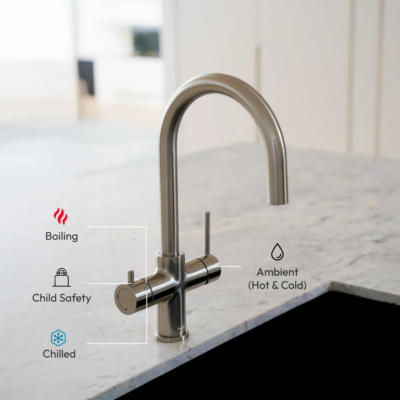
A true 4 in 1 instant boiling water tap supplies four separate outputs from one tap body:
- Filtered boiling water for tea, cooking prep, and quick cleaning jobs
- Filtered chilled water for drinking
- Standard hot water from your household supply
- Standard cold water from your household supply
That mix is what separates it from a 3 in 1 system. A 3 in 1 usually gives you boiling, hot, and cold. A 4 in 1 adds chilled filtered water, which matters in homes that want convenience without adding a separate under-bench chiller or fridge dispenser.
The three parts under the bench
Most systems are built around three main components:
The tap body
This is the visible part. It has separate controls or safety actions for the different water functions so you don’t accidentally run boiling water when you only want normal cold.The under-sink boiler or boiler-chiller unit
The heated and, in some models, chilled water is prepared and stored here.The filter
This improves water taste and helps reduce the impurities and scale that can affect both the drinking experience and the appliance itself.
One useful example comes from the Clearwater Magus specification. The core of the system is often a 2.4-litre stainless steel boiler tank, capable of delivering up to 60 cups of 98°C filtered boiling water per hour, and high-efficiency heating elements can reheat from empty to operating temperature in about 5 minutes with ±0.5°C precision, according to the Clearwater Magus product specification.
Why the tank matters
People often hear “2.4 litres” and assume that means the tap runs out quickly. In practice, it doesn’t work like a kettle. The tank stores hot water ready for use, then reheats rapidly after dispensing. So the important question isn’t just tank size. It’s how tank size, heating element, insulation, and recovery time work together.
That’s why a compact unit can still support a busy household. If two people make coffee back-to-back and someone else fills a pot, the system isn’t boiling from scratch each time.
Practical rule: Don’t judge a boiling tap by tank size alone. Check output, recovery, and whether the unit also handles chilled water.
If you want a broader look at how these systems fit into everyday kitchens, Ring Hot Water has a useful article on instant boiling and chilled water tap systems.
Four Transformative Benefits for Your Kitchen
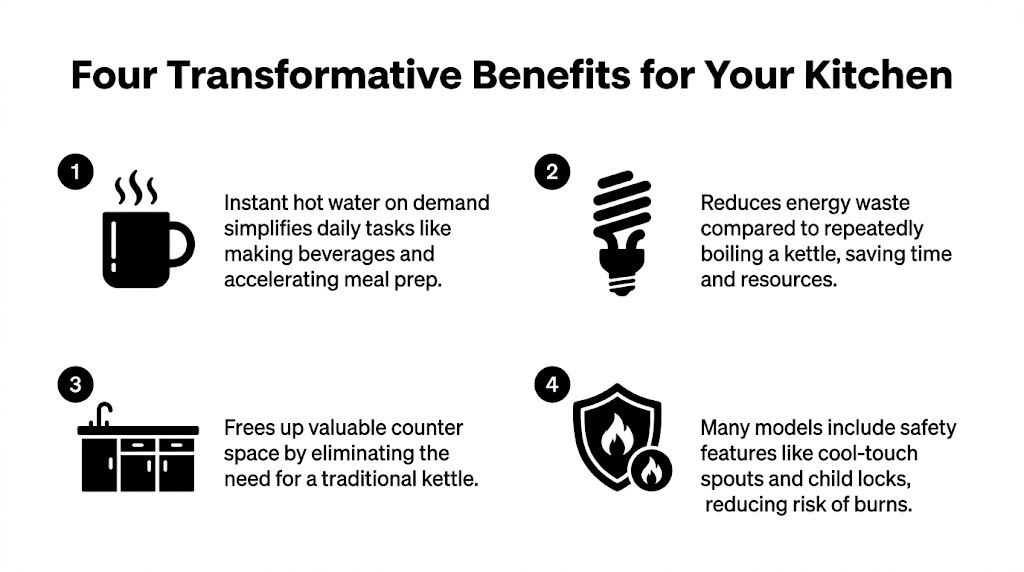
It usually starts the same way. You are halfway through dinner prep, someone wants tea, pasta water still needs heating, and the kettle is sitting in the middle of the bench doing one job at a time. A 4-in-1 tap changes that routine by giving you filtered cold, standard hot and cold, and near-boiling water from the one fixture.
Convenience that saves small pockets of time all day
The first benefit is simple to understand because you feel it straight away. Jobs that used to involve waiting become immediate. Tea, coffee, porridge, noodles, blanching greens, loosening jar labels, or warming a teapot all happen without filling and reboiling a kettle.
That time saving sounds minor on paper.
In a real Melbourne household, it changes the rhythm of the kitchen. You stop planning around the kettle and start treating hot water like any other utility, ready when you turn the handle. Chilled filtered water from the same tap also cuts down the shuffle between sink, fridge, and water jugs.
Energy use that better matches what you actually need
A kettle often heats more water than the job requires. One mug of tea can mean a half-full kettle, and that pattern repeats through the day. A 4-in-1 tap approaches the task differently. It keeps a stored volume hot in an insulated tank and dispenses only what you use.
The practical point is not that every home will save the same amount. It is that the system is built around portion control. If you need one cup, you draw one cup. That makes ownership easier to justify when you are looking beyond the showroom pitch and thinking about running costs over several years.
More working space and a tidier layout
Removing the kettle sounds like a cosmetic improvement until you live with the extra room. Bench space near the sink is some of the hardest space to keep clear because it attracts appliances, bottles, and trays. Replacing separate devices with one tap can make the kitchen feel easier to use, not just nicer to photograph.
This matters even more during a renovation. Tap choice affects where you place power points, how much room you leave under the sink, and whether you still need space for water filters or benchtop dispensers. If you are planning cabinetry and services at the same time, this complete guide to kitchen and bathroom renovations gives helpful context for deciding the right stage to fit a specialty tap.
Better-tasting water where you use it
The fourth benefit is the one many buyers notice after installation. Filtered boiling and chilled water usually tastes cleaner than untreated tap water, especially in homes where chlorine taste or mineral content is noticeable. That improves tea, coffee, and plain drinking water.
There is also a maintenance angle, which matters just as much as taste. Cleaner water can reduce the build-up that causes trouble inside appliances over time. For Melbourne homeowners, that is an ownership issue, not just a comfort feature, because filter changes, servicing, and access to replacement parts all affect the long-term value of the system. This is one of the areas Ring Hot Water helps clarify before purchase, so buyers understand the day-to-day reality, not just the headline features.
| Benefit | What it changes in practice |
|---|---|
| Speed | Hot drinks and cooking prep start straight away |
| Energy habits | You heat and dispense closer to the amount you actually need |
| Space | The kettle and other drink stations can leave the bench |
| Water quality | Filtered water improves taste and supports cleaner internal operation |
A 4-in-1 tap works best as a collection of practical improvements that make the kitchen easier to use every day.
Understanding Key Features and Specifications
Specifications look technical until you translate them into daily use. A 4 in 1 tap is a small system under the sink, not just a stylish spout above it, so the smartest comparison starts with what the hidden parts will need to do for your household.
Tank size and recovery speed
The tank is the reserve. It stores heated water so the tap can deliver it straight away, then reheats after each use. If you only make a few teas and the odd saucepan top-up, a compact tank may suit you. If your kitchen sees back-to-back coffees, instant meals, and cooking prep, stored capacity and reheating speed start to matter much more.
Recovery speed often causes confusion. Buyers tend to focus on how much water is stored, but the better question is how fast the unit gets ready again after a large draw-off. A system with modest capacity can still work well if it reheats quickly enough for the rhythm of your home.
A simple way to judge this is to picture the busiest 15 minutes in your kitchen, not the quietest part of the day.
Temperature and filtered outputs
Near-boiling water is usually the goal, because that covers tea, coffee, blanching vegetables, loosening jar lids, and speeding up cooking prep. Some models also add chilled filtered water. That sounds attractive on a product page, but it only earns its keep if your household will use it regularly.
Filtered output also affects ownership, not just taste. The filter type influences flavour, sediment reduction, and how often cartridges need replacing. In Melbourne, where water conditions and household expectations vary by suburb and property age, it is worth asking a practical question first. Are you buying the tap for convenience alone, or are you also trying to improve the water you drink every day?
These questions usually narrow the shortlist faster than finish, handle shape, or branding:
- How many people will use boiling water in short bursts?
- Will chilled filtered water replace bottled water or a fridge dispenser in your home?
- How easy is the filter to replace, and what will replacements cost over time?
- Can local service support and spare parts be sourced in Melbourne without a long wait?
That last point deserves more attention than it usually gets. Ring Hot Water often helps homeowners compare not just the tap head, but the parts and support behind it, because ownership gets expensive when a filter housing, valve, or cartridge is hard to source locally.
Safety and build quality
Boiling water at a sink should feel controlled. Good systems use deliberate activation steps, steady dispensing, and insulated parts that reduce the chance of accidental contact with high heat. The tap should feel predictable in the hand, especially in a family kitchen where more than one person will use it.
Build quality shows up slowly. You notice it in the handle action after years of use, in whether fittings stay tight, and in whether replacement parts are still available when the unit needs service. That is why it helps to read specifications as a long-term ownership document, not a showroom brochure.
Benchtop planning matters too. A specialty tap changes how you use the sink area, and spout reach, clearance, and handle movement need to suit the surface around it. If you are still choosing finishes, this kitchen countertop material comparison is a useful companion read because the tap and benchtop need to work together, both visually and in day-to-day use.
A quick buying table keeps the comparison grounded:
| Feature | Why it matters |
|---|---|
| Tank capacity | Affects how much heated water is available before the system needs recovery time |
| Recovery speed | Shapes how well the tap handles repeated use during busy kitchen periods |
| Boiling and chilled functions | Determines whether the tap matches your actual drinking and cooking habits |
| Filter design | Affects taste, cartridge changes, and the long-term cost of upkeep |
| Safety controls | Helps prevent accidental activation and makes family use safer |
| Service access and spare parts | Reduces downtime and makes ownership more practical in Melbourne |
If two 4 in 1 taps look similar on the bench, compare the tank, filter setup, safety controls, and local service support. Those details usually decide whether the system feels convenient for years or troublesome after the first installation.
Installation A Job for a Professional
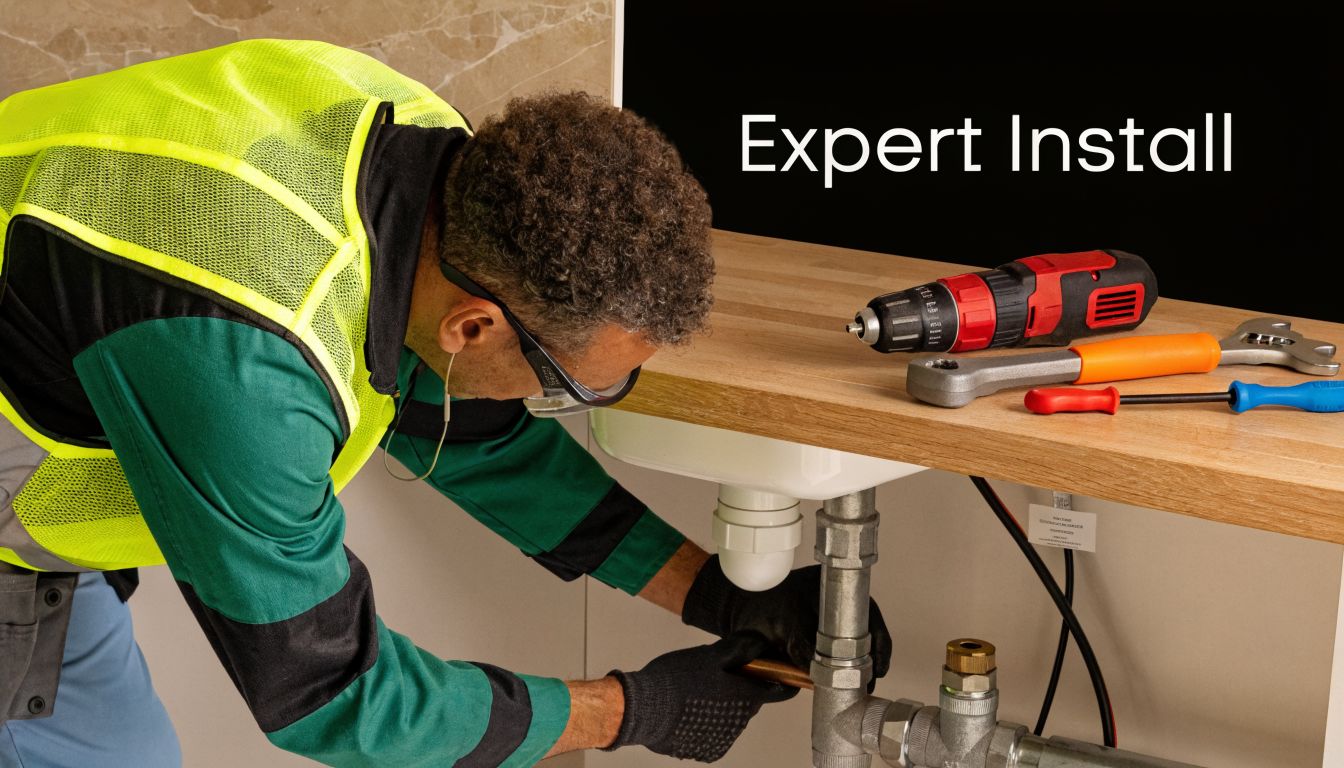
You open the cupboard under the sink and realise a 4 in 1 tap is really a small water system, not just a new spout on the benchtop. There is a boiling tank or boiler-chiller unit, a filter, valves, hoses, electrical power, and enough clearance for a technician to service it later. That is why installation needs to be planned like an appliance fit-off, not treated like a standard tap swap.
What to check before you buy
Start with the cabinet.
A 4 in 1 system needs more than enough room for the unit to physically fit. The installer also needs space to route pipework neatly, mount the filter where it can be changed, and leave airflow around components that generate heat. A cramped cupboard often causes trouble later because simple servicing becomes awkward and more time-consuming.
Power is the next checkpoint. Many Australian instant hot tap systems require a 13A/240V GPO under the sink, as set out in the installation guidance for Australian-compliant instant hot tap systems. If that outlet is missing, too far away, or poorly positioned, you may need both a plumber and a licensed electrician before the tap can be commissioned.
Then check the plumbing conditions. These taps are designed to work within specific pressure ranges and connection setups. A licensed installer confirms that the water supply, isolation valves, waste area, and fittings suit the model you are buying, and that the system can be installed safely without straining hoses or crowding other under-sink services.
Why professional fitting matters
Boiling water changes the standard of care. The tap, tank, and safety controls all need to work together correctly from day one. If the unit is poorly fitted, problems tend to show up in practical ways. Drips at joints, poor temperature performance, awkward filter access, nuisance shutdowns, or warranty disputes if the manufacturer asks how the system was installed.
A professional installer is also planning for the next service visit, not just the handover on install day. At Ring Hot Water, that long-view approach matters because owners in Melbourne usually keep these systems for years. A tidy layout under the sink can make future maintenance faster, safer, and less expensive. If you want an example of the sort of access technicians need later, this guide to Zip filter replacement and service access shows why clearance around filters and fittings should be part of the original installation plan.
Bench preparation matters too. The tap hole must suit the body diameter, the fixing method must suit the benchtop thickness, and the spout needs enough reach to work comfortably over the bowl. If you are replacing surfaces at the same time, tap placement should be decided before the stone or laminate is cut. This kitchen countertop material comparison is a useful reference if you’re choosing between stone, laminate, and other surfaces before committing to a tap location.
A short visual walkthrough helps if you want to see the kind of components involved during fitting:
The homeowner checklist
Before you place an order, confirm these points:
- Cupboard space: Make sure the cabinet can hold the unit, filter, and pipework with clear service access.
- Power access: Check for the correct under-sink GPO in a practical location.
- Tap hole and bench material: Stone and engineered surfaces need accurate drilling and fixing points.
- Plumbing suitability: Confirm your water pressure and connections match the tap’s requirements.
- Installer support: Make sure you can get a qualified local technician in Melbourne for installation and future call-outs.
A good install does two jobs at once. It gets the tap working properly now, and it keeps maintenance realistic later.
The True Cost of Ownership Maintenance and Spares
Many marketing pages go quiet at this point. They’ll show you the polished tap, talk about convenience, then glide past the part that determines whether you stay happy with the purchase. Ownership doesn’t stop at installation.
Filters are not optional
Every filtered boiling or chilled system depends on regular filter changes. The exact interval depends on water quality and how heavily the tap is used, but the principle is simple. If you ignore filter maintenance, performance drops and internal components carry more stress than they should.
That matters in Melbourne because water conditions vary, and scale can become part of the ownership story faster than buyers expect. Competitor content often omits long-term costs, and key questions for Australian homeowners include filter replacement costs, servicing frequency in hard-water regions like Melbourne, and the availability of local providers for warranty and repairs, according to this industry commentary on the missing maintenance conversation.
Spares and repairs matter more than brochures
This is the practical difference between buying a tap and owning a system. Over time, owners may need replacement filters, valves, hoses, thermostats, or other service parts. If your supplier can’t support that, the initial convenience starts to feel fragile.
For that reason, support should be part of the buying decision from day one. If you’re using a Zip system, for example, it helps to understand the maintenance side early, including what a Zip filter replacement involves.
The better question to ask before purchase
Instead of asking only “How much is the tap?”, ask this:
- Who installs it if I buy it?
- Who services it if performance changes?
- Can I get genuine replacement filters and parts locally?
- Will someone troubleshoot water quality, leaks, or heating issues?
That’s the true ownership checklist.
One practical option in Melbourne is Ring Hot Water, which supplies instant boiling and chilled systems and also handles installation, repair, maintenance, spare parts, and fittings for brands used in homes and workplaces. That kind of setup is useful because the same business can often support the appliance after the sale instead of disappearing once the box is delivered.
Ownership insight: The tap body is the visible purchase. The service network is the invisible one, and it often matters more after year one.
What long-term satisfaction usually comes down to
Most problems with these systems aren’t mysterious. They’re usually linked to one of three things:
- Missed filter changes
- Scale or water-quality issues
- No reliable local support
If you plan for those from the start, a 4 in 1 tap is much easier to live with.
Your Buying Guide Finding the Right Tap and Service
The smartest way to choose a 4 in 1 instant boiling water tap is to match it to your routine, not to the fanciest specification sheet.
Start with household behaviour. A couple who mainly want tea, coffee, and chilled drinking water can often use a compact unit comfortably. A larger family, a home with constant entertaining, or a kitchen that sees heavy cooking prep may need more output and a stronger recovery profile. If the chilled function won’t get used much, it’s also worth asking whether you want a 4 in 1 or whether a 3 in 1 would suit you better.
A simple buying filter
Use these questions to narrow your choice:
- How many people use the kitchen daily?
- Will the chilled water function be used often enough to justify it?
- Is under-sink space tight or generous?
- Do you want a minimal look with fewer bench-top appliances?
- Can the supplier also help with installation and servicing?
These questions stop you from overbuying or buying the wrong style of system.
Compare the whole package, not just the tap
A buyer can get distracted by finish, spout shape, or a showroom demonstration. Those things matter, but they’re not the whole story. Compare the appliance, the filter arrangement, the installation requirements, and the support behind it.
If you’re still deciding whether this kind of system suits your kitchen habits, this overview of an instant hot water tap is a good starting point before narrowing down to a full 4 in 1 model.
What a sensible purchase looks like
A sensible purchase usually has four parts working together:
| Decision area | Good sign |
|---|---|
| Tap model | Matches your real usage, not just your wish list |
| Installation | Handled by a qualified professional |
| Maintenance plan | Filter changes and servicing are clear from the start |
| After-sales support | Spare parts and repairs are available locally |
That final point matters most in practice. A beautiful tap with weak support becomes an inconvenience. A well-supported system stays useful.
Frequently Asked Questions
How much under-sink space is really needed
You need enough room for the main unit, the filter, and pipework that can be serviced without forcing everything into the cabinet. The exact footprint varies by model, so measure the cupboard carefully before buying and leave working space for future filter changes.
Does the boiling water unit make a lot of noise
Most units produce some sound while heating or recovering after use. In normal day-to-day use, owners usually notice a low operational hum or a short reheat sound rather than anything disruptive. The sound profile is closer to a compact appliance than a loud kitchen machine.
Can I install a 4 in 1 tap on a stone benchtop or kitchen island
Yes, but it needs planning. Stone and engineered surfaces require precise hole cutting, and an island installation also needs well-planned water and power access inside the cabinetry. This is another reason professional coordination matters.
Is the filtered water as good as a dedicated filter system
For most households, integrated filtration is more than adequate for improving taste and reducing common impurities associated with everyday drinking water. If you have very specific water concerns, a specialist can advise whether a broader filtration setup should be integrated with the tap system.
Are these taps safe for family homes
Yes, provided the system is Australian-compliant and professionally installed. Safety mechanisms are part of the product design, but safe ownership also depends on proper installation, ongoing maintenance, and making sure everyone in the home understands which control operates the boiling function.
If you’re comparing models, planning a renovation, or trying to work out whether a 4 in 1 instant boiling water tap will suit your kitchen, Ring Hot Water can help you sort through the practical details, from product selection to installation, filters, repairs, and spare parts across Melbourne.

