
Water pumps
Your Guide to Choosing the Right 240V Water Pump
Mar
A 240V water pump is the powerful heart of any serious home or business water system. It provides the muscle you need for strong, reliable water pressure, day in and day out.
While you might find smaller 12V pumps for lighter duties, a 240V pump is the Australian standard for more demanding jobs—think instant boiling water taps and whole-home filtration systems.
Understanding the Role of a 240V Water Pump
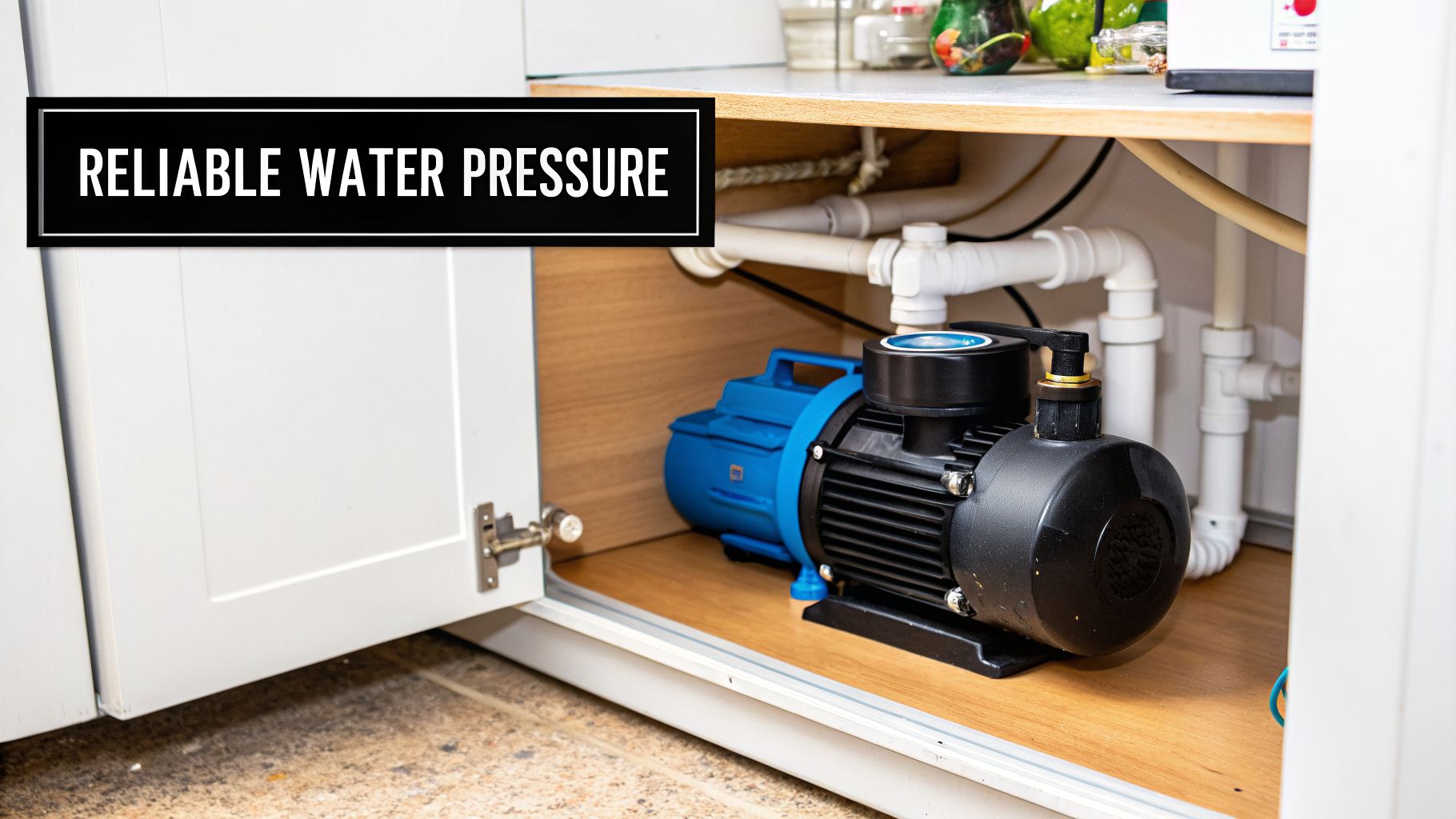
Think of a 240V water pump as the engine driving your entire water network. Its main job is to boost and maintain water pressure, ensuring a strong, steady flow from the mains supply to every tap and appliance on your property. This becomes absolutely essential in buildings where the mains pressure just isn't up to scratch.
The Power Behind Modern Conveniences
In a typical Melbourne home or office, you probably won't even see the pump. It's often tucked away under a sink or in a cupboard, but you’ll certainly feel its impact. It’s the hidden workhorse that makes so many modern conveniences possible.
Take an under-sink instant boiling or chilled water system, for example. Without a capable 240V water pump, that system would struggle. Instead of a powerful stream, you'd get a weak trickle, making simple tasks like filling a cup or a pot frustratingly slow. The pump delivers the consistent pressure these high-performance systems need to function as designed.
A 240V pump doesn't just move water—it elevates your daily experience by ensuring your appliances deliver the efficiency and speed they were designed for. It turns a weak flow into a reliable, powerful stream.
Why Is 240V the Standard?
The choice of 240 volts is no accident; it’s the standard residential and light commercial voltage across Australia. This power rating provides the perfect balance of strength and efficiency for most household and workplace applications.
Here’s why it’s so critical:
- Sustained Power: It delivers enough grunt to run consistently for long periods without overheating or straining, which is essential for things like whole-home filtration systems.
- High-Pressure Output: A 240V motor can generate the high pressure needed to push water through multiple floors of a building or across a large property.
- Appliance Compatibility: It directly matches the electrical requirements of high-demand appliances like instant hot water units, ensuring they operate at peak performance.
- Efficiency: Modern 240V pumps are engineered to provide maximum output with minimal energy consumption, helping to keep your running costs in check.
Essentially, a 240V water pump is the go-to solution for any situation that calls for more than basic, utility-supplied pressure. Whether you're a homeowner installing a new kitchen, a business owner upgrading the office amenities, or a tradesperson sourcing reliable gear, understanding this pump is the first step toward a flawless water system.
How Your Water Pump Powers Filtration and Hot Water Systems
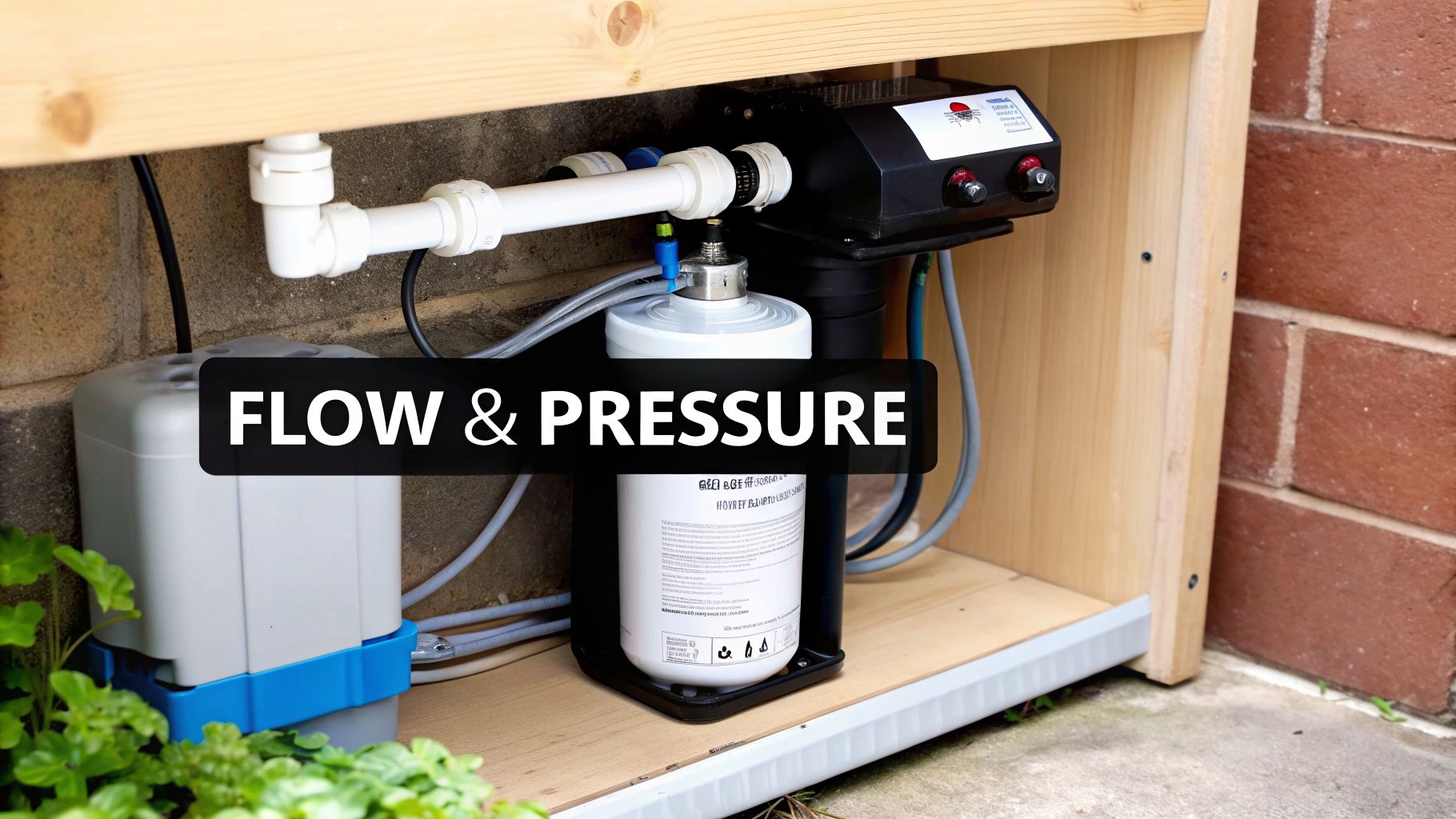
Let's look at the unsung hero behind your favourite appliances, from an under-sink boiling water tap to a whole-home filtration unit: the 240V water pump. Its job is actually quite simple. It provides the muscle needed to move water from your main supply line to where you need it, with enough force to make it work properly.
Without that crucial pressure boost, many high-performance systems would simply be a disappointment.
Think of it this way: you can’t clean a driveway with a standard garden hose dribbling water out. You need a pressure washer to get any real force behind it. A good 240V water pump does the same for your taps and filters, turning a potential trickle into a strong, reliable flow.
Flow Rate vs. Pressure: What You Need to Know
To really get your head around how a pump makes your day-to-day life easier, you need to understand two key terms: flow rate and pressure. They’re the two sides of the performance coin, and getting the balance right is what makes a system feel truly brilliant.
- Flow Rate (Litres Per Minute or LPM): This is all about volume. A high LPM means you can fill a big pot of water for pasta in seconds, not agonising minutes.
- Pressure (Pounds Per Square Inch or PSI): This is all about force. Good pressure ensures that when you go to use your filtered chilled water tap, you get a satisfying stream, not a frustrating dribble.
A whole-home filtration system, for instance, needs enough pressure (PSI) to push water through multiple filter cartridges without choking the volume (LPM) that eventually reaches your shower or kitchen sink. The right pump handles this without breaking a sweat.
How the Pump Actually Works
So what happens behind the scenes? When you turn on your boiling water tap, a sensor tells the 240V water pump to kick into gear. Inside the pump, a motor spins an impeller—essentially a bladed rotor—at high speed. This action sucks water in one side and shoves it forcefully out the other, creating that all-important pressure boost.
The process is incredibly efficient because the pump doesn’t store pressurised water; it creates pressure on demand. This is a game-changer for energy use and the lifespan of the system, as the pump only runs when it’s needed. Modern designs, like those you might see paired with a Grundfos solar water circulation pump, are built specifically to sip power while delivering maximum output.
There’s a reason the Australian water pumps market is booming. Valued at AUD 263.40 million in 2024, it’s expected to climb to AUD 391.02 million by 2034. Centrifugal 240V pumps are the go-to for homes and offices across Melbourne, matching perfectly with demanding systems like boiling taps and chillers. You can dig into the numbers yourself with the latest industry research.
Performance Without the Noise
In a home or office kitchen, performance can't come at the expense of a peaceful environment. Nobody wants a pump that roars to life every time you fancy a cup of tea. Thankfully, manufacturers have put a lot of work into making their pumps whisper-quiet.
Modern 240V pumps use advanced engineering, including vibration-dampening mounts and precision-balanced motors, to ensure they are heard as little as possible. This makes them ideal for installation in quiet office kitchens or open-plan living areas.
Energy efficiency is the other major piece of the puzzle. A well-designed 240V water pump adds a huge amount of convenience to your day without sending your power bills through the roof. In fact, data from 2023 showed that properly optimised installations in Victoria could lead to electricity bill savings of up to 22%—a pretty compelling reason for any household or business to pay attention.
Choosing the Right Pump Type for Your Application
Picking the right 240V water pump isn't a one-size-fits-all job. The pump that’s perfect for boosting pressure across an entire house might be the wrong choice for a specialised water filter. To make the right call, you need to get your head around the two main types: centrifugal pumps and positive displacement pumps.
Each one is built for a different purpose. Think of it like choosing between a sprinter and a marathon runner—both are top athletes, but their skills are honed for very different races. Getting this choice right is the key to a system that runs efficiently, quietly, and reliably for years to come.
Centrifugal Pumps: The Pressure Powerhouses
When you need to lift water pressure across your whole home or office, a centrifugal pump is your go-to workhorse. There's a good reason these are the most common type of 240V water pump you’ll find in homes and light commercial setups across Melbourne.
A centrifugal pump has a spinning part inside, called an impeller, that slings water outwards. This creates the force you need for a decent shower, a fast-filling sink, and consistent pressure on every floor of the house. They are designed to shift large volumes of water with ease, making them the default choice for general pressure boosting. If your main problem is just weak mains pressure, this is almost definitely the pump you’re looking for.
- Best for: Whole-home pressure boosting, supplying multiple taps at once, and ensuring strong flow to all your appliances.
- Key Advantage: Excellent at delivering high flow rates and a solid pressure lift for general use.
- Typical Scenario: A family in a two-storey Yarraville home installs a centrifugal pump to make sure their new upstairs bathroom has the same powerful shower pressure as the one downstairs.
Positive Displacement Pumps: The Consistency Masters
While centrifugal pumps are fantastic all-rounders, positive displacement pumps are the specialists. Instead of slinging water around, they trap a fixed amount of it and methodically push it through the outlet. The result is a highly consistent, steady flow that doesn't really care about pressure changes.
This makes them perfect for any job where a precise, non-pulsating stream is non-negotiable. Think of advanced water filtration systems, reverse osmosis units, or even some off-grid caravan setups that rely on this steady delivery to work properly. While you might be familiar with the needs of a 12V water pump for a caravan, a 240V positive displacement pump plays a similar role for more permanent, high-demand systems.
A positive displacement pump is like a metronome for your water system. It delivers a perfect, rhythmic flow that’s ideal for sensitive equipment, prioritising consistency over sheer volume.
This level of precision is becoming more and more vital. Australia's water pumps market was valued at a huge USD 1.7 billion in 2024 and is expected to hit USD 2.9 billion by 2033, all driven by new infrastructure and the need for reliable water management here in Victoria. For Melbourne homeowners and businesses like Ring Hot Water, this means having the right 240V water pump to power everything from an instant boiling tap to a whole-home filtration system is an absolute must.
Comparing Pump Types Side by Side
To make the choice a bit simpler, let's put the two main types head-to-head. Understanding the technology makes a real difference. For instance, anyone looking at pool maintenance soon learns that choosing the best variable speed pool pumps saves a bundle on energy compared to old single-speed models. It’s the same story here—picking the right 240V pump type has a massive impact on how well your system performs.
To help you decide, here’s a straightforward comparison of how they stack up for different jobs.
240V Water Pump Comparison: Centrifugal vs. Positive Displacement
| Feature | Centrifugal Pump | Positive Displacement Pump |
|---|---|---|
| Primary Function | Boosts overall water pressure and volume. | Delivers a consistent, steady flow rate. |
| Best Application | Whole-home systems, multi-tap usage. | Specialised filtration, RO systems, precise dosing. |
| Flow Characteristic | Flow varies with pressure. | Flow remains constant, regardless of pressure. |
| Ideal Scenario | Eliminating weak water pressure in a house. | Powering a water purifier that needs steady input. |
| Commonly Found | Under-sink to boost kitchen taps, mains boosting. | Laboratories, coffee machines, specific water treatment units. |
Ultimately, the best 240V water pump comes down to what you actually need it to do. If you just need more force behind your taps everywhere, a centrifugal pump is the answer. But if you’re running equipment that needs a perfectly steady and reliable flow to do its job, a positive displacement pump is the clear winner.
Essential Features to Look for Before You Buy
Once you’ve worked out the right type of pump for your needs, it’s time to get into the details that separate a good 240V water pump from a great one. Think of this as your final checklist before you commit. These features are what determine how long your pump will last, how safe it is, and whether it runs quietly in the background or becomes a constant, noisy headache.
Paying a bit of attention here ensures you end up with a reliable unit that delivers consistent performance. This is just as true for a homeowner investing in their kitchen as it is for a plumber sourcing quality parts for a client. A pump isn't a throwaway purchase; it’s a long-term part of your water system.
This decision tree is a great starting point, helping you choose between boosting overall pressure or simply getting a consistent, steady flow for specific equipment.
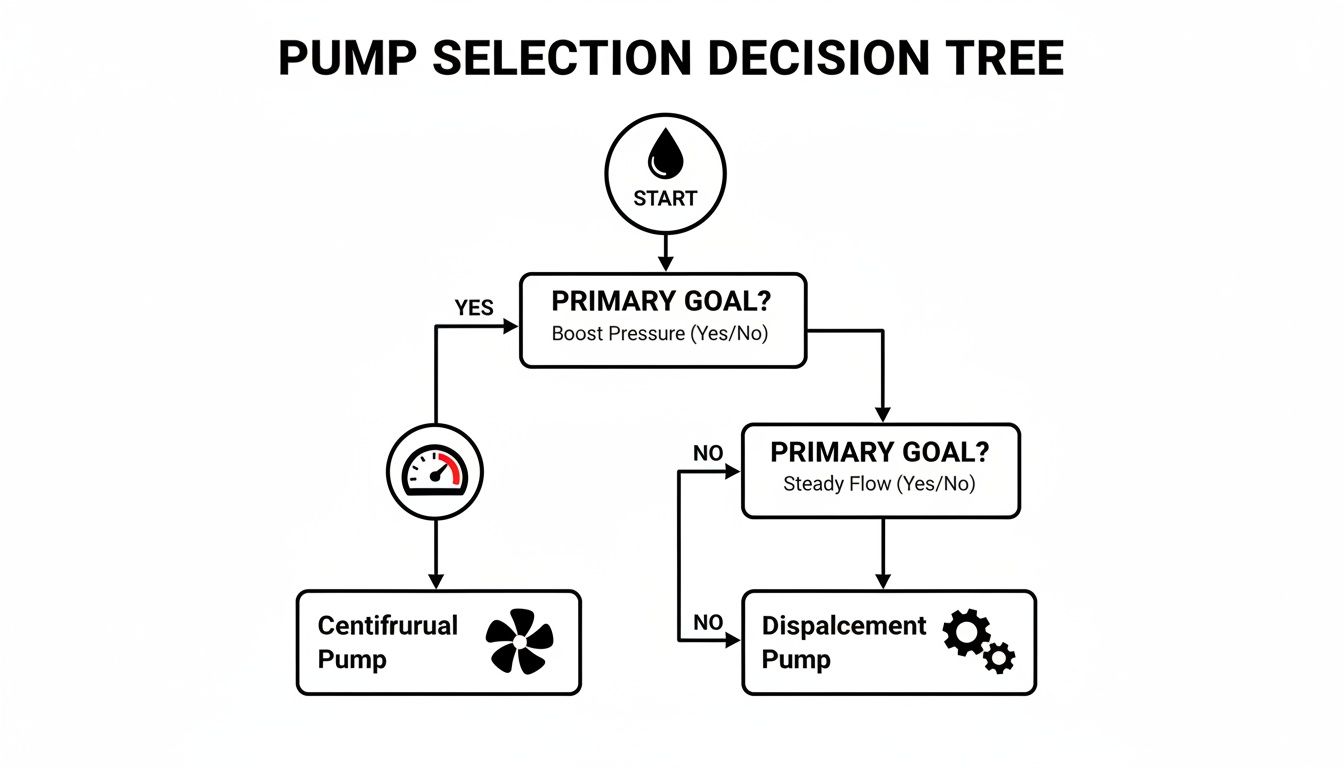
As the flowchart shows, if you need to boost pressure, a centrifugal pump is your best bet. But for that steady, dependable flow, a displacement pump is the smarter choice.
Built-In Safety with Thermal Overload Protection
One of the most important features you can get is thermal overload protection. It’s essentially a smart safety switch built right into the pump's motor. It keeps an eye on the temperature and automatically shuts the pump off if it starts to overheat.
Overheating can be caused by a few things—running dry without any water, a blockage somewhere in the line, or even just being overworked. Without this protection, the motor windings can burn out, leaving you with a dead pump and a costly replacement. A pump with thermal overload protection is designed to look after itself, making it a much safer and more durable investment.
Construction Materials and Durability
The materials a 240V water pump is made from have a huge impact on its lifespan, especially in systems dealing with hot water. Always look for pumps built with high-grade, corrosion-resistant components.
- Stainless Steel: This is an excellent choice for the main pump housing and impellers. It stands up to rust and won’t degrade over time, ensuring the pump lasts and your water stays pure.
- Brass: Often used for fittings and internal parts, brass is tough and handles high temperatures extremely well, making it perfect for hot water booster pumps.
- Advanced Ceramics: You'll find ceramic seals in more premium pumps. They offer fantastic wear resistance and can seriously extend the pump's working life.
This focus on better materials is a big deal in the wider Australian pumps market. The industry is projected to generate USD 2,947.7 million in 2025 and grow to USD 4,299.9 million by 2033. For Ring Hot Water customers, this means reliable hot water delivery, with some hospitality clients reporting 20% energy savings from systems using robust 240V pumps. For tradespeople, fitting a pump with advanced ceramics that can push its lifespan to 15 years is a massive win. You can dig into these industry trends in this market outlook report.
Noise Levels and WaterMark Certification
A pump’s performance isn’t just about power; it’s about how it fits into its surroundings. A noisy pump in a quiet home or an office kitchen can be incredibly annoying.
Always check the noise level, which is measured in decibels (dBA). The lower the dBA rating, the quieter the pump. If it’s going to be installed anywhere near a living or working area, aim for models specifically designed for low-noise operation.
Finally, and this is crucial, never buy a pump in Australia unless it has WaterMark certification. This is your non-negotiable guarantee that the product is safe, fit for its purpose, and meets Australian plumbing standards. It confirms the materials won't leach anything nasty into your drinking water and that the pump is built to last, giving you complete peace of mind.
Installation Tips and Maintenance Best Practices
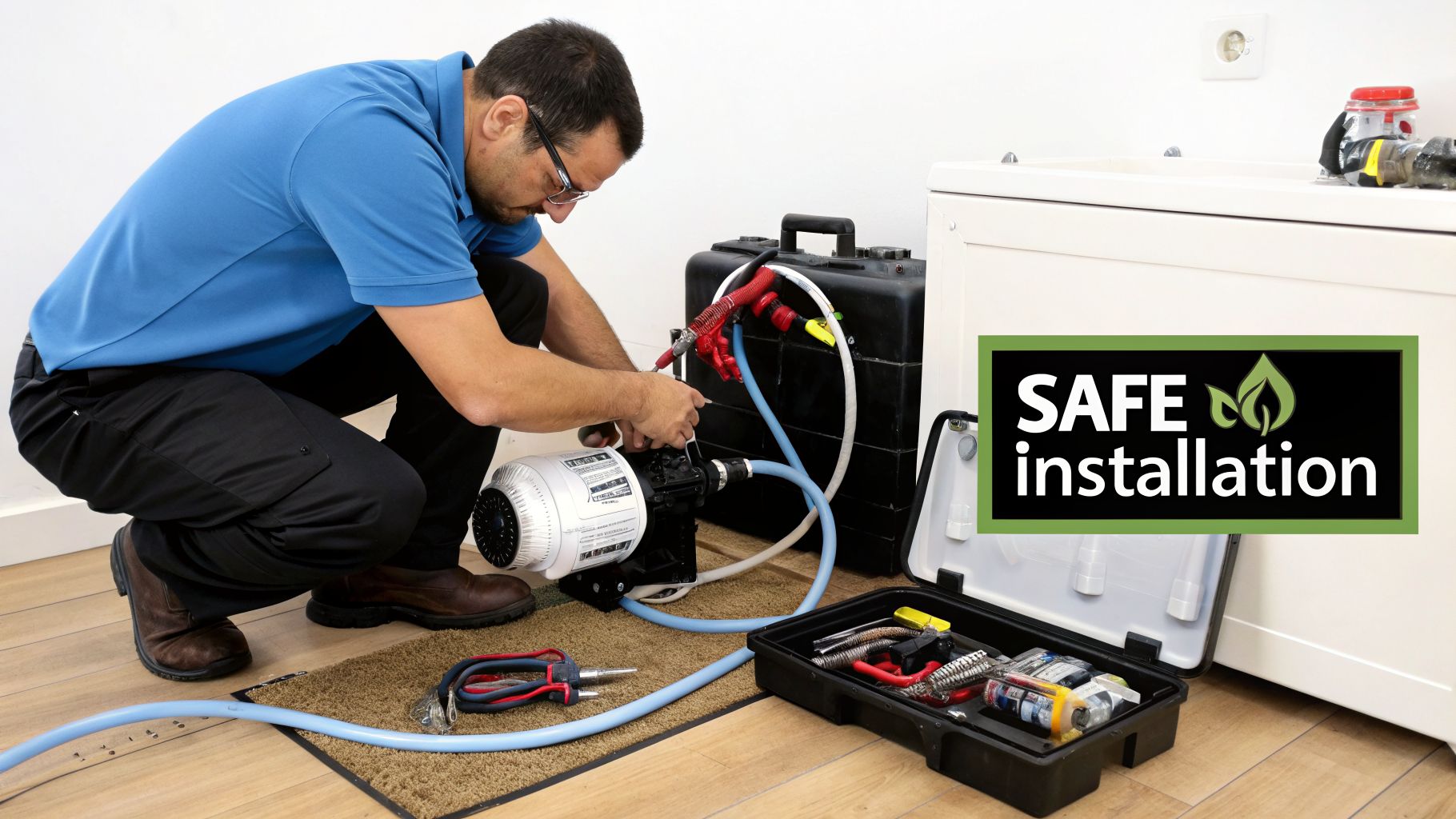
Getting your 240V water pump installed correctly and keeping it in good nick is the difference between a workhorse that lasts for years and one that gives you headaches. Follow a few simple best practices, and you’ll get great performance from day one and keep things running smoothly for a long time to come.
A proper setup isn't just about efficiency; it's about safety. A 240V water pump involves serious power, so understanding the general electrical considerations is non-negotiable. This is why, in Australia, all electrical work must be handled by a licensed electrician. It’s not just red tape – it’s about keeping everyone safe.
Key Installation Steps for Peak Performance
Even though a licensed sparky has to do the wiring, knowing what a good installation looks like means you can be sure the job’s done properly. A quality setup is all about stability, quiet running, and making future service calls a whole lot easier.
Here are the crucial steps:
- Find a Stable, Level Spot: The pump has to be mounted on a solid, flat surface to stop it from vibrating. An uneven base is a one-way ticket to a noisy pump and knackered bearings.
- Give It Room to Breathe: Pumps get hot. Shoving a 240V water pump in a tight cupboard without any airflow is asking for it to overheat. This can trip the thermal overload or, worse, cause permanent damage.
- Use Flexible Hoses: This is a simple trick but a game-changer. Connecting the inlet and outlet with flexible, braided hoses soaks up the vibrations, making the whole system dramatically quieter.
- Install Isolation Valves: Popping a valve on either side of the pump is a godsend for future maintenance. It means a technician can work on the pump without having to cut the water supply to the entire house.
Simple Maintenance to Keep Your Pump Healthy
A few routine checks can stop small issues from snowballing into big, expensive failures. Most of this is just simple looking and listening. Setting a reminder on your phone to do these checks every six months is a brilliant habit to get into.
Think of pump maintenance like a regular car service. A little preventative care goes a long way in avoiding a costly breakdown, ensuring your pump remains a reliable part of your water system.
Here's a simple checklist to run through:
- Inspect for Leaks: Have a good look at all the connections and seals around the pump. Even a small drip can be a sign of a seal that’s on its way out.
- Listen for Odd Noises: A happy pump has a consistent, low hum. If you start hearing grinding, rattling, or a high-pitched whine, it could mean worn bearings or something stuck inside.
- Keep the Area Clean: Dust and cobwebs can block up ventilation ports and make the pump run hot. Give the unit a wipe-down and make sure the space around it is clear.
- Check the Strainer/Filter: If your pump has an inlet strainer, make sure to clean it out regularly. A clogged strainer starves the pump of water, forcing it to work harder and killing its efficiency.
While these tips will help you handle the basics, it’s vital to know when to call in the professionals. For any electrical faults, weird noises that won't go away, or a major drop in performance, getting a qualified technician in Melbourne is the safest bet. They'll make sure everything is compliant, safe, and that your 240V water pump keeps doing its job properly.
Troubleshooting Common Water Pump Issues
Even the most reliable 240V water pump will eventually have an off day. Before you reach for the phone to book a service call, a bit of troubleshooting can often get to the bottom of the issue, saving you both time and money.
Knowing what to look for can turn a moment of panic into a manageable task. While many pump problems have surprisingly simple fixes, it’s just as important to recognise when it's time to step back and call in a professional.
Pump Is Running But No Water Comes Out
This is easily one of the most frustrating things that can happen. You can hear the motor running, but the taps are bone dry. When this happens, it almost always comes down to either an air lock or some kind of blockage.
An air lock is exactly what it sounds like: a pocket of air gets trapped in the suction line or the pump itself. This pocket breaks the vacuum the pump needs to pull water through. You can usually sort this out by priming the pump. Simply turn it off, carefully loosen the priming plug to let the trapped air hiss out, then tighten it back up and switch the pump on again.
The other common culprit is a blockage in the inlet pipe or strainer. It doesn't take much for leaves, sediment, or other debris to get sucked into the line and starve the pump of water. Just be sure to turn off the power and shut off the water supply before you go checking and cleaning out any filters.
Pump Switches On and Off Too Frequently
If your 240V water pump is turning on and off in rapid, short bursts, you're dealing with a classic case of "short-cycling." Nine times out of ten, the problem lies with the pressure tank or the pressure switch that controls it.
- Bad Pressure Switch Settings: Sometimes the cut-in and cut-out pressures are set too close together, tricking the pump into thinking it needs to run constantly.
- Failed Pressure Tank: A waterlogged pressure tank has lost its air cushion and can't hold pressure anymore. This forces the pump to kick in every single time you use water.
- Small Leaks in Your Plumbing: Even a tiny, barely-there leak from a dripping tap or a dodgy toilet cistern somewhere in the house can cause the system pressure to drop and trigger the pump.
A constantly cycling pump isn't just annoying—it's putting extreme wear and tear on the motor and electrical parts, dramatically shortening the pump's lifespan. You need to get onto this one quickly.
Excessive Noise or Vibration
Pumps make noise, that’s a given. But if you suddenly notice a new rattling, a high-pitched whine, or a loud grinding sound, that’s your pump telling you something is seriously wrong. These are mechanical warning signs that you shouldn't ignore.
Here are the most common causes:
- Worn Bearings: A piercing squeal or grinding noise is the classic sign of worn-out motor bearings that are on their last legs.
- Debris Inside the Pump: If you hear a rattling sound, a small stone or piece of debris might have made its way inside and is being knocked around by the impeller.
- Loose Mounts: The whole pump will vibrate and make a racket if it isn't bolted down securely to its base.
When it comes to mechanical issues like worn bearings or any electrical faults, it's always best to call a professional. Just like with more complex appliances, some jobs are best left to the experts. The same troubleshooting logic applies across different systems, as you can see in our guide to some common problems with solar hot water.
Here are some of the most common questions we get asked about the nuts and bolts of a 240V water pump. We've put together some clear, straightforward answers to help you feel confident about choosing and living with your pump.
How Long Should a 240V Water Pump Last?
A quality 240V water pump, if it's installed and looked after properly, should give you anywhere from 8 to 15 years of solid, reliable service. Of course, its final innings really depends on a few key factors.
Things like your local water quality (hard water is much tougher on internal components), how often the pump is called into action, and the materials it’s made from all play a huge role. You’ll almost always find that models built with corrosion-resistant brass or stainless steel will outlast those with cheaper plastic parts, especially when they're handling hot water.
Can I Install a 240V Water Pump Myself?
While a skilled DIYer might feel comfortable tackling the plumbing side of things, the electrical work is a definite no-go. In Australia, any job that involves hardwiring a 240V connection must be carried out by a licensed electrician. It's the law.
For your own safety, to keep your home insurance valid, and to protect the manufacturer's warranty, we always recommend getting a professional to install the entire pump. It’s the only way to guarantee everything is done safely and by the book.
Is a Noisy Water Pump Always a Sign of a Problem?
Not necessarily. Every pump makes a certain amount of noise just from doing its job. The real tell-tale sign of trouble is a sudden change or a brand-new sound you haven't heard before. A new grinding, rattling, or high-pitched whining noise is your pump’s way of telling you something’s wrong.
Keep an ear out for these common culprits:
- Debris in the Pump: A small stone or a bit of sediment can get lodged inside and start rattling around.
- Worn Bearings: This usually starts as a faint grinding or squealing that gets progressively worse over time.
- Vibration Issues: If the pump isn't mounted securely, it can vibrate against its base or the pipework, creating a loud humming or knocking sound.
It’s always best to investigate any strange noises as soon as you notice them. Catching a small issue early can save you from a major, expensive failure down the track. A quick inspection is often all it takes to find the source before it causes serious damage to your 240V water pump.
For expert advice, installation, or genuine spare parts for your 240V water pump, trust the team at Ring Hot Water. Explore our range of solutions and book a service at https://ringhotwater.com.au.

