
Water pumps
Guide to 12v water pump for caravan – 2026
Mar
Think of a 12v water pump for your caravan as the heart of your plumbing system. It’s what separates just camping from truly living on the road. This small device is the key, pushing water from your storage tanks right to your taps, shower, and toilet, giving you the freedom to go properly off-grid.
The Heartbeat of Your On-Road Freedom
Picture this: you’ve just pulled up to a secluded beach after a long, dusty drive through the Outback. Instead of a lukewarm water bottle, a proper hot shower is waiting for you. Or maybe you're washing up after dinner while gazing out at a stunning mountain vista from your kitchen window. This isn't some five-star resort fantasy; it's the daily reality that a dependable 12v water pump makes possible.
This bit of kit turns your caravan from a simple shelter into a proper home on wheels. It runs off your van’s 12v battery system, quietly working in the background to give you the confidence to explore far-flung places without leaving the comforts of home behind. It really is the unsung hero that guarantees you have running water whenever and wherever you need it.
Why Your Pump Is Non-Negotiable
Across Australia, there are over 750,000 registered caravans and motorhomes on the road, and these 12V pumps are a non-negotiable part of the setup. You really feel their importance when they decide to pack it in.
A 2024 survey showed that 68% of caravan breakdowns involved water system failures. A staggering 42% of those were directly because of pump malfunctions, often brought on by the dusty, high-vibration conditions we see all too often. You can explore more about the Australian pump market and its trends to see just how vital they are.
This data really drives home a critical point for any Aussie traveller: getting a quality water pump isn't just for convenience. It's about having reliability and peace of mind when you're out on the road.
Your 12v water pump is much more than just a piece of equipment; it’s the lifeline that makes your self-sufficiency possible. A tough, well-maintained pump is your ticket to worry-free adventures, letting you stay off-grid for longer and soak up every moment of your trip.
A pump delivers more than just H₂O; it provides the fundamental comforts that make life on the road so good. To put it simply, a good 12V water pump is your best mate for any trip.
Here's a quick rundown of what a reliable pump brings to your caravan setup.
Why a 12V Pump Is Your Caravan's Best Friend
| Essential Function | Benefit for Your Adventures |
|---|---|
| Pressurises Water | Delivers strong, consistent water flow to your shower and taps, just like at home. |
| Enables Hygiene | Powers your shower for a refreshing clean after a long day of hiking, swimming, or driving. |
| Kitchen Convenience | Provides pressurised water to your sink, making cooking and cleaning up a breeze. |
| Off-Grid Capability | Lets you be completely self-sufficient, miles away from campgrounds and mains water. |
| Toilet Functionality | Ensures your cassette or portable toilet has a reliable water supply for flushing. |
Ultimately, it’s all about having fewer worries about the basics so you can get on with the adventure.
How Your Caravan Water Pump Actually Works
Ever turned on a tap in your caravan and wondered about the magic that makes water flow, even when you're miles from the nearest town? It’s not magic, but it is a clever bit of engineering. The easiest way to picture your 12v water pump for a caravan is to think of it as the tiny, powerful heart of your mobile home’s entire water system.
At its most basic, the pump’s one and only job is to create pressure. The moment you open a tap, that pressure drops. A small but vital part inside the pump, called a pressure switch, senses this change instantly. It’s the trigger, telling the 12v electric motor to jump into action.
The Pumping Mechanism
Once the motor is whirring, it starts moving a flexible rubber disc known as a diaphragm. This diaphragm is the real workhorse of the operation. It pulses back and forth in a rapid two-stroke motion, a bit like a tiny piston in an engine.
- The Suction Stroke: First, the diaphragm pulls back, which creates a vacuum. This suction is just strong enough to draw water from your caravan’s storage tank into the pump chamber.
- The Pressure Stroke: Then, the diaphragm pushes forward, forcefully shoving that water out of the chamber and down into your plumbing lines. Off it goes to your tap or shower.
This whole cycle happens over and over, multiple times a second, giving you that steady, pressurised flow of water you need. It’s this simple process that provides that "at-home" convenience of running water, wherever your adventures take you.
This diagram shows how it all comes together, from your battery powering the pump to water arriving at the tap.
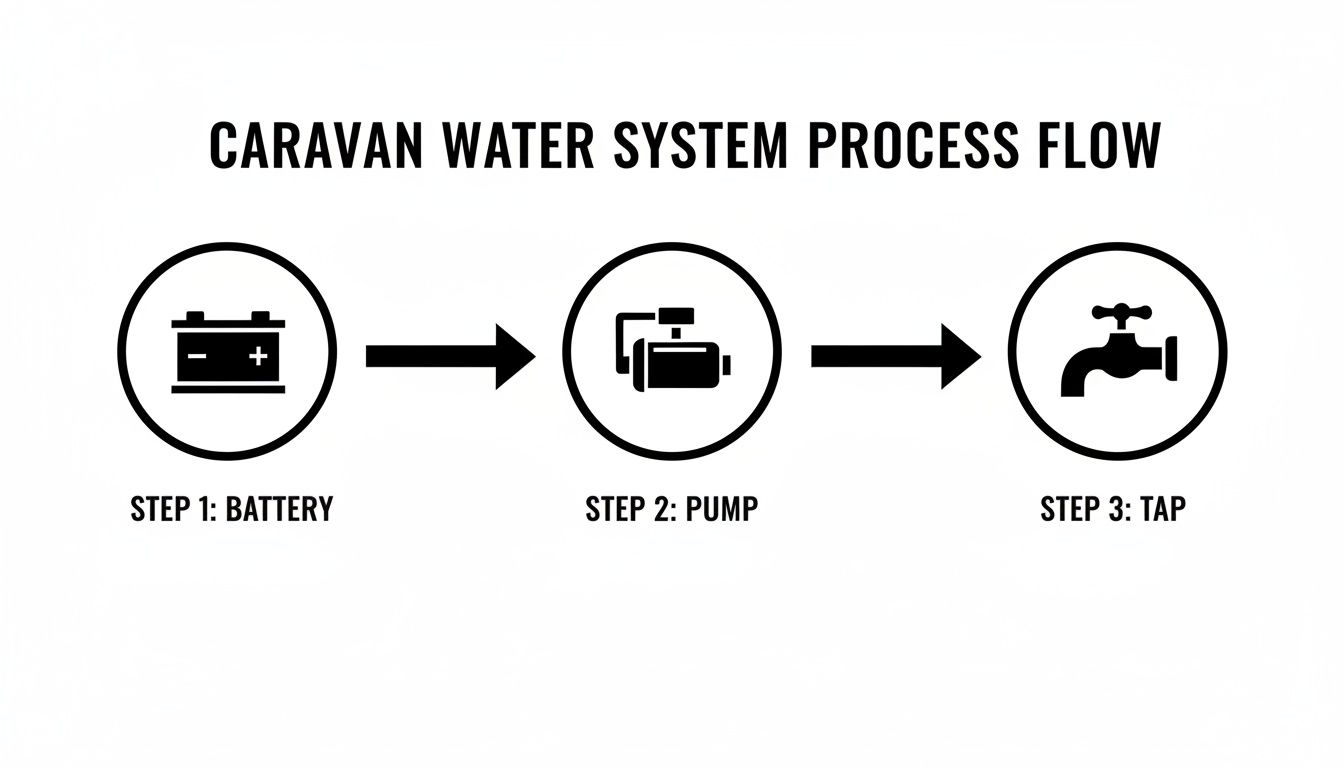
As you can see, it’s a pretty direct link between your 12v power source, the pump itself, and the water coming out of your fixtures.
Understanding Self-Priming Pumps
You'll often hear the term "self-priming" when looking at caravan pumps, and it’s a feature you absolutely want. It refers to the pump’s ability to clear air from the line and pull water up from the tank, even if the pump is installed higher than the water level.
A self-priming pump saves you from the headache of manually filling the hoses with water just to get things started. It can handle that initial air gap all on its own, which is a massive convenience after refilling an empty tank.
Without this feature, you’d be faced with the frustrating job of trying to get the system going every time. A quality 12v water pump for a caravan manages all this for you, making sure water is ready the second you need it. Understanding how it all works gives you a much clearer picture of what’s happening behind the scenes in your rig.
Choosing the Right 12v Pump for Your Travel Style
Picking the right 12v water pump for your caravan isn't about finding the most powerful one on the shelf. It’s about finding the one that perfectly suits your travel style. The best pump for you really depends on how you use water on the road, whether it's for a quick rinse of the hands or a long, hot shower after a day of hiking.
For most Australian conditions, the go-to choice is a diaphragm pump. Unlike submersible pumps that have to sit inside your water tank, these are mounted outside. This makes them incredibly durable, much easier to get to for maintenance, and they can pull water from the tank even if they’re mounted above it—a handy feature known as being ‘self-priming’.
To get it right, you just need to get your head around three key numbers: flow rate, pressure, and power draw.
Decoding Pump Specifications
When you're looking at pumps, you'll see figures for Litres Per Minute (LPM), Pounds per Square Inch (PSI), and Amps. This isn't just tech-speak; these numbers directly impact what it's like to use water in your van.
Flow Rate (LPM): This tells you how much water the pump can actually move. If you’re a solo traveller who just needs water for the sink, 5-8 LPM is plenty. But if you're a family who wants a decent shower, you’ll be looking for something in the 10-15 LPM range.
Pressure (PSI): This is all about the force of the water. Higher PSI gives you that satisfying, strong stream from your tap or showerhead. Most caravan water systems run happily between 30-50 PSI.
Amperage (Amps): This is how much juice the pump will pull from your 12v battery setup. A lower amp draw is always better, especially when you're off-grid and every bit of solar power counts.
A quality pump should also have thermal overload protection. It's a simple safety feature that shuts the pump down if it starts to overheat, saving it from permanent damage.
Matching Your Pump to Your Needs
So, think about how you travel. Are you a minimalist on a weekend trip, or are you packing up the family for a long-haul adventure? The answer will point you straight to the right pump specs.
A common trap is just buying the pump with the biggest numbers. This often leads to chewing through your water supply too quickly and putting an unnecessary strain on your batteries. The real goal is to find that perfect balance between good performance and efficiency.
Here in Victoria, where Ring Hot Water is based, VicRoads data shows there will be over 150,000 registered caravans by mid-2025. What's interesting is that 72% of them use 12V DC pumps precisely because they are so efficient, typically drawing only 3-5A. These pumps, often pushing up to 35 PSI, have seen a 28% jump in popularity since 2020, which really shows the shift towards smarter, off-grid power systems.
For an even better experience, think about adding an accessory like the Proflo Accumulator Tank. It acts like a small pressure buffer, giving you a smoother, more consistent water flow and stopping the pump from constantly turning on and off.
This table should help you match the right pump specs to your setup.
Matching Pump Specs to Your Caravan Needs
Use this table as a quick guide to figure out what pump metrics will best suit your water usage and power system on the road.
| Specification | Solo Traveller (Low Usage) | Couple (Medium Usage) | Family (High Usage) |
|---|---|---|---|
| Flow Rate | 5-8 LPM | 8-12 LPM | 11-15+ LPM |
| Pressure | 30-40 PSI | 40-50 PSI | 45-55 PSI |
| Common Use | A single sink and occasional tap use. | Kitchen sink and a low-flow shower. | A full-pressure shower and multiple taps. |
Ultimately, choosing the right flow rate and pressure for your needs ensures you have a great trip without wasting precious water or battery power.
Getting Your 12V Pump Setup Right
A quality 12v water pump for a caravan is a brilliant bit of kit, but its performance really comes down to the installation. A rushed or sloppy job can lead to annoying noises, weak water pressure, and can even cause the pump to fail prematurely. If you follow a few best practices, you can make sure your system is quiet, reliable, and ready for years of trouble-free travel.
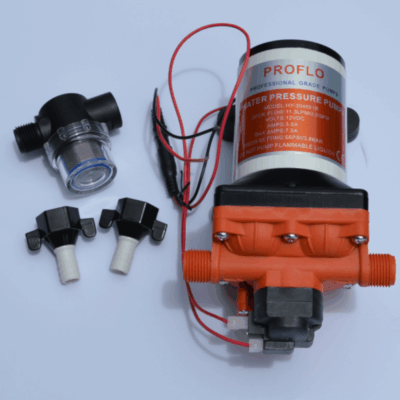
First things first, let’s talk location. You’ll want to install your pump somewhere dry and easy to get to, well-protected from the weather and any road grime. Think about future you—you don’t want to have to become a contortionist just to clean out a filter.
Most importantly, never mount the pump directly onto the caravan’s floor or a wall. This is a classic mistake, and it will turn your whole van into a giant speaker, amplifying every single vibration. Always use the rubber feet that come with the pump to soak up the noise and vibration. It makes a world of difference.
Nailing the Connections
Once you’ve picked the perfect spot, it’s time to focus on the plumbing and electrical side of things. Getting these connections secure and leak-free is absolutely crucial.
Plumbing Pointers:
- Use Flexible Hoses: It’s a great idea to connect the pump to your main rigid plumbing lines with short lengths of flexible, food-grade hose. This helps to isolate any leftover vibrations from travelling through the rest of the system.
- Fit an Inlet Strainer: Always, always put a filter or strainer on the inlet side of the pump. This small part is a lifesaver, stopping debris from your water tank from getting in and wrecking the pump’s delicate diaphragm.
- Hunt for Air Leaks: Double-check that all your clamps and fittings on the suction side (the part from the tank to the pump) are completely airtight. Even the tiniest air leak will stop the pump from priming properly and drive you mad.
For a safe and sound electrical setup, you need to match the wiring and circuit protection to your 12V pump. Having a look at a circuit breaker to wire size chart is a smart move to avoid any overloads. The golden rule of 12V electrics is to always install an in-line fuse on the positive wire, as close to the battery as you can get it. This isn’t optional—it’s a critical safety step that protects your pump and your van from electrical faults.
The Pro Tip for a Quieter, Longer-Lasting Pump
Want to take your water system from good to great? Install an accumulator tank. This small, pressurised tank acts as a buffer, evening out the water flow and getting rid of that “pulsing” you often get with diaphragm pumps.
An accumulator tank holds a small reservoir of pressurised water, so the pump doesn’t have to switch on and off every single time you quickly turn on a tap. This massively reduces wear and tear on the pump’s motor and pressure switch, helping it last much longer and making the whole system noticeably quieter.
For plumbers and tradies, it’s interesting to note that 12V pumps can deliver a solid 5-10 LPM flow while using 10-20% less energy than their 240V cousins. Here at Ring Hot Water, we’ve seen that professional installation makes all the difference, with 92% of Melbourne RV owners we’ve worked with reporting zero issues over 5,000 km trips. If you’re in the market for a reliable new unit, our range of Seaflo drinking water pumps is an excellent place to start.
Simple Maintenance to Keep Your Pump Running Strong
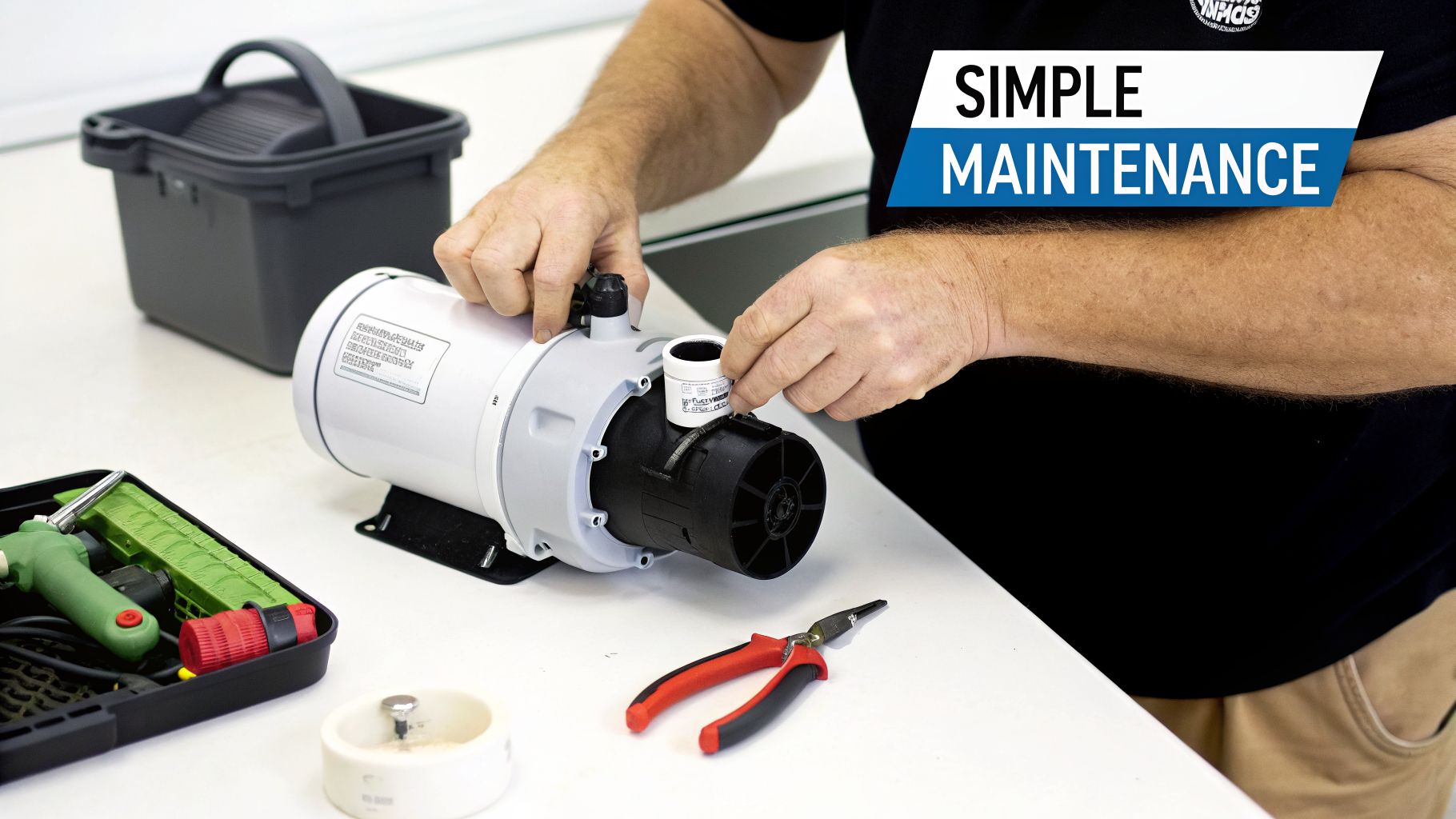
There’s nothing worse than having your water cut out when you’re miles from the nearest town. A little bit of preventative maintenance is your best insurance against that trip-ruining moment.
Just a few simple checks can dramatically extend the life of your 12v water pump for caravan, ensuring it’s ready to go when you need it most. Think of it as a quick health check for the heart of your water system.
This proactive approach helps you spot small issues before they snowball into major headaches on the road. By keeping an eye on a few key areas, you’ll ensure your system remains dependable trip after trip.
Your Essential Pump Maintenance Checklist
A little bit of regular attention goes a long, long way. We recommend running through this checklist every few months, and definitely before heading off on a big trip.
Clean the Inlet Strainer: This is the single most important job you can do. The strainer is the first line of defence, stopping sand, grit, and tank gunk from getting into the pump and wrecking its delicate internals. Just unscrew the clear cover, give the mesh filter a good rinse, and screw it back on tight.
Inspect All Hoses: Take a close look at the water lines connected to your pump, paying special attention to the suction side (the hose running from the tank to the pump). Look for any signs of cracking, brittleness, or loose clamps. Even a pinhole-sized air leak here can stop the pump from being able to prime.
Check Electrical Connections: The constant vibration of the road can work electrical terminals loose over time. Give the positive and negative wires a gentle tug to make sure they’re secure. You’ll also want to look for any corrosion, which can stop the pump from getting the power it needs and lead to poor performance.
Regular maintenance is crucial for the longevity of your 12v water pump. For example, understanding tasks like water pump impeller replacement can prevent common failures and extend pump life.
Listening for Trouble
Your ears are one of your best tools for diagnosing pump problems. A healthy pump has a consistent, rhythmic hum. Get used to that sound, and you’ll quickly notice when something’s off.
Pay attention to any of these changes:
- Excessive Pulsing or Banging: This often points to air in the lines or a clogged filter.
- Struggling or Whining Motor: This could be a sign of a blockage somewhere, or an electrical issue causing low voltage.
- Running Without Pumping Water: A classic symptom of an air leak on the inlet hose or a completely blocked-up strainer.
Catching these sounds early means you can fix the problem before it gets serious. More often than not, the strainer is the culprit, and cleaning it is a five-minute job. A clean filter is your pump’s best friend—learn more about how an inline water filter for caravan can add another layer of protection to your system.
Troubleshooting Common Pump Problems on the Road
There’s nothing quite like that sinking feeling when you turn on the tap, miles from anywhere, and… nothing happens. When your water suddenly stops, a bit of know-how can be the difference between a major drama and a simple roadside fix.
Most issues with a 12v water pump for caravan are surprisingly easy to sort out with a few basic tools. So, before you assume the worst, take a breath and run through these common culprits. You’ll be surprised how often it’s a simple fix, and you’ll build the confidence to be self-sufficient, no matter how far off the beaten track you are.
Pump Will Not Turn On
You flick the switch and hear absolute silence. Nine times out of ten, this points to an electrical issue. No need to panic, just start with the most obvious suspects and work your way backwards.
- Check the Fuse: This is the first place to look. Find the in-line fuse on the pump’s positive wire, pop it out, and see if the thin wire inside is broken. Always, always carry spares!
- Confirm Power Supply: Is your house battery switched on? Does it have a decent charge? A flat battery might not have enough juice to get the pump’s motor to kick over.
- Inspect Wiring: Have a quick look at the electrical terminals right on the pump itself. The constant vibrations of the road can sometimes shake them loose. Make sure they’re clean, tight, and free of any sneaky corrosion.
Pump Runs Constantly and Won’t Switch Off
If your pump sounds like it’s working overtime even when every tap is firmly closed, it’s telling you something. It’s trying to build pressure but can’t, which almost always means there’s a leak somewhere.
The most common cause of a pump that won’t stop running is an air leak on the suction side—the hose running from your water tank to the pump. The pump is sucking in air instead of water, so it can never pressurise the lines.
Work your way along the hose, checking every single clamp and fitting between the water tank and the pump’s inlet. Tighten everything up and look for any tiny cracks or splits in the hose. It only takes a pinhole-sized leak to cause this headache.
Water Flow Is Pulsing or Sputtering
When your water comes out in spurts instead of a steady stream, it’s usually one of two things: air trapped in the lines or a blockage that’s starving the pump of water.
First, try bleeding the system. Open all your taps—both hot and cold—and let the pump run for a minute or two. This can often force any stubborn air pockets out. If that doesn’t do the trick, it’s time to clean your inlet strainer. A gunked-up filter is a classic cause of sputtering flow. Just unscrew the filter’s housing, give the mesh screen a good rinse, and put it all back together.
Caravan Water Pump FAQs
Got a few questions about your caravan’s water pump? We hear these ones a lot. Here are some quick answers to the most common queries we get about the 12v water pump for caravan setups.
Do I Really Need an Accumulator Tank?
While your pump will work without one, we strongly recommend fitting an accumulator tank. Think of it as a small, pressurised buffer for your water system.
This little tank gives you a much smoother, more consistent flow from your taps and stops that annoying “pulsing” you sometimes get. It also does your pump a massive favour by preventing it from constantly switching on and off for small tasks, which means less noise and a longer life for your pump motor.
What’s the Difference Between Submersible and Diaphragm Pumps?
The main difference is where they live and how they move water. A submersible pump, as the name suggests, is dropped directly into your water tank and pushes water up to your taps. They tend to be quiet, but getting to them for maintenance can be a real pain.
On the other hand, a diaphragm pump is mounted outside the tank and pulls water through the lines. These are by far the more popular choice for modern caravans, simply because they’re reliable, can prime themselves, and are much easier to access if you need to service them.
How Do I Choose the Right Flow Rate?
It all comes down to how you use your water. If you’re just running a single kitchen sink, a pump that delivers 5-8 litres per minute (LPM) will do the job perfectly well.
But if you’re hoping for a decent shower after a long day of exploring, you’ll need a bit more grunt. For that, you should be looking for a pump in the 10-15 LPM range to get the pressure you need.
At Ring Hot Water, we’re all about providing trusted advice and reliable parts to keep your caravan’s water system running smoothly. You can check out our full range of caravan pumps and accessories online, with delivery right across Australia.
Visit ringhotwater.com.au to find the perfect solution for your home on wheels.

