
Uncategorized
Kitchen Taps with Water Filter: A Complete AU Guide

May
You know the feeling. The kettle takes up space, the coffee tastes a bit chlorinated some mornings, and the pile of bottled water in the pantry starts to feel like a bad habit you never meant to keep.
For a lot of Melbourne households, the issue isn't that tap water is automatically unsafe. It's that people want water that tastes better, fits daily life better, and doesn't leave them second-guessing what's coming out of the sink. That's exactly where kitchen taps with water filter systems have found their place. They tidy up the bench, give you filtered water on demand, and can make a basic kitchen feel far more practical.
I work with filtered, boiling and chilled water systems around Melbourne, and the same questions come up again and again. What type of tap do I need? What does the filter remove? Will Melbourne water chew through cartridges faster? And why do some products shout about NSF certification but say very little about Australian compliance?
Those are the right questions to ask. The answers matter even more in Australian homes, where local plumbing rules, hard water conditions, and certification requirements can make one tap a smart buy and another a headache.
Why Your Kettle Might Be on Its Last Legs
A tired kettle tells on your water before anything else does. You lift the lid and see scale clinging to the element. You boil water for tea and notice the smell first. You wipe the bench around the kettle and wonder why such a simple job keeps creating clutter.

That frustration is common, and it isn't just in your head. A 2022 Australian Bureau of Statistics survey found that 28% of Australian households had concerns about tap water contaminants, and in Melbourne 12% of samples exceeded aesthetic standards for taste and odour due to chlorination, which was linked with a 35% rise in residential water filtration installations between 2020 and 2025 according to the figures cited in this water filter summary.
The problem is usually daily life, not drama
The individuals I speak to aren't reacting to a crisis. They're reacting to everyday annoyances:
- Taste fatigue: Water tastes flat, chlorinated, or just not pleasant enough to drink regularly.
- Bench clutter: Kettles, jugs, countertop filters, and water bottles start competing for the same space.
- Plastic guilt: Buying bottled water solves one problem while creating another.
- Kitchen wear: Hard water leaves visible residue on kettles, glassware, and appliances.
A filtered tap addresses all four in one move. You get water where you already use it, at the sink, without introducing another bulky appliance.
Practical rule: If you're already changing how you drink, cook, or clean because of your tap water, a built-in filtration setup is worth considering.
Why a filtered tap feels like a modern upgrade
The appeal isn't only health-related. It's convenience. Fill a glass straight from the sink. Fill a saucepan without waiting. Refill drink bottles before school or work without dragging out a jug from the fridge.
There's also a renovation mindset at play. Good kitchens remove friction. That's why people planning bigger upgrades often think about electrical and plumbing foundations at the same time. If you're reviewing the broader safety and capacity of an older home, a resource like this Brisbane switchboard upgrade guide is a useful example of how hidden infrastructure decisions shape daily comfort.
A filtered tap won't fix every water issue on its own, but for many homes it solves the issue that matters most. It makes drinking water easier, nicer, and more consistent. That's why these systems have moved from niche add-on to normal kitchen feature.
Decoding the Taps From Simple Filters to All-in-One Systems
There isn't one single style of filtered tap. That's where people get stuck. They search “kitchen taps with water filter”, see half a dozen layouts, and end up comparing products that do completely different jobs.
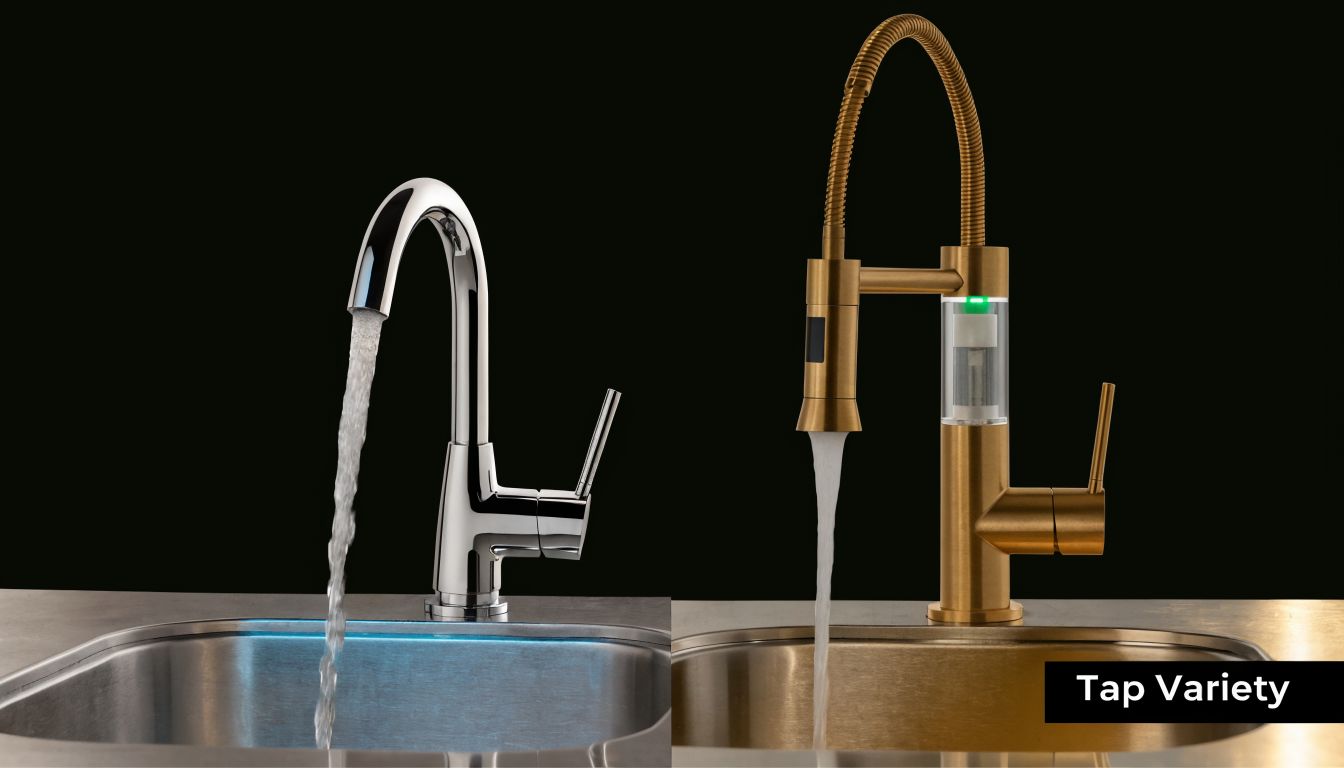
The simplest way to sort them is this: good, better, best, based on how integrated you want the setup to be.
Good for straightforward drinking water
A standalone filter tap is a small secondary tap installed beside your main mixer. It usually connects to an under-sink filter and gives you filtered cold water only.
This suits people who:
- want the lowest-complexity entry point
- already like their existing kitchen mixer
- have enough sink or benchtop room for a second tap
- mainly care about drinking water and cooking water
It's practical, but it does add another fixture to the sink area.
Better for cleaner design
A 3-way tap combines regular hot water, regular cold water, and filtered cold water in one fitting. That means less visual clutter and fewer holes in the sink or benchtop.
For many Melbourne homes, this is the sweet spot. Families get filtered water on demand, but the kitchen still looks like a normal kitchen. You don't have to explain a second tiny tap to every guest.
Best for high-use kitchens and workplaces
Once you step into 4-in-1 and 5-in-1 territory, the tap becomes more like a water appliance. These systems can combine filtered water with extras such as boiling, chilled, or sparkling water, depending on the model and command unit below the sink.
Brands like Zip and Stiebel Eltron are central to this conversation. They're often chosen for:
- busy family kitchens
- office tea points
- hospitality prep areas
- homes where people want fewer appliances on display
A good test is this: if you use the kettle constantly, chill bottles every day, or keep buying sparkling water, an all-in-one system can replace several habits at once.
Why these systems became so common
Australian households didn't start caring about integrated filtration overnight. The shift had a clear push behind it. After the 1998 Sydney water crisis, household water filter adoption increased by 42% by 2003, helping drive the move toward more advanced tap-based systems, as described in this guide on how kitchen faucet filters work.
That history still matters. It explains why so many buyers now expect a filtered tap to do more than drip out water slowly from a side dispenser.
A quick comparison
| Tap style | What it does | Best for | Trade-off |
|---|---|---|---|
| Standalone filter tap | Filtered cold water from a separate tap | Budget-conscious upgrades | Needs extra sink space |
| 3-way tap | Hot, cold, and filtered cold from one fixture | Most homes and small offices | More planning than a separate tap |
| 4-in-1 tap | Usually adds boiling filtered water | Frequent tea, cooking, office use | Larger under-sink setup |
| 5-in-1 tap | Can add chilled or sparkling functions | Entertainers, premium kitchens, high-use spaces | Most complex install and servicing |
The right choice depends less on style and more on your routine. If your kitchen runs hard every day, an integrated system often feels less like a luxury and more like overdue infrastructure.
A Look Inside How Water Filter Technologies Work
The words on the box can get confusing fast. Carbon block. Zeolite. Sediment stage. NSF/ANSI 42. NSF/ANSI 53. This terminology is rarely useful until it is translated into one practical question: what does this filter do to the water I drink?
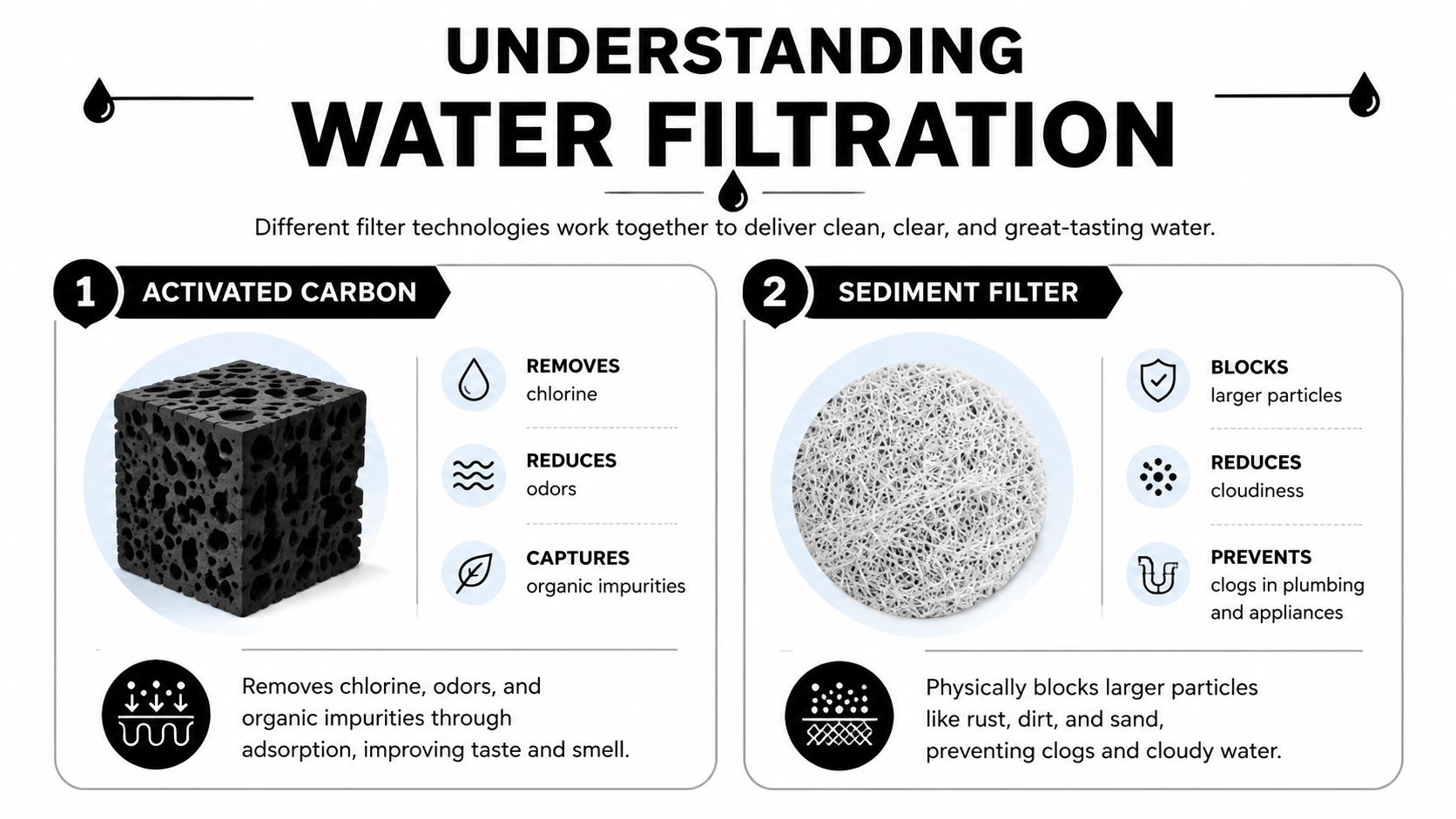
Start with the basic flow path
Most quality kitchen filter systems use more than one stage. Water doesn't just pass through a magic cartridge and come out perfect. It moves through layers, and each layer has a job.
The common sequence looks like this:
Sediment capture first
This stage works like a sieve. It traps larger particles such as dirt, sand, and rust before they can clog the finer filter media.Activated carbon next
This is the workhorse for taste and smell. Activated carbon adsorbs unwanted compounds onto its porous surface.Zeolite or similar media
In multi-stage systems, zeolite can support the removal of certain contaminants and help round out filtration performance.
According to Culligan's explanation of kitchen faucet filters, most high-quality kitchen faucet filters use a multi-stage process with activated carbon and zeolite, and NSF/ANSI 42 is the standard linked to reduction of chlorine taste and odour, while NSF/ANSI 53 covers health-related contaminants such as lead.
What activated carbon actually does
Activated carbon is easiest to picture as a sponge with an enormous internal surface area. Water passes through it, and certain compounds cling to that surface.
That's why carbon is so often used when someone says:
- “My water smells like chlorine.”
- “Tea tastes off.”
- “Cold water tastes better from the fridge than the tap.”
Carbon is especially important for improving the drinking experience. If taste and odour are your main concern, this stage matters a lot.
What many buyers miss: A filter can improve taste beautifully and still not be the right choice for every health-related contaminant. That's why certification details matter.
What sediment filtration does
Sediment filtration is less glamorous but very important. It catches the visible and gritty stuff before it reaches the carbon stage.
That helps with:
- cloudy water appearance
- protection of downstream cartridges
- reduction of clogging from particulates
- better overall system consistency
If you've ever had a cartridge seem to “die early”, the upstream sediment load is often part of the story.
Understanding the certification numbers
The NSF/ANSI labels sound technical, but the practical meaning is simple.
- NSF/ANSI 42 points to reduction of aesthetic issues such as chlorine taste and odour.
- NSF/ANSI 53 relates to health-related contaminants such as lead.
- NSF/ANSI 401 is used for certain emerging contaminants, including PFAS claims in some products.
Those labels don't replace Australian compliance requirements, but they do help you understand what the filter media is designed and tested to target.
Water Filter Technology Comparison
| Technology | Removes | Pros | Cons |
|---|---|---|---|
| Sediment filter | Rust, dirt, sand, larger particles | Protects later stages, helps reduce cloudiness | Doesn't address taste or many dissolved contaminants |
| Activated carbon | Chlorine taste, odours, organic impurities | Big improvement in drinking taste and smell | Can clog sooner if incoming water carries lots of sediment |
| Zeolite media | Supports reduction of selected contaminants in multi-stage systems | Useful in layered filtration design | Performance depends on full cartridge design, not media name alone |
Matching technology to what bothers you
If your complaint is mostly flavour, a carbon-focused system is often the first place to look. If your concern is visible grit or older plumbing debris, sediment protection becomes more important. If you're trying to assess claims around lead or similar contaminants, look beyond vague marketing and check the certification target.
A tap can look premium and still tell you almost nothing useful about filtration. The cartridge spec matters more than the finish. That's the point to keep in mind when comparing kitchen taps with water filter options online.
How to Choose the Right Filtered Tap for Your Space
Buying the right system gets easier when you stop asking “Which tap is best?” and start asking “What does this space need every day?”

In Melbourne, that question has two extra layers. First, hard water in the 80 to 120 mg/L CaCO3 range can cause filters to clog up to 50% faster than some manufacturer claims. Second, WaterMark compliance under AS/NZS 4020 is mandatory in Australia, and gaps in compliance contribute to 35% of non-compliant tap returns, based on the figures cited in this discussion of filtered faucet certification claims.
That means the smartest filtered tap in Melbourne is often not the one with the flashiest spec sheet. It's the one that suits your water and complies with Australian requirements.
For the Melbourne homeowner
Most homeowners want three things at once: cleaner drinking water, a tidier sink area, and manageable maintenance.
A 3-way mixer is often the practical choice. It keeps the sink area neat and avoids the awkward second tap beside the main mixer. If you're comparing layouts, this guide to a 3-way kitchen tap mixer helps show how integrated setups differ from separate dispensers.
Look closely at:
- Under-sink room: bins, pull-out storage, and disposers all reduce available space.
- Cartridge access: if changing the filter means emptying half the cupboard, maintenance will become annoying.
- Hard water tolerance: ask whether pre-filtration or scale management is recommended in your suburb.
A homeowner in a newer apartment may be fine with a compact under-sink cartridge setup. A period home with older plumbing and more sediment may need a more careful combination of pre-filtration and main filtration.
For offices and staff kitchens
Office buyers often focus on the tap itself and forget user behaviour. Staff won't tolerate a dribble. They fill bottles, make tea in batches, and expect the system to work every time without explanation.
That usually pushes the decision towards:
- higher flow
- easier cartridge servicing
- larger-capacity under-sink units
- boiling and chilled integration where needed
Zip and Stiebel Eltron systems are common here because they combine multiple functions in one point of use. If the office already has a basic sink mixer and only wants drinking water, a separate filtered tap may still do the job. But if the goal is to replace kettles and reduce bench clutter, an all-in-one approach often fits better.
Here's a quick visual overview of the sort of setup many buyers compare:
For hospitality and food service
Hospitality venues need more than convenience. They need reliability, easy cleaning, and compliant installation. A filtered tap that feels acceptable in a quiet home kitchen may become frustrating in a café prep zone or staff wash-up area.
For these settings, I'd focus on:
- Certified hardware: WaterMark matters. It isn't a marketing extra.
- Service access: cartridges and components need to be reachable without pulling the kitchen apart.
- Demand pattern: peak periods expose every weakness in flow, temperature delivery, and recovery time.
This is also the section where product compatibility matters. Ring Hot Water supplies a stainless steel water filter faucet with a brass chrome plated body, quarter-turn ceramic disc operation, a swivel spout, and compatibility with 1/4 inch hoses. That sort of tap can suit kitchen filtration setups where a dedicated filtered outlet is the goal rather than a full multi-function appliance.
If a product description talks at length about NSF and barely mentions WaterMark, treat that as a prompt to investigate further, not as reassurance.
For caravans and RVs
RV owners need a different mindset again. Space is tight, vibration is constant, and every fitting has to earn its keep. A compact filtered cold-water tap is often the easiest fit, especially where storage under the sink is limited and access for maintenance is awkward.
For mobile setups, pay attention to:
- hose compatibility
- how securely the tap mounts
- whether replacement cartridges are easy to source in Australia
- whether the setup is practical to service on the road
The ideal RV filter tap usually isn't the one with the most features. It's the one that stays simple, sealed, and easy to live with.
The decision checklist that matters most
Before you buy, write down the answers to these five questions:
- What bothers you most about the water? Taste, smell, scale, or compliance concern.
- How much under-sink space do you have? Not what the brochure assumes.
- Do you want one tap or two? Integrated look versus simpler retrofit.
- How hard is your local water? This affects maintenance more than many buyers expect.
- Is the tap WaterMark compliant for Australia? This is the essential filter before any style preference.
That last point catches people out all the time. Generic overseas claims can sound convincing. Australian plumbing conditions and legal requirements are a separate issue.
Installation and Plumbing What You Need to Know
Filtered taps feel simple once they're in, but the plumbing behind them needs to be thought through properly. Most under-sink systems connect to the cold water pipe, which means your regular hot and cold tap function stays intact while filtered water gets its own pathway.
A standard professional install for an under-sink filter system typically takes about 30 minutes, according to the installation details shown in this filtered tap installation video reference. The same source notes that typical faucet filters run at 0.5 to 1.5 GPM, and that higher-flow systems are the better fit for busier kitchens where slow pouring annoys people quickly.
What a plumber checks first
Before fitting anything, I'd usually look at three things:
- Cabinet space: not just whether the filter fits, but whether someone can service it later.
- Cold line access: the unit needs a clean connection point and an isolation method.
- Tap location: the sink, benchtop, and clearance above and below all matter.
If you're already renovating, this stage is much easier to plan early. A useful companion read is this guide to foundational plumbing for kitchen renovations, because rough-in decisions affect whether your new filtered setup feels clean or improvised.
Why isolation valves and layout matter
An isolation valve lets the installer shut off the feed to the filtration system without turning off water to the whole kitchen. That makes cartridge changes and repairs far less disruptive.
The filter housing is usually mounted under the sink wall or cabinet side. A dedicated filtered tap, or the filtered line within a 3-way mixer, then draws from that housing. The key is a stable, leak-free connection that leaves enough room for future cartridge replacement.
A neat install isn't only about appearance. It's about making sure the next service call is straightforward instead of awkward and expensive.
Flow rate is more important than many buyers realise
People often ask about what the filter removes, but they forget to ask how the tap will feel during normal use. Flow rate changes the whole experience.
In a home kitchen, moderate flow may be fine for glasses and cooking. In an office or shared kitchen, slower output can become frustrating fast. That's one reason premium integrated systems tend to feel better in high-use spaces.
If you'd like a closer look at the plumbing side, this Ring Hot Water article on under sink water filter installation gives a more specific view of how these systems are set up.
DIY or professional install
Some retrofit kits look simple enough for a confident DIYer. Even so, professional installation has clear advantages:
- preserving warranty conditions where required
- checking compliance for the tap and connections
- reducing the risk of hidden leaks under the sink
- making sure flow and mounting are correct from day one
That peace of mind matters more with integrated taps and boiling or chilled systems, where the plumbing setup is part of a larger under-sink appliance layout.
Upkeep and Costs Maintaining Your System for Years to Come
A filtered tap is low-maintenance, but it isn't no-maintenance. The easiest way to stay happy with the system is to treat cartridge changes like any other routine household service. If you ignore them, water quality and flow usually tell you before anything else does.
For many kitchen systems, cartridges are replaced every 6 to 12 months, depending on the design and usage pattern. Some filter references also note usable capacities in litres or gallons, but in day-to-day ownership the schedule that matters most is the one recommended for your specific cartridge and your actual water conditions.
What regular upkeep usually involves
Most households only need to keep on top of a short list:
- Replace cartridges on schedule: Don't wait for taste to worsen dramatically.
- Check for pressure drop: Slower flow often points to a tired or clogged filter.
- Inspect fittings visually: A quick look under the sink can catch moisture early.
- Flush after cartridge change: New filters often need a brief flush before normal use.
If you're buying parts separately, keeping the exact cartridge model on file saves a lot of hassle later. Ring Hot Water's guide to a replacement cartridge water filter is a handy reference for understanding why cartridge matching matters.
Melbourne owners should expect different maintenance patterns
Local water conditions change the conversation. In harder-water areas, cartridges can load up sooner, and scale can create knock-on effects around the system even if the filter is mainly there for drinking water quality.
That doesn't mean every home needs a large treatment setup. It does mean you should be realistic about service intervals. Manufacturer marketing often assumes ideal conditions. Real kitchens don't.
Budgeting without guesswork
If your filtered tap is part of a broader kitchen upgrade, it helps to budget for the full life of the system, not just the day-one purchase. Benchtop layout, cabinet space, and rough-in changes can all affect the final setup. For anyone planning a larger project, this overview of budgeting for an Australian kitchen remodel is useful for seeing how plumbing fixtures fit into the bigger renovation picture.
Keep one spare cartridge on hand if your household relies on filtered water every day. That removes the scramble when replacement time arrives.
Common signs your system needs attention
Watch for these changes:
- water flow drops noticeably
- taste or odour returns
- the tap splutters after periods of non-use
- you hear unusual noise from an integrated under-sink unit
Most of the time, the cause is routine rather than serious. A spent cartridge, an air pocket after servicing, or scale build-up is far more common than major failure. The key is consistency. Small maintenance done on time is much cheaper and less annoying than deferred maintenance done in a rush.
Your Guide to Pure, Convenient Water Starts Here
A good filtered tap changes more than the taste of your drinking water. It changes the rhythm of the kitchen. Fewer bottles. Less bench clutter. Easier refills. A setup that suits the way you cook, drink, and clean.
The right choice depends on your space, your water, and your expectations. Some homes do well with a simple dedicated filter tap. Others need a 3-way mixer to keep the sink area tidy. Offices and hospitality venues often get more value from integrated boiling or chilled systems that can handle regular demand without slowing everyone down.
For Australian buyers, two details deserve extra attention. Melbourne hard water can shorten cartridge life, and WaterMark compliance matters just as much as any overseas filtration claim. If you keep those points in view, you'll avoid a lot of the common mistakes people make when shopping online.
My advice is simple. Don't buy on appearance alone. Check how the tap is certified, how it installs, how easy it is to service, and whether it fits the way your household or workplace uses water every day.
That's the difference between a filtered tap that feels helpful for years and one that becomes another under-sink annoyance.
Frequently Asked Questions
| Question | Answer |
|---|---|
| Do kitchen taps with water filter systems replace my normal mixer? | Some do, some don't. A dedicated filter tap sits beside your normal mixer. A 3-way or all-in-one tap combines regular water and filtered water in one fitting. |
| Will a filtered tap fix hard water scale everywhere in the house? | No. A kitchen drinking water filter targets water at the sink. It can improve drinking water quality and taste, but it won't act like a whole-home scale treatment system. |
| Is NSF certification enough in Australia? | It helps explain what a filter has been tested to target, but it doesn't replace Australian plumbing compliance. For taps and fittings sold for local installation, WaterMark is a key requirement to check. |
| Are filtered taps suitable for offices and caravans? | Yes, but the right setup is different in each case. Offices usually need stronger flow and easier servicing. RVs usually need compact, simple hardware with easy-to-source replacement parts. |
| Can I keep my existing sink and benchtop? | Usually yes, but it depends on space, hole availability, and access below the sink. That's why a quick site check is useful before ordering. |
| What if my water still tastes odd after installation? | Start with the basics. Confirm the new cartridge was flushed correctly, check whether the filter type matches your concern, and look at local factors such as scale or older pipework. |
If you want help choosing the right filtered tap, replacement cartridge, or under-sink setup, Ring Hot Water can help you compare practical options for homes, offices, hospitality spaces, and RVs across Australia, with local installation support in Melbourne.

