
Water Filters
Water Filter Taps: A Complete 2026 Buyer’s Guide
May
You’re probably here because your kitchen setup is doing too much work for too little reward.
There’s the kettle parked on the bench all day. There might be bottled water in the fridge because the tap water tastes a bit flat or chlorinated. In some homes and workplaces, there’s also that daily routine of boiling, waiting, pouring, cooling, refilling, wiping drips, and trying to keep the whole area from looking cluttered.
A lot of Melbourne households and businesses reach the same point. They don’t necessarily distrust mains water. They just want water that tastes better, feels cleaner, and comes out exactly how they want it, whether that’s filtered cold, instant boiling, or chilled on demand.
That’s where water filter taps start to make sense. Not as a flashy extra, but as a practical upgrade that cuts bench clutter, reduces friction, and gives you one reliable point for drinking water every day.
The End of the Kettle and Bottled Water
A common scene in Melbourne kitchens goes like this. Someone fills the kettle for tea, another person grabs a bottle from the fridge because they prefer the taste, and the sink area ends up crowded with appliances, cords, and refill routines.
In offices, it’s similar. Staff want quick hot drinks and easy access to drinking water, but the setup often grows in pieces over time. A kettle here, a fridge dispenser there, a few trays of bottled water in storage, and no single system that feels tidy or consistent.
Water filter taps solve that in a very simple way. They bring drinking water treatment to the point where you use it. Instead of handling water several times, you turn one tap and get filtered water straight away.
Why this change feels overdue
Modern water treatment didn’t begin with stylish kitchen fittings. It began with a public health problem.
The foundation for modern water treatment was laid in 1829, when James Simpson’s slow sand filter for London’s Chelsea Waterworks Company provided the first treated public water supply, an innovation that later influenced water treatment thinking used across countries including Australia, as outlined in the history of water filters.
That history matters because it reminds us of something basic. People have always wanted water that is safer, cleaner, and more pleasant to use. Today’s water filter taps are the household version of that same goal.
Clean water technology has changed shape over time, but the reason people want it hasn’t changed much at all.
What replaces the old setup
Instead of using separate tools for separate tasks, many homes now want one integrated system. That might mean filtered drinking water from a dedicated tap, or a combined unit that delivers standard hot and cold plus filtered water from the same sink area.
For workplaces, the logic is even clearer. Staff don’t want to queue around a kettle or keep refilling bottles from inconsistent sources. A neater, built-in setup often suits daily use better, especially in shared kitchens and breakout spaces. If you’re looking at workplace hydration more broadly, this guide to water dispensers for office environments is a useful next read.
A water filter tap won’t magically redesign your kitchen. But it does remove a surprising amount of daily nuisance. Less clutter. Fewer plastic bottles. Better tasting water on demand. These advantages often make the kettle feel like old technology.
What Exactly Are Water Filter Taps
A water filter tap is a tap connected to a filtration system, usually installed under the sink, that treats water before it reaches your glass, kettle, or cooking pot. The tap itself is the visible part. The actual work happens below the bench.
Think of it as a compact treatment plant for one sink. Mains water comes in, passes through one or more filters, and comes back up cleaner and better tasting.
That basic idea can be set up in a few different ways.
The main tap formats
Some systems use a dedicated filter tap. This is a separate small tap installed beside your main mixer. Its only job is to dispense filtered drinking water.
Others use a 3-in-1 or similar multi-function design. These taps combine standard hot, standard cold, and filtered water in one fixture. In kitchens where bench space and visual simplicity matter, that layout often appeals because it avoids adding another tap body.
You’ll also see integrated systems paired with instant boiling or chilled units. In that arrangement, filtration doesn’t sit off to the side as an optional extra. It becomes part of the full drinking water setup.
What happens under the sink
Under-sink filtration can confuse people because it sounds more technical than it is.
In plain terms, the system usually includes:
- A filter cartridge or set of cartridges that catches sediment and reduces unwanted substances that affect taste, smell, or water quality
- Tubing and fittings that carry water in and out of the filter head
- A tap connection that separates filtered water from regular mains supply where needed
- Sometimes a booster system if the tap also provides instant boiling or chilled water
The simplest way to picture it is this. Your main water supply is a road. The under-sink filter is a checkpoint. The tap is the final exit.
Simple analogy: A water filter tap is like giving your sink its own quality-control station.
Why people buy them
Not everyone buys water filter taps for the same reason.
Some people are mainly chasing better taste and odour. Chlorine notes are one of the most common complaints in ordinary conversation, even when the water is considered safe.
Others want more confidence about what reaches the glass. A tap filter can provide another layer of treatment right where water is consumed, which feels especially useful for drinking, baby formula, tea, coffee, and cooking.
There’s also the practical side:
- Less bench clutter because you can remove jug filters and reduce dependence on kettles or freestanding dispensers
- Less bottled water handling because filtered water is available straight from the sink
- Cleaner kitchen design because under-sink systems do most of their work out of sight
- Better fit for shared spaces where convenience matters every day
Where people get confused
The most common misunderstanding is thinking every water filter tap works the same way. It doesn’t.
Two taps can look nearly identical from above the bench but use very different filtration methods below it. One may focus on taste improvement through carbon filtration. Another may include finer mechanical filtration or membrane-based treatment. A third may be part of a boiling and chilled setup that also protects internal components.
That’s why the tap alone isn’t the product. The tap plus the filter system is the real decision.
Another point that trips people up is whether a filter tap replaces the main kitchen mixer. Sometimes yes, sometimes no. It depends on the format you choose and how you want the sink area to work.
Once that clicks, the category becomes much easier to understand. You’re not just buying a tap. You’re choosing a water treatment method, a delivery method, and a maintenance routine that suit the way you use water.
A Guide to Water Filtration Technologies
When people compare water filter taps, they often compare the tap finish, the spout shape, or the brand first. The smarter comparison is the filtration method.
That’s because the filter determines what the system is trying to do. Improve taste. Catch particles. Reduce specific contaminants. Support specialist water quality needs. Each technology has a different role.
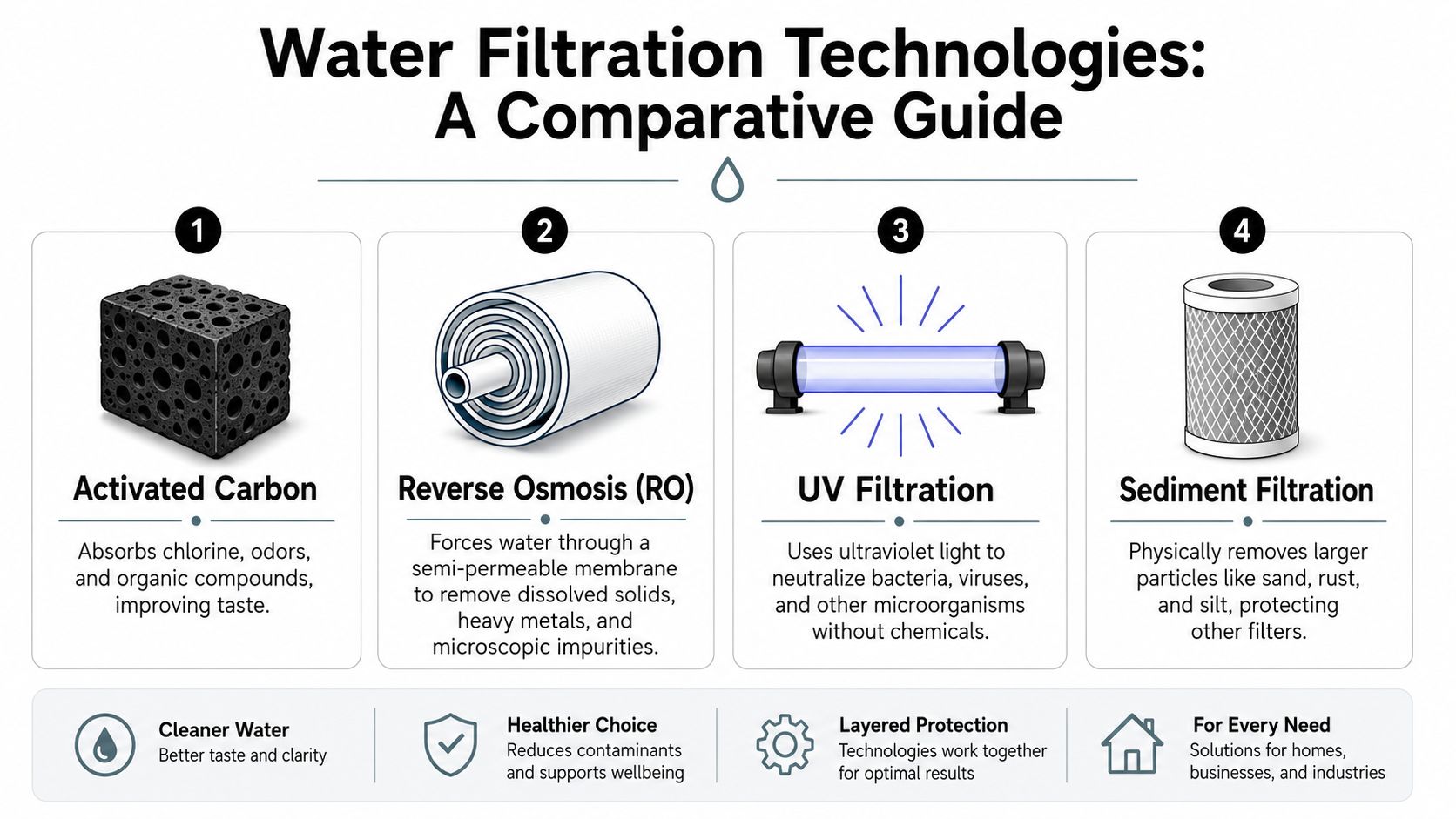
Activated carbon
Activated carbon is the most familiar filtration medium in domestic systems, and for good reason. It’s very good at improving taste and reducing many unwanted chemical compounds.
A useful way to think about it is as a chemical sponge. Water flows through the carbon, and the carbon attracts and holds certain substances on its surface.
A high-quality 0.5 micron carbon block filter can reduce PFAS, chlorine, heavy metals, and microplastics. Its activated carbon has a very large surface area, often over 1000 m²/g, while the sub-micron structure also physically blocks particulates, as described in Philips’ under-sink PFAS Pro Water Tap system information.
Key takeaway: Carbon filtration is often the most practical starting point for homes that want better taste plus broad everyday reduction of unwanted substances.
Reverse osmosis
Reverse osmosis, often shortened to RO, uses a semi-permeable membrane to separate water from a much wider range of dissolved impurities. If activated carbon is a sponge, RO is more like a molecular gatekeeper.
Water is pushed through the membrane. Very small contaminants are left behind, and treated water continues through the system.
By the 1980s, specialised membrane technology had developed to support reverse osmosis as part of water treatment processes, as noted in this background on water filtration development and point-of-use systems.
RO is often chosen when people want more intensive treatment than a standard carbon system provides. The trade-off is that it usually involves a more complex setup and can be less straightforward than a simple under-sink cartridge system.
Sediment filtration
Sediment filters are less glamorous, but they matter. Their job is to catch larger particles such as rust, sand, grit, or silt before those particles move further into the system.
Think of sediment filtration as the front gate screen. It doesn’t do all the cleaning by itself, but it protects the more specialised stages that follow.
In many systems, sediment filtration is used alongside carbon or other technologies rather than as a stand-alone answer.
UV filtration
UV systems use ultraviolet light to neutralise microorganisms without adding chemicals. It’s a very different mechanism from carbon or RO because it doesn’t trap contaminants in the same physical way. Instead, it treats biological risk through light exposure.
This technology is more common where microbiological control is the priority. In some specialist environments, water treatment requirements become much stricter than ordinary kitchens. For readers comparing domestic systems with more controlled applications, this overview of essential water systems for hospitals and labs gives useful context on how water treatment goals change in technical settings.
Comparison of common filtration technologies
| Technology | Primary Function | Removes | Best For |
|---|---|---|---|
| Activated carbon | Adsorbs chemical compounds and improves taste | Chlorine, odour, some organic compounds, and in high-quality carbon block form can reduce PFAS, heavy metals, and microplastics | Homes and offices wanting better drinking water at the tap |
| Reverse osmosis | Uses a membrane for deeper treatment | A broad range of dissolved impurities and microscopic contaminants | Users seeking more intensive filtration |
| Sediment filtration | Physically screens larger particles | Sand, rust, silt, grit, and other visible particulates | Protecting downstream filters and tap components |
| UV filtration | Uses ultraviolet light to neutralise microorganisms | Bacteria, viruses, and other microorganisms | Situations where microbiological treatment is a key concern |
Matching the filter to the problem
Not everyone needs every technology. They need the right combination for their water concerns, available space, and desired convenience.
A practical shortlist often looks like this:
- Taste is your main issue. Start by looking at carbon-based systems.
- You want broader treatment at the drinking point. Compare multi-stage systems, including options that may incorporate RO.
- You’re protecting expensive tap hardware. Make sure sediment reduction is part of the setup.
- You want a broader buying framework. This guide to the best water filtration system for home use can help narrow the field.
The key is not to overbuy or underbuy. The smartest water filter taps are matched to real use, not just marketed features.
Pairing Filters with Boiling and Chilled Taps
A filter tap on its own can be a very sensible upgrade. But for many Melbourne homes and commercial kitchens, the bigger decision is whether to combine filtration with an instant boiling or chilled system.
That combination matters more than many guides admit. Once you add a boiling tank, heating chamber, chiller, or multi-function tap, the water quality reaching that equipment starts affecting more than taste.
Filtration becomes equipment protection
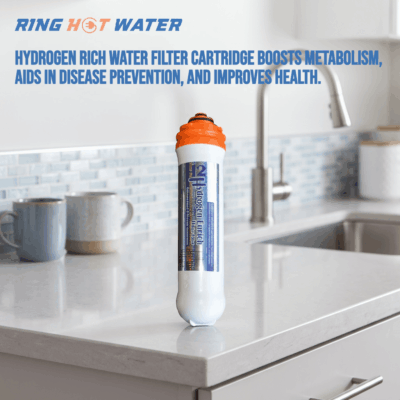
When filtered water feeds a boiling or chilled unit, the filter isn’t only there for drinking quality. It also acts as a protective stage before water reaches internal components.
Sediment and other water characteristics can create extra wear inside systems that heat or cool water continuously. That doesn’t mean every problem disappears with a filter. It means untreated water asks more of the equipment over time.
This is especially relevant when you’re spending real money on under-sink instant systems. The tap is visible, but the costly parts are often hidden in the cabinet or service space.
A good filter can improve what goes in the cup and reduce what reaches the machine.
Why Australians keep asking about integrated systems
There’s a practical gap in most buying advice here. Plenty of articles discuss under-sink filters. Plenty discuss boiling taps. Far fewer deal with the everyday Australian question of whether combining the two is worth it.
The broad answer is yes, often it is, because the system becomes more coherent. You’re not patching together convenience on one side and water treatment on the other. You’re designing one drinking water setup.
The available research also points to why this demand has grown. While Australian water is safe, there’s a growing gap between regulated contaminant levels and what consumers want for peace of mind, and existing content does not adequately analyse the Australian-specific return on using filters to reduce limescale and support instant boiling taps, as discussed in this note on the gap in integrated filtration guidance.
The practical benefits people actually notice
When a filtered system is paired properly with boiling and chilled delivery, the benefits show up in daily use.
- Drinks taste cleaner because tea, coffee, and chilled water all start with treated water
- The setup looks simpler because one integrated station replaces multiple workarounds
- Maintenance becomes more intentional because the filter is treated as part of the appliance system, not an afterthought
- The equipment gets cleaner input water before it reaches heating and cooling components
For homes, that often means less reliance on kettles and fridge bottles. For offices, it means fewer moving parts in the daily tea-and-water routine. For hospitality venues, it can mean more consistency at service points.
One common misunderstanding about hot water quality
Some people assume that if cold mains water seems fine, the hot side will always be equally clean in practice. Plumbing systems don’t always behave that neatly once water is heated and stored or moved through different components.
If you want a simple plain-English explanation of that issue, this article on why hot water is dirty is worth reading. It’s a helpful reminder that water can change as it moves through a system, which is exactly why point-of-use filtration matters.
The decision in plain language
If you’re installing a boiling or chilled tap and skipping filtration altogether, you may be solving convenience without fully addressing water quality at the point of use.
If you’re installing filtration without thinking about the equipment it feeds, you may miss one of the strongest reasons for integrating the system in the first place.
For many Australian kitchens, the cleaner answer is a joined-up one. Filter first. Then heat or chill. Then dispense from a system designed to work as one unit.
How to Choose the Right Water Filter Tap
It often starts the same way. A Melbourne family wants better-tasting water and less bench clutter, or an office wants to stop the queue around the kettle and the fridge. Then the choices multiply. Separate tap or 3-in-1. Filtered cold only, or boiling and chilled too. Small cartridge, larger system, basic setup, or something built for heavier daily use.
The easiest way to choose is to work from routine first, then the hardware. A water filter tap should fit the way people drink, fill bottles, make tea, and clean up through the day. If you are pairing filtration with instant boiling or chilled water, the tap is only one part of the decision. The filter also helps protect the equipment underneath, which can affect servicing frequency and long-term running costs in Australian conditions.
A simple way to frame it is this. The tap is the front door. The filter and under-bench unit are the plumbing and wiring behind the wall. If the visible part looks right but the system behind it does not match your water use, you can end up with slow recovery, awkward servicing, or cartridges that need changing sooner than expected.
Start with the setting
A family kitchen, a staff room, a café prep area, and a caravan sink may all need filtered water, but they do not ask the same thing from a tap.
For homes, the choice usually comes down to convenience, available space, and whether you want one appliance to do more than one job.
- Dedicated filtered tap suits households that mainly want better drinking and cooking water.
- 3-in-1 tap suits renovations or smaller sink areas where you want fewer fittings on the bench.
- Filtered tap paired with instant boiling suits homes that make tea, coffee, and baby bottles throughout the day.
- Filtered boiling and chilled system suits households that want one water point to replace the kettle and reduce bottled water.
For offices, speed and repeat use matter more. Staff will forgive a plain tap long before they forgive a slow one. If several people use the kitchenette across the day, check recovery time, chilled capacity, and how easy it is to replace cartridges without dismantling half the cupboard.
For hospitality, the tap becomes part of service workflow. A polished finish matters less than access for maintenance, dependable output, and a filter specification that supports taste consistency for drinking water and beverage prep.
For caravans and RVs, the question changes again. Tight cabinetry, non-standard fittings, and movement during travel all matter. Compact design and secure connections usually matter more than the neatest appearance.
Match the tap type to the job
Many buyers compare taps by style first because that is the part they can see. A better method is to match the format to the outcome you want.
| Situation | Usually the better fit |
|---|---|
| You want better drinking water with minimal changes to the sink | Dedicated filtered water tap |
| You want fewer fixtures and a cleaner sink line | 3-in-1 or integrated multi-function tap |
| You regularly make hot drinks and want filtered water at the same point | Filtered system paired with instant boiling |
| You want cold drinking water and ready-to-use hot water in one zone | Integrated boiling and chilled filtered system |
| You need a workplace setup that handles repeat use well | Higher-capacity system with easy service access |
| You are fitting a caravan or RV | Compact tap and filter setup with suitable fittings |
Consider your local water conditions, not just the brochure
This is the part many generic guides miss.
Melbourne water is often considered relatively soft compared with some other Australian cities, but water conditions still vary by area, building age, and internal plumbing. Sediment, chlorine taste, and general wear on valves and internal components can still shape how a system performs over time. In offices and commercial sites, higher daily use can expose those issues faster.
That matters more when you are choosing a boiling or chilled tap. These systems do more than deliver filtered water. They heat, cool, store, and dispense it through specialised parts under the bench. Cleaner input water can help those parts stay cleaner as well, which may support steadier performance and reduce avoidable maintenance.
A basic analogy helps here. Putting untreated water through a boiling or chilled unit is a bit like running dusty air through a fine appliance every day. It may still work, but the internal parts have more to cope with. Good filtration helps reduce that burden.
Ask the practical questions early
Before you shortlist brands or finishes, answer these questions:
- How many people will use it each day?
- Do you only need filtered cold water, or do you also want instant boiling or chilled?
- How much under-sink space is available?
- How easy will cartridge replacement be once everything is installed?
- Who will handle maintenance in six or twelve months?
- Do you want one coordinated system, or are you combining separate components?
Those answers usually narrow the field quickly.
A home kitchen may suit a compact integrated unit with safety features for boiling water. An office may need more recovery capacity and easier service access. A café may care most about reliability during busy periods. A caravan owner may accept fewer features in exchange for compact size and easier fitting compatibility.
Choose for maintenance tolerance, not just day-one appeal
A good choice should still feel like a good choice after the novelty wears off.
That means being honest about maintenance tolerance. Some people are happy to track cartridge changes and organise servicing on schedule. Others want a setup that is straightforward to access and simple to keep running. Integrated boiling and chilled systems can offer excellent convenience, but they deserve more planning because there is more equipment under the bench and more value in keeping the filtration matched to the unit.
If you are weighing up layouts, this guide to water filter installation in Melbourne is useful for understanding access, cupboard space, and servicing considerations before you buy.
The right water filter tap is the one that fits your routine, your water use, your cupboard space, and the level of maintenance you are prepared to manage. Once those four pieces line up, the decision usually becomes much clearer.
Your Guide to Installation and Maintenance
Buying water filter taps is the easy part. Living with them well depends on installation quality and sensible maintenance.
That’s where many buyers get caught out. They focus on the tap finish and filter claims, then only later realise they also needed to think about cabinet space, replacement access, tubing routes, shut-off points, and who will service the system when it needs attention.
What installation usually involves
For a basic under-sink filter tap, installation often includes connecting to the cold water feed, mounting the filter head, running tubing, and fitting the tap itself. Some setups are straightforward. Others become more involved if the sink already has limited holes, tight cabinetry, or additional equipment under the bench.
For integrated boiling or chilled systems, the job is more complex. You’re no longer just mounting a tap and cartridge. You may also be positioning a tank or chiller, checking clearances, routing separate lines, and making sure the whole arrangement remains serviceable.
That’s why simple filtered cold systems may suit capable DIY users, while integrated units usually justify professional installation.
When to call a plumber
If the setup includes any of the following, it’s usually wise to bring in a licensed plumber:
- A new tap hole is needed in stone, metal, or another finished surface
- The unit includes boiling or chilled hardware under the sink
- The cabinet is crowded with waste, appliances, or limited access
- You want the installation documented properly for warranty and future servicing
- You’re unsure about fittings or isolation points
For local help, this page on water filter installation in Melbourne outlines the kinds of setups that often benefit from a professional install.
The maintenance part people underestimate
Filters don’t last forever, and replacement timing isn’t universal.
Filter replacement frequency is not one-size-fits-all. Water hardness and mineral content vary significantly between cities such as Melbourne, Sydney, and Adelaide, and those local conditions directly affect cartridge lifespan and the annual cost of ownership, as explained in this discussion of undersink filter replacement and regional variation.
That’s important because generic advice can mislead people. A cartridge schedule that works in one location may be optimistic or conservative in another.
If your local water places more load on the filter, the cartridge will tell the truth long before the marketing brochure does.
What regular upkeep looks like
Ongoing maintenance is usually simple, but it needs to happen on time.
A sensible routine includes:
- Check replacement intervals against the manufacturer’s guidance and your actual usage.
- Watch for changes in taste or flow because they can signal a cartridge nearing the end of its service life.
- Inspect fittings and tubing during cartridge changes so minor issues are spotted early.
- Keep access clear under the sink so a simple filter swap doesn’t turn into an awkward cabinet rebuild.
In some systems, especially those using quality carbon block cartridges, the manufacturer gives a stated capacity or time-based replacement point. In others, the practical replacement cycle depends more heavily on local conditions and usage habits.
Fittings matter more than many people realise
Homeowners often focus on cartridges, but tradespeople know the small connection parts can decide whether a job is smooth or frustrating.
You’ll commonly encounter:
- John Guest push-fit fittings, often used where quick, clean tube connections are needed
- Brass threaded fittings, which are common in more traditional plumbing interfaces
- Isolation valves, which allow servicing without shutting down the whole area
- Flexible hoses and adaptors, which help marry the filter kit to existing tapware and appliances
If you want a quick visual overview of what a typical filter change and setup process can look like, this video is a helpful reference.
Hidden cost doesn’t always mean expensive
When people talk about hidden costs, they often mean surprise expenses. In filtration, it usually means ignored maintenance realities.
The main ownership costs come from replacement cartridges, occasional servicing, and, in integrated systems, keeping the boiling or chilled unit itself in good order. None of that is unusual. The problem starts when buyers assume every system will have the same lifespan, service pattern, or replacement rhythm.
A better mindset is to treat a water filter tap like any working kitchen system. If it improves daily life, it deserves a maintenance plan. In return, it usually gives you cleaner-tasting water, better convenience, and fewer workarounds around the sink.
Frequently Asked Questions About Water Filter Taps
Do water filter taps reduce water pressure
Sometimes, yes. Water has to pass through filter media before it reaches the outlet, so the cartridge acts a bit like a sieve in the line. If the system is matched properly to your incoming pressure and your daily usage, the flow should still feel practical for filling a glass, kettle, or bottle.
A sudden drop in flow usually points to a tired cartridge, not a faulty tap. In Melbourne properties, sediment and mineral load can shorten cartridge life, which matters even more if that filtered water also feeds an instant boiling or chilled unit under the sink.
Are water filter taps expensive to run
The regular cost is usually cartridge replacement. If you choose an integrated boiling or chilled system, add electricity and periodic servicing to the picture as well.
That does not automatically make the system expensive. It means the cost depends on your water quality, how many people use it, and whether the filter is protecting only drinking water or the heating and chilling equipment too. In Australian conditions, that protection can save money over time because cleaner feed water can reduce scale build-up and help the appliance work as intended.
Do filtered boiling taps make sense, or should I keep them separate
For many kitchens, one integrated setup is the tidier and more practical choice. You get filtered drinking water and instant boiling or chilled water from a coordinated system instead of adding separate products one by one.
The main benefit is not just bench space. Filtration helps protect the parts doing the hard work under the sink, especially heating chambers, valves, and seals. That is the part many generic guides skip. In harder or variable water conditions, the right filter can influence maintenance frequency, service costs, and long-term reliability.
Are these taps noisy
A standard filtered cold tap is usually very quiet.
Boiling and chilled systems can make some operating noise from the under-sink unit. You may hear heating, cooling, or short cycling sounds, much like a compact appliance working in a cupboard. The question is less about whether there is any sound at all, and more about whether the level suits your kitchen, staff room, or client-facing space.
Do used cartridges create waste
Yes, replacement cartridges still need to be disposed of. That is a real trade-off.
For many households and workplaces, the balance improves when the system replaces regular bottled water purchases, storage, and transport. The more consistently the tap is used, the stronger that benefit tends to be.
Can I install one myself
Some basic filtered cold taps are within reach for a capable DIY user with the right tools and enough cupboard access. Even then, the job needs care, especially around fittings, shut-off valves, and leak testing.
Integrated boiling or chilled systems are usually better installed by a professional. There are more parts to position, more connections to get right, and more to lose if the unit is installed poorly. A good install also makes future servicing easier, which matters just as much as the first day of use.
What’s the biggest buying mistake
Choosing the tap by looks and leaving the rest for later.
A water filter tap is really a small system, not just a spout. The tap, filter, cartridge capacity, under-sink unit, service access, and your local water conditions all have to work together. A stylish tap with poor filter matching or awkward maintenance access can become frustrating fast, especially in a busy Melbourne kitchen or office.
If you’re comparing options in Melbourne, Ring Hot Water can help you assess the practical fit, including filtration, boiling and chilled integration, installation constraints, and likely maintenance needs for your water conditions.

