
Water Filters
Water Filter Replacement Cartridges
May
Zip & Stiebel Eltron Water Filter Replacement Cartridges
You’re probably reading this because one of three things has happened. Your Zip or Stiebel Eltron tap has started running slower. The water doesn’t taste as clean as it used to. Or you’ve opened the cupboard under the sink, seen a cartridge with a faded label, and realised you’re not quite sure when it was last changed.
That small cylinder under the sink is easy to ignore because it isn’t the part you touch every day. The tap gets the attention. The boiler or chiller gets the blame when something goes wrong. But in most advanced instant water systems, the replacement cartridge is the part doing the daily protective work.
In Melbourne, that matters more than many people expect. Our water conditions, appliance mix, and common use of boiling and chilled tap systems mean a generic approach often falls short. If you’ve got a Zip, Billi, Stiebel Eltron, Boiling Billy, or a similar under-sink setup, choosing the right water filter replacement cartridge isn’t just about fit. It’s about protecting the system, managing hardness, and keeping the water pleasant to drink.
The Unseen Engine in Your Instant Water System
An instant boiling or chilled tap looks simple from above the bench. You press a lever or turn a handle, and filtered water arrives at the temperature you want. Under the sink, though, the system is doing a coordinated job.
The tap is only the delivery point. The boiler or chiller handles temperature. The filter cartridge prepares the water before it reaches those internal parts. If the water arrives dirty, scale-forming, or chemically unpleasant, the rest of the system has to cope with that burden.
That’s why I often compare these taps to a high-performance car. The polished exterior gets the attention, but the engine only stays healthy if it receives clean fuel and proper filtration. A boiling water unit is similar. The cartridge acts like a gatekeeper.
What the cartridge is actually doing
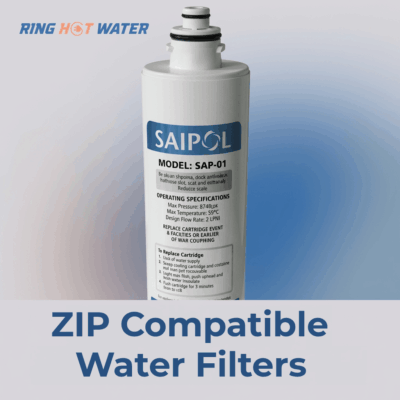
A water filter cartridge usually contains one or more filtration media designed to catch or reduce specific unwanted elements in the incoming supply. Depending on the cartridge, that may include:
- Sediment: Fine grit, rust, and suspended particles that can clog valves and restrict flow.
- Chlorine and taste compounds: Common causes of flat, chemical, or unpleasant drinking water.
- Scale-forming minerals: Especially important for boiling taps and chillers in areas with hard water.
- Specific contaminants: Some cartridges are built to reduce a broader range of health-related contaminants.
When readers hear “filter”, they often picture it as a simple screen. Most cartridges are doing more than that. They don’t just trap visible debris. They also condition water so the appliance can run as intended.
Why the tap system depends on it
Boiling and chilled systems have tighter tolerances than a standard kitchen mixer. Internal chambers, valves, heating elements, and cooling pathways don’t respond well to neglected water treatment.
If sediment gets through, flow slows down and internal wear increases. If hardness isn’t managed, scale can form where heat is generated fastest. If chlorine, odour, or stale filter media become an issue, the first thing you notice is usually in the cup or glass.
Practical rule: If your tap system is advanced, your filter choice can’t be treated like an afterthought.
For homeowners, that means cleaner-tasting water and fewer surprises. For offices and hospitality settings, it means consistent performance when multiple people rely on the unit every day.
Why this matters in Australian systems
A lot of online advice about water filter replacement cartridges is written for overseas brands, overseas water conditions, or simple jug and fridge filters. That advice often ignores Australian boiling and chilled systems, and it rarely addresses the fittings, cartridge styles, and local water characteristics common in Melbourne homes and workplaces.
That’s where confusion starts. A cartridge might look similar on the outside, but still be the wrong choice for the housing, the flow direction, the pressure requirements, or the water chemistry the system is handling.
The result is predictable. The tap still works for a while, so the problem stays hidden. Then the water slows, the unit strains, or the taste slips. In many cases, the cartridge was the engine of the system all along.
Why You Must Replace Your Water Filter Cartridge
People tend to replace cartridges for one obvious reason. The water starts tasting off. But taste is only the visible part of the issue.
A spent cartridge can affect health protection, appliance reliability, and day-to-day performance. That’s why replacement isn’t just routine maintenance. It’s part of owning the system properly.
In Australia, this has become a normal part of water filtration ownership. The household water filtration market was valued at AUD 250 million in 2023, with growth fuelled by Australian Drinking Water Guidelines that recommend cartridge replacements every 6 to 12 months to reduce contaminants like lead and PFAS by up to 99%, according to this Australian market overview on replacement cartridge demand.
Health protection changes over time
A fresh cartridge has available filtration media. An old cartridge has media that has already been doing its job for months. That distinction matters.
As contaminants accumulate, the cartridge doesn’t improve with age. It gradually loses capacity. In plain terms, old media becomes less dependable at reducing what it was designed to reduce.
For systems used for drinking water, tea, baby formula, or direct chilled water, that’s not a detail you want to push aside.
An expired filter doesn’t fail like a light bulb. It usually fades slowly, which is why so many people miss the warning signs.
That slow decline is exactly what makes overdue replacement risky. You may still get water, but you’re no longer getting the same level of protection or consistency.
Your appliance pays the price too
Boiling taps, chillers, and combination units are expensive pieces of equipment. They’re built for convenience, not for coping with neglected filtration.
Once a cartridge loads up with sediment or scale-forming material, several problems can follow:
| Issue | What you notice | What it can lead to |
|---|---|---|
| Restricted flow | Slower fill times, weak stream | Extra strain on valves and internal components |
| Scale build-up | Reduced heating efficiency | Premature wear in boiling systems |
| Poor upstream filtration | More debris entering the unit | Faults, servicing, and preventable downtime |
Here, the car analogy holds up again. Skipping cartridge changes is like asking a machine to run on contaminated input and hoping precision parts will somehow cope.
Taste is the earliest warning
People often dismiss taste and odour changes as minor. They’re not. They’re often the first practical clue that your cartridge is nearing the end of its useful life.
If your morning tea tastes flat, your chilled water smells slightly chemical, or guests start reaching for bottled water instead of the office tap, the system is telling you something. A fresh cartridge restores the conditions the unit was designed for.
Small maintenance, big difference
The cost and effort of replacing a cartridge are minor compared with the cost and inconvenience of a repair visit, a scaled-up boiling unit, or a tap that stops performing when you need it most.
For a family kitchen, regular replacement protects what you drink. For a workplace, it keeps shared equipment dependable. For a café or staff room, it supports consistency.
The key point is simple. The cartridge is consumable by design. If you treat it like a permanent part, the system eventually starts acting like one that hasn’t been maintained.
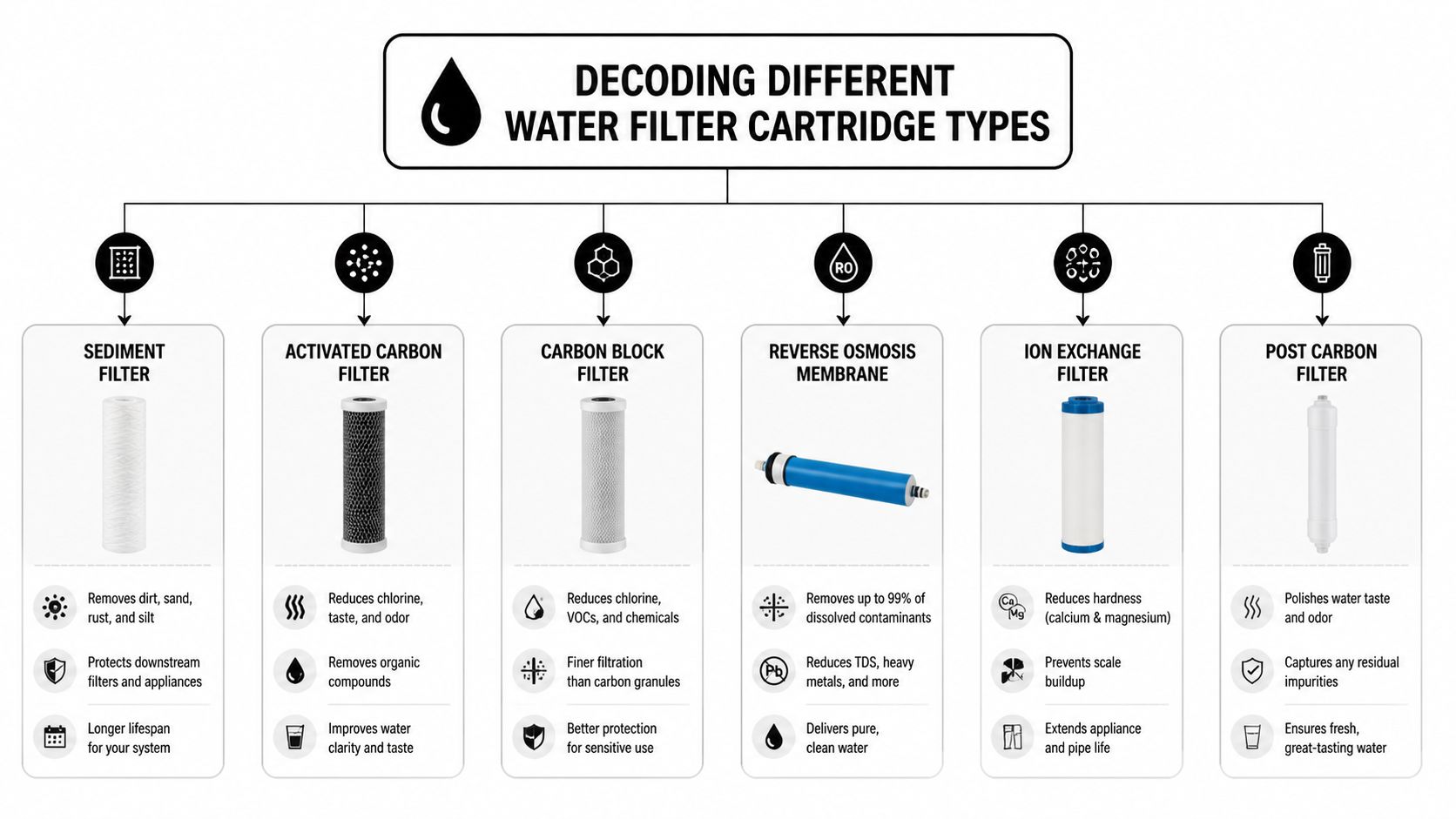
Decoding Different Water Filter Cartridge Types
It is 7 am in a Melbourne kitchen. The boiling tap still dispenses water, the chilled side still looks normal, and nothing appears wrong. Yet inside the system, the cartridge may be doing the wrong job for that appliance, that building, or that water supply.
That is why cartridge types matter.
A replacement cartridge is not just a refill. It is more like choosing the right oil and filter for a specific engine. Two cartridges can share a similar size and still be built for very different purposes. One targets grit. One improves taste and odour. Another helps control mineral scale that can shorten the life of a boiling tank or affect heat transfer inside premium systems such as Zip, Billi, and Stiebel Eltron units.
For a broader overview of replacement cartridge water filter options for tap systems, it helps to start with the job each cartridge is designed to do.
Sediment cartridges
A sediment cartridge catches physical particles such as dirt, rust, sand, and pipe debris. It is the screening stage. If you picture your plumbing as a road network, sediment filtration works like a checkpoint that stops larger troublemakers before they reach the narrow internal passages of the appliance.
This matters in properties with older pipework, after plumbing repairs, or in buildings where supply disturbances send visible debris through the line. In an instant boiling or chilled system, that protection helps reduce blockages and wear in the parts you cannot see.
Carbon cartridges
A carbon cartridge focuses on water quality you can taste and smell. Activated carbon is commonly used to reduce chlorine, chemical odours, and the flat or harsh flavour that can make drinking water less appealing.
That is why a fresh carbon cartridge often makes tea taste cleaner and chilled water smell fresher.
Carbon is especially important in systems installed for drinking convenience, not just utility. In an office, staff notice it in the first glass of the day. In a home kitchen, you notice it in cold water, ice, coffee, and cooking.
Scale reduction cartridges
For Melbourne conditions, scale reduction cartridges deserve special attention. Melbourne water is not identical in every suburb or building, and advanced boiling systems are less forgiving than a standard jug filter or basic sink tap.
Heat changes the equation. As water is heated, dissolved minerals are more likely to leave deposits on internal surfaces. A cartridge designed to reduce scale helps limit that build-up before it settles inside the appliance. In a boiling tap, that can support more stable performance and reduce the stress placed on heating components over time.
This is one reason generic replacement advice often falls short in Australia. A cartridge that is acceptable for cold drinking water may be a poor match for a boiling or chilled unit that has tighter compatibility and performance requirements.
Cyst-rated and specialised cartridges
Some cartridges are made for more specific filtration targets. You may see terms such as cyst-rated, sub-micron, or scale inhibition media on the label. These are not marketing extras. They describe what the cartridge has been built and tested to do.
The important point is simple. The rating should match the application. A specialised cartridge can be useful where the appliance manufacturer calls for it, where the site has known water quality issues, or where the system is expected to meet a defined filtration standard.
A commonly misunderstood term is micron rating
Micron rating sounds technical, but the idea is straightforward. It refers to the size of particles a cartridge is designed to capture.
Smaller is not always better.
A finer micron rating can catch smaller particles, but it can also affect flow rate and may not suit every filter head or tap system. That is particularly relevant in boiling and chilled units, where the cartridge needs to balance filtration performance with the water delivery the appliance was designed to handle.
A simple way to read cartridge types is this:
- Sediment: helps protect the system from dirt, rust, and debris
- Carbon: improves taste, odour, and chlorine-related drinking quality
- Scale reduction: helps manage mineral build-up in heated systems
- Specialised cartridges: address a specific filtration requirement or manufacturer specification
If you only check whether a cartridge fits the head, you are missing half the decision. You also need to check what that cartridge is meant to remove, protect against, or improve. That is the difference between a cartridge that merely slots in and one suitable for an Australian boiling or chilled tap system.
How to Choose the Right Replacement Cartridge
It often starts with a small change. The boiling tap takes longer to fill a mug. The chilled water tastes flat. The unit still works, so it is easy to assume any cartridge that fits will do the job.
For an advanced tap system, that approach causes problems. A replacement cartridge works like the service kit inside the appliance. If it is the wrong match, the system may still run, but not in the way the manufacturer intended. That matters more in Melbourne, where mineral content can be hard on boiling and chilled units.
Start with the appliance, not the cartridge shelf
The first question is not “Which filter looks similar?” It is “What did this system design call for?”
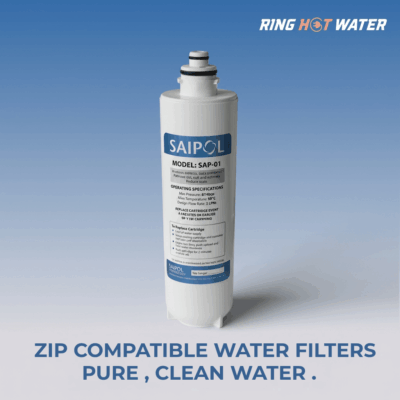
Zip, Billi, Stiebel Eltron, and similar instant boiling or chilled taps are built around specific cartridge formats, flow rates, and filtration media. Some need a quick-change cartridge with a particular head. Others need scale control to protect heated parts. A cartridge can click into place and still be the wrong choice if the seal, flow, or media do not match the unit.
If you want a practical starting point, this guide to replacement cartridge water filter options for Australian systems shows how cartridge selection changes with appliance type.
Match the cartridge to Melbourne water conditions
Melbourne water can be kind to one system and hard on another. The difference is often heat.
Cold drinking water systems mainly need help with taste, odour, chlorine, and fine particles. Boiling taps ask more of a cartridge because heated water encourages mineral scale to settle inside the appliance. That build-up works like plaque in a pipe. At first it is minor. Over time it restricts performance, stresses internal parts, and can shorten the life of the unit.
This is why a standard carbon cartridge is not always enough for a boiling or hot-and-cold tap. If your system heats water repeatedly, a cartridge with scale reduction media is often the safer choice.
Choose for usage pattern as well as water quality
A cartridge should suit how the tap is used each day.
A family kitchen, an office breakout area, and a café prep sink may use the same style of appliance, but they do not place the same demand on the filter. Higher daily use means the cartridge reaches the end of its working life sooner, even if the water still looks clear. In business settings, the practical goal is consistency. You want steady flow, stable taste, and fewer service interruptions during busy periods.
Caravans and compact installations need an extra check. Space under the bench may be tight, and some systems have less room for cartridge height or turning clearance.
Check four details before you buy
Here, careful buyers avoid expensive mistakes.
| What to check | Why it matters |
|---|---|
| Brand and model number | Confirms the cartridge was specified for that exact unit |
| Cartridge head and lock style | Helps the cartridge seat and seal properly |
| Filtration media | Determines whether it is treating taste, sediment, scale, or a combination |
| Physical size and clearance | Prevents problems under the sink, especially in tight cabinets |
One more point causes confusion. “Compatible” can mean physically compatible, performance compatible, or both. For advanced tap systems, you want both.
Decide carefully between genuine and generic
For a basic housing, a well-made compatible cartridge may be acceptable. For a Zip, Billi, or Stiebel Eltron unit, I would be more cautious.
These appliances are more like a coffee machine than a jug filter. The cartridge is part of how the whole system protects itself. If flow is wrong, if scale control is missing, or if the seal is imperfect, the true cost becomes apparent when the tap slows down, internal parts scale up, or a service visit is needed.
That is why many Melbourne homeowners and facilities managers stick with genuine parts or clearly specified equivalents from specialist suppliers. Ring Hot Water, for example, stocks quick-change and carbon block cartridges for boiling and chilled tap systems used in homes, offices, and caravans.
If you are comparing replacement routines across different appliances, these easy Keurig filter replacement instructions are a useful reminder that the right process always starts with the right cartridge, not just a cartridge that seems close enough.
Your Guide to Installing a New Filter Cartridge
It is 7 am in a Melbourne office kitchen. Someone reaches for the boiling water tap, and instead of the usual fast, clean flow, the stream coughs, spits, and runs cloudy for a moment. In many cases, the cartridge itself is not the problem. The installation process is.
A replacement cartridge works like a new air filter in a car. The part matters, but so does the fit. If it is aligned poorly, if the seal area is dirty, or if the system is not flushed properly, even the correct cartridge can leave a premium tap system performing below its standard. That matters more with Zip, Billi, and Stiebel Eltron units because these systems are designed with tighter flow and protection requirements than a simple jug filter or basic under-sink housing.
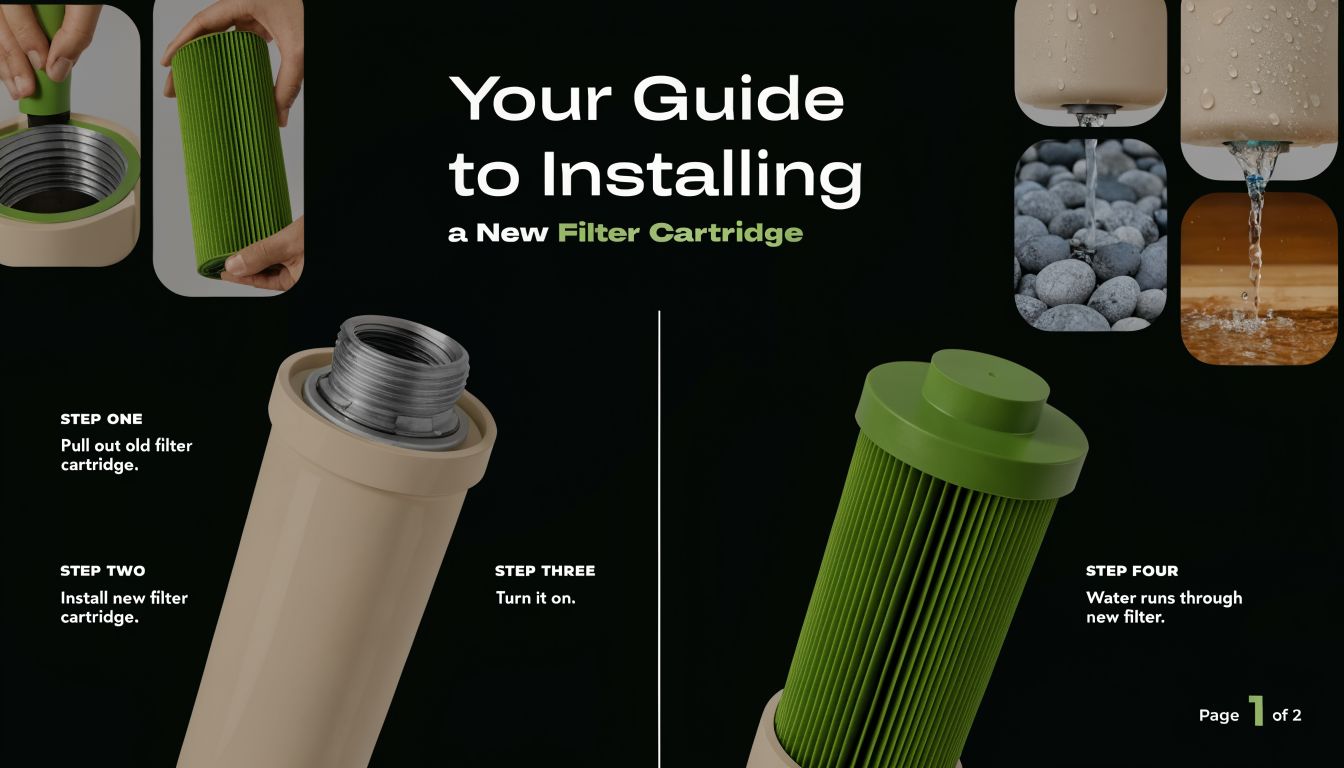
A careful general process
Brand instructions always come first, especially for boiling and chilled tap systems. Still, the changeover usually follows the same practical sequence:
Turn off the water supply.
Isolate the line feeding the filter system before removing anything.Release pressure at the tap.
Open the tap and let residual pressure escape. This makes removal cleaner and reduces the chance of a sudden spray under the sink.Remove the old cartridge gently.
Some cartridges twist out. Others unclip or unscrew. If it feels jammed, stop and check the locking method rather than forcing it.Clean the connection point.
Wipe the filter head or housing where the seal sits. A tiny bit of grit in this area can create a slow leak later.Fit the new cartridge squarely.
Line it up carefully and lock it into place as the manufacturer directs. A crooked start often causes the problems people blame on the cartridge.Turn the water back on slowly.
Slow re-pressurising gives you time to spot drips and helps the system settle without a sharp rush.Flush before drinking.
Fresh carbon media commonly releases fine black dust and trapped air at first. Flushing clears that out and prepares the cartridge for normal use.
Write the install date inside the cupboard or on a service sticker. That one habit saves a surprising amount of guesswork.
What a normal first use looks like
A newly fitted cartridge rarely feels perfect in the first few seconds. Some sputtering is normal. A brief milky appearance can also be normal, because tiny air bubbles in filtered water can make it look cloudy before they disappear.
What you do not want is persistent dripping, a cartridge that never seats firmly, or flow that stays weak after flushing. Those signs usually point to one of three causes. The cartridge is not fully locked in, the seal surface is dirty, or the cartridge is wrong for the system.
Australian conditions make a difference. In Melbourne, mineral content and sediment load can affect how quickly a cartridge settles into service, especially in busy homes, workplaces, and hospitality settings where boiling and chilled taps get constant use.
A simple post-install check
After installation, run through a quick check before you close the cupboard door:
- Look closely at the cartridge head and fittings: Even a slow bead of water matters.
- Run enough water to complete the flush: Stopping too early leaves air and carbon fines in the line.
- Check the flow at the usual outlet: Fill a glass or mug and compare it with normal performance.
- Listen to the system: Short sputtering is common. Ongoing spluttering suggests air is still trapped or the cartridge is not seated correctly.
For brand-specific guidance, this guide to Zip filter replacement steps and product selection is a useful reference if you are working with an instant boiling or chilled tap setup.
If you like simple visual maintenance examples, these easy Keurig filter replacement instructions show the same core principle. Match the part properly, install it carefully, and flush it before regular use.
When to stop and get help
Some cartridge changes are straightforward. Others are a warning sign that the system needs experienced attention.
Call a professional if:
- The old cartridge will not release: Excess force can damage the housing or filter head.
- Leaks continue after refitting: The O-ring, head, or connection may be damaged.
- Flow stays poor after a correct replacement and flush: The issue may sit deeper in the unit, such as scale build-up or a valve problem.
- You are unsure about brand compatibility: That is especially important with Zip, Billi, and Stiebel Eltron systems, where the filter supports both water quality and appliance protection.
Under-sink filter replacement should feel controlled and precise. If it starts feeling like a fight, stop before a simple maintenance job turns into a repair.
Troubleshooting Common Water Filter Issues
Most filter problems begin imperceptibly. The water still comes out, so the system seems “mostly fine”. Then the signs become harder to ignore. Flow drops. Taste changes. The unit makes odd noises after a replacement.
A simple troubleshooting check can often tell you whether the cartridge is the likely cause.
Slow water flow
Slow flow is one of the most common complaints with water filter replacement cartridges and the systems they support. In many cases, it means the cartridge has loaded up with sediment or scale-related material and is restricting passage.
Start with the simplest questions. Has the cartridge been in service longer than expected for your household or business use? Did flow decline gradually rather than suddenly? If yes, the filter is a likely suspect.
Try these checks:
- Check the install date: If you can’t remember when it was changed, that’s a sign in itself.
- Flush after recent replacement: Air in the line can temporarily reduce flow.
- Inspect shut-off valves: A partially open valve can mimic a filter problem.
Strange taste or odour
If the water tastes chemical, stale, earthy, or flat, the carbon media may no longer be doing its job properly. This issue often appears before the cartridge looks visibly dirty.
A newly installed cartridge can also produce temporary taste changes if it hasn’t been flushed enough. That’s a very different situation from a worn-out cartridge.
Use this rule of thumb:
| Symptom | Likely cause | First action |
|---|---|---|
| Taste changed after months of use | Cartridge nearing end of life | Replace cartridge |
| Taste changed immediately after install | Insufficient flushing | Flush again |
| Taste still poor after new filter | Wrong cartridge type or upstream issue | Recheck compatibility |
Noises under the sink
Clicks, sputters, and gurgling right after a cartridge change are often just trapped air moving through the system. Those sounds usually settle after flushing and normal use.
Persistent noise is different. If the boiler or chiller sounds strained, or if the system seems to cycle oddly, poor flow or internal scaling may be involved. In that case, replacing the cartridge alone may not solve everything.
Leaks around the cartridge head
A leak after replacement usually comes down to one of four causes:
- The cartridge isn’t fully locked in place
- The seal surface has debris on it
- An O-ring is damaged or misaligned
- The wrong cartridge has been fitted
Don’t keep tightening blindly. Remove the cartridge, inspect the contact points, and reinstall carefully. If the drip continues, it’s safer to stop and have the unit checked before cabinet damage starts.
The good news is that many apparent “tap failures” are really filter-related maintenance issues. Catch them early, and the fix is often much smaller than people fear.
Find Genuine Cartridges and Expert Service in Melbourne
A common Melbourne service call goes like this. The boiling water turns erratic, the chilled side slows down, and the owner assumes the whole tap system is failing. In many cases, the actual issue is simpler. The unit is asking for the correct replacement cartridge, fitted with the right brand compatibility in mind.
That distinction matters more with advanced systems such as Zip, Billi, and Stiebel Eltron than it does with a basic under-sink filter. These taps work like a matched set of parts. If the cartridge is the wrong spec, the system can still run poorly even after a fresh install. Melbourne water conditions add another layer, especially in areas where hardness and scale place extra strain on boiling tanks, valves, and flow performance.
Buying on price alone can create expensive confusion. A cartridge may look right, thread in properly, and still be a poor match for the unit or the water quality it is treating. That is why many owners look for brand-specific parts rather than treating every filter as interchangeable.
If you need branded components, fittings, or hard-to-find parts for Australian tap systems, a practical starting point is this range of Zip spare parts in Australia for boiling and chilled tap systems.
Good service matters too.
Many cartridge questions are really system questions. A customer may need help confirming whether a Zip filter head matches a newer cartridge, whether a Billi setup needs scale protection suited to Melbourne water, or whether a Stiebel Eltron unit is showing a symptom that points to filter choice rather than a heater fault.
For homeowners, that means fewer wrong purchases and less trial and error under the sink. For cafés, offices, and facility managers, it means less downtime and a better chance of fixing the actual cause the first time.
For Melbourne customers, local product knowledge is what separates a quick cartridge swap from a repeat problem a month later.
Frequently Asked Questions About Filter Cartridges
How long does a water filter cartridge really last
It depends on the cartridge type, the water conditions, and how heavily the system is used. Some homes can stay within a normal replacement cycle. Others, especially with harder water or heavier boiling tap use, need more frequent changes. If flow has dropped, taste has changed, or the install date is unclear, don’t wait for a fault.
Can I use a cheaper generic cartridge
Sometimes a compatible cartridge is acceptable in simpler systems. In branded boiling and chilled tap units, caution makes sense. With the introduction of standards such as AS/NZS 4348:2025, using non-certified cartridges, especially in rental or commercial settings, can create compliance issues and may not offer verified protection against contaminants found in Australian urban water, as noted in this summary of certification concerns for replacement cartridges.
What should I do with my old cartridge
Start by checking whether the cartridge brand or your local waste service offers any recycling pathway. Some do, some don’t. If there’s no formal program, dispose of it according to local council guidance. Don’t assume all cartridges can go into standard household recycling.
Do caravans and RVs need special cartridges
Often, yes. Caravan and RV water systems can involve different space constraints, pressure conditions, and fitting types. The cartridge needs to suit both the filtration goal and the physical setup. Compact systems also tend to punish poor fitment more quickly, so accuracy matters.
Is genuine always worth it
For advanced tap systems, genuine or properly certified application-specific cartridges are often the safest choice. You’re not only paying for the shape. You’re paying for a known fit, intended media, and a clearer maintenance path.
What if I changed the cartridge and the problem is still there
That usually points to one of three things. The wrong cartridge was fitted. The system needs more flushing. Or the appliance itself has a separate fault such as scaling, a worn valve, or another internal issue. A new filter helps a maintained system. It doesn’t undo every older problem.
If your boiling or chilled water system needs the right cartridge, genuine spare parts, or help diagnosing a filter-related fault, Ring Hot Water can help you match the correct component for your setup and organise support for Melbourne installations, repairs, and maintenance.

