
Uncategorized
InSinkErator 3N1 Hot Water Tap: Guide & Benefits
Jun
You're probably reading this while looking at a kettle that feels far too slow for what should be a simple job. Morning tea, coffee before school drop-off, filling a pot, making noodles, rinsing something greasy. None of it is hard, but the repeated wait gets old.
That's where the InSinkErator 3N1 hot water tap enters the conversation. On paper, it sounds straightforward. One tap, multiple temperatures, cleaner bench space. In a real Melbourne kitchen, though, the decision isn't just about convenience. It's about whether the cabinet has room, whether the power point is in the right place, how the unit behaves after years of use, and who fixes it when the tap starts spluttering on a busy weeknight.
Most write-ups stop at features. Homeowners need more than that. They need the ownership picture. That means understanding what the system does, what installation involves, what tends to go wrong, and how to keep it working without frustration.
The End of the Kettle The Rise of Instant Convenience
A kettle rarely feels like a problem until you notice how often you use it. One boil for coffee. Another because someone else wants tea. Another because the first lot cooled while you were packing lunches. Then the jug filter is sitting beside it, and both are taking up bench space you'd rather use for food prep.
In a renovated kitchen, that clutter stands out even more. You've spent good money on cabinetry, stone, lighting and appliances, but the daily workflow still depends on a plastic kettle and a refill jug. It works, but it doesn't feel integrated.
The appeal of the InSinkErator 3N1 hot water tap is that it changes the routine, not just the look of the sink. It replaces the main mixer tap and adds steaming hot filtered water to your regular hot and cold supply. That matters because you're not adding another appliance to the kitchen. You're simplifying the one fixture you already use all day.
A boiling water tap only feels premium on day one if the installation and support are right. After that, it becomes a practical plumbing system, not a showroom feature.
That's the part many Melbourne homeowners miss. The buying decision is easy to understand. The long-term decision is where experience matters more. A tap like this needs suitable plumbing, suitable power, sensible filter maintenance and access to service if performance changes over time.
For households that are tired of the kettle cycle, the 3N1 can be a genuine upgrade. But it works best when it's chosen for the kitchen you have, not the one in the brochure.
Understanding the Insinkerator 3N1 Tap System
The InSinkErator 3N1 is a three-temperature tap that replaces your main kitchen mixer and delivers regular hot water, regular cold water and steaming hot filtered water from one fixture, according to InSinkErator 3N1 product documentation. The same product family has been sold in multiple designs, including the 3N1 Steaming Hot Combined Main Tap and the 3N1 Roma Instant Hot Water Tap, with listed UK pricing of £429 to £949, which gives you a sense of where it sits in the market.
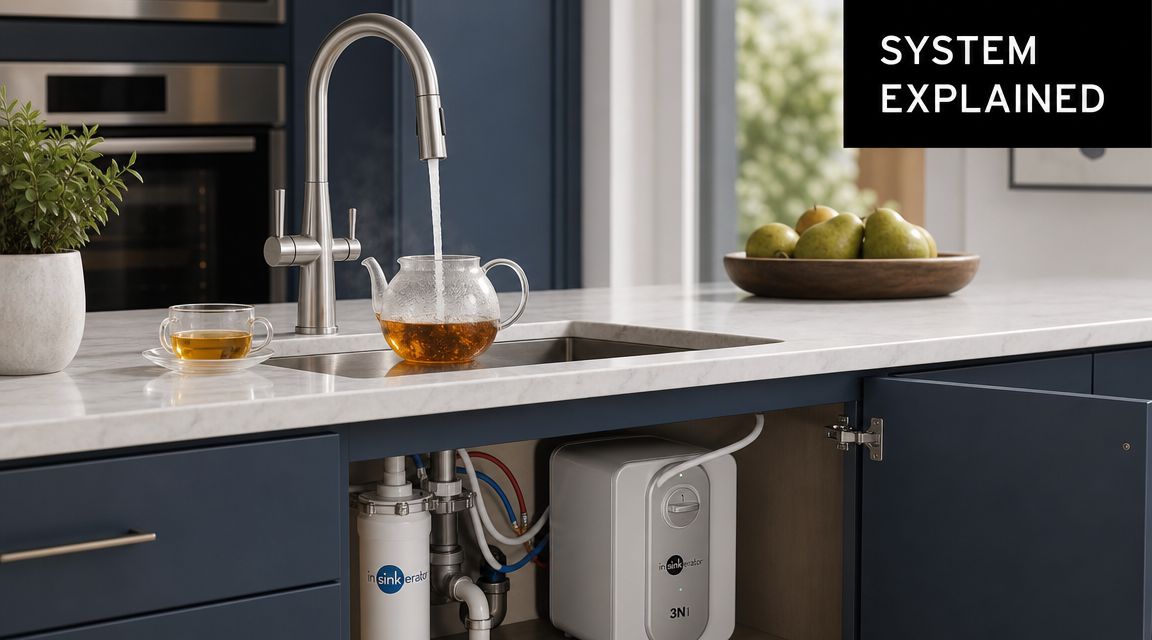
What sits above and below the bench
From the top, it looks like a tap upgrade. Under the sink, it's a small system working together.
You have:
- The tap body that serves as your everyday mixer and your steaming water outlet.
- The under-sink tank that stores and heats the filtered water supply.
- The filter assembly that treats the water before it reaches the hot side.
That's why this product is closer to an integrated water station than a simple tap swap. If you're weighing layouts and styles, it helps to first understand how a 3 way mixer tap works in a kitchen setup, because the plumbing logic is different from a standard mixer.
How it works in daily use
A simple way to think about it is this. Your sink gets a miniature hot water factory in the cabinet below.
The normal hot and cold functions behave like your existing mixer. The extra function is the filtered steaming water line, which is stored, heated and delivered on demand through the same fixture. That's why the unit can declutter a kitchen so effectively. It combines jobs that are often handled by separate appliances.
Practical rule: If you want one fixture to replace a kettle and reduce bench clutter, the 3N1 makes sense. If you only want occasional near-boiling water and don't want under-sink hardware, it may be more system than you need.
For Melbourne homes, that distinction matters. Some buyers want a designer tap first and boiling water second. Others want speed and function above all else. The 3N1 suits households that use the sink constantly and want those functions built into the kitchen rather than scattered around it.
Key Features and Technical Specifications
The headline feature is temperature. InSinkErator states that the 3N1 dispenses filtered steaming hot water at up to 98°C, while the premium NeoTank reaches 99°C, and the water at the spout is usually about 1°C lower than tank temperature because heat is lost immediately after heating, as described on the InSinkErator 3N1 L-shape product page.
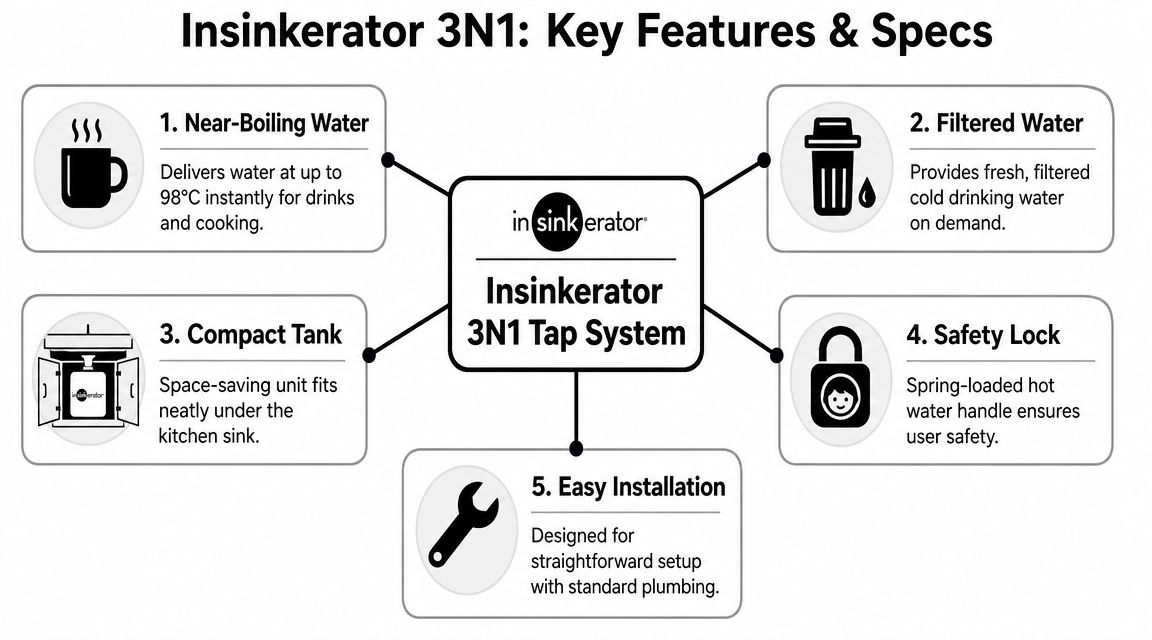
What the temperature spec means in a real kitchen
This is one of those details that matters more than it first appears.
Homeowners often focus on the tank number and assume that's exactly what comes out of the spout. In practice, outlet temperature is what you live with. For tea and coffee drinkers, that means the tap is designed to provide genuinely useful steaming water without needing a kettle top-up. For quick cooking tasks, it's also the difference between “hot enough to help” and “actually practical”.
Long pipe runs, awkward routing and poor installation can affect how that performance feels in day-to-day use. So can expectations. A boiling tap gives you fast, very hot water. It doesn't change the laws of heat loss between tank and outlet.
Capacity, layout and use pattern
The installation literature specifies a 2.5 litre tank capacity, which is one of the key practical specs because it tells you this is a stored hot water system under the bench, not an endless commercial boiler. In normal household use, that's usually enough for the way people draw water. A mug, another mug, a saucepan start, then a pause while the kitchen routine moves on.
Where people get disappointed is when they treat a domestic under-sink unit like a café boiler. If you host often, fill large pots constantly or run a busy family kitchen from dawn to late evening, usage pattern matters just as much as product choice.
Filtered water is part of the system, not an optional extra
The filter does two jobs. It improves the taste and finish of the drinking water, and it also supports the health of the hot water side by reducing the sort of contamination that can create poor user experience over time.
That's why I never treat the filter as an accessory. It's part of the ownership cost and part of the performance equation.
A simple way to judge the value of the 3N1 is to ask what jobs it replaces:
| Kitchen task | Usual appliance | 3N1 approach |
|---|---|---|
| Tea and coffee | Kettle | Steaming filtered water at the sink |
| Drinking water | Jug filter or bottled water | Filtered supply built into the system |
| Main sink use | Standard mixer tap | Same tap handles daily sink duties |
The design trade-off
The 3N1 range has been offered in several styles, which is useful if you care about matching the rest of the kitchen. But design shouldn't be the first filter. Function should.
Choose the style after checking the cabinet, power access, plumbing route and service access. Good-looking hardware installed badly becomes expensive frustration very quickly.
Melbourne Installation What You Need to Know
Installation is where a lot of otherwise good tap choices come unstuck. The 3N1 isn't difficult because it's poorly designed. It's demanding because it combines plumbing, electrical access, filtration and cabinetry constraints in one under-sink area.
According to InSinkErator installation criteria, installation requires a pre-drilled hole for any work surface other than wood composition, a 13 amp power socket within 600 mm of the install area, and a required hot-water supply pressure of 0.5 bar. The same documentation also specifies the 2.5 litre tank. The separate data sheet notes the tank and faucet should be no more than 16 inches apart, which is a practical layout limit in the cabinet.
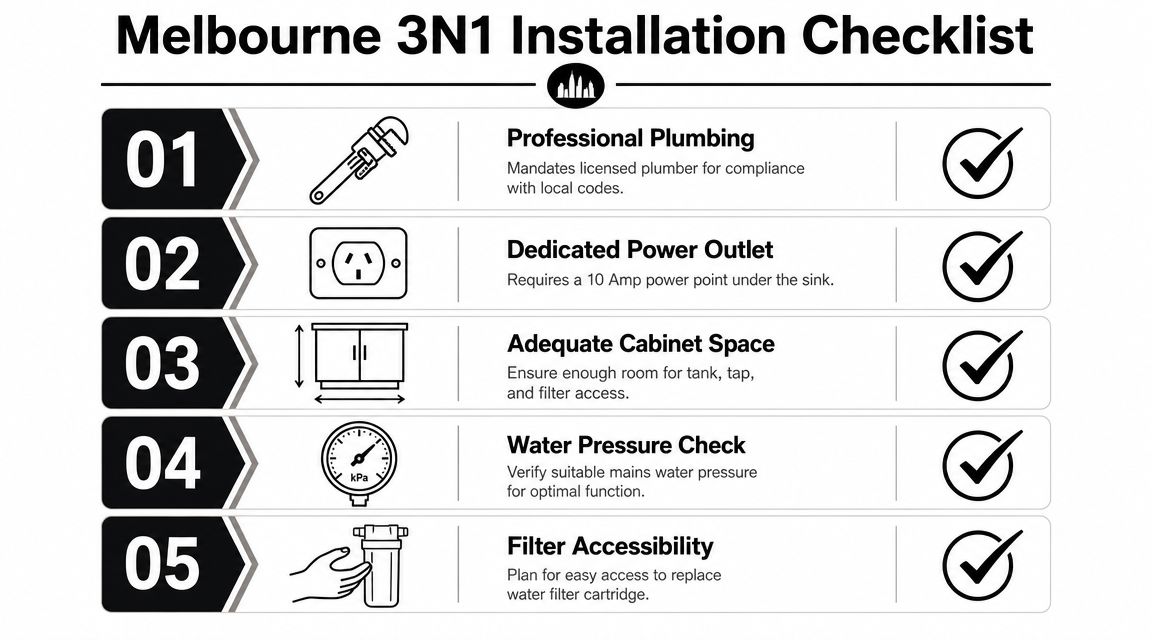
The kitchen checks that matter before you buy
In Melbourne homes, the biggest trouble spots are usually simple:
- Stone or hard benchtops: If the hole isn't already there, drilling needs to be handled properly. Benchtop damage is a far bigger risk than many people expect.
- Crowded sink cabinets: Waste bins, pull-out storage, insinkerators, cleaning products and water filters all compete for the same space.
- Power access: The unit needs nearby electrical supply. Extension-lead thinking has no place under a wet sink cabinet.
- Serviceability: A system that technically fits but can't be accessed easily is a poor install.
If you're still deciding between products and layouts, it's worth reviewing what's involved with an instant hot water tap installation before you commit to one model.
Why DIY thinking usually backfires
Some homeowners assume this is a tap replacement with a small add-on tank. It isn't. It's a coordinated install.
A proper installer has to think about tap hole placement, hose routing, filter placement, tank position, electrical reach, shut-off access and future maintenance. If the tank ends up too far from the tap, if the socket location is awkward, or if the filter is buried behind stored items, the system may work poorly or become painful to service.
Keep the under-sink layout tidy from day one. The neatest install isn't the one with the fewest visible parts. It's the one that leaves safe access for future filter changes and diagnostics.
What works well in Melbourne kitchens
The smoothest installations tend to happen in kitchens with a clear sink cabinet, planned power access and a realistic understanding of what else already lives below the bench. Renovations are the easiest time to get this right, but retrofit installs can work well too if someone checks the cabinet and services properly before ordering.
What doesn't work is buying the tap first and only then asking whether the cabinet can take the tank, filter and hoses without conflict. That approach creates preventable labour, awkward rerouting and disappointment.
Long Term Ownership Care and Common Faults
The most useful question isn't whether the tap works when it's new. It's what ownership feels like later, after daily use, filter neglect, cabinet clutter and changing water conditions start to show up.
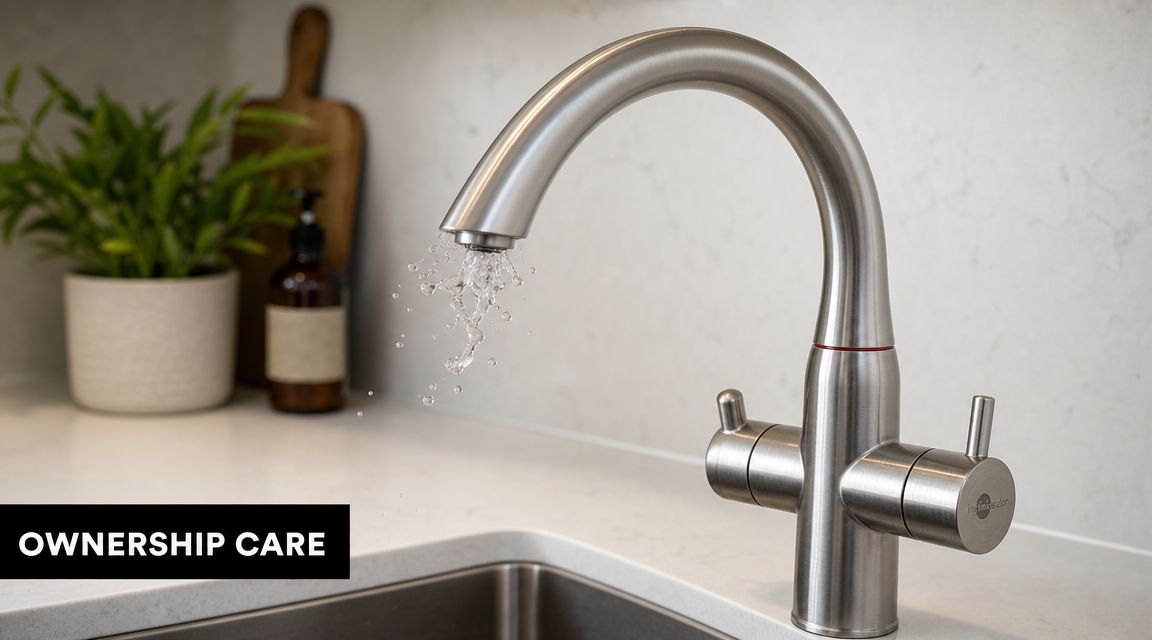
One real-world complaint already visible from users is a “spluttering” 3N1 tap, noted in a customer repair question about an InSinkErator 3N1 issue. That kind of symptom matters because it shifts the conversation from brochure promises to actual support needs in Australia, including parts access and maintenance.
What spluttering usually tells you
Spluttering isn't a diagnosis by itself. It's a symptom.
In practice, it often points to one of a few broad issues:
- Air in the system: This can show up after servicing, filter work or interruptions to supply.
- Scale-related behaviour: Mineral build-up can affect flow quality and consistency.
- Aeration or flow irregularity: The tap may still heat correctly while delivery becomes uneven.
- Service access problems: Sometimes the fault is simple, but the cabinet layout makes even basic checks harder than they should be.
That's why a good installer doesn't just fit the unit and leave. They set it up so future maintenance is straightforward.
The maintenance habits that actually help
Owners don't need to become technicians, but they do need a routine.
A sensible approach includes:
- Change filters on time. This protects water quality and supports system health.
- Notice changes early. Strange noises, reduced flow or unstable delivery are easier to address before they become bigger service jobs.
- Keep the cabinet accessible. Don't bury the tank and filter behind chemicals, bags or stacked containers.
- Use genuine compatible parts. Small consumables and replacement components matter more in integrated systems than people realise.
If you're fitting or maintaining the filtration side, this guide to under sink water filter installation is a useful reference point for understanding placement and service access.
A spluttering tap doesn't always mean major failure. It often means the system needs methodical checking by someone who understands filtration, heating and under-sink routing together.
What good ownership support looks like
Local service is especially important. Not every plumbing issue is a product defect. Sometimes it's scale, setup, filter condition or wear in a commonly stressed component. The owner usually doesn't care which category it falls into. They just want the tap working properly again.
That's also why parts availability matters so much in Australia. Premium taps are easier to live with when filters, fittings and replacements are realistically obtainable. If the support path is unclear, even a nice product can become inconvenient to own.
How the 3N1 Compares to Other Water Solutions
Most households don't choose between the 3N1 and another boiling tap. They choose between the 3N1 and the collection of things they already use now.
That usually means a kettle, some type of filtered drinking water setup, and an ordinary mixer tap. In some homes, bottled water enters the picture too. The practical question is whether combining those functions into one sink fixture makes daily life easier enough to justify the change.
Kettle versus integrated steaming water
The kettle still wins on simplicity. You buy it, plug it in and replace it when it dies.
The 3N1 wins on workflow. There's no separate appliance to fill, boil and put away. Bench space stays clearer, and the sink becomes the point where hot drinks, quick food prep and filtered water all happen. For households that use these functions repeatedly through the day, that's a noticeable upgrade.
Filter jug versus built-in filter
A filter jug is cheap to start with and easy to understand. The downside is handling. It needs refilling, takes fridge or bench space, and often becomes one more item to clean around.
A built-in filtered system is tidier and has a more integrated appearance. The trade-off is commitment. You're now maintaining part of your plumbing setup, not just replacing a cartridge in a jug.
Upfront spend versus ownership value
The 3N1 sits in premium territory, as noted earlier from manufacturer-linked product material. That means it won't suit every budget, especially if the kitchen also needs cabinet work, power adjustment or stone drilling.
Where the value starts to make sense is in homes that care about three things at once:
- Bench space and a less cluttered kitchen
- Convenience without repeated kettle use
- Integrated design rather than add-on appliances
The wrong way to assess the 3N1 is to compare it only to the price of a kettle. The fairer comparison is against the combined role of your mixer tap, your kettle and your drinking water setup, plus the convenience of having those functions built into one place.
Your Melbourne Experts for Insinkerator Taps
A good InSinkErator 3N1 hot water tap setup isn't just about choosing a stylish fixture. It's about matching the tap to the cabinet, the power, the plumbing and the way your household uses the kitchen. That's why the ownership experience matters as much as the specification sheet.
For Melbourne homeowners, the strongest results come from treating the 3N1 as a complete under-sink system. It needs proper installation, sensible filter maintenance and a clear path for parts and servicing later on. If you're also planning a broader kitchen update, this guide on how to choose bathroom or kitchen fixtures is a helpful companion because fixture choice always works better when it's considered alongside layout and daily use.
For supply, installation support, repairs, filters and compatible spare parts, Ring Hot Water offers InSinkErator hot water taps and related under-sink solutions in Australia. That's useful when you want one place that understands both the product and the service side of ownership.
If you're planning an InSinkErator 3N1 hot water tap for your home, or you already have one that needs advice, installation or ongoing care, contact Ring Hot Water. We help Melbourne homeowners choose the right setup, install it properly and keep it working well long after day one.

