
Uncategorized
Hot Water System Installation Cost: A 2026 Melbourne Guide
Apr
Traditional hot water systems cover a wide price range, but a modern under-sink instant boiling system in Melbourne typically lands at $1,800 to $4,000 installed. That higher real-world figure usually comes from the parts people don’t see at first, like specialised fittings, valves, bench integration, and possible electrical work.
If you’re standing in your kitchen right now looking at a kettle, a crowded benchtop, and a sink area that never quite feels organised, you’re not alone. A lot of Melbourne homeowners start by searching hot water system installation cost and end up reading guides that talk about big tanks in the backyard, gas units on the wall, or replacement storage systems. Helpful, yes. But not very useful if what you want is instant boiling water neatly built into the kitchen.
That’s where the conversation changes. Instead of asking, “What does a normal hot water system cost?”, the better question is, “What does it cost to get rid of bench clutter and have boiling water straight from the tap?” The answer depends less on tank size and more on cabinet space, plumbing layout, filtration, fittings, and how easy your Melbourne home is to work on.
Rethinking Your Kitchen Hot Water
A kettle is one of those things people stop noticing until they’re short on space. It sits in the corner, needs refilling, leaves cord clutter, and somehow always looks bigger when you’re trying to prep dinner. In a smaller kitchen, that lost bench space matters.
A 3-way mixer tap changes the setup completely. Instead of separate appliances fighting for room, you get standard hot water, cold water, and filtered or boiling water from one tap point. It’s a cleaner solution, and for many homes it feels less like a plumbing upgrade and more like a kitchen reset.
Broad hot water cost guides still matter, because they give you the wider market context. For example, electric hot water systems remain the most affordable entry point for Australian homeowners, with installation costs ranging from AUD 600 to AUD 2,500 nationally as of 2026, though their higher long-term running costs are pushing many people toward more efficient integrated options, according to this Australian hot water cost guide. That’s useful background, but it doesn’t tell you much about a Zip or Stiebel Eltron unit tucked inside a kitchen cabinet.
Why general cost guides can miss the mark
A standard storage tank is one kind of job. An under-sink boiling tap is another.
One is mostly about bulk hot water for showers, laundry, and the house overall. The other is about compact convenience at the sink, usually with tighter cabinetry, finer fittings, and more attention to how the kitchen works day to day.
A kitchen tap upgrade can affect how you use the room every single day, which is why the install details matter as much as the product itself.
If you’re still comparing broader system types, this practical overview on Choosing The Right Water Heater is a handy companion read. It gives useful background on the bigger decision, while this guide stays focused on the hidden costs and practical realities of instant under-sink systems in Melbourne.
What Melbourne homeowners usually want
Those inquiring about these systems aren’t just chasing hot water. They’re trying to solve a mix of everyday annoyances:
- More bench space by removing the kettle
- Faster kitchen routines for tea, coffee, pasta, and cleaning
- A neater look with one tap instead of multiple gadgets
- Filtered drinking water from the same point of use
That’s why the true cost discussion needs to be narrower, more local, and more practical than a generic hot water article.
Understanding The 3-Way Mixer Tap
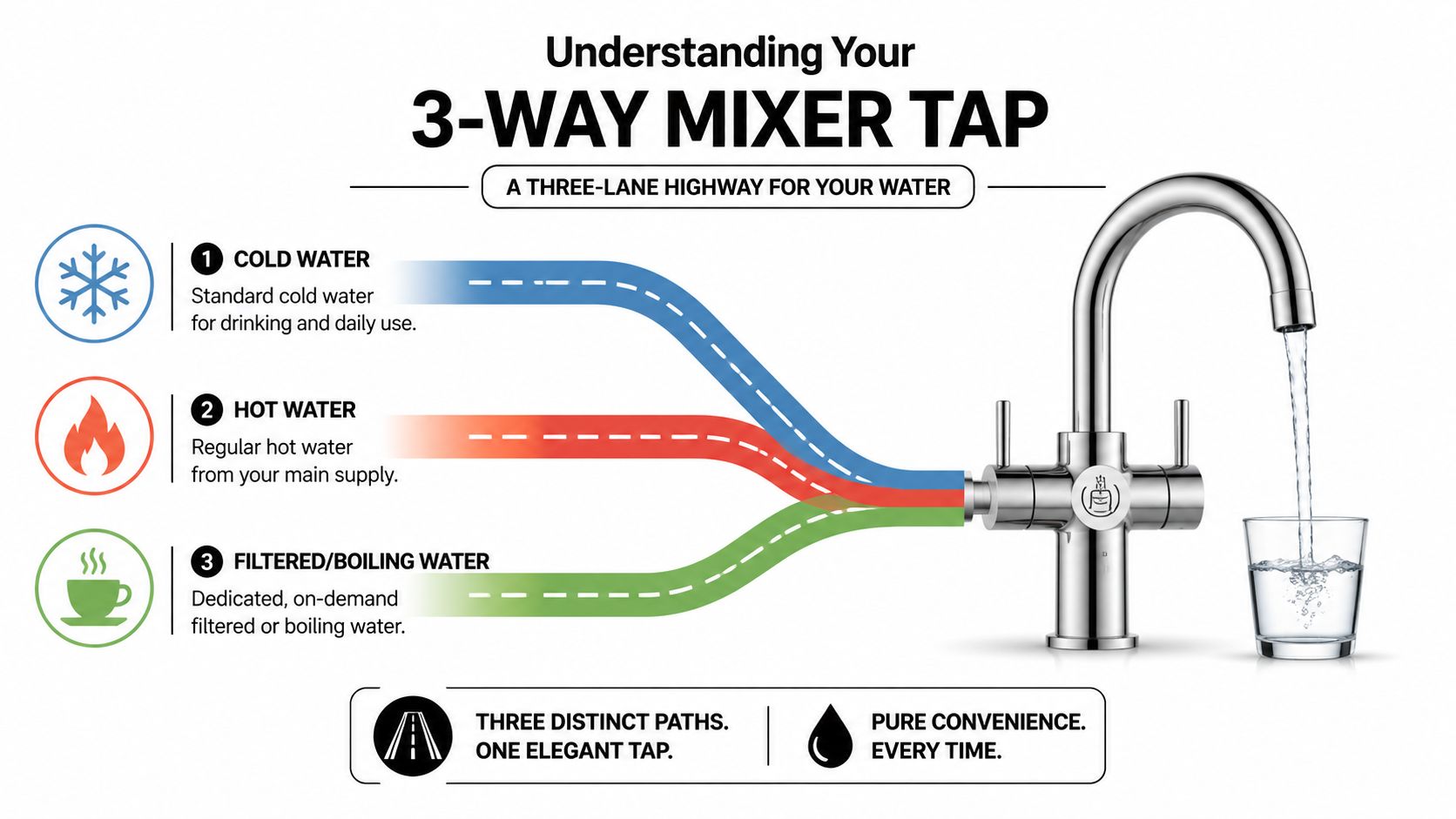
A 3-way mixer tap sounds technical, but the easiest way to picture it is as a three-lane highway for your water. One lane carries cold water. One carries regular hot water. The third carries filtered or boiling water from the under-sink unit. All three reach the same tap, but they travel through separate internal pathways.
That separation matters. It means your filtered or boiling water doesn’t mix with your standard hot and cold supply inside the tap body. You get one elegant fixture at the sink, but the water streams stay in their own lanes until they exit where they’re meant to.
How the controls usually work
Most 3-way taps split the user controls in a simple way.
- Main mixer handle controls everyday hot and cold water for washing up
- Separate lever or safety control activates filtered or boiling water
- Child-safe action is often built into the boiling side, so it’s not turned on by accident
One tap performs the job of a sink mixer, a filtered water tap, and a kettle, without needing three separate fixtures drilled across the bench.
Why the internal design matters
People often assume one tap means one pipe. It doesn’t. Inside the tap are separate channels, seals, and connection points, which is why installation is more exact than a standard mixer swap.
If the plumbing under the sink is the road network, the tap is the interchange. Everything has to connect cleanly, in the right order, with the right pressure and fittings.
Practical rule: The neater the tap looks above the bench, the more important the planning below the bench becomes.
This is also why choosing tapware style isn’t only about finish and shape. The spout design, handle layout, and body size can affect usability, especially in smaller Melbourne kitchens. If you want to compare the look and footprint of modern kitchen mixers, this example of Melbourne kitchen tapware gives a good sense of how integrated tap designs can suit a modern kitchen.
The simple takeaway
A 3-way mixer tap isn’t magic. It’s just smart plumbing design. Separate water paths, one clean outlet, and controls that let you move from rinsing vegetables to filling a teacup with boiling water without changing appliances or losing bench space.
Key Benefits of an Integrated Tap System
The biggest benefit is the one you notice straight away. You get your bench back. Once the kettle is gone, the kitchen usually feels calmer, cleaner, and easier to work in.
That matters more than people expect. In many Melbourne homes, especially apartments and older kitchens, bench space is tight. Removing even one appliance can free up a useful prep zone beside the sink.
Convenience you feel every day
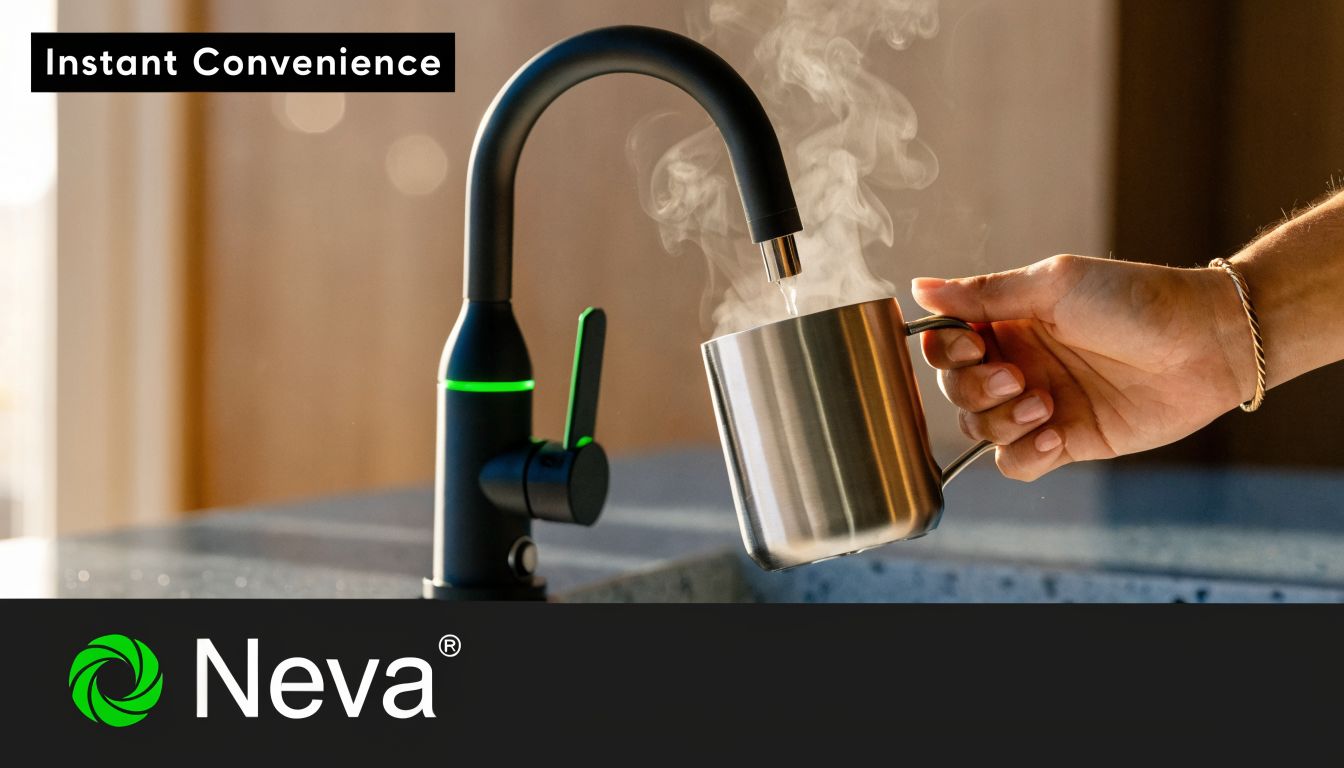
An integrated boiling tap changes the rhythm of the kitchen. Instead of filling a kettle, waiting, and coming back, the water is ready when you are.
That helps with ordinary tasks more than grand ones:
- Morning drinks become quicker because tea and coffee start instantly
- Cooking prep gets easier when you need hot water for pasta, noodles, or blanching
- Cleaning jobs feel simpler when hot water is available without waiting on a separate appliance
It’s one of those upgrades that sounds like a luxury until you use it for a week. Then going back to a kettle feels clunky.
A cleaner look without extra tap clutter
Many kitchens end up with a standard mixer, a kettle, and sometimes a separate filtered water tap. That’s a lot going on around one sink. A 3-way tap condenses those jobs into one focal point.
The result is usually more minimal, but not in a show-home way. It’s practical minimalism. Fewer visible appliances, fewer cords, and fewer things to wipe around.
Good kitchen design isn’t only about looks. It’s about removing friction from the jobs you do every day.
Why people often prefer it to adding another appliance
A standalone appliance solves one problem while creating another. The kettle gives you boiling water, but it takes space. A second tap gives you filtration, but it adds another fixture. An integrated tap system bundles those functions into one place.
Homeowners often like these systems because they can:
| Everyday issue | Integrated tap outcome |
|---|---|
| Kettle taking up bench space | Frees up the corner for food prep |
| Waiting for water to boil | Delivers boiling water on demand |
| Multiple sink fixtures | Combines functions in one tap |
| Mess around appliances | Reduces cords and surface clutter |
That combination is why the install can be more involved, but also why the outcome feels so tidy.
Important Installation and Plumbing Factors
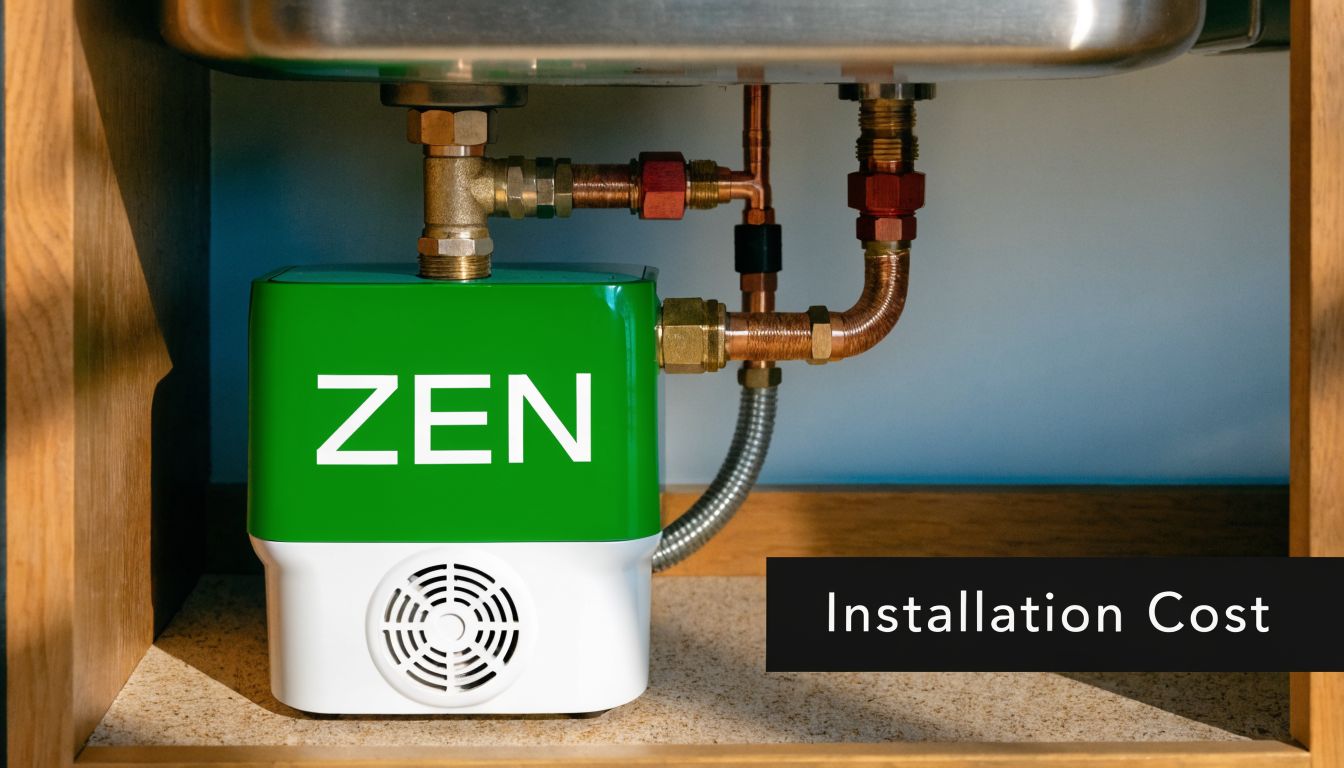
Installing an under-sink boiling system isn’t just a matter of screwing on a nicer tap. You’re adding a compact appliance under the bench, connecting it to the water supply, and making sure the tap, filter, valves, and fittings all work together properly.
Brands such as Zip and Stiebel Eltron are designed for this kind of setup, but the quality of the installation still decides how smooth the system feels in daily use. A good install should look neat, operate with minimal noise, and leave enough room in the cabinet for servicing later.
What has to fit under the sink
Before anyone talks product finish or tap style, check the cabinet.
An under-sink boiling unit needs space not only for the main unit itself, but also for hose runs, filter placement if included, power access, and safe clearance around connections. In a crowded cabinet with bins, cleaning products, and awkward trapwork, layout becomes half the job.
The most common practical checks are:
- Cabinet access so the unit can be installed and serviced without dismantling half the kitchen
- Power location because many systems need an accessible outlet under the sink
- Water line arrangement so hoses don’t kink or rub against sharp edges
- Ventilation and clearance to suit the manufacturer’s installation instructions
Pressure and valves matter more than people expect
These systems like stable conditions. If pressure is too high, the unit can behave poorly and fittings wear faster. If pressure is inconsistent, the tap may not deliver as cleanly as expected.
That’s why valves are not just extras on a quote. They’re part of making the system safe and reliable. If you want a plain-English explanation of why this matters, this guide to a pressure limiting valve is worth reading before installation day.
If a quote includes valves or small control parts, that’s usually a sign the installer is thinking ahead, not padding the job.
John Guest vs Brass Fittings Comparison
A lot of under-sink systems use compact fittings, and homeowners often hear two names come up: John Guest fittings and brass fittings. Neither is automatically “better” in every situation. It depends on the unit, the space, and the plumbing layout.
| Feature | John Guest Fittings | Brass Fittings |
|---|---|---|
| Installation style | Push-fit connection, often quicker in tight cabinet spaces | Threaded connection, more traditional |
| Best use | Compact systems and neat tube routing | Solid fixed connections where threaded components suit the setup |
| Servicing | Can be convenient for component changes | Familiar to many plumbers for long-established plumbing methods |
| Space needs | Helpful where room is limited | Can take more turning room during assembly |
| Typical feel | Lightweight and tidy | Heavier-duty and conventional |
For caravan and RV owners, this matters too. Compact systems often rely on tight routing and smaller spaces, so fitting choice becomes part of making the install practical rather than awkward.
Don’t treat it like a basic tap swap
A standard mixer replacement is one category of plumbing. An integrated boiling tap is a small system installation. That’s the key difference. You’re not only changing what sits on the sink. You’re changing what happens under it.
Breaking Down The Real Installation Cost
Many quotes often surprise people. The tap on display looks simple and polished, but the actual installed price includes the under-sink unit, plumbing connections, valves, fittings, and sometimes electrical preparation.
For Melbourne homeowners looking at under-sink boiling taps, installation can add $500 to $1,500 beyond the unit cost due to custom fittings, valves, and potential electrical work, bringing the total installed price to between $1,800 and $4,000, as outlined in this breakdown of under-sink hot water replacement costs.
What a quote is usually covering
A proper quote for this kind of work usually combines product cost with installation detail. The “hidden” part isn’t that anyone is sneaking in charges. It’s that a lot of homeowners understandably picture only the tap they can see.
Common quote items include:
- The unit itself such as an under-sink boiling system from brands like Zip, Stiebel Eltron, Insinkerator, Birko, or Boiling Billy
- Tap installation including bench or sink mounting and final alignment
- Specialised fittings and valves to connect and protect the system
- Electrical coordination if the cabinet doesn’t already have suitable power access
- Cabinet adjustments where hose routing or clearance needs improvement
Why Melbourne kitchens can push the cost upward
Apartment kitchens, older cabinetry, and tight under-sink spaces are where cost tends to move. If the installer has to work around existing filtration, awkward waste pipes, or limited access, the labour side becomes more involved.
That’s also why generic interstate guides don’t always map neatly to a Melbourne kitchen. If you want a broader metro comparison outside Victoria, this comprehensive guide for Sydney homes shows how location and job type can shift installation thinking, even when the core system sounds similar.
A second useful comparison is system type. This article on which type of hot water system helps explain why under-sink instant systems sit in a different category from larger household hot water options.
What often causes sticker shock
The surprise usually comes from one of three places:
The cabinet isn’t as empty as expected
Waste pipes, pull-out bins, and existing filters leave less usable room than the homeowner thought.The plumbing needs adapting
Off-the-shelf connections don’t always suit integrated boiling systems. Custom fittings or extra valves may be needed.The electrical side isn’t ready
If there’s no suitable power arrangement under the sink, the installation becomes a coordinated job rather than a simple plumbing visit.
Here’s a quick visual explainer on what these systems involve in practice.
Your Guide to Installation in Melbourne
Melbourne installs have their own personality. One day you’re working in a clean new apartment tower with neat service cavities. The next day you’re in a weatherboard in Yarraville with older pipework, tight cabinetry, and a cabinet floor that has seen a few decades of modifications.
That local variation is why kitchen hot water upgrades here can’t be priced purely from a brochure. The same under-sink system may be straightforward in one suburb and fiddly in another.
Older homes change the job
A common Melbourne scenario goes like this. A homeowner in Footscray or Yarraville wants a modern boiling tap to replace the kettle. The kitchen looks simple enough from above, but under the sink there’s old plumbing, limited space, and little room to move tools.
If the job also involves relocating associated hot water components, the complexity can rise fast. In Melbourne, relocating a hot water system can increase installation complexity by 20 to 50 percent, adding $300 to $1,000 in labour, with crane hire or trenching adding another $500 to $800 in some cases, according to this Melbourne installation cost analysis. That specific issue won’t apply to every under-sink tap, but it shows why local site conditions matter so much.
In Melbourne, the house often decides part of the quote before the installer even opens the toolbox.
Brand familiarity matters
A specialist installer who regularly works with Zip, Stiebel Eltron, Birko, Kwikboil, Boiling Billy, Everboil, and Insinkerator will usually spot compatibility issues earlier. That can mean cleaner hose routing, better placement of filters and valves, and fewer surprises after the unit is switched on.
In practical terms, local experience helps with:
- Heritage-era layouts where access is awkward
- Apartment installs where cabinet space is limited
- Replacement jobs involving an older under-sink unit
- Advice on alternatives when a full boiling setup isn’t the best fit
Some Melbourne households also compare integrated boiling taps with a more compact on-demand approach. If you’re weighing those options, this look at a tankless instant water heater is a useful reference point.
What a smooth local install looks like
The best jobs are usually the least dramatic. The installer checks access, confirms the tap position, verifies the cabinet arrangement, fits the control components neatly, tests the system, and leaves enough room for future servicing.
You shouldn’t be left guessing what each valve does or whether the filter can be changed without emptying the whole cupboard.
Simple Maintenance and Troubleshooting
Once the system is in, day-to-day care is fairly straightforward. Most homeowners won’t need to do much beyond keeping the area under the sink tidy and changing the filter when required for their setup.
That’s the good news with modern under-sink systems. They’re designed for regular use, not constant tinkering. But a little attention goes a long way.
The simple maintenance routine
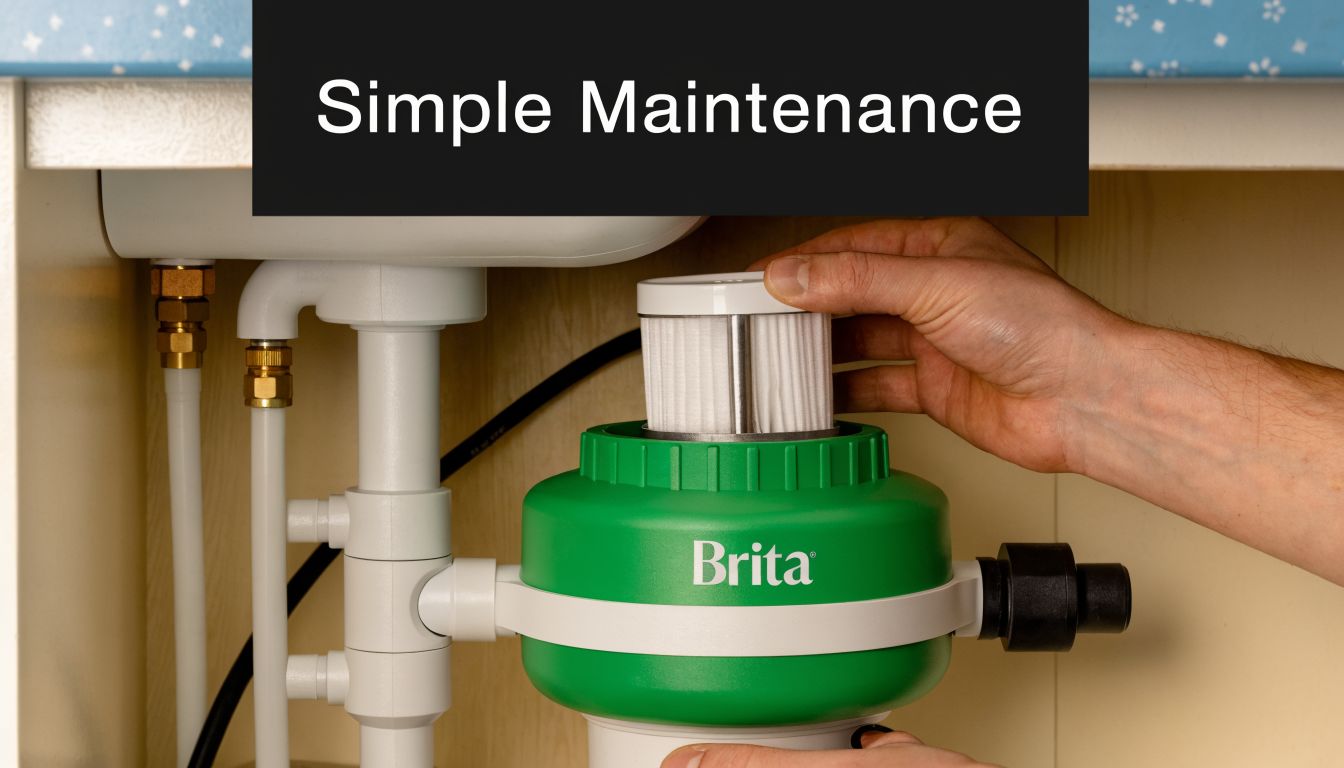
Most ongoing care comes down to a short checklist:
- Check the filter if your system includes filtered drinking or boiling water. A tired filter can affect taste and flow.
- Look for small drips around fittings or valves under the sink. Catching a minor leak early is far better than finding cabinet swelling later.
- Keep the cupboard clear so hoses don’t get knocked by bins, bottles, or stored cleaning gear.
- Listen for changes in normal operation. Odd noises, sputtering, or inconsistent delivery often mean the system needs attention.
What common problems usually mean
A few symptoms show up again and again.
If the boiling water seems less hot than usual, the issue may be with the unit settings, the filter condition, or a component that needs inspection. If the tap spits or sputters, trapped air or an interruption in flow can be part of the story. If you notice moisture around a connection, don’t ignore it and hope it dries up on its own.
Small plumbing issues stay small only when someone checks them early.
When to troubleshoot and when to call a pro
Use this simple rule of thumb:
| Symptom | What you can do first | When to book service |
|---|---|---|
| Reduced flow | Check if the filter needs replacement | If flow stays poor after basic checks |
| Minor sputtering | Run the tap as instructed by the manufacturer | If it continues or gets worse |
| Visible drip | Clear the cupboard and confirm where it’s coming from | If the source isn’t obvious or the fitting stays wet |
| Temperature change | Review user settings if accessible | If performance doesn’t return |
If your system uses genuine replacement filters, specialised valves, elements, or compact fittings, it’s worth matching parts properly rather than improvising. That’s especially true for branded systems where the wrong component can cause nuisance issues later.
Frequently Asked Questions
Is an under-sink boiling tap the same as a whole-house hot water system
No. A whole-house system supplies bathrooms, laundry, and the wider home. An under-sink boiling tap is a point-of-use kitchen system designed for instant filtered or boiling water at the sink.
Why is the hot water system installation cost for these taps higher than a normal mixer tap
Because you’re not only fitting a tap. You’re installing a tap, an under-sink unit, and the connecting plumbing components that let the whole system work safely and neatly together.
Do older Melbourne homes make the job harder
Often, yes. Tight cabinets, older plumbing layouts, and limited access can all make installation more involved than it first appears.
Are these systems only for large kitchens
Not at all. In many cases they suit smaller kitchens especially well because they remove the kettle and reduce bench clutter.
Can I still have normal hot and cold water from the same tap
Yes. That’s the point of a 3-way mixer tap. It combines standard sink use with a separate filtered or boiling water pathway in one fixture.
If you’d like expert help choosing, installing, repairing, or maintaining an under-sink boiling water system in Melbourne, Ring Hot Water can help with genuine parts, practical advice, and specialist support for brands like Zip, Stiebel Eltron, Birko, Kwikboil, Boiling Billy, and more.
