
Boiling Hot Water
Instant Boiling Water on Tap: Best Choices for 2026
Apr
You’re probably reading this while standing in a kitchen that already feels too busy. The kettle is on. Someone wants tea. Someone else needs hot water for porridge or noodles. You’re waiting for the boil, then pouring more water than you needed, then waiting again later in the day.
That’s why instant boiling water on tap has gone from a niche upgrade to a serious consideration in Melbourne homes, offices and hospitality fit-outs. It solves a very ordinary problem, but it solves it well. You get near-boiling water at the sink, without the kettle on the bench and without the stop-start rhythm that slows down a kitchen.
In Melbourne, that decision also comes with local questions that generic guides usually skip. How does hard water affect the unit? What does standby power mean when electricity prices are high? Will it fit under a standard sink cabinet? What if you need parts quickly, or you’re fitting one into a caravan rather than a house?
Those are the practical questions that matter. They’re also the ones that decide whether a boiling water tap feels like a smart long-term appliance or an expensive novelty.
Is This the End of the Kitchen Kettle
It is 7:15 on a Melbourne weekday. One person wants tea, another needs hot water for oats, and the kettle is already halfway through its first boil. A few minutes later, someone fills it again for coffee. By mid-morning, the same little routine has repeated often enough that it no longer feels like waiting. It just feels normal.
That is the habit a boiling water tap challenges.
The kettle has done its job in Australian kitchens for decades, but it also claims bench space, adds another cord and appliance to clean around, and only serves one task at a time. In smaller homes, apartments, office kitchens, and even caravans where every surface matters, that starts to feel less like a trusty standby and more like clutter with a heating element.
A boiling water tap changes the flow of the room. Hot water is available where you already rinse vegetables, fill pots, and make drinks. It is a bit like moving from a freestanding fan heater to ducted heating. Both produce heat, but one becomes part of the space instead of sitting in the way.
What changes in everyday use
The first benefit people notice is speed, but the bigger change is convenience across the whole day.
- You get bench space back. Removing the kettle frees a clear working area, which makes a real difference in compact Melbourne kitchens.
- Short jobs become easier. One mug of tea, a quick top-up for cooking, or hot water for cleaning no longer means filling and reboiling a jug.
- The sink becomes the practical hot water zone. That suits the way people cook and clean.
For households that use hot water in small bursts, the difference adds up quickly. It is less about dramatic time savings and more about cutting out repeated little interruptions.
There is also a design reason these systems come up so often during kitchen upgrades. Once you are replacing tapware, adjusting cabinetry, or trying to create a cleaner open-plan look, the kettle can start to look like a temporary fix that never left.
Why Melbourne buyers ask different questions
Melbourne buyers usually look past the showroom appeal pretty quickly. They want to know what it costs to run, whether local water quality will shorten filter life, how much room the tank needs under the sink, and whether parts and servicing are easy to get. Those are sensible questions, especially with electricity prices under pressure and with some areas dealing with harder water than others.
That local angle is also why generic overseas advice often misses the mark. A unit that sounds simple on paper still has to suit Australian power supply, local plumbing rules, and the practicalities of getting support if something needs attention later. Access to Melbourne-based installation help and replacement parts from suppliers such as Ring Hot Water can make the difference between a practical long-term upgrade and an appliance that becomes frustrating to own.
The kettle is not disappearing from every home. Plenty of households will keep one, and in some kitchens that still makes sense. But for homeowners, businesses, and caravan owners who use hot water repeatedly through the day, it is no longer the automatic choice it once was.
How Instant Boiling Water Taps Actually Work
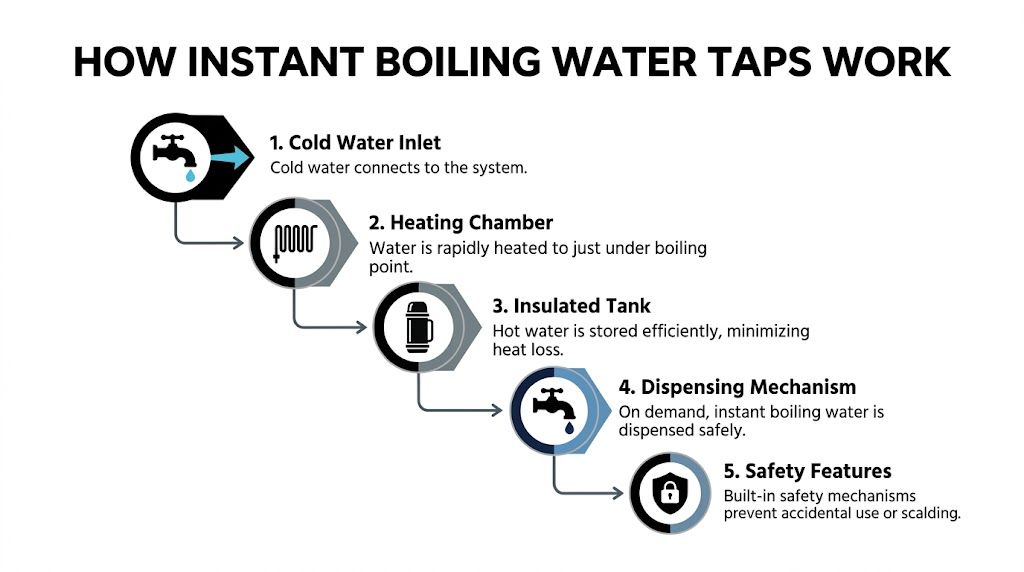
Open the tap, press the safety control, and near-boiling water comes out straight away. What makes that possible is not a hidden kettle inside the spout. It is a compact under-sink system that keeps a small volume of water hot and ready.
A good way to understand it is to separate the visible part from the working part. On the benchtop, you see the tap. In the cabinet below, you have the filter, the heating tank, and the plumbing connections that feed and refill the unit.
The main parts inside the system
Most instant boiling water setups use the same core components:
- Cold mains water feed into the unit
- Filter cartridge to improve taste and reduce sediment
- Insulated heating tank under the sink
- Tap with a safety mechanism to control dispensing
In Australian homes, these systems are generally designed to suit local power supply and standard under-sink layouts. That matters more than it sounds. A model that looks fine in an overseas guide still needs to match Australian electrical requirements, local plumbing rules, and parts you can get in Melbourne if something needs replacing later.
What happens when you turn it on
The tank under the sink stores water at near-boiling temperature. When you use the tap, fresh mains water flows into that tank and pushes the ready-heated water out through the spout.
That is why the water feels instant.
The unit is not heating each cup from cold at the exact moment you ask for it. It works more like a well-insulated thermos that refills automatically, reheats what was used, and keeps the next draw ready. Once people understand that, the whole system becomes much easier to judge on running cost, recovery time, and tank size.
Why the tank is the key part
The word "tank" puts some buyers off because it sounds bulky or wasteful. In practice, the tank is the reason the system works well. It stores only a small amount of water, and the insulation is there to reduce heat loss between uses.
That design suits real kitchens. If you are making tea, blanching vegetables, filling a saucepan, or preparing baby bottles through the day, you are drawing from a ready reserve instead of starting from room temperature each time.
Tank size still matters. A smaller unit suits lighter household use, while a busier office kitchenette or commercial tea point may need more capacity and faster recovery. That is one of the places where local advice helps. Melbourne installers and suppliers such as Ring Hot Water can usually tell from your kitchen layout and usage pattern whether a compact domestic tank will be enough or whether you will outgrow it quickly.
The tap formats people often mix up
Different products get grouped together as if they all do the same job. They do not.
| System type | What it does | Where it suits |
|---|---|---|
| Boiling-only tap | Dedicated tap for near-boiling water only | Secondary sink, butler’s pantry, office tea point |
| 3-in-1 tap | Regular hot, cold and boiling from one fitting | Family kitchens where bench space matters |
| 4-in-1 tap | Usually adds filtered ambient water as well | Homes wanting fewer separate fixtures |
| Multi-function systems | Some premium units add chilled or sparkling water | Renovated kitchens and high-use workplaces |
The confusion usually happens with 3-in-1 and 4-in-1 models. The names sound similar, but the practical difference is simple. A 3-in-1 replaces more of your everyday tap function. A dedicated boiling tap adds a separate water point.
Why filtration matters in Melbourne
Filtration is not just about taste. It also helps protect the system.
Melbourne water quality varies by area, and some households will notice more scale or sediment than others. Over time, that can affect how cleanly the unit performs and how often service parts need attention. A filter helps reduce that load before the water reaches the heating chamber.
This becomes even more relevant in places where water sits in the system for periods between uses, such as holiday homes, small offices, and some caravan or RV setups. In those cases, the goal is not only good-tasting water. It is keeping the appliance cleaner and easier to maintain.
One product source for this article notes that under-sink boiling water systems commonly use a filtered cold-water feed, a compact insulated tank, and Australian-standard electrical supply, with near-boiling delivery from a dedicated or multi-function tap, according to technical product data for instant hot water dispenser systems.
The practical takeaway is straightforward. An instant boiling water tap is a small under-sink hot water appliance, not just a different style of mixer. The tap, filter, tank, and safety controls all work together, and the system only performs well when those parts suit your water, your power supply, and the way you use the kitchen.
The Real Benefits for Your Home or Business
It usually starts the same way. Someone is halfway through dinner prep, the kettle is already on for tea, and another person needs hot water for cooking or cleaning. In a busy Melbourne kitchen, that small delay happens over and over. An instant boiling water tap removes that bottleneck and turns hot water into something you can use straight away, not wait for.
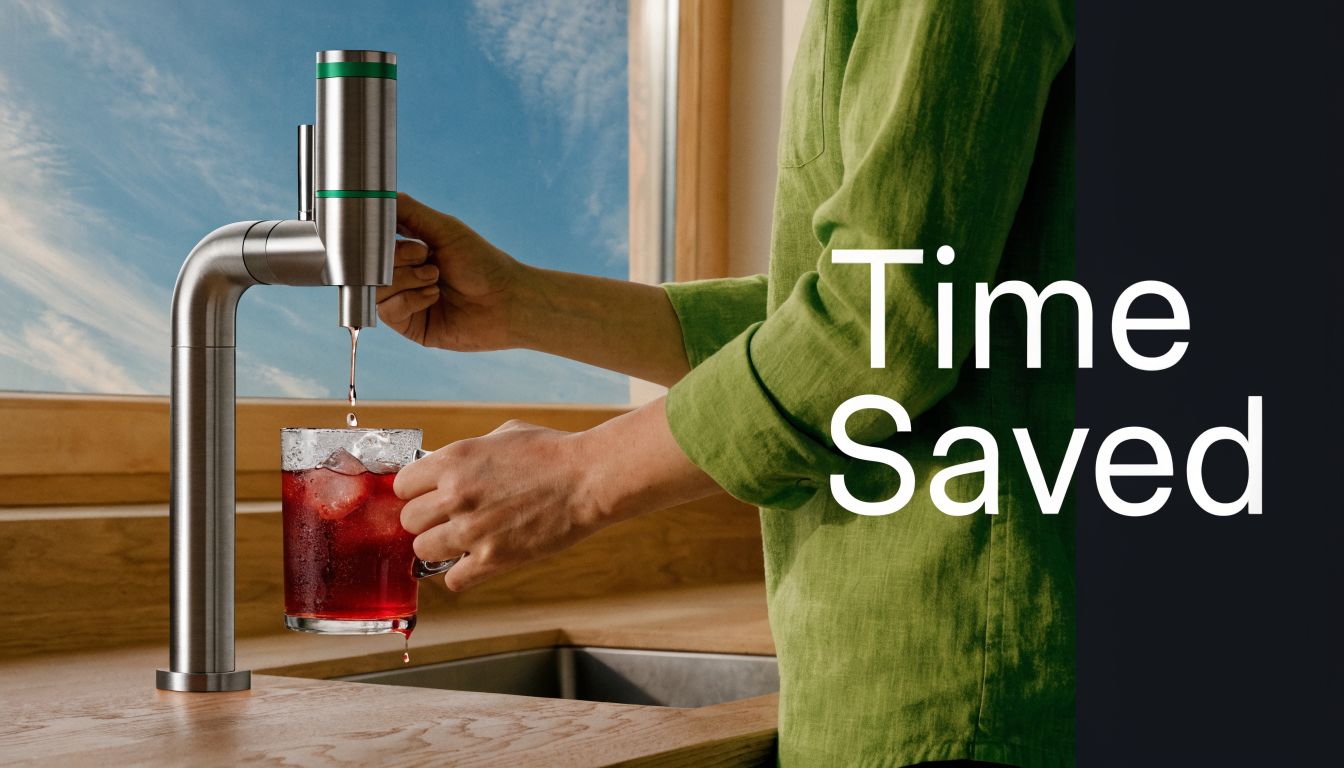
The main gain is not just speed. It is smoother kitchen flow.
A kettle is a separate appliance with its own little routine. Fill it, wait, pour it, put it back, then repeat. A boiling tap folds that task into the sink area, which is already where much of the kitchen work happens. In homes, that means fewer interruptions. In offices and staff rooms, it means less queuing around one appliance. In cafes, studios, and small hospitality setups, it can make repeated hot-water jobs easier to manage during busy periods.
Running cost is usually the next question, especially in Australia where electricity prices matter. The answer depends on usage. If a household or workplace boils water many times a day, especially in small amounts, a boiling tap often reduces waste because people stop overfilling kettles. If the kitchen is used lightly, the savings may be modest. That is why I tell Melbourne customers to look at habits first. How often do you boil water now, and how much of that water is used?
That practical view matters more than a broad market forecast.
Time savings are easy to understand, but the day-to-day benefit is less stop-start movement around the kitchen. You are not waiting for one appliance to catch up while another task stalls. For families, that helps during breakfast and dinner. For workplaces, it helps during morning tea and lunch rushes. For anyone fitting out a compact kitchen, it also removes one more item from the bench.
Here is where owners usually notice the difference first:
- Drinks without the wait: Tea, coffee, and herbal drinks are ready as needed.
- Faster prep: Starting pasta, rice, or stock with near-boiling water speeds up the first part of cooking.
- Quicker clean-up: Hot water at the sink helps with greasy utensils, roasting trays, and sticky residue.
- Less bench clutter: There is no kettle, no base, and no cord taking up visible space.
- Better shared use: In offices or communal kitchens, more than one person can keep moving without waiting on a small appliance.
Bench space deserves more attention than it usually gets. In many Melbourne apartments, townhouses, and renovated older homes, kitchens are doing several jobs at once. They are cooking spaces, homework zones, coffee stations, and entertaining areas. Removing a kettle does not sound dramatic, but it often gives back the patch of bench that is always in the way.
That matters even more in kitchens with limited power points or narrow worktops. It is the same reason many people move toward integrated appliances. The room feels tidier because one more loose item is gone. If you are comparing options, this guide to under-sink hot water systems helps explain how that built-in approach differs from a standalone benchtop appliance.
Homeowners and business owners also value different things, and it helps to be honest about that before buying.
| Setting | Main benefit | Why it matters |
|---|---|---|
| Family home | Less waiting and less clutter | Small hot-water jobs happen all day |
| Office | Faster access for staff | Break areas work better when people are not lining up |
| Hospitality | More consistent workflow | Repeated service tasks are easier to handle |
| Studio or apartment | Better use of limited space | Every bit of bench area counts |
| Caravan or RV | Compact convenience | A kettle is one more loose item to store, power, and secure |
The caravan and RV angle is often missed in generic articles. In a mobile setup, space is tighter, storage matters more, and every appliance has to justify itself. A compact hot water solution can be useful there, but only if the unit suits the available power supply, water setup, and travel conditions. That is one area where local advice and locally available parts matter a lot more than broad online recommendations.
For Melbourne buyers, there is also a maintenance side to value. A system that suits local water conditions and has filters, service parts, and installer support available through a local supplier such as Ring Hot Water is usually a safer long-term choice than a hard-to-service import. The benefit is not only convenience today. It is being able to keep the unit running properly in three or five years without chasing obscure parts.
Taken together, the advantages are simple. You get hot water faster, use bench space better, and remove a small but constant source of kitchen friction. For the right home or business, that adds up quickly.
Choosing the Right System for Your Space
A family in Carlton might want one tap that clears the bench and handles school lunches, tea, and cooking prep. A busy office in Southbank needs something very different. A caravan owner heading up the Hume needs to think about power draw, vibration, and how easy the unit will be to service on the road.
That is why the best choice starts with the setting, not the showroom finish.
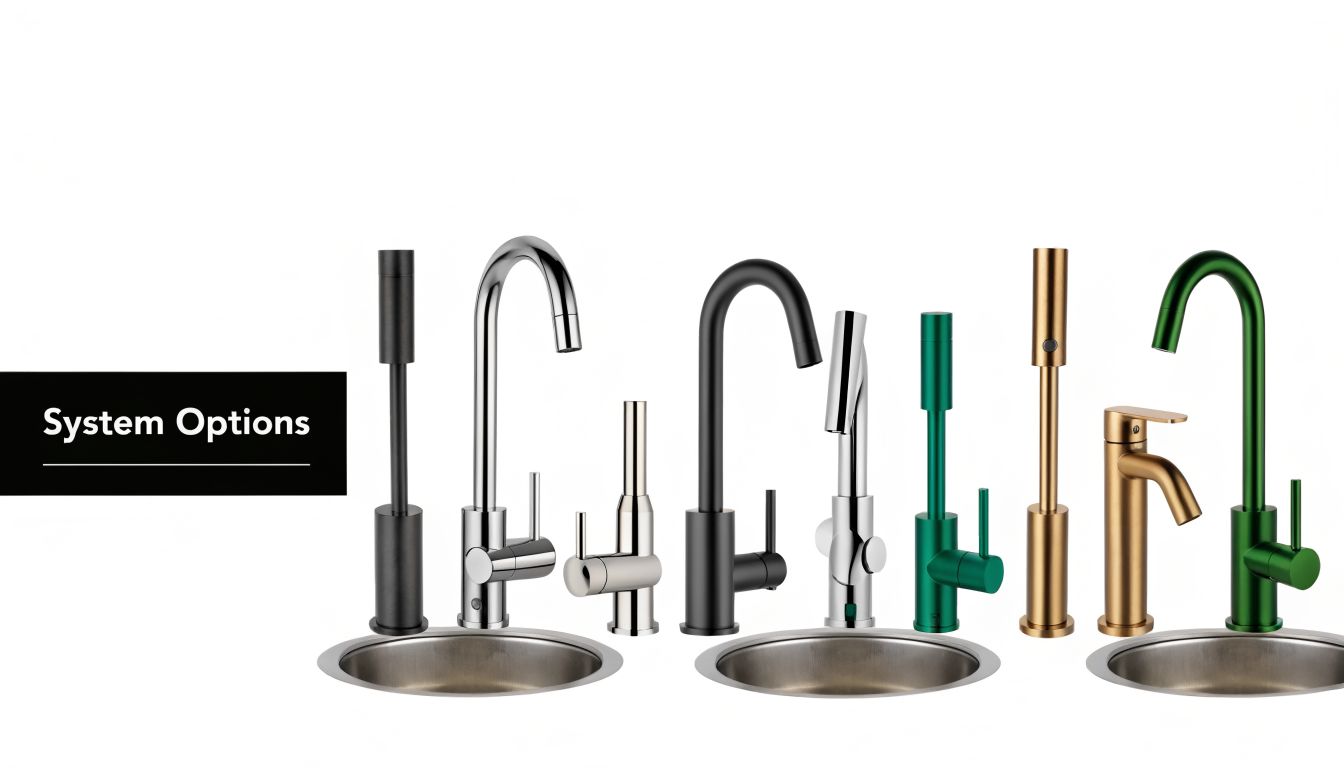
For Melbourne buyers, local water conditions should be part of the decision from the start. A tap can look perfect above the bench and still become annoying if the system under the sink is hard to service, hard to filter, or hard to get parts for later. That is one reason many buyers prefer models with local support and replacement parts available through suppliers such as Ring Hot Water.
For homes
In most homes, the choice comes down to two formats. You either install a dedicated boiling tap beside your existing mixer, or you choose an integrated 3-in-1 or 4-in-1 mixer that combines functions in one fitting.
A dedicated tap suits renovations where the current mixer is staying, or where you want boiling water at a second work zone such as an island, scullery, or butler’s pantry. It is often the simpler retrofit option because you are adding a function rather than redesigning the whole sink setup.
A 3-in-1 or 4-in-1 unit makes more sense in a full kitchen upgrade. One fitting handles standard hot and cold water, and some models add filtered drinking water as well. Brands such as Zip and Stiebel Eltron are commonly compared here.
Before choosing, check these practical points:
- how much under-sink room you have
- whether the filter can be reached without emptying the whole cupboard
- whether you want filtered ambient water as well as boiling water
- whether the finish matches the rest of the kitchen
- whether the system is suited to local water quality and easy servicing
If you’re comparing under-bench formats, this guide to under-sink hot water systems helps explain the main layout and use-case differences.
For offices and staff kitchens
An office kitchen should be sized for peak use, not average use. Ten people making tea one after another puts very different pressure on a system than a household does.
A small office may be fine with an under-sink boiling tap. A larger team usually does better with a higher-capacity unit or a wall-mounted boiler that can keep up during break times without long waits. Brands such as Birko and Boiling Billy are often considered for that kind of workplace use.
Here is the simple way to match the unit to the job:
| User | Usually best fit | Main priority |
|---|---|---|
| Home kitchen | 3-in-1 or 4-in-1 tap | Looks, convenience, bench space |
| Small office | Under-sink boiling tap or compact boiler | Reliable daily drinks service |
| Large office | Wall-mounted boiling unit | Capacity and repeated-use performance |
| Hospitality prep area | Commercial boiler or urn | Fast turnover and easy servicing |
The mistake I see in Melbourne offices is buying for appearance first, then discovering the unit slows down at exactly the busiest part of the day.
For hospitality venues
Cafés, lunch bars, community kitchens, and catering spaces need a more work-focused setup. Staff are not making the occasional mug of tea. They are repeating the same task over and over, often under time pressure.
That usually points to commercial boilers, urns, or high-use filtered systems rather than a domestic-style boiling tap. The right questions are straightforward:
- Can the unit recover quickly between uses?
- Are replacement filters and genuine parts easy to get in Melbourne?
- Can staff or service technicians access the unit without dismantling half the joinery?
- Will the local water supply create scale problems if filtration is skipped?
A stylish tap body matters less here than uptime and easy service access.
For caravans and RVs
Caravans and RVs need their own checklist. Generic online advice often skips this, but it should not.
A mobile setup has tighter cupboards, more movement, and stricter limits on power and water layout. A unit that works well in a fixed kitchen may be a poor fit once you add travel vibration, limited storage, and the need to secure every connection properly. Some compact systems are designed for filtered or mobile-use applications, including caravan-style setups with 12V pump compatibility, as noted in boiling tap product specifications covering filtered and mobile-use systems.
The practical lesson is simple. For a caravan, choose for fitment and serviceability first. If a part fails while you are away, being able to source replacements locally in Australia matters a lot more than having the fanciest tap on day one.
Filtration often decides whether the system stays easy to live with
Melbourne water conditions vary by area, but scale and sediment are real ownership issues. A boiling water tap works a bit like a small high-performance appliance under your sink. If the incoming water is harder or dirtier than expected, the system can lose efficiency, the element can build up scale, and servicing can come around sooner than you planned.
That is why filtration deserves as much attention as the tap itself. In many homes and workplaces, the better long-term buy is not the cheapest unit or the prettiest spout. It is the one with sensible filter support, available cartridges, and a service path that makes sense in Melbourne.
Choose in this order. Start with usage level. Then check cupboard space, water quality, filtration, and parts support. After that, compare finish, tap shape, and extra features.
That approach usually leads to a system you still like using years later, not just one that looked good in the brochure.
Understanding Installation Needs and Safety Features
You only notice the installation side after the tap arrives. The box looks small enough. Then you open the cabinet and find a pull-out bin, a trap, cleaning products, and one badly placed power point all competing for the same space.
That is why a boiling water tap should be planned more like a compact appliance than a standard mixer. The spout on top is the visible part. The real work happens under the sink, where the tank, filter, pipework and power all need to sit safely and stay accessible for servicing.
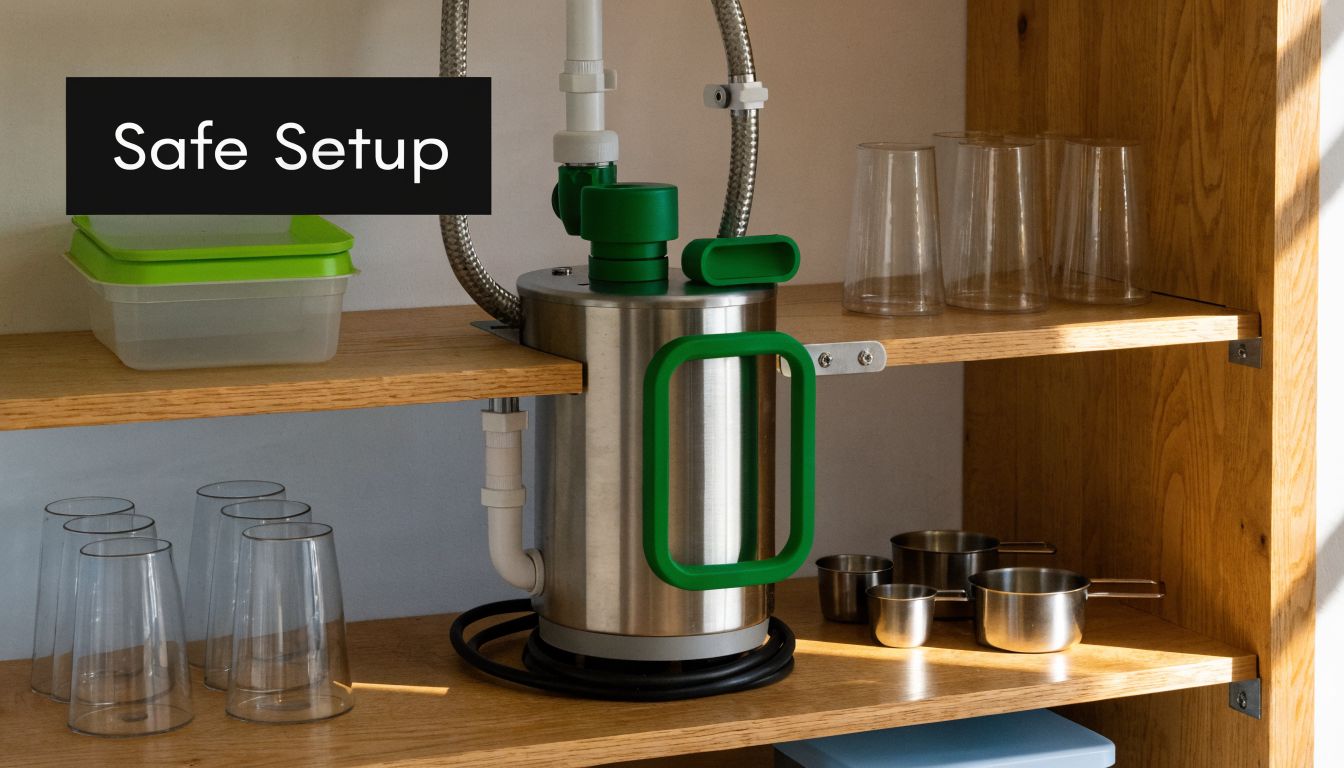
What the installer checks first
A good installer usually starts with the cabinet, not the tap finish. In Melbourne homes, that matters because many kitchens have been renovated in stages. The benchtop may be new while the cabinet layout underneath still reflects an older sink, older plumbing, or limited power access.
Here is the usual checklist:
- Cupboard room: Enough space for the tank, with clearance around traps, bins and stored items.
- Cold water connection: A suitable mains feed for the unit and filter.
- Power access: A nearby powerpoint positioned so the cord does not end up stretched or awkwardly routed.
- Filter access: Room to remove and replace cartridges without dismantling half the cabinet.
- Service clearance: Enough open space to inspect fittings, isolate the unit and carry out future repairs.
A brochure can make any system look compact. Real cabinets are less forgiving.
If incoming water pressure is already on the high side, the plumbing setup may also need a pressure limiting valve for hot water and appliance protection. That is not specific to boiling taps alone, but it can make the whole installation more stable.
Where installations usually go off track
The tap hole is rarely the hard part. The cabinet layout is.
Common obstacles include large sink bowls that drop deep into the cupboard, waste disposers that take up the best tank position, and pull-out bins that make a routine filter change far harder than it should be. Retrofit stone benchtops can also limit where a second hole can be drilled, especially if the sink, soap dispenser and mixer already crowd the work area.
For businesses, access matters even more. A system wedged into a corner can turn a quick service visit into a slow one, and any downtime adds friction to staff routines. In kitchens with hygiene procedures and documented cleaning tasks, the tap should support that workflow rather than complicate it. The same planning mindset shows up in a good commercial kitchen cleaning checklist. Equipment needs to be safe, reachable and easy to maintain.
Safety features worth expecting
The first family question is usually simple. Can a child turn this on accidentally?
A well-designed boiling tap makes that difficult. The boiling function normally needs a deliberate action such as a lock, two-step movement, or spring-loaded control. That extra step matters because near-boiling water should never be available from a casual bump of the handle.
Other safety features are straightforward but important:
| Safety feature | Why it matters |
|---|---|
| Child-safe lever or lock | Helps prevent accidental use |
| Controlled flow delivery | Reduces sudden splashing |
| Insulated touch points | Keeps exposed surfaces cooler |
| Overheat protection | Shuts the system down if temperatures rise beyond normal limits |
The best test is practical. The tap should feel intentional to operate, not fiddly, but clearly different from using ordinary cold or mixed water.
Safety is also about the install quality
People often focus on the control at the spout. Fair enough. But long-term safety also depends on the parts you do not see.
Boiling water systems run under heat and pressure, so correct fittings, sound electrical connection, and clean pipework matter more than they do with ordinary tapware. Poor-quality connectors, makeshift substitutions, or cramped installations can create leaks, nuisance faults, and harder servicing later. A kettle can be unplugged and replaced in minutes. An under-sink boiling unit needs to be installed as part of the kitchen plumbing and electrical setup.
That point matters in Melbourne because parts availability affects downtime. If a valve, filter head or fitting fails, being able to source the right replacement locally through a supplier such as Ring Hot Water is often more useful than having an uncommon imported setup with slow parts support. The same applies in caravans and RVs, where vibration, tighter cupboards and irregular use put more strain on fittings than a fixed home kitchen does.
The practical takeaway is simple. Measure the cupboard, check the power location, confirm the plumbing conditions, and choose a system with safety controls that feel deliberate in daily use. That gives you a tap that works well on day one and still makes sense when it needs service later.
Maintenance and Finding Expert Support in Melbourne
Boiling water taps are low-fuss appliances, but they aren’t no-maintenance appliances. If you want stable temperature, clean-tasting water and a long service life, the system needs routine attention.
The two jobs that matter most are filter replacement and watching for early signs of scale or reduced performance. In Melbourne, that’s more important than many buyers expect because local water conditions can make a well-designed system drift off performance if it’s neglected.
The running cost question needs a local answer
A lot of online advice is too broad to be useful. Melbourne households don’t all use hot water the same way, and electricity costs have changed.
Verified Australian guidance notes that Melbourne electricity prices rose 18% in 2025, and that standby use for some Zip HydroTap models can cost about AUD 60 to 120 per year. In high-use homes, that can still be offset by the way the system avoids repeated kettle boils, especially where people draw hot water many times a day, according to Choice Australia guidance cited in the verified data.
That’s why blanket advice fails. A family kitchen, a low-use apartment, a shared office and a café prep area are not the same running-cost story.
What ongoing care usually looks like
A sensible maintenance routine is straightforward:
- Replace filters on schedule: If the filter is overdue, taste and system protection both suffer.
- Pay attention to output changes: Slower flow, unusual noise or inconsistent temperature usually means the unit needs inspection.
- Use model-correct parts: Filters, valves and fittings need to match the system, especially with boiling applications.
- Service early, not late: A minor issue is easier to sort before it affects elements or thermostats.
If you’re checking what filter service involves for a Zip setup, this guide to Zip filter replacement is a practical reference.
Commercial sites need a broader maintenance view
In commercial kitchens and staff rooms, boiling water taps shouldn’t be maintained in isolation. They sit inside a wider hygiene and equipment routine.
For facility teams, a solid commercial kitchen cleaning checklist is helpful because it puts water points, surfaces, filters and scheduled upkeep into one operational rhythm instead of treating them as separate jobs.
The cheapest service call is the one you avoid by changing the filter before the system starts struggling.
For Melbourne owners, local support matters because parts access matters. Waiting around for the wrong cartridge, a substitute fitting or a hard-to-source thermostat is where a simple issue turns into downtime. That’s especially true for businesses and caravan owners, where a small component can put the whole system out of use.
Your Instant Boiling Water Tap Checklist
A good buying decision usually comes down to a short list of practical checks. If you get these right, the system is far more likely to suit your kitchen, your usage and your budget.
What to confirm before you buy
- Match capacity to use: A family kitchen, office tea point and hospitality prep area all need different output and recovery performance.
- Decide on tap format: Work out whether you want a dedicated boiling tap or an integrated 3-in-1 or 4-in-1 mixer.
- Think about filtration early: In Melbourne, local water conditions make filtration a protection issue, not just a taste upgrade.
- Measure under-sink space properly: Don’t estimate. Check the cabinet with the bin, trap and other services in place.
- Check power and plumbing access: The best-looking unit won’t help if the install becomes awkward or compromised.
- Be realistic about running costs: Your usage pattern matters more than generic online opinions.
- Plan for maintenance: Make sure filters and genuine replacement parts will be easy to source when needed.
- Consider where support will come from: Fast local servicing matters more than people think once the unit is part of daily life.
A simple way to decide
If your kitchen or workplace uses hot water repeatedly through the day, wants less bench clutter, and has the cabinet space for an under-sink unit, instant boiling water on tap is usually worth serious consideration.
If usage is low and the tap would sit idle most of the day, the decision needs more care. In that case, the right answer depends on layout, habits and whether the convenience still justifies the setup.
The strongest choices are rarely the flashiest ones. They’re the systems that suit the space, cope with local water conditions, and can be maintained properly over time.
If you’re comparing options for your home, workplace, hospitality site or caravan, Ring Hot Water offers Australian supply for boiling water systems, filters and genuine spare parts, with installation and servicing available across Melbourne.

