Boiling Hot Water
Your Guide to Hot Water Dispensers in Melbourne
Apr
You’re usually looking at a hot water dispenser for one of three reasons. The kettle is slowing down a busy kitchen. Your office tea point can’t keep up. Or you’ve had enough of bulky urns, bench clutter, and lukewarm “almost boiled” water when you need something fast.
In Melbourne, the choice gets more specific. Water quality varies by suburb, western suburbs can be harder on elements and filters, and commercial jobs need to make sense against energy use, compliance, and real daily demand. A hot water dispenser can solve the problem neatly, but only if the unit type, capacity, installation, and maintenance plan suit the property.
Beyond the Kettle The Rise of Instant Hot Water
The old routine is familiar. Someone fills the kettle. Someone else comes in behind them and finds it empty or half full. Then everyone waits while breakfast, coffee, tea, or service prep gets held up by a small appliance that was never designed for constant demand.
That’s why the hot water dispenser moved from novelty to standard kitchen equipment. Instant hot water dispensers first gained popularity in the 1970s, offering near-boiling water on demand and reducing boiling times from 5-7 minutes per kettle to just seconds, which changed how homes and offices handled daily drinks and light food prep (Wikipedia).
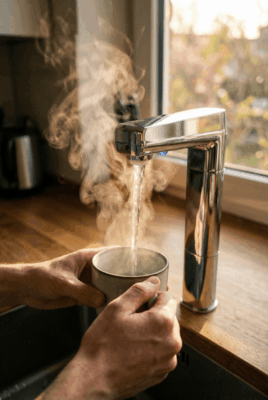
In practice, that shift matters most during pressure points. A family kitchen in Yarraville sees it in the school run. A small office in the inner west sees it at morning break. A cafe back area sees it every hour.
What changed in real kitchens
A kettle is simple, but it’s reactive. You wait every time. A proper hot water dispenser changes the rhythm of the room because the water is already available where people need it.
Three everyday gains stand out:
- Less waiting: tea, coffee, instant meals, and cooking prep happen without the boil cycle.
- Cleaner bench space: under-sink systems remove one more appliance from the worktop.
- More predictable use: staff and family members stop reboiling partial kettles or overfilling them.
A good dispenser doesn’t just save time. It removes a repeated interruption.
Why Melbourne buyers now look past the kettle
The strongest reason isn’t novelty. It’s friction reduction. Once a household or workplace gets used to near-instant hot water, going back to a kettle feels clumsy.
That’s also why buyers often start by looking at an instant hot water tap rather than a standalone appliance. It suits newer kitchen layouts, renovation work, and offices trying to keep benches clear and presentable.
A hot water dispenser isn’t right for every property. Small occasional-use spaces may still be fine with a kettle. But for repeated daily use, especially where several people need water through the day, the upgrade is usually obvious within the first week.
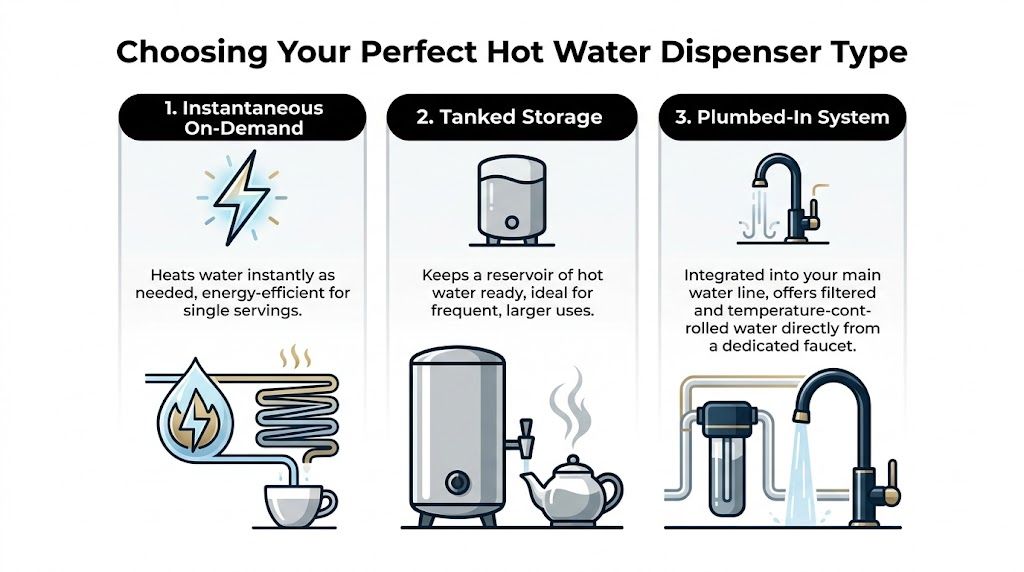
Choosing Your Perfect Hot Water Dispenser Type
Most buying mistakes happen before brand selection. People choose the wrong category, then try to solve the problem with a bigger tank, a fancier tap, or extra servicing. Start with type first.
Under-sink boiling taps
This is the option most homeowners picture first. The tank sits inside the cabinet and a dedicated tap at the sink delivers near-boiling water. Common names in this category include Zip, InSinkErator, and Stiebel Eltron.
They suit:
- Renovated kitchens: especially where clean lines matter.
- Homes with limited bench space: no kettle, no urn, less clutter.
- Small offices: enough output for regular tea and coffee without a visible boiler.
What works well is the integration. You keep the appliance hidden, the tap is always in the same place, and the kitchen looks organised.
What doesn’t work so well is poor cabinet planning. These units need room, airflow, power access, and service access. Cramming one into a crowded sink cabinet beside bins and cleaning products creates avoidable headaches later.
Wall-mounted boilers
These are common in workplaces, staff rooms, cafes, and hospitality back-of-house areas. Brands such as Birko, Robatherm, Crown, and Kwikboil are usually chosen when multiple users need hot water repeatedly through the day.
They suit properties where function matters more than concealment.
A wall-mounted unit usually makes sense when:
| Setting | Why it fits | Main trade-off |
|---|---|---|
| Office lunchroom | Reliable shared use | Visible appliance on wall |
| Cafe or hospitality prep area | Fast repeated draw-off | Needs proper location and install |
| Community or education spaces | Simple operation for many users | Less aesthetic than under-sink systems |
The big strength is capacity handling. If ten people arrive in a break room inside a short window, a wall unit copes far better than a domestic-style setup.
The downside is visual impact. It’s practical, not subtle.
If the room serves many people, choose for throughput first and appearance second.
Benchtop urns and portable units
Urns still have a place. They’re useful for temporary setups, occasional events, workshops, church halls, sports clubs, and spaces where permanent plumbing isn’t practical.
Their appeal is flexibility. You can place them where needed, move them when the layout changes, and avoid plumbing work on day one.
They make less sense when the hot water demand is permanent. In a fitted kitchen or an office tea point, an urn often becomes a compromise that stays for years longer than it should.
A benchtop unit is usually the right call when:
- You need portability
- The setup is temporary
- You can’t alter cabinetry or walls
- The budget favours staged upgrades
The real trade-off
People often compare features when they should compare use patterns.
Choose an under-sink unit if appearance, bench space, and day-to-day kitchen integration matter most.
Choose a wall-mounted boiler if volume and reliability for shared use matter most.
Choose a benchtop urn if the installation needs to stay simple, temporary, or mobile.
The wrong choice usually shows up fast. A homeowner who installs a wall boiler in a design-led kitchen often dislikes the look. A busy workplace that relies on a domestic under-sink setup usually runs into capacity frustration. Matching the dispenser type to the room is what makes the rest of the decision easier.
Sizing and Capacity for Your Home or Business
Capacity gets overlooked because buyers focus on tap style, finish, or where the unit will sit. But a hot water dispenser lives or dies by recovery and output. If it can’t keep up during the busiest part of the day, everything else about it stops mattering.
Start with peak demand, not daily demand
A family may use hot water across the whole day, but demand peaks in a short burst. Breakfast. After dinner. Visitors dropping in. The same applies in a workplace where everyone heads to the kitchen at once.
That’s why I size units around the busiest window, not the total number of cups across a full day.
Ask these questions first:
- How many people use it during the busiest period?
- Are they making one drink each or repeated drinks?
- Is the unit only for beverages, or also for cooking and food prep?
- Will the user base stay stable, or is the room likely to get busier?
What a household-sized tank can really do
A useful benchmark is the InSinkErator-style domestic tank. A standard 2/3-gallon (approx. 2.5L) tank can deliver around 60 cups of near-boiling water per hour, which is a practical guide for many households and small offices (InSinkErator HWT-00 specifications).
That figure helps because it stops people thinking only in litres. Tanks don’t need to hold an entire hour’s use at once. They need to recover fast enough to support normal use patterns.
A simple way to size the unit
Use this rough decision guide:
- Single occupant or couple: an under-sink domestic unit is usually enough if use is mostly drinks and occasional food prep.
- Family kitchen: look for a system that can handle clustered use in the morning and evening.
- Small office: count how many people may use it in the same break period, not how many desks are in the building.
- Cafe, showroom, or high-traffic lunchroom: move away from domestic assumptions quickly and look at commercial wall-mounted capacity.
Common sizing mistakes
Some problems show up all the time.
Undersizing for offices
A unit that feels generous in a house can feel slow in a workplace. Office demand comes in waves. If the system doesn’t recover well, staff start waiting, then someone brings in a kettle “just for backup”, and the original purpose is lost.
Oversizing for compact homes
The opposite also happens. People buy commercial-minded capacity for a two-person apartment and end up paying for bulk they never use, with a more complicated install than necessary.
Ignoring future use
A renovation often changes behaviour. Once instant hot water is available, people use it more often for cooking prep, quick noodles, porridge, and entertaining. Leave some headroom.
Practical rule: If you’re debating between “just enough” and “slightly more than needed”, the safer choice is usually the unit with recovery headroom.
Match the capacity to the room, not the brochure
A small but efficient kitchen in Footscray might only need a tidy under-sink system. A staff room with repeated bursts of use won’t. Capacity planning is less about spec-sheet pride and more about avoiding disappointment.
If you get this part right, the dispenser feels effortless. If you get it wrong, it feels slow every single day.
Understanding Energy Use and Running Costs in Victoria
The first question many buyers ask is simple. If the unit keeps water hot all day, won’t it cost more to run than a kettle?
Sometimes yes, if the wrong product is put in the wrong setting. Often no, especially where people repeatedly boil kettles, leave urns on too long, or need steady commercial output.
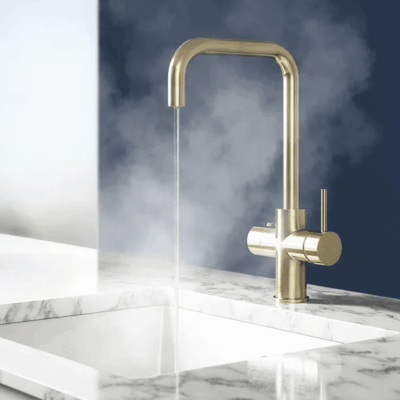
Where the savings actually come from
A modern hot water dispenser saves energy in a few practical ways:
- Better insulation: less heat escapes between uses.
- Controlled heating: the unit maintains usable temperature instead of starting from cold each time.
- Less waste: users stop overfilling kettles for a single mug.
- Faster delivery: less idle waiting in commercial settings.
The gains are clearest in shared environments. Recent updates to Australia’s National Construction Code are described as mandating significant energy reductions for commercial hot water systems, and Melbourne hospitality venues can see up to 35% lower running costs with efficient wall-mounted boilers (Selsius).
For a cafe, staff kitchen, or office lunchroom, that matters. The running cost argument is much stronger when the appliance is used all day rather than once or twice.
Home use versus business use
A home kitchen and a commercial lunchroom behave very differently.
In a home, the payback usually comes from convenience, reduced repeat boiling, cleaner benches, and steadier daily use. Pure energy savings may still matter, but they’re rarely the only reason a household buys one.
In a business, the maths is sharper. If staff or customers need fast hot water many times a day, delays and waste cost money. That’s why facility managers often look at total use pattern first, then purchase price.
For readers already comparing household upgrades more broadly, this guide on evaluating energy efficiency for home installations is a useful way to think about the larger energy picture around appliances and infrastructure.
Compliance and Victorian decision-making
Commercial buyers in Victoria also need to think beyond the power bill. They need to consider specification, suitability for the fitout, and whether a unit supports broader building efficiency targets.
That doesn’t mean every site needs the most complex system available. It means the appliance should match the pattern of use, the building type, and the likely service demands over time.
This video gives a useful visual overview of how these systems are commonly used and selected in practice.
What usually costs more than energy
In real jobs, running cost isn’t always the largest issue. Wrong sizing, poor installation access, neglected filters, and scale buildup can do more damage to value than the electricity bill itself.
That’s why the cheapest purchase price often isn’t the cheapest ownership path. A well-matched unit that runs steadily and is easy to service generally costs less trouble over its life than a bargain model that struggles from day one.
Installation and Plumbing Requirements Explained
A hot water dispenser looks simple from the outside. Under the bench or behind the wall, it’s a plumbing and electrical appliance that needs the right conditions to work properly.
With the Australian market reported as growing at 12% annually and Melbourne accounting for 35% of national installations, proper setup matters because more homes and businesses are adding these units every year (Awesome Water Filters).
The three things every installation needs
Most installations come down to three basics.
Cold water feed
The unit needs a suitable cold water connection. That sounds obvious, but the pipework arrangement under some sinks can be cramped, poorly located, or full of old add-ons from previous appliances.
A clean feed with proper isolation makes future servicing much easier.
Power access
These systems aren’t toasters. The power point location matters. So does protection from moisture, cable routing, and whether the unit can be disconnected safely for service.
Ventilation and clearance
Under-sink models need room to breathe. If the tank is boxed in tightly beside bins, cleaning chemicals, and stacked containers, heat management and servicing become harder than they should be.
Details that prevent callbacks
The small plumbing details are what separate a tidy installation from an annoying one.
A few examples:
- Accessible isolation: a serviceable shut-off point saves time later.
- Correct hose routing: avoids kinks, rubbing, and awkward strain on fittings.
- Stable mounting: stops movement that can stress connections over time.
- Thoughtful placement: leaves space for filter changes and maintenance access.
If you’re planning cabinetry or replacing old valves, it helps to understand the role of a shut-off valve before the unit goes in.
The easiest dispenser to maintain is the one that was installed with service access in mind.
Why professional installation usually makes sense
Some owners focus on whether a unit can be connected. The better question is whether it can be connected in a way that protects the appliance, the cabinetry, and the warranty.
Professional installation is worth it when:
- The sink cabinet is tight
- There’s existing filtration involved
- Pressure control needs checking
- The job is commercial
- You want clear accountability if something leaks or underperforms
Builders and plumbers already know this on larger projects. Homeowners should think the same way. A neat install isn’t only about first-day appearance. It affects reliability, service access, and how long the system lasts without trouble.
Essential Maintenance for Melbourne’s Hard Water
The biggest maintenance mistake is assuming Melbourne water is “good enough” everywhere, so scaling won’t be much of an issue. Water quality may be generally good, but that doesn’t mean every suburb treats hot water equipment gently.
In western areas such as Sunshine and Footscray, mineral content can be harder on boiling taps and under-sink tanks. That matters because a heating element doesn’t fail all at once in most cases. It gets slower, less efficient, and more stressed first.
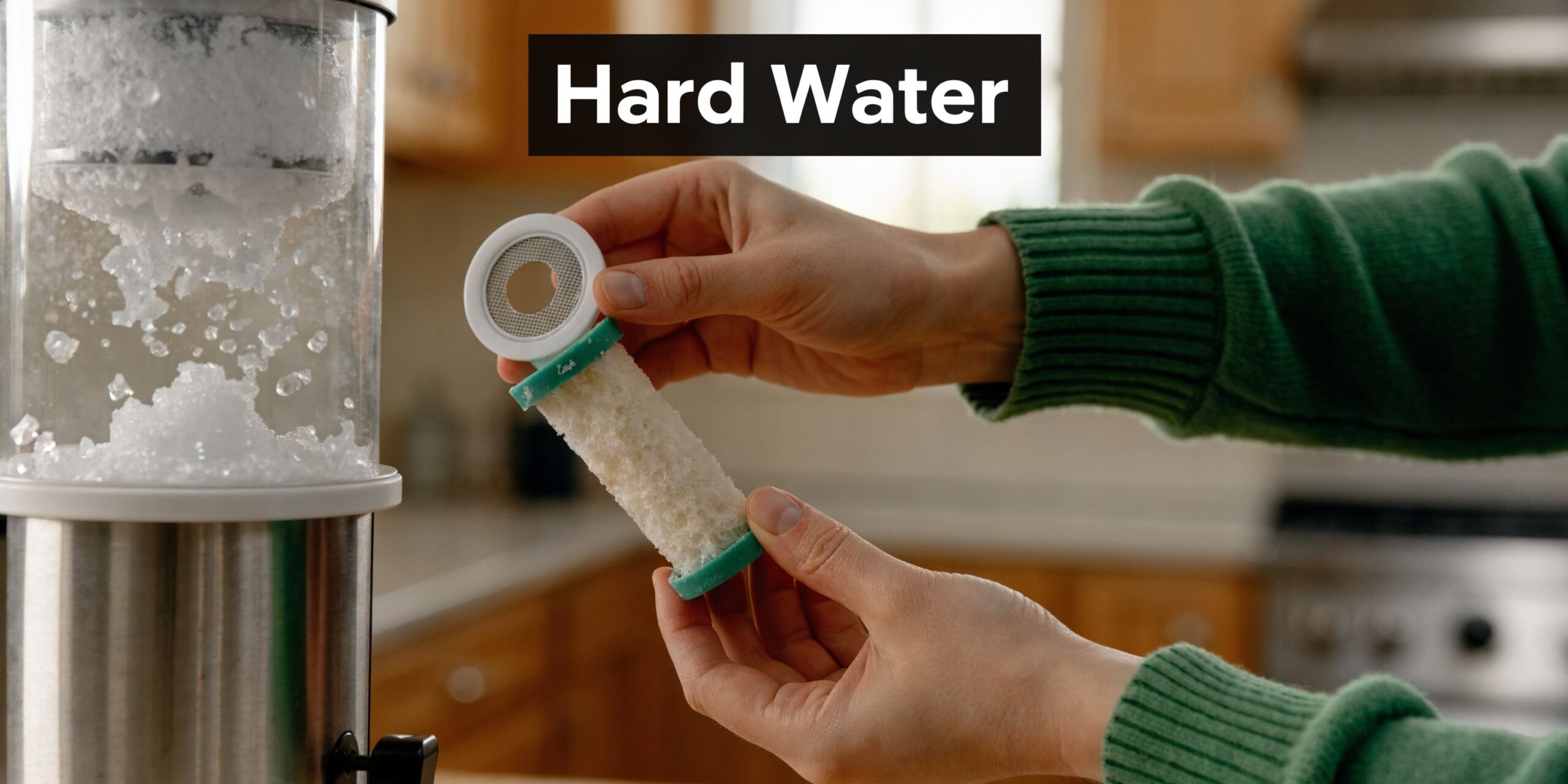
What hard water does inside the unit
Melbourne’s water hardness can cause a 30-50% efficiency loss in heating elements within 12-18 months, and regular descaling plus proper filtration can prevent a lot of that damage (Aquanutech).
That loss shows up in ways owners often misread:
- Slower recovery: the unit seems weaker than it used to be.
- More noise: scale buildup can make tanks and elements sound harsher.
- Higher service frequency: fittings, valves, and internal parts work harder.
- Poorer water quality: taste and clarity can slip if filters are overdue.
What actually works for maintenance
Not every cleaning trick helps. Some do harm.
Descale on a schedule
If your suburb tends harder, waiting for symptoms is too late. Planned descaling is cheaper than performance decline and parts replacement.
The key point is product choice. Citric-acid-based descaling is generally the safer path for these systems. Vinegar gets recommended casually, but it isn’t my first choice around fittings and mixed materials.
Change filters before they become the problem
A filter should protect the unit. Once neglected, it starts restricting performance and compromising taste. That’s especially relevant with boiling water taps where users notice flavour immediately in tea and coffee.
For owners running Zip systems, this guide to Zip filter replacement helps with timing and compatibility considerations.
Check fittings and hoses while servicing
Scale doesn’t only affect the element. It can affect flow behaviour through the whole system. During service, inspect hose condition, valve function, and connection points rather than treating maintenance as “tank only”.
A practical suburb-based mindset
If you’re in the western suburbs, maintain the unit like a western suburbs unit. Don’t copy the schedule of someone in a softer-water pocket and expect the same result.
A dispenser that looks fine from the outside can still be losing performance quietly inside the tank.
When electrical confusion distracts from the real issue
Some owners notice slower heating and start worrying about power supply first. That can happen, but scale is often the more likely cause in Melbourne homes with mineral-heavy water.
If you’re sorting out appliance placement or learning the basics of outlet requirements generally, this explainer on 120V outlet wiring is useful background reading. It’s not a substitute for a licensed local electrician, but it helps people understand why appliance power questions need proper attention.
A simple maintenance checklist
Use this as a working routine:
- Monthly visual check: look for leaks, drips, or unusual discharge behaviour.
- Taste check: if tea and coffee start tasting flat or odd, inspect the filter status.
- Periodic descale: don’t wait for severe slowdown.
- Annual service mindset: inspect the whole system, not just the tap outlet.
This is also where a specialist supplier can be practical rather than promotional. Ring Hot Water stocks filters, valves, thermostats, fittings, and brand-specific parts used in these systems, which matters when a unit needs the correct replacement component rather than a guess.
Maintenance is what separates a dispenser that lasts from one that becomes “temperamental” after the first year or two. In Melbourne, especially in harder-water suburbs, it isn’t optional.
Your Melbourne Hot Water Dispenser Buying Guide
The right unit isn’t the one with the longest feature list. It’s the one that matches the room, the demand pattern, and the level of maintenance the owner will keep up with.
If you’re buying for a home
Start with the kitchen layout. If bench space matters and the property is being renovated, an under-sink boiling tap usually makes the most sense.
Choose carefully if you live in a harder-water area. Filter access and descaling practicality matter just as much as tap style.
If you’re buying for an office
Think in bursts of use. Staff don’t spread demand evenly across the day. They create peaks.
A wall-mounted boiler often makes more sense than a domestic under-sink unit when several people use the tea point in a short window. Reliability beats minimalism in a shared kitchen.
If you’re buying for hospitality
Service speed matters, but so do cleaning, parts access, and recovery under repeated use. Choose equipment that staff can work with easily and that your maintenance team or plumber can service without dismantling half the fitout.
If you’re buying for a caravan, RV, or flexible setup
Compact systems and portable formats make more sense where space is tight and layouts change. Simplicity matters more than premium finish in these environments.
Buy for the way the property runs on its busiest day, not the way it looks on a quiet one.
Final buying checklist
Before you commit, answer these five questions:
- What type suits the room best?
- Can it handle peak demand without frustration?
- Does the install space support proper plumbing, power, and service access?
- Will Victorian energy and commercial considerations affect your choice?
- Can you maintain it properly in your local water conditions?
If those answers are clear, your buying decision usually is too.
Frequently Asked Questions
Can you put a hot water dispenser in a caravan or RV
Yes, if you choose a compact system that suits the available power, space, and plumbing layout. In caravans and RVs, access for servicing matters even more than it does in a house because every fitting and hose run is tighter.
Do boiling water taps need filtration
In many Melbourne properties, filtration is a smart pairing. It helps with taste, helps manage sediment and mineral-related issues, and reduces the maintenance burden on the tank and tap components over time.
Is near-boiling the same as boiling
Not always. Many hot water dispenser systems deliver near-boiling water rather than a rolling kettle boil. For drinks and quick food prep, that’s usually exactly what people need. If your use case is very specific, check the unit’s delivered temperature rather than assuming every model behaves the same way.
Are wall-mounted boilers only for businesses
No. They’re most common in workplaces and hospitality, but they can also suit larger shared spaces where appearance matters less than output and consistency.
If you’re comparing options for a Melbourne home, office, cafe, or fitout, Ring Hot Water can help you narrow down the right hot water dispenser type, capacity, parts, and maintenance approach for the way the property runs.

