
Boiling Hot Water
Tap for Hot Water: Your 2026 Melbourne Guide

Apr
You’re probably reading this with a kettle on, or while staring at the spot where one keeps getting in the way.
That’s how people start looking into a tap for hot water. It isn’t because they want a futuristic kitchen. It’s because they’re tired of waiting for water to boil, tired of the bench clutter, and tired of doing the same small job over and over every day.
In Melbourne homes, offices, and small hospitality setups, instant hot water taps have moved from “nice idea” to a practical upgrade. They suit compact kitchens, busy family routines, tea and coffee habits, and workplaces where the kettle queue wastes more time than anyone admits. They also suit people who want a cleaner setup under the sink, proper filtration, and a system that behaves more like an appliance than a loose collection of tapware and add-ons.
What matters is choosing the right unit, installing it safely, and maintaining it so it keeps doing the job year after year. That’s where most of the confusion starts. People mix up boiling taps with standard hot water, assume every model works the same way, or overlook basics like pressure, filtration, and spare parts.
The End of the Kettle Why You Need an Instant Hot Water Tap
Seven-thirty in the morning is when the kettle starts causing arguments. One person wants tea, another wants coffee, breakfast is on the go, and the bench is already crowded with a toaster, lunch boxes, and dishes from the night before.
A tap for hot water removes that daily hold-up. Hot water is there when you need it, in the same spot every time, without waiting for a jug to boil or finding somewhere safe to set it down.
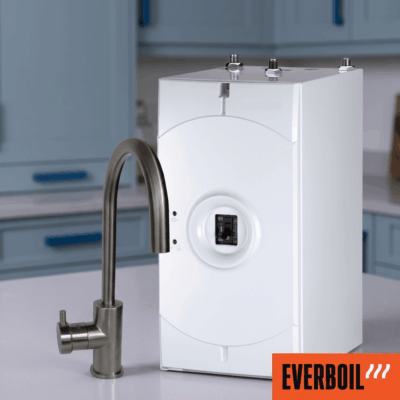
Visit our range of Everboil Systems
From a service point of view, the appeal is rarely about novelty. Melbourne homeowners usually want three practical improvements. Faster mornings, less bench clutter, and one less small appliance to clean around, refill, and replace later.
The day-to-day gains are straightforward:
- Morning drinks: Tea, coffee, and quick breakfasts happen with less waiting.
- Cooking prep: Starting pasta, soaking noodles, or blanching vegetables is easier.
- Entertaining: Guests can help themselves without asking where the kettle lives.
- Bench space: The work zone feels cleaner and less cramped.
That last point matters more than many people expect. In compact kitchens, every bit of clear bench space gets used. Removing the kettle makes the room work better, not just look better.
A well-set-up boiling tap should fade into the background. It becomes part of the sink, like a normal mixer, except it saves time dozens of times a week.
Coffee drinkers should keep one trade-off in mind. Near-boiling water is useful, but it is not the best choice for every brew, so it helps to understand the correct temperature for coffee before settling on a system and how you plan to use it.
These taps also make sense outside high-end renovations. I see them fitted into family homes, office kitchens, staff rooms, and caravans for the same reason. They cut out a repetitive job and tidy up the space around it. The distinction is important because people tend to confuse a boiling water tap with a standard hot water outlet or assume every unit suits every job. Choosing well at the start makes the whole ownership cycle easier, from installation to filter changes and spare parts later on.
How an Instant Tap for Hot Water Works
These systems do not heat water instantly on demand. An under-sink unit stores a small volume of filtered water near boiling point, then sends it to the tap when you open it. That is the source of most confusion.
A good way to picture it is a compact thermos with a heating element, thermostat, safety controls, and a tap connected above the bench. The water stays hot in storage, ready for short draws through the day. In practice, that is why the response feels immediate.
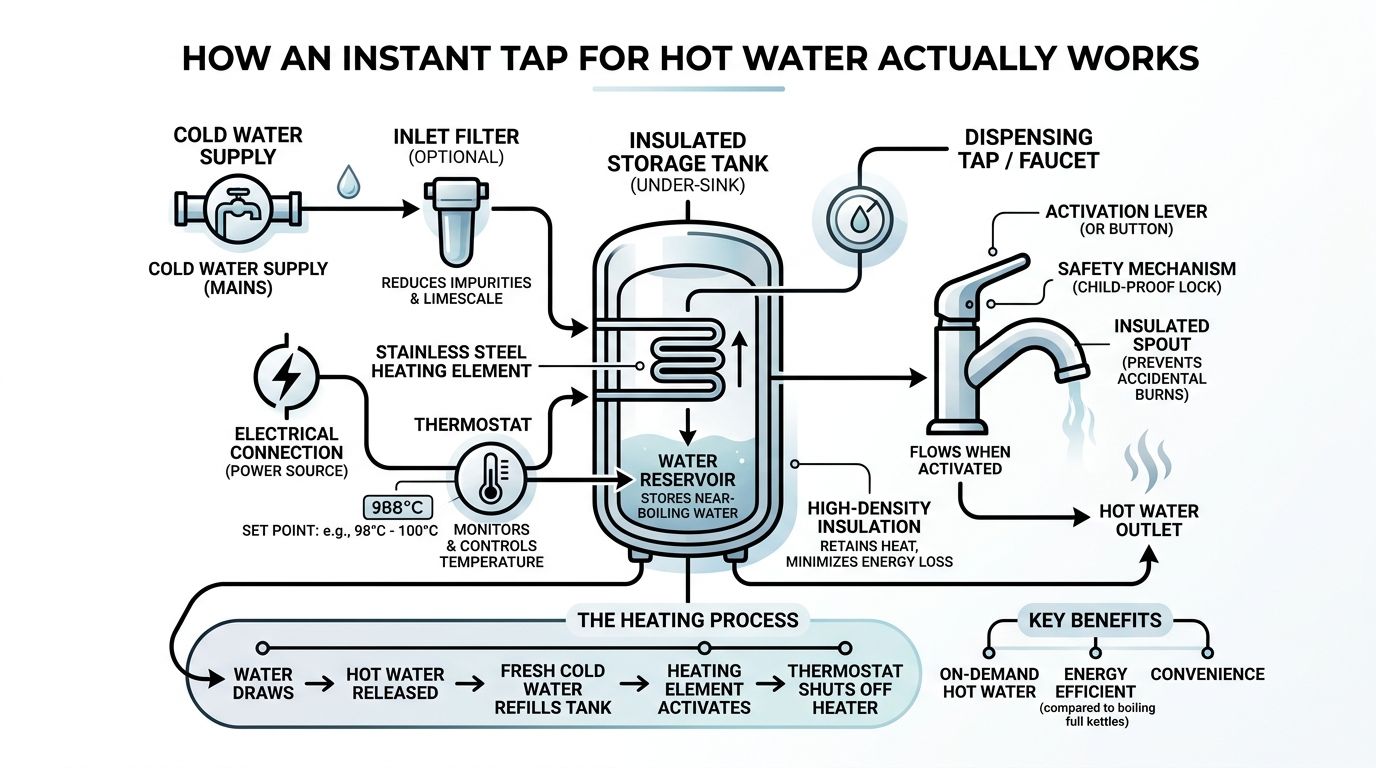
The basic flow path
The process is straightforward:
- Cold mains water enters the unit
- A filter treats the water before heating
- The insulated tank stores it at near-boiling temperature
- The dispensing tap delivers it at the sink
For Melbourne homes, that store-and-dispense design matters. It gives fast access to hot water for cups, cooking prep, and office use without waiting for a kettle cycle every time.
The parts that matter
The inlet and isolation point
Everything starts with the cold feed and the shut-off valve. If the pressure is poor, the valve is awkward to reach, or the plumbing is messy, servicing becomes harder than it needs to be. I want a clean isolation point because filters and tanks do need attention over the life of the unit.
The filter
The filter improves taste, but it also protects the system. Sediment and mineral scale shorten the life of valves, elements, and internal waterways. In Melbourne, water quality varies by area, so the right cartridge and service interval matter more than brochures make out.
The tank and element
The tank and element are critical for performance. A well-matched tank recovers steadily after several cups. An undersized unit in a busy kitchen can leave people waiting, which is why usage matters just as much as brand when choosing a system.
The tap itself
The tap is only the visible end of the system. The safer designs use child-resistant operation, insulated outlets, and matched components tested to work together. Mixing a random tap body with another brand’s tank might save money upfront, but it creates faults, warranty issues, and spare-parts problems later.
Why they often use less power than a kettle
A kettle gets overfilled. People boil fresh water for one mug, tip the rest out, then do it again later. A boiling tap avoids much of that repeat heating because it keeps a controlled volume hot in an insulated tank and dispenses only what is needed.
That does not mean it is the right answer for every job. If a household only boils water once a day, the benefit is smaller. If the tap gets used all day in a family kitchen, staff room, or showroom, the convenience and efficiency are easier to justify.
Practical rule: For small, frequent draws, a boiling tap usually makes more sense than reheating a kettle over and over.
What this means in real kitchens, offices, and caravans
Once installed properly, the system behaves more like a built-in appliance than ordinary tapware. You use the outlet at the sink, but the main work happens below the bench.
That is why layout matters. The tank needs room. The filter needs room. A technician also needs enough access to change cartridges, inspect valves, and replace parts without unloading the whole cupboard.
The same principle applies outside a house kitchen. In office fit-outs, the priority is recovery and durability. In caravans, the questions are different again. Space is tighter, vibration matters, and replacement parts need to be easy to source locally. From a service point of view, the full lifecycle matters just as much as the first install.
Choosing Your System Types of Hot Water Taps Explained
Not every tap for hot water suits every kitchen. The right choice depends on how you use water, how much under-sink room you have, and whether the system is for a home, office, or commercial fit-out.
Some people need one thing only. Fast boiling water for tea. Others want filtered ambient water as well. Others want a full all-in-one setup with chilled and sparkling on top of standard hot and cold.
The main categories
Boiling-only tap
This is the straightforward option. One job, done well. It suits people who mainly want tea, black coffee, quick cooking water, and less clutter on the bench.
It’s the simplest choice to install and live with. If your current kitchen tap is fine and you only want an added boiling outlet, this is the cleanest path.
Boiling plus filtered ambient
This setup suits households that want drinking water and boiling water from the same overall system. It’s practical in homes where bottled water has become a habit and no one wants a separate benchtop filter jug anymore.
This type also makes sense in offices. Staff can fill bottles, make tea, and prepare instant food from one station.
All-in-one systems
These combine standard hot and cold with filtered boiling, and in some models chilled or sparkling as well. They can be a smart answer in a new kitchen where the goal is one tap body and fewer fixtures in the benchtop.
They also demand more planning. These systems need more room below the sink, more components, and clearer service access.
Commercial wall-mounted boilers and high-capacity units
For workplaces, staff rooms, clubs, and hospitality, an under-sink domestic unit may not be the right tool. A commercial wall-mounted boiler or high-capacity unit handles repeated draws better and suits environments where many people need water in short bursts.
In those spaces, reliability matters more than sleek looks.
Instant Hot Water System Comparison
| System Type | Main Function | Best For | Key Consideration |
|---|---|---|---|
| Boiling-only tap | Near-boiling water at the sink | Tea drinkers, compact kitchens, simple upgrades | Needs under-sink tank space |
| Boiling plus filtered ambient | Boiling water and filtered drinking water | Busy family kitchens, small offices | Filter servicing becomes part of routine ownership |
| All-in-one system | Standard hot/cold plus filtered boiling, sometimes chilled or sparkling | Renovations, premium kitchens, people reducing fixture clutter | Requires the most planning under the sink |
| Commercial wall-mounted boiler | Large-volume hot water service | Offices, staff rooms, hospitality venues | Capacity and recovery rate matter more than appearance |
| Compact specialist setup | Hot water in tight or mobile spaces | Caravans, RVs, niche utility areas | Vibration, pressure variation, and fitting choice are essential |
How to choose without overbuying
Many mistakes come from buying by feature list instead of by use.
- If you mostly drink tea and instant coffee: A boiling-only model is often enough.
- If your household constantly fills drink bottles: Filtered ambient plus boiling makes more sense.
- If you’re redesigning the whole sink zone: An all-in-one unit may tidy the bench and tapware layout.
- If the site is high-traffic: Choose commercial capacity, not residential styling.
- If it’s going into a caravan or mobile setup: Choose for movement, compactness, and fitting strength first.
The best unit isn’t the one with the longest brochure. It’s the one that fits the way the site is used.
Brand support matters too. Systems from names such as Zip, Stiebel Eltron, Boiling Billy, Birko, Insinkerator, Kwikboil, and Everboil each suit different environments. The trick is matching the unit to the site, not forcing the site to suit the unit.
Safe Installation and Melbourne Plumbing Compliance
A lot of trouble starts under the sink, not at the tap. I see it in Melbourne homes after kitchen upgrades, in office fit-outs where cabinet space was never checked properly, and in caravans where a domestic-style approach gets copied into a mobile setup. An instant hot water tap has to handle heat, pressure, power, filtration, and safe dispensing in one compact system. If one part is wrong, the whole setup suffers.
Safety starts with the right type of outlet
Boiling water and standard domestic hot water are not the same thing, and the installation has to respect that distinction.
A regular hot water line needs temperature control for safe delivery around the home. A dedicated boiling tap is a separate appliance-style outlet with its own dispensing controls and built-in safety features. In Australia, scald injuries remain a serious issue, especially for children, and regulated tap designs with child-safety features have been linked with fewer incidents, as outlined in this summary on thermostatic mixing valves and scald burns.
That is why a proper install is never just “swap the tap and go”. The unit has to be set up for the way it dispenses, who uses it, and what sits around it.
Pressure checks come early
Pressure is one of the first things I check on site. These systems rely on steady cold inlet supply to perform properly, and low pressure can show up as slow dispense, odd cycling, poor refill behaviour, or nuisance faults.
Common warning signs include:
- weak cold flow at the sink
- older pipework with restrictive valves or tired fittings
- renovated homes with patched-together plumbing runs
- upper-level kitchens or rear additions with inconsistent supply
If the property already has pressure fluctuations, it helps to understand how a pressure limiting valve affects hot water system performance before the unit is chosen and installed.
Compliance is broader than the tap itself
In Melbourne, the tap has to fit into a compliant plumbing system, not sit outside it. That can include valve selection, safe connection methods, correct clearances, and making sure any standard hot water services nearby still meet their own temperature-control requirements.
The under-bench layout matters just as much. The tank needs breathing room. Filters need to be reachable. Power access needs to be safe and sensible. Service isolation should not be buried behind bins or cleaning products. I explain it to customers this way: the visible tap is only the handle. The essential system is the canister, hoses, valves, and wiring below, working together like a sealed thermos with controls attached.
For builders, project managers, and facilities teams pricing work across multiple sites, plumbing estimating software can help set scope and allowances. It still does not replace an on-site inspection. Bench thickness, cabinet depth, socket location, waste layout, and pipe condition can change the job quickly.
What a good install looks like
A good installation is tidy, serviceable, and realistic about the site.
That means a licensed plumber who checks pressure before fitting anything, plans the filter position for future replacement, uses the correct valves and connections, and leaves enough access for servicing. It also means treating caravan and mobile applications as their own category. Vibration, movement, and compact spaces change fitting choice and mounting method.
Poor installs look fine on day one. The trouble shows up later. Filters cannot be changed without removing half the cupboard. Hoses are kinked. The unit runs noisily. The flow feels weak. The owner assumes the product is faulty when the actual problem is the installation.
Filtration Maintenance and Sourcing Genuine Spare Parts
Most boiling tap problems don’t start with a dramatic failure. They begin subtly. Water tastes a bit off. Flow seems different. Recovery slows. The unit gets noisier. Then the call comes in.
Filtration and routine maintenance prevent much of that.
Why filtration matters more in some Melbourne areas
In harder water areas, scale is the enemy. It coats elements, interferes with heat transfer, and shortens the life of parts that should last longer.
In Melbourne’s western suburbs, limescale can significantly shorten a boiling tap element’s lifespan without proper filtration, and water hardness in certain ranges contributes to notably faster scaling, according to this note on water hardness and fitting considerations.
That’s why filtration isn’t only about taste. It protects the internals.
A simple maintenance rhythm
Owners don’t need to overcomplicate this. The basics are consistent.
- Change filters on schedule: Don’t wait until taste drops off or the unit complains.
- Watch for slower dispense or unusual noise: Those are often early warning signs.
- Check for leaks around fittings and cartridges: Small drips become bigger service jobs later.
- Use genuine replacement parts where possible: A cheap substitute can create a much more expensive repair.
For people running Zip, Stiebel Eltron, Boiling Billy, Birko, or similar systems, part compatibility matters. Filters, valves, thermostats, elements, and connectors aren’t interchangeable because they look close.
Spare parts that commonly matter
Some parts wear by design. Some fail because water quality or installation conditions push them too hard.
Common service items include:
- Replacement filter cartridges
- Heating elements
- Thermostats
- Relief or control valves
- Flexible hoses and John Guest fittings
- Brass threaded connectors for tougher applications
If you’ve got a Zip system, this guide to Zip filter replacement is a useful starting point for understanding service timing and compatibility.
Don’t treat filter changes like optional extras. They’re part of owning the appliance, the same way oil changes are part of owning a car.
What to avoid
The biggest mistake is using generic parts because they fit physically. Mechanical fit doesn’t mean correct flow, pressure behaviour, sealing material, or long-term reliability.
The second mistake is delaying maintenance until the unit stops. By then, the original issue may have spread from a blocked filter to a scaled element or a stressed control component. A short routine service is easier than a stacked repair.
Beyond the Home Kitchen Commercial and Caravan Applications
A tap for hot water isn’t only a home-kitchen product. Some of the most practical installs are in offices, hospitality, and caravans where convenience isn’t a luxury. It’s what keeps the day moving.
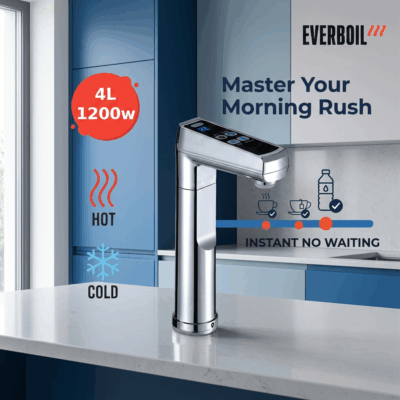
Commercial sites
An office kitchen with one domestic kettle tends to create a queue. A proper instant hot water setup changes the rhythm of the room. Staff fill cups, move on, and don’t stand around waiting.
In cafes, clubs, and staff rooms, the key issue is durability. The fittings and connection method have to cope with heavier use and more demanding plumbing conditions. For specialised installations like commercial mains or caravan systems, Quick-Cam hot tap fittings are rigorously tested to high pressures and can withstand significant vacuum levels, making them suitable for both high-pressure commercial lines and variable RV pump conditions, according to these water tap fitting specifications.
Caravans and RVs
Caravan owners care less about designer finishes and more about whether the system survives travel. Vibration, compact cabinetry, pump-driven water supply, and irregular service access all change the job.
Plastic fittings can be fine in some static domestic situations, but mobile installs benefit from tougher connection choices and a layout that’s easy to inspect. If you’re planning a van setup, the broader water system matters too, especially pump matching. This guide on a 12 V water pump for caravan is useful for understanding that side of the install.
In a caravan, the best hot water setup is the one that keeps working after a rough road, not the one that looks best in a catalogue.
Your Melbourne Solution with Ring Hot Water
A good instant hot water setup solves several small problems at once. It clears the bench, speeds up drinks and food prep, improves access to filtered water, and gives the kitchen a cleaner workflow. In the right site, it also makes good sense for offices, hospitality spaces, and mobile setups like caravans.
The trick is treating the system well across its full life cycle. Choose the right style of unit. Check pressure before installation. Prioritize safety and compliance. Keep filtration current. Use genuine spare parts when service time comes.
That’s where a specialist makes the whole process easier. Ring Hot Water combines local Melbourne installation, repair, and maintenance knowledge with an Australia-wide online store for genuine systems, filters, fittings, valves, elements, thermostats, hoses, and caravan-specific parts. The team works across the Melbourne metro area, including Sunshine, Yarraville, and Footscray, and supports leading brands used in homes, workplaces, hospitality sites, and RVs.
If you want a boiling tap that works well, keeps working, and can still be serviced years later, local product knowledge matters as much as the tap itself.
If you’re ready to upgrade to a reliable Ring Hot Water system, explore the online range or get in touch for practical advice on installation, repairs, filtration, and genuine spare parts across Melbourne and Australia-wide.

