
Water Filters
Best Under Sink Water Filter Australia

Apr
Best Under Sink Water Filter Australia: The 2026 Guide
Your kitchen bench usually tells the story first. There’s the kettle near the splashback, a water jug filter taking up the good corner, maybe a soda unit or coffee machine fighting for the rest, and the sink area doing too much with too little space.
This is where the search for the best under sink water filter Australia options begins. What they often find is a list of cartridges and housings, when what they need is a better kitchen system. In real homes across Melbourne, the more practical answer is often an integrated under-sink setup. A filter below, a 3-way tap above, and if you want to finish the job properly, an optional boiler or chiller tucked away with it.
Reimagining Your Kitchen Sink Beyond Just Taps
A lot of kitchens still work like they were designed before people expected instant convenience. You boil water in one appliance, chill it in another, filter it in a jug, and still use the tap for everything else. It works, but it’s clunky.
The cleaner solution is one most homeowners don’t consider until they see it installed. You keep the bench clear, swap the standard mixer for a 3-way tap, hide the filtration under the sink, and turn one busy zone into a proper water station.
In Melbourne homes, that matters more than people think. Bench space is tight in many renovations, and open-plan kitchens make every appliance feel visible. An integrated system fixes the clutter without asking you to compromise on water quality.
Demand has moved in that direction across Australia. The Australian water purifier market is projected to reach AUD 337.79 million by 2025, driven by concerns about tap water quality and regional issues including hard water in cities such as Melbourne and Sydney, according to Ring Hot Water’s overview of under-sink water filters.
What the modern setup looks like
Instead of thinking in single products, think in layers:
- The visible layer is the tap. That might be a 3-way mixer or a more advanced tap that also works with boiling or chilled water.
- The working layer is the filter system under the sink, matched to your water quality and how you use the kitchen.
- The upgrade layer is optional. Add a boiler, chiller, or both if you want instant drinking water at the temperature you use every day.
Practical rule: If your filtered water setup still leaves a jug on the bench and a kettle beside it, the system isn’t fully solving the problem.
The best setups feel boring in the right way. No refilling. No extra tap drilled as an afterthought if you don’t want one. No awkward appliances crowding the prep area. Just hot, cold, and filtered water where you already stand.
Understanding 3-Way Taps and Integrated Filtration
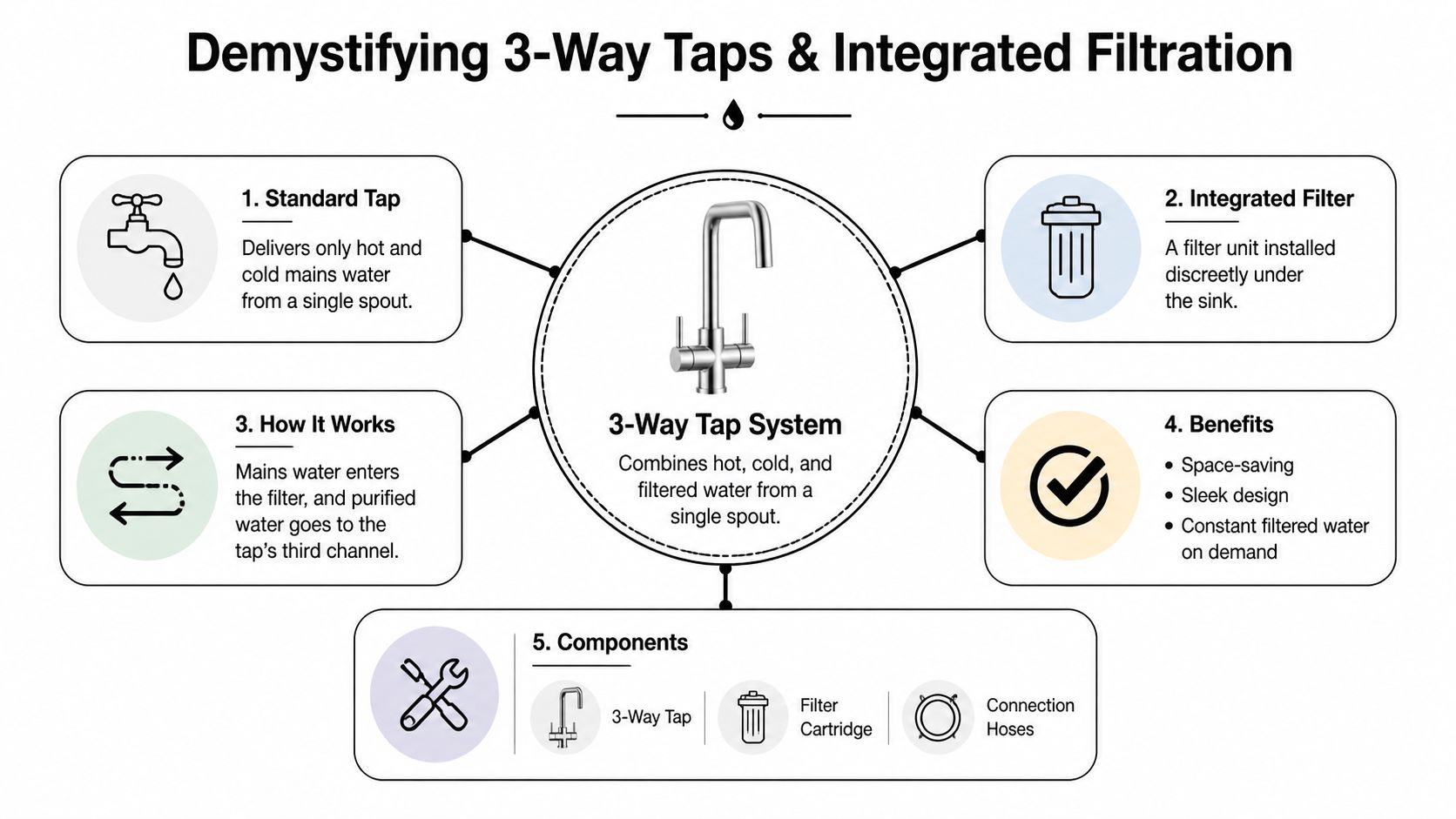
A 3-way tap is the part that makes the whole idea make sense. From above the bench, it looks like one fixture. Inside, it works more like a small water network with separate pathways for hot mains water, cold mains water, and filtered water.
That separation matters. You don’t want filtered drinking water mixing back through the same internal line as standard mains supply.
Think of it as a multi-lane water system
A standard mixer has two lanes. Hot and cold.
A 3-way tap adds a third lane dedicated to filtered water. The tap body is shared, but the internal channels are separate. That gives you the clean look of one tap without giving up the practical benefit of filtered drinking water on demand.
For a closer look at tap styles, finishes, and configurations, see this guide to a kitchen 3-way mixer tap.
Here’s where people often get confused:
Standard mixer tap
Delivers normal hot and cold mains water only.Dedicated filter tap
Gives you filtered water, but usually means another fixture on the benchtop or sink.3-way mixer tap
Combines standard kitchen use and filtered water in one fitting.Boiling or chilled tap system
Goes further again, pairing specialist under-sink units with a tap designed for instant temperature-controlled water.
A short visual helps if you’re comparing layouts and plumbing paths:
What sits under the sink
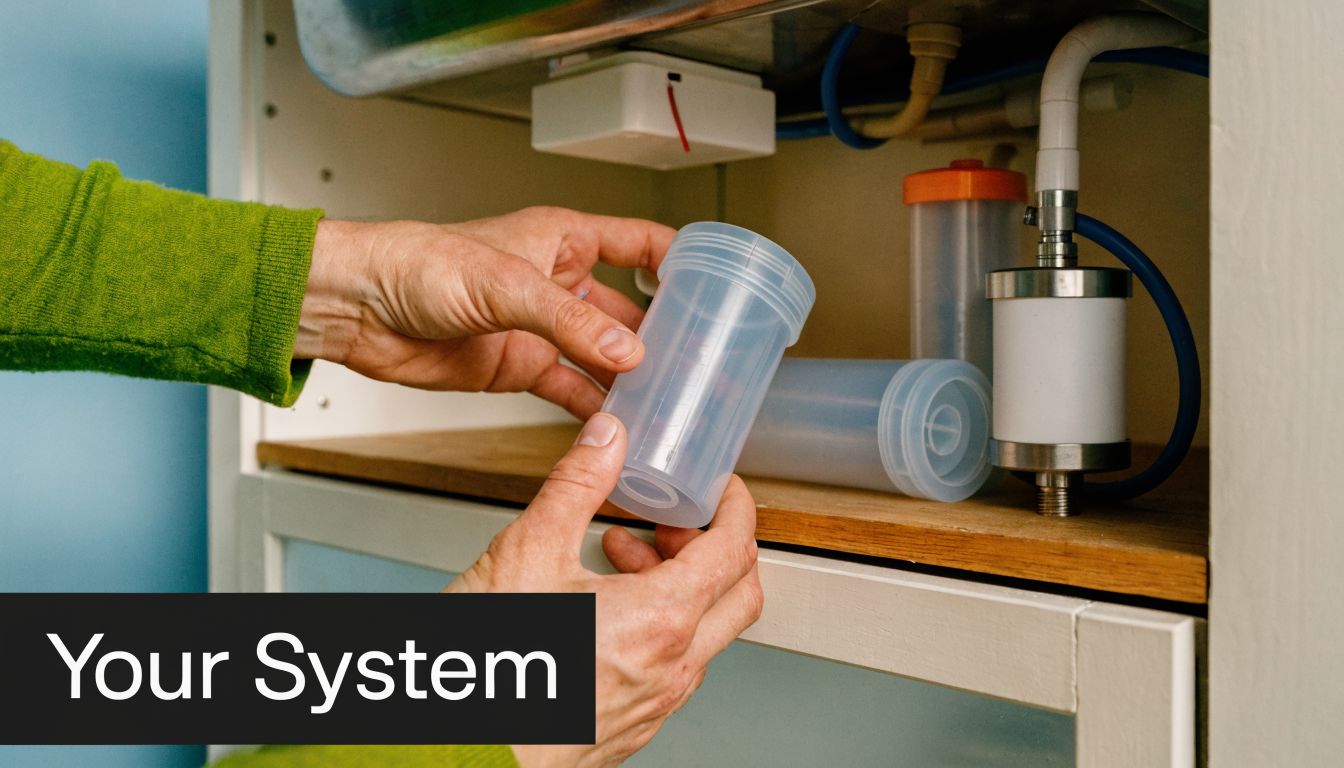
The tap is only the visible end. Underneath, the system usually includes:
- A filter head and cartridge set matched to your water quality
- Isolation valves and hoses for service access
- Optional booster, boiler, or chiller units depending on the setup
- Fittings that keep filtered and unfiltered supply lines correctly separated
Most installation issues don’t come from the tap you can see. They come from poor planning under the sink, where space, access, drainage, and hose routing all compete.
That’s why the best under sink water filter Australia decision usually isn’t just “which cartridge should I buy?” It’s “what complete setup fits my sink cabinet, water use, and kitchen habits?”
How to Select the Right Under Sink Water Filter
The filter itself performs the essential work. The trick is choosing the right filtration method for your water, not the one with the loudest marketing.
In Australia, most buyers are comparing three broad paths. Carbon-based filtration for taste and odour improvement, ultrafiltration when microbial and fine-particle control matters without stripping minerals, and reverse osmosis when the goal is deeper contaminant reduction.
The main technologies in practical terms
Carbon systems are the straightforward choice for many town water households. They’re useful when the main complaints are chlorine taste, smell, or general drinking quality. They’re also usually simpler to live with and easier to fit into compact cabinetry.
Ultrafiltration sits in a useful middle ground. It can physically block very fine contaminants while still keeping beneficial minerals in the water. That makes it attractive for people who want stronger filtration without stepping into a full RO setup.
Reverse osmosis is the more extensive option. It suits households that want broad contaminant reduction, especially where fluoride, dissolved contaminants, or a wider purification target is part of the brief.
The product examples people compare most often make those trade-offs clear. The Waterdrop X8 uses a 9-stage filtration process with up to 99% removal of contaminants like chlorine, lead, and fluoride, while Puratap’s Australian-made ultrafiltration system uses a 0.45-micron membrane to block 99.99% of bacteria and cysts with zero water waste, while preserving beneficial minerals, as outlined in Waterdrop’s Australian under-sink filter guide.
Comparison of Under Sink Filter Technologies
| Technology Type | Primary Contaminant Removal | Effect on Minerals | Typical Flow Rate | WaterMark Certified |
|---|---|---|---|---|
| Activated carbon | Chlorine, taste, odour, common sediment depending on configuration | Usually retains minerals | Usually strong for everyday kitchen use | Check the specific product |
| Ultrafiltration | Fine particles, bacteria, cysts, chlorine when paired with carbon stages | Preserves minerals | Usually steadier than RO in daily use | Check the specific product |
| Reverse osmosis | Broad contaminant reduction including chlorine, lead, fluoride and dissolved impurities in suitable systems | Reduces minerals | Often lower feel at the tap than simpler systems, depending on design | Check the specific product |
| Basic sediment filter | Dirt, rust, larger particles | No meaningful change to minerals | Usually high until cartridge loads up | Check the specific product |
How to match the tech to the water
If your main issue is chlorinated taste in metropolitan supply, a carbon or UF-based system is often enough. If you’re trying to reduce a broader list of contaminants, RO starts to make more sense.
If you’re on tank water, in an older property, or dealing with variable source quality, filtration needs more careful matching. In those cases, the wrong setup can either underperform or create maintenance problems you didn’t need.
A broader buying framework is in this guide to the best water filtration system for home.
Don’t choose a filter by stage count alone. Choose it by what’s in your water, how much water you use, and whether you want to retain minerals or prioritise deeper reduction.
What works and what doesn’t
What works is a system that matches the problem. Carbon for taste. UF for a strong balance of flow and filtration. RO for complete treatment.
What doesn’t work is overbuying a complex system for a simple issue, or underbuying a basic filter and expecting it to solve everything.
Matching a Filter System to Your Kitchen and Needs
By the time you’ve narrowed down the filter type, the next decision is more physical than chemical. The best system on paper can still be the wrong choice if it doesn’t fit the cabinet, suit the tap position, or work with the rest of the kitchen hardware.
Start with the tap, not the brochure
A lot of homeowners choose the filter first and then try to force the tap to suit. In practice, it often works better the other way around.
Check these points first:
Tap construction
Look for solid, plumbing-grade materials. Cheap lightweight fittings don’t age well in busy kitchens.Valve quality
Ceramic disc valves are the standard to look for if you want smoother operation and fewer service headaches.Finish matching
Chrome, brushed finishes, and darker tap colours need to work with your sink, handles, and appliances. A great filter system can still look tacked on if the tap doesn’t belong in the room.
WaterMark isn’t optional
In Australia, WaterMark certification matters because plumbing products need to comply with local requirements. If a tap, filter assembly, or related plumbing component doesn’t meet the standard, that should stop the conversation straight away.
Online shopping can catch people out. Product photos can look fine, but the listing may be vague about certification, compatibility, or exactly how the filtered line is delivered through the tap.
A good buying check is simple:
- Confirm certification for the tap and any relevant filtration components.
- Confirm compatibility between the filter, fittings, and the tap style you want.
- Confirm serviceability so future cartridge changes don’t require dismantling half the cupboard.
Think in system combinations
The best under sink water filter Australia setup is often a combination problem, not a single-product problem.
Some kitchens only need a 3-way tap and a filter. Others suit a fuller arrangement:
| Kitchen need | Better fit |
|---|---|
| Cleaner drinking water with no bench clutter | 3-way tap plus under-sink filter |
| Filtered water plus instant tea and cooking water | Filter system paired with an under-sink boiler |
| Filtered cold drinking water in an office or entertaining area | Filter system paired with a chiller |
| One fixture doing more of the daily work | Integrated tap chosen to suit the under-sink units |
If the cabinet is already tight with bins, traps, and cleaning products, compact equipment matters more than fancy features.
Space planning also affects maintenance. You need enough room to isolate the water, remove cartridges, and inspect fittings without turning a filter change into a half-day exercise.
Your Guide to Installation and Ongoing Maintenance
Installation looks simple from the top of the bench. Underneath, there’s more going on. You’re dealing with water supply lines, tap mounting, filtration connections, and in some cases power, drainage, or ventilation for extra equipment.
DIY or licensed installer
For a confident handy person, a simple filter swap onto an existing compatible setup may be manageable. A complete integrated system is a different job.
A professional installer earns their keep when the job includes:
- A new 3-way tap replacing the existing mixer
- Limited cabinet access around waste pipes or pull-out bins
- Additional equipment such as a boiler or chiller
- Compliance concerns around certified products and plumbing work
For readers comparing the actual process, this article on under sink water filter installation is worth a look.
What proper installation usually involves
The sequence is usually straightforward, even when the details vary:
- Isolate the supply and remove the existing tap if needed.
- Fit the new tap and route the hot, cold, and filtered lines correctly.
- Mount the filter where cartridges can be changed without a fight.
- Connect valves and fittings, then flush the system as required.
- Check every joint under pressure, then test the tap functions separately.
The biggest mistake in DIY installs isn’t ambition. It’s poor access planning. If the housing is mounted hard against the cabinet wall or behind another appliance, future servicing becomes frustrating fast.
Maintenance that keeps the system worth owning
Maintenance is where good systems stay good.
Some verified product guidance is clear on service intervals. Under-sink filters commonly run on a 6 to 12 month replacement cycle in suitable applications, while some advanced systems can have longer-life components depending on the stage involved. The key is to follow the actual product schedule and your water conditions, not a generic reminder on a calendar.
Keep the routine simple:
- Replace cartridges on schedule using the correct compatible parts.
- Flush after changes so carbon fines or trapped air don’t affect taste.
- Sanitise when required if the manufacturer specifies it.
- Inspect fittings and housings whenever you service the system.
Fresh filters don’t fix a badly installed system. Good maintenance starts with clean routing, accessible shut-off points, and genuine replacement parts.
Solving Common Problems with Your Water Filter System
Most under-sink systems are dependable once they’re installed properly. When problems show up, they’re usually small and diagnosable.
Low flow at the tap
If pressure drops suddenly, check whether it’s only the filtered line or the whole tap. If hot and cold mains water still run normally, the filter stage is the first suspect.
Try this order:
- Check the cartridge age. A loaded cartridge is the common cause.
- Check isolation valves under the sink. Partially closed valves happen more often than people expect.
- Check for kinked hose runs behind bins or stored items.
If the whole tap has poor flow, the issue may sit outside the filter system.
Small leaks under the sink
Don’t assume the housing is faulty straight away. Many leaks start at a fitting, not the cartridge body.
Look for:
- Moisture at threaded joins rather than on the base of the housing
- Drips after a filter change, which can point to a seal not seated properly
- Leaks only during draw-off, which often suggests a connection problem under pressure
Dry everything first, then run the system and watch closely. That makes the source easier to identify.
Strange taste after replacing a filter
A taste issue right after a filter swap usually isn’t a sign the system has failed. It often means the cartridge needs a proper flush, or the replacement part isn’t the correct match.
If the taste doesn’t clear, check:
- Whether the cartridge is genuine and compatible
- Whether the filtered and unfiltered lines were reconnected correctly
- Whether the old filter had masked another issue in the supply
Noise, pulsing, or odd operation
Air in the line is common after servicing. So is a bit of noise from housings settling during first use.
If the sound continues, inspect for loose mounting, hose strain, or a component that wasn’t fully primed after installation.
Finding Local Expertise with Ring Hot Water
A good under-sink system isn’t just a product choice. It’s a plumbing choice, a layout choice, and a servicing choice. That’s why local knowledge matters.
In Melbourne, the details that change the result are usually practical ones. Cabinet space in older homes. Access around existing plumbing. Matching a filtered water setup with an instant boiler or chiller. Choosing fittings and spare parts that can still be sourced later. Those are the parts that separate a clean install from a messy compromise.
For homeowners who want one supplier handling both product selection and the practical side, Ring Hot Water supplies under-sink filtration, taps, boiling and chilled water units, plus parts for ongoing maintenance. The business is based in Sunshine and services the wider Melbourne area including Yarraville and nearby suburbs, while also shipping products Australia-wide.
If you’re choosing who should install or service the system, it helps to use a sensible checklist. This homeowner’s guide to plumbers is a useful reminder to verify licensing, experience, and the kind of work they do day to day.
For most households, the right outcome isn’t just buying a filter. It’s getting a complete under-sink water system that suits the kitchen, the water supply, and the way the space is used every morning.
If you want help choosing a complete filtered, boiling, or chilled water setup for your kitchen, visit Ring Hot Water for product advice, Melbourne installation support, and replacement parts delivered across Australia.

