
Uncategorized
Best Replacement Cartridge Water Filter Options
Apr
You fill the kettle, press your instant boiling tap, and wait. The flow seems slower than it used to be. Your tea tastes a bit flat, or maybe there’s that faint chlorine edge again. Around the sink, the white chalky marks have started coming back.
That usually means one small part is carrying a big load. Your replacement cartridge water filter.
Individuals often think about the tap, the boiler, or the chiller first. In reality, the cartridge does the quiet work. It catches grit, reduces taste and odour issues, and helps protect the expensive gear under the bench. When it’s fresh, water feels easy. When it’s spent, the whole system starts to complain.
In Melbourne, that matters more than many generic online guides admit. Water quality isn’t identical from one suburb to the next. Older pipes in places like Yarraville and Footscray can throw more sediment into the mix. Hardness, chlorine, and fitting compatibility also shape what cartridge suits your setup.
If you’re weighing up full system options as well as replacement filters, this guide to the best water filtration system for home is a helpful companion. For now, let’s focus on the part people most commonly replace, and often replace too late.
Your Guide to Clean Water Starts Here
That first glass of water in the morning tells you a lot.
If it tastes crisp and clean, you probably don’t think twice. If it smells a bit chemical, comes out slower, or leaves your coffee tasting off, you notice immediately. Melbourne households often start thinking about filtration only when something changes.
A replacement cartridge water filter is the consumable part inside your filtration system. It’s the part that wears out while the housing, fittings, and tap stay in place. Once the media inside the cartridge fills up or loses effectiveness, water quality and flow start to change.
For one home, the first clue is taste. For another, it’s reduced pressure at the filtered tap. In kitchens with a Zip or Stiebel Eltron unit, people often assume the appliance is failing when the issue is a tired cartridge upstream.
Water problems rarely begin with a dramatic breakdown. They usually start with small annoyances that get worse over time.
Melbourne homes also have a practical challenge. One suburb may deal mostly with chlorine taste. Another may have more sediment from older infrastructure. That’s why the right replacement cartridge isn’t just about “what fits”. It’s about what your water is asking the filter to do.
A good cartridge swap can mean better-tasting water, steadier flow, less scale around the sink, and less strain on boiling or chilled units. It’s one of the simplest maintenance jobs in the kitchen, but it has an outsized effect on everyday use.
What Is a Replacement Water Filter Cartridge
A replacement water filter cartridge is the removable part inside your filtration system that does the actual treatment of the water.
Inside that cartridge is filter media chosen for a specific job. Depending on the design, it may catch grit and rust, reduce chlorine taste and odour, or help limit scale that can shorten the life of appliances. The outer housing holds everything in place, but the cartridge is the part that wears out through normal use.
A simple comparison helps here. The cartridge works like the bag in a vacuum cleaner or the oil filter in a car. The machine still exists around it, but the replaceable part gradually fills up or loses effectiveness. Once that happens, you still get water through the system, just not at the same standard.
That difference matters in real homes. In Melbourne, one kitchen may mainly need better-tasting drinking water because of chlorine. Another may need extra protection from sediment after plumbing works or in an older street. If you have a Zip or Stiebel Eltron unit connected to filtered water, the cartridge also helps protect the equipment that heats or chills the water.
Cartridge versus system
This is the point that causes the most confusion.
The water filter system is the full setup. It includes the housing, fittings, tubing, tap connection, and sometimes valves or pressure control parts. The replacement cartridge water filter is the insert you remove and swap out during servicing.
In other words, you usually keep the body of the system and change the part inside it.
What changes as a cartridge ages
A fresh cartridge has capacity. It can trap particles or absorb unwanted compounds because the media still has room to do its job. Over time, that capacity gets used up.
When that happens, you may notice:
- Slower flow at the filtered tap
- Water that tastes or smells different
- More strain on connected appliances, especially boiling and chilled tap systems
That is why matching the right cartridge to the system matters. A cartridge is not just a tube that fits the housing. It is the treatment stage that determines how your water tastes, how well your system performs, and how much protection your tap setup gets day to day.
Understanding Common Cartridge Types
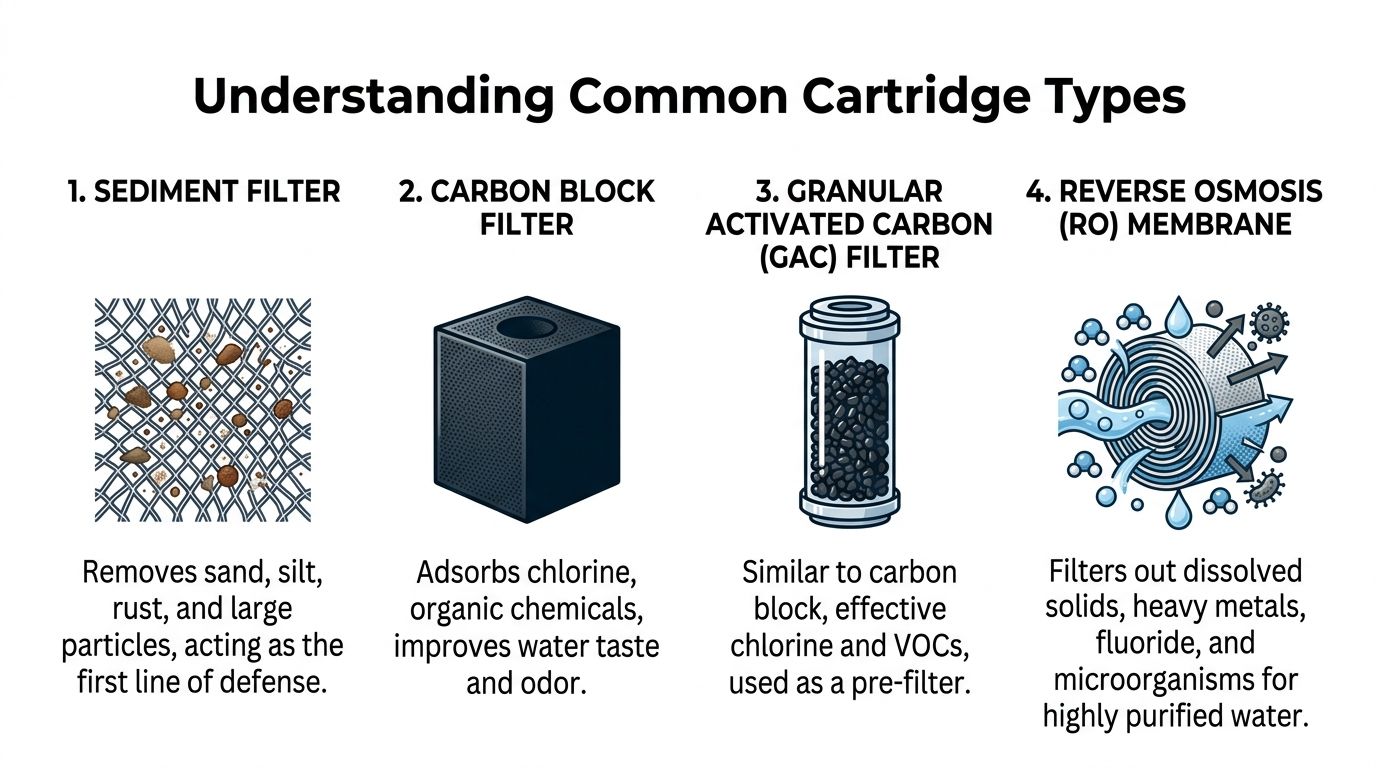
Not every replacement cartridge water filter does the same job. Some catch grit. Some improve taste. Some target dissolved contaminants. Some are there mainly to protect appliances.
For Melbourne homes, the most common starting point is a staged approach. One cartridge handles the physical debris. Another improves taste and odour.
Sediment cartridges
A sediment filter is usually the first line of defence.
Its job is to catch visible and fine particles such as rust, sand, grit, and silt before they move deeper into the system. In older suburbs or after plumbing works in the street, this stage often carries the heaviest load.
If you’ve ever removed a used sediment cartridge and found it discoloured, that’s normal. It means it has been doing the messy work upstream.
Best for:
- Homes with older pipework
- Areas with visible grit or rust
- Protecting carbon cartridges and appliance internals
Carbon block cartridges
A carbon block filter is the taste-and-odour workhorse.
In Australian urban supplies like Melbourne, chlorine can sit around 0.5 to 1.0 mg/L, and pairing a 5-micron sediment pre-filter with an activated carbon block cartridge can deliver more than 95% chlorine reduction while trapping 99.9% of particles above 5 microns (SpringWell replacement cartridge data).
That matters in daily use. Less chlorine usually means better-tasting drinking water, better tea and coffee, and less stress on instant boiling taps from brands like Zip and Stiebel Eltron.
GAC cartridges
A granular activated carbon, or GAC, cartridge also targets chlorine and taste issues.
Instead of a solid carbon block, it uses loose granular carbon media. In some systems it’s used as a pre-filter or a lower-resistance stage where higher flow is useful. It can work well, but many people prefer carbon block when they want more structured filtration performance in a compact under-sink setup.
Reverse osmosis membranes
An RO membrane is different from standard drop-in cartridges.
It’s designed for deeper purification and is used in reverse osmosis systems, not simple sediment-carbon setups. These systems are often chosen when households want broader reduction of dissolved solids and more intensive treatment than a typical under-sink filter provides.
They’re effective, but they also involve more components, more maintenance, and a different replacement schedule from a basic boiling-tap filter system.
Water softening cartridges
For Melbourne kitchens with hard water symptoms, a water softening cartridge can be valuable.
These cartridges use ion-exchange media to target calcium and magnesium, the minerals that leave scale on taps, inside kettles, and on heating elements. They’re especially relevant where protecting hot water equipment is just as important as improving drinking quality.
Inline cartridges
An inline filter is a sealed unit rather than an open housing with a drop-in cartridge.
These are common in fridges, chillers, compact systems, and final polishing stages. They’re tidy and easy to swap, but they need the correct fittings and flow direction to work properly.
A quick comparison
| Cartridge Type | Primary Function | Best For |
|---|---|---|
| Sediment | Traps rust, sand, grit, and silt | Older pipes, pre-filtration, protecting other stages |
| Carbon Block | Reduces chlorine, taste, and odour issues | Drinking water, boiling taps, kitchen use |
| GAC | Improves taste and targets chlorine | Pre-filter stages and some inline setups |
| RO Membrane | Removes a broad range of dissolved contaminants | Dedicated RO systems needing deeper purification |
| Water Softening | Reduces hardness minerals that form scale | Hard water areas, boilers, kettles, hot water units |
| Inline | Compact final-stage filtration | Fridges, chillers, space-limited systems |
How to Find the Perfect Match for Your System
Buying the wrong cartridge is one of the most common mistakes people make. It often looks close enough. Then it leaks, fits poorly, restricts flow, or doesn’t treat the water the way your setup needs.
Start with identification, not guesswork.
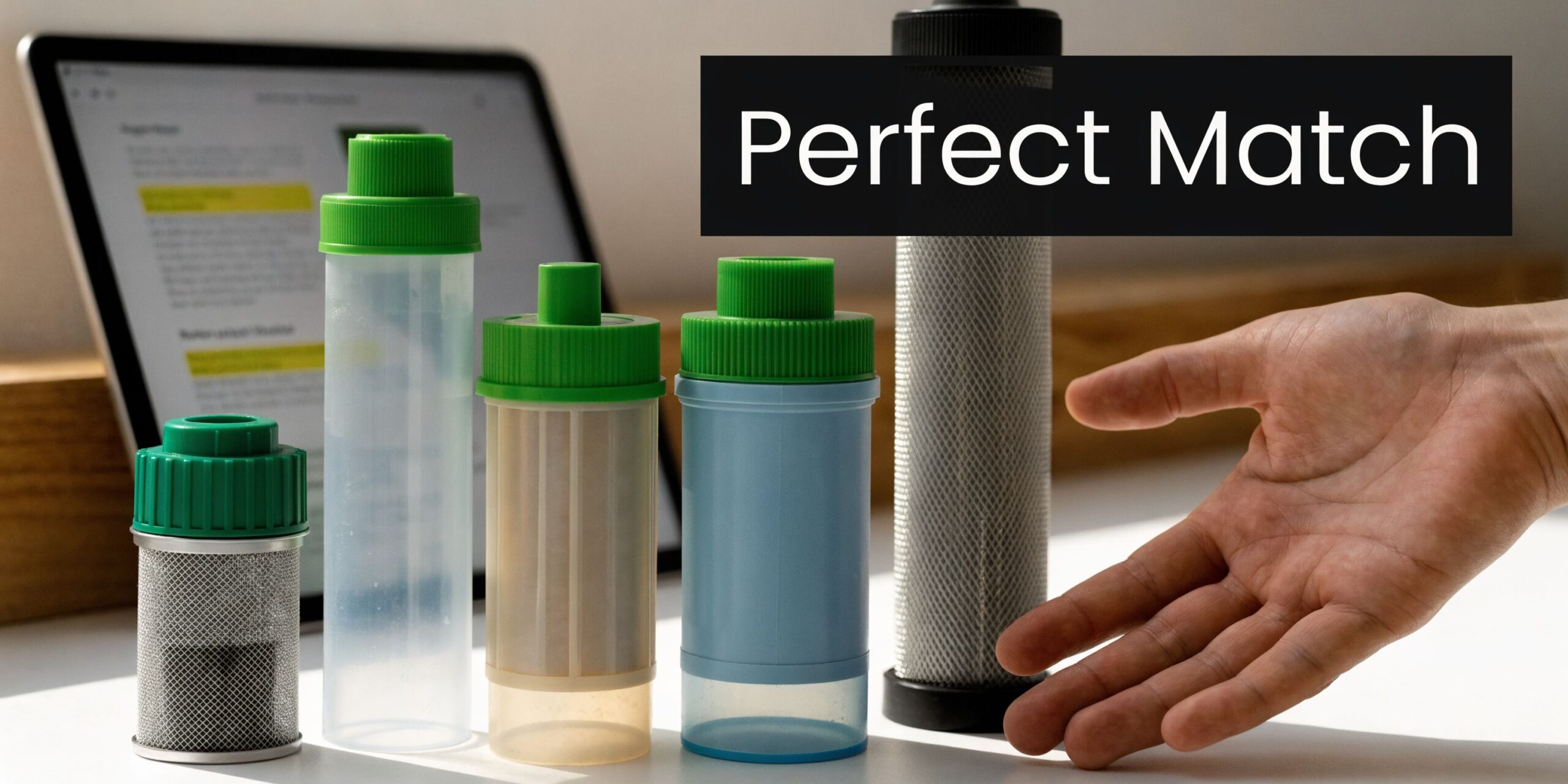
Check the cartridge or system model first
The easiest match is the one printed on the old cartridge or housing label.
Look for:
- Model number
- Brand name
- Micron rating
- Flow direction arrows
- Any fitment code on the ends
If the label has faded, take a photo before removing anything. Even partial model details can help narrow it down.
Measure before you order
If there’s no readable code, measure the old cartridge carefully.
The key measurements are:
- Length
- Outer diameter
- Inner diameter if it’s a drop-in style
- End style, such as double open-end or twist-lock
One verified sizing example for whole-kitchen filtration is a DOE 20" cartridge with 2.75" OD x 1.25" ID, and the practical advice is to measure L=20", OD=2.5-2.75", ID=1.125" before purchase when matching these systems.
Match the fitting style
Branded systems often present a challenge here.
In Australia, sourcing compatible cartridges for units like Zip or Stiebel Eltron is a concern. A 2025 report found 35% of users struggle to find OEM parts, and 22% of service calls involved mismatched John Guest fittings. It also noted that some generic filters may fit physically but can show 18% reduced contaminant removal in Australia’s fluoridated water if they lack the right certification (NSF consumer guidance).
That’s why “it screws on” isn’t enough.
Don’t ignore what you want the filter to do
A cartridge can fit perfectly and still be wrong for your water.
If your main issue is sediment, choose for sediment load. If chlorine taste is the complaint, carbon matters more. If you’re also thinking about emerging drinking water concerns, this explainer on a water filter for microplastics gives useful background on what different media can and can’t target.
For Melbourne homes with boiling or chilled tap systems, compatibility and water conditions both matter. If you’re comparing system layouts or cartridge styles, this guide to an under sink water filter Melbourne setup can help you sort the options.
A cartridge should match three things at once. Your housing, your fittings, and your water problem.
When and Why You Must Replace Your Filter
It is a familiar Melbourne problem. Your morning tea suddenly tastes a bit flat, the chilled water tap runs slower than usual, and the boiling unit seems to take longer to recover. In many homes, the cartridge is the first thing to check.
A replacement schedule is less like changing a wall clock battery and more like changing the oil in your car. The right timing depends on use, water quality, and the job the filter is doing. Melbourne water is generally good, but cartridge life can still vary from suburb to suburb, especially in homes with older pipework or higher sediment coming through after plumbing work nearby.
Three clues matter most. Time, flow, and taste.
Time is a guide, not a guarantee
Manufacturers usually give a service interval in months or litres, and that is the best starting point. For many under-sink and boiling or chilled systems, that means replacing the cartridge on the maker’s schedule rather than waiting for a clear problem.
That matters with popular systems such as Zip and Stiebel Eltron. Even if the water still looks clean, a cartridge can be nearing the end of its useful life inside. Carbon media can lose its ability to reduce chlorine taste and odour gradually, so the change is easy to miss until your coffee or plain drinking water starts tasting dull.
If you are unsure what interval suits your setup, a local water filter installation service in Melbourne can help match the replacement timing to your cartridge type, your appliance, and your suburb’s water conditions.
A drop in flow usually means the filter is doing its job
A clogged cartridge often shows up as slower flow first.
That does not automatically mean the filter is faulty. It often means it has trapped sediment, rust, or fine particles exactly as intended. The issue is leaving it there once it is full. A restricted filter is a bit like breathing through a scarf that has become wet and dusty. Water still gets through, but the system has to work harder to push it.
In a boiling or chilled tap system, that extra strain can show up as slower dispense rates, delayed recovery, and more wear on parts that should have had an easier life.
Taste and smell changes point to a tired carbon stage
If chlorine taste or odour starts coming back, the carbon section of the cartridge may be spent. This is often easiest to notice in Melbourne homes that use filtered water for tea, coffee, or straight cold drinking water.
People sometimes assume the mains supply has changed overnight. Sometimes it has. But if your water tasted clean last month and now it does not, the cartridge is one of the first suspects.
An old cartridge can still sit in the housing neatly while doing a much poorer job.
Why replacing on time saves money
Putting off a cartridge change can look cheaper for a month or two, but it often costs more later.
Common results include:
- Lower flow at the tap
- Poorer taste and smell reduction
- More sediment stress on valves, boilers, and chillers
- Extra strain on the system as it pushes water through a loaded filter
The same basic idea shows up in other home maintenance jobs. If you have ever read about furnace filter replacement frequency, the pattern is similar. A loaded filter restricts flow, and restricted flow makes equipment work harder.
For Melbourne households, the practical lesson is simple. Replace the cartridge by the manufacturer’s schedule, then adjust earlier if your tap flow drops, taste changes, or your area has older pipes and more sediment than average. That small maintenance habit helps keep water tasting better and gives your Zip or Stiebel Eltron system a better chance of lasting as it should.
A Quick Guide to Installation and Maintenance
Most standard cartridge changes are manageable for a confident homeowner. You don’t need to be a plumber to swap a basic under-sink filter, as long as you work carefully and match the cartridge correctly.
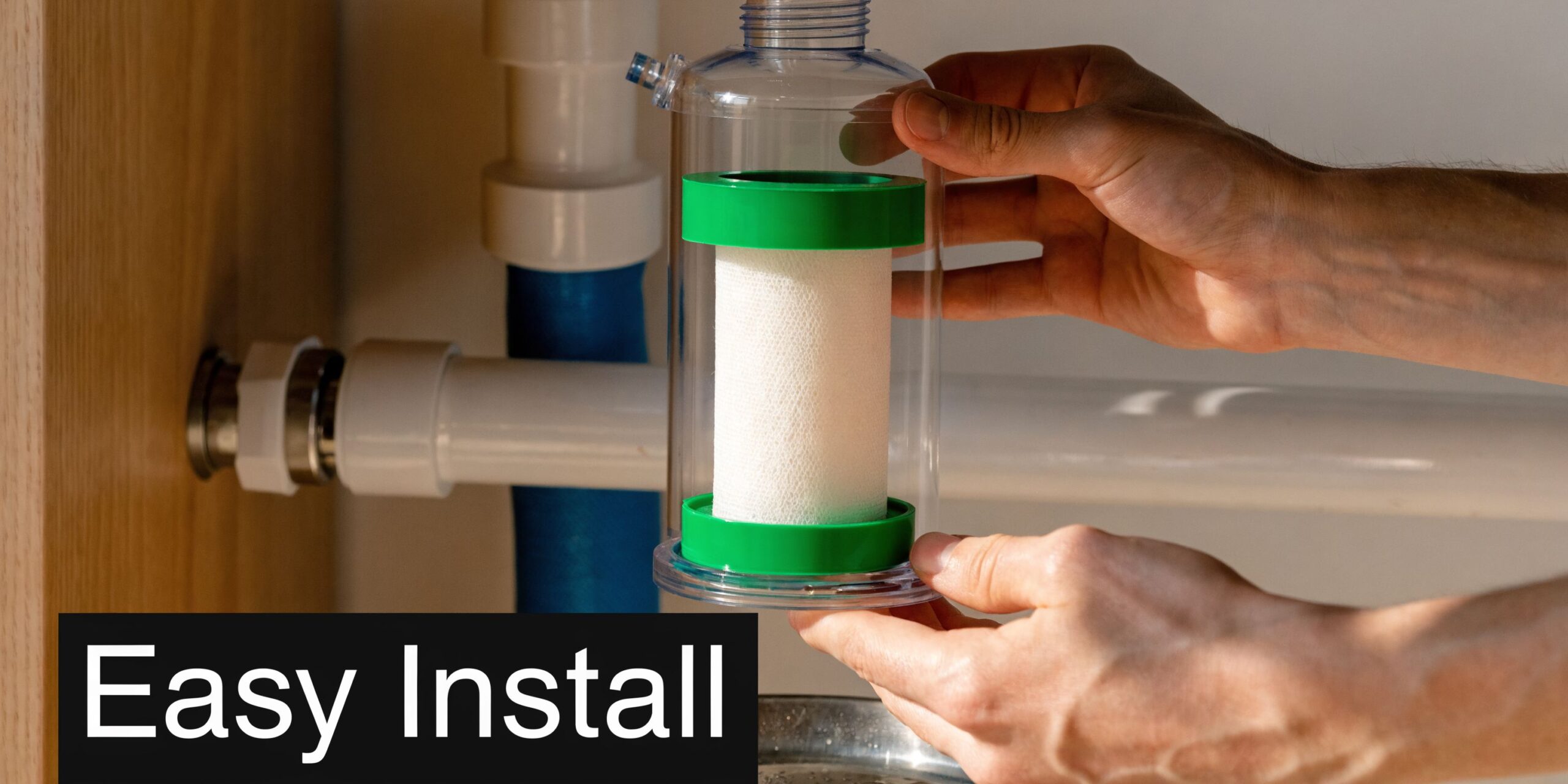
The basic swap process
Start by turning off the water supply to the filter system.
Then:
- Relieve pressure by opening the filtered tap.
- Place a towel or shallow tray under the housing.
- Use the housing spanner if the canister is tight.
- Remove the old cartridge and empty the housing.
- Clean the inside of the canister.
- Check the O-ring for twists, damage, or grit.
- Seat the new cartridge properly before reassembling.
- Turn water back on slowly and check for leaks.
- Flush the new cartridge as directed before drinking.
The most common leak isn’t a cracked housing. It’s a badly seated O-ring.
Maintenance is also about the right cartridge sequence
In hard-water conditions, cartridge choice affects maintenance just as much as replacement technique.
For Melbourne water, water softening replacement cartridges are relevant because average hardness is cited at 180 mg/L CaCO3, and these cartridges can reduce scale formation by 80% in wall-mounted boilers from Stiebel Eltron and Boiling Billy. The same source states that service logs show this swap can cut maintenance calls by 40% and reduce energy consumption by 25% by limiting limescale buildup (Water Anywhere softening cartridge reference).
That’s a practical reminder that maintenance isn’t only “change the old one”. It’s also “use the right media for the job”.
Watch a visual walkthrough
Some people prefer to see the process before trying it. This walkthrough gives a useful visual reference for the general replacement steps.
When to call for help
DIY is fine for a simple housing change. It’s worth getting help if:
- The housing won’t budge and you risk cracking it
- The system uses proprietary twist cartridges
- There are multiple valves and pressure reducers
- You’re working around a boiling or chilled unit
- Leaks continue after checking the O-ring
If you’d rather have the cartridge and fittings checked at the same time, this overview of water filter installation Melbourne services is a practical next step.
Your Melbourne Filter Solution at Ring Hot Water
It often starts the same way. You turn on the chilled or boiling tap expecting clean, fresh water, but the taste seems flat, the flow feels slower, or your unit starts acting up months earlier than expected.
Melbourne homes do not all need the same cartridge, and that is the point. Water conditions can change from suburb to suburb, and the plumbing behind the wall matters too. A newer build may mainly benefit from better chlorine and odour reduction. An older home in Footscray or Yarraville may need stronger sediment protection first, especially if fine rust or grit is finding its way into the system.
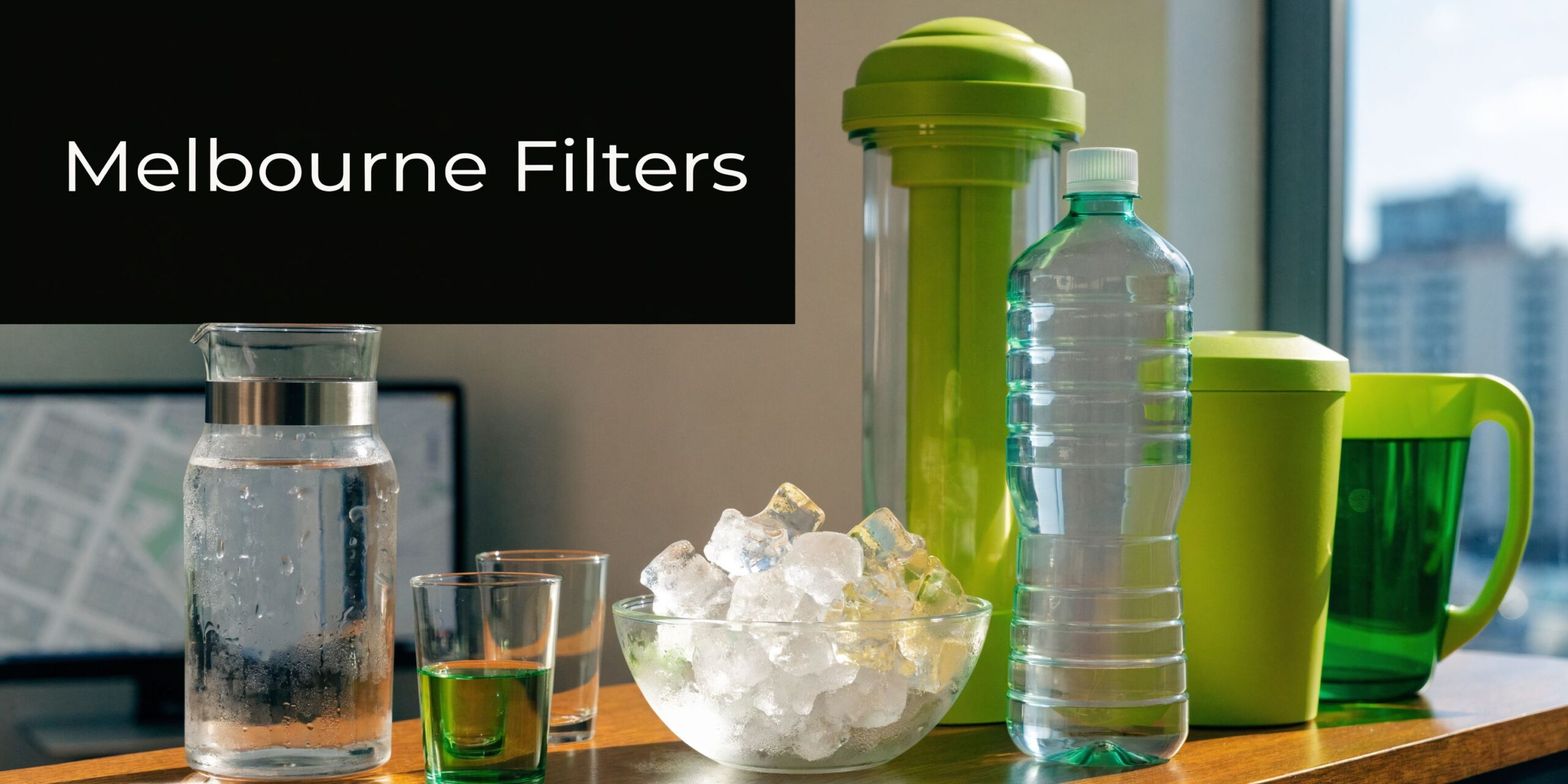
That local variation is why cartridge selection should be based on more than size alone. A filter that slides into place is only half the job. The other half is making sure the media suits your water and the cartridge suits your appliance. That matters with popular Melbourne systems such as Zip, Stiebel Eltron, Boiling Billy, Everchill, and similar under-bench hot and chilled units, where flow rate, pressure, and connection style all affect performance.
Ring Hot Water helps customers sort that out in practical terms. If you already know your cartridge model, the job is simple. If you do not, the useful questions are usually: what unit is under the bench, what problem are you trying to fix, and is your area more likely to need sediment control, taste improvement, or scale reduction?
For offices, cafés, and other busy sites, the choice also affects reliability. The cartridge is a bit like the air filter in a car. If it is the wrong type or left in too long, the whole system has to work harder. In a boiling or chilled tap setup, that can mean poorer tasting water, weaker flow, more wear on internal parts, and avoidable service calls.
For people who need genuine or compatible replacements, fittings, or help identifying a hard-to-find cartridge, Ring Hot Water supplies these products and services from Melbourne while also shipping parts Australia-wide.
The right filter solution is a match between Melbourne water conditions, cartridge media, and the appliance sitting under your bench.
Frequently Asked Questions
Can I use a generic filter with a branded boiling tap
Sometimes it will physically fit. That doesn’t mean it’s the right choice.
Branded systems often rely on specific flow rates, fitting styles, and filtration performance. If the cartridge is wrong, you can end up with leaks, poor taste reduction, reduced flow, or extra stress on the appliance. For units like Zip and Stiebel Eltron, it’s safer to use genuine or properly certified compatible cartridges.
Why did my flow drop after only a few months
Usually because the cartridge has caught a lot of sediment.
That’s common in areas with older pipes, after plumbing works, or when the local supply carries more grit than usual. A fast pressure drop doesn’t always mean a bad cartridge. It can mean your water needs more frequent replacement intervals.
Are carbon and sediment cartridges the same thing
No. They do different jobs.
A sediment cartridge catches physical particles such as rust and grit. A carbon cartridge mainly improves taste and odour by reducing chlorine and similar compounds. Many under-sink systems use both because one protects the other.
Do caravan and RV systems need different cartridges
Often, yes.
Caravan setups usually have tighter spaces, variable water sources, and different pressure conditions. Fitting type matters too, especially with 12mm systems. If you’re buying for a van, check size, pressure suitability, and whether the cartridge is meant for sediment, taste, or multi-stage treatment.
What’s the simplest sign that my replacement cartridge water filter is due
If the water tastes worse, smells more chemical, or the flow has become noticeably weaker, start by checking the cartridge age and condition.
If you can’t remember when you changed it, that’s usually a sign to inspect it now.
If you need help identifying the right cartridge, matching fittings for a Zip or Stiebel Eltron setup, or sorting out a sediment, carbon, or softening filter for Melbourne water conditions, contact Ring Hot Water. The team can help with replacement parts, filtration advice, and service support for homes, workplaces, hospitality sites, and caravans.
