
Uncategorized
Replacement Water Filter Cartridges: Your AU Guide
Apr
The usual trigger is small at first. Your boiling tap starts running slower. The chilled water tastes flatter than it did a few months ago. Or you open the cupboard under the sink and realise you cannot remember the last time the cartridge was changed.
At that point, many users start looking into replacement water filter cartridges. Not because they suddenly became interested in filtration theory, but because the system is giving them signs that something is off.
In Melbourne homes and commercial kitchens, that small cartridge does far more work than people think. It protects taste, helps manage chlorine and sediment, and shields expensive appliances like Zip, Stiebel Eltron, Boiling Billy and similar units from avoidable stress. When the cartridge is the right type and changed on time, the whole system feels invisible. Water runs properly, tastes right, and the unit does what it should. When the cartridge is wrong, overdue, or a poor fit, problems show up quickly.
At Ring Hot Water, this is one of the most common maintenance issues we see. People often buy a cartridge that looks close enough, rely on a generic guide written for US systems, or assume all under-sink filters are interchangeable. In Australian setups, they often are not.
Your Ultimate Guide to Replacement Water Filter Cartridges
A homeowner in Sunshine might notice their instant hot tap losing flow. An office manager in Footscray might get complaints that the filtered water tastes more like straight tap water. A café owner might find a boiling unit cycling poorly after the filter has been ignored for too long. Different sites, same root issue. The cartridge has reached the point where it is no longer doing the job it was selected for.
That matters more in Australia than many imported guides admit. The advice online is often written around common US housings, US brand names, and water conditions that do not line up neatly with Melbourne supply. If you run a Zip HydroTap, a Boiling Billy, a Stiebel Eltron chiller, or a compact under-sink filtration setup with John Guest fittings, compatibility is not a side issue. It is the first issue.
A replacement cartridge is not just a consumable. It is part of a working system with a specific flow rate, connection style, pressure profile and contaminant load. Get the wrong one and you can end up with poor taste, pressure drop, nuisance leaks, premature fouling, or warranty headaches.
The practical view is simple. You need to know four things:
- What the cartridge is meant to remove
- Whether it physically fits your system
- How often it should be changed
- Whether the replacement is suited to local water conditions
A good cartridge feels expensive only at the time of purchase. A bad cartridge keeps costing you after installation.
The rest of the job is straightforward once those basics are clear.
What a Water Filter Cartridge Does
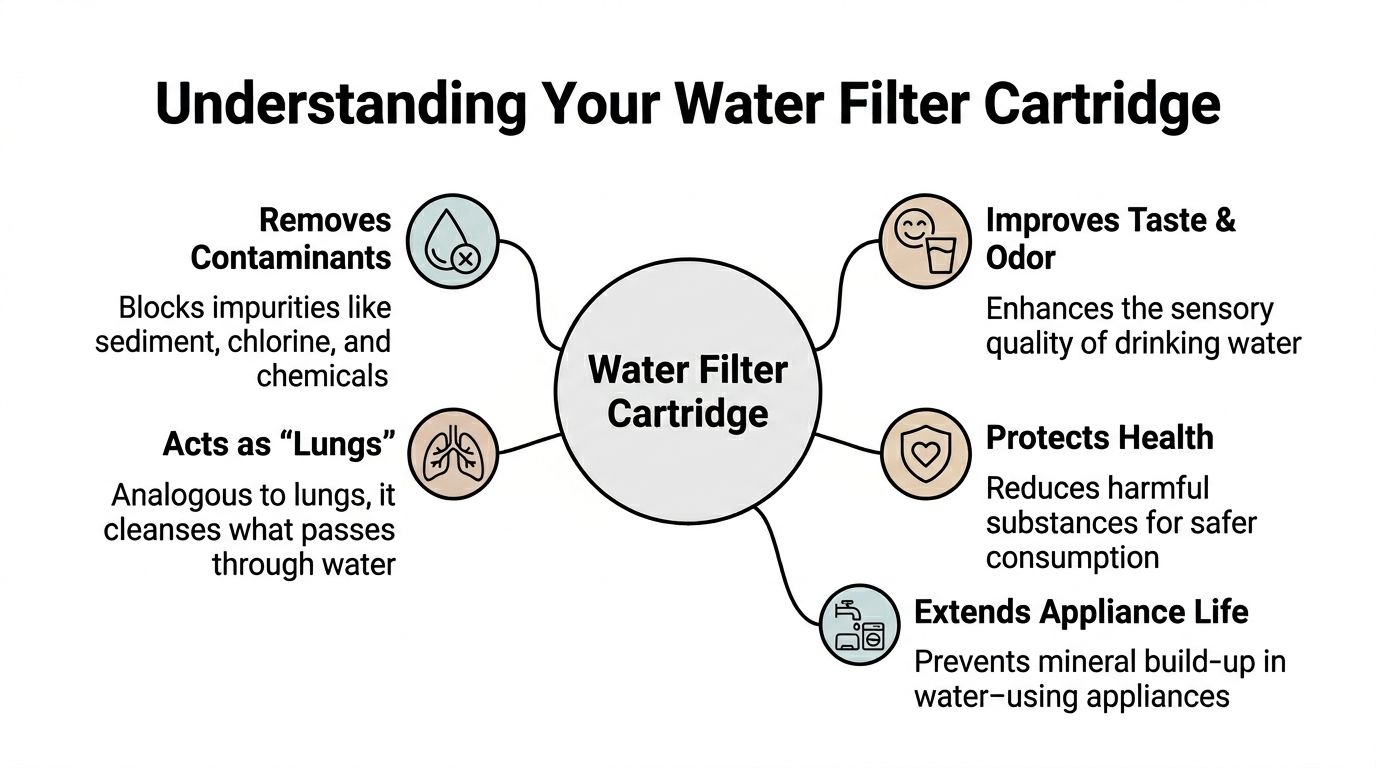
A cartridge is the working core of the filter. The housing holds it in place, but the cartridge does the treatment. If you want an easy way to think about it, it is the lungs of your water system. Water passes through it, and the media captures or reduces what you do not want travelling further downstream.
It handles the contamination load
In practical household use, that usually means dealing with sediment, chlorine, taste and odour issues, and in some systems, scale-related problems. In commercial settings, the cartridge may also be there to protect higher-demand equipment from particulates that would otherwise clog internal pathways or affect consistent dispensing.
For many under-sink systems, the cartridge’s first job is defensive. It intercepts material before that material reaches your tap, boiler, chiller or valve assembly. That is why filter neglect often shows up as an appliance problem before the owner realises it is a filtration problem.
Different media do different jobs
Some cartridges are designed to capture particles. Others are designed to reduce chlorine and improve taste. Some combine both roles. A common example is the 5-micron sediment cartridge used ahead of carbon filtration.
In Australian systems, these cartridges often use a gradient pore structure that gets tighter from the outside in. That design traps larger particles like sand and rust near the outside while holding finer material deeper in the cartridge, extending service life by 2 to 3 times compared with uniform pore filters, and under AS/NZS 4348 they must provide more than 90% retention at the rated micron size, as noted by iSpring’s 5-micron sediment filter details.
It protects both water quality and equipment
When the cartridge is fresh, water moves through the media as intended. As it loads up, two things happen. Flow gets restricted, and filtration effectiveness drops. That creates the common symptoms people notice at the tap, but the more expensive impact is often inside the appliance.
A boiling or chilled unit depends on reliable inlet water conditions. If sediment gets through, or if a clogged cartridge causes poor feed performance, the unit has to work harder. Valves, pumps, internal channels and downstream components all benefit when the cartridge is doing its job.
Why replacement matters
Cartridges are not permanent. They are sacrificial components by design. They collect contamination until they are spent.
That is why “still looks fine” is not a useful standard. Many exhausted cartridges look ordinary from the outside. Performance is what matters.
If your filtered water tastes ordinary, flows slowly, or leaves you second-guessing the system, the cartridge has already become a maintenance issue.
Decoding the Different Types of Filter Cartridges
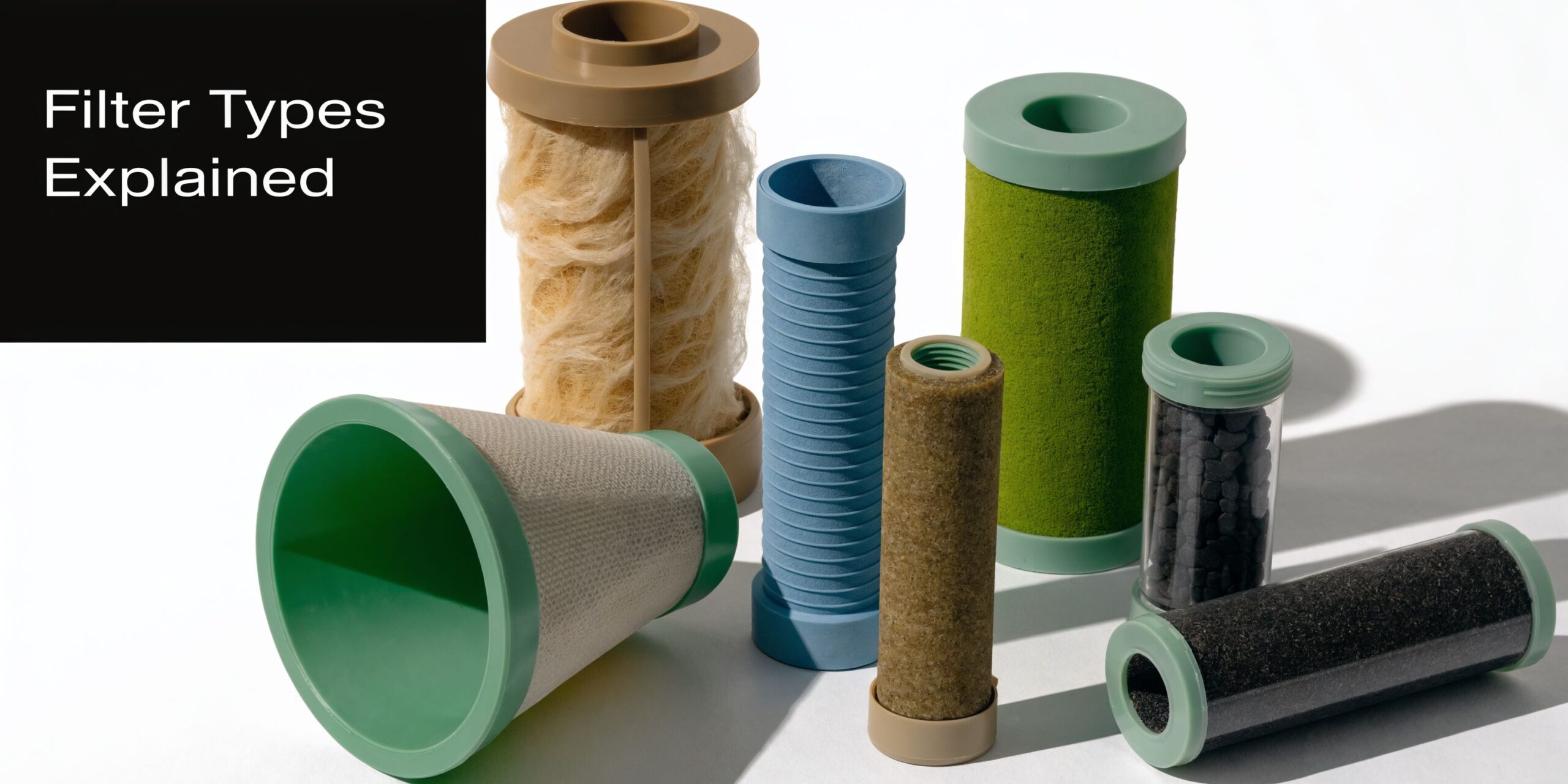
Most confusion around replacement water filter cartridges comes from assuming that all filters do the same thing. They do not. A cartridge is chosen for a job, and the right choice depends on what is in the water and what equipment sits downstream.
Sediment cartridges
Sediment cartridges deal with physical particles. Think sand, rust, silt and general suspended matter. They are often the first stage in a system because they stop debris from loading up more expensive carbon media too quickly.
These are especially useful where visible particles, cloudy water, or intermittent mains disturbance are part of the site’s reality. In a kitchen setup, they help stop the rest of the system from becoming a dirt trap.
A finer micron rating is not automatically better. If you go too fine without considering flow and water quality, you can shorten service life and create pressure issues. In real installations, balance matters.
Carbon block cartridges
Carbon block cartridges are the workhorses for improving taste and odour. They are commonly used to reduce chlorine and the “chemical” flavour many people notice in municipal water.
For under-sink drinking water systems and integrated boiling tap setups, this is usually the cartridge people care about most because the result is immediate. Better taste. Better smell. Water that feels filtered.
The trade-off is that carbon media can clog if upstream sediment is not controlled. That is why pairing a carbon cartridge with proper pre-filtration often produces a better result than relying on one cartridge to handle everything.
Scale-focused cartridges
Harder water changes the conversation. In parts of Melbourne, mineral content can make cartridges foul faster and can add stress to boiling systems where heated surfaces are involved.
A scale-reduction cartridge is not the same as a basic sediment or taste-and-odour filter. Its purpose is to reduce the mineral-related issues that show up as internal build-up, poor appliance performance and heavier maintenance.
If your concern is persistent mineral build-up rather than chlorine taste, a standard cartridge may solve the wrong problem.
Ultrafiltration and specialty media
Some sites need a more specialised approach. Ultrafiltration cartridges are being discussed more often where owners want finer treatment without moving to a full reverse osmosis setup. Specialty cartridges are also considered where there are concerns about specific contaminants or where local water conditions are unusually demanding.
These setups need more care in selection because flow rate, pressure, compatibility and maintenance all become more system-specific.
High-flow cartridges for commercial work
Commercial venues are a different category. A café, staff kitchen, school, or hospitality site may need much more water through the system without sacrificing filtration performance.
For those installations, high-flow pleated cartridges can replace some 3M Cuno and Pall models. According to Global Filter’s high-flow cartridge specifications, these cartridges achieve over 99% efficiency at 1 to 10 microns, handle 15 to 45 m³/h with a single cartridge, and reduce system footprint by 50% compared with standard filters.
That matters where cupboard space is tight, access is poor, or plant room layouts are already crowded.
A practical matching guide
| Water issue | Cartridge type that usually fits the job | Common caution |
|---|---|---|
| Visible grit or cloudy water | Sediment cartridge | Too-fine media can choke flow |
| Chlorine taste or smell | Carbon block cartridge | Loads up faster if sediment is unchecked |
| Mineral build-up around heated units | Scale-focused cartridge | Must be matched to the appliance |
| High-demand commercial flow | High-flow pleated cartridge | Needs correct housing and pressure setup |
| Multiple concerns in one system | Multi-stage setup | One cartridge rarely does every job well |
The simplest mistake is buying on appearance. Two cartridges can look nearly identical and perform very differently.
Finding the Perfect Match for Your System
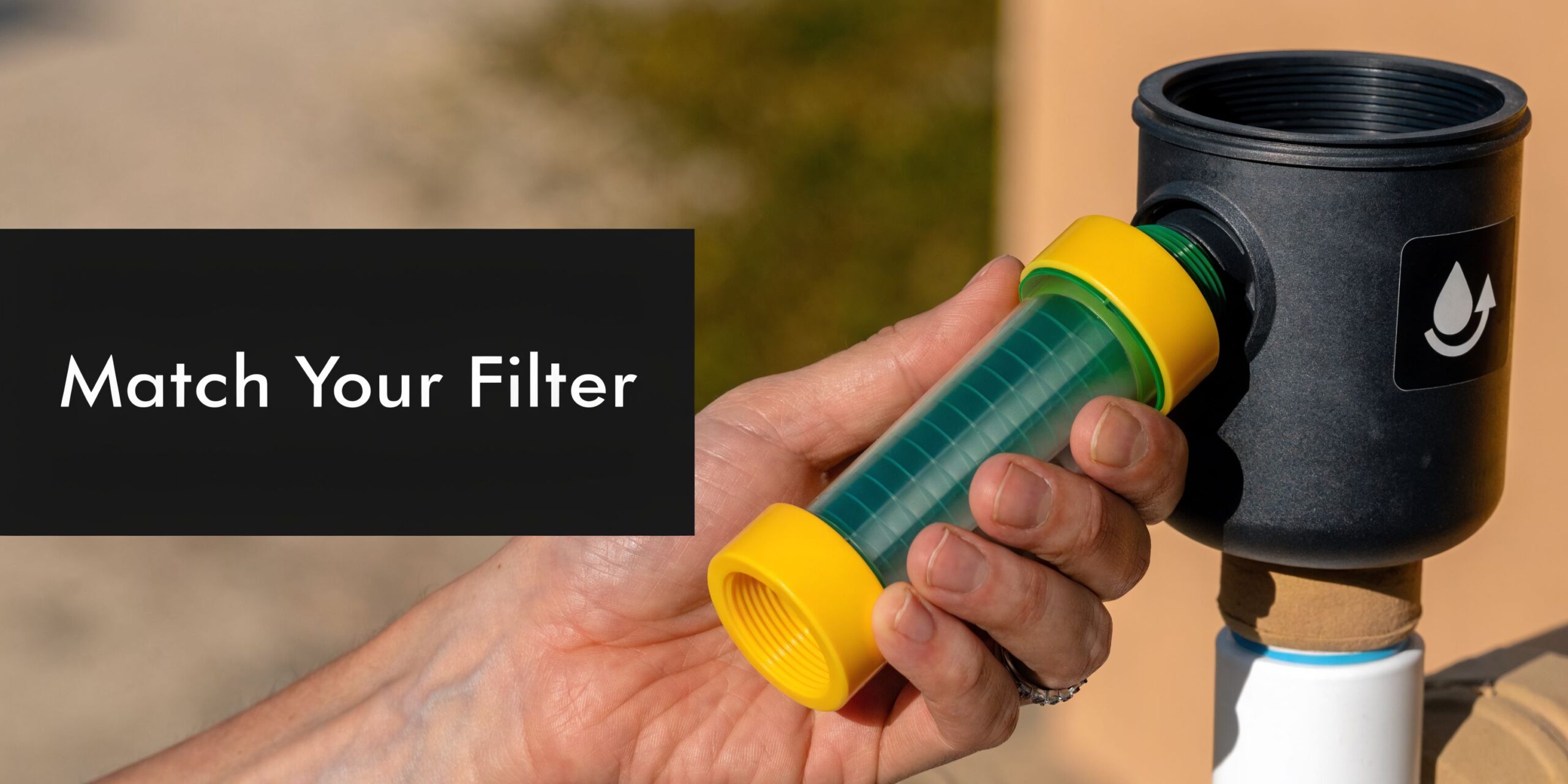
Compatibility is where many replacement jobs go wrong. Homeowners search by size, buy the nearest-looking cartridge online, and assume it will suit the system. In Australian installations, especially with premium boiling and chilled units, that approach causes trouble.
Start with the actual system brand and model
If you have a Zip, Stiebel Eltron, Boiling Billy, Birko, Insinkerator or similar unit, begin there. Do not start with a generic cartridge dimension. Start with the appliance model, then work outward to the approved or proven compatible cartridge options.
That matters because many systems use proprietary heads, specific flow direction requirements, or fittings that are standard in Australia but not in overseas guides. If the cartridge body fits but the head, seal, or flow path does not, it is still the wrong part.
A good starting point for Melbourne-specific under-sink setups is this guide to an under sink water filter in Melbourne.
Generic does not always mean compatible
A recurring problem is imported cartridges sold as universal replacements. The listing may say they suit multiple systems, but the fit can be poor or short-lived in practice.
A key compatibility issue for Australian buyers is that many guides are built around US brands and housings. A 2025 CHOICE Australia test reported 68% of generic import filters failed prematurely under local hard water conditions, with Melbourne water often containing notable levels of dissolved solids. That is why brand-specific spare selection matters for systems like Zip and Stiebel Eltron.
Check these four points before buying
Connection style
John Guest push-fit connections are common in Australian filtration and boiling tap setups. The cartridge or head must match that arrangement properly.Physical dimensions
Standard diameters and lengths matter, but they are only one part of the fit. Housing clearance under the sink matters too.Micron and media type
Correct fit means nothing if the media does the wrong job. Match the cartridge to the water issue and appliance requirement.Flow direction and pressure suitability
Some cartridges are intended for particular heads or flow paths. Reverse fitting assumptions cause poor performance and leaks.
Hard water changes the decision
In Melbourne homes with persistent mineral issues, the filtration choice sometimes needs to be paired with a broader treatment strategy. If scale is a repeated problem across taps and heated appliances, it helps to understand how a water softener system differs from a point-of-use cartridge filter. They solve different problems.
The right cartridge is not the one that can be forced to fit. It is the one designed to fit, seal, and treat the water your system sees.
OEM or aftermarket
A quality aftermarket cartridge can be perfectly acceptable if it is compatible, correctly rated, and made for the local application. What does not work well is gambling on a bargain import with vague compatibility claims, especially on premium units where leaks, poor flow, or warranty disputes become expensive very quickly.
This is one area where the part number matters more than the marketing.
When and Why to Replace Your Cartridge
If you are waiting for a cartridge to fail dramatically, you are waiting too long. Most filters do not announce the end of their life with one obvious event. They fade out through weaker flow, returning taste, and declining protection.
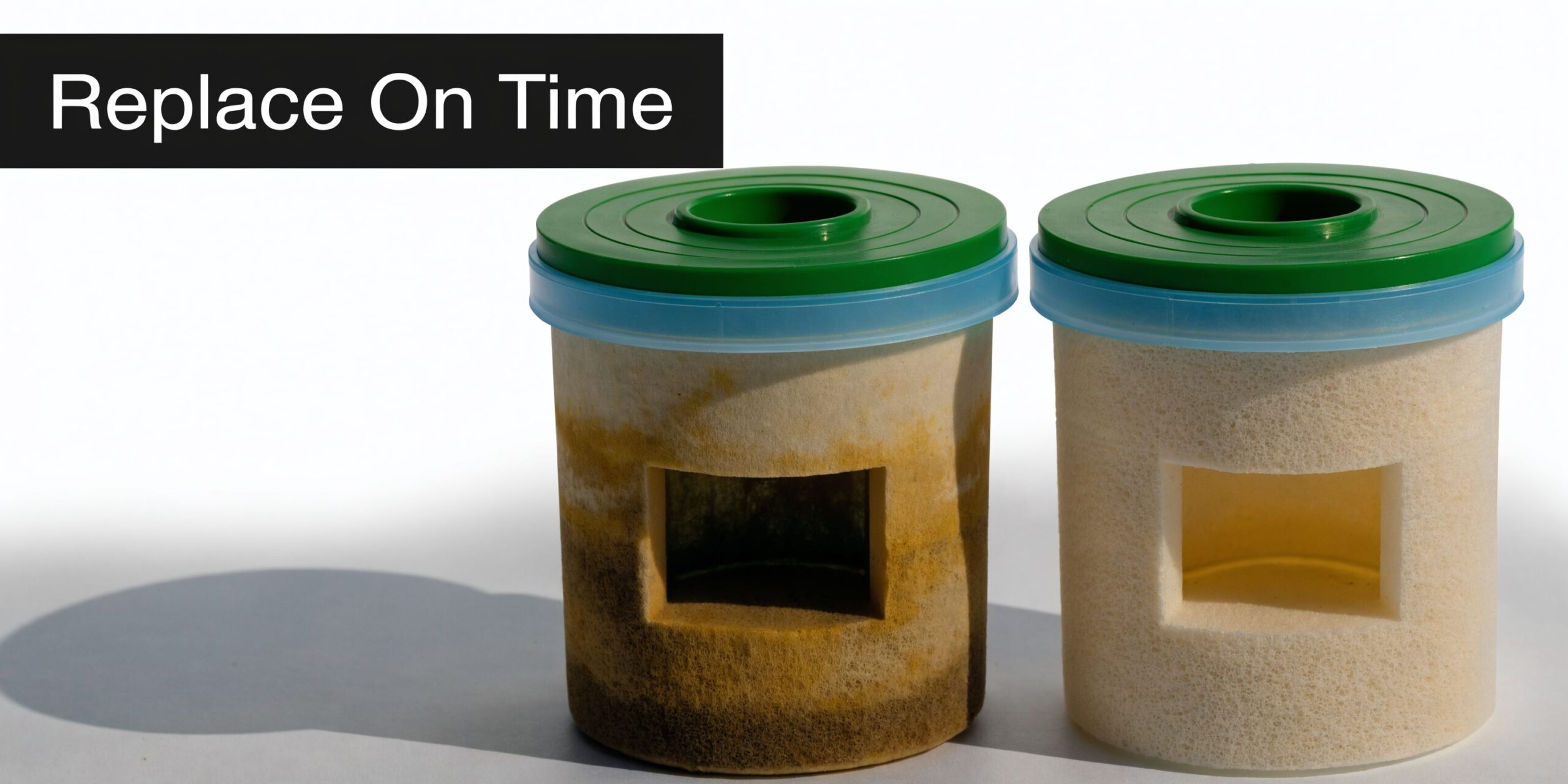
The replacement interval is a real maintenance limit
In Australia, inline water filter cartridges typically need replacement every 6 to 12 months, and high-quality, WaterMark-approved models are rated for up to 56,000 litres, which equates to about a 12-month lifespan for a standard family of four. In harder-water parts of Melbourne, that lifespan can be reduced by 20 to 30%, according to Water Filters Australia’s guidance on inline cartridge replacement.
That is the practical baseline. If your water use is high or the water is harder on filters, you act earlier.
For brand-specific maintenance timing, this guide on Zip filter replacement is useful when the system in question is an integrated Zip setup rather than a standard standalone housing.
What you will notice first
Most owners spot one of these warning signs:
Flow slows down
The filtered tap feels weaker, or the boiling unit takes longer to deliver.Taste or odour creeps back in
Water starts tasting closer to unfiltered mains water.The appliance behaves differently
Dispensing becomes inconsistent, or the unit sounds like it is working harder than usual.
Those symptoms are easy to dismiss for a few weeks. That is usually where unnecessary wear starts.
Why delaying the change is a bad trade
A spent cartridge is not neutral. Once loaded, it stops providing the level of protection the system was built around. In systems feeding drinking taps, chilled units and instant boiling appliances, that means poorer water quality at the point of use and more stress on the appliance itself.
There is also the hygiene issue. Filters are not meant to sit indefinitely once saturated. If the media is exhausted and the housing is neglected, that is not a condition you want in a drinking water setup.
A quick visual guide can help if you are comparing symptoms with cartridge condition:
Calendar date versus actual use
Calendar reminders are useful, but water usage matters more. A lightly used guest kitchenette is different from a family kitchen, and both are different again from a busy office or café.
The most reliable habit is simple:
- Record the install date
- Keep the cartridge part number
- Replace on schedule or earlier if symptoms appear
If the water has changed, the cartridge schedule has changed too. The calendar is only a guide. The system’s behaviour is the true signal.
A Simple Guide to Installing Your New Cartridge
Most under-sink cartridge changes are manageable if the system is accessible and the housing is not seized. The process is not complicated, but rushing it is how people end up with leaks, cracked sumps, twisted O-rings, or a cupboard full of water.
Before you touch the housing
Turn off the supply to the filter or appliance first. If you are not fully sure which valve controls that line, take a moment to locate your main water shut-off valve before you start. That saves a lot of panic if a local isolating valve does not seal properly.
Then open the filtered tap to relieve pressure. If you skip this, the housing can be far harder to open and water release will be messier.
The basic replacement sequence
Shut off the water
Confirm flow has stopped at the tap.Release pressure
Open the tap and let any residual pressure bleed off.Open the housing or remove the quick-change cartridge
Use the correct wrench if the system has a sump-style housing. Do not use pliers on plastic housings unless you want stress fractures.Remove the old cartridge
Keep it upright where possible. Old filters often hold more water than expected.Inspect the housing and seal
Clean the inside. Check the O-ring for wear, flattening, or grit.Fit the new cartridge correctly
Pay attention to orientation. Some cartridges are directional.Reassemble carefully
Tighten firmly, but do not overdo it. Overtightening causes as many leaks as undertightening.Turn the water back on slowly
Let the housing fill gradually and watch for leaks.
A local installation reference for fitted systems is this Melbourne-specific page on water filter installation.
Do not skip the flush
New cartridges often need flushing before normal use. This clears trapped air and harmless carbon fines and helps the media bed settle properly. If the first water out of the tap looks cloudy or grey, that is often just fine carbon dust from a carbon cartridge.
When to stop and call for help
Stop if you notice any of the following:
The housing will not release
Forcing it can crack the sump or bracket.The O-ring is damaged and you do not have a replacement
Reusing a bad seal is asking for a leak.The cartridge does not seat cleanly
That usually means wrong part, wrong orientation, or a misfit head.
For integrated boiling and chilled units, caution is even more important because the filtration side is tied directly to an appliance with its own service requirements.
Smart Buying and Expert Help from Ring Hot Water
A cheap cartridge is not automatically cheap to own. The right way to look at replacement water filter cartridges is cost across the service life, not just the shelf price on the day you order.
What works in practice
Buying from a specialist usually solves three common problems at once:
Correct compatibility
You avoid the guesswork around model fit, seal type and connection style.Appropriate media selection
You get a cartridge that suits the water issue, not just one that physically screws in.Less repeat downtime
A cartridge that lasts properly in local conditions is less disruptive than replacing poor-quality stock again and again.
Australian water industry statistics indicate that 65% of urban households under-replace filters, and sourcing genuine, WaterMark-approved cartridges from a specialist can reduce long-term replacement costs by 15 to 20% through extended filter life compared with generic imports that fail prematurely in local conditions, according to this cartridge replacement guide from Sentry H2O.
Warranty and appliance protection matter
Premium systems are less forgiving of wrong parts. If you fit a cartridge with the wrong seal geometry, poor media quality, or unsuitable pressure characteristics, you can create a problem that looks like an appliance fault when it is really a filtration fault.
That is especially true for integrated boiling taps and chilled systems, where filtration performance affects both water quality and the way the appliance operates day to day.
One practical buying rule
Buy the cartridge for the system you own, the water you have, and the usage pattern you live with.
That sounds obvious, but it rules out most of the mistakes people make. It also explains why one office needs a different replacement cycle and cartridge choice than a home kitchen, even when the hardware looks similar.
Ring Hot Water stocks brand-compatible replacement options and filtration accessories for Australian systems, including parts used with under-sink boiling and chilled water setups. That is useful when the job is not just “buy a filter”, but “buy the cartridge that will fit the existing head, handle local water conditions, and keep the appliance operating properly”.
Frequently Asked Questions
Can I clean and reuse a cartridge
Usually, no. A replacement cartridge is meant to be replaced, not washed and put back into service. Once the media is loaded or exhausted, cleaning does not restore it to proper working condition.
Why does new filtered water sometimes look cloudy
That is often trapped air or harmless carbon fines after a new carbon cartridge is installed. A proper flush usually clears it. If cloudiness persists, stop and check the cartridge fit and installation.
Will a finer micron cartridge always be better
Not always. A finer filter may catch smaller particles, but it can also reduce flow sooner if the water carries a lot of sediment. The correct micron rating depends on the system and the water conditions.
Do all cartridges fit all under-sink systems
No. Similar size does not mean true compatibility. Head design, fittings, seal shape, flow direction and appliance requirements all matter.
Should I choose OEM or aftermarket
Either can work if the cartridge is compatible and suited to the local application. The risk sits with vague “universal” products that do not clearly match the system.
Do standard cartridges remove healthy minerals
Some standard sediment and carbon cartridges focus mainly on particles, chlorine, taste and odour rather than stripping out all dissolved minerals. The effect depends on the cartridge type. If mineral reduction is the goal, the system should be chosen for that purpose rather than assumed to do it.
If your filtered water has slowed down, tastes off, or you are unsure which cartridge suits your system, Ring Hot Water can help you identify the correct replacement and avoid the usual compatibility mistakes with Australian boiling, chilled and under-sink filtration setups.
