
Hot Water Services
Tankless Instant Water Heater: A Definitive 2026 Guide

Apr
You know the moment. Someone in the house starts the dishwasher, another person turns on the shower, and your nice warm water turns sharp and cold. In a lot of Melbourne homes, that is not bad luck. It is the storage system reaching its limit.
That frustration often sends people looking at a tankless instant water heater, also called an instantaneous or continuous flow system in Australia. The promise sounds simple. Hot water when you want it, without waiting for a tank to refill and reheat. But the decision is not as simple as the ads make it look, especially if you live in an older suburb with ageing wiring, tight service spaces, or pipework that was never designed for a high-demand upgrade.
A good tankless system is excellent. A badly chosen one can leave you with lukewarm water, nuisance shutdowns, expensive electrical work, or gas upgrades you did not budget for. The gap between those two outcomes comes down to planning.
The End of the Cold Shower
It is 7:15 on a winter morning in Melbourne. One person is in the shower, another is rinsing breakfast dishes, and someone else wants hot water for the ensuite. In an older home with a storage tank, that is the point where comfort turns into negotiation.
A tankless instant water heater changes that part of the routine. It heats water as you use it rather than storing a full cylinder of hot water in advance. The practical benefit is simple. You are no longer waiting for a tank to catch up after a run of showers or a busy morning in the kitchen.
That sounds like a straightforward upgrade, but houses are rarely that tidy. In many Melbourne properties, especially weatherboards, post-war brick homes, and renovated terraces, the hot water unit is only one part of the job. The home may also need a larger gas line, new electrical circuits, a switchboard upgrade, tempering adjustments, or changes to old pipework that has been pieced together over decades.
That is the part glossy brochures tend to skip.
For households that run out of hot water, the day-to-day appeal is easy to understand:
- Back-to-back showers are less of a gamble: You are not counting litres left in a tank.
- Storage space can improve: A wall-mounted unit often frees up space in a laundry, cupboard, or outside service area.
- Daily routines feel less constrained: Shower times, laundry loads, and kitchen use do not need as much planning.
The bigger lesson is that “endless hot water” depends on the house behind the unit. A tankless system can only deliver what the gas supply, electrical capacity, water pressure, and pipe sizing allow. If any of those pieces are undersized, the result can be disappointing even with a good brand on the wall.
A useful way to picture it is a larger shower rose on a weak water line. The fitting may be new, but the supply still sets the limit. Tankless hot water works the same way.
Older Melbourne homes make this especially relevant. Some still have ageing copper, mixed plumbing materials, cramped access points, or electrical boards that were adequate for yesterday’s appliances, not today’s high-demand upgrades. With Melbourne energy costs where they are, surprise installation work can change the numbers quickly.
A tankless unit removes the storage bottleneck. It still needs the right gas, electrical, and plumbing support to perform properly.
How a Tankless Instant Water Heater Works
A storage heater is like a car left idling in the driveway. It keeps burning energy so it is ready when you need it.
A tankless instant water heater works more like a car engine that starts when you press the accelerator. The unit stays idle until water begins flowing, then it fires up and heats the water passing through it.
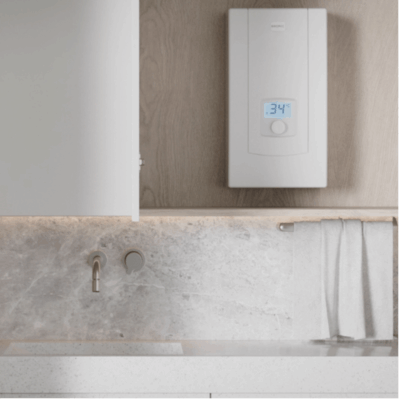
The basic sequence
The process is straightforward once you strip away the jargon.
-
You open a hot tap
Water begins moving through the heater. -
A flow sensor detects movement
The unit recognises that hot water is being requested. -
The heat source activates
In an electric model, heating elements switch on. In a gas model, the burner ignites. -
Water passes through the heat exchanger or heating chamber
The unit raises the water temperature as it flows through. -
Hot water reaches the outlet
You get heated water without drawing from stored reserves.
That is the core reason these systems can feel more efficient in day-to-day use. They do not sit there maintaining a tank of hot water around the clock.
Why people get confused about “instant”
“Instant” does not mean the second you open a tap, hot water teleports out of it. Water still has to travel from the heater to the fixture. If the unit is at one end of the house and the bathroom is at the other, you still wait for the cooled water sitting in the line to clear.
What changes is the heating method, not the pipe distance.
This short explainer shows the on-demand principle in action:
Gas and electric do the same job differently
Both types heat on demand, but they behave differently in practice.
| Type | What it does well | What usually needs attention |
|---|---|---|
| Electric tankless | Compact installation, good for specific zones or smaller demand | Heavy electrical load, especially in older homes |
| Gas tankless | Strong whole-home performance and better high-flow output | Gas line sizing, venting, and combustion safety |
For many Melbourne properties, the “best” option is not the one with the most appealing brochure. It is the one your home can support without major rework.
This is not new technology
Some buyers still worry that tankless units are a modern experiment. They are not. The first gas-powered unit dates to the late 19th century, and Stiebel Eltron introduced the first electric tankless model in the early 20th century, as noted earlier. Long service life is also one reason these systems remain popular in Australian installations.
The smarter question is not “Does the technology work?” It is “Will this model work well in my home, with my plumbing, my wiring, and my winter inlet temperature?”
Tankless vs Traditional Tank Heaters A Head-to-Head Comparison
At 7:10 on a winter morning in Melbourne, one person is in the shower, the dishwasher is filling, and someone else turns on the kitchen tap. That is the moment a hot water system shows its character. Brochure claims matter less than how the unit handles simultaneous demand, cold inlet water, and the limits of an older house.
A fair comparison has to cover three separate questions. How the system performs. What it costs to own. What your home needs before installation can even start.
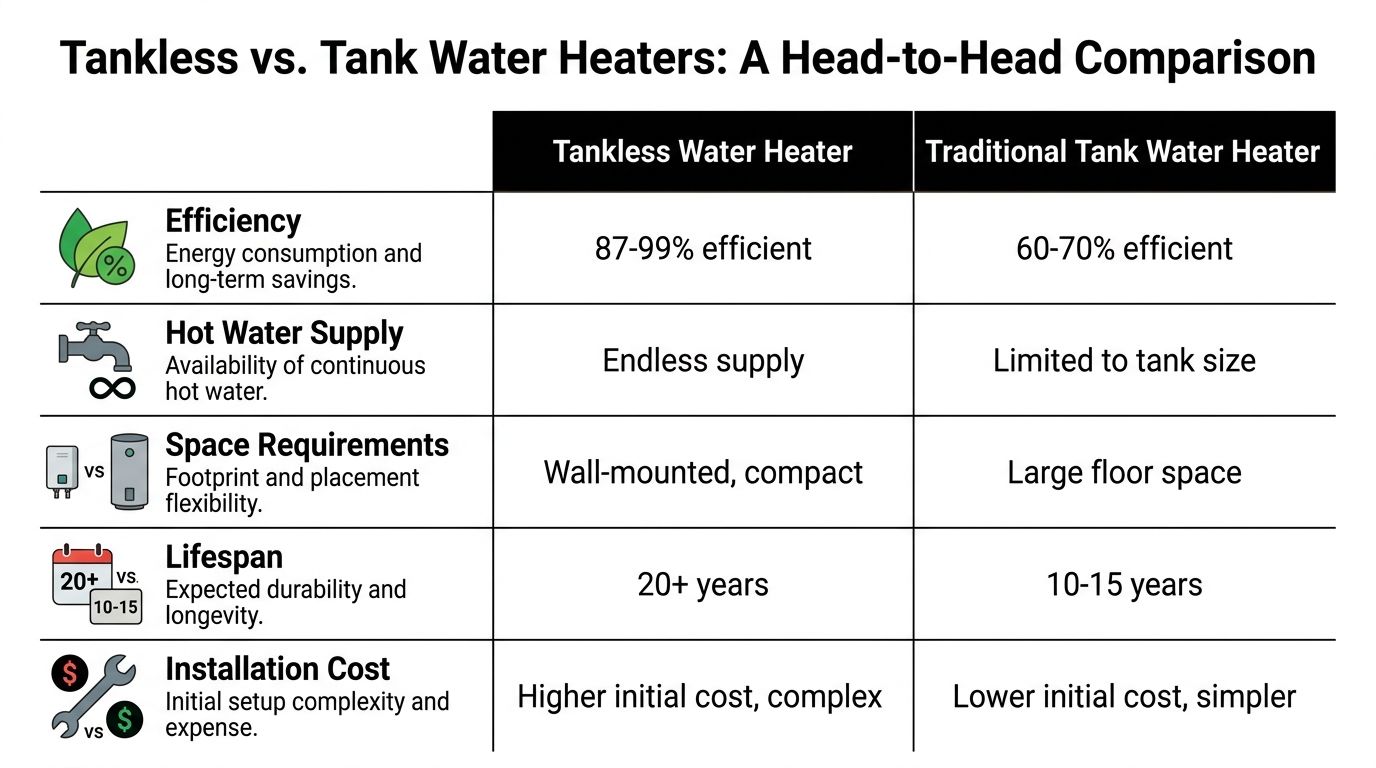
Where tankless systems earn their reputation
A properly sized tankless instant water heater keeps heating water as it flows, so it is not limited by a stored volume sitting in a cylinder. For households that run out of hot water, that solves a specific problem.
The compact form also helps. A wall-mounted unit usually frees up floor area in a laundry, side passage, or utility space that a storage tank would occupy. In smaller Melbourne homes and apartments, that can make the room easier to use, not just neater to look at.
Service life is another common advantage. As noted earlier, tankless units often stay in service longer than storage tanks, provided they are installed correctly and maintained against scale and water quality issues.
Where storage tanks still have a strong case
Traditional tanks are easier to replace because the house is already arranged around them. The plumbing points are there. The space is there. In many cases, the electrical circuit or gas connection is already suitable for a like-for-like swap.
That matters more in older Melbourne homes than many guides admit. A tankless system may be the better appliance on paper, but the project can become more complicated if the switchboard is full, the gas line is undersized, or the flue path is awkward.
Storage tanks also handle short bursts of simultaneous use differently. They can deliver a strong initial volume to several fixtures at once, then gradually run down as the stored hot water is used up. A tankless unit has the opposite pattern. It does not “run out” in the same way, but it can hit its flow limit and deliver cooler water if too many outlets are demanding heat at once.
Comparing appliance cost and house upgrade cost
This is the part many buying guides skip.
People compare the heater price and stop there. In practice, older properties in Melbourne need extra work before a tankless unit can perform properly. Electric models may need a switchboard assessment, heavier cabling, and new dedicated circuits. Gas models may need a larger gas line, compliant venting, and clearance checks. Plumbing changes can include pressure limiting, tempering arrangements, condensate handling on some units, or relocating pipework to suit the new position.
That extra work can shift the decision quickly. A storage replacement may stay close to the original budget. A tankless changeover can be economical in the long run, but only after you include the house-side work, not just the box on the wall.
This is why small point-of-use jobs can be a separate category altogether. If the goal is hot water at one sink rather than whole-home supply, under-sink hot water systems for compact applications can avoid some of the larger upgrade costs.
Running costs need to be read in context
Tankless systems can reduce wasted standby heating because they are not keeping a full tank hot all day. That benefit exists, but its size depends on your usage pattern, your tariff, the fuel type, and whether the unit was matched properly to the home. The catch is simple. Lower running costs do not always mean lower total ownership cost.
The result depends on three things:
- your current system efficiency
- how much hot water your household uses
- whether the home needs electrical, gas, pipework, venting, or valve upgrades before the new unit can perform properly
Why Melbourne homes need a more careful cost check
This is the part buyers miss.
In many older Melbourne properties, especially weatherboard and brick homes in established suburbs, the heater itself is only one line in the budget. A gas tankless unit may need flue changes, gas line upgrades, or pressure adjustments. An electric tankless unit may be cheap to run on the right tariff, but impossible to install economically if the switchboard or supply cannot support it.
Plumbing details matter too. High mains pressure, old isolating valves, scaled pipework, or the need for a tempering setup can all affect cost and performance. If your plumber mentions a pressure limiting valve for hot water system protection, that is not an upsell by default. In Melbourne suburbs with variable mains pressure and older plumbing, it can be part of making the installation safe and compliant.
Total cost means more than the purchase price
A realistic quote should separate the job into parts so you can see where the money is going.
| Cost area | What to check |
|---|---|
| Unit purchase | The heater itself, plus controls or accessories |
| Installation labour | Removal of the old unit, mounting, connections, commissioning |
| Infrastructure work | Switchboard changes, gas line sizing, flue work, valves, pipe alterations |
| Running costs | Day-to-day energy use based on your tariff and usage pattern |
| Maintenance | Descaling, servicing, filters, and replacement parts over time |
That breakdown helps you compare options fairly. A low quote can look attractive until you realise it excludes the work that makes the system usable.
Payback is different from savings
People mix these up.
Savings are the reduction in ongoing energy use compared with your current heater. Payback is how long those savings take to recover the upfront spend. A household may save money every quarter and still face a long payback period if the property needs expensive electrical or plumbing work first.
That is why two similar homes can get different value from the same style of tankless system. A newer townhouse with suitable services may stack up well. A period home with an ageing switchboard, marginal gas sizing, and old pipework may need a longer time to recover the investment.
The smartest way to compare systems is to cost the full installation, then compare that figure against likely running costs over the years you expect to stay in the property.
A practical way to compare quotes
Ask each installer to price the project in the same format:
- unit supply
- installation labour
- plumbing changes
- electrical or gas upgrades
- valves, flue components, and compliance items
- expected maintenance
- any rebate pathway they believe may apply
That last point deserves care. Rebates can help, but they should be treated as a bonus, not the foundation of the decision. Programs and eligibility can change, and the bigger financial difference often comes from whether your home is already suitable for the system you want.
The practical takeaway
Tankless systems can be economical. They are not automatically cheap.
If you want a realistic answer, compare total installed cost against expected running cost in your home, with your usage, on Melbourne energy prices. That approach gives you a more trustworthy result than any broad promise about instant savings.
Installation Plumbing and Electrical Requirements
This is the part many buyers do not hear until after they have chosen a unit.
A tankless instant water heater is not always a straightforward replacement for what is already on the wall or in the cupboard. In older Melbourne homes, the hidden work can be the biggest part of the project.
Electric tankless and older home wiring
Many pre-1980s houses were never set up for a high-powered electric tankless unit. Standard 20A circuits cannot support the 40-60A demand of 18-27kW models, and upgrades can cost $1,500-$3,000 AUD, according to this guidance on electric tankless power requirements.
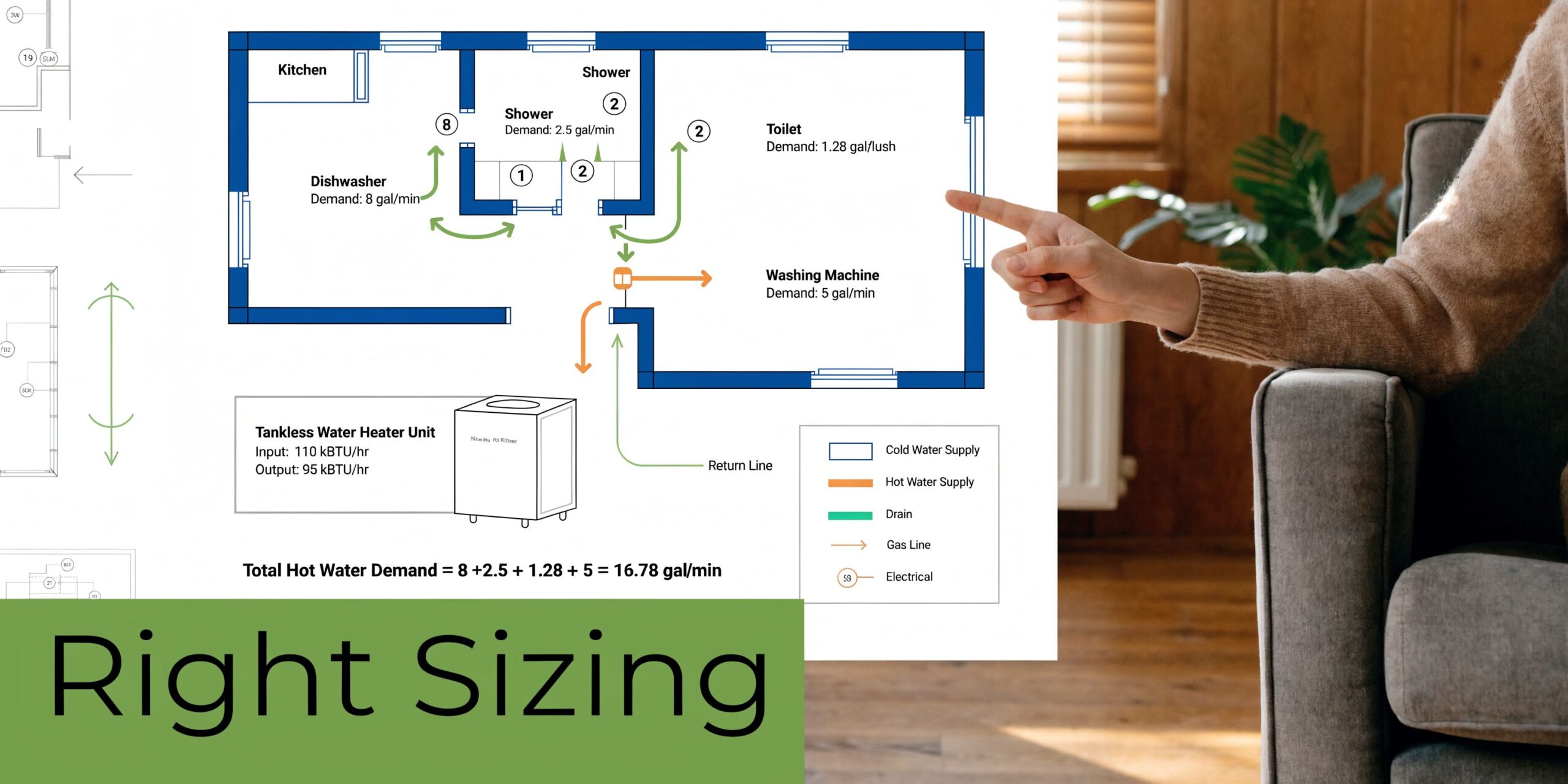
That matters in places with older housing stock, including parts of Yarraville, Footscray, and similar inner-west suburbs where switchboards and circuits may already be carrying modern loads they were never originally designed for.
A proper assessment should check:
- Main supply capacity: Can the property support the new load?
- Switchboard condition: Is there room and compliance for new protection gear?
- Circuit sizing: Can cable size and breaker arrangement match the unit’s demand?
- Location practicality: Can the heater be installed where cable runs remain sensible?
If those answers are not clear before quoting, the price is not final.
Gas models have their own specific requirements
Some homeowners assume gas tankless avoids the electrical problem and therefore must be simple. Not necessarily.
Gas-fired tankless systems need proper venting and correct gas line sizing. A 199,000 BTU/h unit can sustain 8-10 GPM at a 25°C temperature rise, but inadequate 15mm gas lines can cause pressure drops greater than 20 kPa, reducing flow by 30% and cutting BTU delivery below 150,000, according to Takagi tankless water heater performance guidance.
In plain language, that means the unit may never perform as advertised if the gas supply is too small.
Plumbing details that matter
Tankless installs also depend on the surrounding plumbing, not just the heater itself.
Look closely at:
- Isolation valves: Service access is much easier when the plumber can isolate the unit properly.
- Pipe condition: Old pipework can bottleneck flow or shed debris into the system.
- Pressure control: If incoming pressure is unstable, a matching valve setup matters. A practical reference point is understanding the role of a pressure limiting valve.
- Water quality exposure: Hard water increases scaling risk and can shorten service intervals.
Why planning beats optimism
Many bad installations start with one assumption: “We’ll work the rest out on the day.”
That is how budgets blow out.
A better process is to inspect the switchboard, check gas availability and line size if relevant, confirm venting path, review pressure conditions, and match all of that to the chosen heater. Then the quote reflects reality.
If the home is older, the right first question is not “Which model do I want?” It is “What can this property support safely and legally?”
Maintenance Common Parts and Leading Brands
Tankless systems reward owners who stay ahead of maintenance.
The most important routine task is descaling, especially in areas where mineral buildup is more likely. Scale reduces heat transfer, stresses components, and gradually chips away at performance. Even a good unit can feel disappointing if it is furred up inside.
The maintenance jobs that matter most
A simple checklist keeps most units in better shape:
- Descale on schedule: This helps maintain heating performance and protects internal passages.
- Clean inlet filters: Debris at the inlet can affect flow and trigger erratic operation.
- Check valves and fittings: Small leaks around service valves or unions are easier to fix early.
- Watch for temperature drift: If hot water becomes inconsistent, sensors, scale, or flow issues may be involved.
For buyers in Melbourne, this matters because local water conditions vary across suburbs and property types. A system in a busy café or staff kitchen needs more attentive servicing than one in a lightly used guest bathroom.
Common parts owners and trades ask for
Tankless instant water heaters are repairable, which is one of their strengths. Over the life of the unit, the parts discussed include:
- Heating elements
- Flow sensors
- Valves
- Thermostats
- Flexible hoses and fittings
- Control components and service kits
If you are running or specifying a Stiebel Eltron unit, the Stiebel Eltron DHE 27 AU is one example of the type of model that makes proper parts support and accurate servicing especially important.
Brands worth knowing
In the Australian market, buyers and trades look for established names with parts availability and service familiarity. Brands discussed in this category include Stiebel Eltron, Zip, and Birko, along with other recognised hot water names used across homes, offices, and hospitality sites.
That last point matters more than people think. A unit is easier to live with when replacement parts, technical support, and technicians who know the product are not hard to find.
Your Melbourne Instant Hot Water Solution
A tankless instant water heater can be a smart upgrade for Melbourne homes and businesses. You get continuous hot water, a more compact setup, and the potential for lower running costs over time.
The part that deserves more attention is the installation reality. In older homes, electrical capacity, gas supply, venting, pressure control, and pipe condition can make or break the result. That is why the best projects start with a property assessment, not a product brochure.
If you live in Sunshine, Yarraville, Footscray, or anywhere else across Melbourne, the right advice should feel practical. It should tell you whether your home is ready, what work is likely, and whether tankless is the best fit for how you use hot water.
A good system feels simple once it is installed. Getting there takes careful sizing and honest planning.
For expert help choosing, supplying, installing, repairing, or maintaining the right hot water setup, contact Ring Hot Water. Their Melbourne team supports homeowners, workplaces, hospitality venues, builders, plumbers, and caravan owners with genuine parts, trusted brands, and practical advice that matches real site conditions.
