
Uncategorized
How Does a 12V Water Pump Work The Ultimate Guide
Apr
At its heart, a 12V water pump is the automatic pulse of your water system. The moment you open a tap, it senses the pressure drop and instantly springs to life. Inside, a small 12V DC motor gets to work, powering a flexible diaphragm that pulses back and forth, creating the suction needed to pull water from your tank and push it right through to your tap.
Decoding the 12V Water Pump
Think of a 12V water pump as a smart, on-demand delivery service for your water. It’s a clever yet simple system built to give you pressurised water in places where you can't just connect to the mains—like in a caravan, boat, or an off-grid cabin.
The whole operation runs on a simple, automatic cycle: when you need water, it turns on; when you're done, it turns off. No fuss.
In the Australian RV and caravan scene, the diaphragm-style 12V water pump was a real game-changer when it became widely used in the early 2000s. These pumps work by detecting a drop in pressure—usually down to around 10-15 PSI—which happens the second you open a tap.
This pressure drop signals a built-in pressure switch to kick the 12V motor into action. The motor vibrates a flexible diaphragm, creating suction to pull water from the tank, through a non-return valve, and out your tap. If you want to dive deeper, you can explore some of the most frequently asked questions about these pumps on Water Pumps Now.
The Core Components Working Together
To really get how these pumps work, it helps to look at the main parts and the job each one does. It’s a beautifully simple system where each component plays a crucial role in delivering water reliably.
To make this crystal clear, here’s a breakdown of the essential parts and what they actually do for you.
Key Components of a 12V Diaphragm Pump at a Glance
| Component | Function | What It Means for You |
|---|---|---|
| 12V DC Motor | This is the engine of the operation, powered by your battery system. It drives the pump's mechanical parts when activated. | This is what provides the power. A good quality motor ensures reliable performance and longevity for your pump. |
| Pressure Switch | Think of this as the brain. It constantly monitors water pressure and tells the motor when to start and stop. | This is the key to automatic operation. It means you don’t have to flick a switch every time you want water—just turn the tap. |
| Diaphragm | A flexible rubber sheet that acts as the muscle. It moves back and forth to create a vacuum, sucking water in and pushing it out. | This is the part that physically moves the water, creating a steady flow rather than just a trickle. |
This coordinated dance between the motor, switch, and diaphragm is what makes your 12V pump a self-regulating system that provides water exactly when you need it, without you having to think twice about it.
The Step-by-Step Mechanics of Water Flow
So, you’ve got your 12V water pump installed, but what’s actually happening inside that little box every time you turn on a tap? To really get a feel for it, let's follow the water from the tank to your tap.
It's a clever little sequence, all kicked off by a simple drop in pressure. The moment you open a tap, the pressurised water in your lines starts to escape. This causes the system pressure to drop to a preset level, usually around 10–15 PSI. Think of the pump's pressure switch as a bouncer at a club—it's constantly checking the pressure, and as soon as it dips, it springs into action.
This drop in pressure is the trigger. The pressure switch instantly closes an electrical circuit, shooting 12V of power from your battery straight to the pump's motor. The motor whirs to life, and the real work begins.
From Suction to Flow
The heart of the pump is a flexible rubber disc called a diaphragm. Powered by the motor, it starts moving back and forth incredibly fast.
As the diaphragm pulls back, it creates a vacuum inside the pump chamber. This suction is strong enough to draw water from your tank, through the inlet valve, and into the pump itself.
On the forward stroke, the diaphragm pushes forcefully into the chamber, pressurising the water it just pulled in and shoving it out through a separate one-way outlet valve. These valves are the unsung heroes, acting like tiny, one-way gates to make sure water only ever flows in one direction and never back into the tank. This suck-and-push cycle happens many times a second, creating the steady stream you get at the tap.
This simple diagram shows how the whole process kicks off.
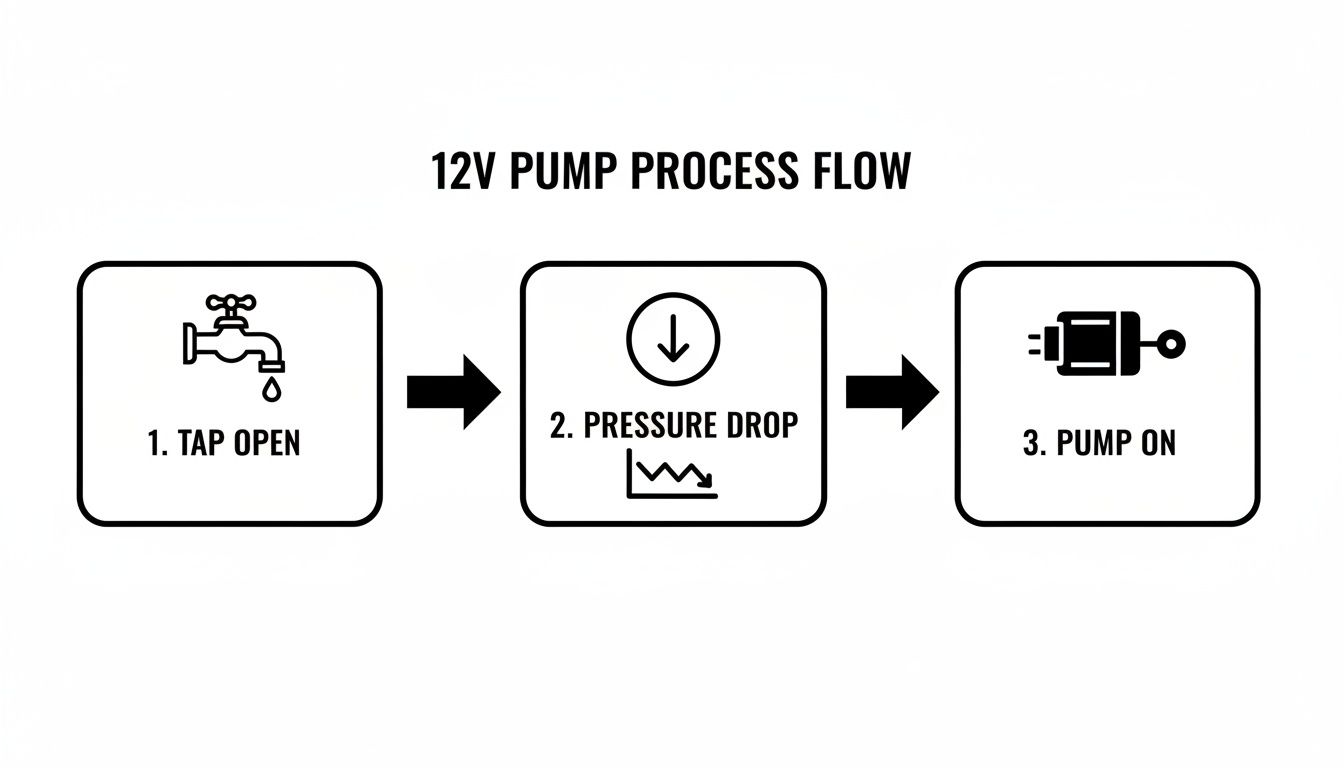
As you can see, opening a tap starts a chain reaction that gets the pump going.
Reaching Pressure and Shutting Off
Now, as the pump shoves more water into the pipes, the pressure in the system starts to climb back up. That same pressure switch is still on the job, monitoring everything.
Once the pressure hits its "cut-off" point, typically around 40-50 PSI, the switch opens the electrical circuit. This immediately cuts power to the motor, and the pump shuts down.
The system is now fully pressurised again. The outlet valve holds the water in the lines, ready and waiting for the next time you need it. This ability to create its own suction and start the flow is known as self-priming—it's what makes these pumps so reliable for pulling water up from a tank.
Choosing the Right Type of 12V Water Pump
Alright, so you know the basics of how a 12V water pump gets the job done. Now comes the important part: picking the right one for your setup. Getting this choice right makes all the difference between a frustrating trickle and a satisfying, reliable flow, whether you're in a caravan, on a boat, or living off-grid.
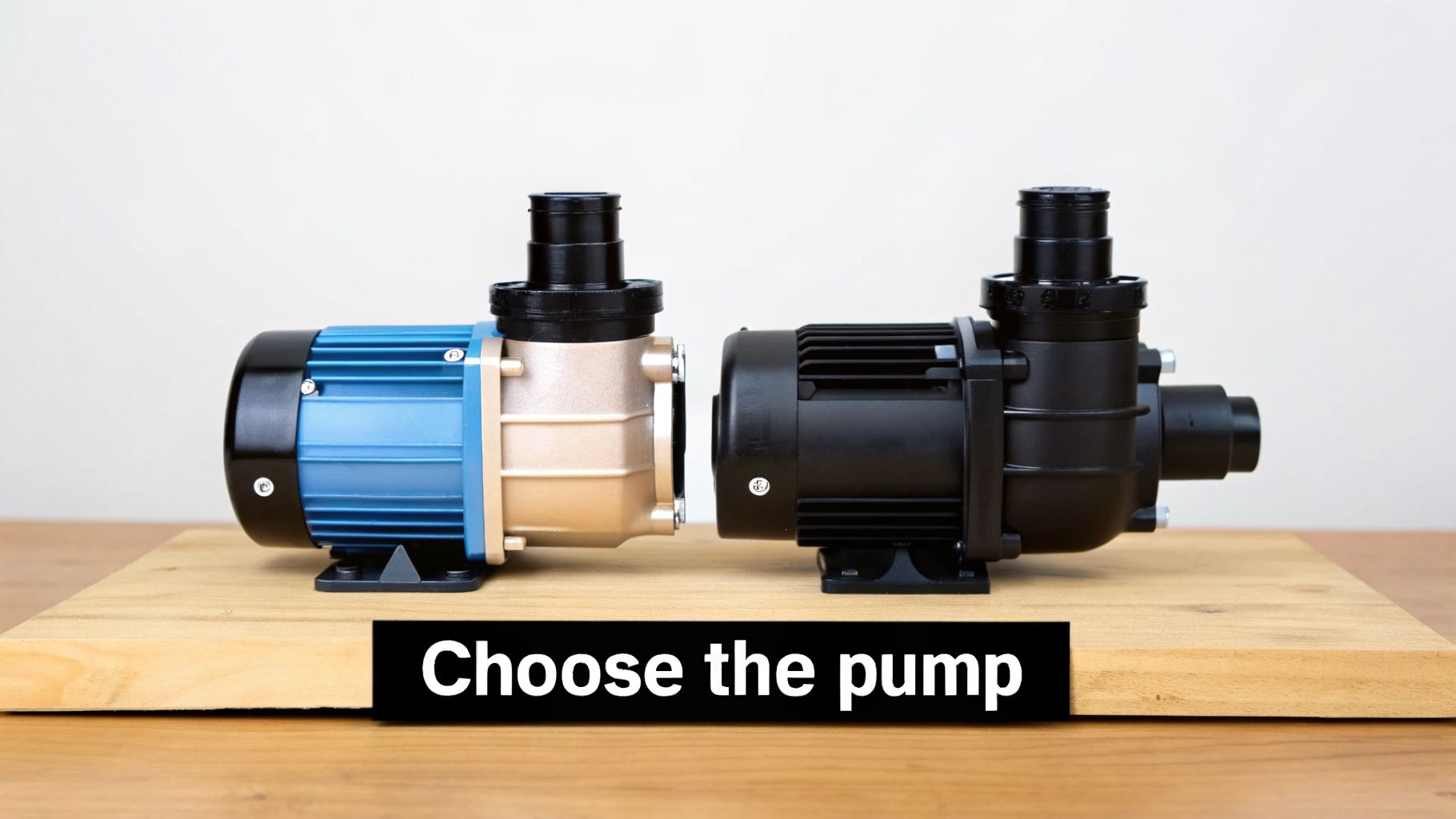
The pump you'll see most often is the diaphragm pump. Think of it as the trusty workhorse of the 12V world. These pumps are brilliant because they’re self-priming, meaning you can mount them above your water tank and they’ll happily pull the water up. This flexibility makes installation a breeze.
Then you have the submersible pump. Just like the name says, these little guys live inside your water tank. Their big advantage is that they’re usually whisper-quiet since the water around them muffles any noise. The catch? They have to be submerged to work and can't prime themselves.
Diaphragm vs. Submersible Pumps
Choosing between the two isn’t about which one is 'better' overall, but which one is better for you. A diaphragm pump is great for a caravan, but if you're just transferring water between two drums, a submersible might be all you need.
For anyone needing serious grunt for more demanding jobs, it might be worth exploring our guide on the uses and benefits of a 240-v water pump.
To make it easier, here’s a quick table to help you weigh your options for an RV, boat, or off-grid cabin.
Choosing Your 12V Pump Type Diaphragm vs. Submersible
| Feature | Diaphragm Pump | Submersible Pump |
|---|---|---|
| Installation | Flexible; mount in a dry, accessible spot. | Must be placed inside the water tank. |
| Priming | Self-priming; can pull water up from the tank. | No priming needed, but must stay submerged. |
| Noise Level | More audible; some vibration is normal. | Generally much quieter as it's muffled by water. |
| Maintenance | Easier to access for servicing and repairs. | Can be tricky to access inside the tank. |
| Best For | All-in-one water systems (caravans, boats). | Simple water transfer tasks. |
Ultimately, the choice comes down to access and application. A diaphragm pump’s ease of service and self-priming ability usually make it the go-to for a complete water system.
For most caravan, RV, and off-grid cabin applications, a diaphragm pump is the standard choice due to its self-priming ability and easy service access. Submersibles are often better suited for simple water transfer tasks where noise is the primary concern.
Key Performance Metrics to Consider
Once you’ve settled on the type, you need to zero in on the specs. Don't just grab the first one you see; matching the numbers to your needs is what guarantees a good result.
Flow Rate (LPM): This is simply how much water the pump can shift, measured in Litres Per Minute. A higher LPM delivers that strong shower you’re dreaming of or fills a sink in a flash. For a typical caravan setup, a pump delivering 8-12 LPM usually hits the sweet spot.
Pressure (PSI): Measured in Pounds per Square Inch, this is all about the force behind the water. Good pressure ensures you don’t get a pathetic dribble when someone opens a second tap. Look for a pump with an automatic pressure cut-off switch around 40-50 PSI.
Amperage Draw (Amps): This tells you how much juice the pump pulls from your battery. When you're running on 12V power, every amp counts. A lower amp draw is more efficient and will be much kinder to your battery, which is absolutely vital for off-grid freedom.
Where You’ll Find 12V Water Pumps in Action
Now that we've covered the basics of how a 12V pump works, let’s look at where these little powerhouses really shine. They're the unsung heroes in countless situations, giving you reliable water flow wherever mains pressure just isn't an option.
From the freedom of the open road to a remote weekend getaway, these pumps are what make modern comfort and convenience possible.
Freedom on Wheels and Water
For anyone who loves to travel, 12V water pumps are an absolute must-have. They are the heart of the water system in caravans, RVs, and boats, turning a simple vehicle into a genuine home away from home.
- Caravans and RVs: A good pump means you can have a refreshing shower after a long drive, wash the dishes in the sink, or simply use a tap that works just like the one back home. We've put together a detailed guide on choosing the right 12-v water pump for a caravan with more specific advice for life on the move.
- Boats and Marine Use: Out on the water, these pumps supply fresh water to the galley for cooking and cleaning, and to the head for showers. It makes life aboard far more comfortable.
In these mobile setups, it’s the pump’s ability to run efficiently on a 12V battery system that gives you true off-grid independence.
Off-Grid Living and On-Site Solutions
But their usefulness goes far beyond just holiday vehicles. They are a cornerstone of off-grid living and have become a vital tool on professional worksites, especially in construction and for mobile services.
During Melbourne’s housing boom in the 2020s, Aussie builders and plumbers sourcing from our nationwide online store found these 12V pumps indispensable. They completely changed the game for temporary site works and even permanent whole-home filtration systems. The way they work is simple but effective: when you open a tap, the pressure in the system drops to around 15 PSI. This drop flicks a switch that activates the pump, which then draws water in and pushes it out at a solid 40 PSI.
Their ability to self-prime—sucking water up from as far as two metres below—makes them perfect for the rainwater tanks you see all over suburbs like Yarraville. You can find a deeper dive into the technicals of how these RV pumps work over at Freshwater Systems.
At its core, a 12V pump’s magic lies in creating instant, reliable pressure from a static water source like a tank. It’s what makes off-grid living, mobile businesses, and remote work sites truly possible.
Commercial and Niche Applications
You’ll also find these pumps quietly working away behind the scenes in all sorts of commercial spaces. Their small size and on-demand power make them ideal for specialised jobs.
Ever wonder how that portable coffee cart at your local market gets water to its espresso machine? Chances are, there’s a 12V pump doing the hard work. In an office kitchen, they often power the under-sink instant hot water units, giving staff boiling water on tap without needing a high-pressure mains connection.
It just goes to show how adaptable these pumps are, turning a simple piece of tech into a practical solution for all kinds of daily challenges.
Essential Installation and Maintenance Tips
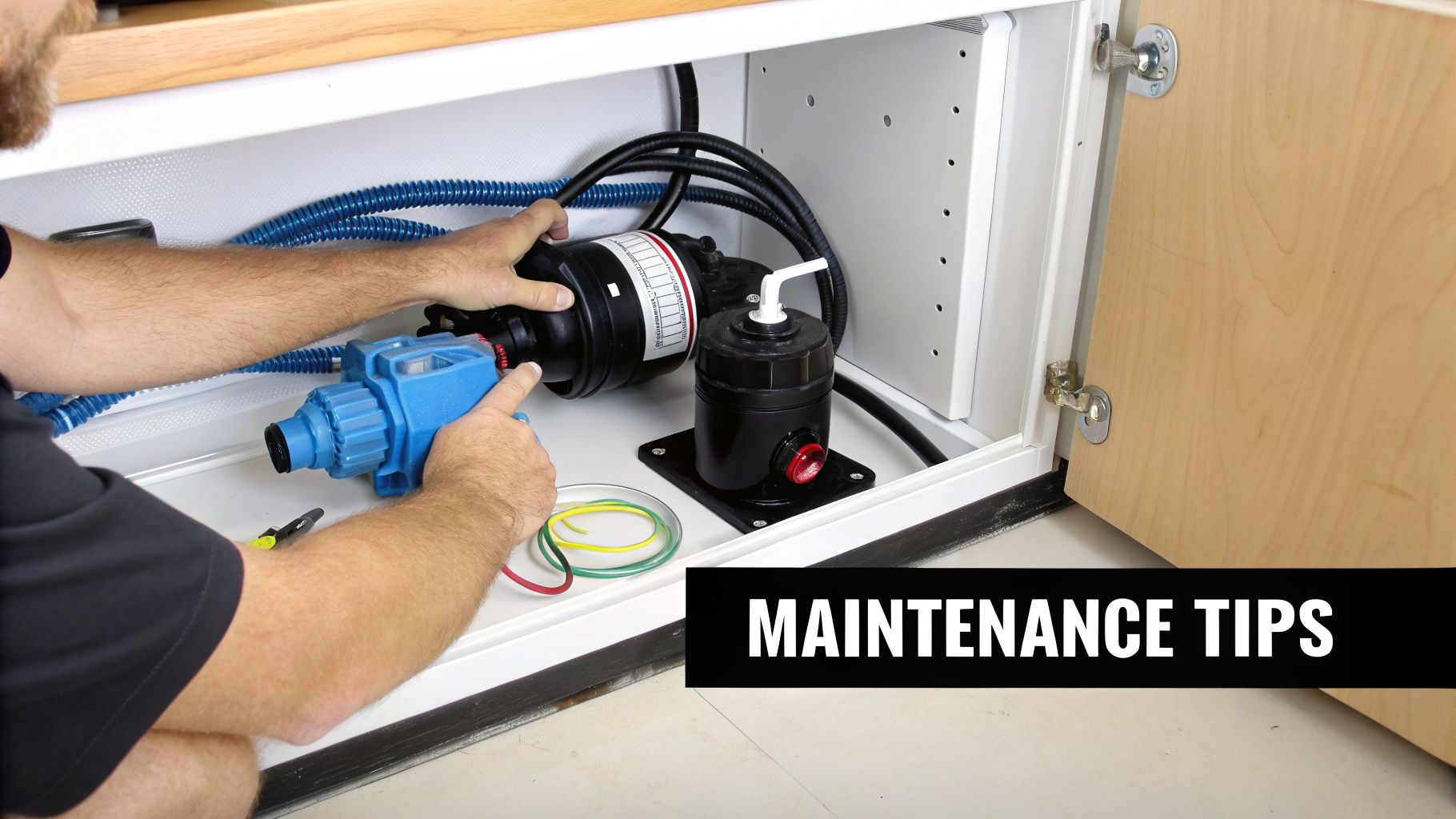
Knowing how a 12 V water pump works is one thing, but a great pump is only as good as its installation. Nailing this part from day one is your ticket to years of reliable, fuss-free water flow when you're on the road.
First up, let’s talk location. Your pump's motor works hard and creates heat, so it needs a dry, well-ventilated spot to breathe. Tucking it away in a tight, airless cupboard is a surefire way to shorten its life through overheating.
Next, think about the noise. These pumps naturally vibrate, and that vibration can travel, creating a constant, annoying hum through your caravan or boat. The simple fix? Use flexible hoses on the inlet and outlet. They do a fantastic job of absorbing those vibrations, making your whole system significantly quieter than if you used rigid pipes.
Protecting Your Pump From Grime
Here’s a non-negotiable step: you absolutely must fit a filter. The number one killer of 12V pumps is debris getting sucked in from the water tank. It doesn't take much—even tiny specks of grit can wreck the delicate diaphragm or jam the valves.
An inline water filter or strainer on the pump's inlet side is your best friend. Think of it as a bodyguard, catching all the sand, grit, and other gunk from the tank before it gets anywhere near the pump's moving parts. It’s a tiny investment that pays for itself over and over in reliability.
A clean filter is a happy pump. Debris is the most common enemy of a 12V pump, leading to reduced pressure, motor strain, and eventual failure. Always install a quality filter on the suction side of your pump.
Simple Maintenance for a Long Life
Once your pump is installed correctly, a little bit of regular love will keep it running like a dream. It's smart to create a simple checklist you can run through before a big trip or at the start of the camping season.
- Clean the Filter: This is your most important task. Every so often, just unscrew the filter housing, give the mesh screen a good rinse under the tap, and pop it back in.
- Check for Leaks: Give all your hose connections a quick look-over for any drips. Even a tiny air leak on the suction side can cause the pump to lose pressure, while a water leak is just a waste you don't need.
- Winterise Your System: If your van or boat will be stored somewhere it might freeze, you have to drain the system completely. Water expands when it freezes, and that can easily crack the pump housing, leading to a costly replacement. Just open all your taps and run the pump for a few seconds until it's dry to clear out any leftover water.
Troubleshooting Common Water Pump Problems
Even the best 12V water pump can have a bad day. But before you start looking for a replacement, a bit of simple troubleshooting can often get your water flowing again. Most of the time, the problem comes down to one of a few common culprits that are surprisingly easy to diagnose and fix yourself.
When your pump starts acting up, it usually falls into one of three camps: it won’t run at all, it pulses on and off rapidly, or it runs but the pressure is pitiful. Let's walk through these issues one by one, so you can figure out what's going on without needing to call in a pro.
Pump Does Not Run at All
If you flick the switch and get nothing—no noise, no vibration, nothing—the problem is almost certainly electrical. Don’t worry, this is usually a simple fix. Just work through the possibilities logically.
- Check Your Power Source: It sounds obvious, but is your 12V battery actually charged? A flat battery is the number one reason a pump won't start. Make sure you’ve got enough juice.
- Inspect the Fuse: Your pump's fuse is designed to be the weak link, sacrificing itself to protect the motor during a power surge. Check if it's blown and, if it is, replace it with a new one of the exact same amperage rating.
- Confirm Connections: Have a good look at all the wiring. Loose or corroded connections at the pump, pressure switch, or battery terminals can easily stop power from getting where it needs to go.
Pump Cycles Rapidly or Pulses
You know the sound—that annoying, rapid-fire brrr-brrr-brrr as the pump kicks on and off, even when a tap is wide open. This is called "pulsing," and it's a classic sign of a water flow issue, not an electrical one.
This happens because the pressure switch gets confused. It senses a sudden spike in pressure the moment it turns on, so it immediately shuts off, only to have the pressure drop and turn it back on again. It's a frustrating little loop.
An accumulator tank is often the best solution for a pulsing pump. This small tank acts as a pressure buffer, absorbing the pressure spikes and creating a smoother, more consistent water flow, which also helps extend your pump's life.
Other common causes are a partially clogged water filter or a sneaky little leak somewhere in the plumbing lines. Keeping your filter clean and all your connections tight is key to smooth operation.
Low Flow or Weak Water Pressure
This might be the most frustrating problem of all. The pump is running, you can hear it working away, but all you get is a disappointing trickle from the tap. This tells you something is stopping the pump from building or holding pressure properly.
- Clogged Filter: A blocked filter is the number one cause of weak pressure, hands down. If debris is clogging the inlet, it's essentially starving the pump of water.
- Air Leaks: Even a tiny air leak in the suction hose between your water tank and the pump will cause it to suck in air instead of water. This absolutely kills its performance.
- Worn Out Diaphragm: With years of service, the pump's internal diaphragm can wear out. When this happens, it just can't create the strong suction and pressure it once did.
Your 12V Pump Questions, Answered
Once you start digging into the world of 12V water pumps, a few common questions always seem to surface. We get these all the time from fellow travellers, boaties, and off-grid adventurers, so we've put together some straight answers to the things people ask most.
How Long Can a 12V Water Pump Run Continuously?
Think of your standard 12V diaphragm pump as a sprinter, not a marathon runner. They are built for intermittent use—perfect for firing up to run the shower or fill the sink, then shutting off again.
Running one non-stop will cause the motor to overheat. Luckily, any decent pump includes a thermal overload protector, which is a brilliant little safety feature that automatically cuts the power before any permanent damage is done. If you genuinely need a constant, unbroken stream of water, you’ll need to look for a specific model that is rated for ‘continuous duty’.
Do I Really Need an Accumulator Tank?
While you can technically run a system without one, an accumulator tank is highly recommended for pretty much any setup. It's a small companion tank that holds a bit of pressurised water, acting like a shock absorber for your whole system.
For a small investment, you get a much better experience:
- Smoother Water Flow: Say goodbye to that annoying water-sputter when the tap first opens.
- Stops Rapid Cycling: It puts an end to the pump’s constant on-off-on-off stutter when you're only using a trickle of water.
- Quieter Operation: Less cycling means less noise. Simple as that.
- Extends Pump Life: This is the big one. It dramatically reduces the strain on the pump's motor and pressure switch, helping it last much longer.
Honestly, it’s one of the best value-for-money upgrades you can make to your 12V water system.
What Size Fuse Should I Use for My Pump?
Getting the fuse size right isn’t just a suggestion; it’s a critical safety measure. The fuse is there to be the weak link, sacrificing itself to protect your pump's motor and wiring from a dangerous electrical surge.
The correct fuse rating is always listed in the pump's manual or on its specifications label. Don't guess. For instance, a pump with a maximum current draw of 5 amps will usually need a 7.5 or 10-amp fuse.
CRITICAL: Whatever you do, never ‘upsize’ a fuse because the old one keeps blowing. Swapping a 10-amp fuse for a 15-amp one won't fix the problem—it just creates a serious fire hazard by letting the circuit overheat. Always stick to the manufacturer's guidelines.
At Ring Hot Water, we’re here with trusted advice and the right parts for any water system project. Whether you’re starting fresh or fixing up an old faithful, you can find everything you need on our website at https://ringhotwater.com.au.
