
Uncategorized
Your Guide to the Best Under Sink Water Purifier

Apr
An under sink water purifier is a water treatment system tucked away neatly inside your kitchen cabinet. It’s plumbed directly into your cold water line, giving you a constant flow of filtered water from a small, dedicated tap right next to your main one. This setup offers incredible convenience, leaving refillable filter jugs in the dust.
Your Kitchen’s Unseen Guardian
Think of your home's water supply like a busy motorway. An under-sink water purifier acts as a personal gatekeeper, standing guard right before your water reaches your glass, making sure only the pure stuff gets through. This is what we in the industry call Point-of-Use (POU) filtration—treating water at the single spot you need it most, your kitchen sink.
It strikes a perfect balance. It's not like a bulky countertop unit that steals precious bench space, nor is it a massive whole-house system that filters water for your toilets and laundry. The under-sink model gives you that high-performance filtration for drinking and cooking, without the cost and complex plumbing of a whole-house setup. For most modern homes, it’s simply a smarter, more efficient upgrade.
But Is Filtration Really Necessary?
While Australia's tap water is treated to meet strict safety standards, it can still pick up a few unwanted passengers on its long journey through the pipes to your home. It’s no surprise that many of us are concerned about the issue of contaminated tap water and what it might be doing to our morning cuppa or daily hydration.
An under-sink purifier is designed to block these common stowaways, including:
- Chlorine: Used for disinfection, but it can leave a chemical taste and smell.
- Sediments: Tiny bits of rust, sand, and dirt from older pipes.
- Heavy Metals: Contaminants like lead can sometimes leach from old plumbing fittings.
- Organic Compounds: Things like pesticides and other chemicals that can enter water sources.
By tackling these impurities, a good filter doesn't just make your water safer; it completely changes the taste, smell, and clarity for the better. This is a big reason why the Australian market for these systems is growing so quickly.
The demand for purifiers is definitely on the rise. The local market was valued at USD 180.23 million back in 2021 and is projected to keep growing. This is largely driven by our growing awareness of water quality and the proven performance of technologies like reverse osmosis (RO) and activated carbon.
At the end of the day, installing an under-sink water purifier is about taking back control of your water. It’s about the peace of mind you get from knowing exactly what’s in your glass and enjoying the simple pleasure of pure, delicious water on tap. It’s this blend of convenience and performance that leads specialists like us at Ring Hot Water to pair these systems with our instant hot and chilled water solutions for homes all across Melbourne.
How to Choose the Right Filtration Technology
Choosing the right under-sink water purifier can feel a bit overwhelming, almost like you’re back in high school science class. But honestly, it’s much simpler than it looks. You’re really just picking the best tool for the job based on your home’s specific water issues. The two main players in this space are Activated Carbon and Reverse Osmosis, and each has its own unique strengths.
Think of an Activated Carbon filter as a sort of magnetic sponge. Its surface is covered in millions of tiny pores, which create a huge area to attract and trap certain impurities. When water passes through, contaminants like chlorine—the reason your tap water sometimes tastes and smells like a swimming pool—get stuck. This makes carbon filters fantastic for quickly improving the taste and smell of your water.
Reverse Osmosis (RO), on the other hand, is more like a high-security checkpoint for water molecules. It uses a special membrane with incredibly small pores, and water is pushed through it under pressure. Only pure water molecules are tiny enough to make it past the barrier.
A good way to picture it is the membrane is like a bouncer at an exclusive club, checking IDs. Water molecules get the nod and are waved through, while bigger contaminants like heavy metals (lead, mercury), salts, and even some viruses are turned away. This is why RO is the go-to for incredibly thorough purification.
This flowchart gives you a simple way to decide what kind of filter suits you best, from a basic jug all the way to an on-demand under-sink system.
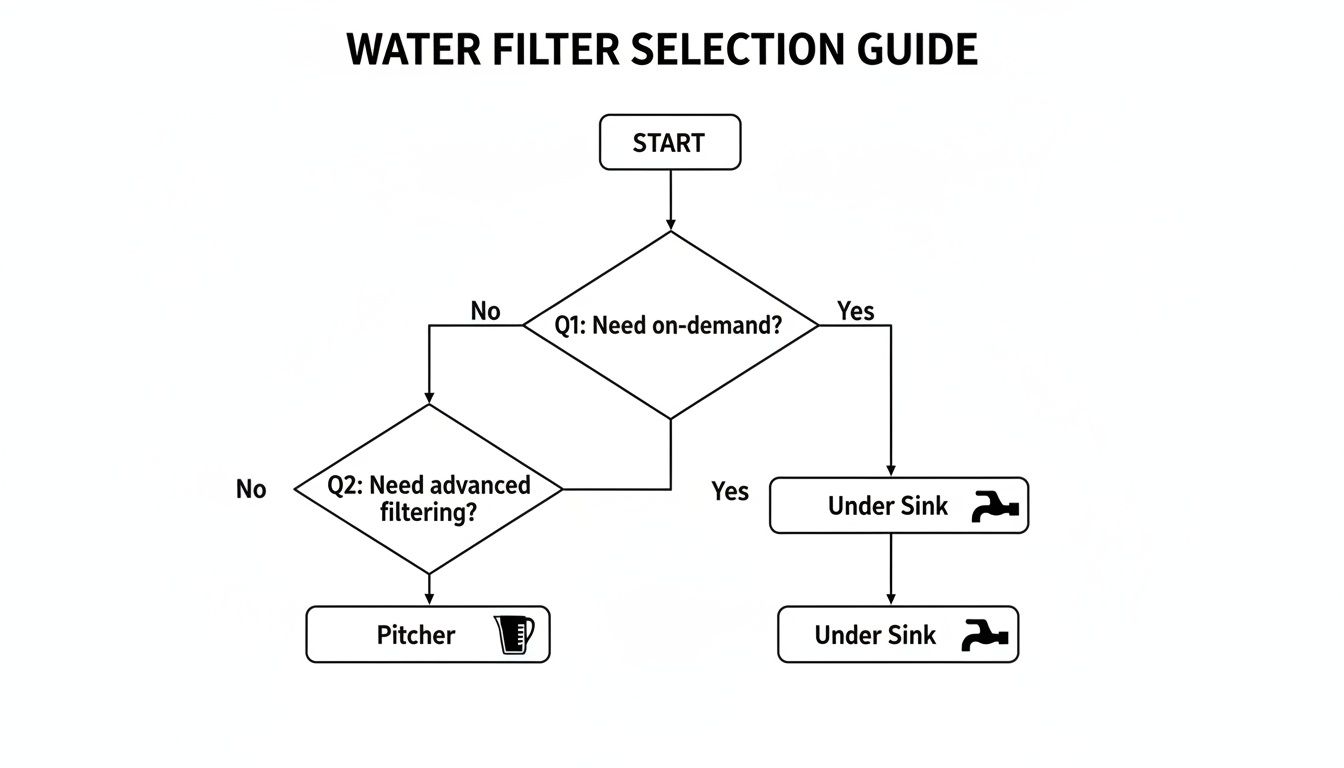
For most people wanting instant, high-quality filtering right at the kitchen sink, an under-sink water purifier is easily the best choice.
Activated Carbon: Your Go-To for Taste and Odour
For many homes around Melbourne, the biggest complaint is simply the taste and smell of the tap water. If that sounds familiar, an Activated Carbon filter is a perfect fit. It’s brilliant at removing:
- Chlorine: Gets rid of that chemical taste and smell.
- Volatile Organic Compounds (VOCs): Tackles things like pesticides and herbicides.
- Sediment: Catches rust and dirt particles from old pipes.
If your main goal is just making your tap water taste crisp and clean for drinking and cooking, a quality carbon filter is often all you need. These systems also tend to be more compact, affordable, and a bit simpler to install.
The demand for these systems is growing fast. In Australia, the under-sink water filter market is projected to hit USD 0.12 billion by 2034. The Activated Carbon segment is leading the charge, mainly because it’s so effective against the common impurities in our water. You can read more about this trend on Deep Market Insights.
Reverse Osmosis: For Ultimate Purity
So, when should you step things up to a Reverse Osmosis system? RO is your best bet when you’re worried about contaminants that a simple carbon filter can’t catch. It’s for households that want total peace of mind.
Consider an RO system if you need to remove:
- Heavy Metals: Things like lead, which can leach from older plumbing.
- Total Dissolved Solids (TDS): Includes the salts and minerals that cause "hard water."
- Fluoride: RO membranes are excellent at reducing fluoride levels.
- Microorganisms: Adds another layer of defence against certain bacteria and viruses.
Because Reverse Osmosis is so thorough, many of the best systems are actually multi-stage, combining different filter types for the best possible result. A typical setup might have a sediment pre-filter, an activated carbon filter for taste, the RO membrane for the heavy lifting, and a final carbon "polishing" filter to make sure the water tastes perfect. This layered approach guarantees you get the purest, best-tasting water on tap.
For a deeper look into the different systems out there, have a read of our guide on the best water filtration systems for home use.
Planning Your Under Sink Purifier Installation
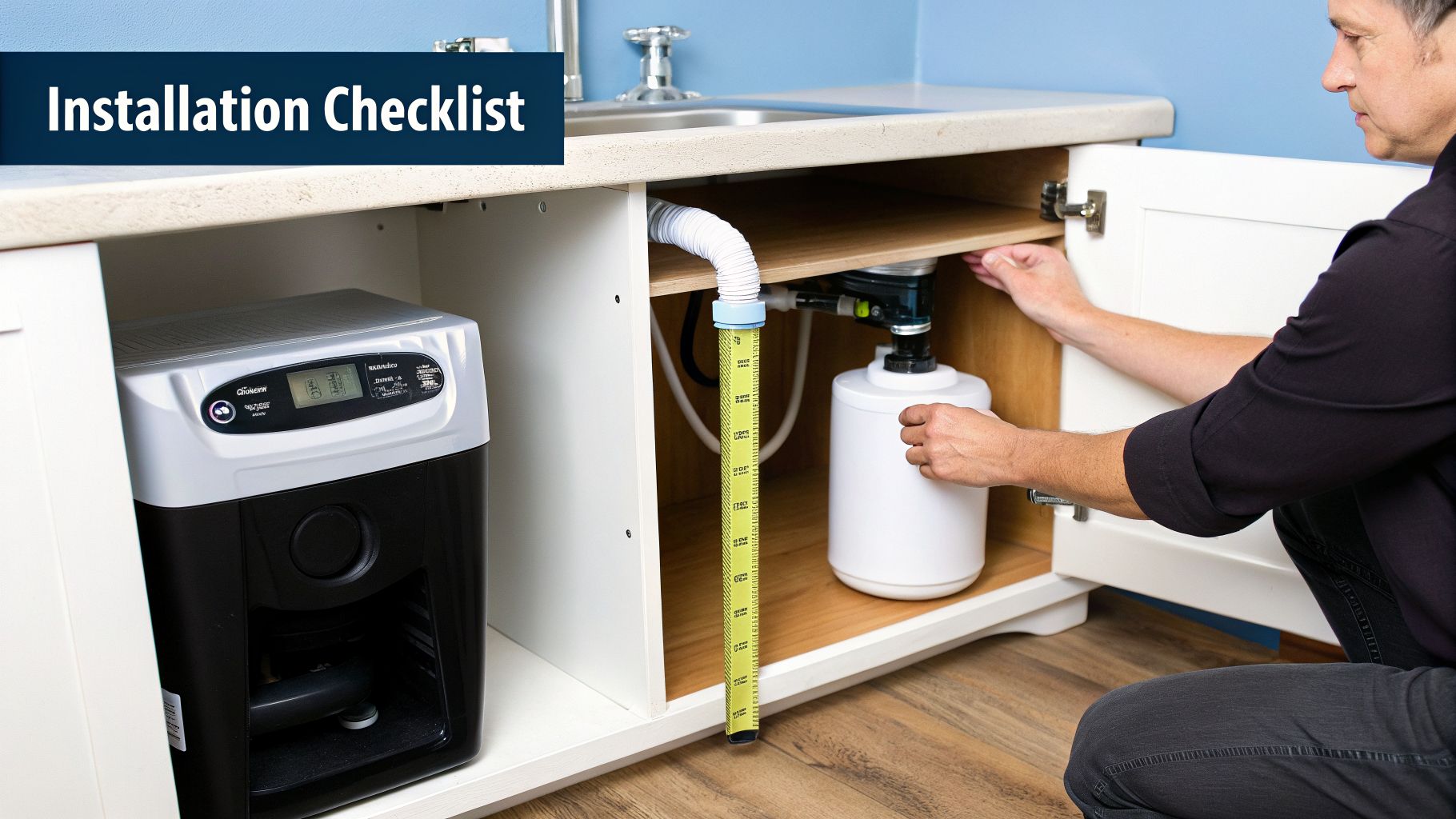
Before you get your heart set on a specific under-sink water purifier, it pays to do a quick "site survey" of the cabinet where it will live. Don’t worry, you don’t need to be a plumber. This is just about getting to know your space so you can choose the right system and guarantee the installation is a walk in the park.
A few minutes with a tape measure and a torch now can save a world of headaches later. By checking four key things—space, plumbing, power, and drainage—you'll know exactly what to look for and what to ask when our team from Ring Hot Water shows up.
Measure Your Cabinet Space
First things first, grab a tape measure. The cupboard under the kitchen sink can be a surprisingly crowded bit of real estate, often sharing space with a garbage disposal, cleaning supplies, and a tangle of pipes. You need to be certain your new purifier will actually fit.
- For simple carbon filters: These are usually quite compact, consisting of one or two cartridges. They don’t need much room and can typically be tucked away easily.
- For Reverse Osmosis (RO) systems: These units are the big boys. They come with multiple filter stages plus a pressurised storage tank that can be about the size of a small BBQ gas bottle. You’ll need to measure the height, width, and depth to ensure there’s enough room to not only fit the system but also to get your hands in for filter changes down the track.
A classic mistake is forgetting about the other things living under there. If you’ve got a big insinkerator, will the RO tank sit happily beside it? Or will it be such a tight squeeze that maintenance becomes a nightmare? A quick sketch of the dimensions can make it all crystal clear.
Inspect Your Plumbing Connections
Next, pop your head under the sink and take a look at the plumbing. Your new filter system needs to tap into the cold water line, which is usually done with a small T-piece adaptor. This diverts a small amount of water to the purifier before it continues on to your main kitchen tap.
The quality of these connections is non-negotiable. While some DIY kits supply basic plastic fittings, a professional installation from our Melbourne team uses only high-grade, robust fittings from brands like John Guest. This guarantees a leak-proof seal that protects your kitchen cabinetry from water damage for years to come.
While you're under there, find the cold water shut-off valve—usually a small tap or handle on the pipe. Does it turn easily? If it’s seized up or looks corroded, it’s best to have a plumber sort it out before the purifier installation begins.
Check for Electrical Access
This is a step people often miss, but it's absolutely vital for certain systems. Most standard carbon filters and basic RO units run on water pressure alone and don’t need any electricity.
However, if you're pairing your purifier with an instant boiling or chilled water tap, you'll definitely need power. These all-in-one taps have heating elements and cooling units that require a standard power point inside the cabinet. The same goes for some high-end RO systems that use an electric pump to boost water pressure.
An extension cord running from another outlet is not a safe or compliant long-term fix. You need a properly installed power point in the cabinet. If you don’t have one, you’ll need to factor in the cost of getting a licensed electrician to install it.
Locate a Drainage Point
Finally, some purifiers need somewhere to send their wastewater. This is a specific requirement for Reverse Osmosis systems and a key part of how they work.
As an RO system purifies water, it separates the pure H₂O from water carrying the flushed-out contaminants. This waste stream needs to go somewhere. The solution is a "drain saddle" that clamps onto your sink's main drainpipe, allowing the wastewater to flow away neatly.
A professional will make sure this is installed correctly to prevent any gurgling noises or potential for backflow. If you have an unusual plumbing setup, this is a great thing to bring up with your installer beforehand. Taking these four simple steps will set you up for a smooth installation and years of beautifully pure water.
Integrating Purifiers With Boiling and Chilled Taps
An instant boiling or chilled water tap is a game-changer for any modern kitchen. They’re a significant investment, but one that pays off every time you make a cuppa or fill a glass. To protect that investment, pairing it with an under sink water purifier isn’t just a good idea—it’s essential.
You wouldn't put cheap, low-grade fuel in a high-performance car, would you? The same logic applies here. Feeding unfiltered tap water, full of minerals and chlorine, into your expensive new tap system is simply asking for trouble down the track.
Protecting Your High-End Appliances
The main culprit we’re fighting against is limescale. If you live in a hard water area, you’ve seen it before—that chalky white build-up. These mineral deposits, mostly calcium and magnesium, wreak havoc on the delicate internal parts of boiling and chilled water units.
Over time, that scale clogs up heating elements, thermostats, and the tiny waterways inside the machine. This forces the unit to work much harder just to do its job, using more electricity and heading towards an early breakdown. An under sink water purifier acts as a bodyguard, stripping out these scale-forming minerals before they ever reach your tap.
It’s not just about preventing breakdowns; it's about performance. A good filter ensures your boiling tap hits temperature efficiently and your chilled tap delivers crisp, clean water without that "off" taste you get from chlorine. You're protecting the machine's lifespan and the quality of every single drop.
This is exactly why any professional installer will tell you to pair the two systems from day one. Planning for this integration from the start ensures a seamless setup. Of course, sometimes things don't go exactly to plan, so it's always handy to know where to find reliable general plumbing repair services if any unexpected tweaks are needed.
Creating a Centralised Water Hub
The magic of an integrated system doesn't stop at one tap. A single, high-quality under sink water purifier can become the heart of your kitchen's water supply, feeding multiple appliances at once.
With the right plumbing, you can create a complete solution for pure, clean water right across the kitchen:
- Boiling & Chilled Tap: Protected from scale and delivering fantastic tasting water.
- Refrigerator: Supplies your ice maker and water dispenser with filtered water, giving you clear ice and tastier cold drinks.
- Coffee Machine: If you have a plumbed-in espresso machine, it gets the perfect water for a great brew while protecting its internal components from scale.
This integrated approach is becoming a massive trend in Australia. The water purifier market here hit USD 193.23 million in 2023 and is only set to grow. We've seen it firsthand in Victoria, where installations jumped by 18% year-on-year by 2023, with many homeowners connecting purifiers to wall-mounted boilers from brands like Birko and Robatherm.
Plus, with regular maintenance from a specialist like Ring Hot Water, you can often extend a filter's life by 20-30%, saving you more money in the long run.
Thinking about a dedicated solution just for cold water? You can get the full rundown on how an under sink water chiller works in our detailed guide. It’s all about elevating your kitchen from a collection of appliances to a smart, efficient, and healthy hub for your home.
Supported Brand Integration Checklist
Making sure your new purifier plays nicely with your existing boiling or chilled tap is crucial. At Ring Hot Water, we service all the major brands, and while most connections are straightforward, each has its own little quirks.
This table gives you a quick overview of what to expect with the popular brands we see every day.
| Brand (e.g., Zip, Stiebel Eltron) | Typical Connection Type | Recommended Filter Type | Key Benefit |
|---|---|---|---|
| Zip HydroTap | Direct inline connection before the unit | Carbon & Scale Reduction | Protects advanced features like the MicroPurity filter and boiling chamber. |
| Billli | Inline connection post-mains, pre-unit | Multi-stage Carbon & Sediment | Preserves the unit's heating element and ensures clean chilled water. |
| Stiebel Eltron | Standard 1/2" or 3/8" braided hose | Carbon Block & Scale Inhibitor | Crucial for protecting the German-engineered heating and cooling components. |
| InSinkErator | Direct inline connection | Multi-stage filtration | Simple integration that significantly extends the life of the heating tank. |
| Birko / Robatherm | Often wall-mounted; connects to mains feed | High-Capacity Scale Filter | Ideal for commercial-grade units to handle high usage and prevent scale. |
Ultimately, our goal is to ensure a perfect match. When we come out for an install, we'll assess your specific model and local water quality to recommend the perfect filter system for years of trouble-free service.
Simple Maintenance and Filter Replacement
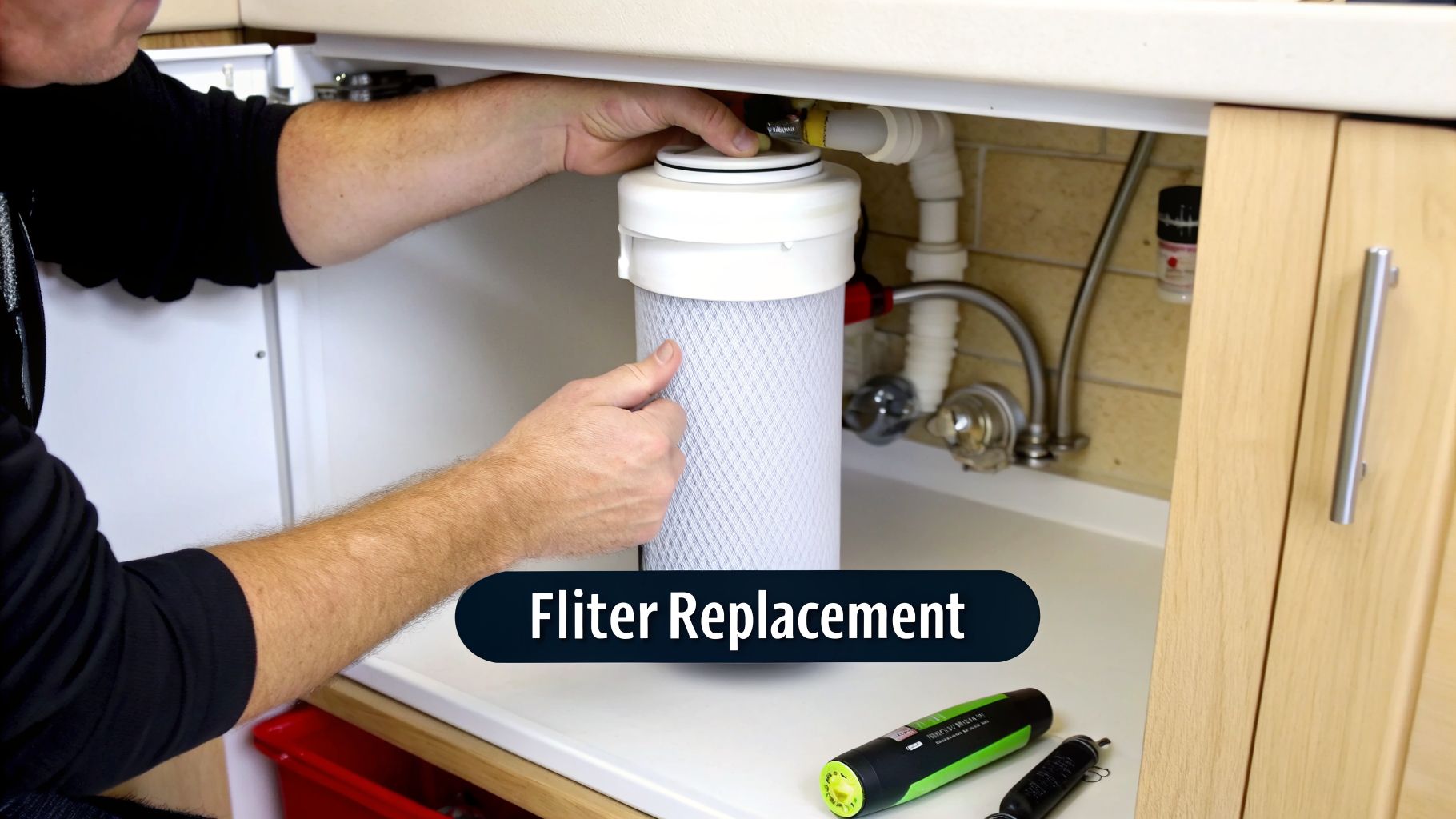
One of the best things about an under-sink water purifier is that once it's in, you can mostly forget about it. But like any hard-working appliance, it needs a little TLC to keep performing at its best. The good news? The maintenance is incredibly straightforward and usually just involves swapping out a filter.
Think of it as a quick tune-up for your water supply. It’s a small job that makes a huge difference, ensuring every glass of water is as pure and fresh as the first.
Your Filter Replacement Schedule
The most common question we get is, "How often do I actually need to change the filters?" It really comes down to the type of system you have and how much water your household uses. Sticking to a schedule is key—a filter that’s full isn't filtering anything at all.
Here’s a rough guide to keep you on track:
- Sediment & Carbon Filters: These are your system's frontline defence, catching things like sediment, chlorine, and other nasties. Plan to replace these every 6 to 12 months.
- Reverse Osmosis (RO) Membranes: This is the heart of an RO unit. Because the other filters protect it, it has a much longer lifespan, typically needing a change every 2 to 3 years.
- Polishing Filters: This final filter gives your water one last pass for taste and odour. It's usually swapped out at the same time as your main carbon filters, every 6-12 months.
Many modern units from brands like Zip take the guesswork out of it with an indicator light that flashes when it’s time for a change. If yours doesn't, a simple reminder in your phone's calendar works perfectly.
How to Change Your Filter Cartridge
Swapping out a filter cartridge is a surprisingly quick and tool-free task. While the design might differ slightly from brand to brand, the core steps are almost always the same. It’s a job most homeowners can tick off in less than five minutes.
A Quick Step-by-Step:
- Shut Off the Water: Find the small isolation valve on the pipe feeding your filter system and turn it off.
- Release the Pressure: If your system has a small red button on top, press it to let out any trapped pressure. Keep a tea towel handy for the odd drip.
- Unscrew and Swap: Twist the filter canister anti-clockwise to open it. Take out the old cartridge and slide the new one in, making sure any rubber O-rings are sitting correctly.
- Reassemble and Check: Screw the canister back on until it's hand-tight. Slowly turn the water back on and give it a quick check for any leaks.
Pro Tip: After a filter change, you’ll likely get some air trapped in the lines, which can cause sputtering or cloudy-looking water. Just let the filtered tap run for a couple of minutes until it flows clear and smooth. This flushes out any harmless carbon particles and air bubbles.
Troubleshooting and The Importance of Genuine Parts
Your system has a clever way of telling you when it needs attention. If you notice the water flow from your filter tap suddenly slowing to a trickle, that's the number one sign a filter is clogged. It isn't broken—it's just full from doing its job protecting you.
When it is time for a change, always insist on genuine replacement parts from the manufacturer. It can be tempting to grab a generic cartridge, but they can void your warranty and often don't provide the same level of filtration. Authentic parts guarantee a perfect fit, preventing leaks and ensuring your under-sink water purifier works exactly as intended. For specific models like those from Zip, our detailed guide can walk you through the Zip filter replacement process step-by-step.
Common Questions About Under Sink Water Purifiers
Even with all the benefits clear, it's smart to ask a few practical questions before you commit. We get these queries all the time from Melbourne homeowners, so let’s walk through the common sticking points to help you make the right choice for your kitchen.
How Much Space Do I Need for an Under Sink Water Purifier?
This really comes down to which system you go for. A simple inline carbon filter is impressively compact—think a couple of wine bottles side-by-side—so it tucks away easily in almost any cabinet.
A full-blown Reverse Osmosis (RO) system, on the other hand, needs a bit more room. With its multiple filter cartridges and separate storage tank, you’ll need a space roughly the size of a small carry-on suitcase. It's always a good idea to measure up first, especially if you have to work around a garbage disposal or other existing plumbing.
Will It Reduce My Water Pressure?
This is a common worry, and it’s a fair question. You will probably notice that the flow from the dedicated filtered water tap is a little softer than your main tap, and that’s completely normal. It’s a sign the water is working its way through those dense filtration layers to get perfectly pure.
Critically, your standard hot and cold kitchen tap pressure won't be affected at all. In fact, a noticeable drop in flow from the filter tap is the number one sign that your filter cartridges have done their job and are due for a change.
Can I Install an Under Sink Water Purifier Myself?
While a keen DIYer could probably handle a basic carbon filter installation, we always recommend getting a professional in for most systems. This is especially true for Reverse Osmosis units or any purifier you’re connecting to an instant boiling or chilled water tap.
These jobs involve more complex plumbing, and getting every connection watertight is non-negotiable. Some even need electrical work. Using a licenced plumber not only protects your product warranty but also gives you peace of mind that it’s installed safely and will work perfectly from day one.
How Often Do I Really Need to Change the Filters?
The replacement schedule depends on the filter type and how much water your household gets through. As a general rule of thumb, you can expect to swap out your sediment and activated carbon filters every 6 to 12 months.
The core membrane in a Reverse Osmosis system is the long-life component, typically lasting 2 to 3 years before it needs replacing. Sticking to the schedule is the key to making sure your water stays pure and the system runs smoothly.
Ready to enjoy pure, great-tasting water on demand? The team at Ring Hot Water can help you find and install the perfect under sink water purifier for your Melbourne home. Explore our solutions and book a consultation today!
