
Uncategorized
Finding the Best Under Sink Water Filter for Melbourne Homes

Mar
When it comes to choosing the best under sink water filter, the decision usually boils down to two main paths: a full-blown Reverse Osmosis (RO) system for near-total purification, or a simpler multi-stage carbon filter that targets taste and common chemicals. Honestly, for most Melbourne households, a quality multi-stage system hits the sweet spot, giving you a great balance of performance and value by tackling things like chlorine and sediment.
Why Under Sink Filters Are a Smart Choice for Melbourne Water
Melbourne’s tap water has a great reputation, and for good reason. But that doesn’t mean an under sink water filter is a luxury—think of it as a practical upgrade for any home or business. It’s a permanent, hidden solution that gives you pure, great-tasting water straight from the tap. No more bulky countertop jugs or the constant hassle of refilling.
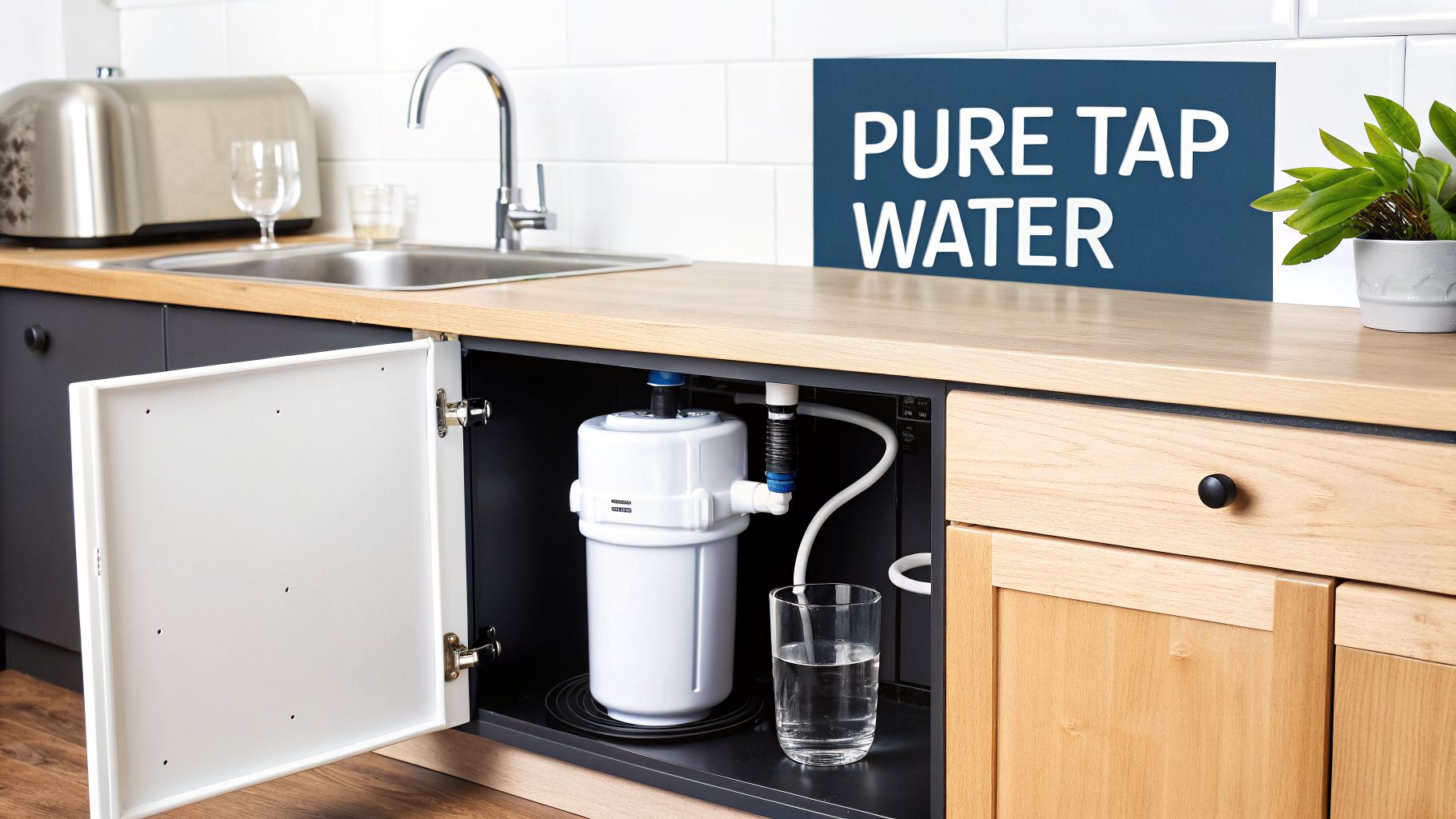
Unlike a filter pitcher that can only handle small amounts at a time, an under sink system delivers filtered water on demand. It’s ready for drinking, cooking, and even filling up your coffee machine or kettle, which is a big reason they’re becoming so popular right across Australia.
Improving Taste and Removing Unwanted Additives
The first thing you’ll notice is the immediate improvement in taste and smell. Melbourne’s water is treated with chlorine to keep it safe on its journey to your tap, but that disinfectant often leaves behind a chemical taste. A good carbon filter is brilliant at removing that chlorine, bringing the water back to its natural, crisp flavour.
Beyond just better taste, these systems are great for:
- Reducing Sediment: They catch the rust, dirt, and silt that can flake off from old pipes.
- Minimising Limescale: This helps protect your kettle, coffee machine, and instant hot water taps from damaging mineral buildup.
- Providing Peace of Mind: It’s reassuring to know your water is free from common additives and potential impurities.
A Seamless and Space-Saving Solution
It’s no surprise the market for these systems is growing. The Australian water purifier market is projected to be worth AUD 337.79 million by 2025, and under-sink models are becoming a clear favourite for homeowners. This shift is all about wanting solutions that integrate neatly into modern kitchens without cluttering up the benchtops.
In fact, according to a 2023 survey, 68% of Australian households in metro areas now prefer these hidden systems, especially when they’re paired with an instant boiling water tap. You can dig into the full findings from Expert Market Research to see the trend for yourself.
For many people, the goal is simple: a better cup of coffee or tea. Unfiltered tap water contains minerals and chlorine that can make coffee taste bitter and flat. A filter balances the water, letting the real flavour of the beans come through.
This move toward integrated systems shows that we want both performance and good design. An under sink filter delivers on both fronts, giving you a reliable source of purified water while keeping your kitchen looking clean and modern. It’s a smart investment in your health, your daily convenience, and the life of your appliances.
Getting to Grips with Under-Sink Water Filter Tech
To find the right under-sink water filter for your home or business, you need to look beyond the sleek chrome tap and understand what’s happening inside the unit itself. It’s a bit like choosing a car; the paint colour is one thing, but you really want to know what’s under the bonnet.
Different filter technologies are built to solve different problems. Some are fantastic for just improving the taste and smell of your water, while others offer a serious line of defence against all sorts of invisible nasties. The real key is matching the right tech to your water and your needs.
Sediment and Carbon Block Filtration
The bread and butter of most under-sink systems are the sediment and carbon filters. A sediment filter is your first line of defence, catching the bigger particles like rust, silt, and dirt that can make their way through Melbourne’s vast pipe network. This not only makes your water look clearer but also protects the finer, more advanced filters further down the line.
From there, the water moves through a carbon block filter. This is the absolute workhorse when it comes to taste and smell. Carbon is brilliant at adsorbing chemicals, which means contaminants literally stick to its surface. It’s incredibly effective at getting rid of:
- Chlorine: The main culprit behind that classic "tap water" taste and smell.
- Volatile Organic Compounds (VOCs): Nasty industrial chemicals and solvents you don't want in your glass.
- Taste and Odour Compounds: Any other unpleasant flavours that might be lingering.
For a lot of Melbourne households, a good quality system that combines sediment and carbon filters is all you need for crisp, clean, and great-tasting water for drinking and cooking.
To help you decide, here’s a quick breakdown of how these technologies stack up against each other.
Comparing Core Filtration Technologies
This table breaks down how different filter technologies work, what they remove, and where they perform best in a Melbourne home or business.
| Filtration Technology | Primary Contaminants Removed | Best For | Key Limitation |
|---|---|---|---|
| Sediment | Dirt, rust, silt, sand, large particles | Homes with older pipes or visible particles in water. Essential pre-filter for other systems. | Does not remove dissolved chemicals, heavy metals, or microorganisms. |
| Carbon Block | Chlorine, VOCs, pesticides, herbicides, bad tastes & odours | General-purpose drinking water improvement in most Melbourne homes. | Limited effectiveness against heavy metals, fluoride, or bacteria. |
| Reverse Osmosis (RO) | Heavy metals (lead, mercury), fluoride, salts, nitrates, PFAS, microplastics | Maximum purity; ideal for health-conscious families or commercial use. | Creates wastewater (though modern systems are far more efficient). |
| Ultraviolet (UV) | Bacteria, viruses, protozoa (Giardia, Cryptosporidium), mould | Disinfecting rainwater tank supply or for homes in rural-urban fringe areas. | Does not remove any physical or chemical contaminants; requires pre-filtration. |
Ultimately, the best choice often involves combining these technologies to cover all your bases, ensuring the water is clean, safe, and tastes great.
Reverse Osmosis for Advanced Purification
If you're after the highest level of purification available for your home, then Reverse Osmosis (RO) is the gold standard. An RO system uses pressure to force water through an incredibly fine membrane, leaving almost everything else behind. It's exceptionally thorough, capable of removing up to 99% of all dissolved solids.
Reverse Osmosis is the go-to solution for removing the widest spectrum of contaminants, including heavy metals, fluoride, salts, and even microplastics and emerging threats like PFAS. It provides an unparalleled level of purity.
This makes RO an excellent choice for families with specific health concerns, or in a cafe or office where water quality is simply non-negotiable. While the under-sink units we focus on are perfect for pristine drinking water, highly specialised fields often need something different, like a dedicated lab water purifier for distilled water, which uses its own specific set of technologies.
Under-sink RO units are also becoming a smart move for businesses. Commercial adoption jumped by 35% in 2024 as businesses ditch single-use plastics, with some reporting savings of up to AUD 5,000 a year. Plus, today's RO systems are much more efficient, cutting down wastewater by as much as 80% compared to older models—a huge win here in Australia. You can dig into more of this data by reviewing the latest industry reports.
Ultraviolet Light for Microbiological Safety
While Melbourne's town water is treated to be microbiologically safe, it’s a different story if you're on tank water or live on the rural-urban fringe. That’s where you might face risks from bacteria, viruses, or cysts. This is where Ultraviolet (UV) purification comes into play.
A UV system works by passing water past a special lamp. The light it emits zaps any microorganisms, scrambling their DNA and making them completely harmless. It’s an instant disinfection process.
It’s important to know that a UV stage doesn't remove anything; it disinfects. Because of this, it's almost always paired with sediment and carbon pre-filters to get rid of particles first. This combination gives you total peace of mind, ensuring your water is both crystal clear and sterile.
Key Performance Metrics That Actually Matter
When you're on the hunt for the best under sink water filter, it's easy to get lost in a sea of marketing claims. But once you look past the buzzwords, a filter's real value comes down to a few key numbers. These aren't just specs on a box; they dictate your day-to-day experience, from how fast your glass fills to how often you're under the sink changing cartridges.
Getting your head around these metrics is the key to making a smart investment. A filter that boasts incredible contaminant removal can quickly become a daily headache if its water flow is painfully slow. In the same way, a cheap upfront purchase might end up costing you a lot more in the long run if the cartridges don't last.
Filter Capacity and Cartridge Lifespan
A filter’s capacity tells you how many litres of water it can purify before it’s time for a replacement. This is probably the most important number for figuring out your long-term costs. A system might look like a bargain at first, but if its cartridges are only rated for 1,000 litres, a busy family could be changing them several times a year.
- For a small household or a couple: A filter rated for 2,000 to 4,000 litres will usually do the trick, lasting anywhere from 6 to 12 months.
- For a family of four or a small office: You'll want to look for something with a higher capacity of 5,000 litres or more. This means less maintenance and more consistent performance.
Some of the more advanced systems use multi-stage cartridges where different parts have different lifespans. For example, a sediment pre-filter might need swapping every six months, while the main carbon block could last the full year. This staggered approach can often be more budget-friendly over time.
Flow Rate Litres Per Minute
Flow rate, measured in litres per minute (LPM), is all about how quickly water comes out of your filter tap. It might seem like a small detail, but a slow flow rate is a massive daily annoyance. Just imagine waiting over a minute to fill the kettle or a big pot for cooking pasta.
A low flow rate is one of the most common complaints we hear from people who chose a filter based on price alone. Aim for a system that delivers at least 2-3 LPM for home use to avoid that frustration. For commercial settings like a café, you should be looking for 4 LPM or higher.
It's also worth knowing that the flow rate will naturally slow down as the filter gets clogged with contaminants near the end of its life. A quality system is designed to keep a more consistent flow throughout its service cycle. Reverse Osmosis (RO) systems are a bit different; they have a slower flow rate by nature because of the super-fine membrane, but they make up for it with a storage tank that gives you instant access to purified water.
Micron Rating and Why It Matters
A filter's micron rating tells you the size of the particles it’s able to catch. For context, one micron is just one-millionth of a metre. The smaller the micron rating, the finer the filtration, and the more tiny contaminants it can trap.
| Micron Rating | What It Typically Removes | Best Suited For |
|---|---|---|
| 5 Microns | Sediment, sand, rust, and larger particles. | Basic sediment reduction to improve water clarity and protect other filters. |
| 1 Micron | Cysts like Giardia and Cryptosporidium, finer silt. | A good standard for safe, clean drinking water in most urban areas. |
| 0.5 Microns | Finer cysts, some bacteria, and provides more effective chemical reduction. | Health-conscious users wanting a higher degree of purification. |
While a smaller micron rating is generally better for purity, it's not always the best choice. It can lead to a lower flow rate and cause the filter to clog up much faster if your water has a lot of sediment. This is exactly why the best under sink systems use a multi-stage approach, starting with a larger micron sediment filter to catch the big stuff and protect the finer, sub-micron filters doing the heavy lifting.
If you're curious about measuring your water's purity before and after filtration, you might want to use a water TDS meter to get a precise reading of the total dissolved solids.
NSF ANSI Certifications
Finally, always look for NSF/ANSI certifications. Think of these as an independent, third-party guarantee that a filter actually does what the manufacturer claims. Anyone can say their filter removes 99% of chlorine, but an NSF certification proves it.
- NSF/ANSI 42: This one is for aesthetic effects – it certifies that a filter improves taste and odour by removing things like chlorine.
- NSF/ANSI 53: This is a much stricter, health-related standard. It verifies the removal of specific contaminants like lead, cysts (like Giardia), and volatile organic compounds (VOCs).
- NSF/ANSI 401: This standard covers emerging contaminants, such as certain pharmaceuticals and chemicals that can find their way into water supplies.
Choosing a certified filter gives you peace of mind that its performance claims are tested, true, and reliable.
Comparing the Top Under Sink Filter Systems for 2026
Picking the right under-sink water filter isn't about finding the "best" one on paper; it's about matching the right technology to your daily life. Forget generic feature lists. We’re going to look at the leading systems through the lens of real-world Melbourne households and businesses to see what actually matters.
It's easy to get lost in technical specs, but what you really need to know is how a system performs day-to-day. We’ll focus on contaminant removal, long-term running costs, and how much effort is involved in keeping it running perfectly, so you can find a filter that delivers clean, great-tasting water for years, not just a quick fix.
Scenario 1: The Health-Conscious Family in Yarraville
For a family that puts water purity above all else, a multi-stage Reverse Osmosis (RO) system is the undisputed champion. This isn't just about getting rid of the chlorine taste from Melbourne's tap water. It's about tackling the invisible stuff—heavy metals, fluoride, and even emerging contaminants like PFAS.
An RO system works by pushing water through an extremely fine membrane, which acts as a barrier to leave almost all impurities behind. While you might have heard that RO wastes a lot of water, modern systems are far more efficient. Some now have a waste-to-pure-water ratio as low as 1-to-1, a big deal for water-wise Melburnians.
Key Differentiator: The peace of mind an RO system provides is its biggest selling point. It’s the most comprehensive defence against a wide range of contaminants that standard carbon filters simply can't catch, making it the go-to for any health-focused household.
Yes, the initial setup is a bit more involved and the upfront cost is higher. But for anyone who wants the absolute purest drinking water on tap, it’s an investment that pays off with every glass.
Scenario 2: The Busy Small Office in Footscray
In a small office, the priorities shift dramatically. You need a system that can handle the morning coffee rush and keep the team hydrated all day without a single person having to wait. Here, capacity, flow rate, and sheer reliability are king.
For this kind of environment, a high-capacity, multi-stage carbon block filter is the perfect fit. These systems are absolute workhorses, built to filter thousands of litres before needing a new cartridge. You’ll want to look for something with at least a 5,000-litre capacity and a flow rate around 3-4 litres per minute (LPM). Anything less, and you’ll have a queue forming at the kitchen sink.
It's the ideal balance. You get fantastic-tasting water free of chlorine and odours, with minimal maintenance. The intensive purification of an RO system is simply overkill here and doesn't make financial sense when the main goal is improving taste and keeping staff happy.
This chart helps to visualise how these different performance metrics should influence your choice.
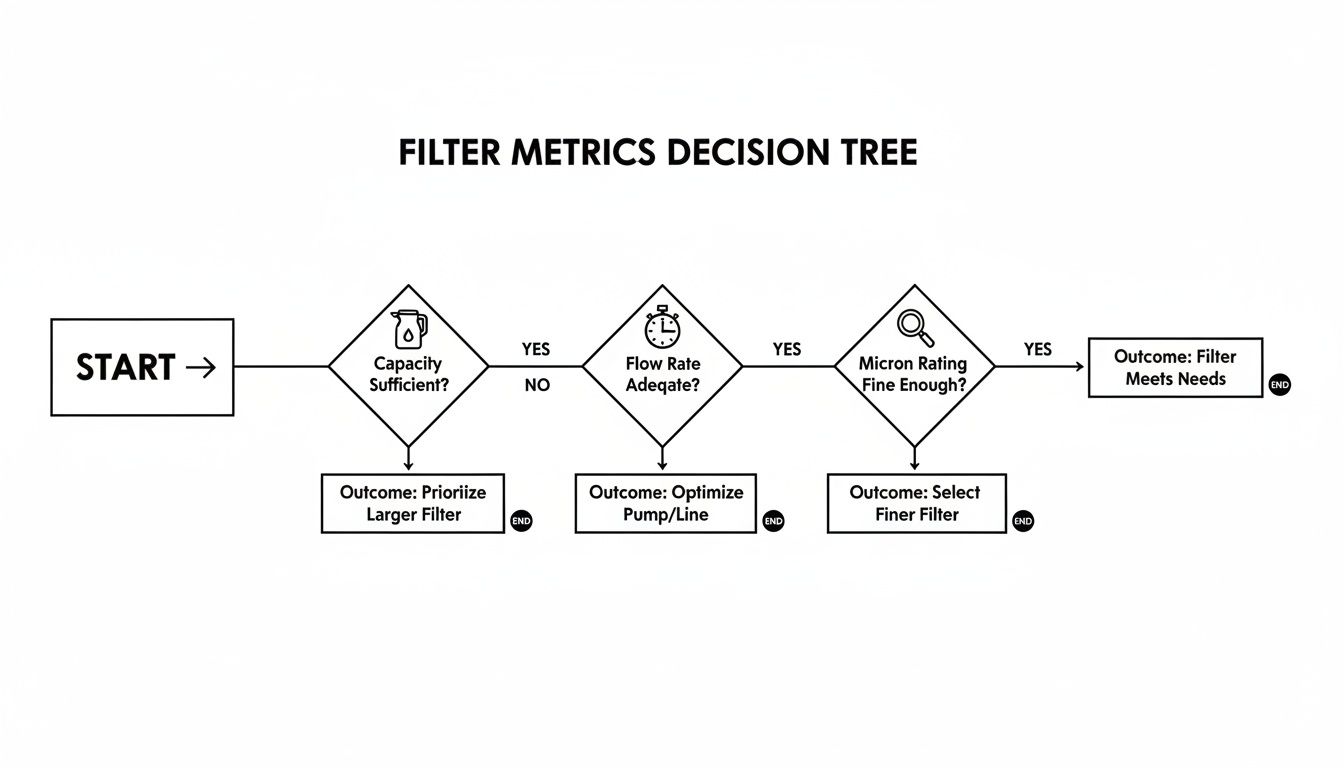
As you can see, matching the filter's capacity, flow rate, and micron rating to your specific needs is the key to getting a system that works for you, not against you.
Scenario 3: The Barista and the Cafe Owner
In hospitality, water isn't just water—it's a critical ingredient. For a café, unfiltered water with its fluctuating mineral content and chlorine can turn a beautiful coffee bean into a bitter, flat-tasting espresso. It can completely ruin the customer experience.
This calls for a specialised approach. The ideal setup is usually a combination system that includes:
- Sediment pre-filtration to catch any physical grit or particles.
- Carbon filtration to get rid of chlorine and any other unpleasant tastes.
- A water softening or scale-reduction cartridge to protect the very expensive espresso machine from damaging limescale buildup.
Some top-tier cafes even install customisable systems that let them add or remove minerals to create the perfect water profile for coffee extraction. While that's next-level, it shows just how vital water quality is in a commercial setting. Many of the same principles apply to getting the best quality at home, and you can learn more about choosing the right system in our article.
Which Under Sink Filter Is Right for You?
To help you decide, we've put together this quick guide. Just find your main goal below to see which system we'd recommend and why.
| Your Primary Goal | Recommended Filter System | Why It Works for You | Typical Melbourne Price Point |
|---|---|---|---|
| Maximum Purity for Family Health | Multi-Stage Reverse Osmosis (RO) System | Removes the widest range of contaminants, including heavy metals, fluoride, and microplastics, for ultimate peace of mind. | $600 – $1,500+ installed |
| Great Taste & Office Convenience | High-Capacity Carbon Block Filter | Delivers excellent flow rate and long cartridge life, perfect for removing chlorine and improving taste in a high-use environment. | $400 – $800 installed |
| Appliance Protection & Budget-Friendly | Twin-Stage Sediment & Carbon Filter | Effectively removes chlorine and sediment, protecting kettles and coffee machines from buildup at an affordable price point. | $300 – $600 installed |
| Superior Coffee & Equipment Safety | Specialised Cafe Filtration System | Combines carbon filtration with scale reduction to protect machinery and provide the ideal water composition for coffee extraction. | $800 – $2,000+ installed |
At the end of the day, the best under sink water filter is the one that fits your water goals, daily demands, and budget. By thinking about it through these real-life scenarios, you can look past the marketing hype and choose a system that will genuinely make a difference in your home or business.
Navigating Installation and Ongoing Maintenance
Choosing the right filter technology is only half the battle. An under-sink water filter is a long-term fixture in your kitchen, so getting the setup and upkeep right is just as important. After all, proper installation and consistent maintenance are what deliver years of pure, great-tasting water. Skimp on this, and you could be looking at poor performance, frustratingly low water flow, or even a slow leak down the track.
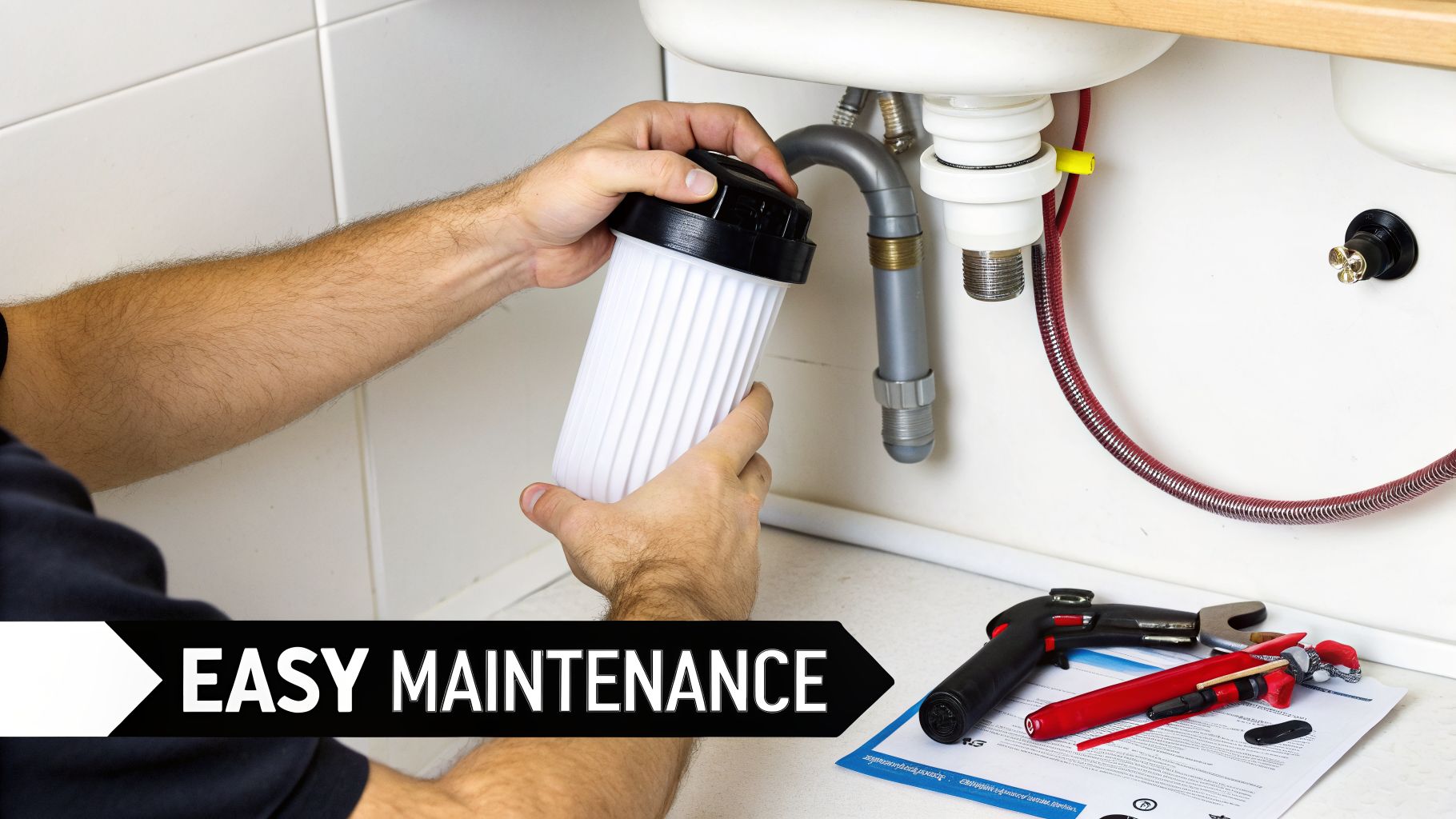
Let's break down the practical side of ownership, balancing the initial setup with a clear picture of future costs and tasks.
DIY vs Professional Installation
While many under-sink filter kits are marketed as DIY-friendly, calling in a professional plumber is often the smarter, safer move. A licenced plumber doesn’t just connect a few hoses; they assess your existing plumbing, make sure every connection is secure and compliant with Australian standards, and can expertly drill through stone or laminate benchtops without causing any damage.
- DIY Installation: This route can save you money upfront, but it’s best left to those with real plumbing experience. A small mistake under the sink can quickly turn into a big, expensive leak.
- Professional Installation: This is all about peace of mind. A specialist guarantees a leak-free setup that works perfectly with your kitchen, including any tricky connections to instant hot water taps. You can learn more about what’s involved in our guide to water filter installation services in Melbourne.
For tradespeople and professional installers, using high-quality components like John Guest fittings is non-negotiable. These fittings ensure robust, leak-free connections that last, with documented failure rates under 2%.
Ultimately, a professional install protects your home and your investment. To ensure everything keeps running smoothly, understanding a few basics of home plumbing care is also a great idea. You can discover some essential plumbing maintenance tips that can help prevent broader issues.
Ongoing Costs and Filter Replacement
The main ongoing cost you’ll have is replacing the filter cartridges. A filter’s life is measured in both litres and months, typically lasting from six to twelve months in a standard Melbourne household before it needs changing.
Typical Replacement Schedule:
- Sediment Pre-filter: Every 6 months
- Carbon Block Filter: Every 12 months
- RO Membrane: Every 2-4 years
Forgetting to change the filters is a common mistake, but it’s one you want to avoid. An old, clogged filter doesn't just stop working; it can slow your water flow to a trickle and may even become a breeding ground for bacteria, undoing all the good work.
These systems offer a fantastic return on investment, often paying for themselves within 18 months through health benefits and what you save on bottled water. In fact, 82% of users report better hydration habits and fewer digestive complaints after making the switch. In a city of over 5 million people, having pure water on demand isn't a luxury—it's an essential part of a healthy home.
Your Final Checklist for Choosing a Filter
Picking the right under-sink water filter can feel a bit overwhelming with all the options out there, but it really just comes down to asking the right questions. Nailing down exactly what you need makes the final choice a lot clearer.
Whether you’re kitting out your family kitchen, a busy office, or a local Melbourne cafe, this checklist will help you cut through the jargon. Think of it as building a profile of your perfect system before you buy.
For the Melbourne Homeowner
For most families, it's a balancing act between health, convenience, and what fits the budget. Your answers here will point you towards a filter that slots right into your daily routine without any fuss.
- What’s my main goal? Is it simply to get rid of that chlorine taste for a better cuppa? Or are you looking to remove a wider range of things like heavy metals and even fluoride with a system like Reverse Osmosis?
- How much room do I have under the sink? Take a peek under there. Is it already packed with a waste disposal or an instant hot water system? If so, a more compact filter will be essential.
- What’s a realistic budget for me? It’s easy to focus on the initial price, but don't forget the ongoing cost of replacement cartridges. Sometimes a cheaper system can end up costing more in the long run.
- Am I happy with a separate filtered water tap? Or would I prefer a sleek, all-in-one 3-way tap to keep the kitchen bench looking clean and uncluttered?
Ultimately, choosing a filter is about matching it to what matters most to you. If you’ve got young kids or health sensitivities, the peace of mind that comes with a more advanced system often makes the initial investment well worth it.
For the Office or Commercial Space
In a business setting, the game changes. Here, it’s all about capacity, rock-solid reliability, and keeping everything running smoothly. A filter that can’t keep up is not an option.
Ask yourself:
- How many people will be using it every day? This is the key to figuring out the filter capacity (total litres) and flow rate (LPM) you’ll need. The last thing you want is a queue forming at the sink.
- What appliances will it connect to? If you’re hooking the filter up to a commercial coffee machine or boiler, then scale reduction becomes non-negotiable for protecting that expensive gear.
- What’s our maintenance plan? Do you need a set-and-forget system with long-life cartridges that are easy to swap out? Or do you have a regular maintenance schedule that can handle more frequent changes?
Common Questions Answered
Even with all the details, you might still be weighing up a few things. It’s a big decision. Here are some straightforward answers to the questions we get asked most often by Melbourne homeowners and businesses, designed to help you make the right choice with confidence.
How Often Do I Need to Change the Filter Cartridges?
The lifespan of your filter really comes down to two things: the type of filter you have and how much water your household uses. As a general guide for a typical Melbourne home:
- Standard Carbon & Sediment Filters: You’ll likely be changing these every 6 to 12 months.
- Reverse Osmosis (RO) Membranes: The main RO membrane is much more durable. You can expect it to last 2 to 4 years before needing a swap.
Every system will have a recommended schedule. It’s important to stick to it to keep your water pure and the system flowing as it should.
Will a Water Filter Affect My Water Pressure?
Yes, any filter will cause a small drop in water pressure. The water has to pass through the filter media, after all. However, a quality system is engineered to keep this drop to a minimum, so you should still enjoy a strong, steady flow from your dedicated filter tap.
If you ever notice a major drop in pressure, it’s almost always a tell-tale sign that your filter cartridge is clogged and it's time for a replacement. For home use, a flow rate of at least 2-3 litres per minute is what you should be aiming for.
Can I Just Install It Myself?
While many kits are sold as DIY-friendly, we almost always recommend getting a professional to handle the installation. A licensed plumber doesn't just connect the hoses; they ensure every connection is leak-proof, can drill cleanly through tricky benchtops like stone or laminate, and will make sure the whole setup meets Australian plumbing standards.
A small cost upfront gives you complete peace of mind that the job’s been done properly.
Do I Really Need a Reverse Osmosis System for Melbourne Water?
For most Melbourne homes, a good multi-stage carbon filter is more than enough to get rid of the chlorine taste and give you beautiful drinking water.
However, a Reverse Osmosis (RO) system is a worthwhile investment if your main priority is health and getting the absolute purest water possible. An RO system is really the only effective way to remove things like fluoride, heavy metals, and salts from your water. If you have specific health concerns or simply want the ultimate assurance, then investing in RO is a solid choice.
Ready to upgrade your drinking water? The team at Ring Hot Water specialises in supplying and installing the perfect water filtration solutions for Melbourne homes and businesses. Explore our range or give us a call for expert advice. Find your ideal under sink water filter today.
