
Uncategorized
Best Water Filtration System for Home in 2026: Top Picks

Mar
When it comes to the best water filtration system for home use, most people find that an under-sink or whole-house unit is the way to go. These systems are the most practical and thorough choice for tackling common issues like chlorine and sediment, giving you clean, fantastic-tasting water right from the tap.
Your Journey to Pure Water at Home
Choosing the right water filter can feel overwhelming, but it’s the single most important step you can take toward enjoying cleaner, safer, and better-tasting water every single day. We’ve designed this guide to cut through the noise and give you a clear, simple roadmap to follow.
We’ll explore why so many homeowners in Melbourne and right across Australia are making the switch from standard tap water to a proper filtration solution. It’s about dealing with those little annoyances that a simple filter jug can’t fix—like that faint whiff of chlorine, the gritty bits from old pipes, or the invisible contaminants you can’t even see.
Ultimately, choosing the right system is a smart investment in your family's health and wellbeing.
Why Invest in a Water Filter?
A quality water filtration system does so much more than just improve the taste of your water. It’s about taking control and gaining genuine peace of mind. Here’s a look at what you stand to gain:
- Improved Health and Safety: By removing things like chlorine, heavy metals, and potential bacteria, you're providing safer drinking water for your whole family.
- Superior Taste and Odour: Say goodbye to that chemical aftertaste. Filtered water is crisp, clean, and refreshing, which naturally encourages everyone to drink more of it.
- Environmental Responsibility: You can dramatically cut down on your household's use of single-use plastic bottles, which is a great feeling and a positive move for the environment.
- Cost Savings Over Time: While there's an up-front cost, a home filtration system is far more economical in the long run than the endless cycle of buying bottled water.
The move towards home water filtration is more than just a passing trend. The Australian water purifier market, valued at AUD 337.79 million in 2025, is expected to nearly double to AUD 652.17 million by 2035. This boom shows just how much homeowners are prioritising water quality.
Here in Victoria, Melbourne residents are especially keen to find solutions for local water concerns. This guide will help you join the thousands of Aussies making a proactive choice for better water, breaking down everything from compact benchtop units to comprehensive whole-home solutions.
We'll even show you how a local expert like Ring Hot Water can help you find the perfect fit for your home. You can dig into the numbers yourself by reading the full research on Australia's water purifier trends.
What’s Actually in Your Tap Water?
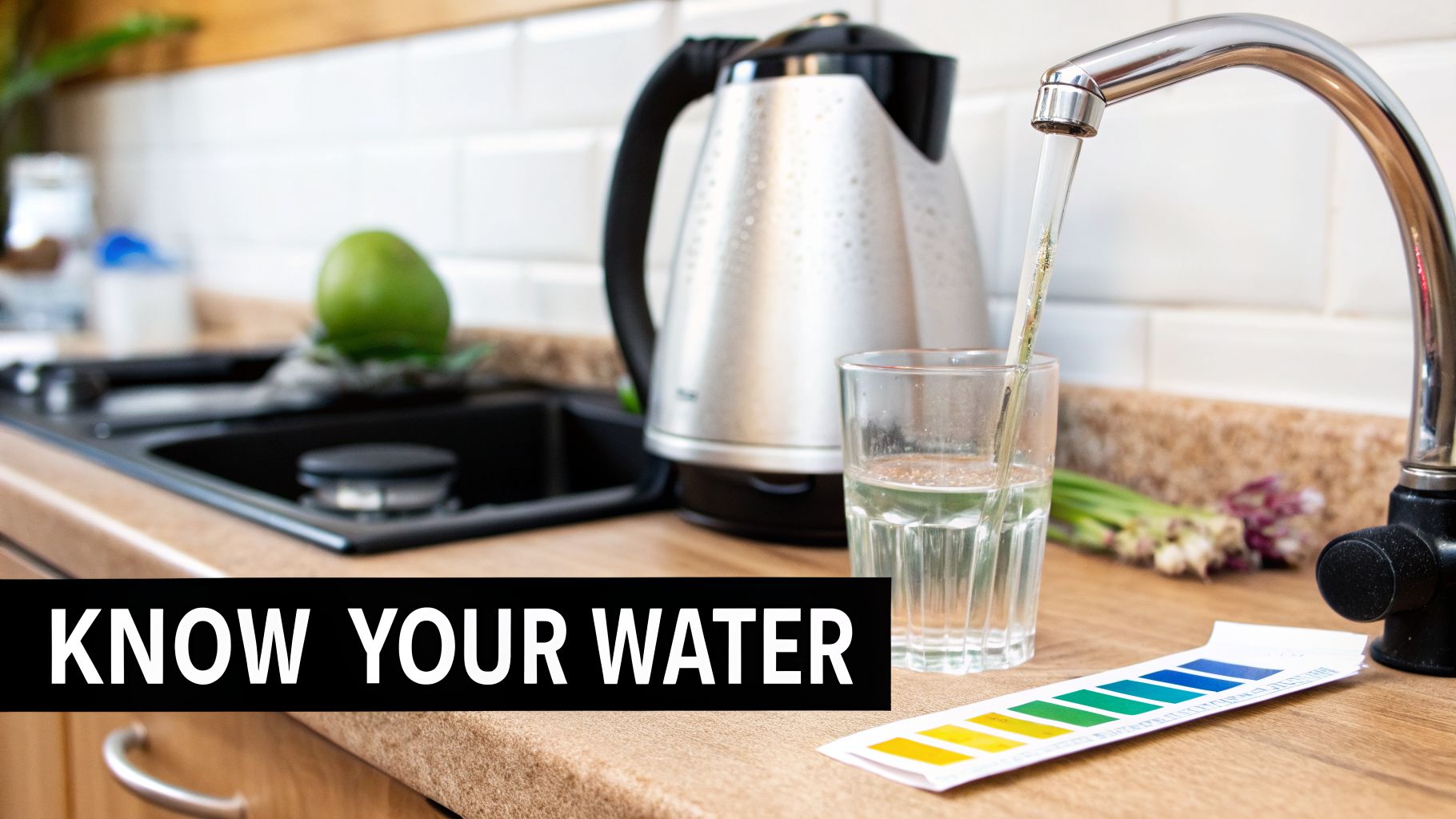
Before you can pick the right filter, you first need to know what you’re trying to filter out. Think of it as playing detective with your own taps. While Australian tap water is some of the safest in the world, what comes out is more than just pure H₂O.
The journey from the reservoir to your kitchen is a long one, involving treatments that add a few things to the mix. The most noticeable is chlorine, which is essential for killing off nasty bacteria and viruses. While it keeps our water safe, it’s also the main reason for that "swimming pool" smell and taste many of us don't love.
Then there are dissolved minerals. Depending on where you live in Melbourne, you might have "hard" water, which is high in calcium and magnesium. This isn't a health issue, but it’s exactly why you see that chalky white scale building up on your kettle, shower screens, and tapware.
The Clues Your Water Is Leaving Behind
You don’t need a fancy lab coat to start figuring out your water’s unique profile. Your own senses—and your appliances—can tell you a surprising amount. Paying attention to these clues is the first step toward finding a filter that solves your specific problem.
A bit of at-home investigation can be very revealing:
- The Taste and Smell Test: Does your water have a chemical tang or a metallic taste? Can you smell something earthy or musty? That’s often chlorine or other sediments making their presence known.
- The Visual Check: Fill a clear glass and hold it up to a light source. See any tiny particles floating about? That could be sediment or even rust from older pipes in your area, or even inside your home.
- The Appliance Inspection: Take a look at your kettle’s heating element for limescale. Notice a white film on your dishes and glasses after they dry? These are classic signs of hard water.
Think of your tap water as a recipe that changes from one suburb to the next. The local water authority sets the base ingredients, but more are added as the water travels through kilometres of pipes to get to you. Your job is to identify those extra additions to find a filter that refines the final product.
Finding Official Water Quality Reports
For a more detailed picture, you can go straight to the source. In Melbourne, suppliers like Greater Western Water, South East Water, and Yarra Valley Water all publish regular reports that break down the exact composition of the water they supply. These documents give you precise data on everything from mineral content and pH levels to disinfection by-products.
Armed with this information, you can make a genuinely informed choice. If the taste of chlorine is your only complaint, a simple carbon filter might be all you need. But if the reports—and your own detective work—point to sediment and hardness, a more comprehensive system will be a much better investment.
This knowledge stops you from overspending on features you don’t need and makes sure you get the right tool for the job. With growing awareness around other potential issues, many people are also looking for solutions that tackle emerging contaminants. For more on this, have a look at our guide to finding a reliable PFAS water filter.
How Different Water Filtration Technologies Work
To find the right water filter for your home, you first need to understand what's happening behind the scenes. Think of these different technologies as specialists, each with a unique skill for tackling specific contaminants. Choosing the right one is like picking the right tool for the job—you wouldn't use a hammer to turn a screw.
Let's break down how these systems turn your regular tap water into crisp, clean drinking water. We'll use a few simple analogies to explain what’s going on inside that filter, so you can feel confident you know exactly what you’re buying.
Activated Carbon: The Magnetic Sponge
The most common technology you'll come across is activated carbon. It’s found in everything from simple filter jugs to advanced under-sink systems. Imagine it as a highly porous, 'magnetic sponge'. Its huge internal surface is covered in nooks and crannies that excel at adsorbing—or chemically binding to—certain contaminants as water flows through.
This process is fantastic for improving the taste and smell of your water. The main job of activated carbon is to grab onto:
- Chlorine: It’s the undisputed champion at removing that chemical taste and smell left over from your water's treatment process.
- Volatile Organic Compounds (VOCs): These are industrial chemicals and solvents that can sometimes find their way into water supplies.
- Pesticides and Herbicides: Carbon is great at trapping many of these agricultural run-off chemicals.
What a standard carbon filter won't do, however, is remove minerals, salts, or dissolved solids. It’s a specialist for making water taste better and removing specific chemicals, which is why it’s often the fundamental first stage in more complex systems.
Reverse Osmosis: The Super-Fine Screen
When you’re after the highest level of purification, Reverse Osmosis (RO) is the gold standard. Think of it as a bouncer at an exclusive club with a very strict guest list. It uses your home's water pressure to push water through a semi-permeable membrane—a screen so incredibly fine that only pure water molecules can get through.
The membrane in an RO system is its secret weapon. Contaminants like heavy metals, fluoride, and salts are physically too large to squeeze through the microscopic pores. They're simply rejected and flushed down the drain, leaving you with exceptionally pure water.
RO systems are incredibly thorough and can remove a huge list of unwanted substances.
- Heavy Metals: Lead, arsenic, cadmium, and mercury are effectively blocked.
- Fluoride: It's one of the few technologies that reliably removes fluoride from tap water.
- Dissolved Solids: This includes salts and other minerals that can contribute to "hard water" and affect taste.
- Microplastics and Bacteria: The membrane is fine enough to stop these tiny particles in their tracks.
Because RO is so powerful, it also strips out beneficial minerals like calcium and magnesium. To fix this, many modern systems include a remineralisation stage that adds healthy minerals back into the water after filtration, improving both the taste and mineral balance.
Ultraviolet Light: The Light Shield
While carbon and RO physically remove things, Ultraviolet (UV) purification works quite differently. Picture it as a powerful 'light shield' that zaps microorganisms with a specific wavelength of light. It doesn't actually remove anything from the water but acts as a steriliser.
When bacteria, viruses, and protozoa like Giardia pass through the UV chamber, the light damages their DNA. This makes it impossible for them to reproduce and cause illness. UV is a fantastic, chemical-free way to ensure your water is microbiologically safe, making it a top choice for homes relying on rainwater tanks or bore water.
It's important to remember that UV is almost always the final stage in a complete system. It works best when the water has already been pre-filtered to remove sediment, as cloudy water can create shadows that shield microbes from the light.
Combining these technologies creates a powerful, multi-stage defence. Many of the best water filtration systems for home use a combination of sediment filters, activated carbon, and then either RO or UV to provide total protection. For example, advanced systems using Reverse Osmosis and Ultrafiltration (UF) technology can filter out 99.99% of contaminants like lead, fluoride, and microplastics. The industry is also seeing a rise in IoT-integrated filters that alert you about maintenance through an app, which has been shown to boost customer satisfaction by 25%. You can explore more about these trends in this detailed report on the Australian water purifier market.
Comparing the Most Popular Home Filtration Systems
So, you’ve got a handle on the different filtration technologies. That’s the first big step. Now, let's talk about how these technologies are actually packaged up for your home. When it comes to picking the best water filtration system, it usually boils down to two main contenders: under-sink systems and whole-home systems.
Sure, there are simpler options out there like water filter jugs or those little filters that screw onto your tap. But let's be honest, they're often more of a starting point than a long-term fix. They need constant refilling, the filters need changing all the time, and they can really clutter up your kitchen.
For a proper upgrade that feels seamless, both under-sink and whole-home systems offer far more convenience and real value. We're going to put these two powerful options head-to-head to help you decide which makes the most sense for you.
Under-Sink Systems: The Kitchen Specialist
An under-sink water filter is exactly what it sounds like. It's a compact unit that gets tucked away neatly in the cabinet under your kitchen sink. It connects straight to your cold water line, delivering purified water through a separate, dedicated tap that sits right next to your main one.
Think of it like a personal chef just for your drinking water. It puts all its effort into creating the highest quality water right where you use it most for drinking and cooking. Because it’s so targeted, you can get really advanced with the technology—like multi-stage carbon filters or even Reverse Osmosis—without the cost of filtering water for the entire house.
The result is pristine, delicious water on tap. Your glass of water, washed veggies, and morning coffee will taste noticeably better.
This handy guide helps simplify the choice between the main technologies you'll find in these systems.
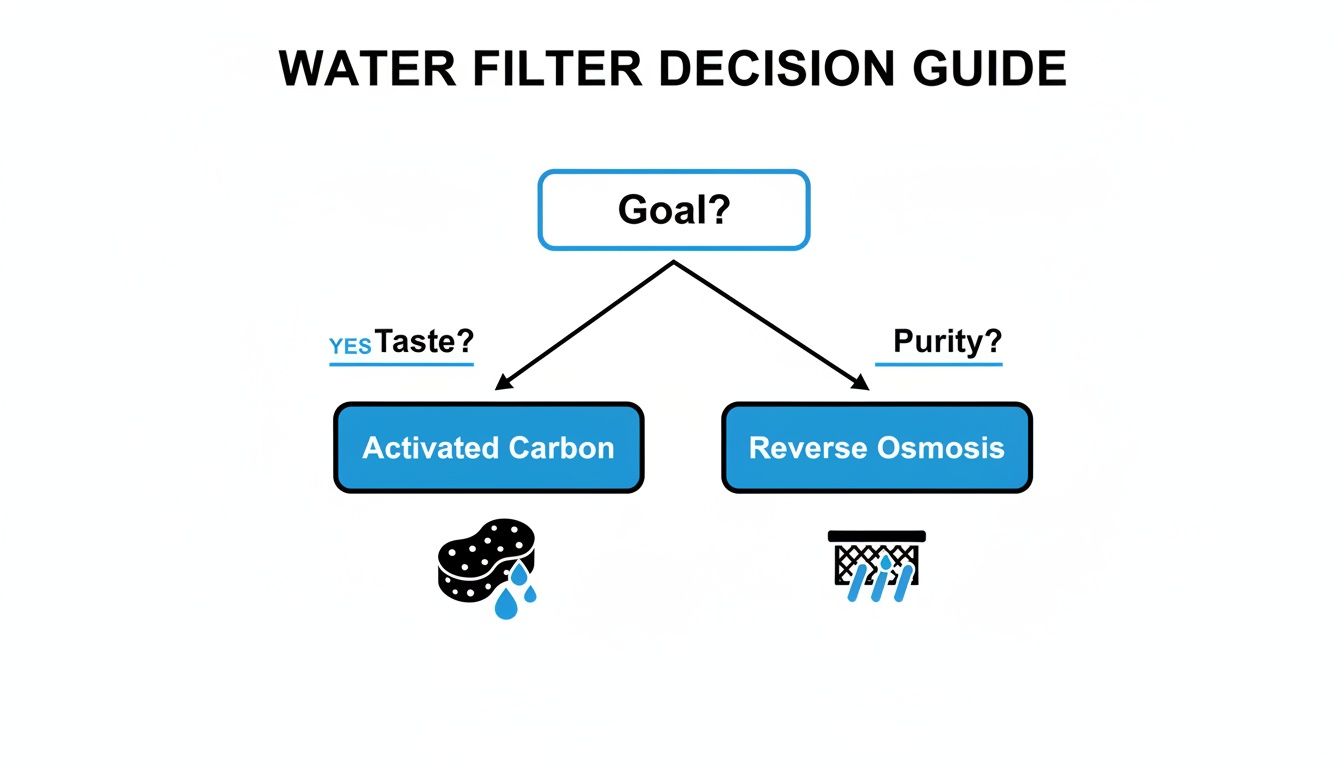
As you can see, if your main goal is simply better-tasting water, an activated carbon filter is a fantastic choice. But if you’re after the highest possible purity, a Reverse Osmosis system is the way to go.
Whole-Home Systems: The Complete Guardian
A whole-home water filtration system, sometimes called a point-of-entry (POE) system, is the ultimate guardian for your home’s water. It’s installed right where the main water line enters your house, treating every single drop of water that flows to every tap, shower, and appliance.
Imagine it as a gatekeeper for your entire property. Instead of just purifying water at one tap, it makes sure the water you shower in, do your laundry with, and wash the dishes with is also free from nasties like chlorine and sediment. It’s a level of protection that an under-sink unit just can't offer.
A huge benefit here is protecting your appliances. By filtering out sediment and reducing the minerals that cause limescale, a whole-home system can seriously extend the life of your dishwasher, washing machine, and especially your hot water system. It’s really an investment in your home’s plumbing infrastructure.
If you're thinking about a whole-home setup, it's worth having a look at our complete whole-house water filter system to get a feel for how this comprehensive protection works.
Under-Sink System vs Whole-Home System
Choosing between these two excellent options really comes down to what you're trying to achieve. Is your priority perfect drinking water at the kitchen sink, or do you want to protect your entire home? This table breaks down the key differences to help you weigh them up.
| Feature | Under-Sink System | Whole-Home System |
|---|---|---|
| Filtration Scope | One specific tap (usually kitchen) | Every tap and appliance in the home |
| Main Purpose | Removes wide range of contaminants for pure drinking/cooking water | Removes chlorine and sediment to protect plumbing and improve general water quality |
| Impact on Showers | None. Only filters water at the kitchen sink. | Softer skin and hair by removing chlorine from shower water |
| Appliance Protection | No protection for dishwasher, laundry, or hot water system | Extends the life of all water-using appliances |
| Installation | Simpler, can be a DIY job for the handy. Fits in a cupboard. | Requires a licensed plumber to cut into the main water line. |
| Initial Cost | More affordable upfront | A larger investment |
| Filter Lifespan | Typically 6-12 months | Typically 1-5 years, depending on the model |
Ultimately, an under-sink system is a specialist, delivering five-star water where it counts most. A whole-home system is a protector, looking after your entire property, your appliances, and your family from the moment water enters your home.
In Melbourne, where tap water can pick up pollutants, both systems are a game-changer. It's also interesting to see that in NSW and Victoria, online sales are the fastest-growing channel at over 12% CAGR, making it easier than ever to get a system delivered anywhere in Australia.
As you dive deeper into the world of filtration, it can be helpful to look at the bigger picture of understanding the best filter technologies for your home, not just for water. The same principles of checking performance and longevity apply to all sorts of home systems.
Installation, Maintenance and Lifetime Costs
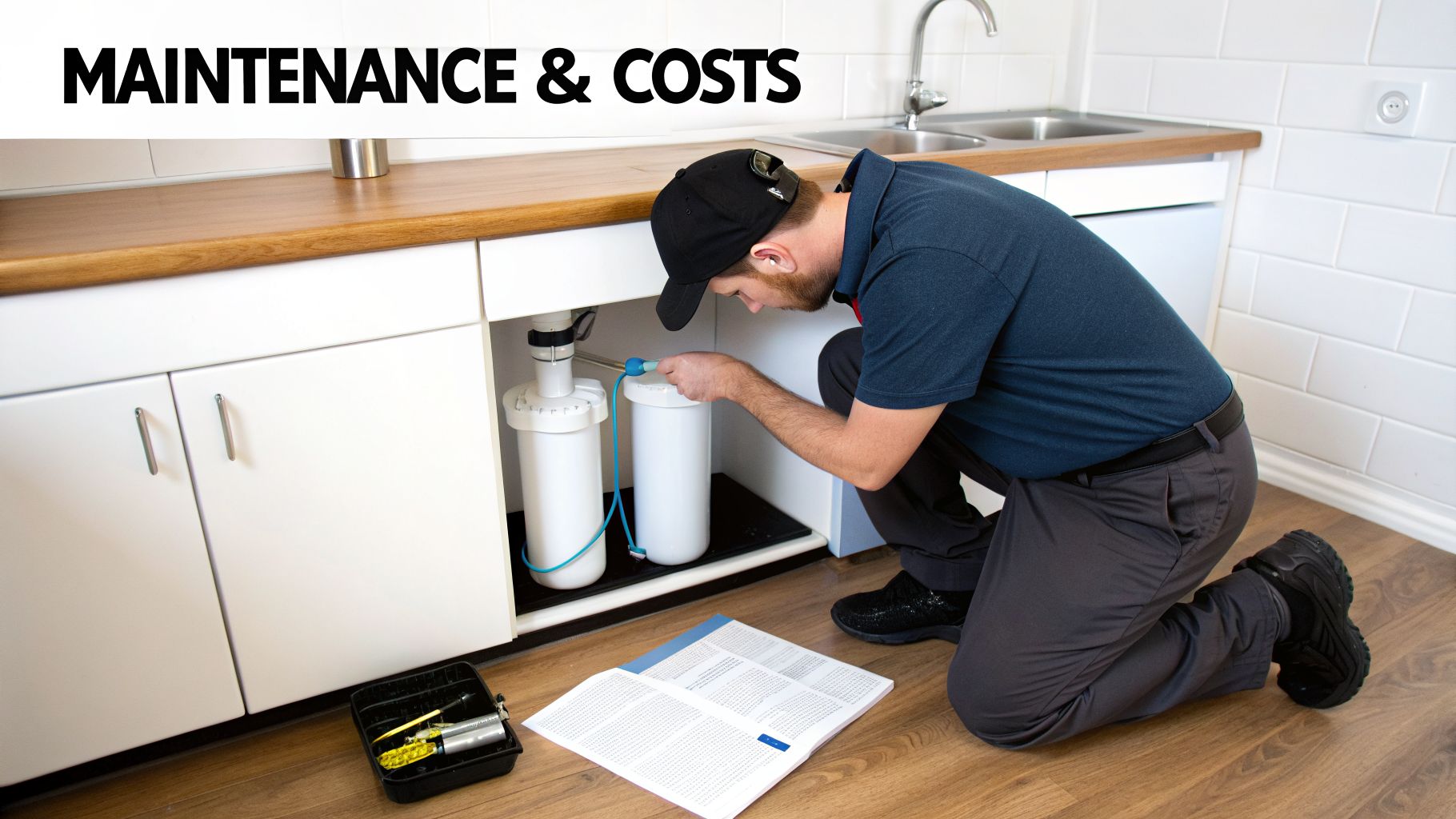
Choosing a great water filter is more than a one-off purchase; it's a long-term investment in your home and your family’s health. To avoid any surprises down the track, it’s crucial to understand the practical side of things—the installation, ongoing maintenance, and the true lifetime cost.
The initial price you see on the box is only the beginning. The real value is found in a system that works brilliantly but is also easy and affordable to run for years to come. Let's break down what you can actually expect.
Professional Installation vs. DIY
While tackling the installation yourself might seem like a good way to save a few dollars, it’s a path I’d only recommend for the simplest benchtop or screw-on tap filters. When it comes to the more serious under-sink and whole-home systems, the risks of a DIY job just aren't worth the savings.
An unseen, slow leak from a connection that isn't quite right can lead to thousands of dollars in water damage to your cabinetry, floors, and walls. For a job this important, you really need to bring in qualified plumbing professionals. A licensed plumber will make sure every connection is watertight, the system is running at the right pressure, and everything is up to Australian standards.
This isn’t just about dodging a potential disaster; it’s about making sure your system works at its best from day one and that your manufacturer’s warranty remains valid.
The Reality of Regular Maintenance
Think of your water filter a bit like the oil filter in your car. It’s built to trap all the gunk, and eventually, it gets full and stops doing its job properly. Putting off a filter change doesn't just mean your water quality drops; it can cause much bigger headaches.
A clogged filter can seriously slow down your water flow and reduce pressure. Even worse, it can become a breeding ground for bacteria as all those trapped contaminants start to break down, potentially making your water quality even worse than before you installed the filter.
Keeping on top of maintenance is pretty simple once you know the schedule. Here’s a general guide:
- Under-Sink Systems: The cartridges in these units typically need replacing every 6 to 12 months, depending on how much water you use and the specific model.
- Whole-Home Systems: These bigger systems have larger, more durable filters that often last anywhere from 1 to 5 years, based on the filter type and your local water conditions.
- Reverse Osmosis Membranes: The RO membrane is the heart of the system. It’s surprisingly tough and usually lasts for 2 to 5 years before it needs to be replaced.
Just pop a recurring reminder in your calendar—it’s the easiest way to make sure you never miss a filter change. Many new systems even have indicator lights or send a notification to an app, taking all the guesswork out of it. If you need a hand, our team offers expert water filter installation and can help you set up a simple maintenance plan.
Understanding the Total Cost of Ownership
To really get an accurate idea of the budget, you have to look beyond the initial purchase price. The total cost of ownership is what gives you the full picture, combining the upfront expense with all the ongoing running costs.
Think of it in three parts:
- Initial Purchase Price: This is the cost of the unit itself.
- Professional Installation: A one-time cost that buys you peace of mind.
- Ongoing Filter Replacements: This will be your main recurring expense. It’s smart to calculate the annual cost of new cartridges to properly compare the long-term value between different models.
When you weigh up all three elements, you might find that a slightly pricier system with longer-lasting filters actually works out to be cheaper over five or ten years. This approach helps you spot the genuine value and choose a system that fits both your home and your budget perfectly.
Choosing a Local Melbourne Filtration Expert
Choosing the right water filter for your home isn’t as simple as grabbing one off the shelf. To get it right, you really need advice that’s shaped around your home and your family. This is where a local expert isn’t just helpful—they’re essential, turning a potentially confusing choice into a clear and confident one.
A Melbourne-based specialist gets the little details about our city’s water. They know the water coming through the pipes in Yarraville can be quite different from what you’d find in Sunshine. They can recommend a system that actually handles local issues like chlorine levels and sediment from our established reservoirs, offering a level of on-the-ground knowledge a generic national chain just can't match.
The Benefits of Local Expertise
Working with a local team like Ring Hot Water gives you practical advantages that extend well beyond the day you buy the filter. It's about having a team around the corner who is genuinely invested in getting the best result for your home.
Here’s what that looks like in practice:
- Personalised Recommendations: A local expert can pop over and properly assess your home’s plumbing, check the water pressure, and chat about your family’s needs. This ensures you get the perfect system without overspending on features you don't need or, worse, under-filtering.
- Seamless Integration: They know how to properly install a filter system to work perfectly with other appliances. Think of combining it with instant boiling and chilled water taps from brands like Zip to create a seriously functional and streamlined kitchen.
- Reliable After-Sales Support: If a problem pops up or you just need a hand with maintenance, help is a quick phone call away. You’re not ringing a faceless call centre on the other side of the country; you’re speaking to a local who knows your setup.
Peace of Mind with Professional Service
Ultimately, the biggest plus of going local is the peace of mind you get. You’re not just buying a piece of equipment; you're investing in a complete service that ensures your system is installed correctly, maintained properly, and works beautifully for years.
Having access to genuine parts and expert service is non-negotiable for a long-term investment like a home water filter. A local specialist ensures that if a replacement filter or a specific part is needed, you get the right component quickly, without the delays and guesswork of sourcing it online from an unknown supplier.
This local support is invaluable. Knowing an experienced technician is nearby to help means your family will always have pure, safe, and great-tasting water on tap. It’s the difference between just owning a product and truly enjoying a reliable, long-term solution for your home.
Common Questions About Home Water Filters
Even after you’ve done all your homework, it’s completely normal to have a few last-minute questions. Getting all the "what ifs" and "how tos" sorted out is the final step before you can choose a system with total confidence.
Let's run through some of the most common queries we hear from homeowners in Melbourne, so you have everything you need to make the right call.
Will a Water Filter Reduce My Water Pressure?
This is a great question, and the short answer is: it depends on the system.
A simple under-sink carbon filter will have almost no effect on your water pressure; you probably won't even notice it's there. More complex systems, like a whole-home unit or a Reverse Osmosis filter, can cause a small drop. This is simply because the water has to work its way through several very fine filter layers.
Any good installer will check your home's water pressure before they even start talking about specific models. If your pressure is a bit on the low side, they can recommend a filter designed for a higher flow rate or even add a small booster pump. The goal is to make sure your shower and taps work just as well as they always have.
How Do I Know When to Change My Filter Cartridges?
Forgetting to change the filters is the single easiest way to undo all the benefits of your system. An old, clogged filter isn't just ineffective; it can become a breeding ground for bacteria.
Most under-sink cartridges have a replacement schedule, typically every 6 to 12 months. The tell-tale signs are a noticeable drop in water flow or the slow return of those tastes and odours you wanted to eliminate in the first place.
Many modern systems take the guesswork out of it. Look for models with a built-in indicator light that changes colour when it's time for a swap, or even smart systems that send a notification straight to your phone.
Is Reverse Osmosis Water Unhealthy Because It Removes Minerals?
We hear this one a lot, and it's a common myth. It's true that Reverse Osmosis (RO) is so thorough that it removes almost everything, including beneficial minerals like calcium and magnesium.
However, the vast majority of our essential minerals come from the food we eat, not the water we drink. The main job of an RO system is to target and remove genuinely harmful contaminants like heavy metals, pesticides, and fluoride. For anyone still concerned about missing out, many modern RO systems now come with a special remineralisation cartridge that adds a healthy balance of minerals back into the water right at the end.
Can I Install an Under-Sink Water Filter Myself?
While some of the basic kits you find at the hardware store are sold as DIY-friendly, we always recommend getting a licensed plumber to handle the installation. This is especially true for any under-sink system and is an absolute must for all whole-home systems.
A tiny, undetected leak from a connection that isn't perfectly fitted can lead to thousands of dollars in water damage to your kitchen cabinets and floors. Hiring a professional ensures it's all done correctly, meets Australian standards, and protects your warranty. It’s a small upfront cost for complete peace of mind.
Ready to enjoy pure, great-tasting water from every tap? The team at Ring Hot Water are Melbourne's specialists in home water filtration. We provide expert advice, professional installation, and ongoing support to ensure you find the perfect solution for your home. Explore our range or get in touch today at https://ringhotwater.com.au.
