Uncategorized
Zip Filter Replacement: A Practical Guide to Keep Your Boiling Water Flowing
Mar
Changing your zip filter replacement on time is one of those small jobs that’s easy to put off, but it’s so much more than just a routine chore. Think of it as essential preventative maintenance for your boiling water tap. Getting this simple task done on schedule is the key to keeping your water pure, your appliance running smoothly, and avoiding some surprisingly costly repairs down the track.
Why Timely Zip Filter Replacement Is Non-Negotiable
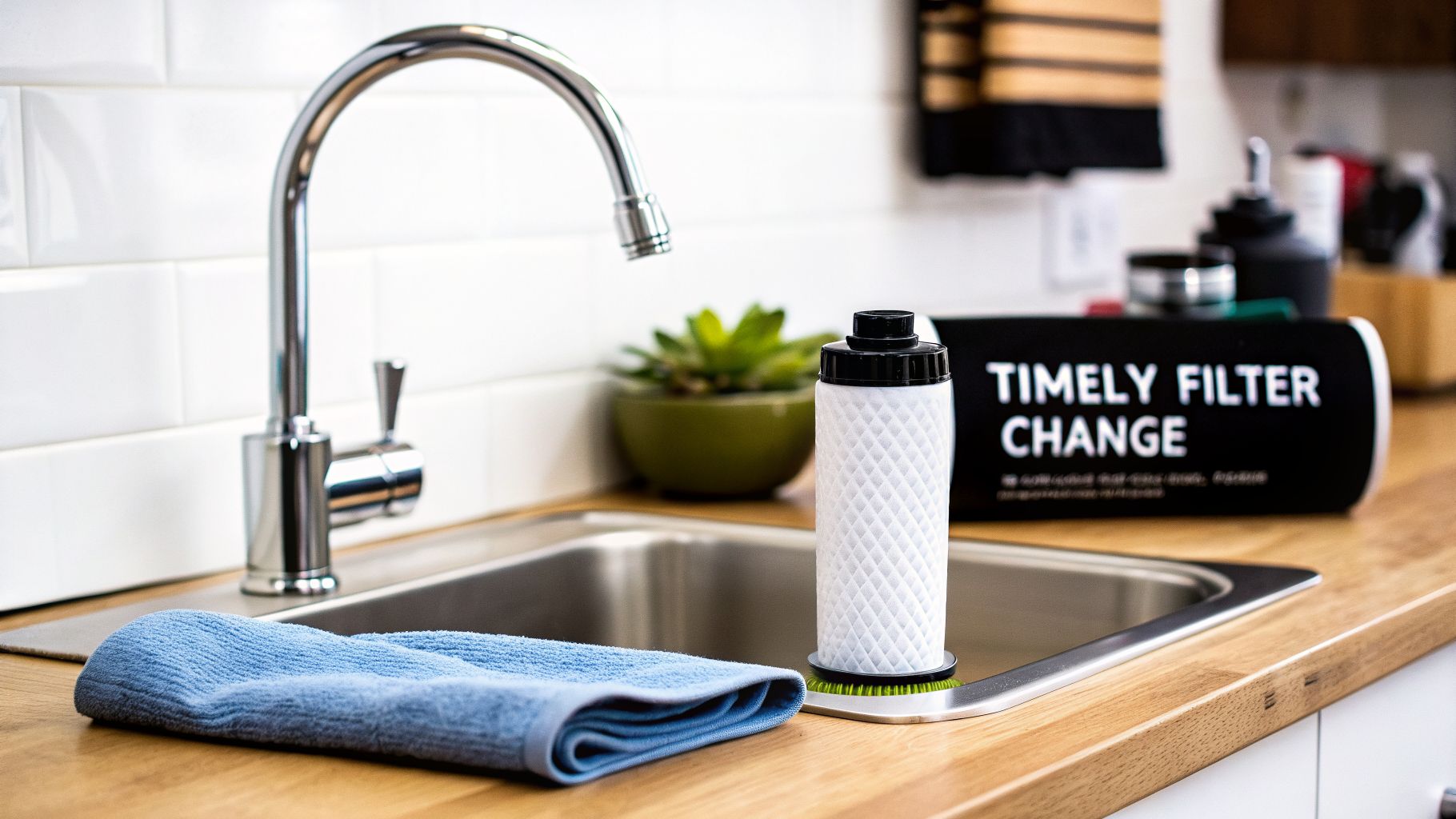
Let's get one thing straight: changing your filter is about more than just ‘clean water’. While that’s a huge plus, the real reason it’s non-negotiable is to protect your investment. A Zip HydroTap isn't just a tap; it's a sophisticated piece of equipment, and that filter is the first line of defence for all its internal parts.
Day in and day out, your filter is trapping all sorts of gunk—sediment, chlorine, rust, you name it. Eventually, all that build-up leads to a clog. A blocked filter forces the entire system to work harder just to push water through. It’s like trying to breathe through a blocked straw. This doesn't just slow things down; it puts serious strain on the unit’s pump and heating elements.
The Impact on Water Flow and Taste
The first and most obvious sign your filter is on its last legs is a drop in water flow. That fast, steady stream you’re used to turns into a slow, frustrating trickle. It’s not just annoying when you’re desperate for a cuppa; it's a massive red flag that your system is struggling.
On top of that, as the filter’s carbon material gets saturated, it stops being effective at removing chlorine and other compounds that mess with the flavour and odour of your water. Suddenly, your premium boiling water starts tasting no better than unfiltered tap water, which defeats the whole purpose of having the system in the first place.
Putting off a zip filter replacement doesn’t just affect water quality—it directly hurts performance and can lead to expensive repairs. It's like an oil change for your car; a small, regular task that saves you from major engine trouble later on.
Protecting Your Appliance from Scale and Damage
Here in Australia, especially in areas with hard water, limescale is a huge problem. Zip filters are specifically designed to reduce scale, which is crucial for protecting the delicate internal workings of your HydroTap from mineral deposits.
When a filter change is overdue, that protection disappears. Scale can then build up in the boiling chamber, on sensors, and inside tiny valves. This gunk acts like an insulator on heating elements, making them burn more energy to get to temperature, and can eventually cause critical parts to fail completely.
The financial hit is real. We’ve seen it time and time again. Service call data from Melbourne suburbs like Yarraville and Footscray shows a clear pattern. Homeowners who let their zip filter replacement slide often see a 20-30% drop in flow rate in as little as eight months.
Even more telling, Ring Hot Water's service teams attended over 500 Zip-related service calls in just one year, and a staggering 40% were directly caused by overdue filters. These were completely preventable problems that ended up costing homeowners upwards of $500 in repairs. To learn more about how water quality plays a role, you can explore insights on the impact of filtration systems on system lifespan.
Identifying the Right Zip Filter for Your System
Choosing the wrong filter is an easy and frustrating mistake to make. We’ve all been there—you end up with a useless cartridge and have to make another trip to the store. A proper zip filter replacement all starts with figuring out the exact part your Zip HydroTap needs. Get this right, and you'll ensure your system performs perfectly from the moment you click the new filter in.
The first thing to do is a bit of detective work in your kitchen cabinet. Your Zip system has a unique model or serial number, usually on a sticker somewhere. Have a look on the side of the under-sink unit or, sometimes, on the inside of the cabinet door. This number is your golden ticket to finding the correct part.
Decoding Your System's Needs
Once you have that model number, you can match it to the right filter cartridge. Zip has a few different types, and each is designed for specific water conditions and how much you use the tap. It's definitely not a one-size-fits-all situation.
- For Scale Reduction: If you live in an area with hard water, a filter that tackles scale is a must. These contain media that actively fights limescale buildup, which is crucial for protecting your system's heating element and all the internal bits and pieces.
- For Sediment and Chlorine: Most standard home filters are focused on getting rid of sediment, chlorine, and nasty tastes or odours. This is perfect for improving the overall quality and flavour of your water if you're on a typical town water supply.
- For Commercial or High-Use: Bigger households or busy offices might find a high-capacity filter is the way to go. They offer the same level of filtration but last longer under heavy use, meaning you won't have to change them as often.
To make it even easier, here's a quick reference table to help you match your system to the right filter.
Matching Your Zip System to the Right Filter
| Zip Filter Part Number | Primary Function | Compatible Zip Systems (Common Examples) | Recommended Replacement Interval |
|---|---|---|---|
| 93701 | Scale Reduction | HydroTap G4 (BC, BCS) in hard water areas | 6 months |
| 93705 | Standard Taste/Odour | HydroTap G4, G5 (all models in soft/medium water) | 12 months |
| 91290 | 0.2 Micron Filtration | HydroTap G4, G5 models needing higher purity | 12 months |
| 91291 | High-Capacity Taste/Odour | Commercial HydroTaps, high-use residential | 6-12 months |
This table covers some of the most common scenarios, but always double-check your model number to be certain.
Don’t just grab the first filter you see. Matching the filter to your water type—whether it’s for heavy sediment or hard water scale—is crucial for both water quality and protecting your appliance. An incorrect choice can lead to poor performance or even system damage.
The Australian water purifier market shows just how much we value clean water. It was valued at USD 193.23 million in 2023 and is tipped to hit USD 260.76 million by 2029. In our experience at Ring Hot Water, proper filter maintenance drives about 30% of our repeat business. For our customers in Victoria, we’ve seen that consistent 12-month cartridge swaps can prevent up to 90% of scale buildup—a massive saving in the long run.
Knowing some of the common part numbers can really speed up your search. For instance, a genuine Zip Water Filter 93705 is a hugely popular choice for many residential systems, offering fantastic all-around performance. Seeing a familiar part number can be a good sign you’re on the right track, but your model number is still the most reliable guide.
Of course, Zip filters are just one piece of the puzzle. If you’re looking at a more comprehensive solution for your home’s water quality, this guide on Reverse Osmosis system installation costs and what’s involved is a great read.
Taking that extra minute to identify the correct part number saves you time, money, and the headache of dealing with a wrong order.
How to Replace Your Under-Sink Zip Filter
Right, let’s get our hands dirty. Swapping out your under-sink Zip filter is one of those jobs you can definitely handle yourself. Forget the jargon-filled manuals; this is more like getting a few tips from a mate who’s done it a hundred times. A successful zip filter replacement honestly takes less than ten minutes, and it saves you the cost and hassle of a service call.
Before you do anything else, grab a couple of old towels. Just pop them in the cabinet right under the filter unit. While the system is designed for a clean swap, it’s always a smart move to be ready for a few drips. A little prep now can save you from mopping up a mess later.
Preparing for the Swap
First things first, you need to turn the water off. Have a look for the small shut-off valve on the cold water line that feeds your Zip system. It’s usually a little lever or a T-shaped handle. Flick it to the off position. If you’re not sure which one it is, our guide on finding and using your water shut-off valve will help you spot it straight away.
With the water off, you need to release the pressure in the lines. You’ll spot a red button on the filter head assembly. Just press and hold it down firmly for about five seconds. You’ll likely hear a quick hiss of air or see a little trickle of water escape—that’s completely normal. It just means the pressure is gone. This bit is crucial, as trying to twist off a pressurised filter is next to impossible.
Removing the Old Filter
Now you’re ready to get the old cartridge out. Get a good grip on the filter body with both hands and give it a solid quarter-turn to the left (counter-clockwise). You should feel it unlatch from the head with a bit of a click.
Once it’s loose, you can pull the filter straight down. Keep in mind it’s still full of water, so hold it upright as you move it onto the towel you laid out earlier. Don’t chuck it in the bin just yet—it’s always good practice to keep it handy to double-check against the new one, just to be sure you’ve got the right model.
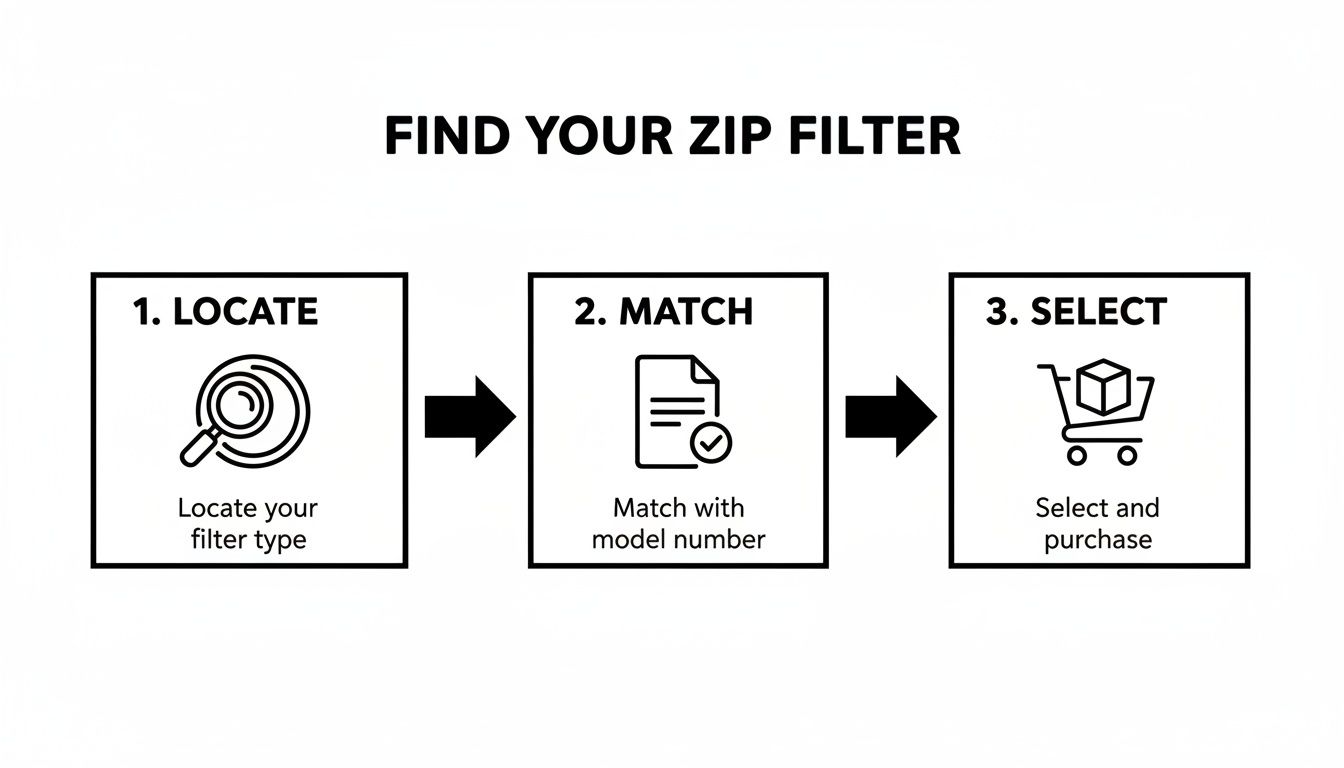
Following this simple process ensures you have the correct cartridge ready to go, which makes the whole job go smoothly.
Installing the New Zip Filter
Time for the new filter. Unwrap it and remove any plastic caps. Here’s a little pro tip I always recommend: grab a permanent marker and write today’s date on the side of the new cartridge. It’s a simple trick that takes all the guesswork out of knowing when it was last changed.
Line up the lugs on top of the new filter with the slots in the filter head. Push the filter up into the head firmly, then twist it a quarter-turn to the right (clockwise) until it clicks securely into place.
That ‘click’ is your best friend here. It tells you the filter is properly locked in. If you don’t hear it, it might not be fully engaged, and that’s a recipe for a leak when you turn the water back on.
With the new filter locked and loaded, you can slowly turn the water supply back on. Have a good look around the filter head for any drips or leaks. It should be bone dry.
The final job is to reset the filter life indicator. You’ll do this through the menu on your under-sink command centre. Just find the filter settings and select the option to reset the timer. This clears the flashing light on your tap and makes sure you get an accurate reminder for the next change.
Using genuine parts really is the key to a hassle-free job. For plumbers, caravan owners, and busy cafes in places like Footscray, sticking with authentic parts from a trusted supplier like Ring Hot Water can slash repair costs by 35%. In fact, data shows that putting off a zip filter replacement can increase the chance of system failure by 40% in high-use environments—a risk that’s just not worth taking.
Troubleshooting Common Replacement Issues
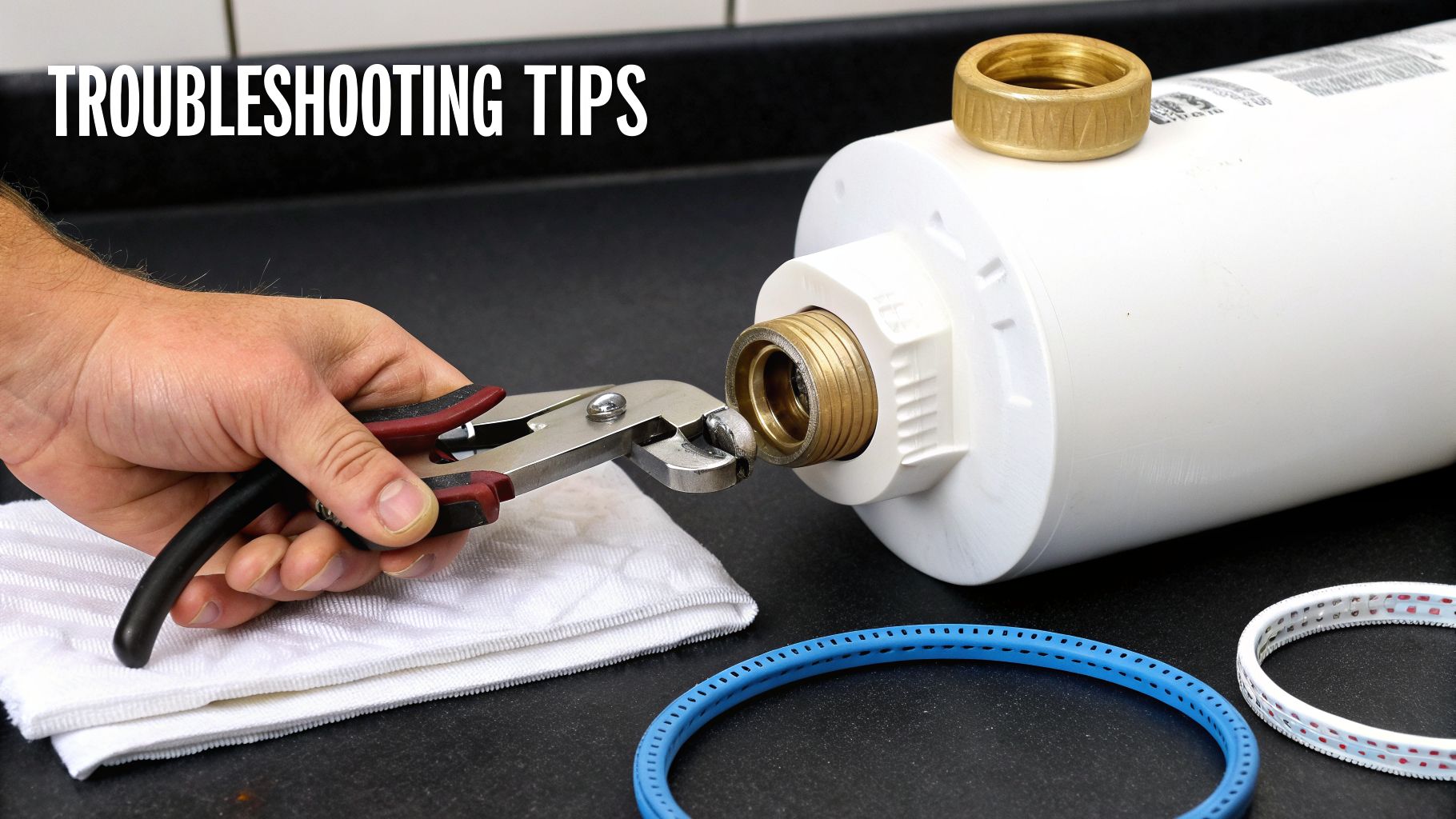
Even with the best intentions, a straightforward zip filter replacement can sometimes hit a snag. So, what happens when things don’t go exactly to plan? After countless customer calls over the years, we’ve pretty much seen it all, and the good news is most hiccups are surprisingly easy to sort out yourself.
Let’s start with the most common frustration we hear about: the filter is stuck solid and just refuses to budge. You’re twisting with all your might, but it feels like it’s been welded into place. In almost every single case, this isn’t about strength—it’s about water pressure.
Even after you’ve shut off the water supply, there’s still pressure trapped inside the system. Before you even think about twisting the filter again, find the red pressure-release button and hold it down for a good five seconds. You should hear a clear hiss of air or see a bit of water escape. This one simple step makes all the difference, allowing the filter to be removed with just a gentle quarter-turn.
Dealing with Drips and Leaks
Another classic worry is finding a small, persistent drip after you’ve installed the new filter. Don’t panic; this almost never means you’ve got a major problem on your hands. The culprit is nearly always the small rubber O-ring at the top of the filter cartridge.
Here’s what you should do:
- Check for Damage: Turn the water off again, release that pressure, and take the new filter out. Give the O-ring a close inspection. Look for any nicks, tears, or spots where it isn’t sitting flush.
- Lubricate Gently: A dry O-ring can sometimes struggle to create a perfect seal. A tiny dab of food-grade silicone grease can help it slide into place and seal properly.
- Reseat the Filter: When you put the filter back in, listen and feel for that definite “click” as it locks home. A filter that hasn’t been twisted all the way is a prime suspect for leaks.
That little O-ring is single-handedly responsible for making a watertight seal. If it’s damaged, pinched, or just not sitting right, a leak is almost inevitable. Always handle your new filters with care to avoid knocking this crucial part before you even install it.
Understanding Flashing Lights
Finally, what’s the deal with those flashing lights on the tap or command centre? You’ve done the zip filter replacement successfully, but the system is still trying to get your attention. This isn’t a fault; it’s simply a reminder waiting for you to action.
After you pop in a new cartridge, you have to manually reset the filter life monitor on the under-sink unit. This is how you tell the system that a new filter is in and to start the countdown for the next replacement. Just navigate to the filter settings menu on the display and find the “Reset Filter Life” option. Once you confirm it, the flashing light will turn off.
If you run into more complex issues that these simple fixes don’t solve, getting a professional in is the smartest move. You can always learn more about what’s involved in a professional Zip HydroBoil service if you hit a problem that’s beyond a standard replacement. By knowing what to look for, you can sort out these minor issues without any stress and get right back to enjoying that perfectly filtered water.
Protecting Your Investment with Genuine Parts
Now that your new filter is securely in place, it’s worth thinking about the long-term health of your Zip system. The standard advice for a zip filter replacement is every 6 to 12 months, but that’s more of a guideline than a strict rule. How you use your tap really dictates the true replacement schedule.
Think about it: a busy office kitchen serving dozens of staff will wear out a filter much faster than a small family home. If you live in an area with hard water or a lot of sediment, you’ll probably notice the flow rate slowing down much sooner. Keeping an eye on these signs is the best way to stay ahead of any issues.
Why Genuine Zip Filters Are a Must
It can be tempting to save a few dollars with a third-party “compatible” filter, but this is one corner you don’t want to cut. We’ve seen firsthand how non-genuine filters can cause a headache of problems. They often don’t meet the precise manufacturing standards of Zip cartridges, which leads to a poor seal.
That imperfect fit is a common cause of slow leaks, the kind that can silently damage your kitchen cabinetry over time. Even worse, these knock-off filters frequently provide subpar filtration, failing to remove the very contaminants they claim to. Using one will almost certainly void your manufacturer’s warranty, leaving you exposed if a bigger problem comes up.
Sourcing an authentic part from an authorised dealer is the single best thing you can do to protect your appliance. It guarantees a perfect fit, ensures optimal performance, and maintains your warranty, giving you complete peace of mind with every glass of water.
The demand for high-quality water is bigger than ever. Australia’s water purifier market, valued at USD 557.03 million in 2023, is projected to hit USD 1435.71 million by 2031. While a genuine Zip filter is designed to remove up to 99% of common contaminants, letting it go past the six-month mark can cause its efficiency to drop by as much as 50%. Recognising this, Ring Hot Water sent out over 1,200 authentic Zip filter kits across Australia last year alone to help customers keep their water pure.
Of course, looking after your Zip system is just one piece of the puzzle. It’s always a good idea to stay on top of maintenance for your various home appliances to keep everything running as it should. When it comes to your zip filter replacement, sticking with genuine parts is a small decision that pays off big time in reliability and water quality.
Your Zip Filter Questions Answered
Even after you’ve got the process down pat, a few common questions tend to pop up. Let’s tackle some of the ones we hear all the time to clear up any final uncertainties and make sure you feel completely confident managing your Zip system.
Do I Really Need to Turn Off the Water to Change My Zip Filter?
Yes, you absolutely do. While it’s true some Zip units have handy auto-shutoff valves, we always recommend turning off the main water supply to the system as a non-negotiable safety step.
It’s a simple flick of a switch that prevents any unexpected sprays or drips while you’re working. More importantly, it protects against the risk of a leak during the swap and makes it far easier to release the system’s built-up pressure. A few seconds of prevention can save you from a huge, watery mess.
My Zip Tap Is Flashing After I Changed the Filter. What Does It Mean?
That flashing light is your system’s way of asking you to confirm the filter change. You’ve done the physical work, but now you need to let the unit’s brain know a new filter is in place.
You’ll usually do this through the menu screen on the under-sink unit. Just navigate to the ‘Filter’ or ‘Settings’ menu and look for an option like ‘Reset Filter Life’. Once you confirm the reset, the light on your tap should go back to normal.
Think of the flashing light as a digital handshake. The system knows a zip filter replacement has occurred, but it needs you to confirm it in the menu before it can stop the alert and start the countdown on the new filter.
Can I Use a Cheaper Compatible Filter Instead of a Genuine Zip One?
We strongly advise against it. It can be tempting to try and save a few dollars with a non-genuine filter, but in our experience, it’s a shortcut that often leads to bigger problems. We’ve seen them cause leaks, offer poor filtration, and in the worst cases, even damage the unit’s internal parts.
Using a non-genuine filter will also almost certainly void your manufacturer’s warranty. It’s just not worth the risk. Always stick with genuine Zip filters to protect your investment and guarantee you’re getting the pure-tasting water you paid for.
How Do I Know if My Filter Needs Changing Early?
Your tap will usually give you a few clues that the filter is getting close to the end of its life, even before the scheduled time.
- A Slower Flow Rate: This is the number one sign. If your water starts pouring more slowly than you’re used to, it’s a good indication the filter is becoming clogged with contaminants.
- Changes in Taste or Smell: When a filter is past its best, it loses its ability to effectively remove chlorine and other impurities. You might start to notice a change in the water’s flavour or a faint odour.
- A Flashing Light Alert: Many modern HydroTaps take the guesswork out of it completely. A light on the tap itself will start flashing to give you a heads-up that a replacement is due soon.
Ready to get the right part for your system? The team at Ring Hot Water stocks a full range of genuine Zip filters and can help you find the perfect match for your needs. Shop our genuine Zip filters online for fast, Australia-wide delivery.
