
Boiling Hot Water
Your Guide to the Instant Hot Water Tap in Melbourne
Mar
Once considered a pure luxury, the instant hot water tap is quickly becoming a must-have in modern kitchens. It’s a simple idea that completely changes your daily routine: a single tap that delivers filtered, near-boiling water in seconds, making the humble kettle look a bit, well, old-fashioned.
It’s about more than just a quick cuppa; it’s about reclaiming your time and clearing your benchtop for good.
The Modern Kitchen Upgrade You Didn’t Know You Needed
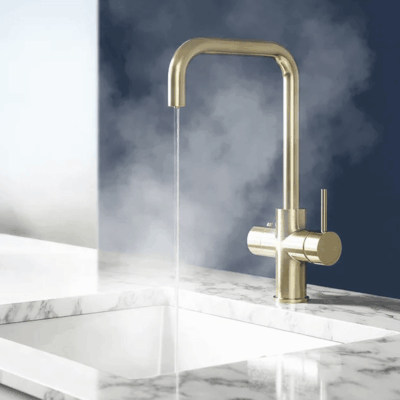
Think about your morning rush. How much time is spent just waiting for the kettle? Now, imagine that wait is gone. Picture filling a pot for pasta or blanching veggies in an instant. This is the new reality for kitchens with a boiling water tap. It’s less of an appliance and more of a genuine upgrade to your lifestyle.
This isn’t just a niche trend, either. The move towards smarter, more efficient kitchen solutions is booming across Australia. In 2024, the market for water heaters, which includes these advanced taps, hit a massive USD 797.6 million in revenue. Experts project it will climb to USD 1,219.0 million by 2033, with a strong annual growth rate of 4.9%. This surge is all about households wanting better performance and energy efficiency—something you can read more about in the full Australian water heater market analysis on GrandViewResearch.com.
So, let’s take a quick look at how a boiling tap stacks up against the classic kettle we all know.
Instant Hot Water Tap vs Traditional Kettle at a Glance
This table breaks down the key differences, showing why so many are making the switch.
| Feature | Instant Hot Water Tap | Traditional Kettle |
|---|---|---|
| Speed | Instant—delivers near-boiling water on demand. | Takes 2-4 minutes to boil. |
| Energy Use | Highly insulated tank uses very little energy to maintain temperature (around 10c/day). | Can be inefficient, especially if you re-boil or boil more water than you need. |
| Convenience | Always ready. Perfect for cooking, drinks, and cleaning. | Needs to be filled, switched on, and waited for. Can be heavy to lift and pour. |
| Counter Space | Frees up the entire space once occupied by a kettle. | Takes up valuable bench space and adds to cord clutter. |
While the kettle has served us well for decades, it’s clear that boiling water taps offer a level of convenience and efficiency that’s hard to ignore.
What Really Makes Them a Game-Changer?
Beyond just getting your tea faster, what are the core benefits that make these taps so popular in busy Melbourne homes and offices?
- Effortless Convenience: You get filtered 98°C water the moment you want it. No more waiting around, no re-boiling half-full kettles, and no more lifting a heavy jug of scalding water.
- Smarter Energy Use: A quality under-sink unit is incredibly well-insulated, using just enough energy to keep the water at temperature. For many households, this is far more efficient than boiling a kettle multiple times a day.
- Better-Tasting Water: Most systems come with built-in filters that tackle chlorine, sediment, and other nasties. The result is noticeably purer, better-tasting water for your coffee, tea, and cooking.
- A Clearer, Cleaner Kitchen: Getting rid of the kettle is one of the easiest ways to declutter your benchtop. It instantly creates a cleaner, more minimalist look and frees up valuable prep space.
An instant hot water tap isn't just about showing off. It’s a genuinely practical tool that gives you back time, saves energy, and improves the quality of every drink and meal you make.
This guide will walk you through everything you need to know about these clever systems. We'll break down how they work, look at the different types available, and give you honest advice on choosing, installing, and maintaining the right tap for your space. Whether you're planning a new kitchen in Yarraville or upgrading an office breakroom in Footscray, you'll soon see why a boiling water tap is such a smart move.
So, How Do They Actually Work?
It’s easy to think there’s some kind of space-age magic happening inside an instant hot water tap, but the reality is much simpler—and a lot more clever. Many people assume the tap heats cold water from the mains in a split second. The real work actually happens out of sight, in a compact little unit tucked away under your kitchen sink.
Think of it as a small, super-efficient thermos that’s always ready to go. This insulated tank holds between 2 to 5 litres of water and keeps it at a near-boiling temperature, usually around 98°C. We don't go to a full 100°C boil because that can cause the water to spit and create excessive steam, so 98°C is the sweet spot for safety and performance.
This is the secret to the ‘instant’ part. When you turn the handle, the tap immediately serves up this pre-heated water. At the same time, it draws a little cold water back into the tank to be heated, ensuring the tank is always topped up and ready for the next time you need it.
The Key Parts Working Together
The system’s efficiency comes down to a few core components working in perfect harmony. It's not just the tap you see, but a trio of parts designed to deliver hot water on demand without you having to wait.
-
The Under-Sink Tank: This is the heart of the whole operation. It’s a pressurised and heavily insulated metal tank that stores the hot water. The quality of the insulation is absolutely critical—it’s what minimises heat loss and keeps the running costs down. In fact, many high-end models use about the same amount of power on standby as a low-wattage light bulb.
-
The Heating Element: Tucked inside the tank is a powerful electric heating element, controlled by a thermostat that’s always monitoring the water temperature. If the temperature drops, even slightly, the element kicks in just long enough to bring the water back up to the target 98°C.
-
The Dispenser Tap: This is the stylish part you see on your benchtop, but it’s more than just a pretty spout. These taps are specially designed with separate internal channels, keeping the boiling water completely isolated from your regular hot and cold water to prevent any risk of scalding. They also house all the crucial safety features that are essential for any instant hot water tap.
The whole thing is a continuous cycle of dispensing and reheating. Because it only heats a small amount of water in a really well-insulated tank, you get incredible convenience without the huge energy bill you might expect.
Why It’s More Efficient Than Your Kettle
This system completely changes how you use energy in the kitchen. Every time you boil a kettle, it needs a big surge of power to heat the water from cold. We’ve all been there—boiling a full kettle for just one cup or re-boiling it five minutes later because we got distracted.
An instant hot water system, on the other hand, uses small, steady sips of energy to keep its insulated tank topped up. Across a full day in a busy home or office, the total energy consumed is often less than boiling a kettle over and over, making it a surprisingly sensible choice for any modern kitchen.
Comparing the Different Types of Boiling Water Systems
Not all instant hot water systems are the same. Picking the right one isn’t about finding the single "best" unit, but about finding the perfect fit for your space, your budget, and how you'll actually use it. It's a bit like choosing a car; a sports car is fun, but a ute is what you need for a trip to the hardware store.
Each type of boiling water system has been designed with a specific job in mind. From sleek, integrated taps that disappear into a modern kitchen to tough, high-capacity units for a busy staff room, understanding the key differences is the first step. Let's break down the main players.
At its core, the process is beautifully simple. Once you activate the tap, it dispenses hot water, and the tank automatically gets the signal to refill and reheat. You never have to think about it.
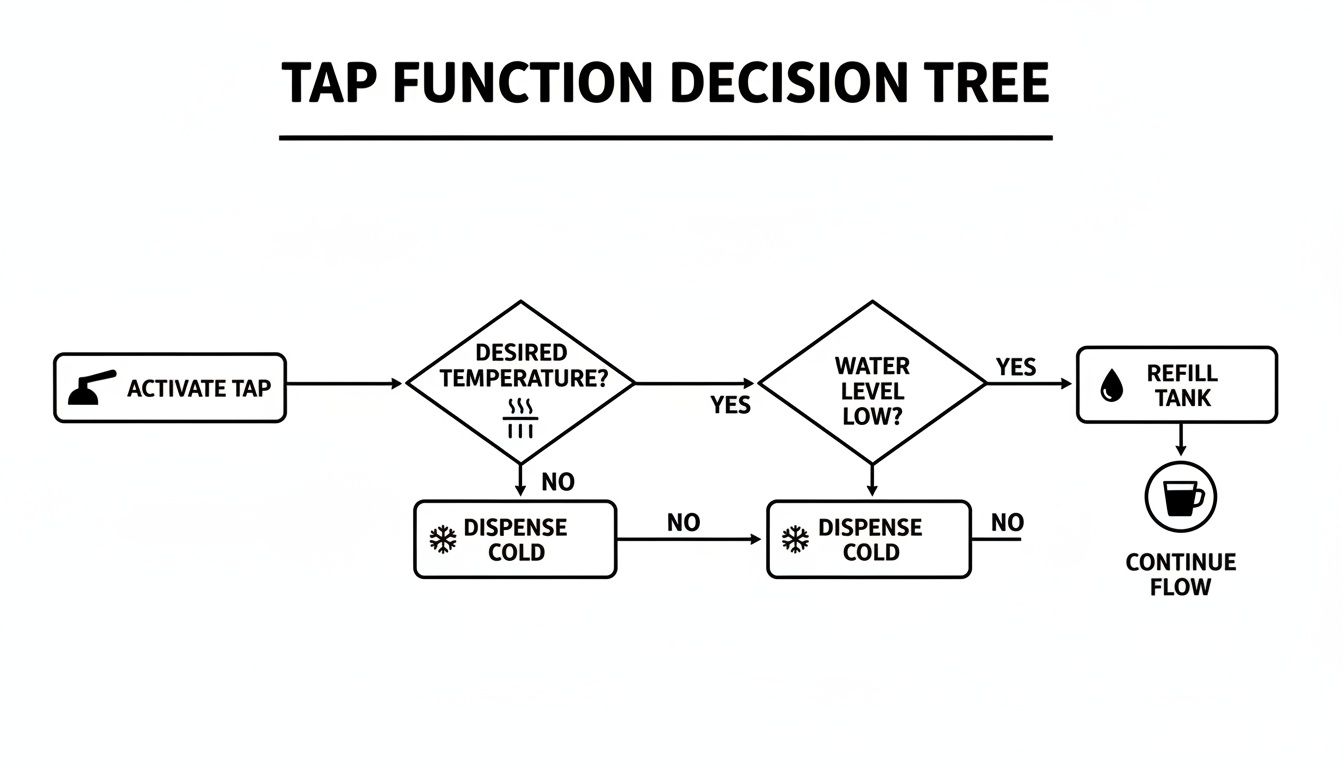
This seamless cycle is what makes these systems so convenient, ensuring you’ve always got near-boiling water ready to go without ever touching a kettle.
Under-Sink Boiling Taps
When someone says “instant hot water tap,” this is usually the system they’re picturing. Brands like Zip and Insinkerator have really nailed this design. It’s a stylish dispenser tap on your benchtop, connected to a small, insulated tank tucked away in the cupboard underneath.
These have become the go-to for home kitchens, and for good reason. They give you a clean, minimalist look by getting the kettle off the bench, which frees up a surprising amount of space. Their biggest drawcard is that they blend in perfectly, feeling like a natural part of any modern kitchen.
- Who It's For: Homeowners, anyone renovating their kitchen, and people who value a clean, design-led aesthetic.
- Where It Works Best: Residential kitchens, small office kitchenettes, and high-end apartment builds.
- Key Advantage: A sleek, decluttered look with the pure convenience of instant boiling water.
We see these all the time in Melbourne homes, where that mix of good looks and practicality is a top priority. To get into the nitty-gritty, have a look at our guide on under sink hot water systems.
All-in-One Systems
Taking the under-sink idea a step further, all-in-one systems (often called 3-in-1 or 5-in-1 taps) pack an incredible amount of function into a single fixture. These taps don't just give you boiling water; they can dispense standard hot and cold, filtered chilled, and even sparkling water.
Think of it as the Swiss Army knife of kitchen taps. It’s an investment, for sure, but it’s one that promises ultimate convenience. You can get rid of your kettle, your water filter jug, and your SodaStream all in one hit. For a high-end kitchen or an office that wants to offer the best perks, these systems are a real statement piece.
These multi-function taps are the peak of kitchen convenience. They're built for spaces where versatility is everything, delivering a morning coffee, a glass of chilled water, or an afternoon spritz all from a single, elegant source.
Wall-Mounted Boiling Units
If an under-sink tap is a sleek sedan, then a wall-mounted boiler is a rugged, dependable ute. These units, from trusted names like Birko and Boiling Billy, are the absolute workhorses of the commercial world. They consist of a large, visible unit mounted right on the wall, capable of holding and dispensing a serious amount of boiling water.
You’ve probably seen them in office break rooms, community halls, and factory canteens. Their main game is capacity and durability. Built for high-traffic areas, they can handle dozens of people making a cuppa one after the other without breaking a sweat. They might not have the subtle style of an under-sink tap, but for raw performance in a busy setting, they’re unbeatable.
- Who It's For: Office managers, facilities coordinators, and any business with a high demand for hot water.
- Where It Works Best: Staff rooms, workshops, hospitals, schools, and function centres.
- Key Advantage: Huge capacity and rock-solid construction built to withstand constant, heavy use.
Compact 12V Caravan and RV Units
Taking the comforts of home onto the open road calls for a completely different kind of system. A standard 240V unit is no use when you’re off-grid, which is where compact 12V units come into play. These are cleverly designed to run directly off a vehicle's 12-volt battery system.
These small but mighty heaters give you instant hot water for washing up or making a quick brew—a small luxury that makes a massive difference when you're camping. They're engineered to be lightweight, handle vibrations from the road, and sip power efficiently. For any serious caravan or RV owner, it's an essential upgrade for life on the move.
Safety, Filtration, and Efficiency: What to Look for in Your Tap
So, you've decided an instant hot water tap is for you. Now comes the important part: sorting through the options to find a tap that’s genuinely a great fit for your kitchen. It's easy to focus on looks, but what truly separates a quality system from a dud comes down to three things: safety, water quality, and how much it costs to run.
Getting these three elements right means you're not just buying a convenient gadget, but a safe, healthy, and cost-effective addition to your home or office. Let's break down what really matters.
Safety First, Always
Let’s be honest, the idea of near-boiling water on tap can be a worry, especially if you have kids running around. Any good manufacturer knows this, which is why modern boiling water taps are designed with safety as the top priority. A simple lever just doesn't cut it.
You should be looking for a tap with a proper child-safe lock or a push-and-turn handle. This makes it impossible for the boiling function to be turned on by accident. Other non-negotiables are an insulated spout that stays cool to the touch and a design that delivers water in a smooth, splash-free flow. No dangerous spitting or spluttering.
The Secret to a Better Cuppa: Water Filtration
An instant hot water tap does more than just give you hot water; it should give you better water. The taste of your morning coffee or tea comes down to the quality of the water, which is why a built-in filter is a standard feature on any tap worth its salt.
These clever systems are designed to tackle the common impurities in our mains water, making every drink taste cleaner and fresher.
- Chlorine and Odour Removal: Filters get rid of that faint chemical taste and smell from chlorine used in water treatment.
- Sediment and Particulate Reduction: They catch the tiny bits of rust and grit that can sometimes travel through the water pipes.
- Scale and Limescale Prevention: Especially important in hard water areas, filters reduce mineral buildup. This not only makes your drinks taste better but also protects the tap's internal parts from getting clogged up over time.
Great-tasting water is a non-negotiable feature for any premium boiling water tap. An effective filtration system not only enhances the flavour of your drinks but also protects your investment by keeping the system clean. Our detailed review of boiling water taps for kitchens explores how filtration impacts performance.
Before we get to energy efficiency, here's a quick checklist to help you compare your options.
Essential Feature Checklist for Your New Tap
This table summarises the must-have features to look for when choosing an instant hot water tap, ensuring you get a model that's safe, reliable, and gives you fantastic-tasting water.
| Feature Category | What to Look For | Why It Matters |
|---|---|---|
| Safety | Child-safe lock (e.g., push-and-turn), insulated spout, splash-free flow. | Prevents accidental burns and ensures safe operation, especially in homes with children. |
| Filtration | Multi-stage filter for chlorine, sediment, and scale reduction. | Improves the taste and smell of your water and protects the unit from internal damage. |
| Energy | High-quality tank insulation and low standby power consumption. | Keeps running costs down and is more energy-efficient than constantly re-boiling a kettle. |
Considering these key features will help you make a smart investment that you’ll appreciate every single day.
Will It Send My Power Bill Through the Roof?
It’s a fair question. Does having hot water constantly on standby use a lot of power? The short answer is no, not if you choose a quality unit. Modern systems are incredibly well-engineered, and the secret is in the insulation of the under-sink tank.
Think of it like a high-tech thermos. The excellent insulation stops heat from escaping, so the heater only needs to kick in for very short periods to keep the water at the perfect temperature. The standby power draw on a good model is tiny—often costing just a few cents an hour to run. In many homes, this is far more efficient than boiling a kettle over and over, especially since we all tend to boil more water than we actually need.
This focus on smarter, more efficient appliances is a big deal. The Australian faucet market reached USD 620.6 million in 2024 and is expected to hit USD 1,096.6 million by 2033. That growth is driven by people wanting fixtures that are not only convenient but also water and energy-efficient. You can read more in the Australia faucet market report from imarcgroup.com. When you’re shopping around, be sure to ask about standby energy use—it’s the key to getting all the convenience without the bill shock.
Professional Installation and Simple Maintenance
Getting an instant hot water tap is a game-changer for any kitchen. But to make sure you get that perfect cuppa from day one and for years to come, it’s worth knowing a little about the setup and upkeep. A bit of planning goes a long way to ensure everything runs smoothly.
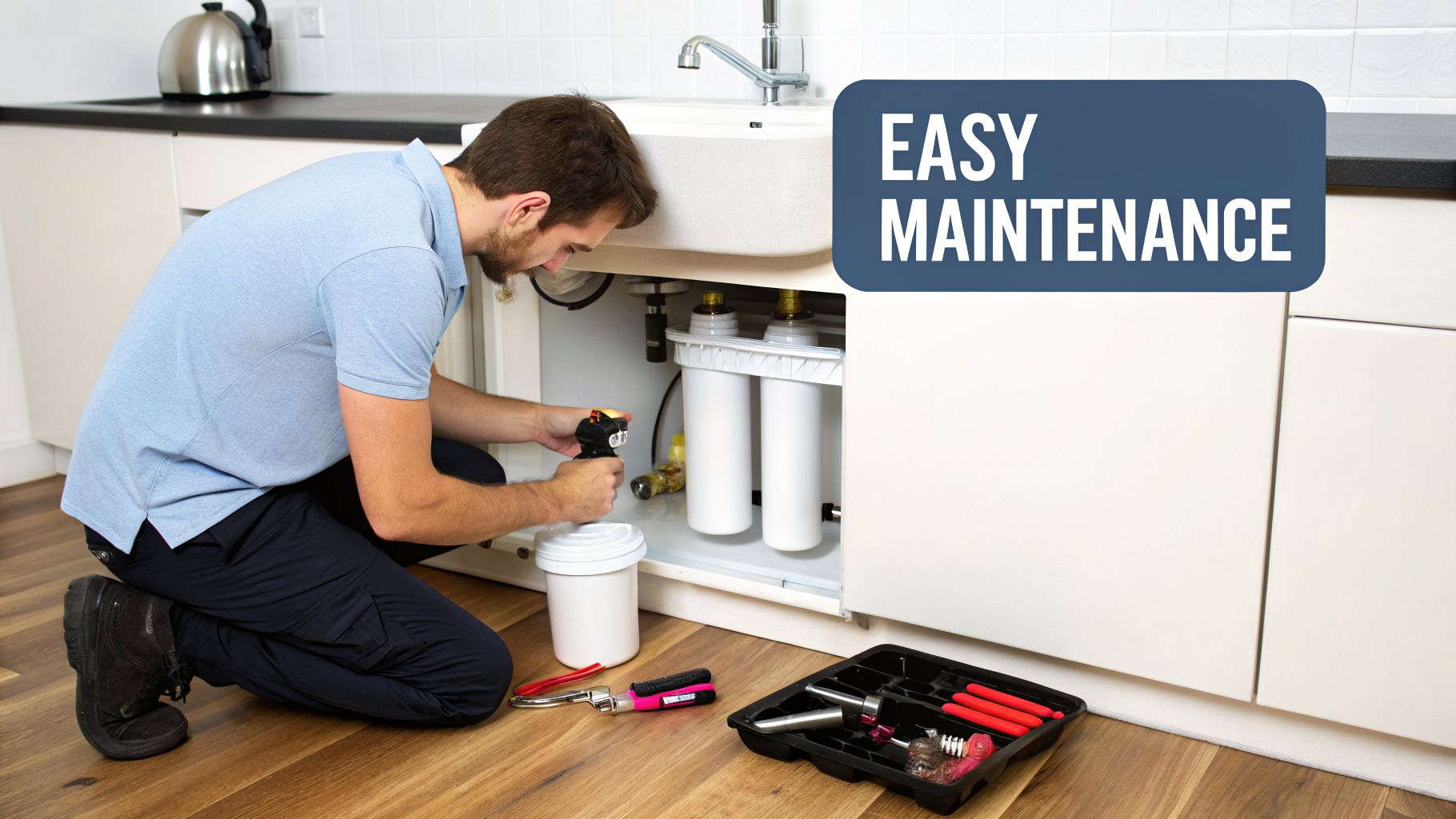
While a bit of DIY can be tempting, these systems are a mix of both plumbing and electrical work. We always recommend getting a professional in. Not only does it guarantee everything is hooked up safely to prevent leaks, but it also keeps your manufacturer’s warranty intact. For a deeper dive into the plumbing side of things, this ultimate guide to plumbing offers some great insights.
Key Installation Requirements
Before the plumber even knocks on your door, you can check a few things to make the job quicker and easier. Getting your kitchen ready avoids any last-minute surprises. For a standard under-sink unit, you’ll just need three things:
- Enough Room Under the Sink: The small heating tank needs a place to live. You’ll need a clear space in your cupboard roughly the size of a shoebox to house the unit comfortably.
- A Nearby Power Point: That tank needs power, so a standard electrical outlet under the sink is a must. Your installer will make sure it’s safely positioned away from any water.
- Access to a Cold Water Line: The system taps into your cold water supply to heat it on demand. Your plumber will need to get to this line to fit a simple T-piece.
Having these basics covered means your installation will be a breeze.
Simple Maintenance for Longevity
Once your tap is in, keeping it running perfectly is surprisingly simple. There are really only two main things to stay on top of, and they both make a huge difference to your water quality and the system’s lifespan.
The most important job is changing the filter. Over time, that filter catching all the nasties will get clogged up. A regular change is key to keeping your water tasting great.
- Change the Filter: Most filters for an instant hot water tap just need to be replaced every 6 to 12 months. It’s a quick swap that keeps your water pure and stops mineral build-up inside the tank. Our guide on water filter installation walks you through the process.
- An Occasional Descale: If you’re in a hard water area, limescale can build up in the tank over time. Descaling it every year or two will keep the heating element efficient and prevent any blockages.
When to Call an Expert
While the day-to-day care is easy, some things are best left to the pros. If you spot any of these signs, it’s probably time to give a technician a call:
- The water just isn’t getting hot enough.
- Your tap is dripping constantly and won’t stop.
- You’re seeing an error code on a digital display.
- There are any signs of a leak from the tank or the connections underneath.
By taking care of the simple stuff and calling in an expert when needed, you’ll make sure your instant hot water tap remains one of the best and most-used appliances in your kitchen for years.
Right, you’ve done the homework. You know what these taps are, how they work, and the different kinds you can get. So, what now? It’s time to pull all that information together and figure out which system is the perfect fit for your kitchen.
Choosing the right instant hot water tap is a big decision, but it’s also an exciting one. It’s about more than just a new gadget; it’s about making a smart, practical upgrade to your home or business that you’ll appreciate every single day.
From Theory to Your Kitchen: Finding the Perfect Match
It’s one thing to read about the benefits, but it’s another to see them in action. Ditching the kettle really does free up your benchtop and makes the whole kitchen feel more streamlined. And yes, you’ll notice the time you get back and the difference in your energy bills.
But selecting the right instant hot water tap means matching the tech to your reality. The needs of a busy family kitchen are worlds away from a high-traffic office breakroom or a compact caravan getting ready for a holiday. This is exactly where getting some expert advice makes all the difference.
A true specialist won’t just point you to the most expensive model. They’ll take the time to chat about how you live and work, guiding you to the right solution from trusted brands like Zip, Stiebel Eltron, or Boiling Billy. It’s about getting personalised advice that covers everything from your daily water use to the actual space you have under the sink.
Honestly, the surest way to get this right is to work with a dedicated expert. You get advice that’s actually for you, a flawless installation, and support you can count on for years to come. It turns a purchase into a proper investment.
The Value of Local Melbourne Expertise
For anyone in Melbourne, leaning on a local team gives you that extra peace of mind. A specialist who knows Melbourne homes and offices understands the local water conditions and building quirks. They can offer a smooth run from the first chat right through to installation and ongoing maintenance.
When you partner with an expert, you get:
- Real Advice: Recommendations based on how you’ll actually use the tap, not just what’s popular.
- Proper Installation: A safe, clean, and warranty-compliant job is a given. No shortcuts.
- Long-Term Support: Genuine spare parts, filter changes, and expert servicing are just a phone call away.
Deciding to install an instant hot water tap is a brilliant move toward a more efficient, enjoyable kitchen. By working with a trusted local expert, you can feel confident you’re making the best choice for your property, backed by professional know-how and reliable service. You’re not just buying another appliance; you’re investing in a better daily routine.
Got Questions About Instant Hot Water Taps? We’ve Got Answers
It’s completely normal to have a few questions before you decide to make the switch. Even after seeing all the benefits, you want to be sure it’s the right move for your kitchen. Here are some of the most common queries we get from homeowners and businesses right across Melbourne, answered in plain English.
Aren’t They Expensive to Run?
This is probably the number one question we hear, but you might be surprised by the answer. A modern, well-insulated boiling water tap is incredibly efficient. The energy it uses on standby is often compared to running a low-wattage lightbulb—we’re talking just a few cents an hour for a typical home.
Think about how many times you re-boil the kettle each day, often with way more water than you need. When you factor that wasted energy in, you’ll likely find the running costs are about the same, or even less. For a busy office where the kettle is constantly on the go, an instant hot water tap is a clear money-saver.
The Bottom Line: A quality boiling water tap uses very little energy to stay ready. It easily pays for itself by getting rid of the wasteful habit of boiling a full kettle over and over, making it a smart choice for any home or workplace.
Is the Water Really Boiling?
Your tap will dispense water at around 98°C, just shy of a full boil. This temperature is a deliberate choice, balancing performance with safety. It’s more than hot enough to brew the perfect cup of tea or coffee and handle all your instant cooking needs.
So why not 100°C? Water at a true boiling point can spit and spurt from the tap, creating a lot of steam and a serious scalding risk. The 98°C mark gives you a smooth, predictable flow of piping hot water without that danger. If you’re interested in keeping up with the latest in water technology and industry trends, the WaterTechIntel blog is a great resource.
How Often Will I Need to Change the Filter?
Changing the filter is key to keeping your water tasting pure and your system running smoothly. As a general guide, you should plan to replace the filter every 6 to 12 months. The exact timing really depends on your local water quality and how much you use the tap.
Don’t worry about forgetting—most modern taps have a handy indicator light that will flash to let you know it’s time for a new one. Sticking to the schedule is important. It not only guarantees great-tasting water but also stops scale from building up and damaging the inside of your instant hot water tap, helping it last for years.
Can I Just Install It Myself?
While it might look like a straightforward weekend project, we always recommend getting a professional to install your tap. An instant hot water system connects to both your water pipes and your electrical wiring, and getting it wrong can lead to leaks or electrical faults.
Besides the safety aspect, most manufacturers insist on professional installation for the warranty to be valid. Paying for an expert installer protects your new tap, your home, and your warranty, so you can relax and enjoy it without a worry.
Ready to bring the convenience of instant boiling water into your Melbourne home or office? Ring Hot Water offers a fantastic range of taps from leading brands, along with expert installation and maintenance. Check out our solutions online and give your kitchen the upgrade it deserves Explore our range and get expert advice today.
