
Commercial Water Chillers
Your Ultimate Guide to Water Dispensers for Office Use
Mar
Thinking about new water dispensers for office spaces isn't just about providing a basic amenity. It’s a smart investment in your team's productivity and wellbeing. Giving your staff instant access to high-quality, filtered water is one of the easiest ways to support good hydration and cut down on time spent away from their desks.
Why Smart Office Hydration Is More Than Just Water
Keeping your team hydrated is about more than just having a tap in the kitchen; it’s a core part of a productive, modern workplace. Upgrading your office water system is right up there with investing in ergonomic chairs or a faster internet connection. It’s a piece of infrastructure that genuinely impacts day-to-day work and how happy your team is.
When you install quality water dispensers for office use, you're building a healthier and more efficient environment. It’s simple: if staff have easy access to clean, great-tasting water, they're far more likely to drink it throughout the day. That's been proven time and again to boost concentration and keep energy levels up.
A Cornerstone of Workplace Wellbeing
Good hydration is a key part of any effective workplace wellness tips, feeding directly into both employee health and overall output. A well-chosen system sends a clear signal that you actually care about your team’s health, which can do wonders for morale.
Think about the frustrations of older or inadequate water solutions:
- The environmental waste and sheer hassle of dealing with single-use plastic bottles.
- The iffy temperature and taste of water straight from the building's tap.
- The lost productivity when staff have to leave the office just to buy a drink.
A modern dispenser solves all of these issues in one neat package. It delivers a constant supply of pure, perfectly chilled or boiling water, which immediately reduces plastic waste and stops those unnecessary trips to the local shop.
An investment in a quality water dispenser is really an investment in your people. It shows you're committed to their health and comfort, and that fosters a more positive and loyal culture.
Matching the System to Your Needs
Ultimately, the aim is to find the right system for your specific office. That means thinking about things like your total number of staff, the layout of your kitchen or breakroom, and of course, your budget.
When you make an informed choice, that new water dispenser isn't just another expense. It becomes a central part of a thriving, productive workplace. This guide is here to help you walk through the options and make the best decision for your business.
Choosing Your Ideal Office Water Dispenser
Trying to find the perfect water dispenser for your office can feel a bit like wading through a sea of options. The good news is, it's simpler than it looks. Most units fall into a few distinct categories, each tailored for a specific workplace need. Once you understand the core types, the right choice for your team becomes much clearer.
Let's walk through the main water dispensers for office spaces to help you pinpoint the system that will best serve your workplace.
Think of it as a simple upgrade path. You start with what you have now, and move towards a more efficient, modern solution that fits your office perfectly.
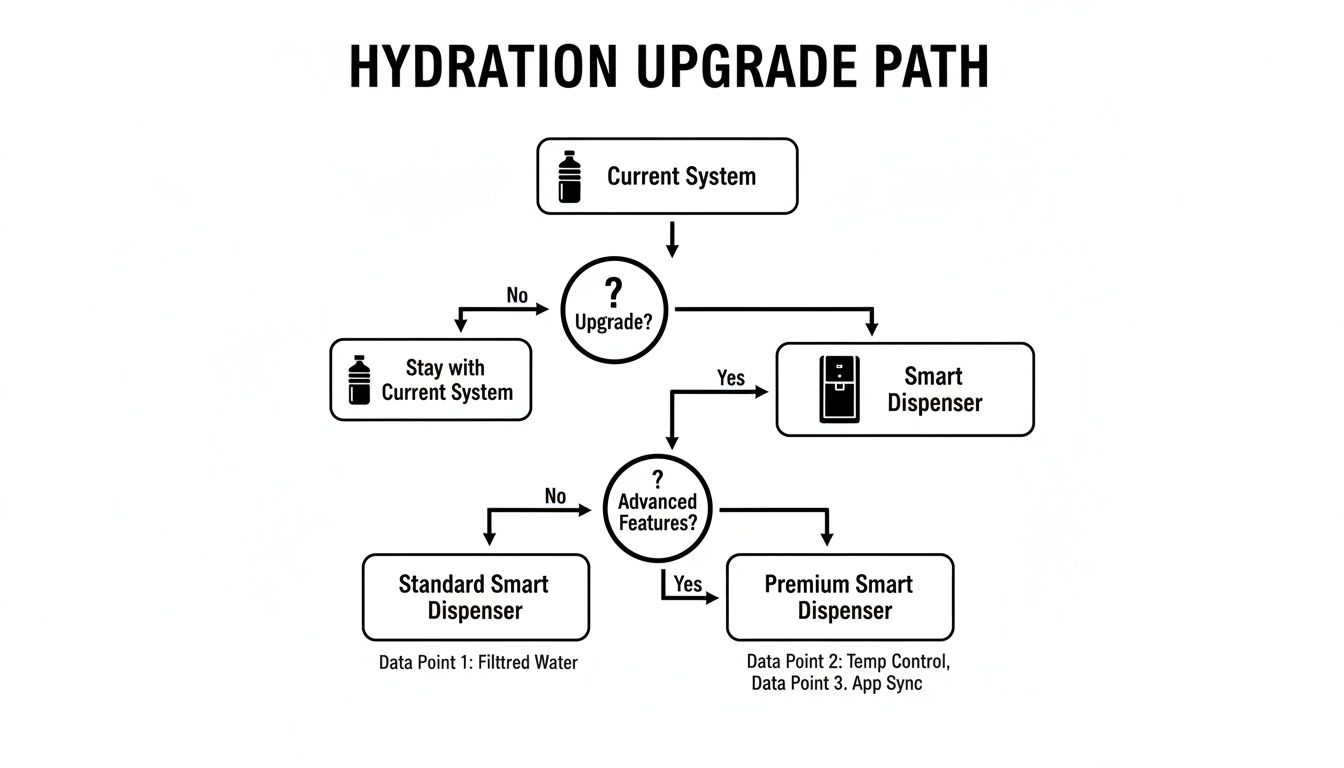
As you can see, making the switch to a dedicated dispenser is a natural next step for any business looking to take staff hydration seriously.
The Hidden Powerhouse: Under-Sink Taps
Imagine instant boiling, chilled, or even sparkling water from a sleek tap, with all the machinery tucked away out of sight. That’s the magic of an under-sink system—they’re the hidden powerhouse of the modern office kitchen. The main unit lives in the cupboard below, keeping your benchtops completely free.
This minimalist approach is their biggest drawcard. They are the perfect solution for:
- Architecturally designed kitchens where style is just as important as function.
- Smaller breakrooms and kitchenettes where every centimetre of bench space counts.
- Client-facing areas and creative agencies needing to project a polished, uncluttered image.
The key benefit here is seamless integration. You get all the performance without the visual clutter, making it the go-to for offices that value a clean, contemporary design.
The Workhorse: Wall-Mounted Boilers
Now for the undisputed workhorse of high-traffic environments: the wall-mounted boiling water unit. These units are built for one purpose and one purpose only—to deliver huge volumes of boiling water, on demand, without fuss. You’ll find them firmly fixed to the wall in busy staff rooms, canteens, and factory lunchrooms across the country.
Their design is all about function over form. They are incredibly robust, utterly reliable, and can handle the morning rush hour when half the company wants a tea or coffee at the exact same time.
If you were to compare it to a vehicle, a wall-mounted boiler is the dependable ute of the dispenser world. It might not be the flashiest ride, but it’s built for a heavy load and it will never, ever let you down.
This makes them a non-negotiable for large corporate offices, manufacturing plants, or any workplace where dozens of people need hot water all at once.
The Flexible Classic: Freestanding Coolers
When most people think of an office water cooler, the freestanding model is what comes to mind. It’s the classic, flexible solution for good reason. Whether you opt for a system that uses big replaceable bottles or one that’s plumbed directly into your water mains, its greatest asset is versatility.
Because it’s a self-contained unit, you can put it almost anywhere you have a power point. This makes it an excellent fit for open-plan offices, reception areas, warehouses, or even temporary sites where drilling into walls isn’t an option. For a closer look at these ever-popular models, you can explore a complete range of office water coolers and their features.
These units almost always provide chilled and room-temperature water, and many models now include a hot water function too. Their sheer adaptability makes them the default choice for businesses wanting a straightforward, plug-and-play hydration station.
The Event Specialist: Commercial Urns
Finally, let’s talk about the event specialist—the commercial hot water urn. These are large-capacity, fully portable units designed for temporary, high-volume situations. Think of them as your go-to for all-hands meetings, client functions, training days, and corporate events.
An urn isn't a permanent fixture. You bring it out when you need it and store it away when you don't. Its singular mission is to hold a massive reservoir of hot water, ready to serve dozens of cuppas in a very short amount of time. If your office hosts regular gatherings, having a commercial urn on standby is a smart and very practical move.
To help you visualise which dispenser fits where, we've put together a quick comparison table.
Office Water Dispenser Feature Comparison
This table offers a side-by-side look at the main dispenser types, helping you quickly match your office needs with the right solution.
| Dispenser Type | Best For | Key Benefit | Space Requirement |
|---|---|---|---|
| Under-Sink Taps | Sleek, modern kitchens and small breakrooms | Aesthetically clean, saves bench space | Under-sink cupboard space |
| Wall-Mounted Boilers | High-traffic areas like canteens and large staff rooms | High-volume, rapid boiling water delivery | Wall space above a bench or sink |
| Freestanding Coolers | Open-plan offices, reception areas, and temporary sites | Placement flexibility, easy setup | Floor space (approx. 30cm x 30cm) |
| Commercial Urns | Meetings, corporate functions, and temporary events | Portability and very large capacity | Bench space during use, cupboard for storage |
Each dispenser has its time and place. By thinking about how and where your team will use it most, you can easily narrow down the options to find a system that not only works but enhances your workplace.
How to Calculate Your Office Water Needs
Choosing a water dispenser with the wrong capacity can be a source of daily frustration. If it’s too small, you'll have queues forming in the kitchen. Too large, and you're just paying to heat or cool water that nobody is using, which is a waste of both energy and money.
A simple headcount won't give you the full picture of your office's real hydration needs. To pick the right water dispensers for office use, you need to look a bit closer at your team’s habits and the actual performance specs of the unit itself.
Go Beyond a Simple Headcount
First, you need a baseline for your daily water consumption. A good rule of thumb is to plan for around 1.5 to 2 litres per person, per day. But this is just a starting point, and you’ll need to adjust it for your specific workplace.
Think about these key factors:
- Work Environment: Is your office a standard, climate-controlled space? Or is it a more physically demanding place like a warehouse or workshop? People doing manual labour will naturally need to drink a lot more water.
- Peak Usage Times: Every kitchen has its rush hours. That first-thing-in-the-morning coffee run, the post-lunch slump, and the mid-afternoon pick-me-up all create moments of high demand. Your system needs to keep up.
- Drink Preferences: Does your team mostly stick to chilled water, or is there a big culture of tea, coffee, and instant soups? This will tell you whether boiling or chilling capacity should be your main priority.
It's also easy to forget about visitors, clients, and people in meetings who will be using the facilities too. Factoring in this extra foot traffic ensures your system won’t falter when you have a full house.
Decoding Technical Specifications
When you start looking at product spec sheets, you'll see two key terms: ‘initial cup delivery’ and ‘hourly recovery rate’. Getting your head around these is crucial for choosing a unit that won't let you down.
Think of it like a battery. The initial cup delivery is your starting power—it’s the number of cups the unit can pour straight away from its hot or cold tank. The hourly recovery rate is how quickly that battery recharges—the number of cups it can heat or chill per hour after that first lot has been used up.
A dispenser with a big initial delivery but a slow recovery rate might be fine for a small office where use is sporadic. But a busy workplace needs a high recovery rate to keep pace with constant demand during those peak times.
It might surprise you to learn just how popular some dispenser types are. For instance, bottled water dispensers make up over 70.4% of the global market. This is often because they offer purified water without needing complex plumbing—a massive plus for commercial buildings where installations can be tricky. You can see the full breakdown in the market research findings on Grandview Research.
Sizing for Growth and Success
Finally, always have one eye on the future. Is your company growing? Do you plan on hiring more people over the next few years?
One of the most common mistakes we see is businesses choosing a water dispenser that only just meets their needs right now. A system that’s running at 100% capacity from day one is going to be overworked, which often leads to premature wear and tear.
When you’re looking at water dispensers for office environments, it’s always wise to pick a model that can handle at least 20-25% more than your current daily estimate. This buffer gives you breathing room for busy days, lets you accommodate team growth, and helps the unit operate efficiently without being constantly pushed to its absolute limit. A little bit of forward-thinking here can save you the cost and hassle of needing to upgrade all over again in a year or two.
Understanding Water Filtration and Why It Matters
When you’re choosing an office water dispenser, it’s easy to focus on temperature and capacity. But the quality of the water itself? That’s just as important. Offering your team genuinely clean, pure-tasting water is a simple but powerful way to show you care about their wellbeing. This is where a good filtration system stops being a "nice-to-have" and becomes an essential feature.
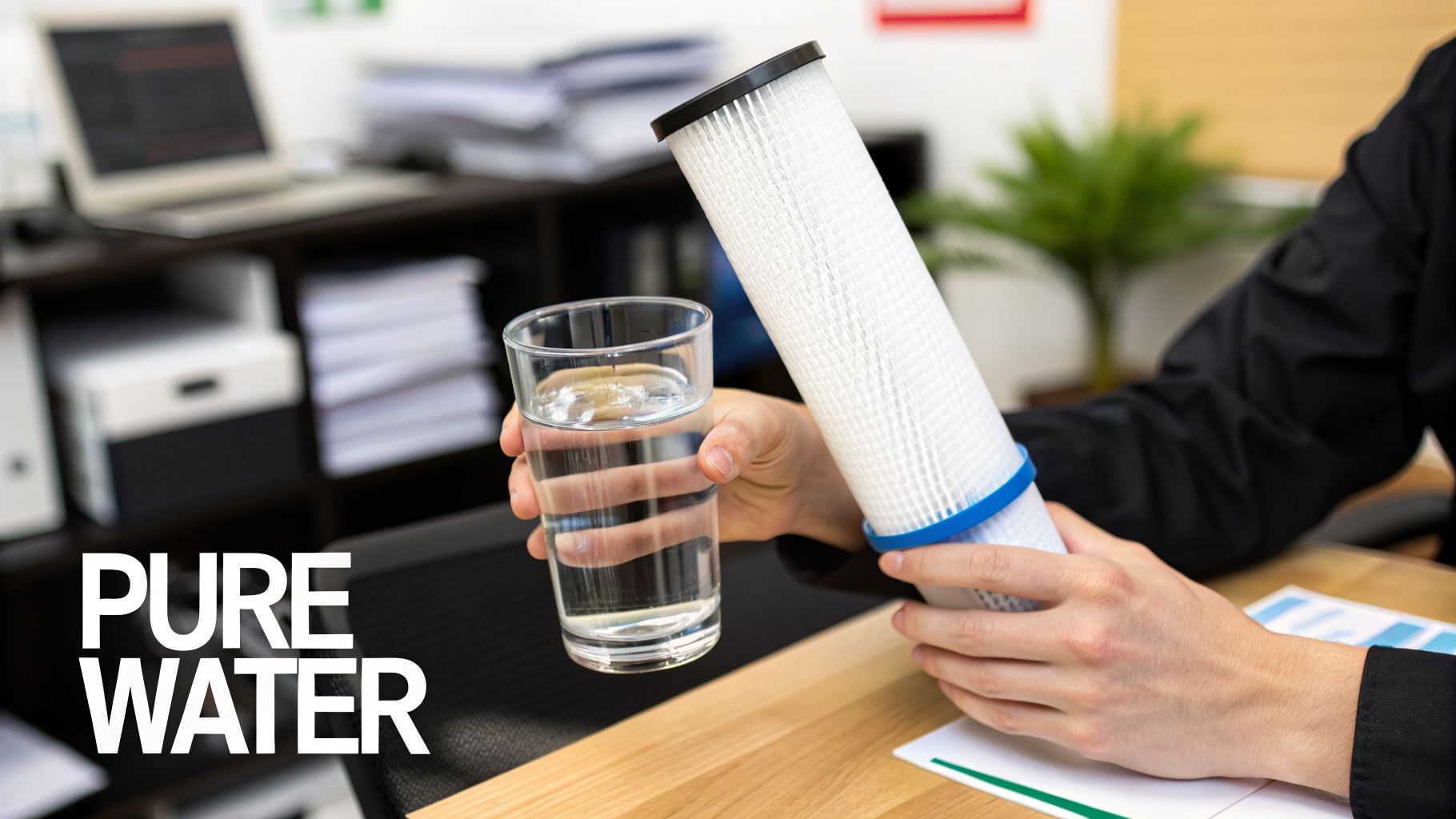
Think of a water filter like a security guard for your water supply. Its only job is to let the pure H₂O through and keep the unwanted stuff out. And even in a city like Melbourne with high-quality mains water, there’s plenty of “stuff” you’d rather not have in your afternoon cuppa.
What Are We Filtering Out?
Even perfectly safe tap water can contain things that affect its taste, smell, and the health of your appliance. A quality filtration system is designed to zero in on these specific impurities.
The main culprits are:
- Chlorine: It’s essential for keeping our water supply safe, but it can leave a distinct chemical taste and smell.
- Sediment: Tiny bits of dirt, rust, or sand that find their way into the pipes can make water look cloudy and unappealing.
- Limescale: This comes from dissolved minerals like calcium and magnesium. It’s the chalky buildup you see in kettles, and it’s a killer for the heating elements in water dispensers for office settings.
- Heavy Metals: In older buildings, trace amounts of lead or copper can sometimes leach into the water from ageing pipes.
A built-in filter removes these, ensuring every glass is fresh, clean, and tastes great. It’s a small detail that makes a huge difference to staff health and morale. You can learn more from the pros in our expert guide to water filter installation in Melbourne.
The Main Types of Filtration Technology
Not all filters are created equal. The technology inside your dispenser dictates what it can remove, and the two most common options you’ll come across are carbon filters and reverse osmosis.
Carbon Filtration
This is the workhorse of the water dispenser world. A carbon filter acts like a powerful magnet for organic chemicals and contaminants, especially the chlorine that affects taste.
Inside is a bed of activated carbon granules, which are incredibly porous. As water flows through, unwanted impurities get trapped in the tiny pores in a process called adsorption. The result is water that tastes and smells noticeably cleaner and fresher.
Carbon filters are the MVPs for improving taste and odour. They’re brilliant at removing that unpleasant chlorine tang, which is a fantastic way to encourage everyone to drink more water.
Reverse Osmosis (RO)
If you’re looking for the highest level of purification, reverse osmosis is the answer. It’s a more intensive process that uses pressure to force water through an extremely fine membrane.
This membrane is so selective it only lets water molecules pass through, blocking almost everything else, including:
- Minerals and salts (the source of limescale)
- Heavy metals like lead
- Viruses and bacteria
- Fluoride
Because RO is so thorough, it produces exceptionally pure water. It’s considered the gold standard for water quality, especially in areas with very hard water or for workplaces where purity is the absolute number one priority.
Why Filtration Protects Your Investment
A good filter does more than just deliver better-tasting water—it’s also your dispenser’s best form of insurance. Limescale is the number one enemy of any appliance that heats water. Over time, that chalky residue builds up on the heating element, forcing it to work much harder and use more energy just to get up to temperature.
Eventually, that strain causes the element to burn out, leaving you with a broken unit, expensive repairs, and a thirsty, unhappy team. A system with the right scale-reducing filtration stops this damage before it starts, protecting your investment and keeping your dispenser running efficiently for years.
Planning for Installation and Long-Term Maintenance
Choosing the perfect dispenser is a great first step, but the job isn't finished once it's out of the box. A water system is only as good as its installation and the care it receives over its lifetime. Getting the setup right and sticking to a maintenance plan aren't optional extras; they're essential for protecting your investment and ensuring your team always has safe, reliable access to clean water.
Think of it this way: you wouldn't install a brand-new air conditioning system and then never change the filters. The same logic applies to sophisticated water dispensers for office use. Planning for the entire lifecycle of your unit—from day one to its ongoing upkeep—is what separates a smart investment from a future headache.
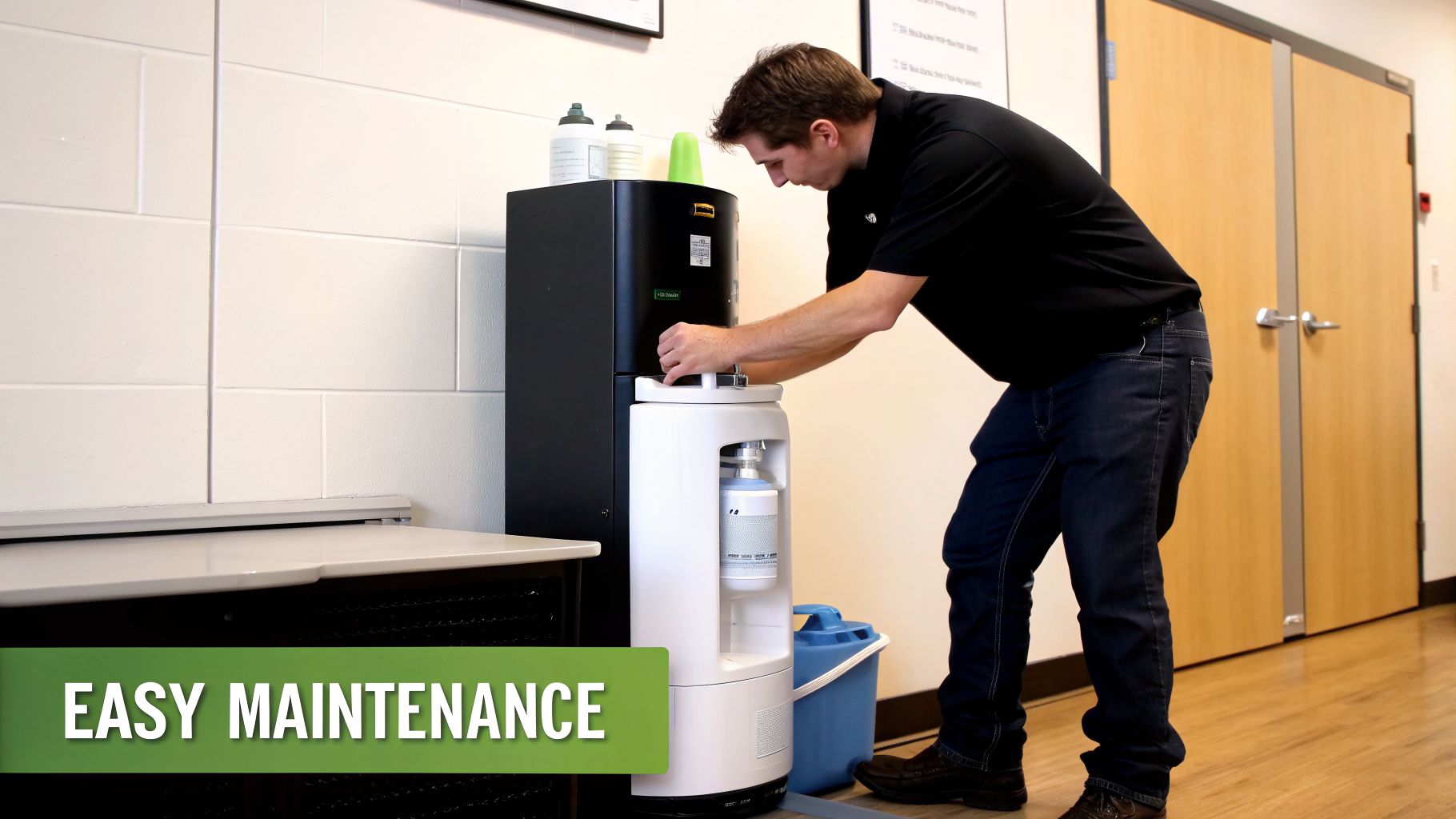
This approach is especially important in Australia, where workplace standards are high and employees have come to expect quality amenities. It’s a trend reflected in the steady growth of Australia's bottled water market, which was valued at USD 1.24 billion in 2024 and is projected to hit USD 1.85 billion by 2030. This tells us that Australian businesses see real value in providing high-quality drinking water. You can explore the full analysis of Australia's bottled water market trends on ResearchAndMarkets.com.
The Installation Roadmap
The installation process looks quite different depending on the type of dispenser you've chosen. Each system has its own unique requirements, which is why a professional installer is your best bet to ensure everything is handled safely and correctly.
- Under-Sink Boiling and Chilling Taps: These are the most complex to fit. A qualified technician needs to manage both the plumbing connections to the mains water and the electrical work for the under-bench unit.
- Wall-Mounted Boilers: These units have to be securely fastened to a wall that can support their weight when full. They also need a direct plumbing connection and their own dedicated electrical circuit.
- Plumbed-In Freestanding Coolers: Similar to the wall-mounted units, these need a nearby water line. The installer will run a discreet, food-grade hose from the mains supply to the cooler.
A professional installation is your first line of defence against leaks, electrical faults, and performance issues. It’s the crucial step that guarantees your system runs exactly as the manufacturer intended—safely and efficiently from the get-go.
The Non-Negotiable Maintenance Schedule
Once your system is up and running, a regular maintenance schedule is the key to longevity and performance. This goes beyond just wiping down the outside; it’s about looking after the hardworking internal components that do the heavy lifting every day.
There are two critical tasks you can’t afford to skip:
- Regular Filter Changes: Filters are the heart of your water quality. Over time, they get clogged with the very impurities they’re designed to capture. Sticking to the manufacturer's recommended schedule (usually every 6 to 12 months) is absolutely essential for great-tasting, safe water.
- Descaling the System: For any unit that heats water, limescale buildup is public enemy number one. A periodic descale, especially in hard water areas like parts of Melbourne, prevents damage to the heating element and keeps the unit running efficiently.
Honestly, the smartest path forward is to partner with a specialist supplier who also offers ongoing service. They can manage the filter replacements, perform descaling, and quickly sort out any issues that pop up. Having access to prompt, expert help is invaluable if something goes wrong; see how a professional can assist by scheduling a service call in Melbourne. It’s the best way to ensure minimal downtime for your team and a long, healthy life for your dispenser.
Calculating the True Cost of Your Water Dispenser
It’s easy to focus on the sticker price when you’re buying a new water dispenser for the office. But that initial number? It’s only a small part of the story. To make a genuinely smart investment, you need to look at what the unit will cost over its entire life, not just what it costs to get it through the door.
Thinking this way helps you understand the full Total Cost of Ownership. It’s the best way to uncover the real value of a system and avoid any nasty surprises on your budget down the track.
Uncovering the Hidden Operating Costs
The real expense of any appliance isn't the purchase price; it's what you pay to run it day-in and day-out. For water dispensers for office use, these ongoing costs typically come from three places.
- Energy Consumption: This is your biggest ongoing expense. How much power a dispenser uses depends on its cooling system and how hard it has to work to keep the water at the right temperature.
- Water Usage: For any plumbed-in system, this is usually a pretty small cost, but it’s still something to factor into your monthly utility bills.
- Consumables: The main consumable is the water filter. You'll need to replace these every 6-12 months to guarantee great-tasting, safe water and keep the unit in good nick. It's a predictable, recurring cost.
Individually, these costs might not look like much. But add them up over the 5-10 year lifespan of a quality dispenser, and they really start to make a difference.
The Power of Energy-Saving Features
Thankfully, modern water dispensers have become much smarter and more efficient. Manufacturers now build in clever features designed to cut down on electricity use, which can lead to some serious long-term savings for your business.
Two of the most effective features to look for are:
- Sleep or Eco-Modes: These automatically power down the heating and cooling functions when the office is empty, like overnight or on weekends.
- Programmable Timers: This feature gives you full control. You can set a schedule so the dispenser only runs during business hours, meaning you’re not paying to heat or cool water when no one is there to drink it.
Choosing a unit with these energy-saving features can reduce its electricity consumption by as much as 25% or more. That translates directly into lower power bills and a smaller carbon footprint for your business.
Comparing Long-Term Value: Plumbed-In vs Bottled
One of the biggest decisions you'll make is whether to go for a plumbed-in system or stick with a traditional bottled water service. While bottled coolers might seem cheaper upfront, their ongoing costs can quickly spiral.
Here’s how the two options stack up over the long term:
| Cost Factor | Plumbed-In System | Bottled Water Service |
|---|---|---|
| Initial Cost | Higher (unit + installation) | Lower (often just a rental fee) |
| Ongoing Costs | Water filter changes, electricity | Bottle delivery fees, rental fees, electricity |
| Hidden Costs | None | Storage space for full and empty bottles |
| Sustainability | Low environmental impact | High plastic waste and delivery emissions |
Over a three to five-year period, the relentless cost of bottle deliveries and rental fees almost always overtakes the one-off installation cost of a plumbed-in unit. A plumbed-in dispenser gives you an endless supply of filtered water for a fixed, predictable price—offering far greater value and budget stability in the long run.
Your Office Water Dispenser Questions, Answered
Even after weighing up the options, it’s natural to have a few final questions before making a decision. We get it. Here are some of the most common things we’re asked by Melbourne office managers, with straight-to-the-point answers to give you complete confidence.
How Much Does an Office Water Dispenser Cost to Run?
This really comes down to the model you choose, but the single biggest factor is always energy use. Modern units are a world away from the old power-guzzlers. Look for models with timers or smart sleep modes that power down the heating and cooling elements overnight and on weekends – the savings are significant.
A plumbed-in system’s running cost is almost entirely your electricity bill. With a bottled service, on the other hand, you’re paying for ongoing rental and delivery fees that can quickly add up over time.
How Often Do I Need to Clean My Water Dispenser?
For hygiene, regular cleaning is non-negotiable. The outside of the unit, especially the taps and the drip tray, needs a daily wipe-down (or at least a few times a week) with a food-safe sanitiser. It only takes a moment.
A proper internal clean and sanitisation, however, is a job for the pros. This should be done every 6 to 12 months, which usually lines up perfectly with a filter change service call.
What Is the Difference Between a Plumbed-In and a Bottled Water Cooler?
A bottled water cooler is the classic standalone unit you see with a big, inverted plastic jug on top. A plumbed-in dispenser, sometimes called a POU (Point of Use) unit, connects right into your building’s main water line and filters the water on the spot.
While bottled coolers might seem cheaper upfront, plumbed-in dispensers almost always win on long-term value. You get an endless supply of fresh, filtered water without the repeat costs, storage headaches, or environmental footprint of all those plastic bottles.
How Long Does a Water Dispenser Take to Get Cold?
When you first plug in a new unit, most water dispensers for office use will take between 1 and 3 hours to get the water in their reservoir properly chilled.
The exact time depends on the cooling tech inside (compressor systems are generally faster), the size of the internal tank, and even the room’s temperature, we have undersink chillers that can chill as little as 5 minutes and once it hits the target temperature, it’ll keep it there automatically.
Can We Install a Water Dispenser Ourselves?
A simple bottled water cooler is a true plug-and-play. Just find a spot near a power point and you’re good to go.
However, any system that connects to your mains water—like an under-sink tap or a wall-mounted boiler—is a different story. This is a job for a qualified plumber and electrician to ensure it’s safe, compliant with regulations, and won’t surprise you with any leaks down the track.
Ready to upgrade your office hydration with a system that saves time, energy, and bench space? The team at Ring Hot Water offers expert advice, professional installation, and ongoing maintenance across Melbourne. Explore our range of commercial water solutions on ringhotwater.com.au and find the perfect fit for your workplace today.
