
Commercial Water Chillers
Your Complete Guide to Under Sink Water Chiller Installation

Mar
An under sink water chiller is a small, smart appliance that fits neatly into your kitchen cabinet, giving you perfectly chilled, filtered water straight from a dedicated tap. Think of it as the ultimate way to declutter your kitchen and say goodbye to fridge-hogging water jugs and endless plastic bottles.
The Real-World Benefits of an Under Sink Water Chiller
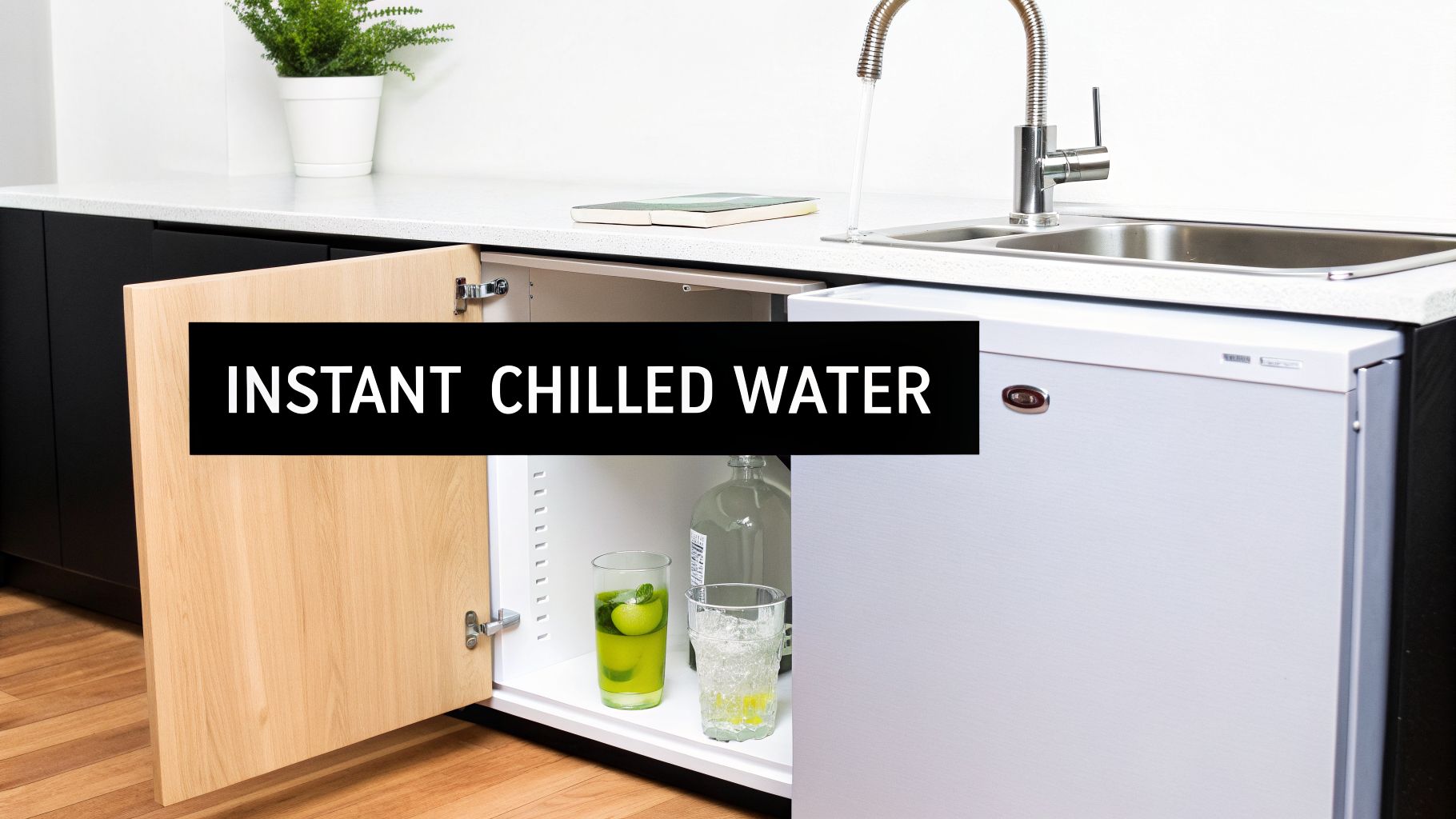
While the simple idea of cold water on demand is nice, the true value of an under sink water chiller is so much more than that. It's a genuine lifestyle upgrade for any modern Melbourne home or office, changing how you use your kitchen day-to-day.
One of the first things you’ll notice is the space you get back. The battle for room on the benchtop and inside the fridge is something we all know too well. An under-sink system makes bulky filter jugs and rows of plastic bottles totally redundant, leaving your benchtops clear and your fridge free for fresh food instead of water.
A More Streamlined and Efficient Kitchen
From personal experience installing these systems across Melbourne, we've seen first-hand how they completely streamline the kitchen workflow. There’s no more waiting for a slow fridge dispenser or holding the door open while a jug fills. Instant chilled water means quicker drink preparation, whether you're pouring a simple glass of water, making iced tea, or mixing a cordial for the kids.
This small change even has a knock-on effect on your power bill. Every time you open the fridge, cold air escapes, forcing the compressor to work harder to cool it down again. An under sink water chiller puts a stop to that constant opening and closing, making for a more energy-efficient kitchen.
An under sink water chiller isn’t just another appliance; it’s an investment in convenience, space, and smarter living. It declutters your kitchen and completely redefines your daily hydration habits.
This efficiency is a big reason why they're becoming so popular. In Melbourne, the demand for these units is part of a larger trend, with Australia's chillers market projected to hit USD 95.0 million by 2030. This growth is being driven by a surge in new residential construction (up 19.4% in early 2024) and demand from offices wanting space-saving solutions. These units can slash energy consumption by up to 30% compared to other cooling methods—a real benefit for a city of over 5 million people. You can find more detail on these Australian market trends and projections.
The Clear Environmental Advantage
Beyond your kitchen, installing an under sink water chiller is a practical step towards a more sustainable home. By giving you an endless supply of delicious, filtered water, you effectively end your reliance on single-use plastic bottles. This cuts down on plastic waste and lowers the carbon footprint that comes with making and transporting bottled water.
Chilled Water Methods at a Glance
Here's a quick, honest comparison of the most common ways to get chilled water, showing where an under-sink system truly shines.
| Feature | Under Sink Water Chiller | Fridge Water Dispenser | Bottled Water |
|---|---|---|---|
| Convenience | Instant, unlimited supply | Slow, limited capacity | Must buy and store |
| Space | Hidden away under the sink | Takes up valuable fridge space | Clutters the pantry and fridge |
| Waste | Minimal (occasional filter changes) | Minimal | High levels of plastic waste |
| Water Quality | Highly filtered and fresh | Moderately filtered | Variable, sits in plastic |
As you can see, the benefits go well beyond just having cold water.
Ultimately, choosing an under sink water chiller is about upgrading your daily experience. It’s a decision that brings convenience, organisation, and efficiency into your home, perfectly matching Melbourne's love for smart, well-designed living spaces.
Measure Twice: What to Check Before You Buy
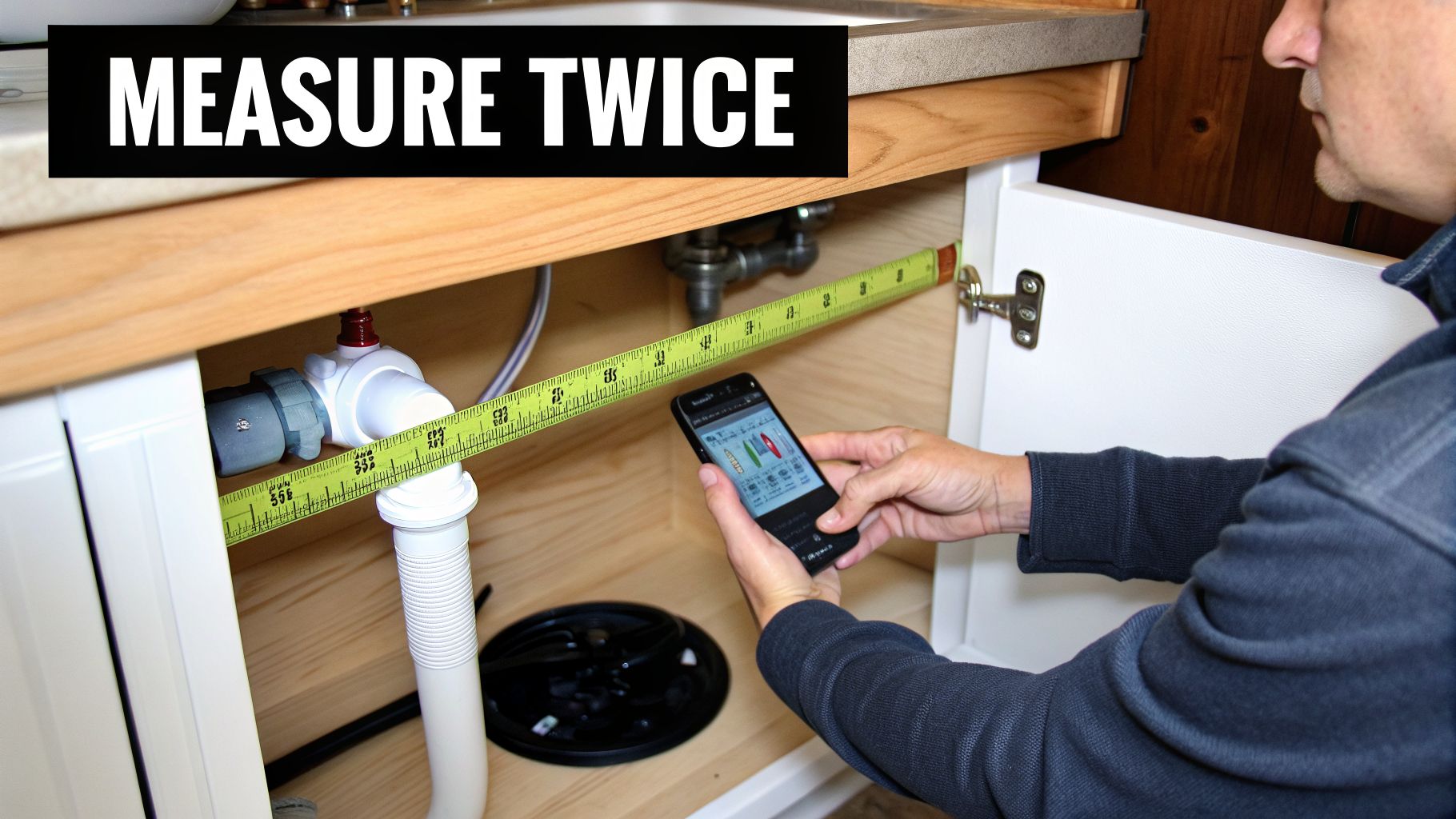
It’s the most common mistake we see, and honestly, the most frustrating. You get excited about your new water chiller, it arrives, and… it doesn't fit. A few careful measurements beforehand save a world of headaches, returns, and even costly cabinet work. This isn't just about grabbing a tape measure; it's about seeing that under-sink space like a plumber does—as a whole system.
First, get the basic, empty-space numbers. Whip out a tape measure and note the clear internal height, width, and depth of your cabinet. But don't stop there. Now for the tricky part: you have to work around everything already living in there.
The usual culprits are the garbage disposal unit and the P-trap (that U-shaped pipe). You need to measure the actual, usable space around them. An under sink water chiller needs its own footprint, and it can't be jammed right up against your existing plumbing.
Planning for Airflow and Water Lines
One detail that catches out a lot of people is ventilation. Your water chiller has a compressor, just like your fridge, and it creates heat. Without enough room for air to move, the unit will struggle, run inefficiently, and its lifespan will take a serious hit.
As a rule of thumb, you absolutely must leave at least 5-10 cm of clear space on all sides of the chiller. So, when you're checking a unit's specs, add that buffer to its dimensions. Does it still fit comfortably around the disposal and pipework?
Don't even think about adding a chiller to your cart until you've confirmed you have room for the unit plus its ventilation gap. A tight squeeze is just asking for an underperforming appliance. Trust me, this step is non-negotiable.
Next, find your cold water supply. It's usually a braided hose or copper pipe running to a small tap (the isolation valve). Your new chiller will tee into this line. Give the valve a turn to make sure it works and isn't seized or leaking. If it is, a plumber will need to replace it before you can do anything else.
Getting Your Power and Safety Sorted
Every under-sink chiller needs its own power source. That means you'll need a standard 240V general power outlet (GPO) inside the cabinet or within easy reach. Accessibility is key for any future maintenance.
Here’s what to look for:
- A proper power point: Is there one under the sink already? If not, you’ll need a licensed electrician to install one.
- No shortcuts: Never, ever use an extension cord or a power board. They aren't designed for the continuous power draw of an appliance and are a major fire risk in a damp space.
- Enough outlets: Got a garbage disposal or an existing instant hot water unit? Make sure you have a dedicated outlet for each appliance.
Thinking about your cabinet's layout from the start makes all the difference. Before you buy, it’s worth measuring the space you have and understanding how to choose kitchen cabinets that can properly house the chiller and give it the airflow it needs. Good planning ensures everything fits perfectly.
Once you’ve taken the time to properly assess your space, plumbing, and electrical situation, you can choose the right under sink water chiller with total confidence. If you're in Melbourne and weighing up your options, digging into the specific requirements of different models will make your final decision a whole lot clearer.
How to Choose the Right Chiller and Filter Combo
Picking out the perfect under sink water chiller is a great move, but it’s really only half the job. A chiller without a quality filter is like a performance car running on dodgy fuel; you’re just not going to get the results you paid for. That filter is the essential partner that decides the taste of your water and, just as importantly, the lifespan of the chiller itself.
For premium brands like Zip and Stiebel Eltron, pairing them with the right filtration system isn’t just a recommendation—it’s crucial for getting that crisp, pure-tasting water and protecting your investment. Honestly, you should think of the filter as the first line of defence for the whole setup.
Why Filtration Is Not Optional
The main job of a filter is pretty obvious: it makes your water taste and smell better by getting rid of chlorine and other nasties. But its second job is just as vital. It stops scale and sediment from building up inside the chiller’s delicate machinery.
Without a filter, tiny minerals and particles in your tap water will eventually start to collect. This buildup is like cholesterol in an artery; it chokes the water flow and makes the chilling unit work much harder than it should. The end game? Poor performance, higher power bills, and a much shorter life for your appliance.
Choosing a filter isn't just about taste. It's the single most important decision you'll make to protect your under sink water chiller from premature failure. Investing in a quality filter is investing in the longevity of the entire system.
Decoding Filter Types for Melbourne Water
To make a smart choice, you need to know the two main types of filtration. Your decision really comes down to your local water quality and what you’re trying to remove.
Activated Carbon Filters
These are the most common filters you’ll see paired with an under sink chiller. They’re fantastic at what’s known as “aesthetic” filtration. An activated carbon block is like a massive sponge, using its huge surface area to absorb impurities that mess with taste and odour, especially chlorine.
- Best for: Improving the taste and smell of Melbourne’s generally high-quality tap water.
- What it removes: Chlorine, volatile organic compounds (VOCs), and some sediment.
- Limitation: It won't remove dissolved minerals, heavy metals, or microscopic organisms.
Reverse Osmosis (RO) Filters
For anyone after the highest level of purification, reverse osmosis is the gold standard. An RO system pushes water through an incredibly fine membrane that strips out almost everything that isn't a pure water molecule. We’re talking minerals, salts, fluoride, and heavy metals—all gone.
This level of purification is really taking off. The Australian under sink water filters market is forecast to double from USD 0.06 billion in 2025 to USD 0.12 billion by 2034, with reverse osmosis systems leading the charge. This trend makes perfect sense, as an under sink water chiller runs best on purified water. You can dive deeper into these under sink water filter market insights to see where the industry is heading.
Making the Right Choice for Your Needs
So, what’s the verdict? For most Melbourne homes, a good quality activated carbon filter strikes the perfect balance. It delivers clean, delicious-tasting water and gives your system the protection it needs without stripping away beneficial minerals.
However, if you're particularly sensitive to tastes, have specific health worries, or just want the absolute purest water you can get, a reverse osmosis system is an excellent way to go. It’s also a fantastic solution for offices looking to provide premium water, a move that can slash bottled water expenses by up to 50% a year. Once you understand the tech, you can confidently select the right under sink water filter to match your chiller.
Ultimately, the goal is to build a complete system where everything works together. A great chiller paired with the right filter means every glass of water is perfectly chilled, refreshingly clean, and free from anything that could harm your appliance down the track.
DIY or Call a Pro? Nailing Your Under-Sink Chiller Installation
So, you've picked out the perfect under-sink water chiller for your kitchen. The next big question is a practical one: should you roll up your sleeves and install it yourself, or is it time to call in a licensed plumber? The DIY route can look tempting on paper, but it’s worth being honest about what the job really involves before you pick up the tools.
This isn't just about connecting a few pipes. It's a job that needs a bit of precision. A small mistake—one you might not even notice at first—can lead to big problems, from a slow, cabinet-destroying leak to accidentally voiding your new appliance's warranty.
The Key Installation Steps
Getting any of these steps wrong can compromise the whole setup. Here’s a quick rundown of what’s involved.
Shutting Off the Water: First things first, you need to safely turn off the cold water supply. It sounds simple, but you have to be certain your isolation valve works properly. In older homes, it's common to find they're seized up or have a slight weep. Our guide on how to check your water supply shut-off valve has some handy tips for this crucial first check.
Tapping Into the Plumbing: This is where you connect to your water line. You'll need to cut into the cold water pipe to install a tee-fitting, which diverts water over to the chiller. This demands a clean cut and a perfectly sealed connection to stop any leaks in their tracks.
Connecting It All Up: With the tee-fitting in, you'll connect the tubing that feeds the chiller and your new tap. Professionals almost always use John Guest fittings for a reason—they create a secure, push-fit seal that’s incredibly reliable. The chiller unit itself then needs to be mounted securely, making sure it’s level and has enough space around it for proper ventilation.
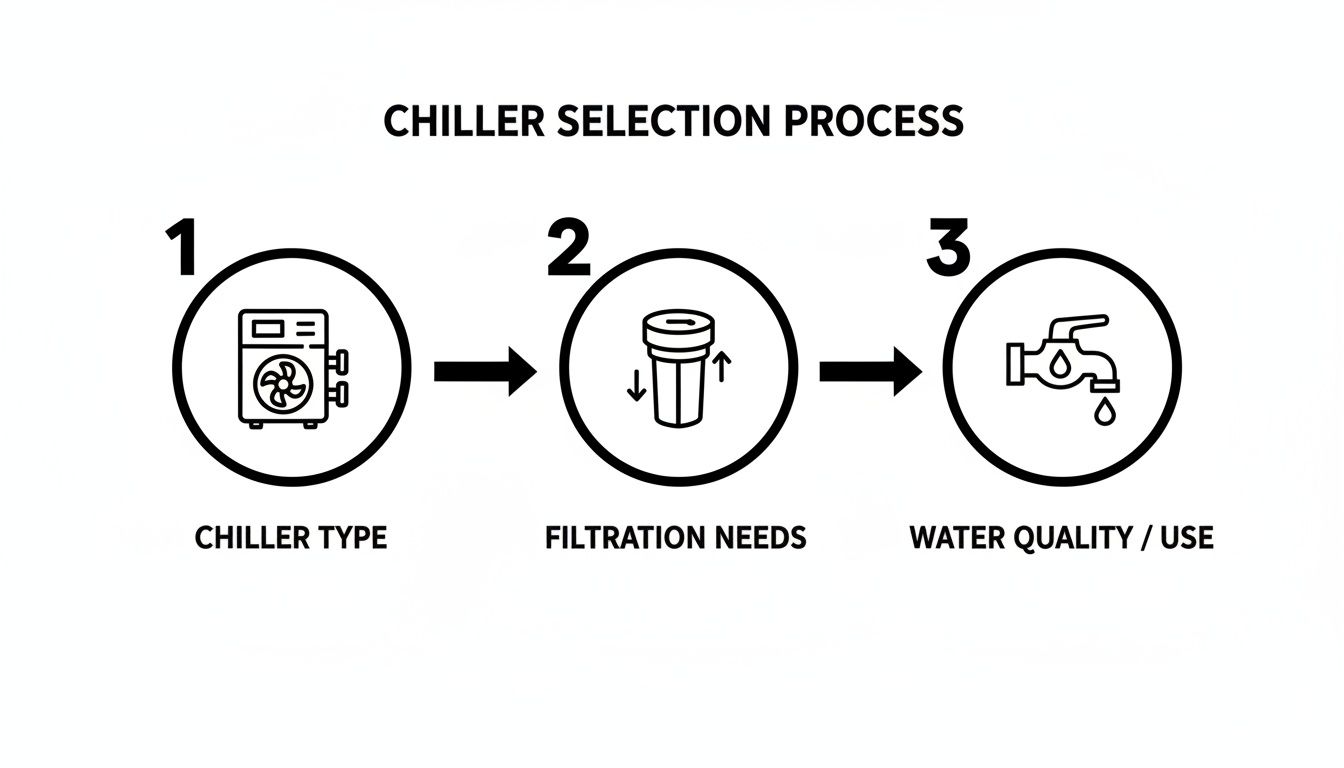
As this flowchart shows, the chiller, its filter, and the tap aren't separate items—they're all parts of one system that need to work together perfectly.
The Real Dangers of a DIY Job
Honestly, the biggest risk in a DIY installation isn't a sudden flood (though it can happen). It’s the slow, silent leak from a dodgy connection that goes unnoticed for weeks, quietly warping your kitchen cabinets and letting mould take hold.
The peace of mind that comes from a professional installation is invaluable. A licensed plumber not only guarantees a leak-free setup but also ensures your system complies with all local plumbing codes, protecting your warranty and your home.
When deciding between DIY and hiring a pro, it helps to look at other home appliance installation projects to get a sense of the scope and potential challenges involved.
Why a Plumber Is Usually the Smartest Move
Hiring a licensed plumber in Melbourne means getting an expert who's done this exact job countless times. They have the right tools, the best fittings, and the experience to spot a potential problem before it even happens. They’ll make sure every single connection is watertight and that the system is properly flushed to clear out any debris before you take that first sip.
This is even more important for the integrated systems that are so popular now. With Australia's water purifier market valued at USD 245.34 million in 2024 and growing, more people are seeing the benefits. For an office or café, these systems can cut down on plastic bottle usage by up to 80% and use 40% less power than old-school freestanding units. It’s a smart move, especially as our national water treatment services market hits $7.9 billion.
At the end of the day, while a DIY job is certainly possible if you have solid plumbing experience, the risks often outweigh the savings. For a system you'll rely on every single day, investing in a professional installation is the best way to get it right the first time and enjoy perfectly chilled water without a worry.
Keeping Your System Running for Years to Come
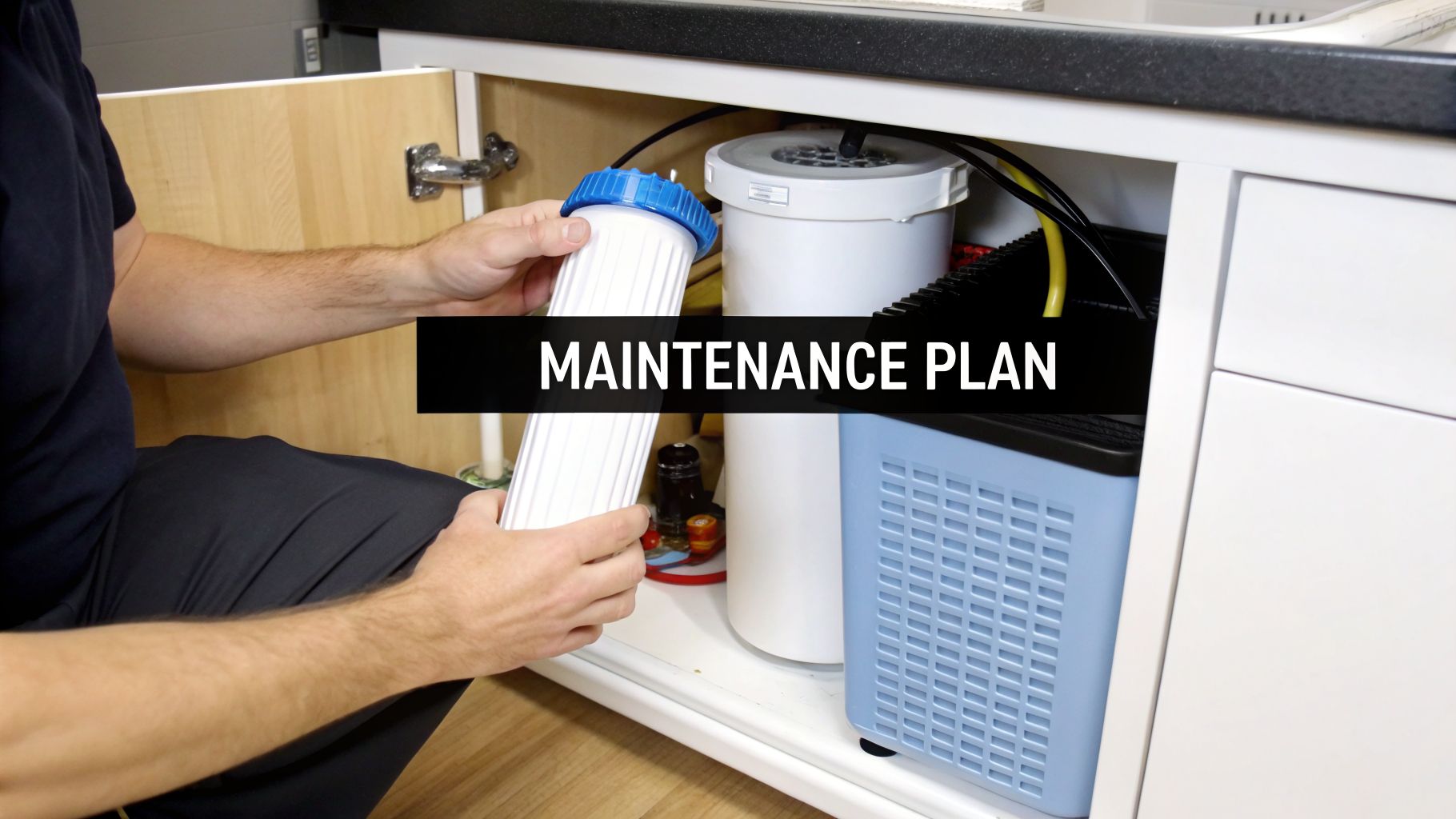
Getting your new under sink water chiller installed is a great feeling, but the job doesn’t end there. To get years of crisp, perfectly chilled water, you need to think of it like any other important appliance in your home. A little bit of consistent care goes a long way in protecting your investment and ensuring it runs just as well on day one thousand as it did on day one.
From our experience servicing units all over Melbourne, we know that simple, proactive maintenance is the secret to longevity. It prevents small issues from becoming big, expensive problems and keeps your water tasting fantastic. This isn't about complicated mechanical work; it's about a few easy checks you can build into your routine.
Your Essential Maintenance Schedule
Think of this as a simple checklist to keep your system in top shape. Following a regular schedule is the best way to ensure flawless performance and avoid surprises. Most of these tasks only take a few minutes but make a massive difference.
The Filter Cartridge Is Non-Negotiable
The single most important maintenance task is changing your filter cartridge on time. A filter's job is to trap chlorine, sediment, and other impurities. Once it's full, it can no longer do its job effectively.
Worse, a clogged filter forces the chiller's pump to work overtime, putting a strain on the entire system and potentially leading to premature failure. Every manufacturer, from Zip to Everchill, provides a recommended replacement schedule, which is typically every 6 to 12 months.
Sticking to the filter replacement schedule is the most effective insurance you can buy for your under sink water chiller. It protects the internal components from scale and sediment, which is the number one cause of reduced performance and early breakdowns.
Clearance for Airflow
Your chiller works like a mini-fridge, and it needs to breathe. The ventilation grilles on the unit allow heat generated by the compressor to escape. It's common for cleaning supplies, shopping bags, and other under-sink clutter to get pushed up against these vents.
Blocked airflow causes the unit to overheat. It will struggle to chill the water, run less efficiently, and significantly shorten its lifespan. Make it a habit to ensure there's at least 5-10 cm of clear space around the chiller's vents at all times. A quick glance every few weeks is all it takes.
Troubleshooting Common Chiller Issues
Even with perfect maintenance, you might occasionally run into a small issue. Before you pick up the phone to call for service, here are a few simple checks you can perform yourself for common problems.
If the water isn't cold enough:
- Check the Ventilation: Is the unit crowded? Clear any obstructions around the vents and give it an hour to see if performance improves.
- Adjust the Thermostat: Many models have an adjustable thermostat. Check your user manual to see if it has been accidentally set to a warmer temperature.
- Inspect the Filter: When was the last time you changed the filter? A badly clogged filter can restrict water flow and impact cooling.
If you hear a strange noise:
- Vibration: Sometimes, noise is just the unit vibrating against a cabinet wall or a pipe. Ensure it’s sitting level and not touching anything around it.
- Gurgling: A gurgling sound is often normal as the refrigerant cycles through the system, much like your kitchen fridge. However, if it's new or unusually loud, it’s worth keeping an eye on.
Here’s a quick-glance table to help you stay on track. Following this simple schedule is the best way to ensure your system performs perfectly for years.
Your Under Sink Chiller Maintenance Checklist
| Task | Frequency | Pro Tip from Ring Hot Water |
|---|---|---|
| Replace Water Filter | Every 6-12 Months (or as per manufacturer) | Set a calendar reminder on your phone the day you install a new filter. Don't rely on memory! |
| Check for Clear Airflow | Monthly | When you take out the rubbish, do a quick visual check to ensure nothing is blocking the chiller's vents. |
| Visual Leak Inspection | Every 3-6 Months | Use a torch to quickly inspect all pipe connections and fittings for any signs of moisture or drips. |
By following these simple care and troubleshooting steps, you’ll not only enjoy pristine, chilled water for years but also protect the value of your appliance. And if you ever do need a hand or a new filter, our team at Ring Hot Water can help you source genuine parts to ensure a perfect fit and lasting repair.
Common Questions About Under Sink Water Chillers
When you're thinking about adding an under sink water chiller to your home or office, a lot of practical questions come to mind. It's completely normal. To help you get a clearer picture, we’ve put together some straight answers to the questions we hear most often from our customers right here in Melbourne.
How Much Will an Under Sink Chiller Cost to Run?
This is usually the first thing people ask, and the answer is almost always a pleasant surprise. Modern units are built to be incredibly efficient. While it varies with your local power rates, a good under sink water chiller typically adds just a few dollars to your quarterly electricity bill.
Honestly, it's often far less than the energy your fridge wastes from the door being opened and closed all day just for a cold drink. The real savings, though, come from ditching bottled water. That habit alone can easily cost a family hundreds of dollars each year. At Ring Hot Water, we make a point of stocking energy-smart models from top brands like Everchill and Zip, specifically because they have such low running costs.
Can I Just Use My Existing Kitchen Tap?
In nearly every case, the answer here is a simple no. Your standard kitchen tap is only plumbed for two water lines: hot and cold. It just doesn't have a separate channel needed for a third line of chilled, filtered water.
To get chilled water on tap, you'll need what's known as a "3-way" or "all-in-one" tap. These taps look sleek and unified on your benchtop, but inside, they have dedicated channels. This is crucial for keeping your chilled water pure and stopping it from mixing with your regular hot and cold supply. We offer a great selection of compatible, stylish taps that give you that clean, professional finish.
A dedicated 3-way tap isn't just a recommendation; it's essential for an under sink chiller. It's a matter of both function and hygiene, making sure your chilled water stays pure and tastes just right.
How Cold Does the Water Actually Get?
Most quality under sink chillers deliver water at what many consider the perfect drinking temperature, which is somewhere between 5°C and 10°C. It’s beautifully crisp and refreshing without being so icy it hurts your teeth. This is a big step up from most fridge dispensers, which can often pour lukewarm water if you use them frequently.
Many of the units we supply also come with an adjustable thermostat, so you can dial in the exact temperature that you prefer. The best part is that you get a continuous stream of perfectly chilled water, ready the moment you want it.
What Happens if the Power Goes Out?
A power outage won't leave you high and dry. If the power goes off, your under sink water chiller simply stops chilling the water—that's it.
Here’s what you can expect:
- Your tap will still work perfectly for normal hot and cold water, straight from your mains supply.
- The filter line will keep providing filtered water at room temperature, so you still get clean, great-tasting water.
As soon as the power comes back on, the chiller unit will automatically kick back into action and start bringing the water down to your set temperature. You don’t have to do a thing.
At Ring Hot Water, we’re here to help you find the perfect chilled water solution for your home or office. Explore our range of under sink water chillers and genuine parts today!

